
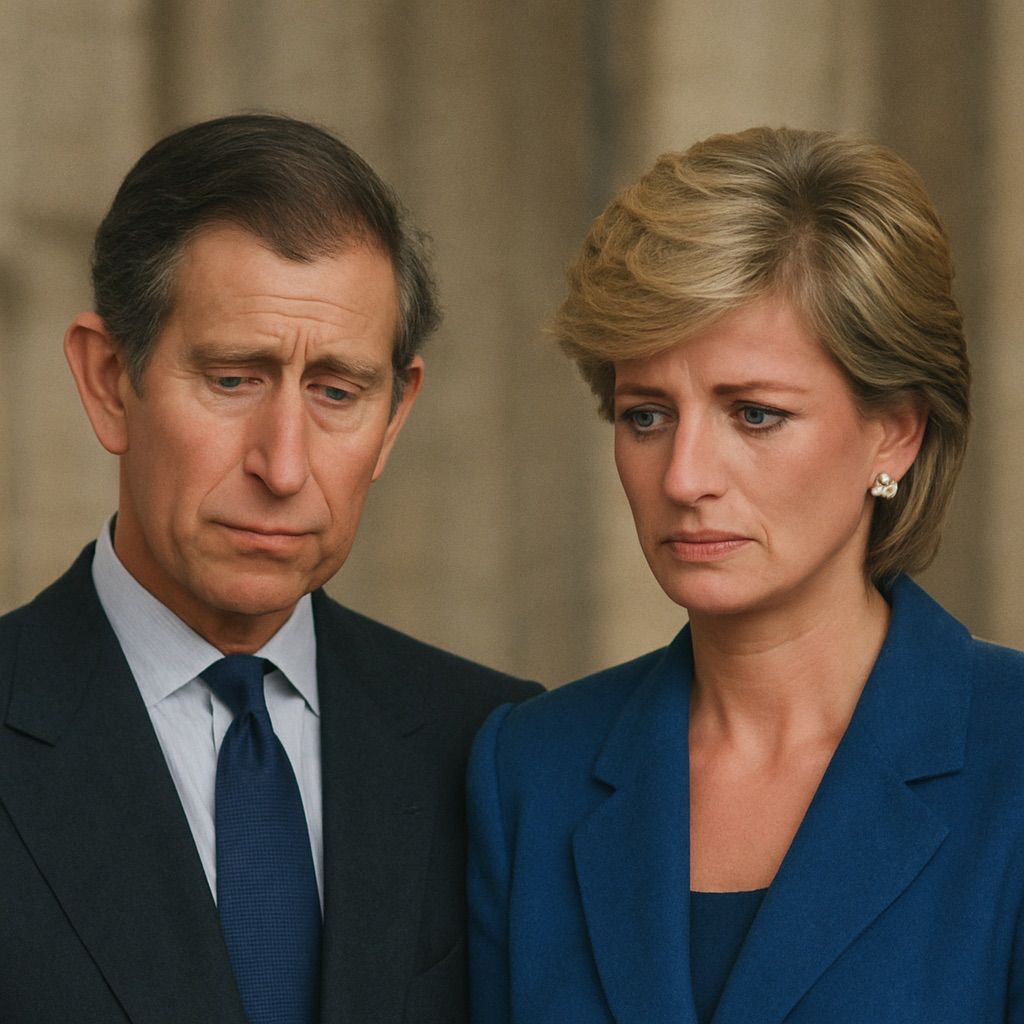
The announcement on December 9, 1993, that Prince Charles and Princess Diana were formally separating struck with the force of a global tremor. Even in an age before social media and instantaneous digital headlines, the news traveled at near-lightning speed, rippling across continents, igniting conversations, and shattering illusions that millions had held for more than a decade. Their marriage had been portrayed to the world as a fairytale, a modern royal romance scripted for adoration, photographed endlessly, and replayed in every glossy publication imaginable. Yet beneath the glitter of tiaras and televised weddings lay fissures that had deepened quietly, painfully, and inevitably until the very foundation of their union finally gave way. What the world saw as a romantic dream had, for its participants, become a space of loneliness, resentment, and unmet expectations.
It is almost impossible to understand the magnitude of the announcement without stepping back to consider the intensity of the spotlight under which Charles and Diana lived from the moment the public first became aware of their courtship. Prince Charles, heir to the British throne and bound by centuries of expectation, had long been under pressure to marry. Diana Spencer, radiant, shy, and barely out of her teens when she entered royal life, became an overnight sensation. Their 1981 wedding was not just a national celebration—it was a global event, watched by an estimated 750 million people. The couple appeared poised to bring a breath of freshness and charm back into the monarchy. Diana, with her warmth and emotional intelligence, connected with ordinary people in a way few royals ever had. Charles, scholarly and thoughtful, represented tradition and continuity. For a brief moment, the pairing felt perfect.
But no fairy tale can survive if its characters feel trapped inside it.
The early signs of strain appeared almost immediately. While Diana struggled to adapt to the rigid protocols of royal life, Charles found himself caught between the duty to shape Diana into a future queen and his own emotional entanglement with Camilla Parker Bowles—a relationship that had roots far deeper than the public realized. Their personalities, already mismatched, became increasingly incompatible under the scrutiny of press cameras and palace expectations. Diana’s vulnerability, her eagerness to love and be loved, clashed with Charles’s emotional reserve and his need for intellectual compatibility. And as Diana later admitted, there were three people in the marriage, and “that’s a bit crowded.”
The royal machine continued forward, expecting the young couple to simply adapt, but Diana’s internal struggles soon became overwhelming. The pressures of her role collided with her personal insecurities, leading her into a dark battle with bulimia, depression, and profound isolation. She often appeared luminous on the outside—smiling for cameras, hugging children, comforting HIV patients, shaking hands with the marginalized long before the rest of the world understood the importance of such gestures—but behind closed doors, she was unraveling. Her emotional pleas went largely unheard, dismissed, or misunderstood. Charles, unused to such expressions of vulnerability, retreated further, turning more frequently toward the steady companionship of Camilla.
By the early 1990s, the marriage was visibly deteriorating. British tabloids, hungry for royal drama, published stories of infidelity, emotional outbursts, secret phone calls, and private despair. Both Charles and Diana became subjects of relentless media scrutiny, but their responses differed sharply. Charles, trained for emotional restraint, kept silent, even as speculation mounted. Diana, feeling voiceless and misunderstood, began subtly pushing back—using interviews, carefully chosen moments, and emotional honesty to tell her side of the story. She was charismatic, relatable, heartbreakingly human. Millions saw her not as a flawed royal but as someone trapped in a gilded cage, fighting to be heard.
The moment that brought the simmering crisis to a full boil came in November 1993, just weeks before the separation announcement. Charles and Camilla were photographed together at a private gathering on the eve of his 50th birthday. Though the relationship had long been whispered about, the intimate nature of the image ignited a media firestorm. Newspapers splashed the photographs across their front pages with bold headlines hinting at betrayal, marital collapse, and humiliation. Diana, who had been trying desperately to maintain some semblance of dignity, was devastated. The picture was more than an image—it was a public confirmation of what she had known privately for years.
In response, she agreed to a series of interviews where her sadness, fragility, and frustration spilled into the open. She never explicitly accused Charles of infidelity, but her emotional honesty made it clear that something had shattered between them that could not be repaired. To some viewers, she appeared brave, finally speaking truths long buried. To others, she seemed lost, overwhelmed, and longing for someone—anyone—to take her pain seriously. Either way, the interviews set the stage for what everyone sensed was coming.
When the official announcement finally arrived on December 9, 1993, it still hit the public with startling force. The Buckingham Palace statement was brief, careful, and coldly formal, noting simply that Charles and Diana were separating and that both would continue carrying out their public duties. But beneath the palace wording was a far more complicated reality: the collapse of the most famous marriage in the world.
Public reaction was swift and deeply emotional. Diana’s supporters wept openly, angry at Charles for what they saw as years of neglect or betrayal. Others sympathized with Charles, believing he had been pressured into a marriage that was doomed from the start. Camilla became a lightning rod, the target of harsh criticism that would follow her for years. The monarchy, already navigating a changing cultural landscape, found itself facing a crisis of public trust.
In the months that followed, the separation evolved into a new normal. Charles continued seeing Camilla, though carefully, aware of public anger. Diana withdrew, spending more time with William and Harry, immersing herself in humanitarian causes that allowed her to channel her pain into purpose. Her work became not only a contribution to the world but also a lifeline—something meaningful to grasp while her personal life splintered.
By August 1996, the separation officially ended in divorce. What had once been heralded as a royal love story now lay in archives and biographies as one of the most tragic mismatches in modern monarchy. Yet from the ashes of the marriage, both Charles and Diana would transform in profound ways. Charles eventually married Camilla in 2005, beginning a new chapter marked by stability and mutual understanding. Diana found love again, at least privately, and continued to evolve into the global humanitarian icon she is remembered as today.
Her death in 1997 froze her legacy in time, sealing her image as the “People’s Princess,” a figure who exposed the vulnerability behind royal glamour and challenged the monarchy to become more human. Even now, decades later, the impact of Charles and Diana’s marriage continues to shape how the public understands the royal family—its pressures, its expectations, its failures, and its need to evolve.
Their story is not simply a tale of infidelity, miscommunication, or shattered expectations. It is a narrative about two people placed in a system larger than themselves, struggling to reconcile personal identity with public duty. It is about the toll that emotional neglect can take, even in the most privileged settings. It is about how love, or the lack of it, can reshape institutions and alter cultural landscapes.
Most of all, it is a reminder that even the most iconic figures—those who appear unbreakable under the flash of cameras—are still human, still fragile, still capable of heartbreak. The separation of Charles and Diana may have marked the end of a marriage, but its echoes continue to resonate as lessons about empathy, vulnerability, and the complexities of love under pressure.