
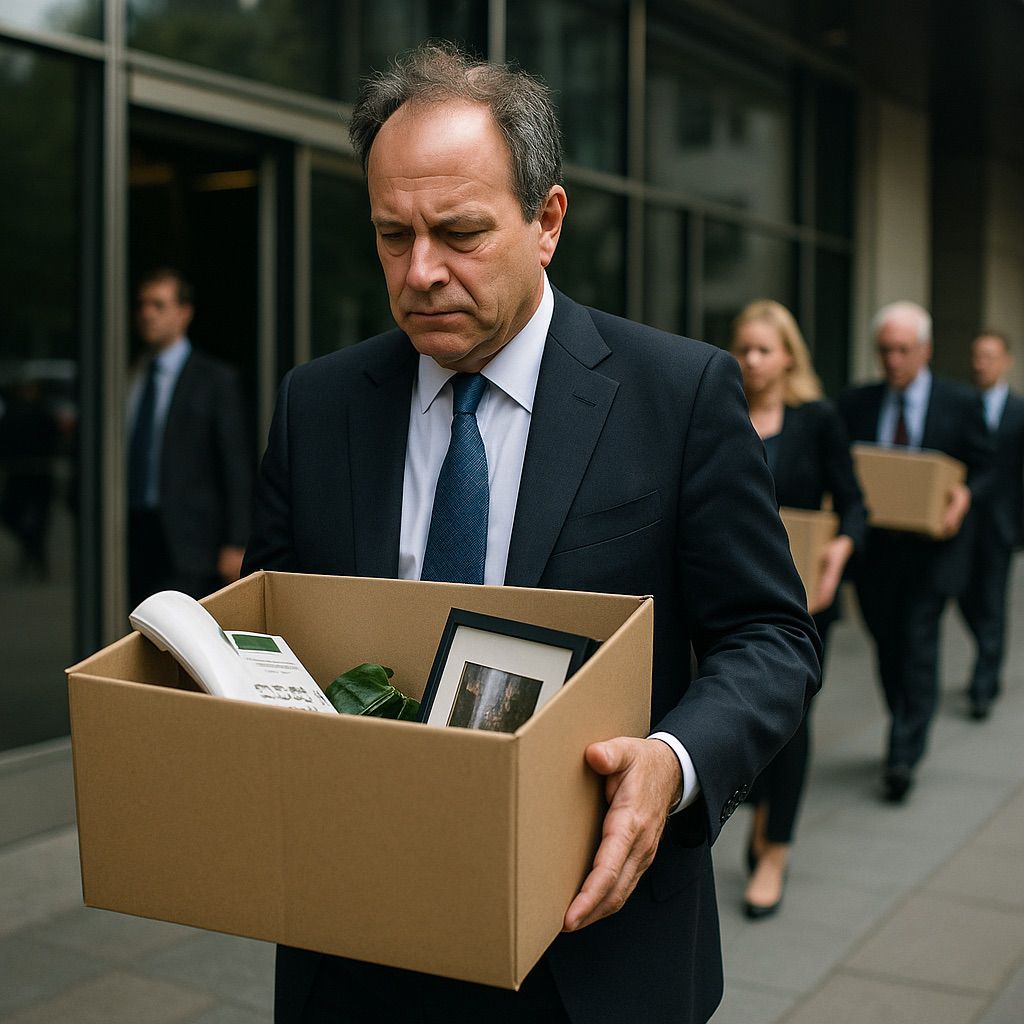
On September 15, 2008, the global economy was rocked by a single event that reverberated far beyond the trading floors of New York. Lehman Brothers, one of Wall Street’s oldest and most prestigious investment banks, filed for bankruptcy. With roots going back to 1850, Lehman had survived wars, depressions, and countless financial storms. But on that Monday morning, as its employees carried boxes of belongings out of its gleaming Manhattan headquarters, the unthinkable became real: a titan of finance had fallen. The collapse of Lehman Brothers was not just the largest bankruptcy in U.S. history at the time, but the moment the financial crisis of 2008 transformed from fear into full-blown panic. It was the day Wall Street shook, and the tremors reached every corner of the globe.
Lehman Brothers was not just another bank. It was an institution woven into the fabric of American capitalism. Founded by three German immigrant brothers in Montgomery, Alabama, the firm began as a cotton trading business before evolving into a powerhouse of finance. Over the decades, it grew into a symbol of Wall Street’s daring and ingenuity, underwriting bonds, guiding mergers, and helping corporations raise capital. By the 21st century, Lehman was a key player in the global financial system, employing over 25,000 people and managing hundreds of billions in assets. Its name carried weight, prestige, and the aura of invincibility. That aura vanished overnight.
The seeds of its downfall had been planted years earlier in the housing market. During the early 2000s, U.S. housing prices soared, fueled by easy credit and risky lending practices. Banks and financial institutions, hungry for profit, packaged these risky mortgages into complex financial instruments known as mortgage-backed securities and collateralized debt obligations. On paper, these products promised high returns with manageable risk. In reality, they were ticking time bombs. Lehman Brothers dove headfirst into this market, becoming one of its biggest players. For years, the strategy paid off, generating billions in profit. But when the housing bubble burst in 2007, the foundation crumbled. Mortgages defaulted, the value of mortgage-backed securities collapsed, and Lehman was left holding billions in toxic assets.
As the losses mounted, confidence evaporated. In the world of finance, confidence is everything. Once investors and partners no longer believe in your stability, the fall can be swift and brutal. By September 2008, Lehman was drowning in debt, its stock price in free fall, its credit rating downgraded to junk status. Efforts to find a buyer failed. Barclays and Bank of America, once seen as potential saviors, backed away. The U.S. government, which had bailed out Bear Stearns months earlier, decided not to rescue Lehman. Treasury Secretary Henry Paulson, Federal Reserve Chairman Ben Bernanke, and other officials faced an agonizing decision: draw the line at Lehman to avoid creating a culture of guaranteed bailouts, or step in to prevent chaos. They chose the former. The bankruptcy filing came on Monday morning, September 15. In a single stroke, Lehman’s 158-year history was over.
The shock was immediate and global. Stock markets plunged, credit markets froze, and panic spread. Lehman’s bankruptcy was more than a corporate failure; it was a rupture in the financial system itself. Banks stopped trusting one another, hoarding cash instead of lending. Investors scrambled for safety, pulling money out of risky assets. Ordinary people felt the aftershocks in ways that were devastating and personal. Retirement accounts shrank, home values plummeted, and millions lost jobs as the crisis rippled outward. Lehman Brothers’ collapse was not just a Wall Street story; it was a Main Street tragedy. It became the symbol of an era when greed, risk, and systemic fragility collided to nearly bring the global economy to its knees.
The images of Lehman employees leaving their offices with cardboard boxes became iconic — not just of the firm’s demise, but of the end of an era. For decades, Wall Street had seemed untouchable, a place where titans of finance operated above the fray. Suddenly, it was revealed to be fragile, human, and deeply flawed. Those images were seared into the public consciousness: young bankers and seasoned veterans alike, faces stunned and hollow, carrying away the remnants of their professional lives. It was a portrait of both personal loss and systemic failure.
The aftermath of Lehman’s collapse reshaped global finance in profound ways. Governments around the world scrambled to stabilize their economies. The U.S. Congress passed the Troubled Asset Relief Program (TARP), a $700 billion bailout to rescue the financial system. Central banks slashed interest rates to near zero and launched unprecedented stimulus measures. Regulators introduced new rules designed to prevent another Lehman, including higher capital requirements for banks, stress tests, and tighter oversight of derivatives. The term “too big to fail” entered the lexicon, reflecting the uneasy recognition that some institutions were so deeply entwined in the system that their failure could bring the entire economy down.
Yet the legacy of Lehman Brothers’ collapse is not just in policy and regulation. It is in the lessons it taught — and the questions it left unanswered. It showed how interconnected the world had become, how a single bankruptcy could trigger a global recession. It showed the danger of complexity, of financial products so intricate that even experts struggled to understand them. It showed the cost of hubris, of believing that markets could only rise and that risk could always be managed. Most of all, it showed the human toll of financial failure — not just on bankers, but on families, workers, and communities around the world.
Fifteen years later, the memory of Lehman still lingers. Economists debate whether letting it fail was the right decision. Some argue that rescuing Lehman would have prevented the worst of the crisis. Others contend that its failure was necessary to force reforms and accountability. What cannot be debated is the impact. The day Lehman Brothers collapsed was the day the illusion of stability shattered, the day the world was reminded that even the mightiest institutions can fall, and that the consequences of financial recklessness are borne not just by those at the top but by millions at the bottom.
On September 15, 2008, the world witnessed more than the end of a bank. It witnessed the end of an era — the era of unchecked financial exuberance, of blind faith in markets, of the belief that Wall Street was indestructible. The collapse of Lehman Brothers remains a defining moment of the 21st century, a reminder that trust, once lost, can unravel the strongest of institutions. It was, quite simply, the day Wall Street shook, and the echoes are still felt today.