
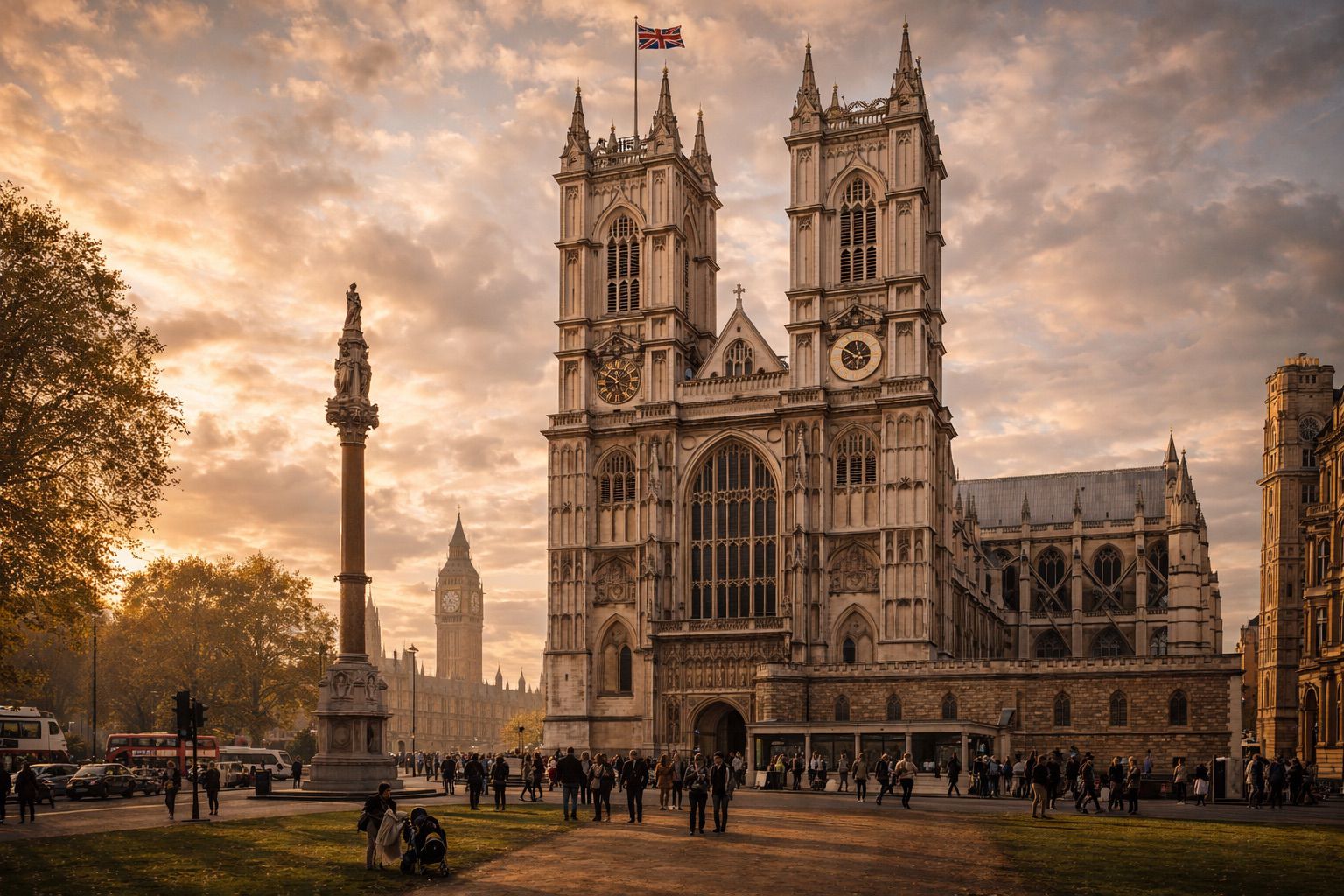
Westminster Abbey has stood for nearly one thousand years as one of England’s most iconic landmarks and revered institutions. The grand Gothic structure that dominates the London skyline today is the culmination of centuries of construction and renovation, but its origins date back to a humble Benedictine monastery founded in the 10th century by King Edward the Confessor.
At that time, England was still reeling from the devastating Viking invasions that had ravaged the country just decades earlier. The once-mighty Anglo-Saxon kingdoms were in disarray, and it was only under the wise leadership of Edgar the Peaceful that a semblance of stability began to return to the land. But as the new king sought to reassert his authority and rebuild his kingdom, he turned his attention to Westminster, where a small community of Benedictine monks had established themselves.
Edward’s vision for Westminster was ambitious: he wanted it to become a major center of learning and spirituality, one that would rival the great monasteries on the Continent. To this end, he invested heavily in the construction of new buildings, including a grand church dedicated to St Peter. The exact nature of this early abbey is lost to history, but it’s clear that Edward’s architects drew inspiration from the latest Romanesque styles then current across Europe.
As Westminster Abbey began to take shape, its founder was also planning his own funeral. In 1065, Edward fell ill and knew that his time on this earth was drawing to a close. He summoned his trusted advisor, Bishop Tovi of Wells, and instructed him to begin preparations for the consecration of the new church. The king’s intention was to have his final resting place within the very walls he had himself built.
Tragically, Edward’s plans were never realized. Just two years later, in 1067, he died peacefully at Westminster Palace, surrounded by his loyal subjects. His body was buried beneath the high altar of St Peter’s, but it wasn’t until a decade or so later that the church was finally consecrated.
This momentous occasion took place on December 28, 1065 – though some accounts suggest it may have been as early as 1059 – and marked the beginning of Westminster Abbey as we know it today. The ceremony would have involved many of London’s most prominent figures, including the city’s bishop, the mayor, and a host of leading clergy and nobles.
It was also around this time that Edward the Confessor began to take on his role as one of England’s greatest saints. Despite dying childless, his reputation for piety and wisdom had already earned him widespread veneration among the Anglo-Saxon faithful. Over the centuries, his cult would grow in popularity until he became one of the most revered figures in English hagiography.
As Westminster Abbey grew in stature, so did its role as a major pilgrimage site. Visitors from across Christendom flocked to pay their respects at Edward’s shrine, which soon became a center of devotion and learning in its own right. Monks copied manuscripts, scholars translated ancient texts, and artists created exquisite illuminated works.
However, it wasn’t until the 13th century that Westminster Abbey truly came into its own as one of Europe’s greatest architectural achievements. The master mason Henry of Reyns – who would later design the magnificent Canterbury Cathedral – was tasked with overseeing a major renovation of the abbey, which saw the introduction of pointed arches and ribbed vaulting.
This new style, pioneered by the French in the 12th century, revolutionized English architecture and paved the way for the iconic Gothic structures that would dominate the continent’s skyline. Under Henry’s guidance, Westminster Abbey was transformed from a relatively modest Romanesque church into a soaring, vaulted masterpiece that seemed to defy gravity itself.
The abbey continued to evolve over the centuries, with various monarchs commissioning new additions and extensions as their power and influence waxed and waned. During the 14th century, King Edward III ordered a major renovation of the nave, which was then rebuilt in the latest Perpendicular style. This phase saw the introduction of elaborate stone carvings and intricate tracery work that added an extra layer of visual drama to the abbey’s already breathtaking interior.
In 1534, Henry VIII famously broke with Rome and declared himself Supreme Head of the Church of England – a decision that would have far-reaching consequences for Westminster Abbey. The monastic community was dissolved, and many of its monks were forced into early retirement or ejected altogether. The abbey itself fell into disrepair, as did many other great institutions across the country.
Yet even in this darkest of periods, Westminster Abbey managed to cling on to some semblance of its former glory. During the Civil War, it served as a temporary residence for Charles I and his family when they fled from Whitehall Palace during the tumultuous 1640s. Later, under George III’s reign, the abbey was restored to its former splendor with the help of an infusion of royal funds.
As the centuries passed, Westminster Abbey continued to play host to some of England’s most significant state occasions and ceremonies – including coronations, state funerals, and even royal weddings. In 1902, it welcomed King Edward VII on the day of his coronation, as did a century later when Queen Elizabeth II took her oath upon ascending to the throne.
Today, Westminster Abbey remains an iconic symbol of England’s rich history and enduring spirit. Its stunning architecture – which blends elements from Romanesque to Perpendicular styles – seems almost otherworldly in its grandeur. Visitors flock to pay their respects at the graves of famous Britons like Charles Dickens, Florence Nightingale, and the Unknown Warrior.
Despite all it has endured over the centuries, Westminster Abbey remains an active working church, with a vibrant community of clergy, choir, and lay members who continue to uphold the abbey’s timeless traditions. As we move forward into an increasingly uncertain future, this majestic structure stands as a testament to human ingenuity, creativity, and our deep-seated desire for transcendence.
As Westminster Abbey stands tall today, its storied past is a testament to the enduring power of faith, artistry, and community. From its humble beginnings as a Benedictine monastery to its current status as one of England’s most revered institutions, the abbey has been shaped by the whims and fancies of monarchs, bishops, and commoners alike.
One of the most striking aspects of Westminster Abbey is its sheer scale. The grand Gothic structure that dominates the London skyline today is a marvel of engineering, with walls that rise high into the air like giant sentinels guarding the city’s secrets. But what lies behind this imposing façade? A glance at the abbey’s architectural history reveals a complex tapestry of styles and influences.
From its Romanesque beginnings to the soaring vaults of the Gothic era, Westminster Abbey has been transformed over the centuries by master masons, architects, and artisans who have left their indelible mark on the building. Each phase of construction has brought new ideas, techniques, and aesthetics to the table, creating a unique and captivating visual narrative that speaks to the abbey’s boundless creativity.
Take, for instance, the introduction of pointed arches and ribbed vaulting in the 13th century. This revolutionary innovation, pioneered by French master masons, allowed for the creation of vast, airy spaces that seemed to defy gravity itself. At Westminster Abbey, these innovative techniques were employed on a grand scale, producing some of the most breathtaking examples of Gothic architecture anywhere in Europe.
As one wanders through the abbey’s labyrinthine corridors and chapels, it becomes clear that each era has left its own distinct stamp on the building. From the delicate stone carvings of the 14th century to the intricate tracery work of the Perpendicular style, every phase of construction has contributed to a richly textured tapestry of artistry.
But what of the people who have lived and worshipped within these walls? The monks who tended the shrine of Edward the Confessor, the courtiers who attended coronations and state funerals, the countless pilgrims who came to pay their respects – each one has played a part in shaping the abbey’s storied past.
In 1534, Henry VIII’s break with Rome sent shockwaves throughout England, casting a long shadow over Westminster Abbey. The dissolution of the monastic community marked the end of an era, as monks were forced into early retirement or ejected altogether. Many great institutions across the country suffered similar fates, but Westminster Abbey managed to cling on to some semblance of its former glory.
During the Civil War, it served as a temporary residence for Charles I and his family when they fled from Whitehall Palace during the tumultuous 1640s. Later, under George III’s reign, the abbey was restored to its former splendor with the help of an infusion of royal funds.
As the centuries passed, Westminster Abbey continued to play host to some of England’s most significant state occasions and ceremonies – including coronations, state funerals, and even royal weddings. In 1902, it welcomed King Edward VII on the day of his coronation, as did a century later when Queen Elizabeth II took her oath upon ascending to the throne.
Today, Westminster Abbey remains an iconic symbol of England’s rich history and enduring spirit. Its stunning architecture – which blends elements from Romanesque to Perpendicular styles – seems almost otherworldly in its grandeur. Visitors flock to pay their respects at the graves of famous Britons like Charles Dickens, Florence Nightingale, and the Unknown Warrior.
But what about those who have not been immortalized by stone or marble? The countless ordinary people whose lives have intersected with the abbey’s over the centuries – from the humble monks who tended its shrines to the scores of pilgrims who came seeking solace and guidance. Their stories are woven into the very fabric of the building, creating a rich tapestry of human experience that speaks to the enduring power of faith, community, and connection.
As we move forward into an increasingly uncertain future, Westminster Abbey stands as a testament to human ingenuity, creativity, and our deep-seated desire for transcendence. Its majestic structure seems to defy time itself, speaking to a world beyond the ephemeral concerns of politics, fashion, or even architecture.
In its stately grandeur, the abbey offers us a glimpse into the past – and a vision of what it means to be human in all our complexity and beauty. As we navigate the complexities of modern life, we might do well to remember that Westminster Abbey is not just a relic of history; it’s a living, breathing community that continues to inspire, comfort, and challenge us all.
The abbey’s story extends far beyond its grand façade or ornate decorations – though these are certainly breathtaking. It lies in the countless lives touched by the building over the centuries: the monks who worshipped here, the kings and queens who crowned themselves within its walls, the ordinary people whose hearts were stirred by its beauty.
In this sense, Westminster Abbey is not just a place of worship or historical significance; it’s a living, breathing embodiment of human spirit. Its legacy will endure long after we’ve forgotten the dates, events, and names that make up its storied past – for in its grandeur, we find our own reflection: a reminder of what we can achieve when we strive to create something greater than ourselves.
As we step out into the bustling streets of modern London, it’s hard not to feel a sense of awe as we gaze upon Westminster Abbey’s soaring spires. This iconic landmark stands as a beacon of hope and resilience in an increasingly uncertain world – a testament to human creativity, perseverance, and our enduring capacity for beauty.
In its majestic grandeur, the abbey speaks to something deep within us: a longing for transcendence, connection, and meaning. As we grapple with the complexities of modern life, it’s essential that we remember the power of institutions like Westminster Abbey – those timeless symbols of tradition, community, and faith that continue to inspire and sustain us.
The abbey may have endured countless challenges over the centuries, but its core remains unchanged: a living, breathing expression of human aspiration, creativity, and our boundless capacity for beauty. As we move forward into an uncertain future, it’s more vital than ever to cherish this timeless treasure – not just as a piece of history, but as a reflection of what it means to be human in all our complexity, beauty, and fragility.
In the stillness of its chapels, the abbey whispers secrets of the past to those willing to listen. It tells the story of kings and queens, saints and sinners – each one leaving an indelible mark on the building’s storied history. Yet for all its grandeur, Westminster Abbey remains a place of quiet contemplation: a sanctuary from the trials and tribulations of modern life.
As we navigate the complexities of our increasingly globalized world, it’s essential that we find time to pause, reflect, and appreciate the timeless treasures that surround us – institutions like Westminster Abbey that speak to something fundamental within our shared human experience.