
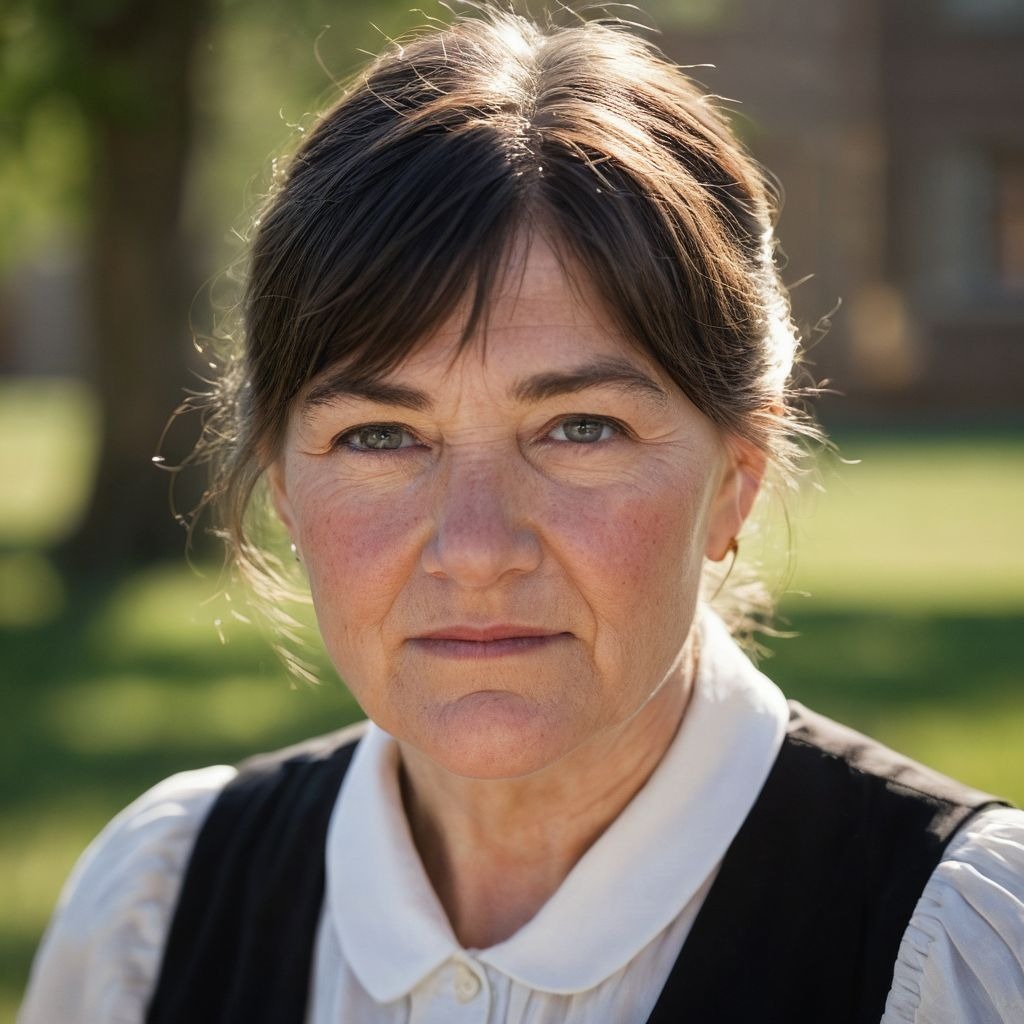
Willa Cather’s writing often felt like a mystery to me, even as I devoured her novels and short stories in college. Her style was so distinct, so precise – every word seemed weighed with significance. But the more I read, the more I realized that I couldn’t quite pinpoint what drew me to her work. Was it the sweeping landscapes of Nebraska? The quiet, unassuming strength of her female characters? Or something else entirely?
I think part of my fascination stems from the way Cather’s writing often walked a fine line between celebration and critique. She was an immigrant herself, born in Virginia but raised in Nebraska by German-American parents – and yet her fiction frequently explored themes of American identity, land ownership, and cultural dislocation. Her characters are often outsiders, caught between different worlds: Russian immigrants in _My Ántonia_, Jewish intellectuals in _The Professor’s House_. And yet Cather herself was not an outsider; she was part of the American literary establishment, a prominent figure in her time.
This paradox – or maybe it’s just my own bias? – has always made me uncomfortable. I wonder if Cather ever felt like an outsider too, despite her success and recognition. Or did she internalize the privileges that came with being a white woman in America during the early 20th century? Her writing doesn’t give us clear answers, which is part of what makes it so compelling.
As I reread _My Ántonia_ recently, I found myself caught up in the story of Ántonia herself – strong-willed and fiercely independent, yet also vulnerable to the whims of men around her. Cather’s portrayal of Ántonia’s struggles struck a chord with me; as a young woman navigating my own uncertain path after college, I felt a kinship with Ántonia’s ambivalence towards the world around her.
But what really stuck with me was the way Cather wrote about place – the way she captured the dusty, wind-swept vastness of the Nebraska plains. It’s not just that she described these landscapes in vivid detail; it’s that she seemed to understand their emotional significance too. For Ántonia and her community, the land is both a source of comfort and a reminder of their displacement – a constant presence that cannot be escaped.
I think this is what gets at the heart of my own connection to Cather’s writing: the way she captures the tension between belonging and dislocation, identity and place. As someone who’s always felt like an outsider within my own community (I’m a city kid with rural roots), I find myself drawn to stories that explore these complexities.
Of course, this is all just me projecting – or maybe it’s not? Cather’s writing does seem to speak directly to the human experience of feeling caught between different worlds. And yet… sometimes I wonder if my own experiences are too personal to be relevant here. Am I reading too much into her work, imposing my own story onto hers?
As I close this notebook (and Willa Cather’s novels), I’m still left with questions. What does it mean to belong in a place that doesn’t feel like home? How do we navigate the tensions between our inner and outer selves – or even between different parts of ourselves? These are mysteries that Cather’s writing only hints at, but for me, they’re what keep me coming back to her pages again and again.
As I sat in my small apartment, surrounded by dusty books and scattered papers, I couldn’t help but feel a sense of kinship with Willa Cather’s Ántonia. Like me, Ántonia is caught between two worlds: the Old Country and America, tradition and innovation. And yet, as much as I identify with her struggles, I’m also aware that our experiences are vastly different. Ántonia faces poverty and hardship, while I’ve had the privilege of attending college and living in relative comfort.
But it’s this very tension between my own life and Cather’s writing that fascinates me. How does someone like Cather, who has it all – success, recognition, a stable home – still manage to write about characters who are struggling to find their place? And what does it say about her own experiences that she can convey this sense of dislocation so vividly?
I think back to my own college years, when I first encountered Cather’s work. I was drawn to her stories because they seemed to capture the essence of my own feelings – a sense of restlessness, of uncertainty, of not quite belonging anywhere. But at the time, I didn’t realize that this sense of dislocation is not unique to me or Ántonia; it’s a universal human experience.
Cather’s writing reminds me that we’re all outsiders in some way, whether it’s by virtue of our heritage, our socioeconomic status, or simply our individual perspectives. And yet, despite these differences, we all share a deep connection to the world around us – a desire to belong, to find meaning, and to make sense of our place within it.
As I close this reflection, I’m left with more questions than answers. What is it about Cather’s writing that resonates so deeply with me? Is it her ability to capture the complexities of human experience, or is it something more personal – a reflection of my own struggles and insecurities? And what does it mean to find connection in someone else’s work, when our experiences are so different?
I don’t have any clear answers to these questions. All I know is that Cather’s writing continues to draw me in, like a magnet, with its nuanced portrayal of human struggle and resilience. And as I continue to read her words, I’m reminded that the search for meaning and belonging is a lifelong journey – one that requires patience, empathy, and an openness to the complexities of the human experience.
As I sit here, surrounded by my own thoughts and feelings, I’m struck by the parallels between Cather’s writing and my own experiences as a young woman navigating her place in the world. Like Ántonia, I’ve felt caught between different worlds – my urban upbringing versus my rural roots, my desire for independence versus the expectations of those around me.
But it’s not just about individual experiences; it’s about the way Cather’s writing taps into something deeper and more universal. The sense of dislocation, of being a stranger in one’s own land, is a common thread that runs through her characters’ stories. And yet, as I read between the lines, I wonder if this isn’t also a reflection of Cather’s own experiences – not just as an immigrant herself, but as a woman in a patriarchal society.
There’s something about Cather’s portrayal of female characters that feels both empowering and heartbreaking to me. They’re strong-willed and independent, yet vulnerable to the whims of those around them. It’s a paradox that I recognize all too well – one that speaks to the complexities of being a woman in today’s world.
As I think back on my own college years, I realize how much Cather’s writing spoke to me then. It was a time of great change and upheaval for me, as I navigated my identity and sense of purpose. And Cather’s stories offered a kind of solace – a reminder that I wasn’t alone in my feelings of restlessness and uncertainty.
But now, as I look back on those years with a bit more distance, I see how much Cather’s writing was also a mirror to my own privilege. Her stories about poverty and hardship felt like a slap in the face, a wake-up call to the fact that not everyone has had it easy. And yet, at the same time, they spoke to something deeper within me – a sense of empathy and understanding that I knew I couldn’t fully grasp.
This is where Cather’s writing gets complicated for me – where the lines between celebration and critique start to blur. Is she romanticizing poverty and hardship, or is she simply acknowledging their existence? And what does it say about her own privilege as a white woman in America during the early 20th century?
I don’t have any easy answers to these questions. All I know is that Cather’s writing continues to fascinate me – to challenge me, to make me think and feel in ways that few other writers do. And it’s this ongoing conversation with her work that keeps drawing me back, like a magnet, again and again.
As I delve deeper into the complexities of Cather’s writing, I’m struck by the way she seems to inhabit multiple worlds at once. Her characters are often caught between different cultures, languages, and landscapes, and yet they somehow manage to navigate these contradictions with a sense of dignity and resilience. It’s as if Cather herself is performing this balancing act, juggling her own identity as an immigrant daughter with the privileges and expectations that come with being a white woman in America.
I think about how Cather’s writing often blurs the lines between fact and fiction, between personal experience and historical record. Her stories are infused with a deep sense of research and attention to detail, but they’re also deeply personal – infused with her own emotions, memories, and experiences. It’s as if she’s trying to capture the essence of the human condition, rather than simply recounting a series of events or facts.
This blurring of boundaries is something that I find myself drawn to, perhaps because it speaks to my own struggles with identity and belonging. As someone who’s grown up between different worlds – urban and rural, city kid and country roots – I’ve often felt like an outsider in both places. And yet, when I read Cather’s writing, I feel a sense of kinship with her characters’ experiences, even though our contexts are vastly different.
But what really fascinates me is the way Cather’s writing seems to speak directly to the present moment – even as it was written over a century ago. Her stories about immigration, displacement, and cultural dislocation feel just as relevant today as they did when she first wrote them. And yet, at the same time, there’s something distinctly anachronistic about her prose – a sense of old-fashioned elegance that feels both beautiful and alien.
I think about how Cather’s writing often relies on the quiet, understated strength of her female characters. These women are not superheroes or trailblazers; they’re ordinary people living extraordinary lives in the face of poverty, hardship, and cultural dislocation. And yet, despite their ordinariness, they manage to embody a deep sense of resilience and determination – qualities that I find both inspiring and humbling.
As I close this reflection on Cather’s writing, I’m left with more questions than answers. What is it about her work that resonates so deeply with me? Is it the way she captures the complexities of human experience, or is it something more personal – a reflection of my own struggles and insecurities? And what does it mean to find connection in someone else’s writing, when our experiences are so different?
For now, I don’t have any clear answers. All I know is that Cather’s writing continues to fascinate me – to challenge me, to make me think and feel in ways that few other writers do. And as I continue to read her words, I’m reminded that the search for meaning and belonging is a lifelong journey – one that requires patience, empathy, and an openness to the complexities of the human experience.
As I sit here, surrounded by the echoes of Cather’s writing, I’m struck by the way her stories have become a part of me – a reflection of my own experiences, struggles, and insecurities. But what I find most intriguing is how Cather’s writing seems to capture the essence of the human condition in a way that feels both timeless and timely.
I think about how her characters often find themselves at crossroads, torn between different worlds and identities. Ántonia, for example, is caught between her Old Country roots and the American landscape that has become her new home. And yet, despite these contradictions, she manages to forge a sense of belonging – not just in the physical world around her, but also within herself.
This idea of finding one’s place in the world resonates deeply with me, perhaps because I’ve always felt like an outsider in both my urban and rural worlds. As someone who’s grown up between different cultures and landscapes, I’ve often struggled to define myself – to pinpoint where I belong, or what makes me feel at home.
Cather’s writing has given me a language for these feelings, a way to articulate the complexities of human experience that have always felt so intangible to me. And yet, as I delve deeper into her work, I’m also aware of the limitations of my own perspective – the ways in which my own experiences and biases shape how I read her stories.
It’s this tension between personal connection and critical distance that makes Cather’s writing so fascinating for me. On the one hand, her stories speak directly to my own emotions and experiences; on the other hand, they also challenge me to think beyond myself – to consider the historical, cultural, and social contexts that shape our lives.
As I close this reflection, I’m left with a sense of wonder and awe at Cather’s writing. It’s as if she’s given me a key to unlocking the complexities of human experience – a way to navigate the contradictions and paradoxes that make us who we are. And yet, even as I feel grateful for her words, I’m also aware of the responsibility that comes with reading – the need to consider multiple perspectives, to question my own assumptions, and to stay open to the possibilities of life.
In many ways, Cather’s writing has become a mirror to my own soul – a reflection of my hopes, fears, and insecurities. And yet, even as I gaze into this mirror, I’m also aware that it’s not just about me – that Cather’s stories speak to something far more universal than my own experiences or biases.
As I sit here, surrounded by the silence of my apartment, I’m left with a sense of awe and gratitude for Willa Cather’s writing. It’s as if she’s given me a gift – not just a collection of words on paper, but a way to see the world anew, to experience life in all its complexity and beauty.