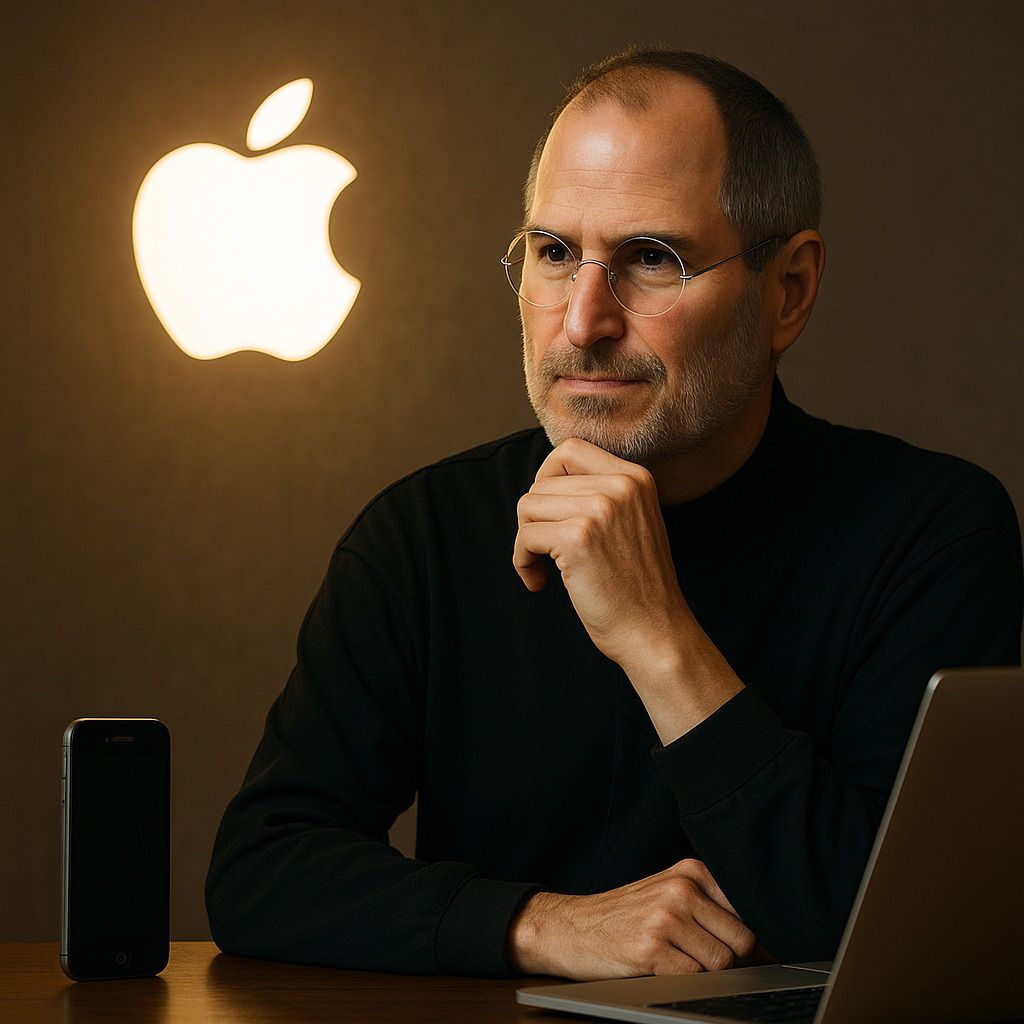
On October 5, 2011, the world seemed to pause. Screens dimmed, voices hushed, and millions of people across the globe sat in stunned silence as the news broke: Steve Jobs, the co-founder of Apple, the visionary behind the iPhone, iPod, iMac, and iPad, had passed away at the age of 56. His death was not just the loss of a man—it was the closing of a chapter in the story of modern innovation. For decades, Jobs had stood at the intersection of art and technology, creating tools that didn’t just work but felt magical. When he was gone, it was as though the magician had left the stage, leaving the world staring at the curtain, wondering how much of the wonder could continue without him.
Steve Jobs’ story has been told so often it feels mythical, but what makes it remarkable is not just what he achieved, but how deeply his work touched ordinary lives. Born in San Francisco in 1955 and adopted shortly after birth, Jobs was not destined for wealth or power. He was a restless soul, dropping out of Reed College after only one semester. Yet, even as he sat in calligraphy classes or crashed on friends’ floors, Jobs carried with him a vision that education couldn’t contain: the belief that technology could be beautiful, intuitive, and deeply personal.
In 1976, Jobs, alongside Steve Wozniak, built Apple Computer in his parents’ garage. The Apple II and Macintosh were not just machines—they were statements. Jobs insisted that design mattered as much as function. He envisioned a future where computers weren’t the cold, intimidating domain of experts but friendly companions that anyone could use. He was ridiculed for it at first. He was called eccentric, demanding, even impossible. Yet, slowly, the world began to realize that Jobs wasn’t just building products—he was reshaping how humans interacted with technology.
His path wasn’t linear. In 1985, Jobs was ousted from Apple, the very company he had founded. Lesser men might have faded into obscurity. Jobs instead founded NeXT and purchased Pixar, a then-struggling animation studio. Pixar would revolutionize storytelling with films like Toy Story, blending technology with heart in a way only Jobs could envision. By the time Apple bought NeXT in 1997, bringing Jobs back as CEO, the prodigal founder returned with scars, wisdom, and a determination that would transform Apple into the most valuable company in the world.
The products that followed weren’t just successful—they were cultural phenomena. The iMac reintroduced design elegance. The iPod put “a thousand songs in your pocket” and changed music forever. The iPhone redefined communication, collapsing phone, internet, and camera into a single sleek device. The iPad challenged our notions of what computers could be. Jobs’ gift wasn’t just creating technology—it was anticipating what people wanted before they even knew it themselves. He didn’t ask consumers what they needed; he showed them what they couldn’t live without.
But what made Jobs truly iconic wasn’t just the gadgets—it was his philosophy. He believed technology was about more than circuits and code. It was about humanity. His obsession with simplicity, elegance, and user experience wasn’t a fetish—it was a conviction that technology should feel like an extension of our own creativity. He once said, “Technology alone is not enough. It’s technology married with liberal arts, married with the humanities, that yields us the results that make our hearts sing.”
Jobs was far from perfect. He was known for being mercurial, exacting, sometimes cruel in his pursuit of excellence. Colleagues described the infamous “reality distortion field” that bent those around him to his vision, for better or worse. Yet, even his flaws became part of his legend. Jobs demanded brilliance not because he wanted to be feared but because he believed the world deserved nothing less. He was not satisfied with “good enough.” For him, products had to be revolutionary, transformative, unforgettable.
When Jobs succumbed to pancreatic cancer, the grief was global. Outside Apple stores, people left flowers, Post-it notes, and half-bitten apples in tribute. Leaders around the world—from Barack Obama to Bill Gates—acknowledged that Jobs had changed not just technology, but culture. His death was mourned not like that of a CEO but like that of an artist, a cultural icon whose canvas was the future itself.
Yet, perhaps the most humanizing detail is this: at the end of his life, Jobs reflected not on his products but on mortality. He reminded us that even visionaries cannot outsmart death. In his 2005 Stanford commencement address, he said, “Remembering that you are going to die is the best way I know to avoid the trap of thinking you have something to lose. You are already naked. There is no reason not to follow your heart.” Those words now echo louder than ever, a message from a man who knew his time was limited but refused to waste it.
Jobs’ legacy lives on every time someone slides their finger across a screen, listens to music through white earbuds, or FaceTimes a loved one oceans away. His DNA is embedded in the devices that define our era. More importantly, his spirit—the relentless push to innovate, to dream, to marry beauty with function—continues to inspire creators, designers, and entrepreneurs around the globe.
October 5, 2011, was the day the world lost Steve Jobs. But it was also the day we realized how much of him remains with us. Every glowing screen, every seamless design, every device that feels like magic is a whisper of his vision. Jobs didn’t just build Apple; he built a world where technology is no longer cold, but human. In death, as in life, he reminds us to stay hungry, stay foolish, and never stop pushing the world forward.