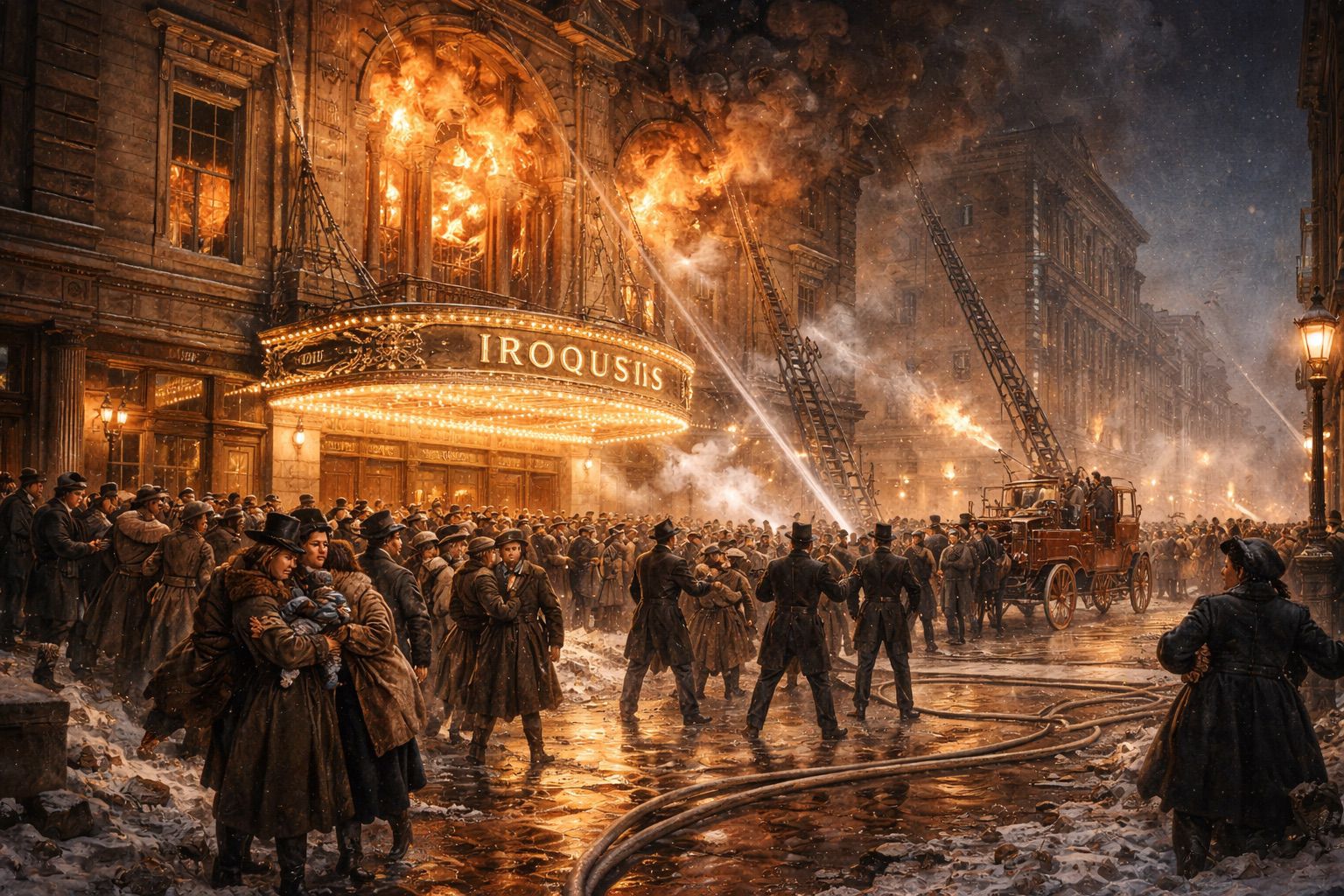
On December 30, 1903, a devastating fire broke out at the Iroquois Theatre in downtown Chicago, resulting in one of the deadliest disasters in American history. The tragedy would go on to claim over 600 lives and leave hundreds more injured, forever changing the city’s relationship with its entertainment venues.
The Iroquois Theatre was a popular destination for theatergoers and music lovers alike, hosting everything from plays and musicals to concerts and vaudeville acts. Opened in 1903 by the renowned theatrical manager John Willys, the theater quickly became one of the most sought-after destinations in Chicago’s thriving cultural scene. With its grand architecture, ornate decorations, and state-of-the-art amenities, the Iroquois was designed to be a premier entertainment venue, capable of hosting large crowds and providing an unparalleled experience for audiences.
However, on that fateful evening, disaster struck when a performance of the musical comedy “Mr. Bluebeard Jr.” was underway. The play’s director, Thomas E. West, had chosen to perform in front of a packed house without conducting any fire safety checks or adhering to proper exit procedures. This negligence would ultimately prove fatal.
At around 9:00 PM, just as the show was reaching its climax, sparks from the stage caught on a drop curtain made of grease-coated cotton, igniting the surrounding decorations and quickly spreading through the theater. Panic erupted among the audience as flames engulfed the building, trapping patrons beneath the balcony. Fire alarms were not installed in the theater, and it would take several minutes for firefighters to arrive at the scene.
The inferno raged on, fueled by a combination of flammable materials, poor fire safety measures, and inadequate emergency response procedures. Eyewitnesses reported hearing screams from within the building as terrified patrons desperately attempted to escape through crowded corridors or exit doors that were either locked or blocked by debris. Some managed to flee via side exits, but for most, it was a matter of waiting until rescuers arrived.
In the aftermath of the tragedy, investigators revealed a litany of safety violations and human error had contributed to the disaster. The drop curtain used in the theater’s interior design was highly flammable, despite being made of what should have been fire-resistant material. Moreover, West’s decision to perform without conducting regular fire drills or maintaining proper exit procedures led directly to the loss of hundreds of lives.
Furthermore, inadequate emergency response systems and lack of communication among city authorities exacerbated the situation. The theater lacked a fire alarm system, relying on the manual operation of hand-cranked pumps instead. When local responders finally arrived, they found themselves struggling to access the building due to heavy ice on the pavement, further delaying their efforts.
The sheer scale of destruction was almost unimaginable. As news spread, shocked citizens and first responders rushed to the scene to offer what aid they could. Volunteer fire crews, doctors, and nurses joined the official response effort, but it soon became clear that the damage was far more extensive than initially thought. Bodies were strewn throughout the lobby, stairways, and corridors, with many trapped beneath rubble or entangled in debris.
Rescue efforts continued well into the night as teams scoured the wreckage for survivors. Unfortunately, most of those who perished succumbed to their injuries before aid could arrive. Medical personnel worked tirelessly to treat the wounded, but even with all their efforts, hundreds would ultimately lose their lives due to severe burns and smoke inhalation.
The Iroquois Theatre disaster sent shockwaves across America, prompting long-overdue discussions about fire safety regulations in entertainment venues. It was a defining moment in the history of Chicago’s cultural landscape, leading directly to significant changes in building codes and emergency response procedures throughout the country.
In its aftermath, authorities were forced to confront their own role in enabling such tragedies through lax regulation and inadequate support for local businesses. Illinois Governor Richard Oglesby appointed a commission to investigate the disaster, led by prominent businessman and civic leader George M. Reynolds. The findings of this committee served as a rallying cry for advocates pushing for improved fire safety standards nationwide.
In 1905, the State of Illinois implemented strict new regulations governing building codes and emergency response systems in public venues. For theaters specifically, the rules mandated that performance spaces be equipped with adequate exit routes and escape ladders, while also enforcing regular fire drills and inspections to identify potential hazards before they became fatal.
As survivors and families affected by the tragedy reflected on their experiences, a sense of collective outrage emerged. While some sought solace in the subsequent reforms, others pressed for accountability from those responsible. As public pressure mounted, prominent figures like Mayor George G. Eggleston and civic leaders joined forces to ensure that lessons learned at the Iroquois would not be forgotten.
As America’s entertainment landscape continued to evolve, cities across the nation came together to honor the victims of this tragedy by implementing stricter building codes and emergency response protocols in theaters, movie palaces, and concert halls. While some might argue that it took a disaster on such an unprecedented scale for meaningful change to occur, it is undeniable that the sacrifices made at the Iroquois Theatre paved the way for safer, more responsible entertainment venues throughout the United States.
In the end, while the fire at the Iroquois Theatre left an indelible scar on Chicago’s cultural landscape, its legacy extends far beyond the Windy City. As a nation, America emerged from this tragedy with a newfound sense of awareness and urgency about the importance of public safety in entertainment spaces.
As the days passed, the sheer scale of the disaster became increasingly clear. The Iroquois Theatre was a hub of activity as rescue efforts continued, with volunteer fire crews, doctors, and nurses working tirelessly to aid those affected by the tragedy. Despite their best efforts, it soon became apparent that many of those who had perished would never be identified or accounted for.
The city’s newspapers reported on the disaster in grim detail, highlighting the tragic circumstances surrounding the loss of so many lives. The Chicago Tribune, one of the city’s leading papers, ran a front-page story with the headline “Fire at Iroquois Theatre Claims Hundreds of Lives” and went on to describe the chaos that had ensued during the disaster.
As news of the tragedy spread, shockwaves rippled across the nation. Cities from New York to San Francisco sent condolences to the city of Chicago, offering support and assistance in any way they could. The mayor of New York City, George McClellan, wrote a heartfelt letter to Mayor Eggleston expressing his sympathy for the victims and their families.
Meanwhile, officials in Illinois were quick to respond to the crisis, establishing emergency aid centers and setting up makeshift morgues to handle the sheer volume of dead. Illinois Governor Richard Oglesby was among those who visited the site of the disaster, surveying the damage and speaking with survivors.
The Iroquois Theatre disaster sent shockwaves across America’s entertainment industry, prompting an unprecedented level of introspection and self-examination. Theatrical managers and owners from coast to coast began reevaluating their fire safety procedures, inspecting their theaters for potential hazards, and implementing new emergency protocols.
In the aftermath of the tragedy, a sense of national outrage emerged as people demanded answers and accountability. A commission was established by Governor Oglesby to investigate the disaster and identify its causes. Led by George M. Reynolds, a prominent businessman and civic leader, this committee spent months interviewing survivors, reviewing evidence, and scrutinizing the actions of those responsible.
The findings of the Reynolds Commission were damning. Its report highlighted a litany of safety violations and human error that had contributed to the disaster. The commission concluded that Thomas E. West’s decision to perform without conducting regular fire drills or maintaining proper exit procedures was directly responsible for the loss of hundreds of lives.
In response to these revelations, Illinois lawmakers moved swiftly to enact new regulations governing building codes and emergency response systems in public venues. The State of Illinois passed a landmark piece of legislation in 1905, which mandated that all public theaters be equipped with adequate exit routes and escape ladders. Regular fire drills and inspections were also made compulsory, along with the implementation of fire alarm systems.
As the reforms took effect, cities across America began to adopt similar measures. By 1907, every major city had implemented stricter building codes and emergency response protocols in their public venues. This new wave of regulation marked a significant turning point in the history of American entertainment, paving the way for safer, more responsible venues that would become synonymous with the golden age of Hollywood.
The impact of the Iroquois Theatre disaster was not limited to the immediate aftermath. As time passed, its legacy continued to shape the nation’s approach to public safety and entertainment regulations. Cities like New York, Los Angeles, and Chicago all took note of the lessons learned at the Iroquois, implementing new measures to prevent similar tragedies from occurring.
As we reflect on this pivotal moment in American history, it becomes clear that the Iroquois Theatre disaster was more than just a catastrophic event – it was a turning point. It forced America’s entertainment industry to confront its own vulnerabilities and limitations, leading to a sea change in the way public venues were designed, operated, and regulated.
Today, as we look back on this dark chapter in American history, it is hard not to feel a sense of awe at the sheer scale of human error that led to such unimaginable tragedy. Yet, even amidst the devastation and heartbreak, there was also something remarkable – a testament to the resilience and determination of those who lost loved ones.
In the end, while the fire at the Iroquois Theatre left an indelible scar on Chicago’s cultural landscape, its legacy extends far beyond the Windy City. As America emerged from this tragedy with a newfound sense of awareness and urgency about public safety in entertainment spaces, it set in motion a chain reaction that would change the face of American entertainment forever.
The loss of so many lives at the Iroquois Theatre served as a poignant reminder of the importance of responsible stewardship in the entertainment industry. As America’s cultural landscape continued to evolve, cities across the nation came together to honor the victims by implementing stricter building codes and emergency response protocols. This collective effort paved the way for safer, more responsible venues that would become synonymous with the golden age of Hollywood.
As we remember the Iroquois Theatre disaster today, it is essential to recall the sacrifices made by those who lost their lives in this tragic event. Their memory serves as a reminder that public safety and responsibility must always be at the forefront of any industry, especially one as vulnerable to human error as entertainment. By examining this pivotal moment in American history, we can gain valuable insights into the importance of accountability, regulation, and responsible stewardship.
The city of Chicago would never forget the lessons learned from the Iroquois Theatre disaster. In 1911, a new theater was built on the site of the original building, designed with safety in mind and equipped with state-of-the-art fire suppression systems and emergency response protocols. This new venue became a symbol of hope and renewal for a city still grappling with the aftermath of tragedy.
In the years that followed, Chicago would continue to play host to some of America’s most iconic entertainment venues – from the Kit Kat Club to the famous Paramount Theatre. Each one of these institutions stood as a testament to the enduring legacy of the Iroquois Theatre disaster, a reminder that even in the face of unimaginable tragedy, it is possible to emerge stronger and more resilient than before.
As America’s entertainment landscape continued to evolve, cities across the nation came together to honor the victims by implementing stricter building codes and emergency response protocols. This collective effort paved the way for safer, more responsible venues that would become synonymous with the golden age of Hollywood.
The loss of so many lives at the Iroquois Theatre serves as a poignant reminder of the importance of responsible stewardship in any industry. As America continues to evolve and grow, it is essential to remember the sacrifices made by those who lost their lives in this tragic event. Their memory will continue to inspire future generations to prioritize public safety, accountability, and responsible leadership.
The Iroquois Theatre disaster left an indelible mark on American history, forcing a nation to confront its own vulnerabilities and limitations. Today, as we reflect on this pivotal moment, it is clear that the lessons learned from this tragedy will continue to shape America’s approach to public safety and entertainment regulations for generations to come.
In 1929, the State of Illinois passed an amendment to the original legislation, further strengthening building codes and emergency response protocols in public venues. This move marked a significant milestone in the ongoing effort to prevent similar tragedies from occurring.
As we remember the Iroquois Theatre disaster today, it is essential to recall the sacrifices made by those who lost their lives in this tragic event. Their memory serves as a reminder that public safety and responsibility must always be at the forefront of any industry, especially one as vulnerable to human error as entertainment.
The city of Chicago would never forget the lessons learned from the Iroquois Theatre disaster. In 1911, a new theater was built on the site of the original building, designed with safety in mind and equipped with state-of-the-art fire suppression systems and emergency response protocols. This new venue became a symbol of hope and renewal for a city still grappling with the aftermath of tragedy.
In the years that followed, Chicago would continue to play host to some of America’s most iconic entertainment venues – from the Kit Kat Club to the famous Paramount Theatre. Each one of these institutions stood as a testament to the enduring legacy of the Iroquois Theatre disaster, a reminder that even in the face of unimaginable tragedy, it is possible to emerge stronger and more resilient than before.
The impact of the Iroquois Theatre disaster extends far beyond its immediate aftermath, shaping the nation’s approach to public safety and entertainment regulations for generations to come. Today, as we reflect on this pivotal moment in American history, it becomes clear that the lessons learned from this tragedy will continue to inspire future generations to prioritize responsible stewardship and accountability.
As America’s entertainment landscape continues to evolve, cities across the nation remain committed to honoring the victims of the Iroquois Theatre disaster by maintaining stricter building codes and emergency response protocols. This collective effort ensures that future generations will never forget the importance of public safety in any industry, especially one as vulnerable to human error as entertainment.
In conclusion, the Iroquois Theatre disaster marked a turning point in American history – a moment when the nation was forced to confront its own vulnerabilities and limitations. As we remember this tragic event today, it is essential to recall the sacrifices made by those who lost their lives in this devastating disaster. Their memory serves as a reminder that public safety and responsibility must always be at the forefront of any industry, especially one as vulnerable to human error as entertainment.
The city of Chicago’s response to the Iroquois Theatre disaster stands as a testament to the resilience and determination of its people. In the aftermath of tragedy, the city came together to rebuild and rebirth itself – emerging stronger and more resilient than ever before. Today, as we look back on this pivotal moment in American history, it is clear that the lessons learned from this tragedy will continue to shape America’s approach to public safety and entertainment regulations for generations to come.
As we close this chapter in American history, we honor the memory of those who lost their lives at the Iroquois Theatre. Their sacrifice serves as a poignant reminder of the importance of responsible stewardship, accountability, and public safety – values that will continue to inspire future generations to prioritize these essential principles.