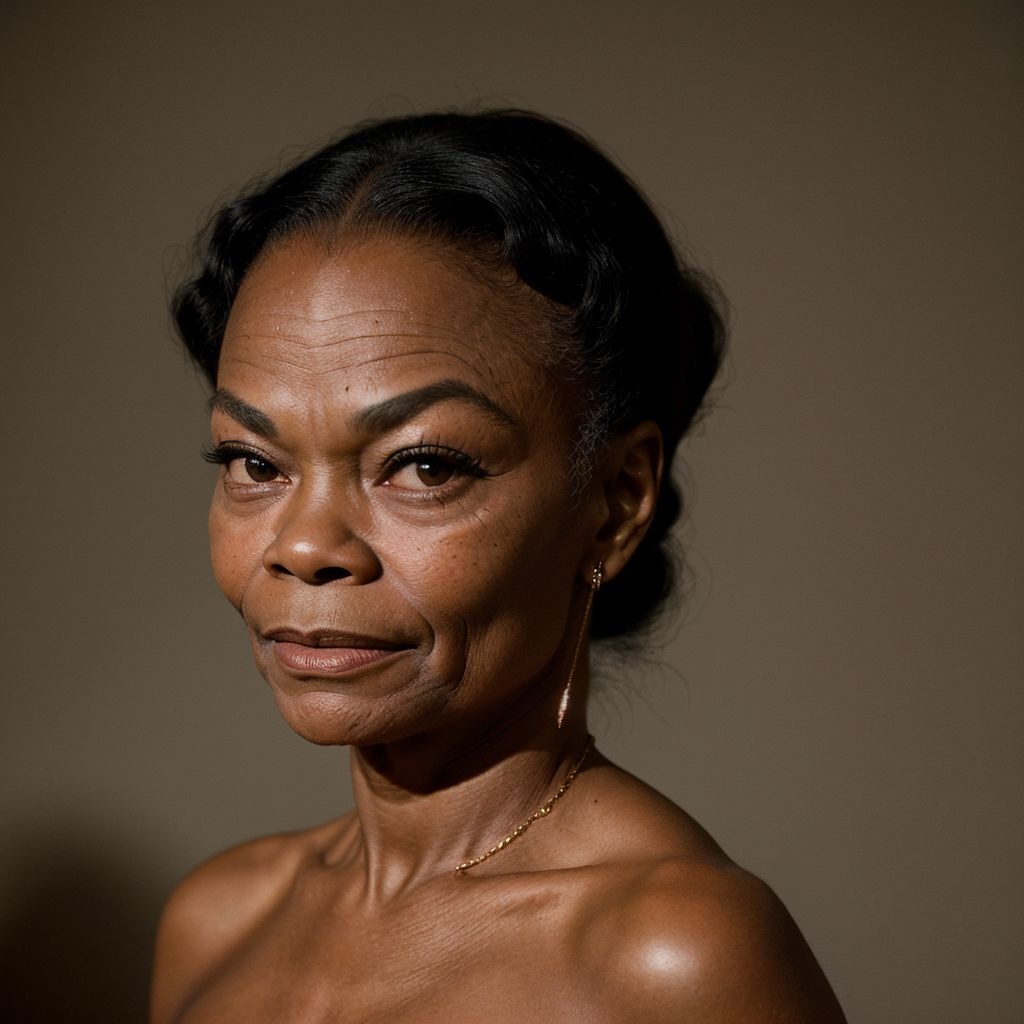
Eartha Kitt. Where do I even start? I’ve been obsessed with her for years, ever since I stumbled upon an old interview of hers on YouTube. Her voice, her wit, her unapologetic candor – it all just drew me in like a magnet. But as I delve deeper into her life and work, I find myself getting tangled up in the complexities of who she was.
One thing that’s always struck me is how Eartha Kitt embodied multiple identities at once. She was an actress, a singer, a dancer, and a model – all while being a black woman from the rural South. Her career spanned decades, genres, and continents, but her identity remained fluid, resistant to categorization. I find myself drawn to this quality in her, perhaps because it resonates with my own experiences as a young adult trying to figure out who I am.
Growing up, I was always told that I had to choose between being smart or being popular, between pursuing my passion for writing or getting a “practical” job. But Eartha Kitt’s career shows me that you can’t be forced into neat boxes. She took on roles and projects that interested her, regardless of whether they were considered “mainstream” or not. And when she spoke out against racism and sexism – as she did so famously in the 1960s, at a White House dinner party no less – it was never just about being a “socialite” or an “activist.” It was about using her platform to speak truth to power.
But what really gets me is how Eartha Kitt’s life has been reduced to soundbites and headlines over the years. She was called a “difficult diva,” a “troublemaker” – words that I’ve seen used to describe her in biographies, articles, and even social media posts. And yet, whenever I read about her struggles with racism, sexism, and mental health, I feel this deep sense of discomfort.
Why do we always focus on the drama, the controversy? Why can’t we talk more about how she navigated these systems of oppression, how she kept going despite the odds being stacked against her? It’s as if we’re more interested in spectacle than substance – in the juicy quotes and feuds rather than the quiet moments of resilience.
As I reflect on Eartha Kitt’s life, I find myself wondering what it means to be a strong woman. Is it about being unapologetic and outspoken, like she was? Or is it about quietly persevering through adversity, even when no one seems to notice or care? For me, the answer lies somewhere in between – in the messy, complicated space where vulnerability meets determination.
And that’s what I love about Eartha Kitt. She didn’t fit into neat categories; she refused to be reduced to a single label or persona. Instead, she embodied multiple contradictions at once: fierce and fragile, confident and uncertain, a product of both her time and place yet somehow always ahead of it. As I try to make sense of my own identity, I’m drawn to this paradoxical quality in her – a reminder that being a strong woman is not about being perfect or consistent, but about embracing the messy complexity of who we are.
I’ve been thinking a lot about the tension between spectacle and substance in our culture’s portrayal of women like Eartha Kitt. It’s as if we’re conditioned to focus on the surface level – the drama, the controversy, the eye-catching headlines – rather than digging deeper to understand the complexity of their experiences. And yet, when I read about Eartha Kitt’s life, I feel a sense of restlessness, a nagging feeling that there’s more to her story than what we’re told.
One of the things that strikes me is how often Eartha Kitt was reduced to her physical appearance. She was described as “exotic,” “sultry,” and “alluring” – words that seemed to emphasize her body over her mind, her talent, or her politics. And yet, when I look at old photos of her, I see a woman who was so much more than just her looks. I see someone with a sharp jawline, piercing eyes, and an unmistakable spark in her gaze.
I wonder if this emphasis on physical appearance is what led to the “difficult diva” label being attached to Eartha Kitt’s name. Was it because she refused to be objectified, reduced to just a pretty face or a sultry voice? Or was it because she spoke out against systems of oppression that were uncomfortable for people to confront?
It’s funny – I’ve noticed the same thing happening in my own life as a young woman. People often respond to me more readily when they can categorize me into some sort of neat box: “You’re an artist,” or “You’re a writer.” But what about when I resist those labels, when I choose not to be defined by just one aspect of myself? Don’t people get uncomfortable then?
Eartha Kitt’s life shows me that this is nothing new. Women like her have been pushing against these boundaries for decades, refusing to be reduced to simplistic stereotypes or neatly packaged personas. And yet, despite their best efforts, they’re often still subject to the same old tropes and expectations.
As I continue to grapple with Eartha Kitt’s legacy, I find myself thinking about what it means to be a woman in a world that’s still so resistant to complexity. How do we challenge these stereotypes without being seen as “difficult” or “uncooperative”? And how do we honor the women who came before us, like Eartha Kitt, who refused to be silenced or reduced? For me, it starts with embracing my own messy, complicated identity – and recognizing that I’m not alone in this struggle.
I’ve been thinking a lot about the way society tries to pin women down, to categorize them into neat little boxes. It’s like we’re all supposed to be reducible to some simple label or persona, but what happens when we refuse to fit? When we resist being defined by just one aspect of ourselves?
I think back to Eartha Kitt’s experiences with racism and sexism in the entertainment industry. She was constantly typecast as the “exotic” or “sultry” Other, never quite allowed to be seen as a fully fleshed-out person. And yet, she continued to speak out against these systems of oppression, using her platform to challenge the status quo.
It’s funny – I’ve been in similar situations myself, where people have tried to reduce me to just one thing: “Oh, you’re an artist,” or “You’re a writer.” But what about when I’m feeling uncertain or messy? When I’m not quite sure who I am or what I want?
Eartha Kitt’s life shows me that it’s okay to be unsure, to question everything. She was a woman of contradictions – fierce and fragile, confident and uncertain – and yet she still managed to make her mark on the world.
As I continue to reflect on her legacy, I find myself thinking about the importance of embracing our own messiness. Of recognizing that we’re all complex, multifaceted beings, full of contradictions and paradoxes. It’s not always easy to be seen this way, especially in a world that seems to value simplicity and certainty.
But what if we started to see each other as more than just one thing? What if we began to value our messiness, our complexity, our refusal to fit neatly into boxes?
I think about the women who came before me, like Eartha Kitt, who refused to be silenced or reduced. Women who took risks and spoke truth to power, even when it was uncomfortable for others to hear.
And I wonder – what would happen if we started to see ourselves as part of a larger narrative, one that’s messy and complex and full of contradictions? What if we began to recognize that our own identities are not fixed or static, but rather constantly evolving and unfolding?
As I ponder these questions, I feel a sense of hope rising up inside me. A sense that maybe, just maybe, we can create a world where women like Eartha Kitt are celebrated for their complexity, their messiness, and their refusal to be reduced.
A world where we’re not forced into neat boxes or simplistic stereotypes. But rather, one where we’re free to be ourselves, in all our messy, complicated glory.
As I delve deeper into Eartha Kitt’s life and legacy, I find myself thinking about the power of storytelling. How do we choose to present ourselves to the world? Do we opt for a carefully curated narrative that hides our true complexities, or do we risk being vulnerable and honest, revealing the messy, imperfect parts of ourselves?
I think back to Eartha Kitt’s interviews and performances, where she effortlessly wove together threads of humor, wit, and unflinching honesty. She spoke her truth, no matter how uncomfortable it might have been for others to hear. And yet, despite this willingness to be vulnerable, she was still able to maintain a sense of dignity and self-respect.
For me, this is a powerful lesson in the importance of authenticity. As someone who’s struggled with anxiety and self-doubt, I’ve often felt pressure to present a perfect exterior to the world – to hide my flaws and insecurities behind a mask of confidence. But Eartha Kitt shows me that it’s okay to be imperfect, to take risks and speak truth to power.
I wonder if this is part of why her legacy feels so compelling to me – because she embodies a sense of freedom and agency that I’m still trying to find for myself. A freedom to be messy, to be complicated, to be unsure. And yet, in the midst of all this uncertainty, she still managed to create something beautiful, something lasting.
As I reflect on Eartha Kitt’s life and work, I feel a sense of gratitude wash over me. Gratitude for her courage, her conviction, and her unwavering commitment to being true to herself. And I realize that this is what I want for myself – to live with the same kind of unapologetic authenticity that she did.
But it’s not going to be easy. There will be times when I’m forced to confront my own fears and doubts, when I’ll feel pressure to conform to societal expectations rather than embracing my true self. And yet, as I look at Eartha Kitt’s legacy, I know that I have the power to choose – to choose authenticity over perfection, vulnerability over pretension.
And so, with a newfound sense of determination, I take a deep breath and let go of the need for control. I allow myself to be messy, to be complex, to be unsure. And as I do, I feel a weight lift off my shoulders, like I’m finally free to be me – imperfections and all.
As I sit here, reflecting on Eartha Kitt’s life and legacy, I’m struck by the way she continues to inspire me to live more authentically. Her willingness to take risks, to speak truth to power, and to be vulnerable in the face of adversity is a powerful reminder that I don’t have to fit into someone else’s mold. I can create my own path, even when it’s uncertain or messy.
I think about how often I’ve felt pressure to present myself in a certain way – to be the “perfect” artist, writer, or young woman. But Eartha Kitt shows me that this is a false narrative. She was never perfect; she was always complex and multifaceted. And it’s precisely this complexity that made her so compelling.
I wonder if our culture’s obsession with perfection is what makes us so resistant to messiness. We’re taught from a young age to present ourselves in a certain way, to hide our flaws and insecurities behind a mask of confidence. But what happens when we shed this mask? When we let go of the need for control and allow ourselves to be messy and complex?
For me, it’s been a journey of self-discovery – one that’s taken time, patience, and courage. There have been moments when I’ve felt like giving up, when the pressure to conform has seemed overwhelming. But Eartha Kitt’s legacy reminds me that it’s okay to be unsure, to question everything, and to take risks.
I think about how she navigated the complexities of her own identity – as a black woman from the rural South, in an industry dominated by white men. She faced racism, sexism, and marginalization at every turn, but she never let that stop her. Instead, she used her platform to speak out against these systems of oppression, even when it was uncomfortable for others to hear.
As I reflect on Eartha Kitt’s life, I’m reminded that my own struggles are not unique. Women like me – women of color, women from marginalized communities, women who don’t fit into neat boxes – we’re all navigating similar challenges. We’re all trying to find our place in a world that often seems determined to silence us.
But Eartha Kitt’s legacy gives me hope. It reminds me that I’m not alone, that there are others out there who have walked this path before me. And it encourages me to keep pushing forward, even when the road ahead is uncertain or messy.
As I look back on my own journey so far, I realize that Eartha Kitt’s influence has been quietly shaping me all along. Her courage, her conviction, and her unwavering commitment to being true to herself have inspired me to do the same. And while it’s not always easy – while there are still moments when I feel like giving up or conforming to societal expectations – I know that I have the power to choose.
I can choose authenticity over perfection. Vulnerability over pretension. Messiness over control.
And as I make this choice, I feel a sense of freedom rising up inside me. A sense that I’m finally free to be myself – imperfections and all.