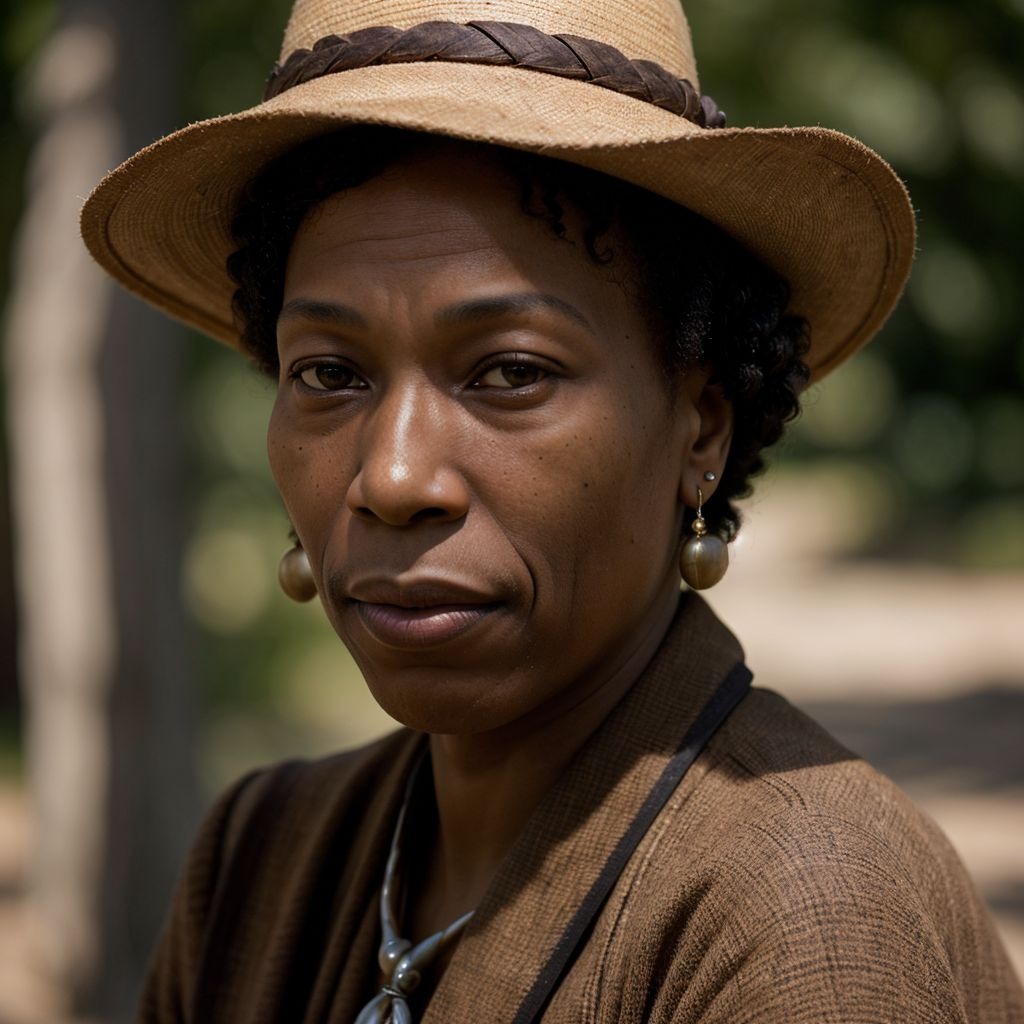
I’ll be honest, I stumbled upon Zora Neale Hurston’s name during a college course on American Literature, but it wasn’t until I read her novel “Their Eyes Were Watching God” that she truly caught my attention. What drew me in was the way Janie Crawford, the protagonist, navigated her own desires and identity within a patriarchal society. It resonated with me because I’ve often found myself questioning the expectations placed on women around me.
As I delved deeper into Hurston’s work, I began to notice how she seamlessly wove together elements of folklore, anthropology, and personal narrative. Her writing style is unlike anything I’d encountered before – it’s as if she’s sharing secrets with you, but only if you’re willing to listen closely. I found myself drawn to the way she blended her love for storytelling with a deep respect for the cultures she was documenting.
One aspect of Hurston that fascinates me is her relationship with her mentor, Franz Boas, and later, with Langston Hughes. I’ve read about how they supported her work, but also how she struggled to navigate their expectations and critiques. It makes me wonder: what does it mean to be a “good” artist? How do we balance our own vision with the opinions of those who believe in us?
I think back to my own writing process – the times I’ve felt like I’m straddling two worlds, trying to please my parents and professors while also staying true to myself. Hurston’s story makes me realize that these struggles aren’t unique to me or my generation. The more I learn about her life, the more I see parallels between our experiences.
For instance, when I read about Hurston’s decision to return to anthropology after being discredited by some of her peers for her romanticization of black culture, I felt a pang of recognition. It’s as if she’s saying, “I know you think I’ve betrayed my own people, but this is what I believe.” That takes courage – a willingness to be misunderstood and criticized in order to stay true to one’s artistic vision.
It also makes me question my own comfort level with controversy. As someone who writes about personal experiences, I often worry about offending or alienating readers. Hurston, on the other hand, seems to have courted debate throughout her career. Was she reckless? Or was she brave?
These questions swirl in my head as I continue to explore Hurston’s life and work. Sometimes I wonder if we’re still grappling with some of the same issues – the tension between art and social responsibility, the complexity of identity and culture. Maybe that’s why I keep coming back to her writing: it’s a reminder that our struggles are not unique, but they’re also a chance for growth and exploration.
As I read through Hurston’s letters and interviews, I’m struck by her passion for storytelling and her commitment to telling the stories of others. She was unapologetic about sharing the tales of African Americans in a way that felt authentic to them – no watered-down versions or sanitized narratives. And yet, she also drew heavily from the cultures she studied.
It’s this tension between authenticity and responsibility that keeps me up at night. What does it mean to represent another culture accurately? Can we ever truly capture the essence of someone else’s experience? Hurston’s work makes me realize how these questions are still unresolved – for her, for me, and for future generations of writers.
I don’t have answers to these questions yet. All I can do is continue to grapple with them through my own writing, using Hurston’s example as a guide. She may be an icon in literary circles, but for me, she’s more than that – a kindred spirit who continues to push me toward the uncomfortable places where art and identity intersect.
As I delve deeper into Hurston’s life and work, I’m struck by her commitment to preserving African American culture through her writing. She was unapologetic about sharing stories that might be considered taboo or unconventional, even within her own community. This bravery is something I admire, but it also makes me uncomfortable.
I think about the ways in which Hurston’s work can be seen as both empowering and problematic. On one hand, she gave voice to women like Janie Crawford who defied societal norms and expectations. On the other hand, some critics have argued that her portrayal of black life was overly romanticized or even exploitative.
I find myself questioning whether it’s possible to accurately represent another culture without being a part of it. Can someone from outside an community truly capture its essence, or will they inevitably bring their own biases and assumptions? Hurston’s experiences working with Franz Boas, who was both her mentor and critic, have made me realize that this tension is not unique to me.
It’s also clear that Hurston’s work was not just about preserving culture but also about challenging the dominant narratives of her time. She was unafraid to subvert expectations and push boundaries, often in ways that were considered radical for a woman writer in the early 20th century.
As I navigate my own writing process, I’m constantly reminded of Hurston’s willingness to take risks and challenge herself. She wasn’t afraid to be misunderstood or criticized; instead, she used those critiques as fuel for her next project. This kind of courage is something I aspire to, but it’s also intimidating.
What if I make a mistake? What if I inadvertently perpetuate harm or stereotypes? These fears can be paralyzing, but they’re also an opportunity to learn and grow. Hurston’s legacy reminds me that mistakes are inevitable, but it’s how we respond to them that truly matters.
In many ways, Hurston’s story is a reminder that art is not just about self-expression but also about responsibility. As writers, we have the power to shape perspectives, challenge norms, and give voice to marginalized communities. It’s a daunting task, but one that I’m eager to take on, even if it means navigating uncertainty and controversy along the way.
As I continue to explore Hurston’s life and work, I’m left with more questions than answers. But that’s what makes her writing so compelling – it’s not just about the stories she tells but also about the ones she leaves unsaid.
One of the things that has been on my mind lately is Hurston’s relationship with the Harlem Renaissance movement. She was a key figure in this literary and cultural explosion, and yet her work often pushed against the boundaries of what was considered “acceptable” within the movement. I find myself wondering if she felt like an outsider even among her peers.
As someone who identifies as a feminist writer, I’m drawn to Hurston’s involvement with the Women’s Club Movement and her efforts to preserve African American culture through her writing. However, I also know that these movements were not without their own set of challenges and contradictions. How did Hurston navigate these complexities? Did she ever feel like she was caught between different worlds or competing expectations?
I think about my own experiences navigating the feminist movement in college. There were times when I felt like I was expected to conform to certain ideas or agendas, rather than being able to forge my own path. Hurston’s story makes me realize that these tensions are not unique to my generation or even my own time period.
One of the things that strikes me about Hurston is her ability to hold multiple perspectives at once. She was both a product of her time and place, and yet she also managed to transcend those boundaries through her writing. This paradox is something I’m still grappling with in my own work – how do I balance my own experiences and biases with the need to represent others accurately?
As I continue to read about Hurston’s life and work, I’m struck by her willingness to take risks and challenge herself. She was not afraid to fail or be misunderstood; instead, she used those experiences as opportunities for growth and learning. This kind of courage is something that I admire, but it’s also intimidating.
What if I make a mistake? What if I inadvertently perpetuate harm or stereotypes? These fears can be paralyzing, but they’re also an opportunity to learn and grow. Hurston’s legacy reminds me that mistakes are inevitable, but it’s how we respond to them that truly matters.
I think about the ways in which Hurston’s work continues to be relevant today – from her portrayal of strong, independent women to her exploration of themes like identity, culture, and social justice. Her writing is a reminder that art has the power to shape perspectives and challenge norms, even years after it was first created.
As I navigate my own writing process, I’m constantly reminded of Hurston’s willingness to push boundaries and take risks. She was not afraid to be misunderstood or criticized; instead, she used those critiques as fuel for her next project. This kind of courage is something that I aspire to, but it’s also a daunting task.
What does it mean to be a “good” writer? How do we balance our own vision with the opinions and expectations of others? Hurston’s story makes me realize that these questions are not unique to me or my generation. They’re ongoing struggles that require us to stay true to ourselves, even in the face of uncertainty and controversy.
As I grapple with these questions, I’m struck by the complexity of Hurston’s legacy. She was a product of her time, shaped by the societal norms and expectations of the early 20th century. And yet, she also managed to transcend those boundaries through her writing, leaving behind a body of work that continues to resonate today.
I think about how Hurston’s experiences as an anthropologist inform her writing. She spent years studying folklore and cultures in the southern United States, immersing herself in the stories and traditions of African Americans. And yet, she also drew criticism for her portrayal of black life, with some accusing her of romanticizing or exploiting these cultures.
It’s a delicate balance to strike – one that I’m still trying to navigate in my own writing. How do I represent others accurately without perpetuating harm or stereotypes? Hurston’s story makes me realize that this is an ongoing struggle, one that requires us to stay true to ourselves and our artistic vision even in the face of criticism.
One thing that strikes me about Hurston is her willingness to challenge dominant narratives. She was unafraid to subvert expectations and push boundaries, often in ways that were considered radical for a woman writer at the time. This kind of courage is something I admire, but it’s also intimidating.
What if I make a mistake? What if I inadvertently perpetuate harm or stereotypes? These fears can be paralyzing, but they’re also an opportunity to learn and grow. Hurston’s legacy reminds me that mistakes are inevitable, but it’s how we respond to them that truly matters.
As I continue to explore Hurston’s life and work, I’m struck by her commitment to preserving African American culture through her writing. She was unapologetic about sharing stories that might be considered taboo or unconventional, even within her own community. This bravery is something I admire, but it also makes me uncomfortable.
I think about the ways in which Hurston’s work can be seen as both empowering and problematic. On one hand, she gave voice to women like Janie Crawford who defied societal norms and expectations. On the other hand, some critics have argued that her portrayal of black life was overly romanticized or even exploitative.
It’s a complex issue, one that I’m still trying to wrap my head around. As someone who writes about personal experiences, I often worry about offending or alienating readers. Hurston, on the other hand, seems to have courted debate throughout her career. Was she reckless? Or was she brave?
These questions swirl in my head as I continue to explore Hurston’s life and work. Sometimes I wonder if we’re still grappling with some of the same issues – the tension between art and social responsibility, the complexity of identity and culture. Maybe that’s why I keep coming back to her writing: it’s a reminder that our struggles are not unique, but they’re also a chance for growth and exploration.
As I navigate my own writing process, I’m constantly reminded of Hurston’s willingness to take risks and challenge herself. She wasn’t afraid to be misunderstood or criticized; instead, she used those critiques as fuel for her next project. This kind of courage is something I aspire to, but it’s also a daunting task.
What does it mean to be a “good” writer? How do we balance our own vision with the opinions and expectations of others? Hurston’s story makes me realize that these questions are not unique to me or my generation. They’re ongoing struggles that require us to stay true to ourselves, even in the face of uncertainty and controversy.
As I continue to explore Hurston’s life and work, I’m left with more questions than answers. But that’s what makes her writing so compelling – it’s not just about the stories she tells but also about the ones she leaves unsaid.