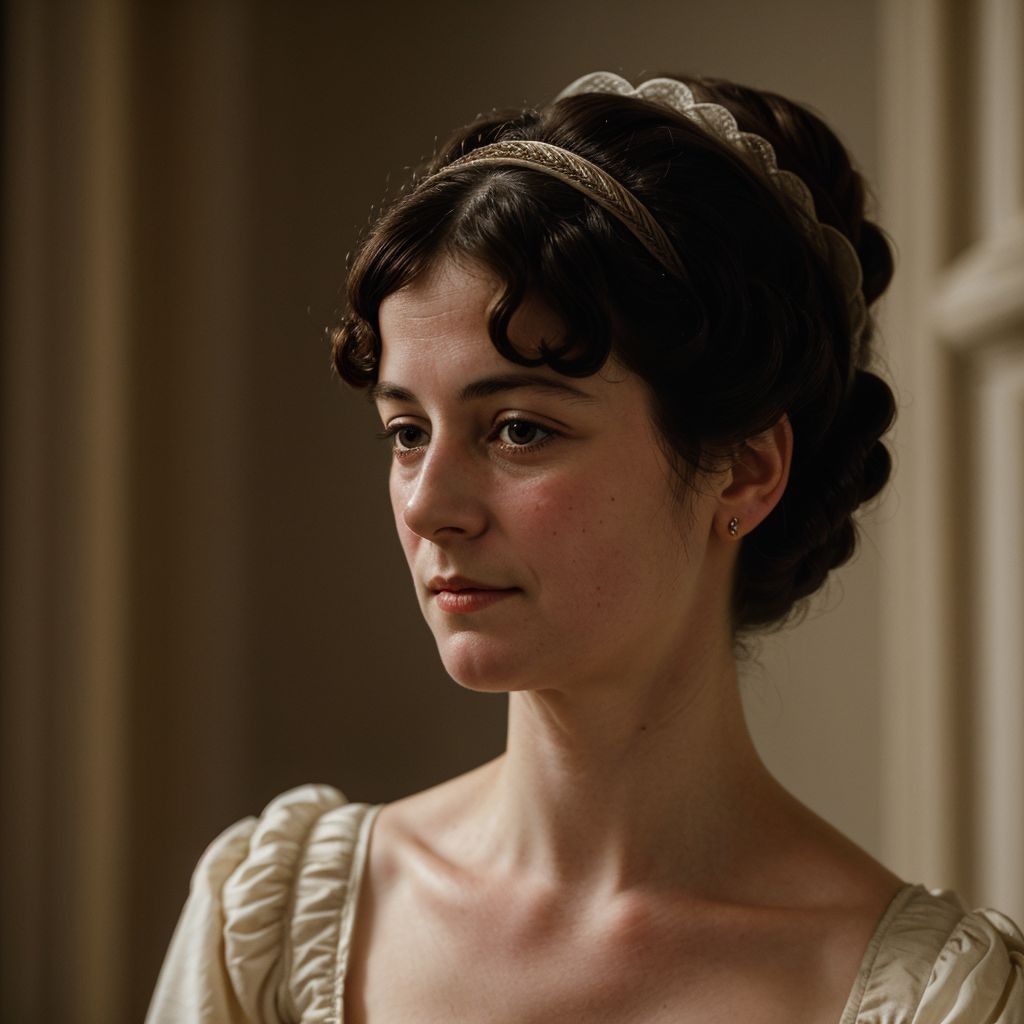
Jane Austen. I’ve spent hours reading her novels, but it’s not the plots or characters that have me stuck – it’s her voice. It’s like she’s speaking directly to me, but from a different time, with a language that’s both familiar and foreign.
As someone who writes for myself, to process my own thoughts and emotions, I find Austen’s writing incredibly compelling. She takes the everyday experiences of women in her time – relationships, family dynamics, social pressures – and turns them into these intricate, witty stories. But what I love most is how she captures the inner lives of her characters. It’s like she’s saying, “I get it, this is hard,” without ever explicitly stating it.
Growing up, my own experiences felt similarly suffocating. As a young woman in a small town, I was constantly navigating expectations and social norms that didn’t always align with what I wanted or felt. And reading Austen’s novels, particularly “Pride and Prejudice”, I saw echoes of myself in Elizabeth Bennet – her frustration, her longing for autonomy, her sometimes-difficult relationships.
But here’s the thing: Austen doesn’t shy away from the more complicated aspects of life either. She writes about class differences, economic pressures, and the societal constraints that limited women’s choices back then. And it’s not just that she critiques these systems; it’s how she does so with such nuance and subtlety. She never shies away from complexity.
It makes me think about my own writing process, which often feels like a way to work through the messy emotions I’m experiencing in real life. Austen’s ability to convey the full range of human emotions – without being too on-the-nose or sentimental – is something I aspire to in my own writing. But it’s also what draws me in – her willingness to confront the uncomfortable aspects of life, even when they’re hard to acknowledge.
Take “Mansfield Park”, for example. It’s a novel that gets criticized for its portrayal of Fanny Price, but to me, that’s exactly why it resonates. Fanny is this complex, often-invisible figure in the lives of those around her – just like many women I know who are quietly struggling with their own desires and limitations. Austen doesn’t shy away from the power dynamics at play, nor does she make excuses for Fanny’s privilege. Instead, she holds up a mirror to both the societal norms that shape our experiences and our own internalized biases.
It’s uncomfortable, because it forces me to confront my own role in perpetuating these systems – even unintentionally. But that discomfort is what makes Austen’s writing so compelling. It’s not just about being entertained; it’s about being seen, and acknowledged for all the contradictions and complexities we embody as human beings.
When I read Austen, I feel like she’s speaking directly to me – but also, to a part of myself I’m still figuring out. Maybe that’s why her writing feels so personal, even centuries later. We’re both navigating these messy relationships between self, society, and expectation; we’re both trying to make sense of our own emotions and desires in the face of external pressures.
It’s a feeling that’s hard to put into words – but one I experience whenever I’m reading Austen’s novels. It’s as if she’s holding up a mirror not just to my time, or her own, but to this fundamental human struggle we’re all experiencing: how do we find our way in the world when it feels like every step forward is also a potential misstep?
As I continue to grapple with Austen’s writing, I’m struck by the way she captures the nuances of relationships – particularly those between women. In novels like “Persuasion” and “Sense and Sensibility”, I see reflections of my own friendships and family dynamics. The ways in which we support and undermine each other, often without even realizing it, is a theme that resonates deeply with me.
I think about the times when I’ve found myself caught between pleasing others and staying true to myself. When I’m writing, I try to work through these feelings by exploring different scenarios and perspectives. But Austen does something similar in her novels – she shows how relationships can be both a source of comfort and a site of tension.
One character that comes to mind is Anne Elliot from “Persuasion”. Her story is one of delayed growth and second chances, as she navigates the complexities of her own emotions and societal expectations. I identify with Anne’s sense of disconnection – feeling like I’m living in a world that doesn’t quite fit my own values or desires.
But what I love about Austen’s portrayal of relationships is how it acknowledges the messiness of human connection. She shows us that even when we’re trying to do our best, we can still hurt and misunderstand each other. And yet, it’s precisely this vulnerability that makes relationships so rich and worth exploring.
When I’m writing, I try to capture similar complexities in my own characters’ interactions. But Austen’s skill lies not just in depicting these relationships, but also in making them feel timeless – like they’re speaking directly to me from across the centuries. It’s a feeling that’s both comforting and unsettling, like being seen by someone who understands me in ways I don’t even understand myself.
I’m reminded of a conversation I had with my own mother about Austen’s novels. She said something that stuck with me: “Austen’s writing is not just about the past; it’s about how we’re still grappling with the same questions today.” It made me realize that, despite the many changes in our world, human relationships remain a fundamental part of who we are.
As I continue to explore Austen’s work, I’m drawn back to this idea – that her writing is not just about the past, but about the present moment. When I read her novels, I feel like I’m having a conversation with someone who understands me in all my complexity. And it’s this sense of connection that makes her writing feel so enduring, even centuries later.
I find myself returning to Austen’s portrayal of relationships because it feels so relatable – and not just because she’s writing about women navigating societal expectations. It’s the way she captures the nuances of human interaction, the ways in which we connect with each other on a deep level, despite our differences.
I think about my own friendships, particularly those that have been strained or complicated over time. Austen shows us that even when relationships falter, there’s always a possibility for growth and renewal. Her characters may make mistakes, hurt each other, or struggle to communicate effectively – but they never give up on the idea of connection.
It’s this commitment to human connection that I find so admirable about Austen’s writing. She doesn’t shy away from the difficulties of relationships; instead, she dives headfirst into the complexities and contradictions that make them so rich.
When I’m writing, I try to capture similar moments of tension and vulnerability in my own characters’ interactions. But Austen’s skill lies not just in depicting these relationships – it’s in making them feel like a mirror held up to our own experiences. We see ourselves in her characters, their struggles and triumphs reflected back at us with uncanny precision.
I’m drawn to the way Austen writes about women who are often invisible or marginalized within their own societies. Characters like Fanny Price, Anne Elliot, and even Elizabeth Bennet – they’re all women who exist on the fringes of their respective worlds, struggling to find their place within them.
It’s a theme that resonates deeply with me, particularly as someone who has always felt like an outsider in my own way. As a young woman from a small town, I’ve often found myself navigating expectations and social norms that didn’t always align with what I wanted or felt. Reading Austen’s novels, I see echoes of myself in these characters – their frustration, their longing for autonomy, their sometimes-difficult relationships.
But what I love most about Austen is the way she captures the complexities of human emotion. She doesn’t reduce her characters to simple labels or categories; instead, she reveals their messy, contradictory nature in all its glory. We see the ways in which they hurt each other, but also the ways in which they try to heal and grow.
It’s a delicate balance, one that Austen achieves with remarkable nuance. And when I’m writing, I find myself striving for similar complexity in my own characters’ interactions. But it’s not just about capturing their emotions or relationships – it’s about revealing the deeper truths of human connection that make us all more relatable and authentic.
As I continue to explore Austen’s work, I’m struck by the way she challenges me to confront my own biases and assumptions. She shows me that even when we’re trying to do our best, we can still perpetuate systems of oppression or hurt those around us unintentionally. It’s an uncomfortable truth, but one that feels essential for growth and understanding.
And yet, despite this discomfort, I find myself drawn back to Austen’s writing again and again. There’s something about her voice – a sense of compassion, empathy, and humanity that speaks directly to my own experiences and emotions. She may be writing from another time, but her insights into the human condition feel timeless, like they were written specifically for me.
It’s a feeling that’s hard to put into words, but one I experience whenever I’m reading Austen’s novels. It’s as if she’s holding up a mirror not just to my own life, but to the fundamental human struggle we’re all experiencing: how do we find our way in the world when it feels like every step forward is also a potential misstep?
I think about the ways in which Austen’s writing has influenced me as a writer, and I realize that she’s not just someone I admire from afar – she’s a guide who helps me navigate my own complexities and contradictions. Her willingness to confront the uncomfortable aspects of life is something I aspire to in my own writing, but it’s also what draws me in and makes her novels feel so personal.
As I continue to explore Austen’s work, I’m struck by the way she challenges me to think critically about my own biases and assumptions. She shows me that even when we’re trying to do our best, we can still perpetuate systems of oppression or hurt those around us unintentionally. It’s an uncomfortable truth, but one that feels essential for growth and understanding.
I remember a conversation I had with a friend about Austen’s novels, where we discussed the ways in which she portrays women’s experiences as both relatable and unique. My friend mentioned that Austen’s writing often feels like a “mirror held up to our own lives,” and I think that’s exactly what makes her novels so compelling.
When I’m reading Austen’s work, I feel like I’m having a conversation with someone who understands me in all my complexity. She gets it – she knows what it’s like to be caught between pleasing others and staying true to oneself. And that sense of understanding is something I crave as a writer, too – the feeling that I’ve captured the nuances of human emotion and experience in my own words.
But Austen’s writing isn’t just about capturing emotions or relationships; it’s also about revealing the deeper truths of human connection that make us all more relatable and authentic. She shows me that even when we’re struggling to communicate effectively, or when relationships falter, there’s always a possibility for growth and renewal.
I think about my own writing process, and how Austen’s influence has shaped the way I approach storytelling. When I’m working on a new piece, I try to capture similar moments of tension and vulnerability in my characters’ interactions. But it’s not just about depicting these relationships – it’s about making them feel like a mirror held up to our own experiences.
As I continue to explore Austen’s work, I realize that her writing is not just about the past; it’s also about the present moment. When I read her novels, I’m struck by the way she speaks directly to me – but also, to a part of myself I’m still figuring out. Maybe that’s why her writing feels so timeless, even centuries later.
I think about the ways in which Austen’s portrayal of relationships has influenced my own friendships and family dynamics. She shows us that even when relationships falter, there’s always a possibility for growth and renewal. And it’s this commitment to human connection that I find so admirable about her writing – she doesn’t shy away from the difficulties of relationships; instead, she dives headfirst into the complexities and contradictions that make them so rich.
As I continue to grapple with Austen’s writing, I’m struck by the way she challenges me to confront my own assumptions and biases. She shows me that even when we’re trying to do our best, we can still perpetuate systems of oppression or hurt those around us unintentionally. It’s an uncomfortable truth, but one that feels essential for growth and understanding.
I think about the ways in which Austen’s writing has influenced my own perspective on relationships – particularly those between women. Her novels show me that even when relationships are strained or complicated, there’s always a possibility for growth and renewal. And it’s this sense of hope and resilience that I find so compelling about her writing.
As I continue to explore Austen’s work, I realize that her writing is not just about the past; it’s also about the present moment. When I read her novels, I feel like I’m having a conversation with someone who understands me in all my complexity – and that sense of understanding is something I crave as a writer, too.
I think about the ways in which Austen’s portrayal of women has influenced my own perspective on feminism and identity. Her novels show me that even when women are marginalized or oppressed, there’s always a possibility for growth and renewal. And it’s this commitment to human connection that I find so admirable about her writing – she doesn’t shy away from the difficulties of relationships; instead, she dives headfirst into the complexities and contradictions that make them so rich.
As I continue to grapple with Austen’s writing, I’m struck by the way she challenges me to think critically about my own biases and assumptions. She shows me that even when we’re trying to do our best, we can still perpetuate systems of oppression or hurt those around us unintentionally. It’s an uncomfortable truth, but one that feels essential for growth and understanding.
I’m reminded of a conversation I had with a friend about Austen’s novels, where we discussed the ways in which she portrays women’s experiences as both relatable and unique. My friend mentioned that Austen’s writing often feels like a “mirror held up to our own lives,” and I think that’s exactly what makes her novels so compelling.
When I’m reading Austen’s work, I feel like I’m having a conversation with someone who understands me in all my complexity – but also, to a part of myself I’m still figuring out. Maybe that’s why her writing feels so timeless, even centuries later.