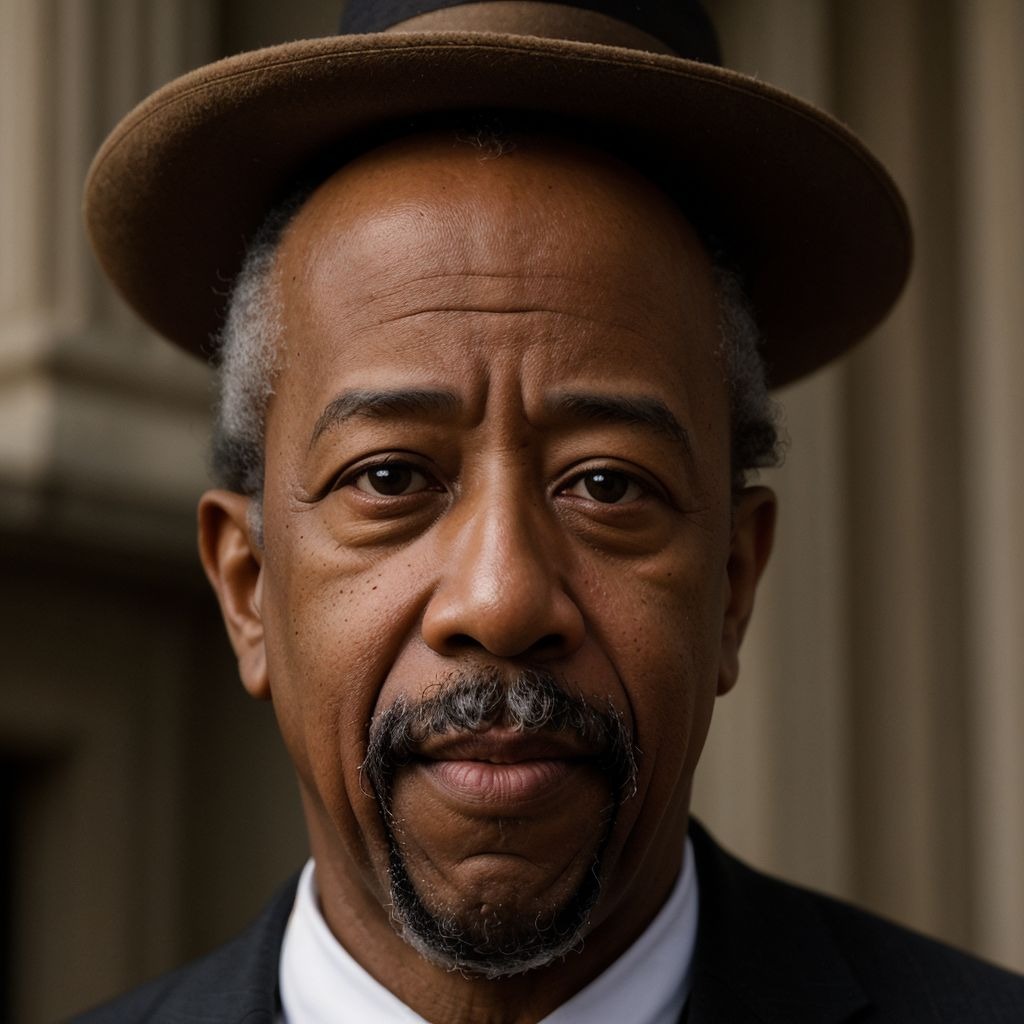
W.E.B. Du Bois’s words have been seeping into my consciousness for years, like a slow-moving river that I’ve never quite managed to follow to its source. It started with phrases like “double-consciousness” and “the color line,” which seemed to articulate a tension I recognized in myself—the feeling of being split between inner identity and the demands of the world. But the more I read Du Bois, the more complicated his image became.
I’ve always been drawn to his writing as a form of protest—a refusal to be silenced or reduced. His essays and speeches read like a series of challenges, each one probing the limits of what was considered acceptable in his time. Yet the deeper I went, the more I noticed his contradictions: the thinker who argued for gradual change through integration, even as he sharply criticized the institutions that sustained inequality.
At times, it feels as though Du Bois is speaking directly to anyone who exists in a liminal space—between ideals and reality, between belonging and exclusion. He writes about the struggle to reconcile the self with a society that seeks to define, constrain, or diminish it. His words make me feel seen, but also unsettled. If he could be so nuanced, so willing to interrogate both oppressive systems and the compromises made within them, then what does that demand of those of us still trying to navigate our own moral and intellectual paths?
One of his most enduring works, The Souls of Black Folk, struck me with the force of a sacred text. In it, Du Bois documents Black life in America at the turn of the twentieth century—a world shaped by segregation, poverty, and violence. Yet even as he records these realities, his writing preserves beauty, resilience, and cultural depth. It refuses to allow suffering to erase humanity.
What I struggle with most in Du Bois’s work is how he balances outrage and hope without collapsing one into the other. He never resolves that tension, and perhaps that is the point. He seems suspended between roles—the activist demanding justice and the artist committed to rendering human experience honestly. That unresolved tension resonates deeply with me, mirroring my own efforts to hold moral urgency and aesthetic attention in the same space.
Over time, I’ve come to see that Du Bois’s work is not only about history or politics. It is also about the private, internal struggle of trying to live with integrity in a world that resists it. His writing feels like an ongoing conversation with himself—one I find myself drawn into, even when it leaves me uneasy.
Perhaps that is why his work has stayed with me. His questions linger: How do we reconcile justice and beauty? Can we sustain outrage without losing hope? How do we live thoughtfully inside systems that resist transformation?
I don’t have answers. But Du Bois has given me a language for thinking through these questions—a language that is both personal and expansive. As I continue to sit with his ideas, I’m reminded of the power of writing to challenge complacency and widen perception.
As I read further, I keep returning to Du Bois’s concept of “double-consciousness.” He described it as a defining feature of Black life in America, a constant awareness of oneself through the gaze of a hostile society. What struck me was how the idea extends beyond its original context. The experience of seeing oneself reflected through external expectations—often distorted ones—feels widely human.
Growing up, I often felt caught between how I understood myself and how I was perceived by others. There was the private self, shaped by creativity and conviction, and the public self, filtered through assumptions and unspoken rules. Du Bois gave language to that internal division, even though its origins lay in a reality different from my own.
Reading him made me realize that fragmentation of self is not confined to one identity or experience. Many of us live with layered selves, shaped by context and constraint. Acknowledging that complexity can be a first step toward coherence.
Du Bois also wrote extensively about dignity—about the importance of self-respect in the face of systems designed to deny it. For him, this meant affirming cultural heritage and intellectual rigor while refusing erasure. His insistence on dignity, even under pressure, continues to feel urgent.
As I reflect on my own assumptions and blind spots, I’m aware of how easy it is to mistake one’s own perspective for a universal one. Du Bois never allowed that mistake to go unchallenged. He insisted on confronting bias—both external and internal—and on recognizing how power operates quietly as well as overtly.
His concept of “the veil” remains haunting. It names not only a racial divide, but a broader human tendency to avoid seeing the full consequences of our systems and behaviors. Du Bois understood that injustice persists not only through malice, but through distance, denial, and comfort.
What I admire most is his willingness to remain with difficult questions. He never rushed toward false resolution. He understood that meaningful change requires patience, persistence, and intellectual honesty.
This may be his greatest lesson: resist simplification. Hold complexity. Stay with contradiction.
As I continue to read Du Bois, I find myself thinking more about community and collective responsibility. He emphasized the necessity of shared effort, of building networks of support and accountability. That idea resonates, especially in a world that often rewards isolation and individualism.
Du Bois recognized that injustice is systemic, not accidental, and that responding to it requires more than personal conviction. It demands sustained engagement, education, and cooperation across difference.
What ultimately draws me back to his work is not just his analysis of inequality, but his insistence on possibility. Even in the face of entrenched injustice, he refused despair. He believed in the capacity for renewal, for intellectual growth, and for moral courage.
In his writing, I find permission to remain curious, to question inherited narratives, and to approach identity as something dynamic rather than fixed. His work reminds me that understanding—of ourselves and of others—is never finished.
And so I continue to read him, not in search of closure, but in search of clarity. In Du Bois, I find a thinker who understood that the most important work often happens in uncertainty—and that staying with complexity is itself a form of commitment.