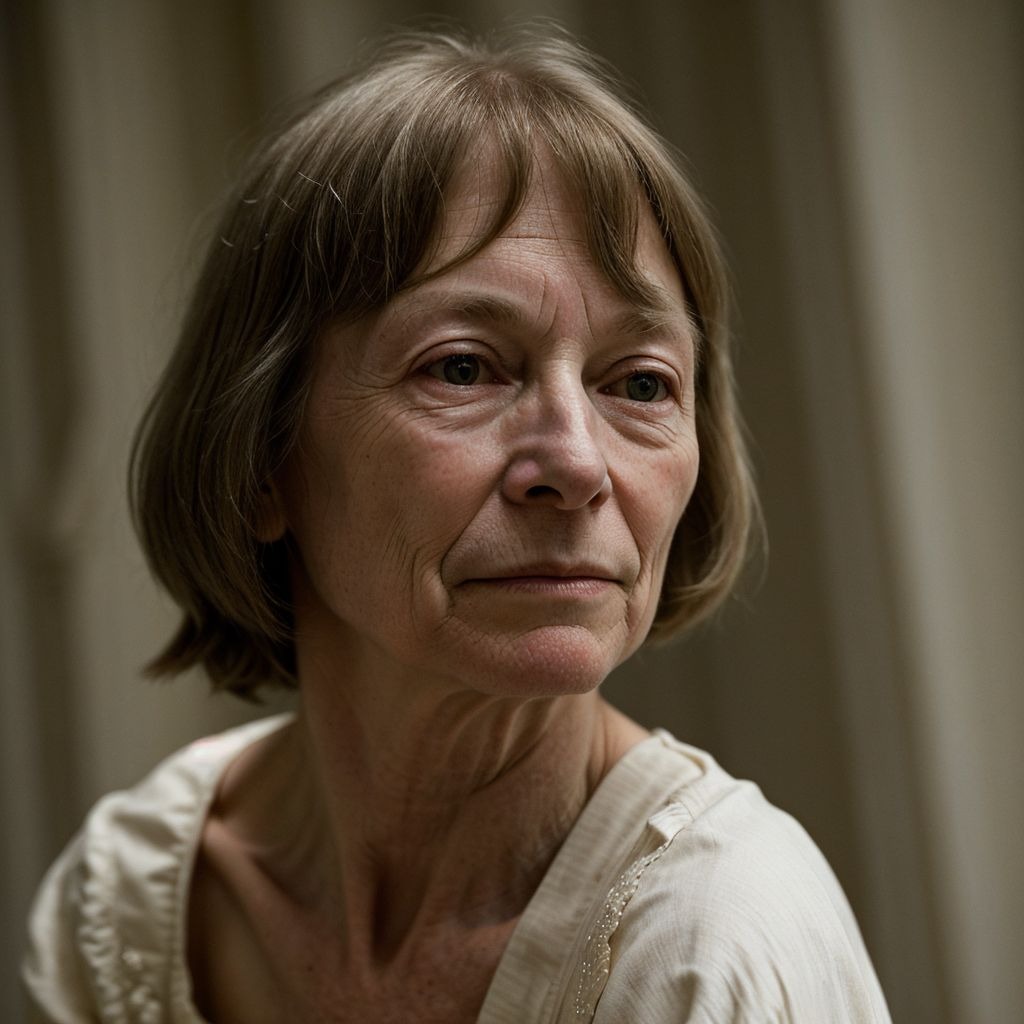
Mary Oliver’s words have been my constant companion for years, yet I only recently stumbled upon her work with any kind of intention. It was during a particularly overwhelming semester, and I found myself pouring over her collections – “Devotions”, “Wild Geese”, “No Voyage and Other Poems” – as if searching for some sort of lifeline.
At first, it was the accessibility that drew me in. Her poetry reads like a gentle stream, effortless to follow yet containing depths that unfold with each reading. I appreciate how she weaves together observations on nature, spirituality, and the human experience without ever feeling didactic or forced. But as I delved deeper into her work, I began to notice a sense of disquiet underlying her words.
Oliver’s writing often speaks of isolation, loneliness, and the fragility of life – not in a despairing way, but rather as a reminder that even amidst beauty and wonder, we’re never truly insulated from pain. Her poetry acknowledges the impermanence of all things, including our own experiences and emotions. I find myself resonating with this perspective, yet it also unsettles me.
As someone who’s struggled with anxiety, I’m drawn to Oliver’s portrayal of uncertainty as a necessary part of growth. She writes about embracing the unknown, even when it feels daunting or terrifying – much like how I’ve had to confront my own fears and limitations during college. But what strikes me is the sense that she never quite finds resolution; instead, she continues to grapple with these questions throughout her work.
I think part of why I’m captivated by Oliver’s writing is because it acknowledges the discomfort of living in a world where our experiences are inherently subjective. Her poems often veer between clarity and ambiguity, leaving room for interpretation and introspection. In doing so, they remind me that my own perceptions – whether of nature, myself, or others – are provisional at best.
It’s this willingness to navigate uncertainty without resorting to neat conclusions or definitive answers that resonates with me. Oliver’s work encourages me to stay curious about the world around me, even when it gets messy and complicated. As I reflect on my own writing practice, I realize how often I fall into patterns of certainty or didacticism – trying to pin down meaning or convey a specific message.
Mary Oliver’s poetry serves as a counterpoint to this impulse, nudging me toward more nuanced explorations of the human experience. Her writing doesn’t provide answers; instead, it illuminates the complexities that underlie even the simplest observations. By embracing these ambiguities, I hope to develop a deeper understanding not only of her work but also of my own thoughts and emotions.
Perhaps what I value most about Oliver’s poetry is its quiet persistence – how she continues to explore these themes across decades, without ever claiming absolute truth or resolution. In doing so, she reminds me that growth and self-discovery are lifelong processes, never truly complete or static. Her words leave me with more questions than answers, but it’s in this uncertainty that I find a sense of peace – a reminder to stay curious, keep exploring, and continue searching for meaning amidst the beauty and messiness of life.
As I immerse myself further in Mary Oliver’s work, I’m struck by her use of imagery and language. Her descriptions of nature are often so vivid that they transport me to a different world – one where the boundaries between self and environment blur. I find myself reflecting on my own relationship with nature, and how it has evolved over time.
Growing up, I spent hours exploring the woods behind our house, collecting leaves and watching birds. My parents encouraged this curiosity, teaching me about the interconnectedness of ecosystems and the beauty of simplicity. As I got older, however, life became busier, and my connection to nature began to fade. College schedules and academic pressures took over, leaving little time for exploration or contemplation.
Reading Oliver’s poetry has awakened a longing in me to rekindle this relationship with nature. Her words remind me that the natural world is not just something external to us – it’s an integral part of our inner lives, influencing our thoughts, emotions, and experiences. I’ve started carrying her book with me on walks around campus or during breaks between classes, allowing her words to merge with my surroundings.
One poem in particular has become a favorite: “The Summer Day”. In it, Oliver describes the beauty of a summer day – how the sun shines bright, flowers bloom, and children play. But what stands out is not just the external description; it’s the way she captures the internal world of the speaker. The poem becomes an introspection on mortality, wonder, and the human condition.
As I read these lines over and over, I feel a sense of recognition – like Oliver is speaking directly to me, acknowledging my own fears, doubts, and moments of awe. Her poetry is not just about nature; it’s about our place within it – how we navigate the complexities of existence, and what that means for our individual lives.
Oliver’s emphasis on attention and observation resonates deeply with me. In a world where distractions are constant, her words remind me to slow down, focus on the present moment, and truly see the world around me. This is not just about noticing beauty; it’s about cultivating awareness – of myself, my emotions, and my relationship with others.
As I continue to explore Oliver’s work, I’m struck by the way she wields language with precision and compassion. Her poetry is an invitation to step into the unknown, to confront our fears, and to surrender to the mystery of life. In doing so, she reminds me that writing – like living – is a journey without clear endpoints or resolutions. It’s a process of discovery, growth, and exploration, where the only constant is change itself.
I find myself wondering what it would be like to write with Oliver’s level of clarity and conviction – to capture the world in all its complexity, beauty, and uncertainty. Is this even possible? Or is her gift unique to her experience and perspective?
As I ponder these questions, I realize that Mary Oliver’s poetry has become a mirror for my own writing practice. Her willingness to grapple with ambiguity, her attention to language, and her commitment to observing the world around her have all influenced me in profound ways.
Perhaps what I value most about Oliver’s work is not just its beauty or insight but its ability to challenge me – to push me out of my comfort zone, to question my assumptions, and to explore new perspectives. Her poetry has become a catalyst for growth, encouraging me to be more honest, more compassionate, and more curious about the world around me.
And so, I continue to read her words, allowing them to seep into my bones like a slow-moving river.
As I delve deeper into Oliver’s work, I find myself drawn to her use of metaphor. Her poems are full of vivid comparisons that not only describe the natural world but also reveal aspects of human experience. For instance, in “The Journey,” she writes about a traveler who must navigate through darkness, just as we must navigate our own lives through uncertainty and fear.
What strikes me is how Oliver’s metaphors often blend the literal and the symbolic, making it difficult to distinguish between the two. This blurring of boundaries speaks to my own experience with anxiety, where the lines between reality and perceived threats can become increasingly blurred. Her poetry reminds me that even in the midst of turmoil, there is always a deeper truth waiting to be uncovered.
I’m also fascinated by Oliver’s use of silence as a poetic device. In many of her poems, she leaves space for the reader to fill, allowing us to project our own thoughts and emotions onto the page. This technique speaks to my own writing process, where I often find myself struggling with the need to say something definitive or meaningful.
Mary Oliver’s poetry has taught me that sometimes it’s okay to leave things unsaid, to allow the silence to speak for itself. In fact, her use of silence can be almost subversive, challenging our expectations and forcing us to engage more deeply with the material. As I reflect on my own writing, I realize that this is a valuable lesson – one that encourages me to trust in the power of subtlety and restraint.
As I continue to explore Oliver’s work, I’m struck by her ability to find the sacred in everyday life. Her poems often celebrate the mundane – the way light falls on a leaf, the sound of raindrops on pavement – yet elevate these moments into something transcendent. This is not just about finding beauty in the ordinary; it’s about revealing the interconnectedness of all things.
Oliver’s poetry reminds me that even in the most ordinary-seeming moments, there lies a deeper reality waiting to be uncovered. As I walk through campus, I start to notice the way light filters through the trees, casting intricate patterns on the ground. I see the way birds flit between branches, their songs weaving together in a rich tapestry of sound.
These moments are not just aesthetically pleasing; they’re also a reminder that life is full of hidden meanings and connections waiting to be discovered. Oliver’s poetry has taught me to slow down, to pay attention, and to trust in the beauty that surrounds us.
As I ponder Mary Oliver’s ability to find the sacred in everyday life, I’m reminded of my own experiences with mindfulness and meditation. During college, I found solace in these practices, which helped me cultivate a sense of awareness and presence. But what struck me about Oliver’s poetry is how she weaves this awareness into her writing, creating a seamless blend of the mundane and the mystical.
One poem that resonates with me is “Morning Poem.” In it, Oliver describes the simple act of waking up to a new day, but in doing so, she reveals a profound sense of wonder and awe. Her words transport me to a place where time stands still, and all that exists is the present moment. This is not just about describing a natural phenomenon; it’s about capturing the essence of existence itself.
As I read Oliver’s poetry, I’m struck by her use of the phrase “pay attention.” It’s as if she’s issuing an invitation to the reader, encouraging us to slow down and notice the world around us. Her words remind me that attention is not just a passive act; it’s an active choice, one that requires effort and intention.
I find myself wondering what would happen if I applied this same level of attention to my own life. Would I be able to uncover new meanings and connections in everyday experiences? Would I be able to tap into the sacred within the mundane?
As I continue to explore Oliver’s work, I’m drawn to her concept of “the gift.” In many of her poems, she writes about how nature provides us with gifts – whether it’s a beautiful sunset, a quiet moment of contemplation, or even the simple act of breathing. Her words remind me that life is full of these gifts, waiting to be received and appreciated.
But what strikes me is that Oliver’s concept of “the gift” is not just about receiving something external; it’s also about cultivating an inner sense of generosity and gratitude. Her poetry encourages us to approach life with a spirit of openness and receptivity, allowing us to receive the gifts that surround us.
This idea resonates deeply with me, particularly in relation to my own writing practice. As someone who struggles with anxiety and self-doubt, I often find myself focusing on what’s lacking or missing in my work. But Oliver’s poetry reminds me that there’s also beauty and value in the imperfect, incomplete moments – that these can be gifts in themselves.
As I reflect on this concept, I realize that it speaks to a deeper truth about life itself. That even in our darkest moments, there is always the possibility for transformation and growth – that we can find meaning and purpose in the most unexpected places.
Mary Oliver’s poetry has taught me to approach life with a sense of wonder, awe, and gratitude. Her words remind me to slow down, pay attention, and trust in the beauty that surrounds us. And as I continue to explore her work, I’m left with a sense of hope – that even in the midst of uncertainty and impermanence, there is always the possibility for growth, transformation, and renewal.