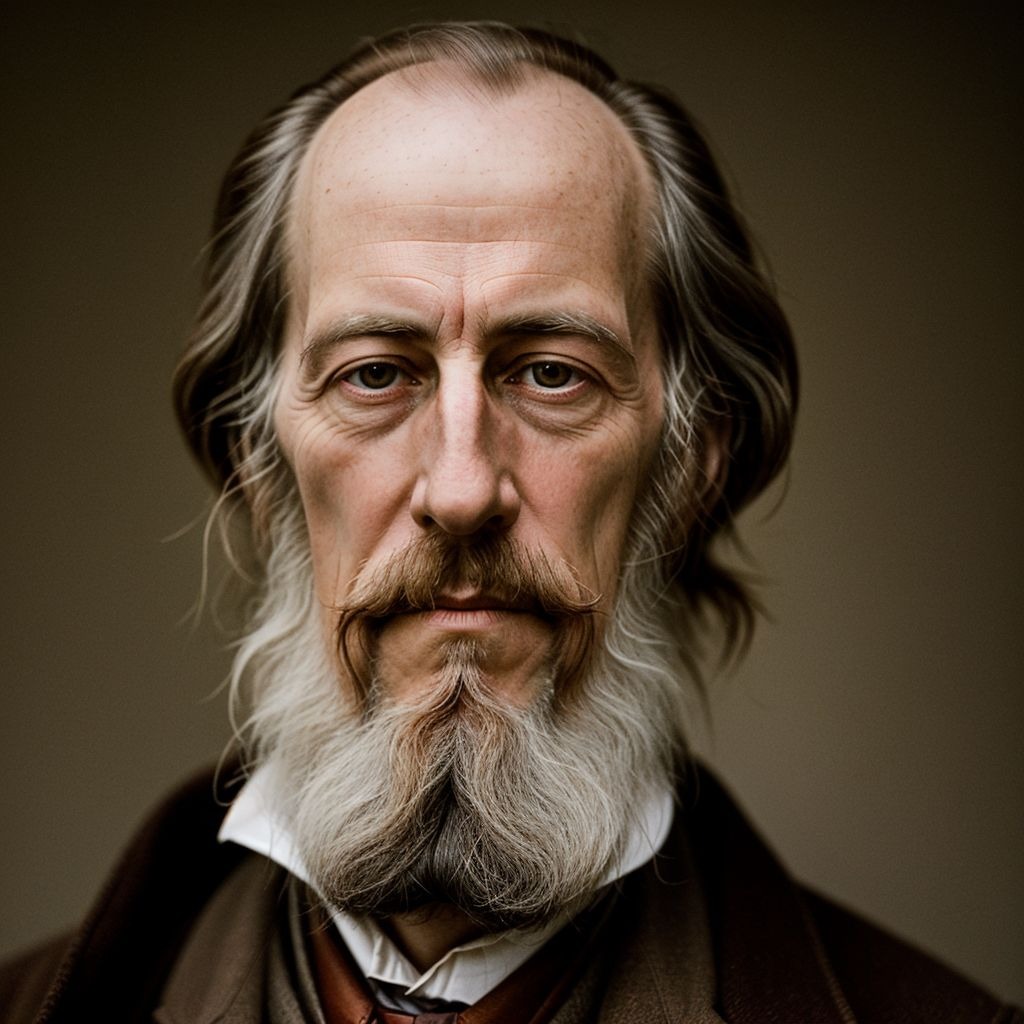
James Clerk Maxwell. His name has been echoing in my mind for weeks now, ever since I stumbled upon a worn-out textbook on electromagnetic theory in the college library’s discard bin. I remember feeling a strange sense of familiarity as I flipped through its yellowed pages, like reconnecting with an old friend from childhood.
What drew me to Maxwell was his seemingly contradictory nature – part mathematician, part physicist, part theologian. His work seamlessly weaves together abstract concepts and tangible observations, making him both captivating and intimidating at the same time. As a writer, I appreciate the way he uses language to bridge gaps between different disciplines, creating a sense of continuity where none existed before.
I’ve always been fascinated by the way Maxwell’s thoughts on faith and science intersected. On one hand, his commitment to the Presbyterian Church seems almost…old-fashioned in today’s context. The way he saw God as an underpinning for the natural world – a universe governed by laws and principles that echoed the human experience – feels both comforting and alienating at the same time.
As someone who grew up questioning the limits of science, I’ve often found myself torn between the certainties of empirical evidence and the mysteries of faith. Maxwell’s struggles with this dichotomy resonate deeply within me. His notion of a “God of order” resonates with my own experiences as an artist – the way I try to impose meaning on chaos through patterns, structures, and narratives.
But what really unsettles me is how Maxwell’s own life unfolded in such contrast to his groundbreaking work. His obsessive focus on mathematical elegance led him to neglect his relationships, particularly with his family. The stories of his wife, Katherine Mary Dewar, waiting for him at home while he spent countless hours locked away in his study – it’s a heartbreaking reminder that even the most brilliant minds can be consumed by their own ambitions.
As I continue to read about Maxwell, I’m struck by how little we truly know about this person behind the equations and theories. His inner life remains shrouded in mystery, leaving me to wonder what drove him forward, what motivated his creative breakthroughs, and what secrets he took with him to the grave.
Perhaps that’s why I find myself drawn back to Maxwell again and again – because in his enigmatic presence, I see a reflection of my own search for meaning. A perpetual questioning of how we navigate the boundaries between science and art, reason and faith.
As I delve deeper into Maxwell’s life and work, I’m increasingly struck by the tension between his precision and passion. On one hand, his mathematical prowess is breathtaking – the way he derived the equations that unified the previously separate realms of electricity and magnetism still feels like magic to me. The elegance with which he solved problems was not just a product of his intellect, but also a reflection of his deep love for understanding the underlying order of the universe.
But alongside this precision, there’s a sense of restlessness, of discontent. Maxwell was known to be a perfectionist, always seeking to refine and improve his theories. This drive pushed him to explore new ideas and push the boundaries of what was thought possible, but it also left him vulnerable to criticism and self-doubt. I find myself wondering if this constant striving for excellence ever came at the cost of his own happiness.
I think about my own struggles with creative perfectionism – how often I’ve gotten lost in the pursuit of a “perfect” draft or a “just right” sentence, only to realize that it’s an unattainable goal. Maxwell’s story feels like a cautionary tale, reminding me that there’s value in embracing imperfection and taking risks, even if it means risking failure.
As I read about Maxwell’s relationships with his colleagues and contemporaries, I’m struck by the complexity of his social dynamics. He was known for his wit and humor, but also for his occasional irritability and competitiveness. It’s clear that he was a deeply human being, full of contradictions and flaws – and yet, his intellect and creativity continue to inspire awe.
I find myself reflecting on my own relationships and how I navigate the boundaries between collaboration and competition. As a writer, I’m used to working alone, but when I do work with others, I often struggle to balance my desire for autonomy with the need for feedback and support. Maxwell’s example reminds me that even the most brilliant minds need human connection to flourish.
Perhaps this is why I keep coming back to Maxwell – not just because of his groundbreaking theories or his intriguing personal life, but because he represents a reminder that creativity and curiosity are essential parts of being human. His story encourages me to embrace my own contradictions, to celebrate my imperfections, and to seek out connections with others who share my passions.
As I delve deeper into Maxwell’s life and work, I’m increasingly struck by the ways in which he embodied the tensions between creativity and convention. His commitment to his faith and his dedication to scientific inquiry might seem at odds, but it’s precisely this blend of perspectives that allowed him to make breakthroughs that others couldn’t.
I find myself wondering how Maxwell’s experiences as a Scottish gentleman farmer influenced his approach to science. Growing up on the estate of Glenlair, he was surrounded by the rhythms of nature and the practicalities of rural life. This connection to the land and its creatures seems to have instilled in him a sense of wonder and awe that he carried with him into his scientific pursuits.
As I read about Maxwell’s struggles with depression and anxiety, I’m reminded of my own experiences with mental health. The way he used writing as a means of coping with his emotions resonates deeply within me – the act of putting words on paper can be both therapeutic and cathartic.
But what really fascinates me is how Maxwell’s approach to creativity and problem-solving was shaped by his experiences as an outsider. As a member of the Scottish nobility, he was steeped in tradition and convention, yet he also felt stifled by the expectations placed upon him. His decision to pursue a career in science, despite its unconventional nature at the time, speaks to a sense of restlessness and discontent that I think many creatives can identify with.
I wonder if Maxwell’s experiences as an outsider – someone who didn’t quite fit into the traditional molds of his time – inform his approach to mathematics. Did he see equations as a means of imposing order on a chaotic world? Or did he view them as a way of expressing the intricate beauty that lay hidden beneath the surface?
As I continue to explore Maxwell’s life and work, I’m struck by the ways in which his legacy extends far beyond his scientific contributions. He represents a reminder that creativity and curiosity are essential parts of being human – that even in the face of adversity, we can find solace and inspiration in the world around us.
I think about how often I get caught up in my own struggles with self-doubt and perfectionism, how easily I lose sight of the bigger picture. Maxwell’s story serves as a powerful reminder to stay grounded, to keep seeking out new perspectives and experiences that can help me grow as a writer and as a person.
As I close this chapter on Maxwell for now, I’m left with more questions than answers – but it’s precisely this sense of wonder and curiosity that draws me back to his story again and again.
I find myself returning to the intersection of science and faith in Maxwell’s life, wondering how he navigated the tensions between these two seemingly opposing forces. His notion of a “God of order” resonates deeply with my own experiences as an artist, trying to impose meaning on chaos through patterns, structures, and narratives.
As I delve deeper into his work, I’m struck by the ways in which Maxwell’s theology informs his scientific inquiry. He saw the natural world as a reflection of God’s design, with laws and principles that echoed the human experience. This perspective allowed him to approach science with a sense of wonder and awe, rather than mere intellectual curiosity.
I think about my own relationship with faith, how I grew up questioning the limits of science and the mysteries of the universe. Maxwell’s struggles with this dichotomy resonate deeply within me, making me wonder if it’s possible to reconcile these two seemingly opposing forces in my own life.
The more I read about Maxwell, the more I’m struck by his humility in the face of uncertainty. Despite his groundbreaking contributions to science, he remained open to new ideas and perspectives, recognizing that there was still so much to learn and discover. This humility is something I strive for as a writer, but often find myself falling short.
As I explore Maxwell’s personal life, I’m struck by the ways in which he prioritized his work over his relationships. His obsessive focus on mathematical elegance led him to neglect his family and friends, leaving me to wonder if this was a trade-off worth making. Did his dedication to science ultimately bring him greater fulfillment, or did it come at the cost of meaningful connections with others?
I think about my own priorities as a writer, how easily I get caught up in the pursuit of creative perfectionism. Maxwell’s story serves as a cautionary tale, reminding me that there’s value in embracing imperfection and taking risks, even if it means risking failure.
As I continue to reflect on Maxwell’s life and work, I’m left with more questions than answers. But perhaps that’s the point – to acknowledge the mysteries of the universe and our place within it, rather than trying to impose a predetermined narrative or solution. Maxwell’s story is a reminder that creativity and curiosity are essential parts of being human, and that even in the face of uncertainty, we can find solace and inspiration in the world around us.
One aspect of Maxwell’s life that I keep coming back to is his sense of humor. He was known for his wit and ability to find levity in even the most mundane situations. I’ve found myself chuckling at anecdotes about his clever remarks and playful jabs with colleagues, feeling a strange kinship with this brilliant scientist who also knew how to laugh.
As someone who struggles with anxiety and self-doubt, I often find it difficult to see the humor in my own situation. But Maxwell’s example encourages me to cultivate a sense of playfulness and irreverence, even when faced with uncertainty or criticism. It’s a reminder that creativity and curiosity can be joyful pursuits, not just serious endeavors.
I’m also struck by Maxwell’s relationships with women in his life, particularly his wife Katherine Mary Dewar. The stories of her waiting patiently for him at home while he worked on his theories are both heartbreaking and inspiring. I find myself wondering about the dynamic between them – did she support his work, or was she often left to pick up the pieces when he became consumed by his research?
As a woman who’s struggled with her own relationships and priorities, I’m drawn to Katherine’s example of patience and understanding. She represents a reminder that love and partnership can be just as important as intellectual pursuits, even for those of us who are deeply passionate about our work.
But what really fascinates me is the way Maxwell’s personality seemed to shift depending on his surroundings and relationships. With colleagues, he was witty and charming; with his wife, he was tender and loving. I wonder if this adaptability was a strength or a weakness – did it allow him to navigate complex social situations, or did it lead to feelings of disconnection and inauthenticity?
As I reflect on Maxwell’s life and work, I’m increasingly aware of the ways in which he embodied both creativity and convention. His commitment to his faith and his dedication to scientific inquiry might seem at odds, but they also complemented each other in unexpected ways. This blend of perspectives allowed him to approach science with a sense of wonder and awe, rather than mere intellectual curiosity.
I think about how often I get caught up in trying to fit into predetermined molds or expectations – as a writer, as a friend, as a partner. Maxwell’s story serves as a reminder that it’s okay to be messy and complicated, to embody contradictions and paradoxes. By embracing our own complexity, we can find new ways of thinking and creating that are more authentic and meaningful.
As I continue to explore Maxwell’s life and work, I’m struck by the way he saw himself in relation to others – as a member of the Scottish nobility, as a scientist among his peers, as a husband and father. His sense of identity was multifaceted and dynamic, reflecting the various roles and relationships that shaped his life.
I wonder if this fluidity of identity is something I can learn from – how to navigate multiple perspectives and personas without getting lost in the process. As a writer, I often struggle with finding my own voice and perspective, feeling like I’m constantly juggling competing demands and expectations. Maxwell’s example encourages me to be more confident in my own skin, to trust that my various roles and relationships can coexist and inform one another.
As I close this chapter on Maxwell for now, I’m left with a sense of awe and curiosity – about the mysteries of the universe, about the complexities of human nature, and about the ways in which creativity and curiosity can illuminate even the darkest corners of our lives.