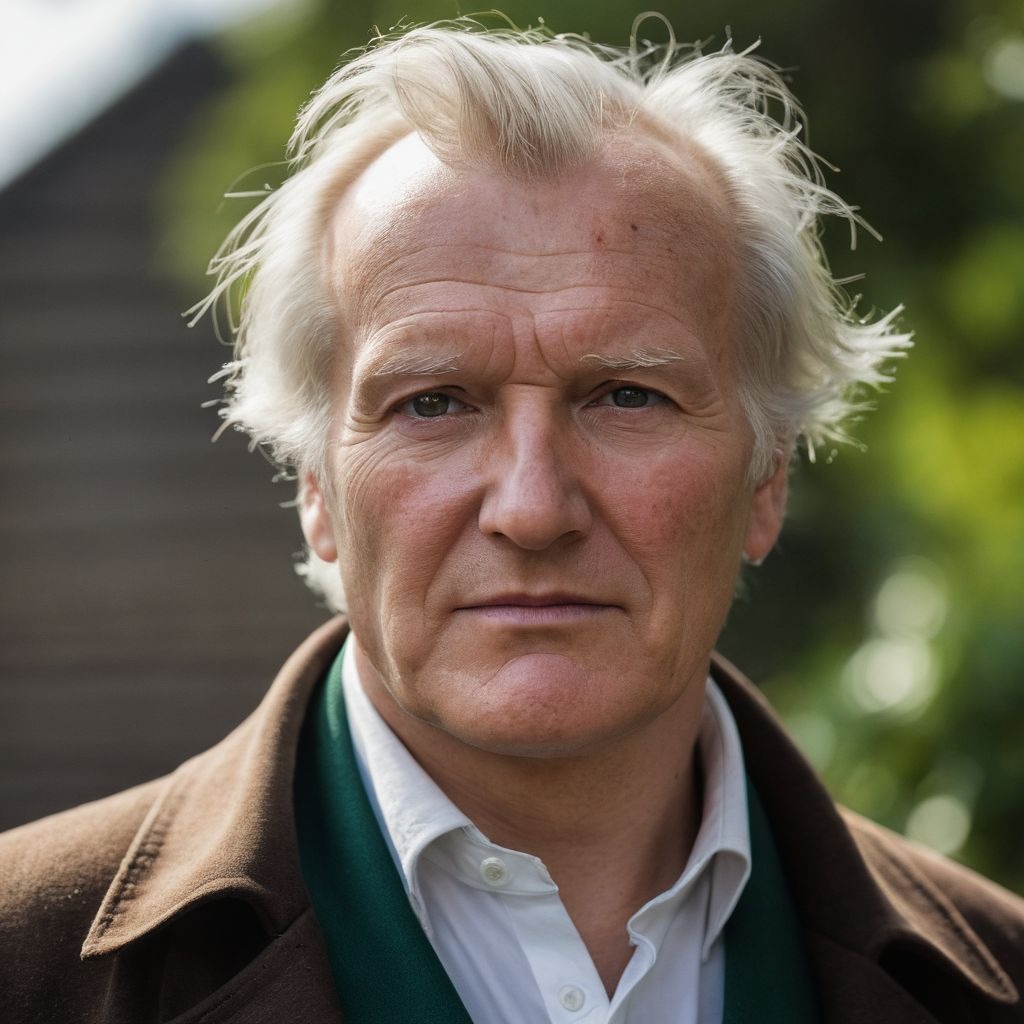
I’ve been fascinated by Alexander von Humboldt for months now, ever since I stumbled upon a biography of his life while browsing through my college library’s shelves. His name kept popping up in conversation with friends and acquaintances who were studying environmental science or history, but it wasn’t until I started reading about him that I truly understood why they found him so captivating.
As I delved deeper into his story, I began to feel a sense of discomfort – not because he was doing anything wrong, but because he embodied traits that I admire yet struggle with in my own life. Humboldt’s insatiable curiosity and thirst for knowledge are qualities that I aspire to, but his unwavering dedication to his work often led him to prioritize it over relationships and personal well-being.
I find myself wondering what it would be like to have such an unshakeable passion for learning, even if it means sacrificing other aspects of my life. Humboldt spent decades traveling the world, collecting data, and observing natural phenomena – all in pursuit of understanding the intricate web of connections between the earth’s ecosystems. His journeys took him from the deserts of South America to the mountains of Asia, and his observations helped shape our modern understanding of geography, botany, and geology.
But what strikes me as particularly compelling is Humboldt’s holistic approach to knowledge. He saw no boundaries between disciplines; he didn’t separate science from art or nature from culture. His work was a testament to the interconnectedness of all things – a concept that resonates deeply with me. As someone who writes as a way to process and make sense of my own thoughts, I’ve come to appreciate how ideas can seep into each other from unexpected places.
I’m drawn to Humboldt’s writing style as well, which is both poetic and meticulous. His descriptions of the natural world are infused with a sense of wonder that feels almost palpable – like he’s trying to convey the awe-inspiring complexity of it all through language alone. At the same time, his scientific observations are remarkably detailed and precise, often accompanied by elaborate sketches and diagrams.
This blend of artistry and rigor reminds me of my own struggles as a writer. I often find myself oscillating between the desire for precision and clarity on one hand, and the need to express the messy, intangible aspects of human experience on the other. Humboldt’s work shows me that it’s possible to balance these competing demands – to merge the scientific with the poetic.
As I continue to explore Humboldt’s life and ideas, I’m struck by the way his legacy continues to unfold long after his passing. His influence can be seen in everything from conservation efforts to modern environmentalism; his name is invoked in discussions about climate change, biodiversity, and sustainable development. And yet, despite this enduring impact, he remains a somewhat enigmatic figure – someone who defies easy categorization or interpretation.
I think that’s part of what draws me to him: the sense that there’s still so much to uncover, so many layers to peel back and explore. Humboldt’s story is a reminder that even in an age where knowledge is readily available at our fingertips, there are still vast expanses of uncharted territory waiting to be mapped – both within ourselves and in the world around us.
For now, I’ll continue to follow the threads of his life, seeing where they lead me. The more I learn about Alexander von Humboldt, the more I realize how little I know – not just about him, but about myself and my own place in this complex, beautiful world we inhabit.
As I delve deeper into Humboldt’s story, I find myself thinking about the concept of a “universal man” – someone who embodies expertise across multiple fields, effortlessly bridging the gaps between science, art, literature, and philosophy. Humboldt is often referred to as such, and it’s easy to see why: his work spans geology, botany, anthropology, and even music. He was a polyglot, speaking multiple languages fluently, and his travels took him across vast cultural landscapes.
But what fascinates me about this idea of the universal man is its tension with my own experience as a writer. I’m constantly torn between the desire to be a generalist – to dip into various subjects and explore their connections – and the need to specialize in order to make meaningful contributions to any one field. Humboldt’s example suggests that it’s possible to do both, but at what cost?
I think about my own writing process, where I often find myself getting stuck between the worlds of fiction and nonfiction. When I’m writing about science or history, I feel a strong urge to get the facts right – to be precise and accurate in my descriptions. But when I’m writing creatively, I want to allow for more freedom and experimentation, to let my imagination run wild. Humboldt’s work shows me that these opposing forces don’t have to be mutually exclusive; that with enough curiosity and practice, one can find a way to integrate the two.
But what about the human cost of such an integrated approach? Humboldt’s dedication to his work took a toll on his personal relationships and physical health. His travels were often grueling and isolating, leaving him with little time for family or friends. I worry that in pursuing my own writing ambitions, I’ll be forced to make similar choices – ones that might lead to burnout or isolation.
And yet, as I continue to explore Humboldt’s life, I’m struck by the ways in which his work has been passed down through generations. His journals and letters have been widely read and studied; his ideas have influenced countless thinkers and activists. In a way, his legacy has created a kind of temporal loop – where past and present converge, and the connections between people and ideas become visible.
I’m left wondering: what will be my own contribution to this ongoing conversation? Will I find ways to integrate my passions for writing and learning in a way that honors Humboldt’s example without sacrificing my own well-being? Or will I stumble upon new paths – ones that don’t require me to be a universal man, but rather someone who is willing to explore the messy intersections between disciplines and experiences?
As I ponder these questions, I find myself returning to Humboldt’s concept of “der Welt als ein Ganzes” – the world as a whole. He believed that everything is connected, that there are no artificial boundaries separating one discipline from another. This idea resonates deeply with me, not just as a writer, but as a human being trying to make sense of this complex, interconnected world.
I think about how often we compartmentalize our lives – dividing our interests into neat little boxes, never allowing them to bleed into each other. Humboldt’s work shows me that this is a false dichotomy; that the lines between science and art, reason and emotion, are not as clear-cut as we might think.
I’m reminded of my own experiences trying to write about social justice issues – how I often feel torn between the desire to present facts and data, and the need to convey the emotional resonance of a particular issue. Humboldt’s holistic approach suggests that I don’t have to choose between these two perspectives; that I can weave them together in a way that creates a richer, more nuanced understanding of the world.
But what about when it comes to my own relationships? How do I balance the demands of my writing career with the need for human connection and community? Humboldt’s life was marked by periods of intense isolation – times when he had to push himself to the limit in order to achieve his goals. And yet, despite this isolation, his work has left a lasting impact on the world.
I’m not sure what it means to “leave a lasting impact” on the world, or how I can do so as a writer. Humboldt’s legacy is complex and multifaceted – he was both a brilliant scientist and a passionate advocate for social justice. He saw the world as a vast, interconnected web of relationships, and his work reflects that.
As I continue to explore Humboldt’s life and ideas, I’m struck by the ways in which his story challenges my own assumptions about creativity and productivity. What does it mean to be a “successful” writer? Is it measured by the number of books sold, or the awards won? Or is it something more – a sense of contribution, of making a meaningful impact on the world?
I don’t have answers to these questions yet. But I do know that Humboldt’s example has given me permission to explore my own writing in new and unexpected ways. His life shows me that creativity can take many forms, and that even in the most isolated moments, there is always the possibility for connection and community.
For now, I’ll continue to follow the threads of his story – seeing where they lead me, and what insights they might offer into my own writing journey. The more I learn about Alexander von Humboldt, the more I realize how much I still have to learn – not just about him, but about myself and this complex, beautiful world we inhabit.
As I delve deeper into Humboldt’s life, I’m struck by his ability to see beauty in even the most mundane aspects of nature. He writes about the intricate patterns on a leaf, the way light filters through a forest canopy, or the majestic curves of a mountain range. His descriptions are not just scientific observations; they’re also poetic tributes to the world’s inherent wonder.
I find myself wanting to emulate this kind of attention to detail in my own writing. As someone who often struggles with getting lost in abstract ideas or grand concepts, Humboldt’s emphasis on the small, everyday things reminds me that beauty can be found in the most unexpected places.
But it’s not just his writing style that resonates with me; it’s also his approach to science itself. Humboldt was a product of his time – an era when the natural world was still seen as a vast, uncharted territory waiting to be explored and mapped. And yet, even in the face of this “unknown,” he approached science with a sense of reverence and awe.
I wonder if there’s something to be learned from this approach – a way of engaging with the world that is both grounded in empirical evidence and open to the mysteries that lie beyond our current understanding. As someone who writes about complex social issues, I often find myself getting caught up in the demands of “getting it right” or presenting a clear, data-driven argument. But Humboldt’s work shows me that science doesn’t have to be reduced to a series of cold, clinical facts; it can also be a source of wonder and inspiration.
As I continue to explore Humboldt’s story, I’m drawn to his experiences as an outsider in the scientific community. As a young man from a Prussian aristocratic family, he was expected to follow in his father’s footsteps and pursue a traditional career in politics or government. But Humboldt had other plans – he wanted to explore the natural world, to collect data and observe phenomena firsthand.
I see parallels between Humboldt’s experiences and my own struggles as a writer from a non-traditional background. Growing up in a family where art and creativity were valued, but not necessarily seen as viable career paths, I often felt like an outsider looking in – someone who didn’t quite fit into the neat categories of “artist” or “writer.” Humboldt’s story shows me that it’s possible to defy these expectations, to pursue one’s passions even when they don’t align with societal norms.
But what about the costs of such a path? Humboldt faced significant challenges throughout his career – from financial struggles to personal losses. His relationships were often marked by tension and conflict, particularly with those who didn’t understand or appreciate his work.
I’m reminded that every choice we make comes with its own set of trade-offs; that pursuing our passions can sometimes require us to sacrifice other aspects of our lives. Humboldt’s legacy shows me that even in the midst of uncertainty and adversity, it’s possible to find a way forward – to create something meaningful and lasting from the ashes of our challenges.
As I reflect on these themes, I’m struck by the ways in which Humboldt’s story continues to resonate with me. His life is a testament to the power of curiosity, creativity, and perseverance – qualities that I aspire to embody in my own writing journey.
But what does it mean to write about someone like Alexander von Humboldt? Is it an act of homage, or simply an exercise in intellectual curiosity? As I continue to explore his story, I’m left wondering: how can I honor the legacy of this remarkable individual without appropriating or reducing him to a set of neat, manageable categories?
The more I learn about Humboldt, the more I realize that there’s no easy answer to this question. His life is complex and multifaceted – a rich tapestry of experiences, ideas, and relationships that defy simplification.
And yet, it’s precisely this complexity that draws me in. As a writer, I’m constantly seeking ways to capture the nuances and contradictions of human experience; to convey the messy, intangible aspects of life in all its beauty and ugliness.
Humboldt’s story shows me that even in the face of uncertainty and ambiguity, there is always the possibility for meaning and connection – not just with others, but also with ourselves.