Download PDF: 19961203 – DDForm1697
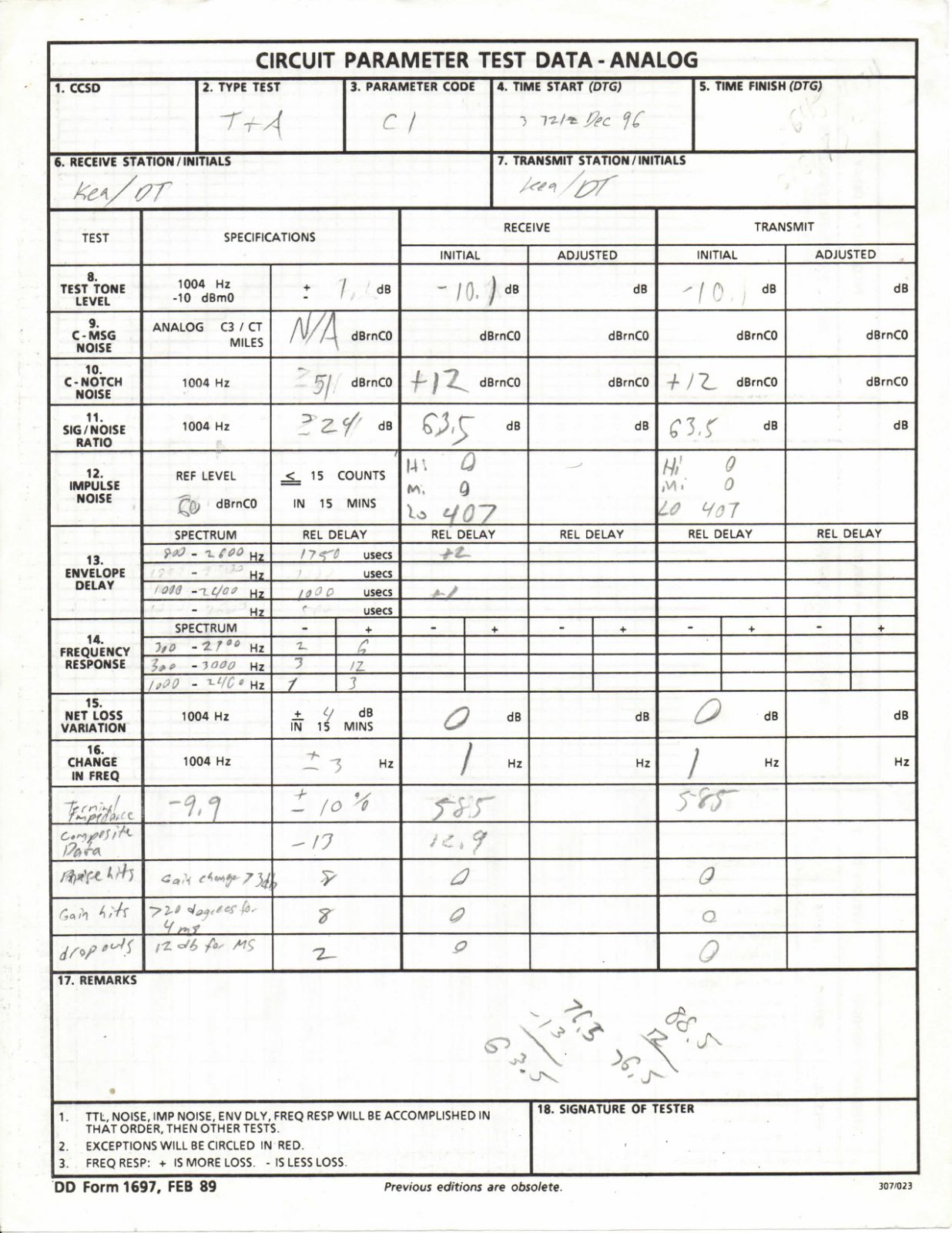
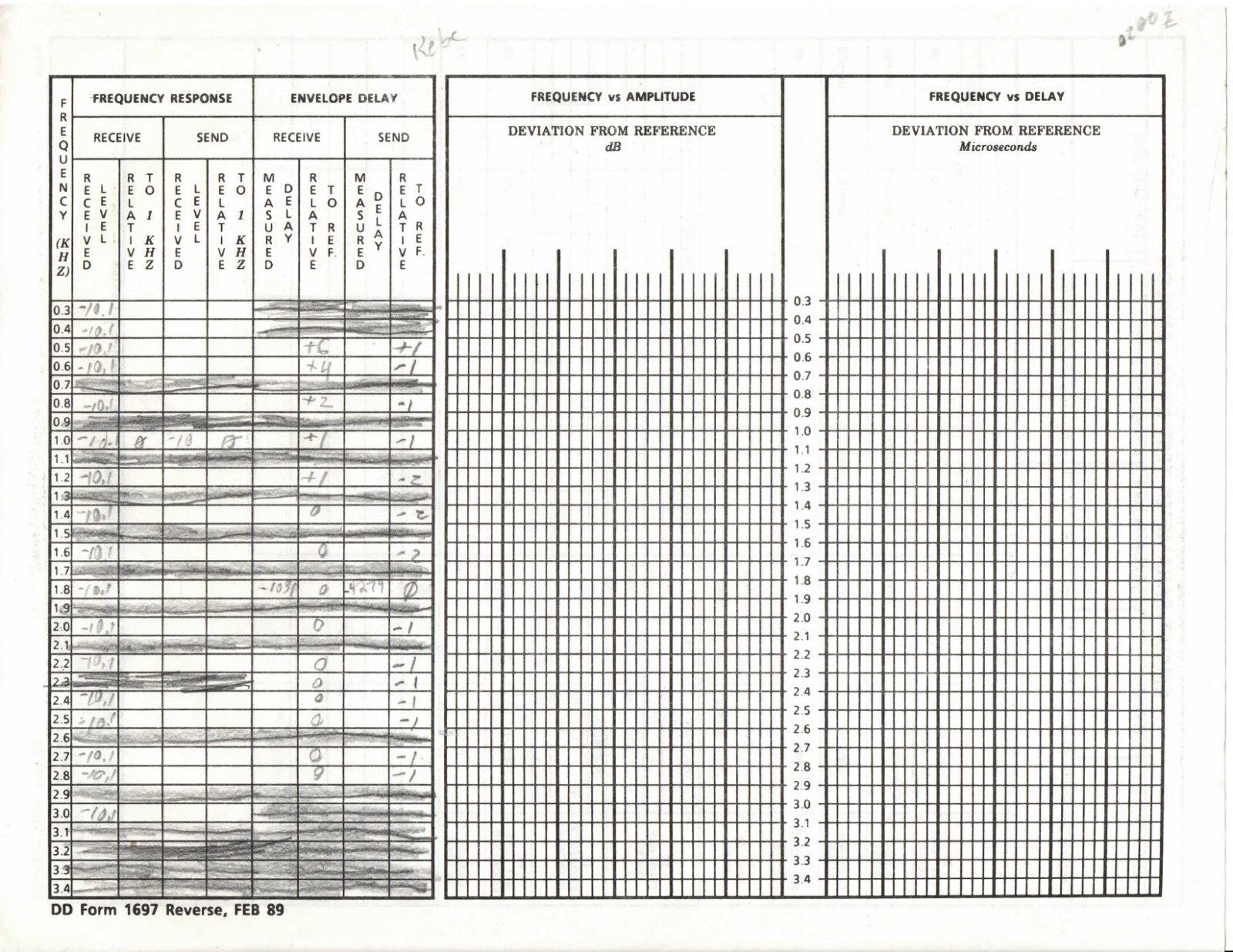
While stationed at Kadena Air Base in Okinawa, Japan, one of the tasks I sometimes had to perform was circuit testing and acceptance tests. At first glance, that might sound like a dry, technical duty buried in the shadows of military operations — just another behind-the-scenes requirement that never makes the news. But the reality was far richer. Each test I conducted wasn’t just about circuits and voltages; it was about trust, responsibility, and ensuring that the massive communications backbone of one of the most strategically important bases in the Pacific functioned without flaw. What looked like a clipboard, a test set, and a jumble of cables was actually the silent lifeline of international security. And on one occasion, I remember vividly holding the results of a test I had run, the lines and figures staring back at me, representing much more than numbers — they represented readiness, accountability, and the connection between nations.
When people think of the U.S. military presence in Okinawa, they often imagine fighter jets streaking through the skies, ships docking at harbors, or Marines marching in formation. Rarely do they think about the invisible arteries of communication — the circuits that make everything possible. Every order, every radar report, every encrypted conversation between commanders traveled through those circuits. Without them, the most advanced aircraft would have been grounded, the sharpest intelligence dulled, the most well-trained soldiers cut off from leadership. The truth is that no mission succeeds without communications, and no communications succeed without people like us doing the unglamorous but essential work of circuit testing.
Circuit testing itself was a meticulous process. Acceptance testing was even more intense. It wasn’t just about plugging in equipment and checking if a light blinked green. We had to verify every parameter: signal quality, latency, attenuation, and noise levels. These weren’t abstract measurements — if the readings weren’t within tolerance, it could mean garbled communications in the middle of a crisis or an outright failure when lives were on the line. The Defense Information Systems Agency (DISA) had exacting standards, and they expected every facility to meet them. At Kadena, those standards weren’t just a checklist. They were a source of pride. Passing a circuit acceptance test was proof that our systems were world-class and that the Pacific’s most critical hub of operations had the resilience it needed.
I remember one particular day when a test set beeped back results that didn’t align with expectations. The figures were off — just enough to cause concern. I traced the line, retested, verified with another tech. Eventually, after hours of work, we tracked the anomaly to a faulty connector deep in the distribution frame. Fixing it was tedious, but when the retest results came back within perfect tolerance, the sense of satisfaction was immense. That single connector might not seem like much, but in the chain of global defense, it was the difference between secure communications and a potential vulnerability. That day taught me that diligence in even the smallest details mattered, because in communications, the smallest failure could ripple outward with enormous consequences.
Okinawa itself added to the gravity of the work. Kadena Air Base wasn’t just another installation — it was the linchpin of U.S. air power in the Pacific. The island’s location, close to Taiwan, the Korean Peninsula, and the South China Sea, meant it was always on the front line of geopolitical tension. During my time there, the Cold War had ended, but the echoes of its strategic posture remained. North Korea’s unpredictability, China’s growing assertiveness, and the ever-present need to reassure Japan all made Kadena indispensable. Every circuit we tested wasn’t just about the base; it was about the stability of the region. Knowing that put weight on our shoulders, but it also gave meaning to the long nights, the repetitive checks, and the endless paperwork.
There was also a human side to the testing process. It wasn’t just me and a machine. We worked as a team, sharing responsibilities, double-checking each other’s results, and learning from mistakes. In the cramped test rooms filled with humming equipment, we developed camaraderie. We joked, we argued over methods, and we competed silently to see whose results would come back the cleanest. At the end of the day, though, we knew we were all on the same side. The base depended on us, and we depended on each other. The pride in passing a difficult acceptance test wasn’t just individual — it was collective. We celebrated those moments because we knew how much effort went into them.
The paperwork from a circuit test might seem dull to an outsider, just columns of figures and acronyms. But I kept a few of those results as reminders. They were proof of the work, proof of the responsibility carried, and proof of how even hidden roles contributed to something much larger. They reminded me that not all heroes wear flight suits or stand on a parade ground. Some heroes sit in test rooms, headphones on, scribbling down results while the world outside spins on, oblivious to the fact that their work is what keeps the entire system alive.
Looking back, those acceptance tests were lessons in more than just communications. They were lessons in persistence, attention to detail, and the importance of unseen labor. They taught me that history isn’t only shaped by the grand events we see on the news, but also by the quiet victories of people making sure the circuits don’t fail. In that way, the beeping of a test set was as much a sound of security as the roar of a jet engine overhead.
So yes, while stationed at Kadena Air Base in Okinawa, I had to perform circuit tests and acceptance tests. And the results I held in my hands all those years ago weren’t just numbers — they were the story of reliability, of unseen labor, and of the assurance that, when the world demanded it, the lines of communication would be there.