
I’ve just finished college and stepped into a part of life where very little feels settled. I’m moving through the world with a light bag and an open schedule, paying attention as I go. I’m less interested in the moments people are applauded for and more curious about the quiet stretches in between—the parts of life that shape someone long before anyone is watching. I find myself noticing what people linger on, what they carry with them, and what they leave unsaid. I don’t write to explain lives or to draw neat conclusions. I write because observing feels more honest than summarizing. I’m drawn to small, telling details, to contradictions that don’t resolve, to the way uncertainty can shape a person just as much as confidence ever does. Most lives don’t unfold in clean lines, and I’ve found that meaning often shows up only after you stop trying to tie everything together. When I write about someone, I try to stand close enough to feel their presence, but far enough away to let them remain themselves. I avoid judgment and resist endings that feel too finished. I trust readers to recognize what feels familiar without being guided there. I’m optimistic not because I believe people are simple or easy to understand, but because I believe they’re worth the effort. Paying attention feels like a way of taking the world seriously, even when it’s complicated. Maybe especially then.
Author's posts
Louise Glück: Where Intensity Meets Elegance (Or Does It?)
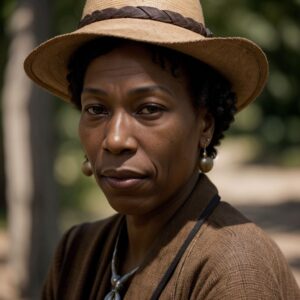
Louise Glück has been on my mind a lot lately, probably because I’m trying to figure out what makes her poetry so compelling. At first glance, she seems like the epitome of quiet confidence – a Pulitzer Prize winner, National Book Award recipient, and renowned poet with a distinctive voice that’s both lyrical and precise. …
Claude Levi Strauss: The Anthropologist Who Made Me Question My Optimism

Claude Levi-Strauss. I stumbled upon his name while reading a book on anthropology, but it wasn’t until I began to dig deeper that I felt an odd sense of connection to him. At first, I was drawn to the complexity of his ideas – the way he wove together structuralism and cultural relativism, challenging traditional …
Elizabeth Barrett Browning: Love Letter or Liberation Anthem?
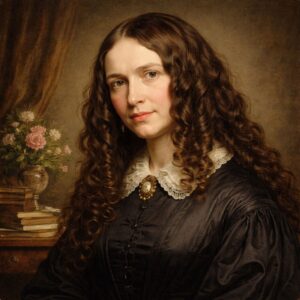
I’ve always been fascinated by Elizabeth Barrett Browning’s life, particularly her relationship with Robert Browning. It’s not just the romance – though that’s certainly a big part of it – but the way she navigated her own desires and ambitions within it. For me, the most compelling aspect is how Elizabeth, as a poet, struggled …
Niels Bohr: Where Certainty Goes to Die (Or Does It?)

Niels Bohr – the man who dared to challenge the universe’s secrets, and in doing so, left me questioning my own place within it. I first encountered his name in a college physics class, where we spent hours pouring over his theories on atomic structure and quantum mechanics. But as I delved deeper into his …
Flannery O’Connor: What Would Happen If She Got Her Hands on My Family?
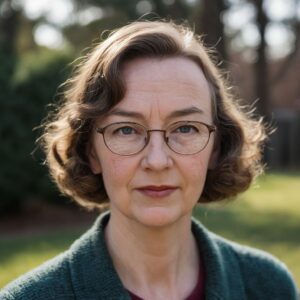
I’ve always been fascinated by Flannery O’Connor’s writing, but it wasn’t until I read her short stories that I started to feel a real connection to her. There was something about the way she wrote about people – their flaws and contradictions, their cruelty and kindness – that resonated with me. As I read through …
Gregor Mendel: Talking to Trees While Everyone Else is Talking to Themselves
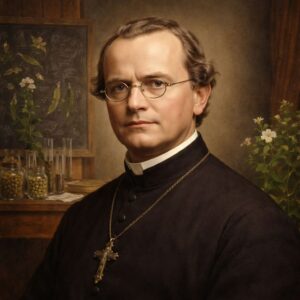
I’ve always been drawn to the quiet, methodical nature of Gregor Mendel’s work. As a writer, I appreciate how he approached his research with precision and patience, like a gardener tending to the intricate patterns of a plant’s growth. What fascinates me is how Mendel’s experiments on pea plants led him to discover the fundamental …
Paul Celan: Where Identity Goes to Hide (And Why It’s Still Talking to Me)
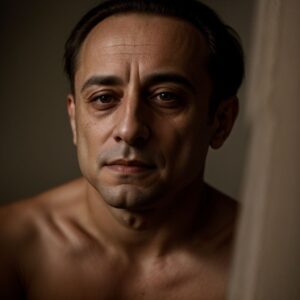
Paul Celan’s poetry has been a constant presence in my life since I first stumbled upon it in a literature class during my junior year of college. His words have haunted me, lingered with me, and sometimes even felt like they were speaking directly to me. But as much as his poetry resonates, there are …
Susan B Anthony: The Rebel in a Corset
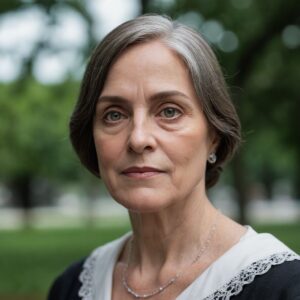
I’ve been thinking a lot about Susan B. Anthony lately, and what draws me to her is the sense of contradictions that surround her legacy. On one hand, she’s often celebrated as a pioneering figure in the fight for women’s suffrage – and rightfully so. Her tireless efforts to secure voting rights for women are …
Herman Melville: The Patron Saint of My Inner Contradictions

Herman Melville’s words have been lingering in my mind for years, even before I dove into his novels as a college student. There’s something about the way he tackles complex themes like identity, morality, and the human condition that resonates with me on a deep level. I think it’s because his writing often feels like …
Italo Calvino: Where Fragmented Thoughts are a Beautiful Mess
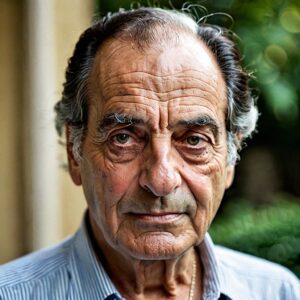
Italo Calvino’s words have a way of slipping into my thoughts like whispers from an old friend. I remember stumbling upon his essays and stories while researching for a paper on Italian literature in college. At first, they felt foreign – the language was poetic, the ideas were complex, and the tone was detached yet …
Margaret Mead: The Unsettling Truth About Being True to Myself (Mostly)

Margaret Mead. I’ve always been fascinated by her, but not for the reasons you’d expect. It’s not her groundbreaking research on adolescence, though that does get a nod of respect from me. As someone who’s still figuring out this whole “adulting” thing, I appreciate that she didn’t shy away from exploring the complexities of growing …
Alan Turing’s Face Haunts Me, But Does It Haunt Him Too?
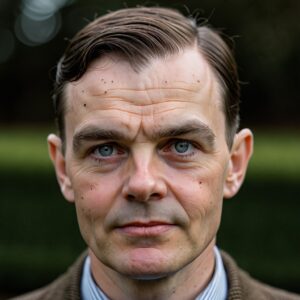
Alan Turing’s face haunts me. I’ve seen it on a worn-out T-shirt my friend wore to class, and again on the Wikipedia page that I must have stumbled upon during a late-night research session for a paper. The first time I saw him was probably in an image of his later years, gaunt and bespectacled, …
Elizabeth Bishop: The Cartographer of In-Between Places
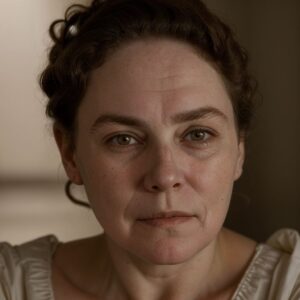
Elizabeth Bishop’s poetry has been a constant companion to me during my college years, and yet I’ve only recently started to grapple with what it is about her writing that resonates so deeply. It’s not just the precision of her language or the vividness of her imagery – although those things are certainly part of …
Johannes Kepler: When Perfection is a Never-Ending Orbit
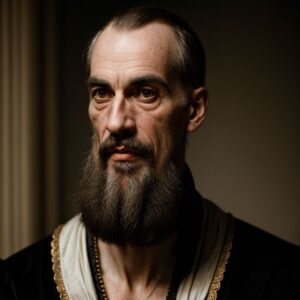
Johannes Kepler – the man who cracked the code of our solar system’s rhythm. I’ve always been fascinated by his story, but it wasn’t until I stumbled upon a biography of his life that I started to grasp the depth of my fascination. It’s not just about his groundbreaking discoveries; it’s about the way he …
Octavia Butler: Where My Outsider Heart Beats
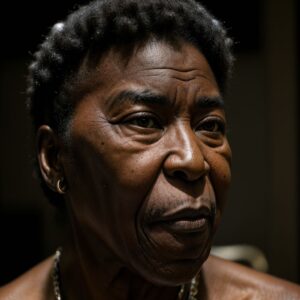
I’ll admit it: Octavia Butler fascinates me, but not just because she’s a trailblazer or a genius writer (although those things are definitely true). I’m drawn to the complexities that make her story feel both deeply personal and universally relatable. One of the things that’s always struck me about Butler is how her experiences with …
Rosalind Franklin: The Invisible Thread That Almost Broke Me Too
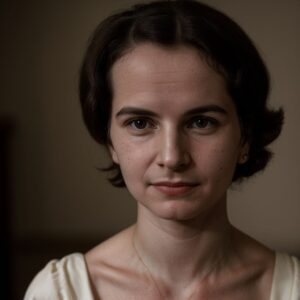
I’ve always felt a pang of fascination when I think about Rosalind Franklin’s story. Her life is like a puzzle with too many missing pieces, and yet it’s the gaps that intrigue me. What I know is that she was a brilliant British biophysicist who made significant contributions to our understanding of DNA structure, but …
Leo Tolstoy: The Elusive Truth and My Own Fumbling Attempts at Grasping It
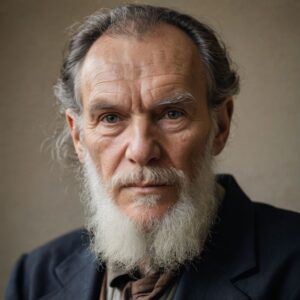
Leo Tolstoy’s face keeps popping up in my mind, a constant presence in the crowded landscape of writers I’ve read and admired. At first glance, he seems an imposing figure – tall, brooding, with a philosophical intensity that makes me feel like I’m staring into the depths of the Russian soul. But as I delve …
Hannah Arendt: Where Idealism Meets Ego-Stroke (And How to Tell the Difference)

I’ve been reading Hannah Arendt’s work for a while now, and I keep coming back to her concept of “the banality of evil.” It’s not just the idea that ordinary people can commit atrocities, but also the way she suggests that this is often due to a lack of imagination. For me, it’s both fascinating …
Carl Sagan: The Uncomfortable Distance Between His Cosmic Visions and Our Messy Reality

Carl Sagan has been a constant presence in my life, lurking in the background of my thoughts like a wise and enigmatic friend. I’ve devoured his books, watched Cosmos with wide eyes, and felt my mind expand with each new idea he presented. But as much as I admire him, there’s something that always makes …
Emily Brontë: The Ghost in My Creative Closet

Emily Brontë has been lingering in the back of my mind for months, ever since I finished reading Wuthering Heights and couldn’t shake off its haunting presence. At first, it was just a vague sense of fascination with her reclusive life at Haworth Parsonage, where she lived with her sisters Charlotte and Anne, but as …
Michel Foucault: Does My Writing Have a Soul? (Or is it Just Borrowed?)

Michel Foucault’s name keeps popping up in my sociology readings, but it wasn’t until I stumbled upon his essay “What is an Author?” that I felt compelled to take a closer look. His ideas on power dynamics and knowledge production resonated deeply with me, perhaps because they mirrored some of the discomforts I’ve experienced as …
Florence Nightingale: The Uncomfortable Intersection of Privilege and Devotion

Florence Nightingale’s name has been etched in my mind for as long as I can remember. As a student of history, I’ve read about her pioneering work during the Crimean War, but it wasn’t until recently that I started to see her beyond the surface level. I began to wonder why she, of all people, …
Gabriel Garcia Marquez: The Haunting of Reality

I’ve spent countless hours immersed in the magical world of Gabriel Garcia Marquez, but it’s only recently that I’ve started to unravel why his writing holds such a strange and intimate grip on me. It began with “One Hundred Years of Solitude,” which my literature professor assigned for our final semester. I remember being swept …
Hypatia: How Do You Keep Your Head When Everyone Else Wants to Take It Off?

I keep coming back to Hypatia, the 4th-century mathematician, philosopher, and astronomer. Maybe it’s because she lived during a time when ideas were literally being dissected and devoured – both intellectually and physically. I find myself stuck on the paradox of her existence: a woman of such profound learning in an era where women were …
Walt Whitman: Where the Lines Bleed Off the Page and Onto My Skin
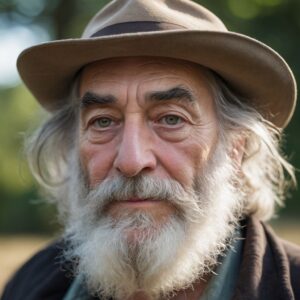
Walt Whitman’s poetry has been a constant companion throughout my college years, and even now that I’ve graduated, his words still linger in my mind like the echoes of a conversation I’d rather not end. There’s something about his openness, his willingness to explore the complexities of human experience, that resonates with me. I think …
Barbara McClintock: When Obsessive Genius Meets Unrequited Respect

Barbara McClintock’s name has been on my radar for a while now, but it wasn’t until I stumbled upon her Nobel Prize-winning research that I really started to dig deeper. As someone who’s spent countless hours pouring over books and articles in the hopes of understanding the intricacies of genetics, I felt an instant connection …
Fyodor Dostoevsky: When Your Best Intentions are Your Own Worst Enemy
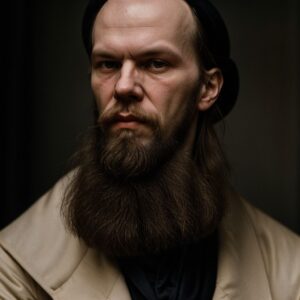
I’ve always been fascinated by Fyodor Dostoevsky, but it’s not because I’ve read all his novels or even most of them. To be honest, I got stuck on Crime and Punishment when I was 19 and never quite finished it. But there’s something about him that draws me in – a quality that makes me …
Rachel Carson: The Unlikely Rebel Who Made Me Question My Own Inner Conflict

I’ll be honest, I didn’t know much about Rachel Carson until a few months ago when I stumbled upon her book “Silent Spring” while researching for an environmental studies course. At first, it was the title that caught my attention – how eerie and haunting. But as I started reading, I became fascinated by this …
Rainer Maria Rilke: Where Solitude Meets Self-Doubt in a Used Bookstore
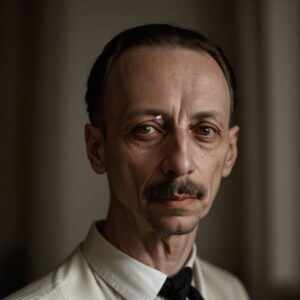
Rilke. His name is like a whisper, a gentle breeze that rustles the pages of my mind. I’ve always been drawn to his words, but it’s only recently, as I sit here with my own thoughts and doubts, that I’m beginning to understand why. I stumbled upon his letters from the Duino Elegies in a …
Ada Lovelace: Where Art Meets Algorithm (and I Meet Myself)
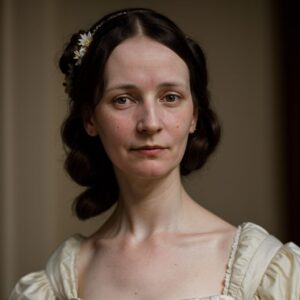
I’ve always been fascinated by Ada Lovelace, the world’s first computer programmer. But what draws me to her is not just her groundbreaking work on Charles Babbage’s Analytical Engine – it’s the sense of tension that exists between her calculated logic and her artistic imagination. I’m someone who loves writing as a way to clarify …
Langston Hughes: Where the Rivers Meet My Confusion
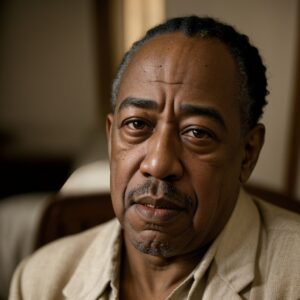
Langston Hughes. I’ve always been drawn to his words, like a moth to a flame that burns bright but uncertain. There’s something about the way he speaks of love and loss, of blackness and identity, that resonates deeply within me. I think it’s because, on some level, I see myself in his struggles. Not directly, …