Author: Penelope

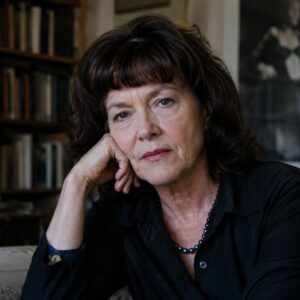
I’ve just finished college and stepped into a part of life where very little feels settled. I’m moving through the world with a light bag and an open schedule, paying attention as I go. I’m less interested in the moments people are applauded for and more curious about the quiet stretches in between—the parts of life that shape someone long before anyone is watching. I find myself noticing what people linger on, what they carry with them, and what they leave unsaid. I don’t write to explain lives or to draw neat conclusions. I write because observing feels more honest than summarizing. I’m drawn to small, telling details, to contradictions that don’t resolve, to the way uncertainty can shape a person just as much as confidence ever does. Most lives don’t unfold in clean lines, and I’ve found that meaning often shows up only after you stop trying to tie everything together. When I write about someone, I try to stand close enough to feel their presence, but far enough away to let them remain themselves. I avoid judgment and resist endings that feel too finished. I trust readers to recognize what feels familiar without being guided there. I’m optimistic not because I believe people are simple or easy to understand, but because I believe they’re worth the effort. Paying attention feels like a way of taking the world seriously, even when it’s complicated. Maybe especially then.

Kathe Kollwitz: The Artistic Unraveling of a Human’s Many Threads

Penelope

I’ve been fascinated with Kathe Kollwitz’s work for a while now, ever since I stumbled upon her etchings in an art history book in college. Her bold lines and unflinching depictions of human struggle resonated deeply with me, but it wasn’t until I started delving deeper into her life that I realized why she holds such a strong grip on my imagination.

It’s the way Kollwitz poured herself into her work, pouring all her emotions – grief, anger, love – onto the page. Her art was never just about creating something beautiful; it was an expression of her very being. I find myself drawn to that authenticity, that willingness to expose oneself to the world. As someone who’s always struggled with articulating my own thoughts and feelings, Kollwitz’s vulnerability is both captivating and intimidating.

One of the things that strikes me about Kollwitz is how she navigated the complexities of motherhood while still pursuing her artistic vision. She was a single mother for much of her life, and yet, her work often centers around themes of family, death, and the cyclical nature of life. I’ve always struggled with balancing my own creative pursuits with the demands of daily life – work, relationships, self-care – and Kollwitz’s perseverance in the face of adversity is a constant source of inspiration.

But what really gets me is her willingness to confront the darker aspects of human experience. Her etchings often depict scenes of poverty, war, and social injustice, and yet, they’re never didactic or preachy. Instead, she presents these harsh realities with a sense of quiet reverence, as if acknowledging the inherent worth and dignity of every individual. I find myself drawn to this aspect of her work because it’s something I struggle with – how to engage with pain and suffering without becoming mired in it.

I think what unsettles me about Kollwitz is how unflinchingly honest she was, even when it came to her own flaws and shortcomings. Her artwork often reflects a sense of inner turmoil, as if she’s grappling with the very same questions I’m still trying to answer. And yet, there’s a certain sense of calm that pervades her work, like she’s come to some sort of understanding about the human condition.

I’m not sure what it is about Kollwitz that continues to captivate me – maybe it’s the way she lived her life with such purpose and conviction, or perhaps it’s simply that I see aspects of myself in her struggles. Whatever the reason, her work has become a constant source of comfort and inspiration for me, a reminder that even amidst chaos and uncertainty, there’s always room for creative expression and introspection.

Lately, I’ve found myself returning to Kollwitz’s etchings again and again, searching for answers to questions I’m still trying to articulate. Her artwork is like a mirror held up to my own fears and doubts – it shows me that even in the darkest moments, there’s always hope, always a way forward. And as I continue to grapple with my own creative journey, Kollwitz remains a steady presence, a reminder of the power of art to express the inexpressible and give voice to the silenced.

As I delve deeper into Kollwitz’s life and work, I’m struck by the way she seems to embody the contradictions that often feel like mine own. On one hand, she’s a fiercely independent artist who refuses to compromise her vision, even in the face of criticism or rejection. And yet, at the same time, she’s deeply committed to her family and loved ones, pouring all her energy into their care and well-being.

I think about my own relationship with independence and interdependence. Growing up, I was always drawn to the idea of striking out on my own, of forging a path that was uniquely mine. But as I’ve gotten older, I’ve come to realize just how much I rely on others – friends, family, partners – to support me in ways both big and small.

Kollwitz’s work seems to capture this tension perfectly. Her etchings often depict scenes of isolated figures, struggling to make sense of the world around them. And yet, at the same time, there’s a sense of connection and community that pervades her art – a feeling that even in our darkest moments, we’re never truly alone.

As I look back on my own life, I realize just how much Kollwitz’s art has been a source of comfort for me. There have been times when I felt lost or uncertain, when the demands of everyday life seemed to overwhelm me. And yet, whenever I’ve turned to her etchings, I’ve found solace in their quiet strength and resilience.

But what I think really draws me to Kollwitz is her willingness to confront the unknown. Her artwork often depicts scenes of war and violence, but it’s not just the horror that’s striking – it’s the way she seems to approach those moments with a sense of curiosity and wonder. As if she’s asking herself: what does it mean to be human in the face of such suffering?

I think about my own fears and anxieties – the things that keep me up at night, or make me feel small and insignificant. And I wonder: what would it be like to approach those feelings with Kollwitz’s bravery and vulnerability? To confront them head-on, without flinching or looking away?

It’s a daunting prospect, but one that feels essential to my own creative journey. Because as I continue to grapple with the complexities of art and life, I’m coming to realize just how much Kollwitz has taught me about the power of uncertainty – and the importance of embracing it, rather than trying to control or escape from it.

As I ponder Kollwitz’s relationship with uncertainty, I’m struck by the way her artwork often seems to blur the lines between reality and abstraction. Her etchings can be incredibly detailed and precise, yet at the same time, they possess a sense of dreamlike quality that defies clear interpretation. It’s as if she’s tapping into a deeper truth, one that exists beyond the realm of language or rational understanding.

I find myself drawn to this aspect of her work because it speaks to my own struggles with articulating my thoughts and feelings. As someone who writes as a way of processing the world around me, I often feel like I’m struggling to capture the essence of what I want to say. Kollwitz’s artwork suggests that maybe that’s okay – maybe the truth lies in the ambiguity, the uncertainty, rather than trying to pin it down with words.

But what really fascinates me is how Kollwitz seems to use her art as a way of navigating the complexities of human experience. Her etchings often depict scenes of everyday life, but they’re imbued with this sense of depth and meaning that’s both profound and subtle. It’s like she’s saying: yes, we’re all just trying to make our way through this thing called life, but what does it mean to do so with intention, with purpose?

I think about my own struggles with finding meaning in the mundane aspects of life – the daily routines, the responsibilities, the expectations. Kollwitz’s artwork suggests that even in these moments, there’s always room for artistry, for creativity, for a sense of wonder. It’s not just about creating something beautiful; it’s about infusing every moment with meaning and significance.

As I continue to explore Kollwitz’s life and work, I’m struck by the way she seems to embody this tension between the ordinary and the extraordinary. Her artwork often depicts scenes of everyday people going about their daily lives, but there’s a sense of majesty, of awe-inspiring beauty that pervades every image.

I think about my own experiences with creativity – how it often feels like a solitary pursuit, something I do in private when no one is watching. But Kollwitz’s artwork suggests that maybe that’s not true; maybe creativity can be a communal endeavor, a way of connecting with others on a deeper level.

And yet, at the same time, there’s a sense of isolation that pervades her art – like she’s holding up this mirror to the world, but also keeping it at arm’s length. It’s a paradox I find myself grappling with all the time: how do I share my creative expression with others without sacrificing my own authenticity? How do I balance the need for connection and community with the desire for solitude and introspection?

As I ponder these questions, Kollwitz’s artwork seems to hover in the background, offering me a silent companion on this journey of self-discovery. Her etchings may be abstract, open-ended, but they’re also profoundly human – a testament to the power of art to capture the complexities and contradictions of our shared experience.

I’ve been thinking a lot about Kollwitz’s use of silence in her artwork. There are moments where she leaves vast expanses of white space on the page, creating a sense of void or absence that draws me in. It’s as if she’s acknowledging the impossibility of putting words to certain experiences, and instead is letting the viewer fill in the gaps with their own imagination.

I’ve been struggling with silence myself lately, both in my writing and in my personal life. There are moments where I feel like I’m expected to have all the answers, to be able to articulate my thoughts and feelings perfectly. But Kollwitz’s artwork shows me that sometimes, it’s okay to leave things unsaid. Sometimes, it’s even necessary.

As I look at her etchings, I see a woman who is unafraid to confront the ambiguities of life. She doesn’t try to tie everything up with a neat bow or provide easy solutions to complex problems. Instead, she presents us with a messy, beautiful world that is full of contradictions and paradoxes.

I think about my own struggles with perfectionism, with trying to control every aspect of my life and creative output. Kollwitz’s artwork shows me that this kind of striving for perfection can be suffocating, that it’s okay to let go and allow things to unfold in their own time.

And yet, at the same time, I’m drawn to her sense of discipline and dedication to her craft. She spent years honing her skills, experimenting with different techniques and mediums until she found a style that was uniquely hers. Her artwork is not just about expressing herself; it’s also about pushing herself to new heights, to explore the depths of human experience.

I’m still trying to figure out how to balance my own desire for creative expression with the need for discipline and hard work. Kollwitz’s artwork offers me a model for how to navigate this tension, but I’m not sure if it’s something that can be replicated or emulated. It feels like she’s speaking directly to me, offering me words of wisdom and guidance, but also leaving room for my own interpretation and exploration.

As I continue to grapple with these questions, I find myself returning again and again to Kollwitz’s artwork. Her etchings are like a mirror held up to my own creative journey, reflecting back at me all the hopes and fears and doubts that I’ve been trying to articulate. And yet, they also offer me a sense of hope and possibility, a reminder that even in the darkest moments, there is always room for creativity and expression.

I’m not sure where this exploration will take me, but for now, it’s enough to keep returning to Kollwitz’s artwork, letting her words and images wash over me like a wave. It’s a way of being with myself, of acknowledging the complexities and contradictions that make up my own human experience. And in that sense, I feel a deep connection to this artist who has become such an important part of my creative journey.

As I sit here, surrounded by Kollwitz’s etchings, I’m struck by the way they seem to capture the impermanence of life. Her artwork is full of fragile, fleeting moments – a mother cradling her child, a worker laboring in a factory, a soldier fallen on the battlefield. And yet, despite the transience of these scenes, there’s a sense of timelessness that pervades each image.

It’s as if Kollwitz is saying: yes, everything is temporary, but it’s also etched into our collective memory, leaving behind a mark that can never be erased. Her artwork is like a palimpsest, where the old is constantly being rewritten by the new, yet still remaining visible beneath the surface.

I think about my own fears of impermanence – how easily things can fall apart, how fragile our lives are in the face of uncertainty. Kollwitz’s etchings show me that even amidst chaos and upheaval, there’s a beauty to be found in the fleeting moments we share with one another.

As I look at her artwork, I’m struck by the way she seems to capture the intimacy of human connection. Her etchings often depict scenes of quiet, everyday moments – a mother soothing her crying child, a husband reading to his wife, friends gathered around a table sharing stories. And yet, despite the simplicity of these scenes, there’s a sense of depth and emotion that’s almost palpable.

I think about my own struggles with intimacy – how easily I can feel disconnected from others, how hard it is for me to open up and be vulnerable. Kollwitz’s artwork shows me that even in our most private moments, we’re not alone; that there’s always a connection to be made, always a way to reach out and touch someone else.

As I continue to grapple with these questions, I find myself returning again and again to Kollwitz’s etchings. Her artwork is like a map of my own inner world – a topography of hopes and fears, desires and doubts. And yet, despite the complexity of her themes, there’s a sense of simplicity that pervades each image.

It’s as if Kollwitz is saying: yes, life is messy and complicated, but it’s also beautiful in its imperfections. Her artwork shows me that even amidst chaos and uncertainty, there’s always room for creativity, always a way to find meaning and purpose in the world around us.

As I sit here, surrounded by Kollwitz’s etchings, I feel a sense of peace wash over me. It’s as if her artwork has given me permission to be myself – to acknowledge my own flaws and imperfections, but also to see the beauty in them. And in that sense, I know that I’ll continue to return to her work again and again, letting it guide me on my own creative journey.

Related Posts

Max Weber: The Charismatic Slippery Fish

Penelope

Max Weber. I’ve been reading about him for weeks now, and yet I still can’t quite put my finger on what it is about him that fascinates me so much. Maybe it’s the way he seemed to embody two conflicting worlds – the intellectual rigor of academia and the rebellious spirit of activism. Or perhaps it was his ability to navigate the complexities of modern society, critiquing both capitalism and socialism while remaining steadfast in his commitment to individual freedom.

As I read through his essays and lectures, I find myself getting lost in the intricacies of his thought process. He’s like a puzzle that I’m determined to solve, but one that keeps shifting shapes under my fingers. Take, for instance, his concept of “charisma.” At first glance, it seems straightforward enough – charisma is about magnetism and leadership, right? But as I delve deeper, I start to feel uneasy, because charisma can also be a means of control, a way to wield power over others through charm and persuasion. It’s like trying to grasp a slippery fish with wet hands.

Weber’s writing on this topic resonates with me, but not in the way you’d expect. You see, I’ve always been drawn to leaders who are charismatic in their own right – people who can command attention without resorting to manipulation or coercion. But what does it mean when charisma is wielded by someone like a politician or a cult leader? Doesn’t it just become another form of oppression?

This is where Weber’s ideas start to get really messy for me. He talks about how charisma can be both creative and destructive, capable of inspiring people to greatness but also of leading them down a path of ruin. It’s this paradox that makes me feel like I’m stuck in limbo – caught between my desire for freedom and autonomy on the one hand, and the allure of authority and guidance on the other.

I think about my own experiences with charismatic leaders – professors who inspired me to pursue my passions, or mentors who guided me through difficult times. They all had this magnetic quality that drew people in, but it’s hard to shake the feeling that they were also manipulating us, shaping our perceptions of reality to fit their own agendas.

Weber would say that charisma is a product of social circumstance – that it emerges from the interactions between individuals and groups. But what about when charisma is used as a tool for social control? Doesn’t that just become another form of exploitation?

As I read through Weber’s work, I start to feel overwhelmed by the complexity of his ideas. He’s like a maze with no clear exit – every door leads to more questions, more contradictions, and more uncertainty. And yet, it’s this very uncertainty that draws me in. It’s like trying to navigate a puzzle where each piece fits together imperfectly, leaving gaps and inconsistencies that you can’t quite explain.

I’m not sure what I’ll take away from my time with Max Weber – maybe just the recognition that even the most brilliant thinkers are capable of holding multiple, contradictory ideas at once. Or perhaps it’s simply the acknowledgment that life is messy, and we’d do well to approach it with a healthy dose of skepticism and self-doubt.

Whatever the case may be, I’m grateful for this journey through Weber’s work – even if it’s left me feeling more uncertain than ever before.

As I continue to grapple with Weber’s ideas on charisma, I find myself thinking about my own experiences as a writer. When I write, I feel like I’m trying to tap into this magnetic quality that draws people in – not necessarily through manipulation or coercion, but by creating something authentic and compelling. But what if my words are just a form of charismatic influence, shaping people’s perceptions of reality without them even realizing it? It’s a unsettling thought, one that makes me question the very purpose of writing.

I think about all the times I’ve written about social justice issues – trying to use my words to inspire change and mobilize action. But is that just another form of charisma at play? Am I using my platform to shape people’s opinions, rather than genuinely empowering them to make their own decisions? The more I write, the more I realize how easily language can be used as a tool for social control.

Weber would say that language is a product of social circumstance – that it emerges from the interactions between individuals and groups. But what about when language is used to mask the truth or obscure our understanding of reality? Doesn’t that just become another form of exploitation?

I’m not sure I have any answers, but I do know that this process of questioning has been incredibly liberating for me as a writer. It’s forced me to think more critically about my own motivations and biases, and to consider the potential impact of my words on others. Maybe that’s the true value of Weber’s work – not in providing clear answers or solutions, but in encouraging us to ask the right questions.

As I close this chapter on Max Weber, I’m left with a sense of wonder and uncertainty. What does it mean to be charismatic, really? Is it about inspiring others, or is it just another form of manipulation? The more I think about it, the more I realize how little I truly know – and that’s both exhilarating and terrifying. But as a writer, I suppose that’s where the real work begins – in embracing the uncertainty and complexity of life, and trying to make sense of it all through words.

As I close my book on Max Weber, I find myself thinking about the tension between clarity and ambiguity. Weber’s writing is like a rich tapestry – woven with intricate threads of nuance and complexity that resist easy summary or reduction. He’s not afraid to grapple with contradictions, to acknowledge the messiness of human experience, and to leave questions unanswered.

I’m struck by how this resonates with my own experiences as a writer. I’ve always been drawn to complex ideas and nuanced perspectives – ones that challenge me to think critically and make connections between seemingly disparate concepts. But it’s precisely this desire for clarity and coherence that can sometimes lead me astray, causing me to simplify or oversimplify the world around me.

Weber’s emphasis on the importance of ambiguity and uncertainty has made me realize how often I’ve tried to impose order on things that are inherently chaotic or ambiguous. It’s as if I’ve been trying to silence the whispers of doubt and confusion that inevitably arise when we confront the complexities of human experience.

As I reflect on this, I’m reminded of a particular paper I wrote in college – one that attempted to make sense of the intersection between social justice activism and digital technology. I was so caught up in trying to present a clear, coherent argument that I ended up glossing over the nuances and contradictions that were actually at stake.

Looking back, I can see how Weber’s ideas might have helped me approach that topic with more nuance and humility. By acknowledging the complexity of the issues and embracing the ambiguity of human experience, I might have produced a paper that was less about trying to control or manipulate others’ perceptions and more about genuinely exploring the messy realities of social justice in the digital age.

This realization has left me feeling both relieved and unsettled – relieved because it acknowledges the limits of my own understanding, but unsettled because it challenges me to think more critically about my role as a writer. Am I using my words to shape others’ perceptions or to genuinely empower them? The question lingers in the back of my mind like a ghostly presence, haunting me with its uncertainty and ambiguity.

As I continue to grapple with these questions, I’m reminded that writing is never just about conveying information or presenting ideas – it’s also about navigating the complexities of human experience. And it’s precisely this navigation that requires us to be willing to walk through the ambiguities and uncertainties, rather than trying to impose order on them.

Weber’s work has taught me a valuable lesson: that clarity and ambiguity are not mutually exclusive, but rather intertwined aspects of human understanding. By embracing the messiness of life and the complexity of our experiences, we might just find ourselves growing more honest, more nuanced, and more compassionate in our writing – and in our lives.

As I close my book on Max Weber, I’m left with a sense of awe at his ability to navigate these complexities with such precision and nuance. His writing is like a masterclass in ambiguity – he leaves no stone unturned, no question unanswered, and yet somehow manages to illuminate the very darkness that lies within.

I find myself wondering if this is what it means to be a truly good writer – not just one who conveys information or presents ideas, but one who can capture the messy, ambiguous nature of human experience in all its complexity. Is it possible for me to emulate this kind of writing? To tap into the same sense of nuance and ambiguity that Weber brings to his work?

I think about my own writing, and how often I’ve fallen prey to the temptation to simplify or oversimplify complex issues. I’ve written about social justice, politics, and identity – all topics that are inherently messy and ambiguous. But how have I approached these subjects? Have I been honest with myself and with my readers about the complexity of these issues?

Weber’s work has made me realize just how much I’ve been operating on autopilot as a writer – repeating formulas and tropes that I thought were true, but never really questioning their validity. He’s forced me to confront the limitations of my own understanding and to consider the ways in which language can be used to shape or distort reality.

As I reflect on this, I’m struck by the realization that writing is not just about conveying information – it’s also about being honest with ourselves and our readers about what we don’t know. It’s about acknowledging the ambiguities and uncertainties that lie at the heart of human experience.

I think about all the times I’ve felt frustrated or disappointed when my writing didn’t quite live up to its own promises. Maybe it was a paper that didn’t quite make sense, or a blog post that failed to capture the complexity of an issue. But looking back, I realize that these moments were not failures – they were simply opportunities to learn and grow as a writer.

Weber’s work has taught me that writing is not about achieving some kind of objective truth or clarity – it’s about embracing the ambiguity and uncertainty that lies at its core. It’s about being willing to walk through the darkness, even when it feels scary or uncomfortable.

As I close this chapter on Max Weber, I’m left with a sense of gratitude for his work – not just as a thinker or an intellectual, but as a writer who has shown me the value of ambiguity and uncertainty in my own writing. I know that I’ll carry these lessons with me long after I finish reading his books, and that they will shape the way I approach my writing in ways both subtle and profound.

But even now, as I sit here reflecting on Weber’s ideas, I’m aware of a lingering sense of unease – a feeling that I’ve only scratched the surface of what he has to offer. There are still so many questions left unanswered, so many complexities waiting to be unraveled. And yet, it’s precisely this uncertainty that draws me in, like a moth to flame.

I think about all the ways in which Weber’s work could continue to shape my writing – not just as a intellectual exercise or an academic pursuit, but as a journey of discovery and growth. What if I were to take his ideas on charisma and ambiguity and apply them to my own experiences as a writer? How would that change the way I approach my craft?

As I ponder these questions, I’m reminded that writing is not just about conveying information or presenting ideas – it’s also about exploring the complexities of human experience. And it’s precisely this exploration that requires us to be willing to walk through the ambiguities and uncertainties, rather than trying to impose order on them.

Weber’s work has shown me that there’s no such thing as a clear answer or a definitive solution – only a maze of complexities and contradictions waiting to be unraveled. And it’s precisely this realization that sets my heart racing with excitement – because I know that the journey ahead is full of possibilities, uncertainties, and ambiguities waiting to be explored.

Related Posts

Thomas Hardy: The Unsettling Familiarity

Penelope

Thomas Hardy’s name has been floating around my consciousness for years, long before I finally picked up one of his novels in college. There was something about the way people spoke of him – as if he were a mythical figure from another time, a relic of an era that still lingered on the edges of our own modern world. I’ve always found it fascinating how certain authors become vessels for collective nostalgia, their works serving as gatekeepers to bygone eras.

My first exposure to Hardy was through The Return of the Native, which I read in a crowded classroom during my junior year. At the time, I was captivated by his descriptions of the English countryside – the way he wove together the lush greenery and the stark beauty of the moors into a sense of desolate grandeur. But it wasn’t until I delved deeper into his works that I began to grasp the complexity of his writing.

Hardy’s fiction often feels like an exploration of the human condition in all its messy, unglamorized forms – the cruelty of nature, the futility of love, and the crushing weight of societal expectations. His stories are populated by characters who embody these struggles, people like Tess Durbeyfield and Jude Fawley, whose lives are marked by tragic flaws and the inexorable march of fate.

What draws me to Hardy’s work is the way he seems to resist romanticizing his subjects, even as they’re often caught up in a sense of doomed inevitability. His writing has this piercing clarity that makes you feel like you’re witnessing events unfold before your eyes – not because he’s trying to persuade or manipulate, but simply because he’s so deeply invested in the truth of the human experience.

One aspect of Hardy’s fiction that’s always unsettled me is his treatment of women. On the surface, his female characters seem to embody a mix of strength and vulnerability, but as you dig deeper, it becomes clear that they’re often trapped within societal strictures that render them powerless. I’ve grappled with this tension – wondering whether Hardy was simply reflecting the limitations placed on women during his time, or if he was perpetuating them through his writing.

I find myself drawn to this paradox because it speaks to my own complicated feelings about feminism and female empowerment. As a young woman, I’m constantly aware of the ways in which societal expectations can both liberate and restrict us – and yet, there’s a part of me that feels like we’re still grappling with these same questions today.

For Hardy, the struggles of his female characters often serve as a metaphor for the broader human condition. Their stories are about the fragility of life, the capriciousness of fate, and the impossibility of escaping one’s circumstances. But what happens when I try to apply this perspective to my own life? Do I start seeing myself as similarly trapped – subject to the whims of a cruel universe that refuses to be swayed?

These are questions that still feel unresolved for me. Hardy’s writing has this way of posing problems without providing neat solutions, and it’s precisely this quality that draws me in. He doesn’t pretend to have answers; instead, he invites you to wade into the messiness of existence alongside him.

As I continue to read through his works, I’m struck by how much of himself Hardy pours onto the page – not just as an author, but as a person grappling with his own sense of disillusionment and despair. His writing is like a confessional, where he lays bare his doubts and fears in order to make sense of them.

In many ways, this is what I find most compelling about Thomas Hardy: the way he acknowledges the darkness within himself, even as he refuses to be consumed by it. It’s an act of remarkable courage – one that speaks to the human capacity for self-awareness and introspection.

And yet, despite all these complexities, there remains a part of me that can’t shake off the feeling that I’m missing something fundamental about Hardy’s writing. Perhaps it’s his relationship with Emma, or his philosophical leanings towards fatalism – but whatever it is, I know that I’ll keep coming back to his work, searching for answers that may never fully reveal themselves.

As I continue to grapple with Hardy’s treatment of women and the societal expectations that shape their lives, I find myself thinking about my own experiences as a young woman. Growing up, I was always told that I had choices – that I could be whoever I wanted to be, pursue whatever career I desired. But as I’ve navigated adulthood, I’ve come to realize just how limited those choices really are.

I think about the way women are often pitted against each other, competing for scarce resources and attention in a world that seems determined to hold us back. And yet, when I look at Hardy’s female characters – Tess, Jude, Sue – I see this same dynamic playing out on a grand scale. They’re all fighting against impossible odds, their lives shaped by the cruel whims of fate and the societal norms that govern them.

It’s strange to think about how much we’ve changed since Hardy’s time, but also how little we’ve really progressed. Women are still fighting for equal pay, for reproductive rights, for basic recognition in a society that often seems designed to marginalize us. And yet, when I read Hardy’s writing, I’m struck by the way he seems to capture this same sense of frustration and disillusionment.

Perhaps it’s because Hardy was a product of his time – a man who saw the world through the lens of Victorian values and societal norms. But maybe it’s also because he was ahead of his time – a writer who grasped the complexities of human experience in a way that feels eerily prescient today.

As I continue to read through his works, I’m struck by the way Hardy seems to question everything – not just society’s expectations of women, but the very fabric of existence itself. He writes about the fragility of life, the capriciousness of fate, and the inevitability of decline and death. It’s a bleak view of the world, perhaps – but it’s also strangely liberating.

Because when you confront the darkness within yourself, as Hardy does in his writing, you begin to see just how little control we really have over our lives. We’re all subject to the whims of fate, caught up in a web of circumstances that can’t be fully understood or predicted. And yet, it’s precisely this realization that sets us free – allows us to let go of our attachments and illusions, and simply be present with what is.

I’m not sure I’ve fully grasped Hardy’s philosophy on this, but it feels like the key to understanding his writing – a way of embracing the uncertainty and chaos that surrounds us, rather than trying to impose order or control. It’s a daunting prospect, perhaps – but also strangely exhilarating. Because when you surrender to the mystery of existence, as Hardy does in his writing, you begin to see just how much beauty there is in the world – even in its darkest corners.

As I delve deeper into Hardy’s works, I’m struck by the way he weaves together the threads of fate and free will. His characters are often forced to navigate the harsh realities of their lives, with little control over the course of events. And yet, it’s precisely this sense of powerlessness that seems to give them a strange kind of freedom.

I think about Tess Durbeyfield, for example – a woman who’s trapped in a cycle of poverty and exploitation, forced to make impossible choices in order to survive. On one level, her story is a tragic one, a cautionary tale about the dangers of societal pressure and the cruel whims of fate. But on another level, it’s also a testament to the human spirit – Tess’s determination to hold onto her dignity, despite everything that’s been taken from her.

For me, Hardy’s writing raises fundamental questions about the nature of agency and responsibility. If we’re all subject to the capriciousness of fate, do we have any real control over our lives? Or are we simply pawns in a larger game, forced to play by rules that we didn’t make?

As I grapple with these questions, I find myself drawn back to my own experiences as a young woman. Growing up, I was always told that I had choices – that I could be whoever I wanted to be, pursue whatever career I desired. But as I’ve navigated adulthood, I’ve come to realize just how limited those choices really are.

I think about the way women are often socialized to prioritize others’ needs over our own, to put ourselves last in order to maintain a sense of harmony and stability. And yet, when we do this, don’t we risk losing ourselves entirely? Don’t we become trapped in a cycle of self-sacrifice, forced to abandon our own desires and dreams in order to fit into someone else’s idea of what it means to be a woman?

Hardy’s writing doesn’t offer any easy answers to these questions. Instead, he poses them in all their complexity – inviting us to explore the messy, often contradictory nature of human experience. And yet, it’s precisely this willingness to confront the unknown that makes his work feel so profoundly liberating.

As I continue to read through his works, I’m struck by the way Hardy seems to capture the essence of existence itself – the mix of beauty and ugliness, joy and suffering, that defines our lives. It’s a bleak view of the world, perhaps – but it’s also strangely beautiful.

Because when you confront the darkness within yourself, as Hardy does in his writing, you begin to see just how much more there is to life than surface-level appearances. You start to notice the subtle nuances of existence – the way light filters through the leaves of trees, the sound of raindrops hitting the pavement, the scent of freshly cut grass.

These are things that we often overlook in our daily lives, too caught up in our own worries and concerns to fully appreciate the beauty around us. But Hardy’s writing reminds me that even in the darkest moments, there is always something to be savored – a sense of wonder, a spark of curiosity, a glimmer of hope.

As I finish reading one of his novels, I’m left with a sense of awe and reverence for the man himself. Not just as an author, but as a person who saw the world in all its complexity, who refused to shy away from its darkness or its beauty. He’s a writer who invites us to join him on this journey into the unknown, to explore the uncharted territories of our own hearts and minds.

And so I’ll continue reading his works, savoring every word, every sentence, every chapter that unfolds before me like a map to hidden worlds. Because in Hardy’s writing, I’ve found a kindred spirit – someone who understands the messy, often contradictory nature of human experience, and invites us to explore it all with him.

As I sit here, surrounded by the dusty pages of Hardy’s novels, I’m struck by the sense that his writing has become an integral part of my own story. It’s as if his words have seeped into my pores, infusing me with a newfound understanding of the world and its complexities. And yet, even as I feel this deep connection to his work, I’m also aware of the ways in which it challenges me – forces me to confront aspects of myself that I’d rather not face.

One of the things that’s struck me most about Hardy is the way he writes about time. His novels are often structured around a sense of temporal fluidity, where past and present blend together in a way that defies traditional notions of chronology. It’s as if he’s trying to capture the essence of existence itself – the way moments accumulate and overlap, forming a tapestry of experience that’s both fragmented and whole.

I think about how this relates to my own life, and I’m struck by the ways in which time seems to warp and distort for me. Memories from childhood feel like they’re from another lifetime, while recent events seem to have happened just yesterday. It’s as if my sense of time is being constantly rewritten – a process that’s both disorienting and liberating.

Hardy’s writing has helped me see this phenomenon in a new light. His characters often experience moments of temporal dislocation, where they’re transported back into the past or propelled forward into an uncertain future. And yet, even as they navigate these shifts in time, they remain anchored to the present – aware of their own mortality and the fleeting nature of existence.

This awareness is something that I’ve struggled with myself, particularly in my early twenties. There’s a sense of disorientation that comes with transitioning from adolescence into adulthood – a feeling that your whole identity is being rewritten before your eyes. And yet, Hardy’s writing has helped me see this process as a kind of liberation – an opportunity to shed the skin of our former selves and emerge anew.

As I continue to read through his works, I’m struck by the way he writes about love. His characters often experience moments of profound connection with one another, but these relationships are always tinged with a sense of sadness or loss. It’s as if Hardy is trying to capture the bittersweet nature of human attachment – the way we’re drawn to others even as we know that our time together is limited.

This resonates deeply with me, particularly in my own experiences with love and relationships. I’ve always been someone who wears their heart on their sleeve, pouring all of themselves into those they care about. And yet, this can also be a source of pain – a reminder that the people we love are never truly ours to possess.

Hardy’s writing has helped me see this dynamic in a new light. His characters often experience moments of epiphanic insight, where they realize that their love is doomed from the start. And yet, even as they acknowledge this reality, they’re also drawn into the very depths of their own emotions – forced to confront the full range of human feeling.

This is something that I’ve struggled with myself, particularly in my relationships with others. There’s a sense of vulnerability that comes with loving someone deeply – a willingness to be hurt or rejected that can feel both exhilarating and terrifying. And yet, Hardy’s writing has helped me see this vulnerability as a strength rather than a weakness – a testament to the human capacity for love and connection.

As I finish reading one of Hardy’s novels, I’m left with a sense of awe and gratitude for the man himself. Not just as an author, but as a person who saw the world in all its complexity – a writer who refused to shy away from its darkness or its beauty. He’s someone who understands that existence is a messy, often contradictory thing – a tapestry of experience that can’t be reduced to simple truths or tidy solutions.

And so I’ll continue reading his works, savoring every word, every sentence, every chapter that unfolds before me like a map to hidden worlds. Because in Hardy’s writing, I’ve found a kindred spirit – someone who understands the messy, often contradictory nature of human experience, and invites us to explore it all with him.

Related Posts

Sylvia Plath: The Dark Companion I Can’t Shake Off

Penelope

Sylvia Plath’s words have been a constant companion for me since I stumbled upon her poetry in college. Her language is like a wild animal that snatches my breath away, leaving me gasping for air. There’s something about the way she describes the world – dark, twisted, and beautiful all at once – that speaks to me on a deep level.

I remember being struck by how raw and honest her writing was. It felt like she had stripped herself bare, exposing every wound and scar for the world to see. I’ve always been drawn to authenticity in art, and Plath’s work seemed to embody that quality. But as I delved deeper into her life and writings, I started to feel a sense of discomfort. Her stories are often brutal, her emotions explosive, and her struggles with mental health devastating.

I think what unsettles me most is the way Plath’s writing can be both breathtakingly beautiful and utterly heartbreaking at the same time. It’s like she’s holding out a hand to you, inviting you into this dark, intimate world of hers, only to yank it away just when you think you’re getting close. I’ve found myself drawn back to her work again and again, despite (or because of) the pain it inflicts.

One of the things that fascinates me about Plath is how she navigated the expectations placed upon her as a woman. She was a brilliant student at Smith College, but her experiences with mental health issues and sexism made her feel like an outsider in both academia and society. Her writing often grapples with these tensions, revealing a deep sense of isolation and frustration.

As I read about Plath’s relationships – particularly her tumultuous marriage to Ted Hughes – I couldn’t help but wonder how she managed to keep creating amidst such chaos. It’s almost as if her art became an extension of herself, a way to process the turmoil that swirled around her. Her poetry is like a scream into the void, a desperate attempt to be heard above the din.

Sometimes I feel like I’m reading Plath through a lens of my own experiences. As someone who’s struggled with anxiety and depression, I see myself in her words – the desperation, the fear, the feelings of being trapped. But at the same time, I worry that I’m romanticizing her struggles, diminishing the complexity of her life by trying to apply my own narrative to hers.

This is where things get complicated for me. Plath’s writing has been a source of comfort and catharsis, but it also feels like a reminder of all the things I’m afraid to confront in myself. Her stories are full of darkness and despair, but they’re also infused with a fierce determination to live – to write, to create, to exist.

As I sit here with my thoughts swirling around me, I wonder: what would happen if I let go of some of that fear? Would I be able to tap into the same kind of creative fury that Plath did? Or am I just kidding myself, thinking I can channel her genius?

I’m not sure. All I know is that Sylvia Plath’s words continue to haunt me, refusing to let me look away. They’re a mirror held up to my own fears and insecurities, forcing me to confront the parts of myself that I’d rather keep hidden. And yet, in their darkness, I see a glimmer of hope – the possibility that even in the most broken places, there’s still beauty to be found.

As I delve deeper into Plath’s work, I find myself returning to the same themes again and again: the fragility of mental health, the suffocating nature of societal expectations, and the desperate quest for self-expression. It’s as if her writing is a doorway that swings open onto my own inner world, revealing all the hidden corners where my fears and doubts reside.

One thing that strikes me about Plath is how she used her writing as a form of resistance against the world around her. Her poetry is full of sharp edges and jagged lines, like a physical manifestation of her own fractured psyche. And yet, in the midst of all this chaos, there’s a fierce determination to create – to craft words that will cut through the noise and leave their mark.

I think about my own creative endeavors, how I often feel like I’m struggling to find my voice amidst the din of everyday life. It’s easy to get caught up in comparisons with Plath, wondering if I’ll ever be able to tap into that same kind of raw power and emotion. But as I read her words, I realize that maybe it’s not about emulating her – but rather, finding my own unique way to express the turmoil that rages within me.

There’s a passage in The Bell Jar where Plath describes feeling like she’s “a skeleton on the beach” after a great storm has passed. It’s an image that haunts me still – this idea of being stripped bare, exposed and vulnerable. But as I look closer at that passage, I see something else too: a deep sense of resilience, a determination to rebuild and recreate.

For me, Plath’s writing is like a mirror held up to my own struggles with anxiety and depression. It’s a reminder that even in the darkest moments, there’s still beauty to be found – if only we’re brave enough to look for it. Her words are a balm to my frazzled nerves, a reassurance that I’m not alone in this wild and crazy world.

But as I sit here with these thoughts swirling around me, I wonder: what happens when the storm finally passes? When the anxiety subsides and the darkness recedes? Will I still be able to tap into that same creative fury, or will it fade away like a mirage on a desert highway?

I’m not sure. All I know is that Sylvia Plath’s words continue to haunt me – pushing me to confront my fears, to explore the depths of my own inner world, and to find a way forward in the face of uncertainty.

As I ponder this question, I’m struck by how much of Plath’s writing is concerned with the tension between light and darkness, hope and despair. It’s as if she’s constantly navigating the fine line between these opposing forces, seeking to find a balance that feels authentic to her.

I think about my own life, and how often I’ve found myself caught in this same struggle. There are days when the anxiety feels overwhelming, like a tidal wave crashing over me, threatening to consume everything in its path. And then there are moments of clarity, when the sun breaks through the clouds and I feel a sense of purpose and direction.

It’s interesting to me that Plath often describes her creative process as a form of exorcism – a way to purge herself of the darker emotions that threaten to overwhelm her. Her writing is like a ritual, a way to confront the shadows within herself and emerge stronger on the other side.

I’ve always been drawn to this idea, the notion that art can be a kind of cathartic release. When I’m feeling overwhelmed or stuck, I often find myself turning to my own creative endeavors – whether it’s writing, drawing, or simply journaling – as a way to process my emotions and gain clarity.

But what happens when the storm finally passes? What happens when the darkness recedes and the light shines through? Do we lose that sense of urgency, that drive to create something meaningful out of our struggles?

I’m not sure. For me, it’s like I’m caught in a perpetual state of limbo – always reaching for the next creative high, always trying to tap into that same sense of raw emotion and vulnerability.

Perhaps that’s what makes Plath’s writing so compelling – her willingness to confront the darkness head-on, to stare it straight in the face and say, “I see you. I understand you.” It’s a powerful form of resistance, one that reminds me that even in the darkest moments, there is still beauty to be found.

As I sit here with these thoughts swirling around me, I’m struck by how much Plath’s writing has taught me about the importance of vulnerability. It’s not just about sharing our struggles – it’s about embracing them, confronting them head-on, and emerging stronger on the other side.

For me, that’s a lesson worth learning. As I navigate my own creative journey, I’m reminded that the line between light and darkness is often blurred – and that it’s in those moments of uncertainty that we find our truest selves.

As I reflect on Sylvia Plath’s writing and its impact on me, I’m struck by the way she blurs the lines between vulnerability and strength. It’s as if she’s saying, “I’ll show you my scars, but don’t think for a second that they make me weak.” Her words are like a battle cry, a declaration of independence in the face of adversity.

I think about how I’ve often felt torn between being open and honest about my struggles, and hiding behind a mask of confidence. Plath’s writing makes me realize that vulnerability is not a sign of weakness, but rather a strength – a willingness to be seen, to be heard, and to be understood.

But what does it mean to be vulnerable in a world that often values strength and resilience over sensitivity and emotion? I think about how society expects us to put on a brave face, to mask our pain with a smile or a witty remark. And yet, Plath’s writing shows me that there’s beauty in the brokenness – that the cracks and fissures are where the light gets in.

As I navigate my own creative journey, I’m struggling to reconcile this idea of vulnerability with the pressure to produce something polished and perfect. I feel like I’m caught between being true to myself and trying to meet the expectations of others. It’s a tension that I see played out in Plath’s writing as well – her struggle to balance her own desires with the demands of her loved ones, her career, and society at large.

I wonder if this is what it means to be an artist: to constantly walk the fine line between revealing our true selves and hiding behind a mask of creativity. Or is that just a romanticized notion, one that ignores the very real pressures and expectations that come with being an artist?

For me, Plath’s writing has been a reminder that the most powerful art comes from a place of vulnerability – a willingness to take risks, to push boundaries, and to explore the unknown. But what happens when we’re not just creating for ourselves, but for others as well? When do we prioritize our own needs over the expectations of those around us?

As I ponder these questions, I’m reminded of Plath’s famous phrase: “I took a deep breath and listened to the old brag of my heart.” It’s an image that resonates deeply with me – this idea of listening to our hearts, of tuning in to our deepest desires and fears. And yet, it’s also a reminder that our hearts are not always easy to hear – that there are moments when we’re too scared, too uncertain, or too hurt to listen.

In many ways, Plath’s writing is like a meditation on the complexity of human emotion – a recognition that our experiences are messy, multifaceted, and often contradictory. Her words are like a mirror held up to our own inner worlds, revealing all the hidden corners where our fears and doubts reside.

As I look back at my own experiences with anxiety and depression, I realize that Plath’s writing has been a source of comfort and guidance – a reminder that I’m not alone in this struggle. But it’s also forced me to confront my own limitations, to acknowledge the times when I’ve felt too scared or too uncertain to listen to my heart.

Perhaps that’s what makes Plath’s writing so enduring – its ability to capture the complexity of human emotion, to show us that even in the darkest moments, there is still beauty to be found. And perhaps it’s also why her words continue to haunt me, refusing to let me look away from the parts of myself that I’d rather keep hidden.

As I sit here with these thoughts swirling around me, I’m reminded of the importance of vulnerability – not just as an artist, but as a human being. It’s a lesson that Plath’s writing has taught me time and again: that our struggles are what make us strong, that our scars are what give us character, and that our imperfections are what make us beautiful.

Related Posts

Tillie Olsen: The Expat, the Writer, My Mirror?

Penelope

Tillie Olsen’s name keeps popping up in my literature classes, always alongside the likes of Hemingway, Joyce, and Woolf. At first, I thought she was just another old-school writer who happened to be a woman, but the more I read about her, the more I feel drawn to this enigmatic figure. What is it about Tillie Olsen that resonates with me?

I think part of it is the way her life and work intersect in complicated ways. She’s often talked about as an American writer who spent much of her career outside the US, living on a kibbutz in Israel and then in Mexico. Her experiences as an expat have influenced her writing, which often explores themes of displacement, identity, and social justice. But what really gets me is how Tillie’s personal life reflects these same tensions.

As I read about her struggles to publish her work, to balance family obligations with artistic ambitions, and to navigate the patriarchal societies she lived in, I feel a familiar sense of discomfort. It’s not just that I see myself in her – though I do recognize the push-pull between creative desires and practical responsibilities – but also that I’m struck by how Tillie’s choices were shaped by the very systems she sought to critique.

One of the things that’s been nagging at me is the way Tillie’s writing often seems to hover between introspection and didacticism. Her essays, in particular, are like extended lectures on politics, history, and philosophy, all wrapped up in a lyrical style that borders on the poetic. And yet, there’s something about these essays that feels…untethered. As if Tillie is aware of her own detachment from the world around her, even as she tries to engage with it.

When I read “Tell Me a Riddle” or “I Stand Here Ironing,” I get this sense that Tillie is performing a delicate balancing act – between intellectual curiosity and emotional vulnerability, between critique and confession. It’s as if she’s constantly trying to pin down her own thoughts and feelings while simultaneously being aware of the distance between herself and others.

All of which makes me wonder: what does it mean for a writer to be both deeply personal and intellectually detached? Is it possible to convey complexity without sacrificing intimacy? And how do we navigate the spaces where our own experiences intersect with those of others, especially when those intersections are messy and complicated?

Tillie Olsen’s writing has become a kind of touchstone for me – not because I aspire to emulate her style or approach, but because her work reminds me that literature can be both intellectually rigorous and emotionally honest. And it’s precisely this tension between intellect and emotion that I find myself struggling with in my own writing.

As I grapple with these questions, I’m drawn back to Tillie’s life and work again and again. There’s something about her contradictions – the way she was both a radical thinker and a devoted mother, for example – that feels eerily familiar. And it’s this sense of kinship that keeps me coming back to her writing, even as I struggle to make sense of it all.

The more I delve into Tillie Olsen’s life and work, the more I’m struck by the way she embodies a tension that feels both deeply personal and profoundly universal. It’s as if she’s caught between two worlds – one of intellectual curiosity and another of emotional vulnerability – and is constantly navigating the space between them.

I find myself wondering what it would be like to write from this place of tension, where intellect and emotion coexist in a delicate balance. Would my writing feel more authentic? More honest? Or would I be sacrificing something essential in the process?

As I think about it, I realize that Tillie’s essays are often characterized by a sense of intellectual detachment, but at the same time, they’re infused with a deep emotional resonance. It’s as if she’s aware that her own experiences and emotions are not solely hers to own – that they’re intertwined with those of others, shaped by the very systems and structures she critiques.

This awareness is what makes her writing feel so hauntingly familiar. I see echoes of my own struggles to balance intellectual curiosity with emotional vulnerability in her work. The desire to engage with the world around me, to critique its injustices, while also acknowledging the complexities of my own experiences – it’s a tension that feels both deeply personal and profoundly universal.

I’m drawn to Tillie’s writing because it reminds me that this tension is not something to be resolved or overcome, but rather something to be acknowledged and explored. That literature can be a space for wrestling with these contradictions, for grappling with the messy intersections of intellect and emotion.

As I continue to read and think about Tillie Olsen’s work, I’m struck by the way she challenges me to question my own assumptions about writing, about identity, and about the role of the writer in society. Her writing is a reminder that we’re not just individuals with our own unique experiences, but also members of larger systems – systems that shape us, influence us, and sometimes even silence us.

Tillie’s legacy feels like a call to action, a reminder that writers have a responsibility not only to create art but also to engage with the world around them. Her work is a testament to the power of literature to challenge, to critique, and to connect – and it’s this connection that I feel most deeply when I read her words.

As I sit here, surrounded by my own thoughts and doubts, I realize that Tillie Olsen’s writing has become a source of comfort, a reminder that I’m not alone in this struggle to navigate the complexities of intellect and emotion. Her work is a beacon, shining brightly in the spaces where our experiences intersect – a testament to the enduring power of literature to bridge gaps and challenge assumptions.

I find myself returning to Tillie’s essays again and again, searching for clues about how to navigate this delicate balance between intellect and emotion. Her writing is like a mirror held up to my own struggles as a writer, reflecting back at me the tensions that I’ve been trying to resolve.

One of the things that draws me to her work is the way she uses language to create a sense of intimacy with her readers. Despite being an intellectually rigorous writer, Tillie has a gift for making complex ideas feel accessible and personal. She writes about politics and philosophy in a way that feels almost confessional, as if she’s sharing secrets with us rather than lecturing.

I’m struck by the way she uses metaphor to convey the complexity of human experience. In “Tell Me a Riddle,” for example, she uses the image of a river to describe the way our lives are shaped by forces beyond our control. The river flows effortlessly, yet it’s also constantly changing course – just like us, Tillie suggests. We’re all caught up in currents of history and culture that shape who we become.

This idea resonates deeply with me because I’ve always felt like I’m floating on a sea of uncertainty, trying to find my own way through the world. As a writer, I want to capture this sense of disorientation and confusion, but I’m not sure how to do it in a way that feels authentic and honest.

Tillie’s work suggests that authenticity is precisely what’s at stake when we try to balance intellect and emotion. When she writes about her own experiences as an expat, for example, she’s not just sharing stories – she’s also confronting the complexities of identity and belonging. Her writing is a reminder that our experiences are always shaped by multiple forces: cultural, historical, personal.

This realization makes me wonder if I’ve been trying to separate these different aspects of myself too much in my own writing. Am I creating a false dichotomy between intellect and emotion? Is it possible to write from a place of both intellectual curiosity and emotional vulnerability at the same time?

As I ponder this question, I’m struck by the way Tillie’s work challenges me to rethink my assumptions about writing as a process. Her essays are not just polished, finished products – they’re also drafts, sketches, and explorations that reflect her own struggles with language and meaning.

In this sense, Tillie’s writing feels more like a conversation than a lecture – a conversation between herself and the reader, where ideas are being tested and explored in real-time. This approach is both exhilarating and intimidating: it suggests that writing is not just about creating art, but also about engaging with the world around us in all its complexity.

As I continue to read and think about Tillie Olsen’s work, I’m reminded of the importance of staying open to multiple perspectives and experiences. Her writing is a testament to the power of literature to bridge gaps and challenge assumptions – and it’s this connection that I feel most deeply when I read her words.

I’ve been thinking about Tillie Olsen’s use of metaphor in her essays, particularly how she employs imagery to convey complex ideas and emotions. In “Tell Me a Riddle,” for instance, she uses the image of a river to describe the way our lives are shaped by forces beyond our control. The river flows effortlessly, yet it’s also constantly changing course – just like us, Tillie suggests. We’re all caught up in currents of history and culture that shape who we become.

This idea resonates deeply with me because I’ve always felt like I’m floating on a sea of uncertainty, trying to find my own way through the world. As a writer, I want to capture this sense of disorientation and confusion, but I’m not sure how to do it in a way that feels authentic and honest. Tillie’s work suggests that authenticity is precisely what’s at stake when we try to balance intellect and emotion.

When she writes about her own experiences as an expat, for example, she’s not just sharing stories – she’s also confronting the complexities of identity and belonging. Her writing is a reminder that our experiences are always shaped by multiple forces: cultural, historical, personal. This realization makes me wonder if I’ve been trying to separate these different aspects of myself too much in my own writing.

Am I creating a false dichotomy between intellect and emotion? Is it possible to write from a place of both intellectual curiosity and emotional vulnerability at the same time? Tillie’s work challenges me to rethink my assumptions about writing as a process. Her essays are not just polished, finished products – they’re also drafts, sketches, and explorations that reflect her own struggles with language and meaning.

In this sense, Tillie’s writing feels more like a conversation than a lecture – a conversation between herself and the reader, where ideas are being tested and explored in real-time. This approach is both exhilarating and intimidating: it suggests that writing is not just about creating art, but also about engaging with the world around us in all its complexity.

As I think about this, I’m reminded of my own struggles to write about complex topics like social justice and identity. I often find myself feeling overwhelmed by the weight of these issues, unsure of how to approach them in a way that feels authentic and meaningful. But Tillie’s work suggests that it’s not about finding easy answers or clear solutions – it’s about engaging with the messiness of human experience.

This is what draws me to her writing: its ability to capture the complexity of our lives, to convey the emotions and ideas that shape us without sacrificing intellectual rigor. It’s a difficult balance to strike, but one that feels essential for writers like myself who want to make a meaningful impact on the world.

I’ve been thinking about Tillie Olsen’s legacy, too – how her work continues to inspire and challenge writers today. Her commitment to social justice and her willingness to engage with the complexities of human experience are qualities that I admire greatly, and ones that I aspire to in my own writing.

But I’m also aware that Tillie’s legacy is not without its challenges. As a woman writer who struggled to publish her work during a time when women’s voices were often marginalized or silenced, she faced incredible obstacles in her career. And yet, despite these challenges, she continued to write, to speak out against injustice and to advocate for the rights of others.

This resilience is something that I find inspiring, but also daunting. As a writer who is just beginning my own career, I’m acutely aware of the many challenges that lie ahead – from finding publication opportunities to navigating the complexities of identity and belonging in my writing. But Tillie’s work reminds me that these challenges are not insurmountable, that even in the face of adversity, we can find ways to write truthfully and powerfully.

As I continue to read and think about Tillie Olsen’s work, I’m struck by the way she embodies a tension that feels both deeply personal and profoundly universal. It’s a tension between intellect and emotion, between critique and confession – a tension that I feel acutely in my own writing. But it’s also a reminder that this tension is not something to be resolved or overcome, but rather something to be acknowledged and explored.

In Tillie’s work, I see a reflection of my own struggles as a writer – struggles to balance intellectual curiosity with emotional vulnerability, to engage with the complexities of human experience without sacrificing authenticity. It’s a delicate balancing act, one that requires patience, persistence, and a willingness to take risks. But it’s also an essential part of what makes writing so powerful – the ability to capture the complexity of our lives in all its beauty and messiness.

Related Posts

Georg Lukacs: Where Privilege Meets the Fray

Penelope

Georg Lukacs. I’ve been thinking about him a lot lately, trying to untangle why his ideas keep slipping into my mind like a loose thread on an old sweater. As I sit here with my laptop open, staring at the screen as if it’s a blank page waiting for inspiration, I realize that what draws me to Lukacs is the way he grappled with the complexities of history and class.

I’m not even sure why this fascinates me, but I think it has something to do with my own experiences navigating the divide between my privileged upbringing and the reality of economic inequality. Growing up in a middle-class family, I was often oblivious to the struggles that came with living on the margins. It wasn’t until I started taking classes on Marxist theory during college that I began to grasp the ways in which capitalism creates and perpetuates these divisions.

Lukacs’ work on reification, specifically his concept of commodity fetishism, resonates deeply with me. He argued that under capitalism, people begin to treat things as if they have an objective reality independent of their human relationships – a phenomenon he called “reified consciousness.” As I reflect on my own experiences, I see this playing out in the way we consume and discard objects: buying clothes, gadgets, or experiences without thinking about the labor that went into creating them. It’s like we’re trapped in a never-ending cycle of consumption, where the value of something is determined by its price tag rather than its actual worth.

But what really bothers me about Lukacs’ ideas is his emphasis on the proletariat as the revolutionary force. As someone who doesn’t identify with any particular economic class, I struggle to see myself as part of this narrative. Don’t get me wrong – I believe in the importance of social justice and economic equality – but when I think about the ways in which Lukacs’ theories have been applied, I worry that they oversimplify the complexities of human experience.

I recall a conversation with a friend who’s involved in socialist organizing; she was talking about how the working class needs to rise up against the bourgeoisie. I listened attentively, trying to understand her perspective, but what struck me was how this vision for revolution seemed to erase the nuances of individual experiences. What about those of us who don’t fit neatly into either category? Don’t we have agency in shaping our own lives and contributing to social change?

Perhaps that’s where Lukacs’ dialectical materialism comes in – his attempt to understand history as a process of thesis, antithesis, and synthesis. He believed that the contradictions between opposing forces would eventually lead to a higher level of understanding, which I can appreciate on an intellectual level. But when it comes down to personal relationships or everyday interactions, this dialectical approach often feels too abstract for me.

As I continue to grapple with Lukacs’ ideas, I realize that my discomfort stems from the tension between his theoretical framework and the messy realities of human experience. It’s like trying to fit a square peg into a round hole – it just doesn’t feel right. And yet, despite these reservations, I find myself drawn back to his work because of its ability to challenge me, to force me to think critically about my own place within the social hierarchy.

This is where Lukacs’ relationship with Adorno comes in – their debates over Marxist theory and cultural criticism are like a never-ending puzzle for me. Adorno’s critique of Lukacs’ emphasis on the proletariat as revolutionary force makes sense to me, but I’m also drawn to Lukacs’ optimism about human potential. Maybe that’s what I love most about his work: its ability to evoke conflicting emotions and ideas within me.

As I close this essay – or rather, let it trail off into a series of disconnected thoughts – I realize that my fascination with Georg Lukacs stems from the same place where my own doubts and uncertainties reside. He represents both a challenge and an inspiration for me: a reminder that history is complex, messy, and multifaceted, and that our understanding of it must always be incomplete.

As I navigate the contradictions between Lukacs’ theories and my own experiences, I’m reminded of a phrase he used to describe reification: “the fetishism of the commodity.” It’s as if we’re trapped in a never-ending cycle of consumption, where things take on a life of their own and we forget about the humans behind them. But what happens when this phenomenon is applied not just to objects, but to ideas themselves?

I think about how often I’ve encountered people who are so invested in defending Lukacs’ theories that they lose sight of the nuances he himself acknowledged. They simplify his ideas into neat packages, stripping away the complexities and contradictions that made him such a brilliant thinker. It’s like they’re treating his work as a commodity itself – something to be bought and sold, rather than a tool for critical thinking.

This gets me thinking about my own relationship with Lukacs’ ideas. Am I guilty of fetishizing them too? Do I get so caught up in defending or critiquing his theories that I forget about the humans behind them – including myself? I think back to the conversations I’ve had with friends and classmates, where we debate the merits of Marxist theory without ever stopping to consider our own positions within the social hierarchy.

Lukacs’ emphasis on dialectical materialism as a way to understand history feels like it should be helpful in navigating these complexities. But when I try to apply it to my own life, I feel like I’m stuck between opposing forces that don’t quite fit into neat categories. What’s the thesis and antithesis in this scenario? Am I the working class or the bourgeoisie? Or am I something entirely different – a product of privilege who wants to do good but doesn’t know how?

I find myself returning to Lukacs’ essay “The Old Culture and the New Culture,” where he argues that the old culture was based on a rigid, bourgeois worldview, while the new culture represents a more fluid, dialectical understanding of history. But what does this mean for someone like me, who’s caught between these two worlds? Do I need to choose one or the other, or can I find a way to navigate both simultaneously?

As I continue to grapple with these questions, I realize that my fascination with Lukacs is not just about his ideas – it’s also about the person behind them. What was he like as a thinker and a writer? How did he engage with others in debate and conversation? Did he ever feel stuck between opposing forces, or did he manage to find a way forward?

I remember reading that Lukacs was known for his intense debates with other intellectuals, including Adorno and Brecht. He was a fierce critic of bourgeois culture, but also a complex thinker who acknowledged the contradictions within himself. It’s this humanity – this willingness to engage with complexity and nuance – that draws me to him again and again.

As I close in on these thoughts, I’m left with more questions than answers. What does it mean to be a critical thinker in today’s world? How can we navigate the complexities of history and class without getting caught up in simplistic or dogmatic thinking? And what does it look like to engage with others in debate and conversation, rather than treating ideas as commodities to be bought and sold?

These questions feel both familiar and foreign – like a landscape I’ve visited before, but one that’s still shrouded in mist. As I continue to explore the work of Georg Lukacs, I’m reminded that the journey is just beginning – and that it’s okay to get lost along the way.

The more I delve into Lukacs’ ideas, the more I find myself drawn to his relationship with Adorno, their debates over Marxist theory and cultural criticism. It’s like a dance of opposing forces, where each step forward is met with a counterpoint that challenges my own thinking. I recall reading about how Adorno critiqued Lukacs for his emphasis on the proletariat as revolutionary force, arguing that this approach oversimplified the complexities of human experience.

I think back to my conversation with my friend who’s involved in socialist organizing – she was so convinced that the working class needed to rise up against the bourgeoisie. I admired her passion and commitment, but at the same time, I felt like we were stuck in a binary opposition, where one side was either good or evil. It’s not that simple, I thought. What about those of us who don’t fit neatly into either category? Don’t we have agency in shaping our own lives and contributing to social change?

Lukacs’ dialectical materialism feels like it should be able to capture this nuance, but when I try to apply it to my own life, I feel like I’m stuck between opposing forces that don’t quite fit into neat categories. What’s the thesis and antithesis in this scenario? Am I the working class or the bourgeoisie? Or am I something entirely different – a product of privilege who wants to do good but doesn’t know how?

I find myself thinking about Lukacs’ concept of “reified consciousness,” where people begin to treat things as if they have an objective reality independent of their human relationships. It’s like we’re trapped in a never-ending cycle of consumption, where the value of something is determined by its price tag rather than its actual worth. But what happens when this phenomenon is applied not just to objects, but to ideas themselves?

I think about how often I’ve encountered people who are so invested in defending Lukacs’ theories that they lose sight of the nuances he himself acknowledged. They simplify his ideas into neat packages, stripping away the complexities and contradictions that made him such a brilliant thinker. It’s like they’re treating his work as a commodity itself – something to be bought and sold, rather than a tool for critical thinking.

This gets me thinking about my own relationship with Lukacs’ ideas. Am I guilty of fetishizing them too? Do I get so caught up in defending or critiquing his theories that I forget about the humans behind them – including myself? I think back to the conversations I’ve had with friends and classmates, where we debate the merits of Marxist theory without ever stopping to consider our own positions within the social hierarchy.

As I continue to grapple with these questions, I realize that my fascination with Lukacs is not just about his ideas – it’s also about the person behind them. What was he like as a thinker and a writer? How did he engage with others in debate and conversation? Did he ever feel stuck between opposing forces, or did he manage to find a way forward?

I remember reading that Lukacs was known for his intense debates with other intellectuals, including Adorno and Brecht. He was a fierce critic of bourgeois culture, but also a complex thinker who acknowledged the contradictions within himself. It’s this humanity – this willingness to engage with complexity and nuance – that draws me to him again and again.

As I close in on these thoughts, I’m left with more questions than answers. What does it mean to be a critical thinker in today’s world? How can we navigate the complexities of history and class without getting caught up in simplistic or dogmatic thinking? And what does it look like to engage with others in debate and conversation, rather than treating ideas as commodities to be bought and sold?

These questions feel both familiar and foreign – like a landscape I’ve visited before, but one that’s still shrouded in mist. As I continue to explore the work of Georg Lukacs, I’m reminded that the journey is just beginning – and that it’s okay to get lost along the way.

I think about how often I’ve felt lost while navigating these ideas. It’s like trying to find my way through a dense forest, where every step forward leads to new questions and uncertainties. But what if getting lost is actually a necessary part of the journey? What if embracing complexity and nuance means acknowledging that we don’t always have all the answers?

This thought feels both liberating and terrifying – like standing at the edge of a precipice, unsure whether to take the leap or turn back. But as I look out at the landscape before me, I see a figure in the distance – Georg Lukacs, standing with his feet firmly planted on the ground, ready to engage with the complexities of human experience.

I feel a sense of connection to him, like we’re both navigating this treacherous terrain together. It’s not about finding the answers or arriving at some predetermined destination; it’s about staying curious, staying open, and staying willing to get lost in the process of discovery.

Related Posts

Lou Andreas Salomé: The Unapologetic Rebel Who Made Me Question Everything About Following My Heart

Penelope

Lou Andreas-Salomé has been on my mind a lot lately, ever since I stumbled upon her name while researching women writers of the early 20th century. At first, it was just a fleeting curiosity – who is this woman and why should I care? But as I delved deeper into her life and work, I found myself becoming increasingly obsessed with her complexities.

What draws me to Lou is her unwavering commitment to her own desires, even when those desires go against the societal norms of her time. She was a Russian-German philosopher, psychoanalyst, and writer who lived during an era where women were expected to be subservient, domesticated, and silent. Yet, she rejected all these expectations with ease, pursuing a life that was both unconventional and intellectually demanding.

I find myself wondering what it must have been like for Lou to navigate the patriarchal society of her time. Born into a wealthy family in 1861, she had access to education and opportunities that many women did not. But even with these advantages, she still faced opposition from those around her – including her own family members who disapproved of her intellectual pursuits.

What resonates deeply with me is the tension between Lou’s need for autonomy and her desire for human connection. She was known to have had several intense relationships throughout her life, including a romantic affair with Friedrich Nietzsche, which has been widely documented. But what I find particularly interesting is how these relationships seemed to be both a source of comfort and a means of validation – as if she was constantly seeking external proof that she was worthy of love and respect.

I have to admit, this aspect of Lou’s life makes me uncomfortable. As someone who values independence and self-sufficiency, I struggle to understand why she would seek out relationships that might compromise her autonomy. And yet, at the same time, I recognize that human connection is a fundamental need – one that can be difficult to fulfill on our own.

I’m also drawn to Lou’s intellectual pursuits, particularly her work in psychoanalysis. As someone who writes as a way of processing my thoughts and emotions, I appreciate her use of writing as a therapeutic tool. Her writings on the female psyche are insightful and thought-provoking, offering a nuanced understanding of the complexities of femininity.

One aspect of Lou’s life that still eludes me is her relationship with psychoanalysis itself. While she was one of the first women to be analyzed by Sigmund Freud, her own views on psychoanalysis were somewhat ambivalent. She saw it as a useful tool for understanding human behavior, but also believed that it could be limiting and restrictive.

I find myself wondering whether Lou’s experiences in psychoanalysis influenced her writing style or worldview. Did she use writing as a way to process the intense emotions and conflicts that arose during analysis? Or did she see writing as a means of pushing back against the restrictions imposed by psychoanalytic theory?

These are just a few of the questions that swirl around my mind whenever I think about Lou Andreas-Salomé. She is a complex, multifaceted figure who defies easy categorization – a true original in every sense of the word. As I continue to explore her life and work, I’m reminded of the importance of embracing ambiguity and uncertainty. In an era where we’re often encouraged to seek clear answers and definitive solutions, Lou’s example is a powerful reminder that sometimes it’s okay not to know – and that uncertainty can be a source of strength rather than weakness.

As I delve deeper into Lou’s life, I’m struck by the way she navigates the tension between her intellectual pursuits and her emotional needs. Her relationships with men, in particular, seem to be a site of great complexity and conflict. On one hand, she was drawn to men who were intellectually stimulating and emotionally challenging – Friedrich Nietzsche, for example, was both a mentor and a lover. But on the other hand, these relationships often left her feeling vulnerable and exposed.

I find myself wondering whether Lou’s need for validation through relationships was a coping mechanism for the societal expectations placed upon her as a woman. Did she feel that by seeking out men who valued her intellect and creativity, she could somehow prove to herself and others that she was worthy of respect? Or did she genuinely believe that these relationships were a source of personal growth and transformation?

What’s interesting is how Lou’s experiences with psychoanalysis seem to have influenced her views on the human psyche. She wrote extensively about the concept of the ” anima,” or the feminine aspect of the male psyche, which suggests that men have an unconscious feminine side that is often repressed. But I wonder whether this idea was also a reflection of her own experiences as a woman navigating a patriarchal society.

In many ways, Lou’s life feels like a precursor to my own experiences as a young woman in academia. Like her, I’ve struggled with the tension between intellectual pursuits and emotional needs – often feeling like I have to choose between being taken seriously as a writer and being seen as vulnerable or emotional. But while Lou’s struggles were rooted in a particular historical moment, I’m starting to realize that these tensions are still very much alive today.

As I continue to explore Lou’s life and work, I’m struck by the way she embodies both the privileges and the pitfalls of being a woman in a patriarchal society. She had access to education and opportunities that many women did not, but she also faced intense pressure to conform to societal expectations. And yet, despite these challenges, she continued to pursue her passions with unwavering dedication – often at great personal cost.

I’m left wondering what lessons we can learn from Lou’s example. How do we navigate the tensions between intellectual pursuits and emotional needs? How do we balance our desire for autonomy with our need for human connection? And what does it mean to be a woman in a society that still largely values men over women? These are questions that I’m not sure I have answers to, but they’re definitely ones that I’ll continue to grapple with as I explore Lou’s life and work further.

As I reflect on Lou’s experiences, I find myself thinking about my own relationships with men in academia. Like her, I’ve often felt like I have to choose between being taken seriously as a writer and being seen as vulnerable or emotional. It’s as if I’m constantly walking a tightrope, trying to balance my desire for intellectual rigor with the need for human connection.

I think about my own relationships with male friends and colleagues – how we often discuss ideas and critique each other’s work in a way that feels both stimulating and safe. But at the same time, I wonder whether these relationships are also tinged with a subtle power dynamic, where men feel entitled to offer critiques or advice because they’re perceived as being more “objective” or “expert.” It’s a feeling that’s hard to put my finger on, but it’s one that Lou’s experiences seem to echo.

One of the things that strikes me about Lou is her willingness to take risks and challenge societal norms. She was unafraid to push boundaries and question established authority – whether it was in her relationships with men or in her intellectual pursuits. And yet, despite this boldness, she also seemed to be deeply vulnerable and emotionally sensitive.

I’m reminded of the ways in which women are often socialized to be both strong and fragile at the same time. We’re expected to be resilient and independent, but also nurturing and empathetic. It’s a contradictory set of expectations that can be incredibly difficult to navigate – especially when we’re trying to establish ourselves as intellectuals or professionals.

As I continue to think about Lou’s life and work, I’m struck by the ways in which she embodies both the privileges and the pitfalls of being a woman in a patriarchal society. She had access to education and opportunities that many women did not, but she also faced intense pressure to conform to societal expectations. And yet, despite these challenges, she continued to pursue her passions with unwavering dedication – often at great personal cost.

I find myself wondering what it means to be a woman in academia today – particularly when we’re still grappling with issues of sexism and inequality. How do we balance our desire for intellectual rigor with the need for human connection? And how do we navigate the complex power dynamics that exist between men and women in academic settings?

These are questions that I’m not sure I have answers to, but they’re definitely ones that I’ll continue to grapple with as I explore Lou’s life and work further. As I delve deeper into her experiences, I’m reminded of the importance of embracing complexity and ambiguity – rather than trying to simplify or categorize it.

As I reflect on Lou’s relationships with men, I’m struck by the way she often found herself caught between two opposing forces: her desire for intellectual stimulation and her need for emotional connection. She was drawn to men like Nietzsche who were both intellectually stimulating and emotionally challenging, but these relationships also left her feeling vulnerable and exposed.

I think about my own experiences in this regard. I’ve had relationships with men who valued my intellect and encouraged me to pursue my writing, but at the same time, they often seemed to expect me to be more nurturing or emotional than I was comfortable being. It’s as if they saw me as a woman first, rather than as an equal intellectual partner.

This dynamic is something that Lou also grappled with in her relationships with men. She wrote about how women are often socialized to prioritize their relationships with men over their own desires and needs, and how this can lead to feelings of resentment and frustration.

I find myself wondering whether Lou’s experiences with psychoanalysis influenced her views on the role of women in society. Did she see psychoanalysis as a way of understanding the ways in which societal expectations shape our behavior and desires? Or did she view it as a tool for challenging those expectations?

As I continue to explore Lou’s life and work, I’m struck by the way she embodies both the privileges and the pitfalls of being a woman in a patriarchal society. She had access to education and opportunities that many women did not, but she also faced intense pressure to conform to societal expectations.

I think about my own experiences as a young woman in academia, and how I’ve often felt like I’m walking a tightrope between being taken seriously as a writer and being seen as vulnerable or emotional. It’s a feeling that’s hard to shake, especially when I’m surrounded by men who seem to have more authority and confidence.

Lou’s experiences with psychoanalysis also make me think about the ways in which women are socialized to internalize their own oppression. She wrote about how women often feel like they need to prove themselves to others in order to be worthy of love and respect, rather than trusting their own desires and needs.

I find myself wondering whether this is still a prevalent issue today. Do women still feel like they need to conform to societal expectations in order to be taken seriously? And what does it mean for our intellectual pursuits and emotional lives when we’re socialized to prioritize one over the other?

These are questions that I’m not sure I have answers to, but they’re definitely ones that I’ll continue to grapple with as I explore Lou’s life and work further. As I delve deeper into her experiences, I’m reminded of the importance of embracing complexity and ambiguity – rather than trying to simplify or categorize it.

As I reflect on Lou’s experiences with psychoanalysis, I’m struck by the way she used writing as a therapeutic tool to process her emotions and thoughts. Her writings on the female psyche are incredibly insightful, offering a nuanced understanding of the complexities of femininity. I find myself wondering whether this is something that resonates with my own experiences as a writer.

I’ve always turned to writing as a way to work through difficult emotions and ideas, but I’m not sure if it’s because of any specific influence from Lou or psychoanalysis. Perhaps it’s simply a fundamental aspect of being human – the need to express ourselves in order to make sense of our own thoughts and feelings.

One thing that does resonate with me is the way Lou used writing as a means of challenging societal norms and expectations. In her work, she often pushed back against the restrictive roles assigned to women, advocating for greater autonomy and self-expression. I see parallels between this and my own experiences in academia, where I’ve often felt like I’m walking a tightrope between being taken seriously as a writer and being seen as vulnerable or emotional.

It’s interesting to me how Lou’s experiences with psychoanalysis seem to have influenced her views on the role of women in society. Did she see psychoanalysis as a way of understanding the ways in which societal expectations shape our behavior and desires? Or did she view it as a tool for challenging those expectations?

As I continue to explore Lou’s life and work, I’m struck by the way she embodies both the privileges and the pitfalls of being a woman in a patriarchal society. She had access to education and opportunities that many women did not, but she also faced intense pressure to conform to societal expectations.

I find myself wondering whether this is still a prevalent issue today – do women still feel like they need to prove themselves to others in order to be worthy of love and respect? And what does it mean for our intellectual pursuits and emotional lives when we’re socialized to prioritize one over the other?

These are questions that I’m not sure I have answers to, but they’re definitely ones that I’ll continue to grapple with as I explore Lou’s life and work further. As I delve deeper into her experiences, I’m reminded of the importance of embracing complexity and ambiguity – rather than trying to simplify or categorize it.

One thing that strikes me about Lou is her willingness to take risks and challenge societal norms. She was unafraid to push boundaries and question established authority – whether it was in her relationships with men or in her intellectual pursuits. And yet, despite this boldness, she also seemed to be deeply vulnerable and emotionally sensitive.

I see parallels between this and my own experiences as a young woman in academia. I’ve often felt like I’m walking a tightrope between being taken seriously as a writer and being seen as vulnerable or emotional. But while Lou’s experiences were rooted in a particular historical moment, I’m starting to realize that these tensions are still very much alive today.

As I continue to reflect on Lou’s life and work, I’m struck by the way she embodies both the privileges and the pitfalls of being a woman in a patriarchal society. She had access to education and opportunities that many women did not, but she also faced intense pressure to conform to societal expectations.

I find myself wondering what lessons we can learn from Lou’s example – how do we navigate the tensions between intellectual pursuits and emotional needs? How do we balance our desire for autonomy with our need for human connection? And what does it mean to be a woman in academia today, particularly when we’re still grappling with issues of sexism and inequality?

These are questions that I’m not sure I have answers to, but they’re definitely ones that I’ll continue to grapple with as I explore Lou’s life and work further.

Related Posts

Paul Klee: Where the Machines Go Silent and Creativity Takes Flight (Sort Of)

Penelope

Paul Klee’s work has been a constant presence in my life, even though I’ve never met him. His paintings are like fragments of my own thoughts – abstract, yet somehow familiar. I find myself drawn to his use of color and shape, the way he blends the ordinary with the surreal.

I remember staring at “Twittering Machine” for hours, trying to decipher its meaning. The machine itself is a contraption of gears and wires, but it’s not a machine that produces sound – it’s silent. I was struck by how Klee could create something so mechanical-looking yet simultaneously evoke a sense of quiet contemplation. It made me wonder about the relationship between technology and creativity.

As an art student, I was introduced to Klee’s work through his Bauhaus period. His emphasis on experimentation and pushing boundaries resonated with me. I felt like I was witnessing the birth of something new – not just a style or movement, but a way of thinking. The idea that art could be both functional and expressive at the same time seemed revolutionary.

But it’s Klee’s more recent work, from his later years in Switzerland, that really speaks to me. Paintings like “Senecio” or “Red Balloon” are full of an almost childlike wonder – a sense of discovery that’s hard to put into words. I find myself getting lost in the textures and patterns he created, feeling like I’m unraveling a mystery.

I’ve always been fascinated by Klee’s relationship with his own identity. As a Swiss-German artist living in Europe during World War II, he was caught between two worlds. His paintings often reflect this tension – a blending of cultures, styles, and emotions. It makes me think about how I navigate my own sense of self, caught between the expectations of others and my own desires.

Sometimes, when I’m feeling stuck or uncertain, I’ll find myself looking at Klee’s work as a way to clear my head. His paintings are like a puzzle I can’t quite solve – they’re both complete and incomplete at the same time. It’s a reminder that sometimes, the only way forward is to surrender to the unknown.

I’m not sure what it is about Klee’s art that resonates with me so deeply. Is it the way he explores the boundaries between reality and fantasy? The way he combines opposites – order and chaos, simplicity and complexity? Or is it something more personal, a reflection of my own inner struggles?

As I continue to explore his work, I’m left with more questions than answers. Klee’s paintings are like a mirror held up to my own thoughts and emotions – they reflect back at me in ways both comforting and unsettling. It’s a reminder that art is never just about the artist or their intentions – it’s about the way we engage with it, the way it speaks to us on a deeper level.

For now, I’ll keep returning to Klee’s paintings, letting them guide me through the twists and turns of my own creative journey. And maybe, just maybe, his work will continue to unravel its secrets, revealing new layers of meaning and wonder that I’m still not prepared for.

The more I delve into Klee’s art, the more I feel like I’m uncovering a parallel universe – one where the rules of reality are gently bent, and the ordinary becomes extraordinary. It’s as if he’s showing me that creativity is a form of alchemy, transforming base materials into something new and wondrous.

I find myself getting lost in his use of line and shape, how they seem to dance across the canvas with a life of their own. In paintings like “Ad Parnassum” or “Angelus Novus,” I see echoes of my own struggles with anxiety and self-doubt. The way Klee’s lines twist and turn, creating a sense of tension and release, feels almost visceral – like he’s tapping into the same emotional currents that run through me.

At the same time, there’s something about his work that feels both personal and universal – like I’m witnessing a private language being spoken directly to my soul. It’s as if Klee is saying, “I see you, Penelope,” even when I don’t fully understand what he means. This sense of recognition is both comforting and unnerving, like discovering a secret handshake that only we share.

As an artist myself, I’m drawn to the way Klee experiments with different media – from oil paint to watercolor, from charcoal to collage. He’s not afraid to try new things, to push the boundaries of what’s possible. This sense of playfulness and curiosity is infectious, reminding me that creativity is a journey without a destination.

Sometimes, when I’m working on my own art projects, I’ll find myself channeling Klee – not in terms of style or technique, but in terms of attitude. I’ll try to capture the same sense of wonder and experimentation that he embodies, letting go of my fears about what others might think. It’s as if his art is giving me permission to be reckless, to take risks, and to trust the process.

But here’s the thing: Klee’s work isn’t just about inspiration or influence – it’s also a reminder of the limitations of language. His paintings often defy description, resisting the need for words or explanations. In this sense, they’re like a secret handshake that can only be understood through experience. When I look at his art, I’m forced to confront my own limitations as a writer and thinker – the ways in which language falls short when trying to capture the essence of something.

As I continue to grapple with Klee’s work, I’m left wondering: what does it mean to create something that transcends words? How do we convey the intangible, the ineffable, or the mysterious through art? And what role does the artist play in this process – are they a conduit for something greater than themselves, or simply a vessel for their own thoughts and emotions?

For now, I’ll keep exploring these questions, letting Klee’s paintings guide me down the rabbit hole of creativity and uncertainty.

The more I delve into Klee’s art, the more I’m struck by its enigmatic nature. It’s as if he’s intentionally left clues for us to decipher, but the answers remain elusive. This quality is both captivating and frustrating – it keeps me coming back for more, even when I feel like I’ve reached a dead end.

I find myself returning to his use of symbols and metaphors, trying to unravel their meanings. In paintings like “The Fountain of Love” or “Angelus Novus,” I see references to mythology and alchemy, but they’re not explicit enough for me to grasp fully. It’s like Klee is speaking a language that only whispers to me, leaving me with more questions than answers.

This ambiguity reminds me of my own writing process – the way I struggle to put into words what I’m trying to convey. Sometimes, it feels like I’m trying to capture a dream or a feeling that’s slipping through my fingers. Klee’s art is like a mirror held up to this experience, showing me that I’m not alone in my struggles.

But there’s also a sense of liberation that comes from embracing the unknown. When I look at Klee’s paintings, I feel like I can surrender to the mystery, letting go of my need for control and explanation. It’s a reminder that art is often more about evoking emotions than conveying facts – and that sometimes, the most powerful messages are those that don’t need words.

As I continue to explore Klee’s work, I’m struck by his ability to blend the mundane with the extraordinary. In paintings like “Ancient Harmony” or “Pastoral,” he takes everyday scenes and transforms them into something magical. It’s as if he’s showing me that even in the most ordinary moments, there lies a world of wonder waiting to be discovered.

This quality resonates deeply with me, as someone who often struggles to find meaning in my own daily life. Klee’s art is like a wake-up call, reminding me that creativity can emerge from the most unexpected places – and that sometimes, it’s the smallest details that hold the greatest significance.

But there’s also a sense of disorientation that comes from looking at Klee’s paintings. They’re not always easy to decipher, and they often leave me feeling like I’m walking in circles. It’s as if he’s creating a maze for me to navigate, one that leads nowhere and everywhere at the same time.

This experience is both exhilarating and unsettling – it makes me wonder about the role of art in shaping our perceptions of reality. Are Klee’s paintings showing me the world as it truly is, or are they refracting it through his own unique lens? And what does this say about the nature of truth itself?

For now, I’ll continue to navigate this maze, letting Klee’s art guide me through its twists and turns.

As I wander through the labyrinth of Klee’s paintings, I find myself confronting my own relationship with uncertainty. His art is like a reflection of my inner world – a place where meaning is constantly shifting, and clarity is elusive. It’s as if he’s inviting me to enter this liminal space alongside him, where the boundaries between reality and fantasy blur.

Sometimes, when I’m feeling stuck or uncertain, I’ll find myself looking at Klee’s paintings as a way to clear my head. His art is like a puzzle that I can’t quite solve – they’re both complete and incomplete at the same time. It’s a reminder that sometimes, the only way forward is to surrender to the unknown.

But what does it mean to surrender to uncertainty? Is it a form of defeat or a form of liberation? Klee’s paintings seem to suggest that it’s the latter – that embracing the ambiguity of life can lead to new possibilities and insights. Yet, as I navigate my own creative journey, I find myself torn between the desire for clarity and the need for surrender.

As an artist, I’m constantly grappling with the tension between intention and chance. Do I try to control every aspect of my work, or do I let go and allow things to unfold organically? Klee’s art seems to suggest that it’s a combination of both – that the most innovative ideas emerge from the spaces where intention meets accident.

This idea resonates deeply with me, as someone who often struggles with self-doubt and perfectionism. Klee’s paintings are like a reminder that mistakes can be beautiful, that the unexpected can lead to new discoveries. It’s a message that I need to hear again and again, especially when I’m feeling stuck or uncertain.

But what about the role of intention in art? Doesn’t it matter if an artist sets out to create something specific, only to have it deviate from their original plan? Klee’s paintings seem to suggest that intention is not a fixed entity – that it can evolve and change over time. Yet, as I work on my own projects, I find myself torn between the desire for control and the need for surrender.

Perhaps the key lies in embracing the tension between these opposing forces. By acknowledging the uncertainty of life and art, we can create space for new ideas to emerge – ideas that might not have been possible if we’d stuck to a predetermined plan. Klee’s paintings are like a testament to this idea – they’re full of contradictions and paradoxes, yet they also seem to contain a deeper truth.

As I continue to explore Klee’s work, I’m left with more questions than answers. What does it mean to create art that is both intentional and accidental? How do we balance the need for control with the need for surrender? And what role does uncertainty play in the creative process?

For now, I’ll keep navigating this maze of questions, letting Klee’s paintings guide me through its twists and turns.

Related Posts

Nadine Gordimer: Where the Answers Are as Messy as Life Itself

Penelope

I’ve always been drawn to Nadine Gordimer’s writing, but it wasn’t until I was in college that I truly began to grasp the depth of her work. As a writer myself, I find myself returning to her novels again and again, searching for clues on how to navigate the complexities of human relationships and societal expectations.

What strikes me most about Gordimer is her unflinching examination of privilege and power. In novels like “Burger’s Daughter” and “July’s People,” she exposes the intricate web of oppression that underlies even the most seemingly progressive societies. Her characters, often wealthy and well-educated, are forced to confront their own complicity in systems of oppression they may not even be aware of.

I’ve always felt a sense of discomfort reading Gordimer, but it’s a good kind of discomfort – the kind that makes me question my own assumptions about the world. As I read her words, I’m constantly reminded of my own privilege as a white, middle-class woman from a relatively safe and stable community. It’s uncomfortable to acknowledge, but also necessary.

One aspect of Gordimer’s writing that fascinates me is her use of ambiguity. She rarely offers clear moral answers or simplistic solutions to the complex problems she presents. Instead, she leaves her characters (and readers) with more questions than answers, forcing us to grapple with the gray areas in between. It’s a style that reflects my own uncertainty about the world – and about myself.

I’ve often found myself wondering how Gordimer managed to maintain such a nuanced perspective on the world around her. Did she always see things this way? Was it a product of her upbringing, or did she develop this viewpoint through her experiences as an anti-apartheid activist? I’m not sure I’ll ever know for certain, but it’s clear that her unique perspective was shaped by her commitment to social justice.

As someone who writes largely from personal experience, I’m drawn to Gordimer’s exploration of the inner lives of her characters. She has a remarkable ability to capture the intricate web of emotions and thoughts that lie beneath their surface-level appearances. Her writing is a masterclass in subtlety – she never hits you over the head with a message or moral lesson, instead trusting that the reader will pick up on the nuances of her characters’ inner lives.

I’ve found myself returning to “The House Gun” again and again, particularly the character of Simeon. His struggles with identity and belonging resonate deeply with me – as someone who’s often felt like an outsider in my own family, I recognize the tension between his desire for connection and his fear of being seen as different.

In many ways, Gordimer’s writing feels like a mirror held up to my own fears and doubts. She shows me that even the most well-intentioned individuals can be complicit in systems of oppression – and that it’s never too late to confront our own privilege and try to make amends.

As I continue to read and reread Gordimer’s work, I’m struck by the ways in which she challenges my assumptions about the world. Her writing is a reminder that truth is often complex and multifaceted, and that there are no easy answers – only more questions to be asked, and more complexities to be explored.

For now, I’ll keep returning to her words, seeking guidance from the ambiguities and uncertainties that she so skillfully navigates.

As I delve deeper into Gordimer’s work, I’m struck by the way she weaves together seemingly disparate threads – politics, morality, identity – into a rich tapestry of human experience. Her writing is like a prism, refracting light in all directions and revealing new facets with each reading.

One aspect that continues to fascinate me is her portrayal of women’s lives under patriarchal systems. In novels like “The Late Bourgeois World,” she depicts the stifling expectations placed on women, the narrow choices available to them, and the devastating consequences of nonconformity. Gordimer’s female characters are multidimensional and complex, refusing to be reduced to simplistic stereotypes or binary oppositions.

I find myself thinking about my own experiences as a woman, navigating societal expectations and internalized pressures to conform. Gordimer’s writing makes me realize how easily I’ve internalized the idea that women should be nurturing, empathetic, and selfless – and how this can lead to feelings of burnout and resentment. Her characters’ struggles with these same dynamics resonate deeply with me.

At the same time, I’m aware that my own experiences are shaped by privilege – I’m a white woman from a relatively affluent background, with access to education and resources that many women don’t have. Gordimer’s writing forces me to confront this reality, to acknowledge the ways in which my own privilege intersects with the systems of oppression she critiques.

As I read, I feel like I’m constantly walking a tightrope – between empathy for the characters’ struggles and awareness of my own complicity in systems of oppression. It’s a precarious balance, one that requires ongoing self-reflection and critique.

And yet, despite this discomfort, I’m drawn back to Gordimer’s writing again and again. There’s something about her commitment to social justice, her willingness to challenge the status quo and confront difficult truths, that inspires me as a writer and as a person.

In the end, it’s not just about understanding Gordimer’s work – it’s about being changed by it. Her writing has become a mirror held up to my own biases and assumptions, forcing me to confront the complexities of human experience and the ways in which I’m complicit in systems of oppression. It’s a reminder that truth is often messy and multifaceted, and that the only way forward is through ongoing self-reflection and critique.

One thing that continues to fascinate me about Gordimer’s writing is her use of subtlety to convey complexity. She never hits you over the head with a moral lesson or a clear message, instead trusting that the reader will pick up on the nuances of her characters’ inner lives. This approach feels particularly relevant to my own experiences as a writer, where I often struggle with finding the right balance between clarity and subtlety.

As someone who writes about personal experiences, I’ve come to realize that there’s no such thing as a “clear” or “simple” truth. Instead, reality is messy and multifaceted, full of contradictions and ambiguities. Gordimer’s writing reflects this complexity beautifully, never shying away from the tough questions or the uncomfortable truths.

I find myself thinking about my own relationships with others, particularly those in positions of power or privilege. Gordimer’s portrayal of these dynamics feels eerily familiar, like a reflection of my own experiences navigating complex social hierarchies. Her characters are often forced to confront their own complicity in systems of oppression, and this process is never easy or straightforward.

In fact, it’s often downright painful. I think about the times when I’ve felt like an outsider in my own family, struggling to find my place within a system that didn’t always understand me. Gordimer’s writing captures these feelings perfectly, conveying the sense of disorientation and confusion that can come from feeling like you don’t quite fit.

And yet, despite this discomfort, there’s something powerful about witnessing these struggles unfold on the page. It’s like watching a mirror being held up to my own experiences, forcing me to confront the complexities and nuances of human relationships in all their messy glory.

As I continue to read Gordimer’s work, I’m struck by the ways in which she challenges my assumptions about identity and belonging. Her characters are never simply one-dimensional or easy to categorize; instead, they’re complex, multifaceted beings with their own unique struggles and triumphs.

This approach feels particularly relevant to my own experiences as a writer and a person. I’ve always struggled with the idea of “belonging,” feeling like an outsider in many different contexts. Gordimer’s writing shows me that this sense of disorientation is not unique to me, but rather a universal human experience that we all navigate in our own ways.

And so, as I delve deeper into her work, I’m left with more questions than answers. What does it mean to belong? How do we find our place within complex systems of power and privilege? And what happens when we challenge these systems, forcing ourselves (and others) to confront the uncomfortable truths that lie beneath?

These are the kinds of questions that Gordimer’s writing continues to ask me, long after I’ve finished reading her words. They’re questions that I’m still grappling with today, as I navigate my own relationships and experiences in the world.

As I ponder these questions, I find myself thinking about the role of language in shaping our understanding of identity and belonging. Gordimer’s writing is a masterclass in subtlety, using language to convey complex emotions and ideas without ever hitting me over the head with a message or moral lesson.

I’m struck by the way she uses silence as a form of resistance, often leaving her characters’ inner lives unspoken but palpable. This approach feels particularly relevant to my own experiences as a writer, where I’ve struggled to find the right balance between showing and telling.

In Gordimer’s hands, language becomes a tool for social commentary, a way to critique the systems of oppression that underlie even the most seemingly progressive societies. Her writing is a reminder that words have power, and that the choices we make about how to use them can either reinforce or challenge the status quo.

I find myself thinking about my own relationship with language, particularly as a white woman from a relatively affluent background. Gordimer’s writing forces me to confront my own privilege, to acknowledge the ways in which I’ve internalized the dominant narratives and power structures of our society.

At the same time, I’m aware that language is also a site of resistance, a way for marginalized voices to be heard and seen. Gordimer’s writing is a testament to this power, offering a platform for characters who might otherwise be silenced or erased.

As I continue to read her work, I’m struck by the ways in which she challenges my assumptions about the relationship between language and reality. Her writing suggests that words are not simply reflections of the world around us, but rather tools for shaping it – for creating new possibilities and challenging existing power structures.

This idea feels particularly relevant to my own experiences as a writer, where I’ve often struggled with the tension between creative expression and social responsibility. Gordimer’s writing shows me that these two things are not mutually exclusive, but rather intertwined – that our words have the power to shape the world around us in profound ways.

And so, as I delve deeper into her work, I’m left with more questions than answers. What is the relationship between language and reality? How can we use words to challenge existing power structures and create new possibilities? And what happens when we fail to do so – when our language reinforces rather than resists the status quo?

These are the kinds of questions that Gordimer’s writing continues to ask me, long after I’ve finished reading her words. They’re questions that I’m still grappling with today, as I navigate my own relationships and experiences in the world.

As I reflect on Gordimer’s use of language, I’m reminded of the ways in which she critiques the dominant narratives of her time. Her writing is a masterclass in subverting expectations and challenging the status quo. She shows us that even the most seemingly progressive societies are underpinned by systems of oppression, and that these systems are often perpetuated through language.

I think about how Gordimer’s writing has influenced my own approach to language as a writer. I’ve always been aware of the power dynamics at play in language, particularly when it comes to issues of identity and belonging. But reading Gordimer’s work has made me realize just how subtle these power dynamics can be – how easily they can be masked by language that sounds progressive or inclusive on the surface.

For example, I think about how often we use terms like “diversity” and “inclusion” without critically examining their implications. These words sound good on paper, but do they really challenge existing power structures? Or do they simply serve as a way to co-opt marginalized voices into the dominant narrative?

Gordimer’s writing forces me to ask these kinds of questions about language, and to consider how my own words might be used to reinforce or challenge existing power dynamics. It’s a constant process of self-reflection and critique – one that requires ongoing attention to the ways in which language shapes our understanding of the world.

As I continue to grapple with these issues, I’m struck by the complexity of Gordimer’s characters. They’re never simply one-dimensional or easy to categorize; instead, they’re multidimensional beings with their own unique struggles and triumphs. This approach feels particularly relevant to my own experiences as a writer, where I’ve often struggled to capture the nuances of human relationships on the page.

One thing that continues to fascinate me about Gordimer’s writing is her use of silences as a form of resistance. Often, her characters’ inner lives are left unspoken but palpable – a testament to the power of what isn’t said, rather than what is. This approach feels particularly relevant to my own experiences as a writer, where I’ve struggled to find the right balance between showing and telling.

In Gordimer’s hands, silence becomes a powerful tool for social commentary – one that critiques the dominant narratives and power structures of our society. Her writing shows us that words are not always necessary to convey meaning; sometimes, it’s what we leave unsaid that speaks loudest of all.

As I reflect on this aspect of Gordimer’s work, I’m reminded of the ways in which silence can be a form of resistance – particularly for marginalized voices who have been silenced or erased by dominant narratives. Her writing suggests that silence is not always a lack or absence, but rather a deliberate choice to challenge the status quo.

I find myself thinking about my own relationship with silence as a writer, particularly when it comes to issues of identity and belonging. Gordimer’s writing has made me realize just how much power there is in what we leave unsaid – and how often our silences can be used to reinforce or challenge existing power dynamics.

As I continue to grapple with these questions, I’m left with more thoughts than answers. What does it mean to use silence as a form of resistance? How do we balance the need for self-expression with the importance of listening and being silent when necessary? And what happens when our silences are used to reinforce existing power structures – rather than challenge them?

These are the kinds of questions that Gordimer’s writing continues to ask me, long after I’ve finished reading her words. They’re questions that I’m still grappling with today, as I navigate my own relationships and experiences in the world.

Related Posts

Pierre Curie: When Brilliant Minds Are Cut Short, But Not Forgotten

Penelope

Pierre Curie’s smile keeps popping into my head. I’ve only seen pictures of him, but there’s something about the way his eyes crinkle at the corners that makes me feel like he might be smiling directly at me. It’s a little unsettling, to be honest.

I started reading about Pierre Curie in a course on early 20th-century science and society. We were discussing the intersection of politics and discovery, and Marie Curie’s work kept coming up as an example of how women could break into male-dominated fields through sheer force of will. But whenever I turned to Pierre, my mind wandered.

I think it’s because he died so young – 46 years old, just a few months after being run over by a horse-drawn carriage in Paris. That’s even before he had a chance to really capitalize on his discoveries about radioactivity with Marie. It feels like such a waste of potential, and yet…and yet I’m drawn to the idea that he might have been more than just a brilliant scientist.

When I read about Pierre Curie’s work as a philosopher – yes, he was also interested in philosophy, particularly the ideas of Henri Poincaré – it started to feel like there was more to him than just his research. He was asking big questions about the nature of time and space, about how our understanding of the universe is always incomplete.

I find myself wondering if I’d have liked Pierre Curie if we’d met in person. Would I have been intimidated by his intellect, or would we have connected over some shared curiosity? It’s impossible to know, but it’s hard not to imagine us having long conversations about science and philosophy and the human condition.

Sometimes, when I’m writing (which is often), I find myself thinking about Pierre Curie as a kind of mirror for my own anxieties. He was struggling with the pressure of living up to his wife’s expectations – Marie was already an accomplished scientist in her own right – while also navigating the complex politics of the scientific community. It feels like he might have been trapped between two competing desires: to do groundbreaking work, and to be seen as more than just the husband of a famous woman.

I don’t know if I’m projecting too much onto Pierre Curie’s story. Maybe it’s just easier for me to imagine someone struggling with these same pressures because I’ve felt them myself – in academia, in relationships, everywhere. But whenever I read about Pierre Curie, I feel this nagging sense that there’s more to the story than what we’re told.

What if his early death wasn’t just a tragic accident? What if it was a symptom of something deeper – the exhaustion of living up to expectations, the weight of being a genius in a world that didn’t always understand or appreciate him? It sounds melodramatic, I know, but there’s something about Pierre Curie’s story that feels almost…poignant.

I’m not sure if I’ll ever get to the bottom of what drew me to Pierre Curie. Maybe it’s just the mystery of him – this enigmatic figure who left behind a legacy of discovery and uncertainty. All I know is that whenever his smile pops into my head, I feel this shiver of recognition, like we’re connected in some fundamental way.

And maybe that’s enough for now.

As I continue to think about Pierre Curie, I find myself pondering the relationship between genius and expectation. It’s clear that Marie Curie was a driving force behind his work, pushing him to pursue their research together. But at what cost? Did he ever feel suffocated by her expectations, or did he thrive under the pressure?

I wonder if Pierre Curie’s struggles with identity would have been different if he were a woman in a field dominated by men. Would he have faced similar scrutiny and criticism for his work, or would his experiences be viewed through a different lens? It’s impossible to know, but I do know that women like Marie Curie often had to navigate treacherous waters, both in their personal and professional lives.

The more I read about Pierre Curie, the more I’m struck by the tension between his scientific curiosity and his sense of responsibility. He was driven to uncover the secrets of radioactivity, but he also felt a deep obligation to use his knowledge for the greater good. This sense of duty is something that resonates with me, especially as someone who’s struggled with their own sense of purpose.

As I write this, I’m realizing that Pierre Curie’s story isn’t just about him – it’s about all the people who’ve felt pressure to live up to expectations, whether it’s in science, art, or life. It’s about the weight of legacy and the fear of not meeting standards. And it’s about the quiet moments of doubt and uncertainty that we all face, even in the midst of greatness.

I’m not sure where this train of thought will take me next, but for now, I’m content to simply sit with these questions and ideas. Pierre Curie may be a historical figure, but his story feels surprisingly relevant to my own life – and perhaps, to yours as well.

The more I delve into Pierre Curie’s story, the more I find myself entangled in the web of expectation that surrounds him. It’s as if he’s become a symbol for all the times I’ve felt like I’m living up to someone else’s vision of me, rather than my own. My parents’ hopes and dreams for me, my professors’ expectations of what I should achieve after graduation – they all seem to be whispering in my ear, telling me that I’m not good enough unless I meet certain standards.

I remember the countless nights spent studying for exams, feeling like I was racing against time to prove myself. The pressure to succeed was suffocating at times, and it’s only now that I’m out of college that I can see how it affected my mental health. Pierre Curie’s story makes me realize that I’m not alone in this struggle – he too felt the weight of expectation, particularly from his wife.

It’s interesting to consider how Marie Curie’s legacy might have influenced Pierre’s sense of identity. Did he feel like he was living in her shadow, or did he find a way to carve out his own path? I wonder if their relationship was as complex and multifaceted as it seems on the surface. Were they two equals working together, or did Marie always hold the reins?

As I ponder these questions, I’m struck by the way Pierre Curie’s story intersects with my own fears about being seen as a writer. What does it mean to be a “real” writer? Is it someone who publishes widely, or is it someone who produces quality work that resonates with others? The pressure to fit into certain categories feels overwhelming at times, and I’m starting to realize that Pierre Curie’s story might hold some clues about how to navigate these expectations.

What if, instead of trying to live up to someone else’s definition of success, we focus on our own sense of purpose? What if we prioritize the work itself over external validation or recognition? It’s a daunting prospect, but one that feels increasingly necessary as I navigate my own creative journey.

The more I think about Pierre Curie’s story, the more I realize how little control he had over his own narrative. He was constantly being pulled in different directions – by his wife, by his colleagues, by his own sense of curiosity and wonder. It’s a delicate balance to strike, especially when you’re working at the forefront of your field.

I find myself wondering if Pierre Curie ever felt like he was losing himself in all the hype surrounding his work with Marie. Were they two individuals working together, or had their partnership become a kind of symbiotic entity that threatened to consume them both? It’s a question that resonates deeply with me as I navigate my own relationships and creative partnerships.

As someone who writes for themselves, I often feel like I’m operating outside the bounds of conventional success. There’s no clear definition of what it means to be a “good” writer, at least not one that makes sense to me. And yet, there’s this persistent pressure to produce work that will resonate with others – to create something that will leave a lasting impact.

Pierre Curie’s story makes me realize how much I’m not alone in this struggle. He too felt the weight of expectation, particularly from his wife and colleagues. But what if he had chosen to define success on his own terms? What if he had prioritized his own curiosity and sense of wonder over external validation?

It’s a tantalizing prospect – one that feels both liberating and terrifying at the same time. As I continue to write about Pierre Curie, I find myself drawn into this world of conflicting desires and expectations. It’s a messy, complicated place, but one that feels increasingly familiar.

I think about all the times I’ve felt like I’m living up to someone else’s vision of me – my parents’ hopes for me, my professors’ expectations of what I should achieve after graduation. And then there are the moments when I feel like I’m losing myself in the process – when the pressure to succeed becomes overwhelming and I start to doubt my own abilities.

Pierre Curie’s story offers a powerful counterpoint to these feelings. He was someone who lived on his own terms, even if it meant taking risks and facing uncertainty head-on. And yet, there’s also this sense of tragedy that surrounds him – the idea that he died young, cut down in his prime before he could fully realize his potential.

It’s a complicated legacy to navigate, one that feels both inspiring and cautionary at the same time. As I write about Pierre Curie, I find myself drawn into this web of conflicting desires and expectations. It’s a difficult place to be, but one that feels increasingly familiar – like a mirror held up to my own struggles with identity and purpose.

I’m starting to see Pierre Curie as a kindred spirit in more ways than one. His passion for discovery, his willingness to challenge conventional thinking – it’s all so deeply relatable to me as a writer. And yet, I also feel a sense of trepidation whenever I think about him. It’s like he’s warning me, cautioning me against the dangers of getting too caught up in the pursuit of greatness.

I think about all the times I’ve pushed myself to write something truly remarkable, only to end up feeling burnt out and empty. The pressure to produce quality work is suffocating at times, and it’s hard not to feel like I’m losing myself in the process. Pierre Curie’s story makes me realize that even someone as brilliant and driven as he was struggled with these same feelings.

It’s funny – I used to think that being a “real” writer meant publishing widely, receiving accolades and recognition from others. But the more I write about Pierre Curie, the more I’m starting to question what it really means to be a writer. Is it about producing work that resonates with others, or is it about staying true to ourselves and our own unique vision?

I find myself wondering if Pierre Curie ever felt like he was living in his own skin, or if he too struggled with the pressure to conform to certain expectations. Did he ever feel like he was losing himself in the process of achieving greatness? These are questions that I’m still trying to answer for myself, and yet, somehow, Pierre Curie’s story feels like a kind of guidepost along the way.

As I continue to write about him, I’m starting to see his legacy as a complex tapestry – one that’s woven from threads of genius, passion, and vulnerability. He was someone who took risks, who challenged conventional thinking, and yet, he also struggled with the weight of expectation. It’s a delicate balance to strike, but one that feels increasingly essential for me as I navigate my own creative journey.

I think about all the times I’ve felt like I’m living up to someone else’s vision of me – my parents’ hopes for me, my professors’ expectations of what I should achieve after graduation. And then there are the moments when I feel like I’m losing myself in the process – when the pressure to succeed becomes overwhelming and I start to doubt my own abilities.

Pierre Curie’s story makes me realize that even someone as brilliant and driven as he was struggled with these same feelings. He too felt the weight of expectation, particularly from his wife and colleagues. But what if he had chosen to define success on his own terms? What if he had prioritized his own curiosity and sense of wonder over external validation?

These are questions that I’m still trying to answer for myself, but Pierre Curie’s story feels like a kind of guiding light along the way. He was someone who lived on his own terms, even if it meant taking risks and facing uncertainty head-on. And yet, there’s also this sense of tragedy that surrounds him – the idea that he died young, cut down in his prime before he could fully realize his potential.

It’s a complicated legacy to navigate, one that feels both inspiring and cautionary at the same time. As I write about Pierre Curie, I find myself drawn into this web of conflicting desires and expectations. It’s a difficult place to be, but one that feels increasingly familiar – like a mirror held up to my own struggles with identity and purpose.

I’m starting to see Pierre Curie as someone who embodied both the thrill of discovery and the pain of uncertainty. He was a genius who struggled with his own limitations, and yet, he also found ways to transcend them through his work. It’s a paradox that I find myself drawn to – the idea that even in our darkest moments, we have the power to create something new and beautiful.

As I continue to write about Pierre Curie, I’m starting to realize just how much he has to teach me about living on my own terms. He was someone who refused to be bound by conventional thinking, who instead chose to forge his own path through science, philosophy, and art. It’s a lesson that feels both liberating and terrifying at the same time – one that I’m still trying to wrap my head around as I navigate my own creative journey.

I think about all the times I’ve felt like I was living in someone else’s skin, rather than my own. The pressure to conform to certain expectations can be overwhelming at times, but Pierre Curie’s story makes me realize that it’s never too late to break free from those constraints and forge our own path.

It’s a scary prospect – one that feels both exhilarating and terrifying all at once. But as I write about Pierre Curie, I’m starting to see his legacy as a kind of beacon of hope in the midst of uncertainty. He was someone who lived on his own terms, even if it meant taking risks and facing challenges head-on.

And so, as I sit here with my pen in hand, trying to make sense of Pierre Curie’s story, I’m starting to realize that I have a choice to make. Do I continue down the path of conventional thinking, or do I forge my own way through the unknown? It’s a question that feels both daunting and liberating at the same time – one that I’m still trying to answer for myself as I navigate my own creative journey.

For now, I’ll just keep writing – about Pierre Curie, about myself, and about the complexities of living on our own terms. It’s a path that feels winding and uncertain at times, but also exhilarating in its own way. And so, I’ll continue to write, hoping to find my own way through the darkness and into the light.

Related Posts

Mary McCarthy: The Unapologetic Stranger Who Refuses to Be Liked

Penelope

Mary McCarthy’s words keep slipping into my mind, like fragments of a puzzle I’m trying to assemble. I first encountered her as an undergraduate, studying her novels and essays alongside the greats. But it was her reputation – or rather, the whispers surrounding her name – that drew me in.

Some people described her as brutal, unsparing in her critiques. Others called her brilliant, unflinching in her observations of human nature. I read her essay “The Fact in Fiction” and felt a shiver run down my spine. She wrote about the writer’s responsibility to truth, but also acknowledged the impossibility of capturing it fully. It was both exhilarating and terrifying – like trying to grasp smoke.

I found myself drawn to her candidness, even when it made me uncomfortable. Like when she eviscerated her former friend and fellow intellectual, Lillian Hellman, in a series of scathing essays. Some saw it as petty cruelty; I saw it as a ruthless pursuit of honesty. As someone who struggles with conflict and direct confrontation, Mary McCarthy’s willingness to speak truth, no matter how unpalatable, resonated deeply.

But there’s something else, too – a sense of detachment that borders on callousness. When I read her novels, I feel like I’m standing just outside the characters’ lives, watching them with a mixture of fascination and disinterest. It’s as if she’s observing us all from a remove, cataloging our flaws and weaknesses with a clinical eye.

I’ve always been someone who writes to process my own thoughts and emotions. Writing helps me untangle the knots in my mind. When I read Mary McCarthy, I feel like I’m trying to untangle a particularly stubborn tangle – one that seems to have no clear beginning or end. Her writing is like a mirror held up to the human condition; it’s both beautiful and brutal.

Sometimes I wonder if she was as detached as people say, or if she simply wrote about detachment as a way of exploring its own allure. Was she truly unfeeling, or did she just write about being unfeeling because it was easier – or more interesting? These questions swirl in my head like leaves on a stream.

I find myself returning to her essays and novels again and again, trying to unravel the threads of her thought process. It’s not that I’m searching for answers; I think that’s what draws me to her work – the sense that there are no easy resolutions, only more questions waiting to be asked.

As I continue to grapple with Mary McCarthy’s writing, I find myself returning to the concept of detachment. It’s a quality that both fascinates and repels me – like being drawn to a train wreck that you can’t look away from. In her essays, she writes about the importance of objectivity in observation, but also acknowledges its limitations. She seems to be caught between the desire for truth and the need for emotional connection.

I wonder if this detachment is a product of her privileged upbringing or her experiences as a woman in a male-dominated literary world. Did she develop it as a coping mechanism, a way to shield herself from the cruelties of others? Or was it always a part of her nature, a byproduct of her sharp intellect and observational skills?

I think about my own struggles with confrontation and emotional intimacy. As someone who has always been drawn to writing as a means of processing my thoughts and emotions, I’ve often found myself oscillating between the desire for connection and the need for distance. Mary McCarthy’s detachment resonates with me on a deep level – it’s like she’s speaking directly to my own ambivalence.

But what does it mean to be detached in a world that values empathy and emotional intelligence? Is it possible to be both objective and compassionate, or are those qualities mutually exclusive? These questions swirl in my head as I read her work, and I find myself returning to the same passages again and again, searching for answers that may never come.

I’m reminded of a conversation I had with a friend about the importance of vulnerability in writing. She argued that true intimacy requires openness and willingness to be hurt, while I countered that sometimes detachment is necessary – not to shield oneself from pain, but to create space for observation and critique. Mary McCarthy’s work seems to occupy both sides of this debate, simultaneously embracing and rejecting the idea of emotional connection.

As I delve deeper into her writing, I’m struck by its complexity – a quality that’s both exhilarating and intimidating. It’s like trying to navigate a maze with no clear exit, where each twist and turn leads to more questions and fewer answers. And yet, it’s this very uncertainty that draws me in, like a moth to flame.

I find myself getting lost in the labyrinthine corridors of Mary McCarthy’s mind, trying to make sense of her contradictions. One moment she writes about the importance of emotional connection, and the next she seems to revel in the art of detachment. It’s as if she’s playing a game of cat and mouse with herself, always keeping us guessing.

I think about my own relationship with vulnerability. As someone who writes to process their thoughts and emotions, I often feel like I’m walking a tightrope between openness and protection. There are times when I want to bare my soul on the page, to expose myself to the world in all its messy glory. And then there are moments when I retreat into the safety of detachment, when the thought of being hurt or rejected becomes too much to bear.

Mary McCarthy’s writing seems to speak directly to this ambivalence. She writes about the importance of observing human nature with a critical eye, but also acknowledges the need for empathy and understanding. It’s as if she’s saying that we can’t have one without the other – that objectivity and compassion are two sides of the same coin.

But what does it mean to be objective when writing about people? Is it possible to capture their essence without judgment or bias? I think back to my own experiences with character development in fiction. I’ve always struggled with creating characters that feel fully realized, without resorting to stereotypes or caricatures. Mary McCarthy’s detachment seems like a double-edged sword – on the one hand, it allows her to observe human nature with precision and accuracy; on the other, it risks reducing people to mere objects for observation.

I’m reminded of a passage from “The Group” where she describes the protagonist, Kay Strong, as a “social animal” who is both drawn to and repelled by the idea of emotional connection. It’s a beautifully nuanced portrayal that captures the complexities of human relationships in all their messy glory. And yet, it also feels detached – like we’re watching Kay from outside her skin, rather than being fully immersed in her experience.

I wonder if this detachment is a product of Mary McCarthy’s own experiences as a woman in a male-dominated literary world. Did she develop it as a survival strategy, a way to protect herself from the cruelties of others? Or was it always a part of her nature, a byproduct of her sharp intellect and observational skills?

As I continue to grapple with these questions, I find myself returning to the idea of vulnerability in writing. My friend’s argument that true intimacy requires openness and willingness to be hurt still resonates with me – but so does Mary McCarthy’s detached gaze. It’s as if she’s saying that we can’t have one without the other – that objectivity and compassion are two sides of the same coin.

I’m left with more questions than answers, but I think that’s what draws me to Mary McCarthy’s writing in the first place. Her work is a mirror held up to the human condition, reflecting our complexities and contradictions back at us. It’s a reminder that we’re all messy, multifaceted beings, full of contradictions and paradoxes. And it’s this uncertainty that makes her writing so compelling – like trying to navigate a maze with no clear exit, where each twist and turn leads to more questions and fewer answers.

As I continue to explore Mary McCarthy’s work, I’m struck by the way she seems to oscillate between intimacy and detachment. On one hand, her writing is incredibly candid and vulnerable – like she’s sharing secrets with you in a quiet moment. But on the other hand, there’s this sense of remove that makes it feel almost clinical, as if she’s observing us all from outside ourselves.

I think about my own experiences with vulnerability in writing. There are times when I feel like I’m pouring my heart out onto the page, sharing every fear and doubt I have. And then there are moments when I pull back, feeling exposed and vulnerable. Mary McCarthy’s detachment seems to speak directly to this ambivalence – it’s as if she’s saying that we can’t have one without the other.

But what does it mean to be vulnerable in writing? Is it about baring our souls on the page, or is it about creating a sense of intimacy with the reader? I think back to my friend’s argument that true intimacy requires openness and willingness to be hurt. But then I read Mary McCarthy’s essays, where she writes about the importance of objectivity and observation.

It’s like trying to navigate a paradox – how can we be both open and closed at the same time? How can we share our deepest fears and doubts with others, while also maintaining a sense of detachment that allows us to observe ourselves from outside?

I’m reminded of a passage from “The Group” where Kay Strong is struggling with her own identity and purpose. It’s a beautifully nuanced portrayal that captures the complexities of human relationships in all their messy glory. And yet, it also feels detached – like we’re watching Kay from outside her skin, rather than being fully immersed in her experience.

I wonder if this detachment is a product of Mary McCarthy’s own experiences as a woman in a male-dominated literary world. Did she develop it as a survival strategy, a way to protect herself from the cruelties of others? Or was it always a part of her nature, a byproduct of her sharp intellect and observational skills?

As I continue to grapple with these questions, I find myself returning to the idea of writing as a form of observation. Mary McCarthy’s work is all about observing human nature – but not in a passive way. She’s actively engaged with the world around her, always trying to understand it on its own terms.

I think about my own experiences with writing as observation. When I’m writing fiction, I often try to get inside my characters’ heads and experience the world from their perspective. But at the same time, I’m also observing them from outside – analyzing their motivations and actions, trying to understand what makes them tick.

It’s a delicate balance – one that requires both intimacy and detachment. And it’s this balance that makes Mary McCarthy’s writing so compelling – like trying to navigate a maze with no clear exit, where each twist and turn leads to more questions and fewer answers.

As I continue to explore the complexities of Mary McCarthy’s writing, I find myself drawn back to her concept of “fact in fiction.” She writes about the importance of truth in storytelling, but also acknowledges its elusiveness. It’s as if she’s saying that truth is always slipping through our fingers, like sand between our toes.

I think about my own experiences with trying to capture reality on paper. When I’m writing fiction, I often feel like I’m trying to pin down a wild animal – it’s elusive and unpredictable, but also incredibly beautiful. And yet, the more I try to grasp it, the more it seems to slip away from me.

Mary McCarthy’s detachment seems to be both a strength and a weakness in this regard. On one hand, her objectivity allows her to observe human nature with precision and accuracy – like a scientist studying a specimen under a microscope. But on the other hand, it risks reducing people to mere objects for observation, rather than fully realized characters.

I’m reminded of a conversation I had with a friend about the importance of empathy in writing. She argued that true empathy requires us to be fully immersed in someone else’s experience – to feel their emotions and understand their perspective. And yet, Mary McCarthy’s detachment seems to suggest that empathy can also be a form of observation, rather than direct connection.

It’s like trying to navigate a paradox – how can we be both empathetic and detached at the same time? How can we observe human nature without reducing it to mere abstraction?

As I continue to grapple with these questions, I find myself returning to Mary McCarthy’s concept of “the observer” in her essay “The Fact in Fiction.” She writes about the importance of creating a sense of distance between ourselves and our subjects – not to judge them, but to truly see them.

I think about my own experiences with observing people. When I’m writing fiction, I often try to get inside my characters’ heads and experience the world from their perspective. But at the same time, I’m also observing them from outside – analyzing their motivations and actions, trying to understand what makes them tick.

It’s a delicate balance – one that requires both intimacy and detachment. And it’s this balance that makes Mary McCarthy’s writing so compelling – like trying to navigate a maze with no clear exit, where each twist and turn leads to more questions and fewer answers.

As I continue to explore the complexities of Mary McCarthy’s writing, I find myself drawn back to her concept of “the intellectual” in her essay “On the Art of Fiction.” She writes about the importance of creating a sense of distance between ourselves and our subjects – not to judge them, but to truly see them.

I think about my own experiences with trying to capture reality on paper. When I’m writing fiction, I often feel like I’m trying to pin down a wild animal – it’s elusive and unpredictable, but also incredibly beautiful. And yet, the more I try to grasp it, the more it seems to slip away from me.

Mary McCarthy’s detachment seems to be both a strength and a weakness in this regard. On one hand, her objectivity allows her to observe human nature with precision and accuracy – like a scientist studying a specimen under a microscope. But on the other hand, it risks reducing people to mere objects for observation, rather than fully realized characters.

I’m reminded of a conversation I had with a friend about the importance of empathy in writing. She argued that true empathy requires us to be fully immersed in someone else’s experience – to feel their emotions and understand their perspective. And yet, Mary McCarthy’s detachment seems to suggest that empathy can also be a form of observation, rather than direct connection.

It’s like trying to navigate a paradox – how can we be both empathetic and detached at the same time? How can we observe human nature without reducing it to mere abstraction?

As I continue to grapple with these questions, I find myself returning to Mary McCarthy’s writing as a form of observation. Her work is all about observing human nature – but not in a passive way. She’s actively engaged with the world around her, always trying to understand it on its own terms.

I think about my own experiences with writing as observation. When I’m writing fiction, I often try to get inside my characters’ heads and experience the world from their perspective. But at the same time, I’m also observing them from outside – analyzing their motivations and actions, trying to understand what makes them tick.

It’s a delicate balance – one that requires both intimacy and detachment. And it’s this balance that makes Mary McCarthy’s writing so compelling – like trying to navigate a maze with no clear exit, where each twist and turn leads to more questions and fewer answers.

As I continue to explore the complexities of Mary McCarthy’s writing, I find myself drawn back to her concept of “the observer” in her essay “The Fact in Fiction.” She writes about the importance of creating a sense of distance between ourselves and our subjects – not to judge them, but to truly see them.

Related Posts

Fernando Pessoa: When the Man You Are Is Not the Man You Thought You Were

Penelope

Fernando Pessoa has been a constant presence in my life, lurking in the margins of my thoughts like a whispered secret. I first encountered him in a literature class during my senior year of college, where we devoured his poetry and prose alongside other modernist giants. But it wasn’t until I started reading his letters, scattered throughout the internet like breadcrumbs, that I felt an inexplicable connection to this Portuguese writer.

What draws me to Pessoa is his multiplicity – or rather, his multiplicities. He’s a man of many personas, each with its own distinct voice and perspective. There’s Bernardo Soares, the accountant-turned-poet, who writes with a detached precision that unsettles me; Ricardo Reis, the physician with a penchant for classical allusions; and Álvaro de Campos, the engineer turned poet, whose verses are infused with a sense of longing and disillusionment.

As I delve deeper into Pessoa’s work, I find myself oscillating between fascination and discomfort. It’s as if he’s holding up a mirror to my own fragmented self – the various roles I’ve assumed and discarded over the years: daughter, student, writer, friend. I identify with the sense of dislocation that pervades his writing, the feeling of being a stranger in one’s own life.

One of Pessoa’s most famous declarations is that he has “many faces” but no individual self. This concept both intrigues and terrifies me. On one hand, it speaks to the fluidity of identity – how we’re constantly reinventing ourselves, shedding old skins like snakes. But on the other hand, it implies a kind of dissolution, a dispersal of self that feels both exhilarating and terrifying.

Reading Pessoa’s letters, I’m struck by his inner turmoil, his struggles with depression, anxiety, and writer’s block. He’s a man who has grappled with the void, the abyss that lies at the heart of human existence. His writing is often an attempt to bridge this chasm, to create meaning from the fragments of his own life.

As I reflect on my own experiences with mental health, I’m reminded of Pessoa’s words: “I am a multitude, but a multitude without unity.” It’s as if he’s describing my own internal landscape – the constant tug-of-war between competing voices, desires, and fears. His writing becomes a lifeline, a testament to the fact that I’m not alone in this struggle.

But Pessoa’s work is also a reminder of the dangers of fragmentation. When we fragment ourselves, when we become multiple personas or identities, don’t we risk losing our sense of coherence, our grip on reality? It’s a question I return to again and again as I read his poetry and letters – what happens when we’re no longer sure who we are, or where we belong?

Perhaps this is the greatest mystery that Pessoa’s work holds for me: the tension between multiplicity and unity. Is it possible to hold these opposing forces in balance, to find a sense of self amidst the disparate voices and personas? Or am I forever doomed to navigate the labyrinthine corridors of my own mind, searching for a door that leads out into the light?

As I close Pessoa’s letters and step away from his writing, I’m left with more questions than answers. But it’s precisely this uncertainty that draws me back in – the promise that even in the midst of confusion, there lies a deeper truth waiting to be uncovered.

The more I immerse myself in Pessoa’s work, the more I feel like I’m wandering through a maze with no clear exit. His writing is a perpetual questioning, a probing into the depths of human experience that leaves me both unsettled and intrigued. It’s as if he’s holding up a mirror to the fragility of the self, revealing all the cracks and fissures that lie beneath the surface.

I find myself wondering about Pessoa’s own experiences with identity and fragmentation. Was it always this way for him – a constant juggling act between personas and voices? Or was there a moment, a turning point, when he realized that his multiplicity was both a gift and a curse? And what of his famous phrase, “I am a multitude, but a multitude without unity”? Is it a statement of defeat or declaration of liberation?

As I ponder these questions, I’m struck by the realization that Pessoa’s work is not just about him – it’s about all of us who have ever felt lost in our own skins. His writing becomes a kind of communal confessional, where we can confront our own fears and doubts without shame or apology. And yet, even as we find solace in his words, there’s also a sense of disorientation, a feeling that the ground beneath our feet is shifting.

Pessoa’s notion of “heteronyms” – his various personas and identities – has me thinking about my own relationships with language and identity. I’ve always been drawn to writing as a way of exploring myself, but Pessoa’s work raises questions about the limits of self-expression. Can we truly capture our essence through words, or are we forever trapped in the ambiguities of language?

Sometimes, when I’m sitting at my desk, staring blankly at my computer screen, I feel like I’m channeling Álvaro de Campos – Pessoa’s engineer-turned-poet persona. The lines between reality and fiction blur, and I become lost in a sea of possibilities. It’s both exhilarating and terrifying, this sensation of being multiple selves at once.

I wonder if Pessoa ever felt the same way – caught between his various personas like a shipwreck on a stormy sea. Or did he find some kind of resolution, a way to integrate his disparate voices into a cohesive whole? I’m not sure I’ll ever find the answers to these questions, but the search itself is what draws me back to Pessoa’s work again and again – a journey into the labyrinthine corridors of my own mind.

As I continue to grapple with Pessoa’s concept of heteronyms, I start to wonder about the relationship between language and identity. Is it possible to capture our true selves through words, or are we forever bound by the limitations of language? Pessoa’s use of multiple personas seems to suggest that language can never fully contain us, that there will always be a gap between what we say and what we mean.

I think about my own experiences with writing as a way of exploring myself. I’ve always felt that words have the power to shape me, to help me make sense of the world around me. But Pessoa’s work raises questions about the nature of self-expression. Can we truly capture our essence through language, or are we forever trapped in the ambiguities of words?

I remember a conversation I had with a friend during college, where she said that writing was like trying to catch a fish with your bare hands – it’s always slipping away from you, just out of reach. I think about this now as I read Pessoa’s letters, and I realize that she was onto something. Our words are never quite enough to capture the complexity of our experiences; they’re always provisional, always subject to revision.

And yet, despite these limitations, we keep writing, keep trying to pin down the elusive self. It’s a Sisyphean task, but one that feels essential to who I am as a person. Pessoa’s work reminds me that this struggle is not unique to me – it’s a fundamental aspect of the human experience.

I start to wonder about the relationship between Pessoa’s use of heteronyms and his experiences with mental health. Did he see his multiple personas as a way of coping with depression, anxiety, or writer’s block? Or were they simply a natural outgrowth of his creative process? I’m not sure, but it seems clear that his work was deeply influenced by his inner life.

As I read through Pessoa’s letters, I start to notice the ways in which he uses language to navigate his own emotions. He writes about feeling lost and disconnected from himself, about struggling to find a sense of purpose or meaning. And yet, even in the midst of this turmoil, there is a sense of wonder, of curiosity about the world around him.

This is something that resonates deeply with me – the idea that our inner lives are always in flux, always shifting and evolving. Pessoa’s work reminds me that it’s okay to be uncertain, to not have all the answers. In fact, it’s precisely this uncertainty that makes life worth living.

I find myself thinking about my own experiences with mental health, and how they’ve influenced my writing. I’ve always felt like I’m struggling to keep up with my own thoughts, like I’m constantly trying to catch my breath. Pessoa’s work feels like a kind of validation – proof that I’m not alone in this struggle.

But at the same time, there’s a sense of disorientation, a feeling that the ground beneath me is shifting. It’s as if I’m standing on the edge of a precipice, staring out into an abyss. And yet, even in the midst of this uncertainty, there is a sense of possibility – the promise that anything can happen, that the future is full of unknowns.

This is what Pessoa’s work does for me – it holds up a mirror to my own fragility and uncertainty, reminding me that I’m not alone in this struggle. And yet, even as it acknowledges our shared humanity, his writing also offers a kind of liberation – the freedom to explore, to experiment, to see where the journey takes us.

As I continue to immerse myself in Pessoa’s work, I find myself drawn to the idea that our identities are not fixed or static, but rather fluid and ever-changing. This concept is both exhilarating and terrifying, as it suggests that we are constantly reinventing ourselves, shedding old skins like snakes.

I think about my own experiences with self-discovery, how I’ve struggled to pin down a sense of identity throughout my life. It’s as if I’m perpetually chasing after something just out of reach, always trying to catch up with myself. Pessoa’s notion of heteronyms seems to speak to this experience, the idea that we are multiple selves at once, each with its own distinct voice and perspective.

But what does it mean to be a multitude without unity? Is it a statement of defeat or declaration of liberation? I’m not sure, but I do know that Pessoa’s work has given me permission to explore these questions, to delve deeper into the complexities of my own identity.

I start to wonder about the relationship between Pessoa’s use of heteronyms and his experiences with creativity. Did he see his multiple personas as a way of accessing different aspects of himself, of tapping into new sources of inspiration? Or were they simply a natural outgrowth of his creative process?

As I read through his letters, I start to notice the ways in which he uses language to navigate his own emotions. He writes about feeling lost and disconnected from himself, about struggling to find a sense of purpose or meaning. And yet, even in the midst of this turmoil, there is a sense of wonder, of curiosity about the world around him.

This is something that resonates deeply with me – the idea that our inner lives are always in flux, always shifting and evolving. Pessoa’s work reminds me that it’s okay to be uncertain, to not have all the answers. In fact, it’s precisely this uncertainty that makes life worth living.

I find myself thinking about my own creative process, how I’ve often struggled to find a sense of purpose or direction in my writing. But Pessoa’s work has given me permission to explore these questions, to delve deeper into the complexities of my own creativity.

As I continue to grapple with Pessoa’s concept of heteronyms, I start to wonder about the relationship between language and identity. Is it possible to capture our true selves through words, or are we forever bound by the limitations of language? Pessoa’s use of multiple personas seems to suggest that language can never fully contain us, that there will always be a gap between what we say and what we mean.

I think about my own experiences with writing as a way of exploring myself. I’ve always felt that words have the power to shape me, to help me make sense of the world around me. But Pessoa’s work raises questions about the nature of self-expression. Can we truly capture our essence through language, or are we forever trapped in the ambiguities of words?

As I ponder these questions, I’m struck by the realization that Pessoa’s work is not just about him – it’s about all of us who have ever felt lost in our own skins. His writing becomes a kind of communal confessional, where we can confront our own fears and doubts without shame or apology.

And yet, even as we find solace in his words, there’s also a sense of disorientation, a feeling that the ground beneath our feet is shifting. It’s as if Pessoa’s work is holding up a mirror to our shared humanity, revealing all the cracks and fissures that lie beneath the surface.

I’m left with more questions than answers, but it’s precisely this uncertainty that draws me back in – the promise that even in the midst of confusion, there lies a deeper truth waiting to be uncovered.

Related Posts

Maria Mitchell: The Unlikely Stargazer Who Defied Expectations (And Made Me Wonder If I Can Too)

Penelope

Maria Mitchell. I’ve been thinking about her a lot lately, especially since finishing college. Maybe it’s the sense of freedom that comes with being done with school, but I find myself drawn to people who didn’t fit neatly into expectations – and Maria certainly didn’t.

I first learned about Mitchell in my astronomy class, where we spent an entire semester studying the history of women in science. She was one of those pioneers, a woman who broke through in a field dominated by men. What struck me most was her discovery of a comet in 1847, which earned her international recognition and a reputation as one of the leading astronomers of her time.

But it’s not just her accomplishments that fascinate me – it’s the circumstances surrounding them. Mitchell grew up on Nantucket, where she worked at the local whaling museum (yes, you read that right). She spent countless hours studying the stars through the museum’s telescope and developed a passion for astronomy. Her father, who was a Quaker minister, encouraged her love of learning but also warned her against pursuing it as a career – women weren’t meant to be scientists.

It’s that tension between expectation and desire that I find myself reflecting on most when I think about Maria Mitchell. As someone who grew up in a world where STEM fields were considered male-dominated, I can relate to the frustration of being told what you’re capable of versus what you actually want to do. But while Mitchell faced similar obstacles, she never let them hold her back.

I wonder if it’s because she had a sense of community and support that helped her stay focused on her goals. Her father, despite his initial reservations, ended up becoming one of her biggest advocates – he even supported her decision to attend the opening of the Harvard Observatory, where she gave a lecture on astronomy. That kind of backing is hard to come by, especially for women who were (and still are) underrepresented in these fields.

It’s also worth noting that Mitchell was not just an astronomer; she was an abolitionist and a social reformer. She used her platform to speak out against slavery and advocate for women’s rights – often at great personal risk. Her courage is inspiring, but it also makes me uncomfortable. I mean, how do you balance the desire to make a difference with the need to protect yourself from the consequences of speaking truth to power?

I’m not sure if Maria Mitchell would have recognized herself in my own struggles or doubts. She seems so confident, so unwavering in her commitment to her passions. And yet… there must have been moments of uncertainty, of self-doubt, that she faced along the way. The question is: how did she navigate them?

As I reflect on Mitchell’s life and legacy, I find myself drawn back to my own experiences with ambition and fear. Am I being brave enough in pursuing my own dreams? Do I have the courage to speak up when it counts? These are questions that Maria Mitchell’s story has sparked within me – questions that I’m still trying to answer.

And maybe that’s the most important thing about Mitchell’s life: she didn’t just achieve greatness; she inspired others to strive for their own potential. Her legacy is not just about what she accomplished, but about the ripple effect she had on the people around her – a reminder that even the smallest actions can have far-reaching consequences.

But I’m still stuck on those moments of uncertainty, wondering how Mitchell navigated them and whether I can learn from her example. Maybe the most complicated thing about Maria Mitchell is not what she did, but who she was: complex, multifaceted, and full of contradictions – a true pioneer in every sense of the word.

As I delve deeper into Maria Mitchell’s story, I find myself pondering the concept of “bravery” – something that seems to be synonymous with her name. Was she truly fearless, or did she simply have an unshakeable conviction in her passions? Did she ever feel overwhelmed by the weight of expectation, or did she somehow manage to sidestep it altogether?

I think about my own experiences with fear and uncertainty. When I was applying for graduate programs, I felt like I was taking a huge risk – what if I didn’t get accepted anywhere? What if I ended up stuck in a dead-end job, wondering where it all went wrong? The what-ifs swirled around me like a vortex, making it hard to focus on anything else.

And yet, when I look at Maria Mitchell’s life, I see someone who took risks and faced uncertainty head-on. She didn’t just dream big; she worked tirelessly to make those dreams a reality. Her determination is inspiring, but it also makes me uncomfortable – what if I’m not as brave as I think I am?

I wonder if Mitchell ever felt like giving up. Did she have moments of self-doubt, where the pressure and expectations felt suffocating? Or did she somehow manage to tap into a reservoir of inner strength that carried her through even the toughest times?

As I continue to reflect on Mitchell’s story, I’m struck by the way she navigated multiple identities – astronomer, abolitionist, social reformer. She didn’t fit neatly into one category or another; instead, she blended and merged different passions and pursuits to create something unique.

I find myself drawn to this complexity, this multifaceted nature of hers. It’s a reminder that identity is never fixed, but rather fluid – a constantly evolving tapestry of experiences, emotions, and desires. And yet, even as I admire Mitchell’s eclecticism, I’m also aware of the risks involved in embracing multiple identities.

What if people don’t understand or accept me for who I am? What if I get lost in the process of trying to fit into different worlds and roles? The questions swirl around me like a maelstrom, making it hard to discern what’s true and what’s not.

And yet, as I look at Maria Mitchell’s life, I see someone who embodied this complexity – someone who refused to be reduced to a single label or definition. Her legacy is a testament to the power of embracing our many facets, even when it feels scary or uncertain.

I think about how Mitchell’s story has given me permission to explore my own complexities, my own contradictions. As someone who writes for a living, I’ve often felt like I’m expected to be more straightforward, more definitive in my thoughts and feelings. But Mitchell’s life shows me that it’s okay to be messy, to be multifaceted – even if it means being misunderstood or underestimated.

I wonder if she ever felt like she was living up to other people’s expectations of her, rather than her own. Did she feel pressure from her family or society to conform to certain norms or standards? Or did she somehow manage to carve out a path that was uniquely hers?

As I reflect on Mitchell’s legacy, I’m struck by the way she used her platform to speak truth to power – and how it often came at great personal cost. She faced ridicule, criticism, and even physical danger for her abolitionist work, but she never wavered in her commitment to justice.

I find myself wondering if there are times when I’ve been too cautious, too fearful of speaking out or taking a stand. Have I let the voices of others silence me, rather than speaking my own truth? The questions swirl around me like a vortex, making it hard to discern what’s true and what’s not.

But Mitchell’s story gives me hope – hope that even in the face of uncertainty, fear, or doubt, we can still find the courage to be ourselves. We can still find the strength to stand up for what we believe in, even when it feels like the whole world is against us.

I think about how Mitchell’s legacy extends far beyond her own accomplishments – it’s a testament to the power of community and support. She had people around her who believed in her, who encouraged her to pursue her passions, no matter how impossible they seemed.

As I look at my own life, I realize that I’ve been fortunate to have similar supporters along the way – friends, family members, mentors who’ve helped me stay focused on my goals. But Mitchell’s story shows me that this kind of community is not just a privilege – it’s a fundamental right.

We all deserve to be surrounded by people who believe in us, who encourage us to take risks and pursue our dreams. We all deserve to have the support we need to overcome obstacles and achieve greatness – even if that means embracing our own complexities and contradictions along the way.

As I continue to reflect on Maria Mitchell’s life and legacy, I’m struck by the way she embodied a sense of curiosity and wonder. She was always seeking out new knowledge, new experiences, and new perspectives – whether it was through her astronomy work or her social reform efforts.

I find myself wondering if this sense of curiosity is something that can be cultivated, even nurtured. As someone who writes for a living, I know how easy it is to get stuck in a rut, to rely on familiar patterns and habits rather than seeking out new ideas and perspectives. But Mitchell’s life shows me that it’s never too late to start exploring, to start asking questions and seeking answers.

In fact, I think this sense of curiosity is essential for living a full and meaningful life – whether you’re an astronomer, a writer, or simply a person trying to make your way in the world. It’s what allows us to grow, to learn, and to evolve as individuals.

As I ponder Mitchell’s legacy, I’m also struck by the way she used her platform to advocate for women’s rights and social justice. She was a true pioneer in every sense of the word – using her knowledge and skills to make a difference in the world.

I find myself wondering if this kind of activism is something that we should all strive for, no matter what our passions or interests may be. Can we use our unique talents and abilities to create positive change in the world? And how can we support each other in doing so?

For me, Mitchell’s story raises important questions about the role of women in society – particularly in fields like science and social reform. Her life shows me that women have always played a vital role in shaping the world around us, often behind the scenes or without recognition.

As I reflect on my own experiences as a woman, I’m struck by the ways in which societal expectations can limit our potential. We’re often encouraged to be nice, to be polite, and to avoid conflict – even when it means sacrificing our own desires and aspirations.

But Mitchell’s life shows me that there’s another way to live – one that values courage, conviction, and creativity above all else. She refused to be limited by the expectations of others, instead forging her own path and creating a legacy that continues to inspire us today.

As I look at my own life, I realize that I have a choice to make – will I follow in Mitchell’s footsteps, embracing my passions and pursuing my dreams with courage and conviction? Or will I play it safe, sticking to what’s familiar and comfortable rather than risking everything for something greater?

The questions swirl around me like a vortex, making it hard to discern what’s true and what’s not. But one thing is certain – Maria Mitchell’s legacy has given me the permission to be myself, to pursue my passions with abandon, and to create a life that truly reflects my values and aspirations.

In the end, I’m left with more questions than answers – but also with a sense of hope and possibility. Maybe it’s time for me to start embracing my own complexities and contradictions, just as Mitchell did before me. Maybe it’s time for me to take risks, to speak truth to power, and to create a life that truly reflects my values and aspirations.

As I close this reflection on Maria Mitchell’s life and legacy, I’m struck by the way she continues to inspire us today – even in the face of uncertainty, fear, or doubt. Her story shows me that we all have the power to create our own legacy, to make a difference in the world around us, and to forge our own path in life.

And with that thought, I’ll leave you here – lost in the vortex of Mitchell’s legacy, searching for answers, and seeking inspiration from this true pioneer.

Related Posts

George Steiner: Where Words Become Walls

Penelope

I’ve been thinking a lot about George Steiner lately, trying to put my finger on why his work resonates with me so deeply. As I sit here with a blank page and a cup of cold coffee, I’m struck by the complexity of this man’s thoughts and the way they seem to mirror my own anxieties.

For those who don’t know, Steiner was a literary critic, philosopher, and linguist who wrote extensively on language, culture, and the humanities. His books are like doorways into other worlds – dense, layered, and often unsettling. I find myself getting lost in his sentences, feeling like I’m wandering through a maze with no clear exit.

One thing that’s drawn me to Steiner is his obsessive focus on language. He believed that words have power, not just to describe the world but to shape it. This idea both excites and terrifies me – what if our words are creating reality itself? What if we’re trapped in a web of linguistic constructs, unable to escape?

I think about my own writing, how I often feel like I’m grasping for something intangible. Steiner’s work makes me realize that language is not just a tool for communication but a way of making sense of the world. His sentences are like prayers, or incantations – they attempt to conjure meaning from the void.

But what really gets under my skin is Steiner’s pessimism. He was haunted by the idea of linguistic decadence – that our words are losing their power, becoming empty and hollow. This resonates with me on a deep level, because I feel like I’m constantly struggling to find authentic ways to express myself. It’s as if language has become a facade, hiding the truth beneath.

I’ve been re-reading his book “Real Presences” lately, and it’s like he’s speaking directly to my fears. He writes about how our words are becoming detached from reality, how we’re losing touch with the world around us. It’s both depressing and liberating – maybe this is what I’m trying to say in my own writing, but don’t know how.

Steiner’s also obsessed with the relationship between language and violence. He believes that our words can be used to wound or heal, to destroy or create. This idea makes me think about social media, where hate speech and outrage seem to reign supreme. It’s like we’re living in a perpetual state of linguistic war – words as projectiles, aimed at destroying the other.

As I read Steiner’s work, I feel like I’m being forced to confront my own complicity in this linguistic violence. Am I contributing to the decay of language? Am I using words to hurt or divide? These questions make me uncomfortable, but they’re also necessary – maybe that’s what writing is supposed to do.

Steiner’s legacy is complicated, and I’m not sure I fully understand him yet. But his work has given me permission to explore these dark corners of my own mind, to question the power of language and its limitations. It’s a daunting task, but one that feels essential – like trying to unravel a knot that’s been tied too tightly.

As I put down Steiner’s book for now, I’m left with more questions than answers. But maybe that’s what writing is all about – searching for meaning in the void, even when it feels like we’re lost forever.

The more I immerse myself in Steiner’s work, the more I feel like I’m navigating a labyrinth of mirrors – reflections upon reflections, each one distorting my perception of reality. His writing is a perpetual reminder that language is not just a tool for expression but a filter through which we view the world.

I’ve been thinking about his concept of “real presences” – the idea that our words can only ever be approximations of truth, that they’re always filtering out or distorting some aspect of reality. This makes me wonder if my own writing is just a pale imitation of the real thing. Am I trying to grasp something that’s inherently elusive? Do I even have a handle on what I’m trying to say?

Steiner’s critique of modern society as being mired in “linguistic decadence” feels uncomfortably close to home. The more I engage with social media, the more I feel like we’re drowning in a sea of clichés and empty signifiers – words that are supposed to mean something but ultimately signify nothing. It’s like we’ve lost touch with the world around us, substituting hollow abstractions for genuine human connection.

And yet, despite this pessimism, Steiner’s work is also infused with a sense of hope. He believes that language can be redeemed, that it’s possible to find new ways of speaking and writing that cut through the noise. This gives me a glimmer of optimism – maybe I’m not just contributing to the decay of language, but helping to create something new.

But what does this “something new” look like? Is it even possible to break free from the linguistic constructs that have defined our culture for so long? Steiner’s legacy is complicated because he’s both a critic and a visionary – he sees the flaws in our language, but also believes in its potential for transformation. This leaves me with more questions than answers, wondering if I’m just perpetuating the same cycle of linguistic violence or if I can find a way to break free.

As I continue to read Steiner’s work, I feel like I’m being forced to confront my own complicity in this process – not just as a writer but as a member of society. What role do I play in shaping our cultural narrative? Am I contributing to the decay or trying to create something new? The more I think about it, the more I realize that these questions are not just rhetorical – they’re what writing is all about.

As I delve deeper into Steiner’s work, I’m struck by his concept of “ecstasis” – a term he uses to describe the way language can transport us out of ourselves and into other worlds. It’s as if words have the power to transcend our individual experiences and connect us to something greater than ourselves.

This idea resonates with me on a deep level, because I’ve always felt like writing is about trying to capture the essence of experience – to bottle up the emotions, thoughts, and sensations that make us human. But Steiner’s notion of ecstasis suggests that language can do more than just record our experiences; it can actually create new realities.

I think about my own writing in a new light when I consider this idea. Am I simply trying to document my life, or am I attempting to conjure something greater – to evoke emotions, spark connections, and transcend the mundane? Steiner’s concept of ecstasis makes me wonder if language has the power to transport us to places we’ve never been before.

This realization both excites and intimidates me. If words can create new realities, then what does that mean for my own writing? Do I have a responsibility to use language in a way that transcends the ordinary? And what are the risks of trying to conjure something greater – is it hubris or genius?

Steiner’s work also makes me think about the relationship between language and the body. He writes about how our words can be tied to our physical experiences, how they can evoke sensations and emotions that are deeply rooted in our embodied existence.

This idea resonates with me because I’ve always been fascinated by the way language can be used to describe the body – its curves and contours, its movements and textures. As a writer, I often try to capture the sensory details of experience – the taste of food, the feel of sunlight on skin, the sound of music.

But Steiner’s notion that language is tied to the body suggests that there’s more to it than just description. Our words can actually evoke physical sensations and emotions – they can transport us back to a moment in time or conjure up new feelings altogether.

This realization makes me think about my own writing in a new way. Am I simply describing experiences, or am I trying to tap into the deeper connections between language and the body? And what are the implications of this connection for my own work as a writer?

As I continue to grapple with these questions, I’m left with more uncertainty than clarity. But it’s in this space of uncertainty that I feel like I’m doing the most important work – pushing against the boundaries of language, exploring its limits and possibilities.

Steiner’s legacy is a reminder that writing is not just about expression or communication; it’s about creating new realities, evoking emotions and sensations, and tapping into the deeper connections between language and the body. It’s a daunting task, but one that feels essential – like trying to unravel a knot that’s been tied too tightly.

As I delve deeper into Steiner’s work, I find myself wondering about the relationship between language and time. He writes about how our words are often tied to specific moments in history, how they can evoke memories and emotions that are deeply rooted in the past. This idea makes me think about my own writing as a way of preserving fragments of time – capturing moments that might otherwise be lost.

I’ve been thinking about this in relation to my own experiences with social media. It’s like we’re living in a perpetual state of temporal dislocation, where our words and images are detached from the present moment. We’re constantly looking back or forward, never fully inhabiting the here and now. This feels like a form of linguistic decay – words that are disconnected from their historical context, unable to evoke the emotions and sensations they once did.

Steiner’s notion of “chronos” as a way of measuring time also resonates with me. He sees time as a linear progression, a steady march towards the future. But what if this is just an illusion? What if our words are actually creating new temporalities – ones that bend and warp in unexpected ways?

This idea makes me think about my own writing as a way of subverting traditional notions of time. I’ve been experimenting with non-linear narrative structures, trying to capture the fragmented and disjointed nature of experience. It’s like I’m attempting to create new temporalities, ones that are more fluid and malleable.

But Steiner’s work also warns me about the dangers of playing with time – how our words can become detached from reality, losing all sense of historical context or emotional resonance. This is a risk I take every time I write, always aware that my words might be misunderstood or misinterpreted.

As I continue to explore these ideas, I’m left with more questions than answers. What does it mean to capture the essence of experience in language? Is it possible to preserve fragments of time through writing? And what are the implications of our words creating new temporalities – ones that warp and bend in unexpected ways?

Steiner’s work has given me permission to explore these questions, to push against the boundaries of language and time. It’s a daunting task, but one that feels essential – like trying to unravel a knot that’s been tied too tightly.

As I sit here with my notes and thoughts scattered across the page, I feel like I’m just beginning to scratch the surface of Steiner’s ideas. His work is like a labyrinth, full of twists and turns that lead me deeper into the heart of language itself. And yet, it’s also a reminder that writing is not just about understanding or analyzing – it’s about creating new realities, evoking emotions and sensations, and tapping into the deeper connections between language and the world around us.

I’m not sure where this journey will take me, but I know that Steiner’s work has given me the courage to keep exploring. His legacy is a reminder that writing is not just about expression or communication; it’s about creating new worlds, ones that are full of wonder, uncertainty, and possibility.

Related Posts

Noam Chomsky: The Uninvited Guest in My Head

Penelope

I’ve always been fascinated by Noam Chomsky’s ability to think critically about the world around him. As someone who writes as a way to process my own thoughts and emotions, I find his intellectual honesty both inspiring and intimidating. There’s something about the way he tackles complex issues with such clarity and conviction that makes me want to step up my own game.

I remember reading Chomsky’s critique of modern capitalism for the first time in college. It was like a lightbulb went off – all these things I’d been sensing but couldn’t quite put into words suddenly made sense. He argued that our economic system is fundamentally flawed, that it prioritizes growth over people and the planet. At the time, I felt both excited to finally understand this perspective and also overwhelmed by the weight of his words.

As I delved deeper into Chomsky’s work, I began to notice a pattern – he doesn’t just critique systems; he calls for revolution. It’s not just about pointing out problems; it’s about imagining a better world and working towards making it a reality. This is what gets me. I mean, I’ve always thought of myself as someone who wants to make a difference, but Chomsky’s radicalism makes me wonder if I’m just scratching the surface.

I’ve come across people in online forums saying that Chomsky is too pessimistic, that his views are too bleak. And maybe they’re right – he does have a tendency to focus on the darker aspects of human nature and society. But for me, this isn’t off-putting; it’s what draws me in. It’s like he’s holding up a mirror to our collective psyche, forcing us to confront the parts we’d rather ignore.

I’m not sure I agree with everything Chomsky has said or written, but that’s beside the point. What resonates with me is his willingness to challenge the status quo, even when it means going against the grain. It takes courage to be a voice in the wilderness, and Chomsky has spent his career doing just that.

When I read about Chomsky’s own experiences as a student activist during the Vietnam War era, I’m struck by how much he’s been driven by a sense of outrage and responsibility. He hasn’t changed; his core message remains the same – we need to think critically about power structures and challenge them if we want to create a more just world.

I’ve seen online discussions where people compare Chomsky to other public intellectuals, like Neil Postman or Daniel Dennett. And while those thinkers are certainly important in their own right, there’s something unique about Chomsky’s blend of intellectual rigor and personal conviction. He’s not afraid to take a stand; he’s not afraid to be wrong.

This brings me back to why I’m drawn to Chomsky in the first place – his willingness to question everything, even himself. It’s humbling to see someone who’s spent their career studying language and politics still grappling with the complexity of human nature. He doesn’t have all the answers; he knows that there are no easy solutions.

As I sit here thinking about Chomsky, I’m reminded of my own struggles as a writer – struggling to find the right words, struggling to make sense of the world around me. It’s comforting to know that someone like Chomsky is out there, asking tough questions and pushing against the boundaries of what we think we know.

It’s funny; sometimes when I’m writing, I’ll catch myself thinking, “What would Noam say about this?” It’s not like I expect him to magically appear with some profound insight (although that would be nice!). Rather, it’s a reminder that there’s always another perspective to consider, another way of looking at the world.

I still have so many questions about Chomsky and his ideas – how do they apply to my own life? What does he mean by ‘revolution,’ really? And what role can I play in creating change?

For now, though, it’s enough for me to know that Chomsky exists as a constant presence in the world of ideas. He reminds me that thinking critically and acting with conviction is possible – and necessary.

As I continue to grapple with Chomsky’s ideas, I find myself thinking about my own role in the world. Am I just a passive observer, taking in information and commenting on it? Or can I be an active participant, using my voice and actions to challenge the status quo? It’s easy to get caught up in the idea that individual actions don’t matter, that we’re all just tiny cogs in a much larger machine. But Chomsky’s work suggests otherwise.

I’ve been thinking about how his ideas might apply to my own life as a writer. Is it enough for me to simply write about social justice and politics, or do I need to take action? Should I be using my words to mobilize others, or am I just preaching to the choir? These are tough questions, and ones that I’m still trying to answer.

One thing is clear: Chomsky’s ideas have given me a sense of purpose. They’ve made me realize that my writing can be more than just entertainment – it can be a tool for change. But this also feels daunting, like I’m taking on a responsibility that I may not fully understand. What if I mess up? What if my words are misinterpreted or used to further the very systems I’m trying to challenge?

I’ve been reading about Chomsky’s concept of “manufacturing consent,” where he argues that the media and other institutions work together to shape public opinion and maintain power structures. It’s a sobering idea, one that makes me wonder how much control we really have over our own thoughts and actions.

As I continue to explore these ideas, I’m struck by how Chomsky’s life has been marked by both privilege and radicalism. He comes from a wealthy background, but he’s used his platform to speak truth to power and challenge the systems that perpetuate inequality. It’s a complicated narrative, one that raises questions about the role of privilege in social justice movements.

For me, this is where Chomsky’s ideas get really interesting – they’re not just about grand theories or abstract concepts; they’re about how we can apply these principles to our own lives and experiences. He’s not just a public intellectual; he’s a human being who’s struggled with his own doubts and uncertainties.

As I wrap up my thoughts on Chomsky, I’m left wondering what it means to live a life of conviction in the face of uncertainty. Can we truly know what’s right or wrong? Or are we always navigating through shades of gray? These questions feel both exhilarating and terrifying – but they’re also necessary if we want to live up to our own ideals and make a difference in the world.

I find myself drawn back to Chomsky’s concept of “manufacturing consent,” wondering how it relates to my own experiences as a writer and thinker. I’ve noticed that even within online communities, there can be a kind of groupthink that emerges, where certain ideas or perspectives are promoted over others. It’s like the media and institutions he talks about, but on a smaller scale.

I remember a conversation with friends once, where we were discussing a social justice issue, and one person started to dominate the conversation, presenting their own perspective as the only correct one. The rest of us felt pressure to agree or risk being labeled “problematic” or “divisive.” It was like they were trying to manufacture consent, even within our small group.

This makes me think about the role of language in shaping our perceptions and actions. Chomsky talks about how language is a tool for social control, but it’s also a tool for empowerment. When we use language to challenge dominant narratives or promote marginalized voices, we’re not just communicating ideas – we’re creating new possibilities.

As I continue to grapple with these concepts, I’m reminded of my own experiences as a writer. I’ve struggled with feelings of imposter syndrome, wondering if my words are truly making a difference or if they’re just preaching to the choir. But Chomsky’s ideas encourage me to think more critically about language and its potential for social change.

I start to wonder: what would it mean to use language as a tool for revolution? Not just in the sense of grand, sweeping changes, but in the sense of everyday, incremental shifts. How can I, as a writer, contribute to this process?

This question feels both daunting and exhilarating – like I’m standing at the edge of a cliff, staring into an unknown future. But it’s also a reminder that even small actions, when combined with others, can lead to significant change.

As I sit here, reflecting on Chomsky’s ideas and my own place in the world, I feel a sense of hope. Maybe, just maybe, language can be a powerful tool for creating a better world – one where we challenge dominant narratives, promote marginalized voices, and work towards a more just and equitable society.

But this also feels like a daunting task – one that requires courage, conviction, and a willingness to take risks. Can I truly live up to Chomsky’s ideals? Or am I just another voice in the wilderness, shouting into the void?

I’m not sure what the answer is yet, but as I continue to explore these ideas, I’m reminded of why I started writing in the first place – to make sense of the world around me and to find my own voice. Chomsky’s work has given me a new perspective on language and social change, and it’s up to me to see where this journey takes me next.

As I sit here, lost in thought, I’m struck by how much Chomsky’s ideas have become intertwined with my own sense of purpose as a writer. It’s like he’s holding up a mirror to my own ambitions and aspirations, forcing me to confront the ways in which I can use language to make a difference.

I start to think about all the times I’ve felt like I’m just scratching the surface, like I’m only touching on the edges of important issues without really delving deeper. Chomsky’s work makes me realize that even small actions, even small changes in perspective, can add up over time. It’s a reminder that my words don’t have to be grand or revolutionary to be impactful – they just need to be honest and authentic.

But it’s also daunting to think about the responsibility that comes with using language as a tool for social change. What if I’m not equipped to handle the complexities of the issues I’m trying to address? What if my words are misinterpreted or used to further harm? These questions swirl in my head like a vortex, making me wonder if I’m truly cut out for this kind of work.

As I ponder these doubts and fears, I start to think about Chomsky’s own experiences as a writer and public intellectual. He’s faced criticism and backlash countless times over the years, but he’s never let that stop him from speaking truth to power. In fact, it seems like his willingness to challenge dominant narratives has only grown stronger with time.

This gives me hope, but also makes me realize how far I still have to go. Chomsky’s work is a reminder that social change is often incremental, that progress is rarely linear or straightforward. It takes courage and perseverance to keep pushing forward in the face of adversity – and it takes a willingness to learn from mistakes and failures.

As I continue to grapple with these ideas, I start to think about my own role in the world as a writer and thinker. Am I just a passive observer, taking in information and commenting on it? Or can I be an active participant, using my words and actions to challenge the status quo?

It’s a question that feels both exhilarating and terrifying – like standing at the edge of a precipice, staring into an unknown future. But it’s also a reminder that even small actions, when combined with others, can lead to significant change.

I take a deep breath and try to quiet my doubts and fears. I remind myself that Chomsky’s ideas are not about being perfect or infallible – they’re about taking risks, challenging assumptions, and pushing against the boundaries of what we think is possible.

As I sit here in silence, surrounded by the echoes of Chomsky’s words, I feel a sense of resolve building inside me. Maybe, just maybe, I can use my writing to make a difference – not because it will be easy or straightforward, but because it will be necessary and urgent.

Related Posts

Elizabeth Gaskell: Where the Lines Get Blurrier

Penelope

I’ve always been drawn to Elizabeth Gaskell’s writing, particularly her novels about the lives of ordinary people in 19th-century England. What fascinates me is how she humanizes those often-overlooked individuals – the poor, the marginalized, and the struggling. Her characters’ plights feel eerily familiar, even across a century and a half.

As I read Gaskell’s works, I find myself thinking about my own family history. My grandparents immigrated to this country from a small town in Eastern Europe, leaving behind poverty and hardship. Their stories, though vastly different from Gaskell’s, echo the same themes of resilience and perseverance in the face of adversity.

What strikes me most about Gaskell is her ability to capture the complexities of social class. Her novels often blur the lines between good and bad people, rich and poor, highlighting the messy realities that defy simplistic categorizations. I think back to my own observations growing up in a working-class neighborhood – how people’s lives were marked by both kindness and cruelty, and how economic struggles could both unite and divide communities.

One of Gaskell’s most famous novels, North and South, explores the clash between industrial Manchester and rural England. The main character, Margaret Hale, is a woman from a lower gentry family who finds herself in this strange new world of factories and textile mills. I identify with her fish-out-of-water experience – having moved to the city for college, I felt similarly out of place among the high-rise apartments and bustling streets.

But what really draws me to Gaskell’s writing is its emotional honesty. Her characters’ inner lives are richly detailed, full of doubts, fears, and contradictions. They’re not easily reducible to neat moral lessons or tidy resolutions. Instead, they grapple with the ambiguities of life, often arriving at conclusions that feel messy and uncertain.

I wonder if this is part of why I’m so drawn to Gaskell’s work – because it acknowledges the complexity of human experience? Or perhaps it’s because her writing feels like a reflection of my own struggles to make sense of the world? As someone who writes for personal reasons, I find solace in Gaskell’s ability to convey the messiness of life through her words.

I’ve been thinking about the ways in which Gaskell’s writing has influenced me as a writer. She shows us that even the most ordinary-seeming lives can be imbued with depth and significance. Her characters’ struggles, though different from mine, feel relatable – they remind me that I’m not alone in my own experiences.

As I continue to explore Gaskell’s works, I’m struck by how much her writing speaks to my own fears and doubts about the world. But what does it mean to find comfort in a writer who lived in such a different time? Is it possible to learn from someone who faced challenges that seem almost unimaginable today?

I’m not sure if I have answers to these questions, but Gaskell’s writing has shown me the value of exploring complexities, rather than seeking easy solutions or clear-cut moral lessons. Her novels may be set in 19th-century England, but they feel surprisingly relevant – a reminder that the human experience is both universal and uniquely particular.

As I sit here, surrounded by my own scattered thoughts and half-finished drafts, I’m reminded of Gaskell’s own writing process. She poured her heart onto the page, often struggling to find the words to express herself. Her writing may have been shaped by the constraints of her time, but it also speaks to the timeless human experiences that transcend borders and eras.

I suppose what I love most about Elizabeth Gaskell is how she shows us that even in the darkest moments, there’s always a glimmer of hope – not necessarily a tidy resolution or a happy ending, but a sense of connection to others that can sustain us through the toughest times.

As I reflect on Gaskell’s ability to convey hope amidst hardship, I’m struck by the ways in which her writing has influenced my own experiences as a writer and as a person. When I’m struggling with self-doubt or feeling overwhelmed by the world around me, I turn to her novels for solace. North and South, particularly, has become a sort of touchstone for me – Margaret Hale’s journey from a narrow-minded rural community to the bustling streets of Manchester resonates deeply.

What I find most compelling about Margaret’s story is its portrayal of the complexities of identity. As she navigates this new world, she’s forced to confront her own biases and limitations. It’s a process that feels eerily familiar to me – having grown up in a working-class neighborhood, I’ve often found myself grappling with my own sense of belonging and purpose.

Gaskell’s writing shows us that identity is never fixed or static; it’s constantly evolving as we navigate the world around us. Margaret’s struggles to reconcile her past and present selves feel like a potent reminder that we’re all works in progress – that our experiences shape us, but also leave room for growth and transformation.

As I think about my own writing, I realize that Gaskell’s influence extends far beyond the literary realm. Her ability to capture the complexities of human experience has taught me to approach life with greater nuance and empathy. When faced with difficult situations or conflicting perspectives, I try to remember Margaret Hale’s story – how she navigated her way through uncertainty by listening to others and seeking understanding.

It’s a lesson that feels increasingly relevant in today’s world, where divisions and disagreements seem to dominate the headlines. Gaskell’s writing reminds me that even in the midst of disagreement, there’s always a chance for connection and growth. Her characters may grapple with vastly different issues than I do, but their struggles feel universally relatable – a reminder that we’re all part of a larger human tapestry.

As I continue to explore Gaskell’s works, I’m struck by the ways in which her writing has become a kind of emotional map for me. Her novels chart the complexities of human experience with remarkable precision, illuminating the messy realities that lie beneath surface-level appearances. It’s a reminder that even the most seemingly ordinary lives are imbued with depth and significance – that we’re all worthy of love, compassion, and understanding.

In Gaskell’s words, I find a sense of solidarity with others who’ve struggled through adversity. Her writing is a testament to the power of human resilience – a reminder that even in the darkest moments, there’s always hope for connection, growth, and transformation.

As I delve deeper into Gaskell’s works, I’m struck by her ability to capture the nuances of female experience in 19th-century England. Her characters’ struggles with societal expectations, limited agency, and personal desires feel eerily familiar, even across a century and a half. It’s as if she’s speaking directly to me, a young woman living in this modern era.

I think about my own experiences as a woman navigating the world. The pressure to conform to societal norms, the expectation of being a certain way, the constant questioning of my abilities – it’s all so familiar. Gaskell’s writing reminds me that I’m not alone in these struggles; that women throughout history have faced similar challenges and found ways to persevere.

One of Gaskell’s most notable female characters is Mary Barton, from her novel of the same name. Mary’s story is a powerful exploration of poverty, exploitation, and social justice. What strikes me about Mary’s character is her unapologetic strength in the face of adversity. She refuses to be defined by her circumstances, instead choosing to assert her own agency and fight for what she believes in.

As I reflect on Mary’s story, I’m reminded of my own struggles with self-doubt and uncertainty. Gaskell’s writing shows me that it’s okay to be messy, to question myself, and to seek help when needed. Her characters’ flaws and weaknesses make them more relatable, more human – a reminder that we’re all works in progress.

I’m also struck by Gaskell’s portrayal of women’s relationships with one another. In her novels, female friendships are often depicted as sources of comfort, support, and strength. These bonds are forged through shared experiences, mutual understanding, and a deep empathy for one another. It’s a powerful counterpoint to the societal expectations that often seek to divide women against each other.

As I think about my own relationships with women, I realize that Gaskell’s writing has taught me the value of female solidarity. Her characters’ friendships remind me that we’re stronger together, that our collective voices can be heard above the din of societal noise. It’s a lesson that feels increasingly relevant in today’s world, where women’s rights and empowerment are being threatened on multiple fronts.

Gaskell’s writing is a testament to the power of storytelling as a means of connection and understanding. Her novels transcend time and place, speaking directly to our shared human experiences. As I continue to explore her works, I’m reminded that the struggles of the past are not so different from those of today – that we’re all part of a larger human tapestry, woven together by our hopes, fears, and desires.

As I delve deeper into Gaskell’s works, I find myself thinking about the ways in which her writing has influenced my own relationships with women. Her portrayal of female friendships as sources of comfort, support, and strength resonates deeply with me. I think about the close bonds I’ve formed with women throughout my life – the late-night conversations, the shared laughter, the quiet moments of empathy.

Gaskell’s writing reminds me that these relationships are not just a luxury, but a necessity. In a world that often seeks to divide us, her novels show us the power of female solidarity. Her characters’ friendships are forged through shared experiences, mutual understanding, and a deep empathy for one another – qualities that I strive to cultivate in my own relationships.

As I reflect on Gaskell’s influence on my life, I’m struck by the ways in which her writing has helped me navigate the complexities of identity. Her novels often explore the tensions between social class, education, and personal aspirations – themes that feel eerily familiar in today’s world. Margaret Hale’s journey from a narrow-minded rural community to the bustling streets of Manchester resonates deeply with me, as I think about my own experiences growing up in a working-class neighborhood.

Gaskell’s writing shows us that identity is never fixed or static; it’s constantly evolving as we navigate the world around us. Her characters’ struggles to reconcile their past and present selves feel like a potent reminder that we’re all works in progress – that our experiences shape us, but also leave room for growth and transformation.

As I think about my own writing, I realize that Gaskell’s influence extends far beyond the literary realm. Her ability to capture the complexities of human experience has taught me to approach life with greater nuance and empathy. When faced with difficult situations or conflicting perspectives, I try to remember Margaret Hale’s story – how she navigated her way through uncertainty by listening to others and seeking understanding.

It’s a lesson that feels increasingly relevant in today’s world, where divisions and disagreements seem to dominate the headlines. Gaskell’s writing reminds me that even in the midst of disagreement, there’s always a chance for connection and growth. Her characters may grapple with vastly different issues than I do, but their struggles feel universally relatable – a reminder that we’re all part of a larger human tapestry.

As I continue to explore Gaskell’s works, I’m struck by her ability to convey the messiness of life through her words. Her novels often blur the lines between good and bad people, rich and poor, highlighting the complexities of social class and identity. It’s a reminder that even in the darkest moments, there’s always hope for connection, growth, and transformation – a message that feels both timely and timeless.

I think about my own experiences as a writer, and how Gaskell’s influence has shaped my approach to storytelling. Her ability to convey the complexities of human experience through her characters’ inner lives is something I aspire to in my own writing. I want to capture the nuances of people’s thoughts and feelings, without resorting to easy answers or moral lessons.

Gaskell’s writing reminds me that our experiences are never isolated – we’re all connected to others, and our stories are intertwined with theirs. Her novels show us that even the most seemingly ordinary lives are imbued with depth and significance; that we’re all worthy of love, compassion, and understanding.

As I reflect on Gaskell’s legacy as a writer, I’m struck by her commitment to social justice and equality. Her novels often explore themes of poverty, exploitation, and social change – issues that feel eerily familiar in today’s world. Mary Barton’s story is a powerful example of this, as she fights for better working conditions and fair wages in the face of overwhelming opposition.

Gaskell’s writing shows us that even in the face of adversity, there’s always hope for change. Her characters’ struggles to challenge societal norms and expectations feel like a potent reminder that we’re not powerless – that our voices can be heard, and our actions can bring about positive change.

As I continue to explore Gaskell’s works, I’m struck by her ability to capture the complexities of women’s experiences in 19th-century England. Her novels often depict women as agents of social change, rather than passive victims of circumstance. This portrayal feels like a powerful counterpoint to the societal expectations that often seek to limit women’s agency and autonomy.

Gaskell’s writing reminds me that our stories are not just individual experiences, but also part of a larger collective narrative. Her novels show us that even in the darkest moments, there’s always hope for connection, growth, and transformation – a message that feels both timely and timeless.

Related Posts

Karl Marx: The Guy Who’s Been Making Me Question My Entire Existence for Years Now

Penelope

Karl Marx. I’ve spent countless hours reading his words, trying to make sense of the complex ideas that poured out of him like a torrent. It’s as if he’s speaking directly to me, challenging my assumptions about the world and our place in it.

I’ll admit, at first, I found his writings dry and impenetrable. The dense language and abstract concepts left me scratching my head. But as I delved deeper into his work, I began to feel a growing sense of unease. It’s not just that his ideas are provocative; it’s that they’re personal. They cut close to the bone.

I’ve always been drawn to Marx’s critique of capitalism, but what really gets under my skin is his concept of alienation. He argues that under capitalist systems, workers become disconnected from their labor, from each other, and even from themselves. It resonates with me on a deep level because I’ve experienced it firsthand.

In college, I worked part-time as a tutor to make ends meet. The more I tutored, the less I felt like I was actually teaching or learning. It became a monotony of repetition – grading papers, attending meetings, and going through the motions. I started to feel like a cog in a machine, interchangeable with any other tutor. My work wasn’t meaningful; it was just a means to pay the bills.

Marx would say that’s exactly what happens under capitalism: we become alienated from our labor because it’s reduced to a mere commodity. Our skills and talents are exploited for profit, leaving us feeling empty and unfulfilled. But here’s the thing – I didn’t feel empty when I was tutoring. What I felt was apathy, a sense of resignation.

It’s as if Marx is right: we do become alienated under capitalism, but perhaps it’s more complex than that. Maybe what we’re really experiencing is a lack of agency, a feeling that our lives are being dictated by forces beyond our control. When I think about my time as a tutor, I realize that I wasn’t necessarily disconnected from my labor; I was just disconnected from the potential for change.

Marx’s ideas about revolution and class struggle seem radical today, but what if they’re not radical enough? What if the problem isn’t just capitalism itself, but our relationship to it? We can talk all we want about overthrowing the system, but what happens when we confront the ways in which we’ve internalized its values?

I’m still trying to wrap my head around this. Marx’s writing is like a mirror held up to me, reflecting back all my doubts and fears. I’m not sure if he’s pointing me toward a solution or simply illuminating the darkness that lies beneath our comfortable illusions.

As I read his words, I feel a sense of discomfort creeping in – not just because his ideas are challenging, but because they’re so uncomfortably close to home. Maybe that’s what draws me to him: the feeling that he’s not just analyzing the world; he’s confronting us with our own complicity in its systems.

I’m left with more questions than answers. Is Marx’s critique of alienation a call to revolution, or is it an invitation to introspection? Can we reclaim our labor and re-establish meaningful connections with each other, or are those just ideals born out of nostalgia?

The more I think about it, the more I realize that Marx isn’t just a historical figure; he’s a reflection of my own struggles. His ideas are like a prism, refracting light onto the complexities of modern life. And the more I learn from him, the more I’m forced to confront the ambiguities within myself.

I’ve been struggling with this idea of alienation for weeks now, and it’s starting to seep into my daily life. I find myself questioning the value of the work I do as a writer, wondering if I’m just churning out words for the sake of publication or whether I’m truly creating something meaningful. It’s like Marx said: our labor is reduced to a commodity under capitalism, and we’re left feeling empty and unfulfilled.

But what if that’s not the whole story? What if, as Marx suggests, we’ve internalized the values of capitalism so deeply that we’re complicit in our own alienation? I think about my social media feeds, filled with curated highlights of other people’s lives. We present a polished exterior to the world, hiding behind masks of perfection and achievement. It’s like we’re performing for an audience, rather than being authentic individuals.

I’ve noticed this phenomenon among my peers, too – we all seem to be searching for validation online, seeking likes and comments as a measure of our worth. It’s like we’re trying to prove ourselves to the world, even when we know it’s not real. Marx would say that this is exactly what happens under capitalism: we become commodities, reduced to our market value rather than our human worth.

But here’s the thing – I don’t feel like a commodity. At least, not most of the time. There are moments when I feel fully alive, connected to my writing and my thoughts in a way that feels authentic. Those moments are fleeting, but they’re real.

So what does that say about Marx’s ideas? Is he right that we’re all alienated under capitalism, or is there more to it than that? Maybe it’s not just about the system; maybe it’s about our own perceptions and values. When I’m writing at my best, I feel like I’m tapping into something deeper – a sense of purpose and meaning that goes beyond the superficial.

I’m still trying to figure this out, but what I do know is that Marx’s ideas have forced me to confront some uncomfortable truths about myself. I’ve been living in a world where likes and comments are currency, where success is measured by my online presence rather than my actual work. It’s time for me to question those values, to see if they align with the person I want to be.

As I read Marx’s words, I’m struck by how relevant his ideas remain today. He wrote about alienation in the 19th century, but it feels like he’s speaking directly to our digital age. We’re still searching for meaning and connection in a world that often seems designed to keep us isolated.

I don’t know what lies ahead, but I do know that Marx’s critique of capitalism has given me a new perspective on my own life. It’s not just about revolution or change; it’s about examining our assumptions and values. Maybe that’s the first step toward reclaiming our labor, re-establishing meaningful connections with each other – and finding a sense of purpose in this chaotic world.

As I sit here, reflecting on Marx’s ideas, I’m struck by the realization that his critique of alienation isn’t just about capitalism or economics; it’s about the human condition. We’re all searching for meaning, connection, and purpose in our lives, but often we find ourselves lost in a sea of distractions and superficial relationships.

I think back to my time as a tutor, and how I felt disconnected from my labor. But what if that disconnection wasn’t just about capitalism? What if it was about the way we’re conditioned to value productivity over people? We’re encouraged to be constantly “on,” always achieving and striving for more, without ever stopping to ask ourselves if this is truly fulfilling.

Marx’s ideas about alienation make me wonder if we’re not just selling our labor, but also our humanity. We trade in our autonomy, our creativity, and our sense of purpose for the fleeting highs of success and validation. It’s a Faustian bargain, one that promises us security and comfort but ultimately leaves us empty.

I’m starting to see Marx’s critique as a call not just to revolution, but to introspection. We need to look within ourselves, to examine our values and assumptions about work, identity, and community. What does it mean to be human in a world that often seems designed to strip away our dignity and autonomy?

As I navigate this complex landscape, I’m drawn back to Marx’s words: “The ruling ideas of each age have ever been the ideas of its ruling class.” It’s a powerful statement, one that challenges us to question not just the systems we live under, but also the values and assumptions that shape our individual lives.

I realize now that I’ve been living in a world where my worth was measured by my productivity, my achievements, and my online presence. But what if that’s not enough? What if we need something more fundamental to truly thrive – something like meaning, purpose, and connection?

Marx’s ideas have given me the courage to question these assumptions, to seek out new ways of living and working that align with my values and aspirations. It’s a journey I’m still on, one that involves uncertainty and self-doubt as much as clarity and purpose.

As I look around at the world today, I see people struggling to find their place in it – searching for meaning, connection, and purpose in a society that often seems designed to keep us isolated. Marx’s critique of alienation is a reminder that we’re not alone in this struggle; we’re part of a larger movement, one that seeks to reclaim our humanity and create a more just and equitable world.

I’m not sure what the future holds, but I do know that Marx’s ideas have given me a new perspective on my own life. They’ve forced me to confront my assumptions about work, identity, and community, and to seek out new ways of living and working that align with my values and aspirations. It’s a journey I’m still on, one that involves uncertainty and self-doubt as much as clarity and purpose.

As I continue to grapple with Marx’s ideas about alienation, I find myself thinking about the concept of “false consciousness.” He argues that people under capitalism are often unaware of their own exploitation because they’re convinced by the ruling class that their interests align with those of the elite. It’s as if we’re living in a dream world where our values and aspirations are shaped by forces beyond our control.

I think about my own social media feeds, filled with curated highlights of other people’s lives. We present a polished exterior to the world, hiding behind masks of perfection and achievement. But what if this is just a form of false consciousness? What if we’re not truly connected to our desires and aspirations, but are instead conforming to the expectations of others?

Marx would say that this is exactly what happens under capitalism: we become commodities, reduced to our market value rather than our human worth. We internalize the values of the ruling class, believing that success is measured by wealth, status, and power. But what if this is a lie? What if true fulfillment comes from something deeper – from connecting with others, from pursuing meaningful work, or from cultivating a sense of purpose?

I’m not sure I have the answers to these questions, but Marx’s ideas are forcing me to confront them in a way that feels both uncomfortable and liberating. As I reflect on my own life, I realize that I’ve been living in a world where my worth was measured by my productivity, my achievements, and my online presence. But what if this is just a form of self-exploitation? What if I’m not truly alive when I’m constantly striving for more?

Marx’s ideas are making me wonder about the nature of freedom and autonomy in modern life. We’re told that we have choices, that we can pursue our passions and interests without fear of reprisal. But what if this is just an illusion? What if our choices are actually limited by the systems we live under – by capitalism, by patriarchy, by racism?

I think about my friends who are struggling to make ends meet, working multiple jobs just to get by. They’re not free; they’re trapped in a system that demands more and more of them without offering anything in return. And I’m not immune to this either; I’ve been caught up in the same cycle of productivity and achievement, sacrificing my own well-being for the sake of success.

Marx’s critique of alienation is making me see the world in a new light – as a place where people are struggling to find their place, to connect with others, and to live meaningful lives. It’s not just about economics or politics; it’s about human beings, with all our complexities and contradictions. We’re searching for connection, for purpose, and for meaning in a world that often seems designed to keep us isolated.

As I navigate this complex landscape, I’m drawn back to Marx’s words: “The philosophers have only interpreted the world, in various ways; the point is to change it.” It’s a call to action, one that challenges us to confront our assumptions and values about work, identity, and community. What does it mean to be human in a world that often seems designed to strip away our dignity and autonomy?

I’m not sure what lies ahead, but I do know that Marx’s ideas have given me the courage to question my own assumptions and values. It’s a journey I’m still on, one that involves uncertainty and self-doubt as much as clarity and purpose.

Related Posts

Jean Rhys: Where the Outsiders Are the Only Ones Who Seem Fully Alive

Penelope

I’ve been thinking a lot about Jean Rhys lately, and I’m not entirely sure why. Her writing doesn’t exactly resonate with me on an emotional level – it’s often described as detached, observational – but there’s something about her that fascinates me. Maybe it’s the way she captures the essence of loneliness in her characters, a sense of disconnection that feels all too familiar.

I’ve read Good Morning, Midnight and Voyage in the Dark multiple times now, and each time I’m struck by Rhys’ ability to convey the inner lives of women who are often marginalized or overlooked. Her protagonists are complex, multifaceted beings – not simply victims or stereotypes – but fully realized human beings with their own desires, fears, and contradictions.

As someone who’s struggled with feelings of inadequacy and self-doubt, I find myself drawn to Rhys’ portrayal of women on the fringes of society. Her characters are often outsiders, struggling to navigate the expectations placed upon them by others. I recognize this feeling of being an outsider within myself – like there’s a disconnect between who I am and what the world expects me to be.

But it’s not just the relatability that draws me in; it’s also Rhys’ unflinching gaze at the darker aspects of human experience. Her writing is never sentimental or comforting, and yet it’s precisely this honesty that makes her so compelling. She doesn’t shy away from exploring themes like depression, infidelity, or exploitation – all things that are often swept under the rug in favor of more palatable narratives.

One thing that continues to puzzle me about Rhys is her own life story. Born Ella Gwendolen Rees Williams, she was a Jamaican-born British writer who spent much of her life grappling with mental health issues, poverty, and personal struggles. Her experiences as a woman, an immigrant, and a member of the lower classes are woven throughout her writing – but it’s almost as if she’s hiding in plain sight.

I wonder if this sense of invisibility is what allows me to connect with her on some level. As someone who’s often felt invisible or overlooked myself, I see parallels between Rhys’ own struggles and my own experiences as a young woman trying to find my place in the world. But this isn’t just about me – it’s also about the ways in which Rhys’ writing continues to resonate with readers decades after her death.

I’ve been thinking about the concept of “outsider art” lately, where artists create outside the mainstream or cultural norms. Rhys often gets labeled as a “minor” writer or an “outsider” herself – someone who operates on the periphery of literary circles. But what does it mean to be considered “minor” or “outsider”? Is it a reflection of her writing style, her subject matter, or something more fundamental about her person?

These are questions I’m still grappling with as I continue to read and think about Rhys’ work. There’s no clear answer in sight, only a growing sense that her writing is more relevant now than ever – precisely because it refuses to be contained within neat categories or labels.

The more I think about Jean Rhys, the more I’m struck by the ways in which she blurs the lines between “minor” and “major” literature. Her writing isn’t flashy or showy; it’s often described as simple, even plain-spoken. But beneath this surface-level simplicity lies a depth of emotion and psychological insight that’s both mesmerizing and unsettling.

I think about how Rhys’ style – observational, detached, yet piercingly perceptive – has been interpreted in different ways over the years. Some critics have praised her for capturing the “authentic” voices of women from the margins; others have seen her work as a form of “preciousness,” or even fetishization. I’m not sure which interpretation is more accurate – perhaps it’s both, depending on one’s perspective.

What I do know is that Rhys’ writing has a way of making me feel like I’m eavesdropping on private conversations, even when the subjects are strangers to me. There’s something unnervingly intimate about her portrayals of women’s inner lives – as if she’s sharing secrets that shouldn’t be shared at all.

Maybe this is why her work feels so relevant today: we’re living in an era where personal boundaries are constantly being pushed and prodded, often without our consent. Rhys’ writing speaks to the ways in which women’s bodies and desires have always been subject to scrutiny, control, or exploitation – and yet, despite these constraints, they continue to find ways to resist, to subvert, and to reclaim their own agency.

As I read through her letters and biographies, I’m struck by Rhys’ own experiences of marginalization and exclusion. Her struggles with mental health, poverty, and personal relationships are all too familiar – and yet, she refused to be defeated by them. Instead, she used her writing as a way to process, to navigate, and to make sense of the world around her.

This is something I deeply admire about Rhys: her ability to turn pain into art, to transform suffering into insight. It’s a powerful reminder that our struggles are not just individual experiences, but also part of a larger web of human connection – one that transcends borders, identities, and boundaries.

I’ve been reading Rhys’ letters, and they’re a revelation. The way she writes about her relationships, her writing process, and her own mental health struggles is both raw and revealing. It’s like getting a glimpse into her inner world, one that’s full of contradictions and complexities.

What strikes me most about Rhys’ letters is the way she talks about her writing as a form of self-discovery. She writes about how it’s only through putting words on paper that she can make sense of herself, her emotions, and her experiences. This resonates deeply with me – I’ve always found that writing helps me process my own thoughts and feelings, even when I don’t fully understand them.

Rhys’ letters also highlight the tension between her creative ambitions and her personal struggles. She writes about feeling overwhelmed by the demands of being a writer, while also struggling to make ends meet as a single mother and woman living in poverty. It’s heartbreaking to read about these struggles, but it’s also a powerful reminder that art is often born out of pain and adversity.

I’m struck by the parallels between Rhys’ experiences and my own. As a young adult, I’ve struggled with feelings of inadequacy and self-doubt – especially as a woman in a society that often seems to undervalue feminine perspectives. Reading about Rhys’ struggles makes me feel less alone, like I’m part of a larger community of women who are navigating similar challenges.

At the same time, I’m aware that my own experiences are vastly different from Rhys’. She lived through colonialism, racism, and poverty in ways that I can only imagine. Her experiences as a Jamaican-born British woman were shaped by the intersecting forces of imperialism and class privilege – forces that I don’t have to navigate in the same way.

This is where my fascination with Rhys’ writing starts to get complicated. On one hand, I feel a deep connection to her portrayal of women’s lives and experiences – particularly those on the margins or outside the mainstream. Her writing speaks to me in ways that few other authors do, capturing the messy complexities of female existence.

On the other hand, I’m aware of my own privilege – as a white, middle-class woman living in a relatively safe and stable society. My struggles are not Rhys’, nor are they those of countless women who have been silenced, oppressed, or erased throughout history. This recognition both humbles me and makes me feel guilty for appropriating her experiences or claiming kinship with someone whose life was so vastly different from mine.

I’m left wondering: how can I honor Rhys’ legacy without co-opting her voice or experiences? How can I acknowledge the complexities of our shared humanity – including the power dynamics, cultural differences, and historical contexts that shape our lives? These are questions I don’t have clear answers to yet, but they’re ones that I’m eager to explore further.

As I delve deeper into Rhys’ life and work, I’m struck by the ways in which she challenges traditional notions of femininity and womanhood. Her characters are often depicted as being outside the bounds of societal expectations – whether it’s through their sexuality, their relationships, or their economic circumstances. This refusal to conform is both empowering and subversive, highlighting the tensions between individual desire and societal constraint.

I think about how Rhys’ portrayal of women on the margins resonates with me on a personal level. As someone who’s struggled to fit into traditional feminine roles or expectations, I see myself in her characters – their struggles, their frustrations, and their resilience. But I’m also aware that my own experiences are mediated by privilege – as a white, middle-class woman living in a relatively stable society.

This is where the tension between identification and appropriation comes in. On one hand, I feel a deep connection to Rhys’ writing because it speaks to me on an emotional level. Her portrayal of women’s lives and experiences resonates with me in ways that few other authors do. But on the other hand, I’m aware that my own privilege means I don’t have to navigate the same structural barriers or historical contexts as Rhys.

I’m left wondering: can I truly claim kinship with someone whose life was so vastly different from mine? Or am I simply appropriating their voice and experiences for my own benefit? These are questions I’m still grappling with, but they’re ones that feel essential to exploring the complexities of Rhys’ legacy.

As I read through her letters and biographies, I’m struck by the ways in which she defied convention – whether it was through her writing style, her relationships, or her personal struggles. She was a woman who refused to be bound by societal expectations, who instead chose to forge her own path in life.

This sense of agency and self-determination is something that resonates deeply with me. As someone who’s struggled to find their place in the world, I see Rhys as a model for living an authentic, unconventional life – one that prioritizes individual desire over societal expectation.

But I’m also aware that this sense of agency is itself complex and fraught. Rhys’ writing often grapples with the limitations placed on women’s lives – whether it’s through poverty, racism, or class privilege. Her characters are often depicted as being trapped in situations they can’t escape, their choices constrained by external forces.

This raises important questions about the nature of agency and freedom. If women like Rhys were often forced to navigate systems that limited their options, how can I claim a sense of agency for myself? Is it simply a matter of individual willpower and determination – or is there something more complex at play?

These are questions I’m still exploring, but they’re ones that feel essential to understanding the complexities of Rhys’ legacy. As I continue to read and think about her work, I’m struck by the ways in which she challenges traditional notions of femininity and womanhood. Her writing is a powerful reminder that women’s lives are multifaceted and complex – full of contradictions and paradoxes.

I’m left wondering: what does it mean to write as a woman? Is it possible to claim a sense of agency and self-determination in a world that often seeks to constrain or erase our experiences? These are questions I don’t have clear answers to yet, but they’re ones that feel essential to exploring the complexities of Rhys’ legacy – and my own place within it.

I’ve been reading about Rhys’ relationships with other writers and artists, particularly her friendships with people like Ford Madox Ford and Vita Sackville-West. It’s fascinating to see how she navigated these complex social dynamics, often finding herself at the periphery of literary circles despite being a talented writer in her own right.

One thing that stands out to me is Rhys’ tendency to observe and comment on the people around her, often with a level of detachment that borders on critique. This quality is evident in her letters and biographies, where she frequently critiques the societal norms and expectations that govern women’s lives.

I see this as both a strength and a weakness in her writing. On one hand, Rhys’ observational skills are unmatched – she has a keen eye for detail and a talent for capturing the subtleties of human behavior. On the other hand, her detachment can sometimes make it difficult to connect with her characters on an emotional level.

I’ve been thinking about how this quality relates to my own writing style. As someone who often finds herself observing life from the outside, I wonder if I’m similarly prone to detachment. Do I too struggle to truly connect with my characters and their experiences? Or am I simply trying to maintain a safe distance from the world around me?

This is where Rhys’ work gets really interesting – she’s not afraid to grapple with the complexities of human relationships, often exploring themes like loneliness, isolation, and disconnection. Her writing is never sentimental or comforting, but instead it offers a level of honesty that feels both unsettling and liberating.

As I continue to read and think about Rhys’ work, I’m struck by the ways in which she blurs the lines between public and private experience. Her writing often feels like a confessional, where she lays bare her innermost thoughts and feelings for all to see. And yet, at the same time, it’s clear that this is not just a personal exercise – Rhys’ work is also deeply concerned with exploring the universal aspects of human experience.

I’m left wondering: what does it mean to write about one’s own life? Is it possible to capture the complexities and nuances of personal experience without sacrificing honesty or authenticity? These are questions I don’t have clear answers to yet, but they’re ones that feel essential to understanding the power and significance of Rhys’ writing.

As I delve deeper into her work, I’m struck by the ways in which she challenges traditional notions of femininity and womanhood. Her characters are often depicted as being outside the bounds of societal expectations – whether it’s through their sexuality, their relationships, or their economic circumstances. This refusal to conform is both empowering and subversive, highlighting the tensions between individual desire and societal constraint.

I think about how Rhys’ portrayal of women on the margins resonates with me on a personal level. As someone who’s struggled to fit into traditional feminine roles or expectations, I see myself in her characters – their struggles, their frustrations, and their resilience. But I’m also aware that my own experiences are mediated by privilege – as a white, middle-class woman living in a relatively stable society.

This is where the tension between identification and appropriation comes in. On one hand, I feel a deep connection to Rhys’ writing because it speaks to me on an emotional level. Her portrayal of women’s lives and experiences resonates with me in ways that few other authors do. But on the other hand, I’m aware that my own privilege means I don’t have to navigate the same structural barriers or historical contexts as Rhys.

I’m left wondering: can I truly claim kinship with someone whose life was so vastly different from mine? Or am I simply appropriating their voice and experiences for my own benefit? These are questions I’m still grappling with, but they’re ones that feel essential to exploring the complexities of Rhys’ legacy.

Related Posts

Muriel Rukeyser: A Woman Who Refused to be Extinguished (Mostly)

Penelope

I’ve been thinking a lot about Muriel Rukeyser lately, and it’s not just because I recently finished a semester-long course on 20th-century American poetry. It’s because she was a woman who seemed to be constantly at odds with the world around her – and yet, in that same breath, she managed to produce some of the most profound and beautiful writing I’ve ever encountered.

I think what draws me to Rukeyser is her unapologetic willingness to take up space. In an era where women were expected to be demure and subservient, she was unafraid to speak her mind and challenge the status quo. Her poetry and prose are like a slow-burning fire that refuses to be extinguished – they’re raw, honest, and occasionally brutal.

One of the things that’s always fascinated me about Rukeyser is her relationship with Georgia O’Keeffe. The two women were close friends, despite their vastly different personalities and artistic styles. I’ve read that O’Keeffe was drawn to Rukeyser’s intelligence and passion, while Rukeyser admired O’Keeffer’s independence and creativity.

But what strikes me about their friendship is the way it blurs the lines between public and private life. On one hand, you have O’Keeffe – a figure of great renown and fame – who was unafraid to take risks and challenge societal norms in her art. And then there’s Rukeyser, a writer who was often overlooked and underappreciated during her lifetime.

It’s like they were two sides of the same coin – O’Keeffe, the celebrated artist, and Rukeyser, the uncelebrated poet. Or maybe it’s more than that – maybe their friendship was a way for them to balance each other out, to find common ground in a world that often seemed determined to tear them apart.

I’ve been thinking about this a lot because I feel like I see myself in Rukeyser. As a woman who writes for a living (or at least tries to), I know what it’s like to be overlooked and underappreciated. And yet, when I read her poetry – with its raw emotion and unflinching honesty – I’m struck by the sense that she’s speaking directly to me.

It’s as if Rukeyser is saying, “I see you, I hear you, and I believe in you.” It’s a message that’s hard to find in many places, especially for women who are struggling to make their voices heard. And yet, when I read her words, I feel like I’m part of something bigger than myself – a community of writers and artists who refuse to be silenced.

But what about the harder stuff? The parts of Rukeyser’s life that were marked by struggle and heartbreak? Her marriage to Viola Baxter was tumultuous, to say the least – they had two sons together, but their relationship was also deeply troubled. And then there’s the way Rukeyser’s work was often dismissed or marginalized during her lifetime.

I think about these things because I feel like they make me uncomfortable. They remind me that even the most seemingly confident and self-assured people can be struggling on the inside. And yet, when I look at Rukeyser’s body of work – with its unflinching honesty and raw emotion – I’m struck by the sense that she was always pushing against these boundaries.

She was a woman who refused to be bound by convention or expectation. She was a writer who spoke truth to power, even when it was hard. And in many ways, that’s what draws me to her still – not just as a poet or a writer, but as a human being who continues to inspire and challenge me to this day.

As I write these words, I’m aware of the fact that I don’t know Rukeyser’s story nearly as well as I’d like. There are gaps in my knowledge, holes in my understanding. And yet, even with those limitations, I feel like she continues to speak to me – a poet who refused to be silenced, a woman who took up space and challenged the world around her.

It’s a message that I think we all need to hear right now – especially women who are struggling to make their voices heard in a world that often seems determined to silence them. And so, as I finish writing these words, I’m left with a sense of wonder and awe at Rukeyser’s life and legacy – a sense that she continues to inspire me to this day.

As I sit here, surrounded by scribbled notes and dog-eared pages from my favorite books, I find myself wondering what it would have been like to meet Muriel Rukeyser in person. What would we have talked about? Would she have seen herself in me, a young woman struggling to make her voice heard in a world that often seems determined to silence her?

I imagine us sitting at a small café, sipping coffee and talking about everything from poetry to politics to the struggles of being a woman in a society that often values masculine perspectives above all else. I picture Rukeyser’s eyes sparkling with intensity as she talks about her work, her passions, and her fears.

But what if we didn’t have such a comfortable relationship? What if our conversation was marked by tension and disagreement? Would I have been intimidated by her sharp intellect and quick wit? Would she have seen me as just another young woman trying to make a name for herself in the literary world?

These questions swirl around in my head, making it hard to focus on anything else. But one thing is certain: Muriel Rukeyser’s life and work continue to inspire me, even if I don’t fully understand all of its complexities.

As I write these words, I’m reminded of a line from one of her poems – “The Ballad of Orange”: “The world is hushed as the dead / Are waiting for their turn at life.” It’s a haunting image, one that speaks to the ways in which women are often silenced or erased from history.

But what if we refused to be silenced? What if we spoke out against the injustices and inequalities that plague our society? That’s what Rukeyser did, time and again – she used her words to challenge the status quo, to speak truth to power, and to give voice to those who were often marginalized or ignored.

And that’s what draws me to her still – not just as a poet or a writer, but as a human being who continues to inspire and challenge me to this day.

As I sit here, surrounded by the echoes of Rukeyser’s words, I’m struck by the realization that she was a woman ahead of her time. Her poetry and prose were like a clarion call, urging women to take up space, to speak their minds, and to refuse to be silenced. And yet, in many ways, she was also a product of her own era – a woman shaped by the societal norms and expectations that governed her life.

I think about how Rukeyser’s experiences as a woman in the early 20th century must have been vastly different from mine, even though we’re separated by generations. I’ve grown up with feminist theories and ideologies that were largely absent during Rukeyser’s lifetime. And yet, despite these differences, I feel a deep connection to her – a sense that she was grappling with many of the same issues that I face today.

It’s as if time has compressed itself, allowing me to skip over centuries and directly into Rukeyser’s world. I see myself in her struggles, in her doubts, and in her unwavering commitment to speaking truth to power. And it’s this sense of connection that makes me wonder: what would have happened if I had lived during her lifetime? Would we have been friends, or would our paths have crossed in some other way?

I imagine us attending a dinner party together, surrounded by other writers and intellectuals who were pushing the boundaries of art and politics. Rukeyser would be regaling us with stories of her travels to Mexico and Spain, while I would be listening intently, trying to absorb every word. Or perhaps we’d be arguing over the merits of various literary movements – modernism vs. realism, say – our voices rising in a heated debate that would leave everyone else at the table feeling uncomfortable.

But what if this friendship were not so straightforward? What if Rukeyser saw me as a naive young woman, too blinded by my idealism to understand the complexities of the world? Or what if I saw her as an older, wiser mentor – someone who could guide me through the treacherous waters of literary politics?

These questions swirl around in my head like autumn leaves on a gusty day. They make it hard for me to focus on anything else, but at the same time, they’re also what draw me back to Rukeyser’s life and work. Her story is a reminder that even in the most uncertain times, we have the power to choose our own path – to take risks, to speak truth to power, and to refuse to be silenced.

As I write these words, I’m aware of the fact that I’m still grappling with many of the same issues that Rukeyser faced. Women’s voices are still being erased from history, still being marginalized or ignored in the literary world. And yet, when I look at her life and work – with its raw emotion, unflinching honesty, and unwavering commitment to justice – I feel a sense of hope that I’ve been lacking for far too long.

Maybe it’s time for me to take up space in a way that feels more authentic to me. Maybe it’s time for me to speak out against the injustices that plague our society – not just with words, but with actions. Because when I think about Rukeyser, I’m reminded of something she once wrote: “The unknown is both wonderful and terrible; it is a threshold which we must cross.”

As I sit here, surrounded by the echoes of Rukeyser’s words, I’m struck by the realization that her legacy extends far beyond her own lifetime. She may have been a product of her era, shaped by the societal norms and expectations of her time, but her poetry and prose continue to inspire and challenge me today.

I think about how Rukeyser’s commitment to justice and equality resonates with my own experiences as a young woman in the 21st century. I’ve seen firsthand the ways in which women’s voices are still being erased from history, marginalized or ignored in the literary world. And yet, when I look at Rukeyser’s life and work, I’m reminded that there have always been women who refused to be silenced – women who spoke truth to power, who challenged the status quo, and who fought for justice and equality.

It’s a message that feels particularly relevant today, as I navigate my own place in the world. As a writer, I feel like I’m constantly struggling to find my voice, to make myself heard above the din of societal expectations and literary conventions. But when I read Rukeyser’s poetry, I’m reminded that there have always been women who have spoken out against injustice – women who have refused to be silenced.

I think about how Rukeyser’s experience as a mother also informs her writing. Her marriage to Viola Baxter was tumultuous, and their relationship was marked by struggle and heartbreak. And yet, in many ways, this experience seems to have given Rukeyser a sense of purpose – a drive to speak out against the injustices that she saw around her.

It’s something that I can definitely relate to. As a young woman, I’ve often felt like I’m struggling to find my place in the world – to balance my own desires and dreams with the expectations placed upon me by others. But when I read Rukeyser’s poetry, I’m reminded that there have always been women who have fought against these expectations – women who have spoken out against injustice, who have refused to be silenced.

I think about how this might inform my own writing, as I try to navigate the complexities of being a woman in the 21st century. What are the injustices that I see around me? How can I use my words to speak out against them? And what does it mean for me to take up space – not just in the literary world, but in society more broadly?

These questions swirl around in my head as I write these words. They’re messy and uncertain, but they’re also what make Rukeyser’s poetry so compelling – her unflinching honesty, her raw emotion, and her unwavering commitment to justice.

As I finish writing this essay, I’m left with a sense of wonder and awe at Rukeyser’s life and legacy. She was a woman ahead of her time – a poet who refused to be silenced, a writer who spoke truth to power, and a human being who continues to inspire and challenge me to this day.

I don’t know what the future holds for me as a writer, or as a young woman in the 21st century. But one thing is certain: I will carry Rukeyser’s legacy with me – her poetry, her prose, and her unwavering commitment to justice. And who knows? Maybe someday I’ll be able to write something that captures even a fraction of her beauty, her passion, and her unflinching honesty.

But for now, I’m just grateful to have been touched by her words – to have been inspired by her courage, her resilience, and her unwavering commitment to justice.

Related Posts

Michael Faraday: The Guy Who Was Like the Human Version of a College Student with Too Many Tabs Open

Penelope

I’ve always been fascinated by Michael Faraday, the 19th-century English chemist and physicist who revolutionized our understanding of electricity and magnetism. What draws me to him isn’t just his groundbreaking work – it’s the way he approached science with a sense of wonder, curiosity, and humility.

As I delve into his life, I find myself reflecting on my own relationship with learning. Like Faraday, I’ve always been driven by a desire to understand the world around me. But whereas he threw himself into experiments and observations with an almost childlike enthusiasm, I often struggle to balance intellectual curiosity with practicality. My college years were spent juggling coursework, part-time jobs, and personal projects – sometimes feeling like I was trying to cram too many puzzle pieces together.

Reading about Faraday’s early days as a bookbinder’s apprentice, I’m struck by his eagerness to learn from anyone who would teach him. He’d attend lectures by prominent scientists, take notes furiously, and often ask questions that would embarrass the more reserved intellectuals of his time. His unbridled enthusiasm was infectious – it made even the most complex concepts seem accessible.

But what really piques my interest is Faraday’s relationship with silence. As a man who relied on observation and experimentation to inform his theories, he had an uncanny ability to listen to the world around him. He’d spend hours sitting in quiet contemplation, waiting for inspiration to strike – or, rather, allowing it to seep into his consciousness like a gentle stream.

In contrast, I often find myself overwhelmed by the constant din of social media, podcasts, and online news. My mind is constantly buzzing with information, making it difficult to silence my inner critic and simply listen. It’s as if I’m afraid that by not constantly consuming knowledge, I’ll fall behind or miss out on something crucial.

Faraday’s emphasis on the importance of quiet reflection makes me wonder: what would happen if I made more space for stillness in my own life? Would I be able to tap into a similar source of creativity and insight? Or would I simply get bored, anxious, or uncertain?

I’ve always admired Faraday’s willingness to challenge established theories – not because he was a contrarian, but because he genuinely sought truth. His work on electromagnetism forced scientists to rethink fundamental principles, leading to breakthroughs that continue to shape our understanding of the world.

As I ponder my own intellectual courage (or lack thereof), I’m reminded of Faraday’s struggles with criticism and self-doubt. He faced ridicule from some quarters for his unconventional ideas – yet he persevered, driven by a deep conviction in the value of his work. It’s humbling to realize that even someone as brilliant as Faraday had to confront skepticism and uncertainty.

Perhaps what draws me to Faraday is not just his intellect or accomplishments but also his vulnerability. He faced setbacks, mistakes, and criticism – yet he continued to explore, learn, and create with a sense of purpose and humility. As I navigate my own life after college, I’m left wondering: how can I cultivate that same sense of resilience and open-mindedness in the face of uncertainty?

As I sit here reflecting on Faraday’s vulnerability, I’m struck by the contrast between his willingness to take risks and my own tendency to play it safe. While he was experimenting with electricity and magnetism, I was more likely to be worrying about what others thought of me or whether I’d meet certain expectations. It’s as if I’ve been living in a state of suspended animation, hesitant to make waves or challenge the status quo.

I think back to my college days when I was part of a research team working on a project to develop sustainable energy solutions. We had a great idea, but it required us to take some risks and venture outside our comfort zones. I remember feeling anxious about presenting our proposal to our professors, fearing that they’d shoot down our ideas or tell us we were being too ambitious. But Faraday’s story is a reminder that taking calculated risks can lead to incredible breakthroughs.

What if I had been more like him during those college days? What if I had thrown myself into the project with the same enthusiasm and sense of wonder that Faraday brought to his work? Would I have made different choices, pursued different opportunities, or learned from my mistakes in a more meaningful way?

I’m not sure. All I know is that as I look back on those experiences, I see a pattern of self-doubt and hesitation that’s still present in me today. It’s like I’ve been living under the weight of someone else’s expectations, trying to measure up to standards that aren’t even mine.

Faraday’s story offers a different perspective – one that values curiosity, experimentation, and resilience over perfection or conformity. As I consider what this means for my own life, I’m reminded of the words of his fellow scientist, James Clerk Maxwell: “The only way to do great work is to love what you do.”

I want to believe that’s true. I want to love learning, to be driven by a sense of wonder and curiosity. But how do I get there? How do I shake off the doubts and fears that hold me back and cultivate a more Faraday-like approach to life?

As I ponder these questions, I find myself drawn to the idea of “loving what you do” as a state of being rather than an accomplishment. It’s not just about doing great work or making groundbreaking discoveries; it’s about embracing the process, the journey, and the uncertainty that comes with it.

I think back to my own experiences in college, where I’d often feel overwhelmed by the pressure to perform well academically while also pursuing extracurricular activities. I was constantly trying to balance different expectations, whether from myself or others, and it left me feeling drained and uncertain about what I truly wanted to achieve.

Faraday’s story suggests that this kind of pressure is not unique to my generation or even his own time period. He faced similar challenges as a young scientist, struggling to make a name for himself in a field dominated by more established thinkers. Yet he persevered, driven by a passion for discovery and a willingness to learn from others.

As I reflect on this, I realize that part of the problem is not just about external pressures but also internal ones. I’ve always been someone who seeks validation and approval from others, whether it’s through grades, awards, or social media likes. It’s as if I’m constantly seeking external confirmation of my worth, rather than trusting in my own abilities and interests.

Faraday’s emphasis on the importance of silence and quiet contemplation offers a different approach to this problem. By making space for stillness and reflection, he was able to tap into his inner world and listen to his own curiosity. He didn’t need external validation or recognition to drive him; instead, he was motivated by a genuine desire to understand the world around him.

I wonder if I could cultivate a similar sense of internal motivation, one that’s driven by my own passion for learning rather than external expectations. Would it be possible to silence my inner critic and trust in my own abilities, even when faced with uncertainty or criticism? The thought is both exhilarating and terrifying, like standing at the edge of a cliff with no safety net.

As I sit here, lost in these thoughts, I’m reminded of Faraday’s famous lecture on “Chemistry as an Art.” In it, he argues that chemistry should be approached not just as a science but also as an art, one that requires creativity, imagination, and a willingness to take risks. He sees the chemist as a kind of artist, who must navigate the unknown and experiment with new ideas.

I think this is what I’m getting at – the idea that learning and discovery should be approached not just as a chore or a necessity but as an art form, one that requires passion, creativity, and a willingness to take risks. It’s not just about accumulating knowledge or achieving success; it’s about embracing the process of exploration and experimentation.

As I close my eyes and let these thoughts settle in, I’m left with more questions than answers. But for the first time in a long while, I feel a sense of hope and possibility. Maybe, just maybe, I can learn to approach life like Faraday – with curiosity, wonder, and a willingness to take risks.

As I reflect on Faraday’s approach to learning as an art form, I’m struck by the idea that creativity and experimentation are not just essential for scientific breakthroughs but also for personal growth. What if I could view my own life as a work of art in progress, one that requires patience, curiosity, and a willingness to take risks? Would I be able to see myself as an artist, navigating the unknown and experimenting with new ideas?

I think about how Faraday’s emphasis on silence and quiet contemplation has influenced my thinking. He didn’t just sit around waiting for inspiration; he actively sought out opportunities to learn from others, whether through attending lectures or engaging in conversations with fellow scientists. His approach suggests that learning is not just a solo endeavor but also a collaborative one – that we can gain insights and understanding by listening to the perspectives of others.

As I consider this idea, I’m reminded of my own experiences as a college student. While I was surrounded by talented and motivated peers, I often felt like I was on an island, struggling to find my place in the academic world. Looking back, I realize that I had been so focused on meeting external expectations that I neglected to seek out opportunities for collaboration and feedback.

What if I could approach learning as a conversation rather than a competition? What if I could see myself as part of a larger community of learners, each contributing our unique perspectives and experiences to the collective understanding?

Faraday’s story suggests that this kind of collaborative approach is not just limited to scientific inquiry but can be applied to all areas of life. By embracing uncertainty and taking calculated risks, we can create new possibilities for ourselves and others.

As I ponder these ideas, I’m struck by the realization that Faraday’s legacy extends far beyond his scientific contributions. His approach to learning as an art form, his emphasis on collaboration and experimentation, and his willingness to challenge established theories all offer a powerful reminder of the importance of curiosity, creativity, and resilience in our personal and professional lives.

I think about how I can apply these principles to my own life, even in small ways. What if I started a journal or a sketchbook to record my thoughts and observations? What if I approached each new experience as an opportunity for exploration and discovery, rather than simply trying to achieve a specific outcome?

The thought of embracing this kind of creative experimentation is both exhilarating and intimidating – like standing at the edge of a vast, uncharted territory. But as I reflect on Faraday’s story, I’m reminded that it’s not about having all the answers or being perfect; it’s about being willing to take risks, learn from our mistakes, and trust in our own abilities.

In the end, I realize that Faraday’s legacy is not just about his scientific achievements but also about the way he lived his life. He embodied a sense of curiosity, wonder, and resilience that continues to inspire me today – even as I struggle with self-doubt and uncertainty.

As I close this reflection, I’m left with more questions than answers. But I’m also filled with a sense of hope and possibility – the hope that I can cultivate a similar approach to learning and living, one that values creativity, experimentation, and collaboration above all else.

I’ve been lost in thought for hours, pondering Faraday’s legacy and its implications for my own life. As I sit here, surrounded by the quiet of my room, I feel a sense of calm wash over me. It’s as if the weight of external expectations has lifted, and I’m finally able to breathe.

I think about how Faraday’s emphasis on experimentation and collaboration resonates with me on a deep level. As someone who’s always been drawn to creative pursuits, I’ve often felt stifled by the need for perfection or recognition. But what if I could approach my passions as an art form, rather than a chore? What if I saw myself as part of a larger community of learners and creators, each contributing our unique perspectives and experiences?

The idea is both exhilarating and terrifying. As I imagine myself embarking on this new path, I’m filled with visions of possibility – of writing stories that speak to people’s hearts, of creating art that inspires and uplifts, of learning from others in a way that deepens my understanding of the world.

But alongside these dreams comes a sense of uncertainty. What if I fail? What if my ideas aren’t good enough or relevant enough? What if I’m not talented or gifted enough to make a meaningful contribution?

These doubts creep into my mind, and I feel myself slipping back into the familiar patterns of self-doubt. But as I reflect on Faraday’s story, I remember that he faced similar challenges – ridicule, criticism, and uncertainty. And yet, he persevered, driven by his passion for discovery and his willingness to take risks.

I think about how Faraday’s approach to learning as an art form is not just about the outcome but also about the process itself. He saw value in experimentation, exploration, and collaboration – not just because they led to breakthroughs, but because they allowed him to grow as a person and deepen his understanding of the world.

As I consider this idea, I realize that it’s not just about achieving success or recognition; it’s about cultivating a sense of purpose and meaning in my own life. What if I saw myself as an artist, navigating the unknown and experimenting with new ideas? Would I be able to trust in my own abilities and take risks, even when faced with uncertainty?

The thought is both thrilling and daunting. As I imagine myself on this path, I’m filled with a sense of wonder – a sense that anything is possible if I’m willing to take the leap.

But as I look around me, I’m reminded of the world outside these walls. There are expectations and pressures, demands and deadlines. There are people who may not understand or support my choices. And there’s the constant din of social media and online culture, tempting me with comparisons and validation.

As I navigate this complex landscape, I realize that Faraday’s legacy is not just about his scientific achievements but also about the way he lived his life – a life marked by curiosity, wonder, and resilience. He embodied a sense of authenticity and vulnerability, even in the face of criticism and uncertainty.

I think about how I can apply these principles to my own life – not just as a scientist or an artist, but as a person. What if I approached each new experience with a sense of wonder and curiosity? What if I saw myself as part of a larger community of learners and creators, each contributing our unique perspectives and experiences?

The thought is both exhilarating and intimidating – like standing at the edge of a vast, uncharted territory. But as I reflect on Faraday’s story, I’m reminded that it’s not about having all the answers or being perfect; it’s about being willing to take risks, learn from our mistakes, and trust in our own abilities.

As I close this reflection, I’m left with more questions than answers. But I’m also filled with a sense of hope and possibility – the hope that I can cultivate a similar approach to learning and living, one that values creativity, experimentation, and collaboration above all else.

Related Posts