I’ve just finished college and stepped into a part of life where very little feels settled. I’m moving through the world with a light bag and an open schedule, paying attention as I go. I’m less interested in the moments people are applauded for and more curious about the quiet stretches in between—the parts of life that shape someone long before anyone is watching. I find myself noticing what people linger on, what they carry with them, and what they leave unsaid. I don’t write to explain lives or to draw neat conclusions. I write because observing feels more honest than summarizing. I’m drawn to small, telling details, to contradictions that don’t resolve, to the way uncertainty can shape a person just as much as confidence ever does. Most lives don’t unfold in clean lines, and I’ve found that meaning often shows up only after you stop trying to tie everything together. When I write about someone, I try to stand close enough to feel their presence, but far enough away to let them remain themselves. I avoid judgment and resist endings that feel too finished. I trust readers to recognize what feels familiar without being guided there. I’m optimistic not because I believe people are simple or easy to understand, but because I believe they’re worth the effort. Paying attention feels like a way of taking the world seriously, even when it’s complicated. Maybe especially then.
Author's posts
Marie Curie: Where Vulnerability Meets Radioactive Genius (and a Whole Lot of Unanswered Questions)

Marie Curie’s name has been echoing in my mind since I stumbled upon her story a few weeks ago. What struck me most was the way she embodied both vulnerability and resilience, qualities that are often at odds with each other. As someone who’s struggled to balance my own sense of self-worth with the demands …
James Joyce: Eluding Me Like A Dublin Fog

James Joyce. His name has been floating around my academic circles for years, a constant presence in discussions of modernism and literary innovation. But the more I engage with his work, the more elusive he becomes. It’s as if he’s always just out of reach, whispering secrets to me through the pages of Ulysses. I’ve …
Audre Lorde: Where Vulnerability Meets Unapologetic Rage
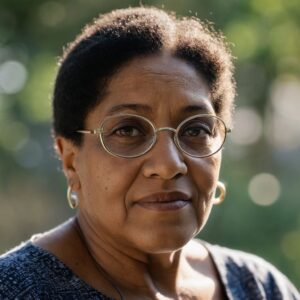
Audre Lorde’s name has been etched in my mind for years, long before I’d even picked up one of her books. My college English professor assigned us her poem “The New York Head Shop” and I was struck by the raw emotion and unapologetic language. It was like she had taken a magnifying glass to …
Audre Lorde: Where Vulnerability Meets Unapologetic Rage
Audre Lorde’s name has been etched in my mind for years, long before I’d even picked up one of her books. My college English professor assigned us her poem “The New York Head Shop” and I was struck by the raw emotion and unapologetic language. It was like she had taken a magnifying glass to …
Galileo Galilei: When the Truth Hurts (and Everyone Else Too)
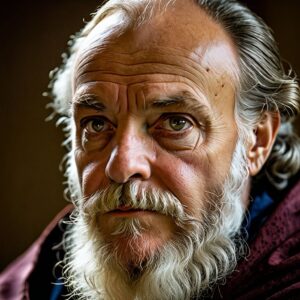
I’ve always been drawn to people who challenge the status quo, and Galileo Galilei is one of those figures who has captivated me for a while now. What strikes me about him is his unwavering commitment to observing reality, even when it went against the dominant views of his time. As I reflect on my …
Toni Morrison: Where the Unraveling Begins

Toni Morrison’s words are a slow burn, not a sudden flame. I remember the first time I read Beloved, how it took me weeks to get through, my mind piecing together fragments of Sethe’s story like a puzzle that refused to fit neatly into place. The language was rich, dense, and unapologetic, much like Morrison …
Charles Darwin: When Self-Discovery Gets Lost at Sea (and Then Found Again)

I’ve always been fascinated by Charles Darwin, but it’s not because I’m a biologist or even particularly interested in evolution. It’s something deeper than that. Maybe it’s the way he embodied both scientific rigor and introspection, two qualities that often feel mutually exclusive to me. As I read about his experiences on the Beagle, I …
Zora Neale Hurston: Where the Lines Get Blurred Between Storyteller and Savant
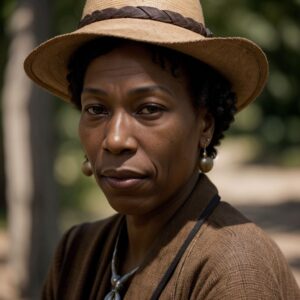
I’ll be honest, I stumbled upon Zora Neale Hurston’s name during a college course on American Literature, but it wasn’t until I read her novel “Their Eyes Were Watching God” that she truly caught my attention. What drew me in was the way Janie Crawford, the protagonist, navigated her own desires and identity within a …
Franklin D Roosevelt: The Secret Life of a Hidden Disability
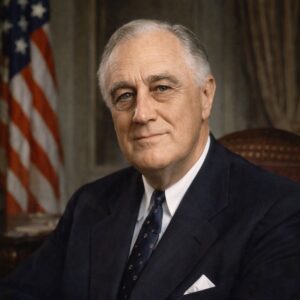
I’ve always been fascinated by Franklin D. Roosevelt, but not in a straightforward way. It’s not just his accomplishments or his leadership during World War II that draw me in – although those are certainly impressive. What really gets my attention is the complexity of his personality and the contradictions within him. Growing up, I …
Anton Chekhov: Melancholy by Default, or Maybe Just a Realist?
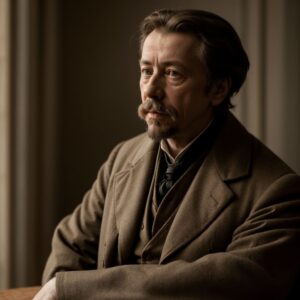
Anton Chekhov. His name has been etched in my mind for as long as I can remember, but it wasn’t until recently that I really started to think about who he was and what his writing means to me. I’ve always known that he’s a Russian playwright and short story writer, famous for his poignant …
Virginia Hall: The Extra Limb That Made Her Life More Complicated
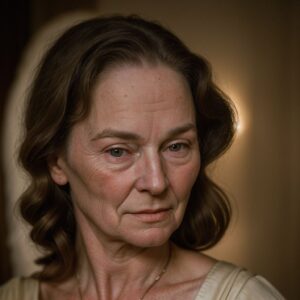
Virginia Hall. I first learned about her during a history class, where we briefly touched on the French Resistance during WWII. Her name stuck with me because of the unusual circumstances surrounding her involvement – she was an American living in France when Germany invaded, and instead of fleeing, she chose to stay and join …
Primo Levi: Fire That Won’t Quit
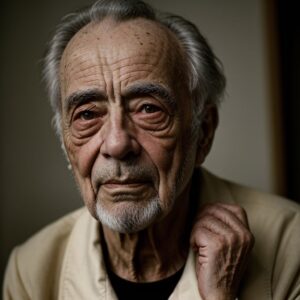
Primo Levi’s words have been etched into my mind like a scar, a reminder of the complexity and brutality of human existence. As I reflect on his life and work, I’m drawn to the contradictions that seem to define him: a chemist who became a writer, an Italian Jew who survived Auschwitz, a witness to …
Eartha Kitt: When Being Interesting Meant You Were a Problem
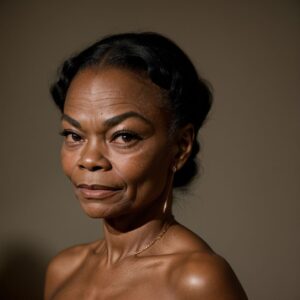
Eartha Kitt. Where do I even start? I’ve been obsessed with her for years, ever since I stumbled upon an old interview of hers on YouTube. Her voice, her wit, her unapologetic candor – it all just drew me in like a magnet. But as I delve deeper into her life and work, I find …
Robert Burns: A Life in Public Record
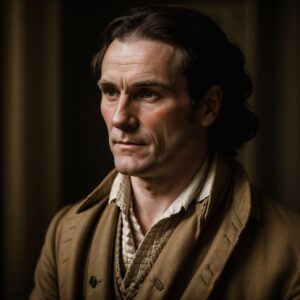
Robert Burns was born in 1759 in Alloway, Ayrshire, into a family sustained by tenant farming. His father, William Burnes, leased marginal land and supplemented the household income through manual labor and instruction. Burns received irregular formal education, supplemented by extensive self-directed reading in English literature, Scots verse, and Enlightenment thought. From an early age, …
Yayoi Kusama: The Making of a Public Figure
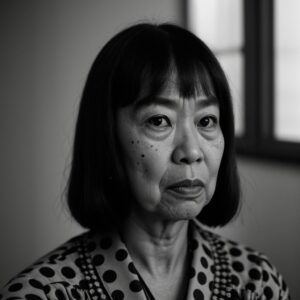
Yayoi Kusama was born in 1929 in Matsumoto, Japan, into a family involved in seed cultivation and commerce. From an early age, she produced drawings marked by dense fields of repeated marks, a practice that would remain central throughout her career. Formal training began at the Kyoto Municipal School of Arts and Crafts, where she …
Mary Wollstonecraft: A Career in Context
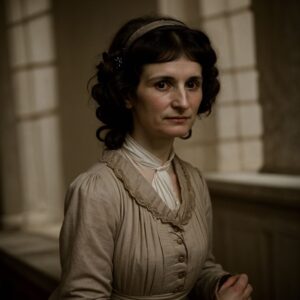
Mary Wollstonecraft was born on April 27, 1759, in Spitalfields, London, into a family whose financial instability shaped much of her early life. Her father’s failed ventures and volatile temperament produced a household marked by uncertainty, forcing Wollstonecraft to develop independence at an unusually young age. Formal education for girls was limited, and hers consisted …
Lord Byron: Too Many Masks for One Face

Lord Byron has been on my mind lately, probably because I’ve been re-reading his poetry. It’s not just the way he weaves words together that fascinates me – though, oh man, it’s like a masterclass in language. But it’s more than that. It’s the contradictions that make him hard to pin down. I find myself …
George Eliot and the Making of the Victorian Novel

Mary Ann Evans was born on November 22, 1819, at Arbury Hall in Warwickshire, England. Her father, Robert Evans, managed the estate for the Newdigate family, a position that placed the household within the orbit of landed society without granting it social standing. Her mother, Christiana Pearson Evans, oversaw domestic life until her death in …
David Bowie: A Life Shaped by Culture

David Robert Jones was born on January 8, 1947, in Brixton, London, to Haywood Stenton Jones and Margaret Mary Burns. His early years were marked by frequent changes in residence, with the family eventually settling in Bromley, Kent. School records from Bromley Technical High School show sustained engagement with visual art and music rather than …
Martin Luther King Jr. and the Labor of Words
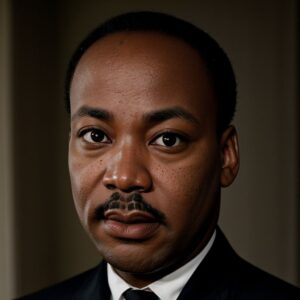
Martin Luther King Jr.’s handwriting shifts from cursive to print in a draft of his letter to the Birmingham City Council. The sentence “We will have to face the fact that we are now dealing with beasts” appears first in cursive, then is rewritten in print with the word “beasts” crossed out and replaced with …
Virginia Apgar and the Weight of First Minutes

In a letter to her colleagues, Virginia Apgar writes, simply, “A baby’s life should count.” The sentence appears midway down a page dated March 1959. One line above it reads, “The newborn’s future hangs in the balance.” There is no transition between the two, no attempt to explain the connection. The words sit beside each …
Benjamin Franklin and the Discipline of Attention

He wrote, in a careful hand, “What I wish most to learn.” The phrase appears again in a later draft, altered only slightly: “what I wish most to understand.” The change is small, almost negligible, yet it suggests a shift from accumulation to precision, from gathering facts to refining judgment. In the margins of his …
Susan Sontag in Fragments and Revisions
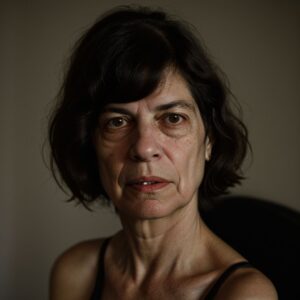
In a draft, the sentence appears: “Susan Sontag’s writing is an act of attention.” In this early version, the phrase “act of attention” feels almost like a placeholder, a gesture towards something yet to be explored. Later, it is crossed out and written again: “her essays are meditations on the human condition.” The language shifts …
Edgar Allan Poe and the Persistence of Doubt
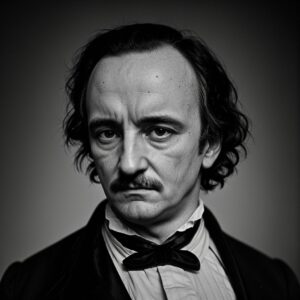
The sentence appears first as certainty and then as hesitation. “All that we see or seem is but a dream within a dream.” It surfaces in a letter, disappears in a later draft, and returns altered, as if the words themselves were unsure whether they wished to remain. In the margins nearby, Poe has written …
Anne Frank: Invisible Walls War, Identity, Trauma, Hope, Survival, Memory
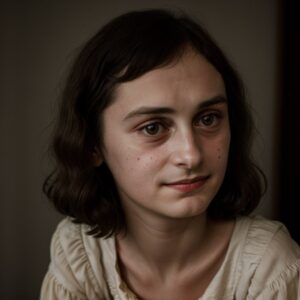
A photograph dated 1942 shows Anne Frank at a desk, her face turned toward the camera. The image records a moment from the year the Frank family went into hiding after the German occupation of the Netherlands intensified. The photograph does not explain what followed. It marks only a point in time, preserved without context, …
Albert Camus: A Stranger in the Mirror

A photograph dated 1948 records Albert Camus at a small table on the Boulevard Saint-Michel. The image is grainy and tightly framed, offering little beyond the outline of a figure, a scattering of papers, and the suggestion of a crowded interior just beyond the edge of the shot. Nothing in the photograph explains what he …
Hedy Lamarr: The Hidden Seam

Hedy Lamarr. I’ve been thinking about her a lot lately, trying to figure out why she fascinates me so much. It’s not just that she was an actress and inventor – although those things are pretty amazing on their own. No, it’s something more complicated than that. I think what really draws me in is …
Rosa Parks: A Dose of Drama, a Lifetime Supply of Trouble
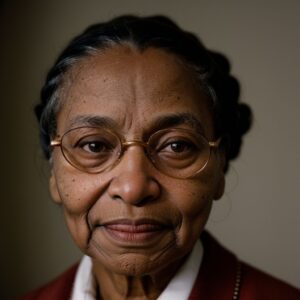
Rosa Parks’ hand was steady on the wheel of her bus route, a familiar rhythm that guided her through Montgomery’s city streets. But it was on one ordinary day, December 1, 1955, when her routine was disrupted by the driver’s demand that she give up her seat to a white person. She refused, sparking a …
Unraveling Orwell: A Study in Complexity
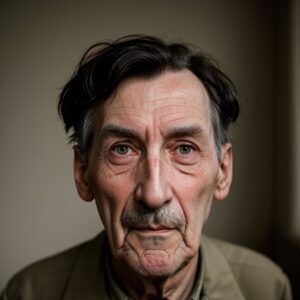
I have been studying the writings of George Orwell through the remains he left behind: notebooks, drafts, letters, photographs, and revisions that resist settling into a single narrative. His notebooks show a careful habit of recording fragments — overheard phrases, political observations, reminders written in haste. In “Why I Write,” he refers to the necessity …
Harper Lee: When The Spotlight Became a Straitjacket

I’ve always been fascinated by Harper Lee’s life, particularly the years leading up to and following the publication of To Kill a Mockingbird. It’s as if she vanished into thin air after that book became a sensation. I wonder what drove her to withdraw from the public eye. When I read about her struggles with …
Simone de Beauvoir and the Quiet Work of Ambiguity
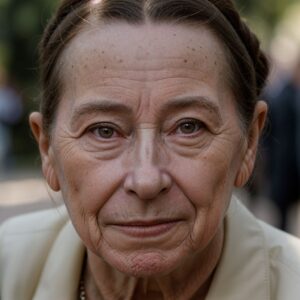
Simone de Beauvoir’s handwriting is uneven, as if she would rather be writing with her left hand. In a letter to Jean-Paul Sartre, she mentions the “difficulty of putting words to thought.” The sentence appears in multiple drafts, each time slightly altered. Her daily routine included early mornings near the Seine. She describes this time …