
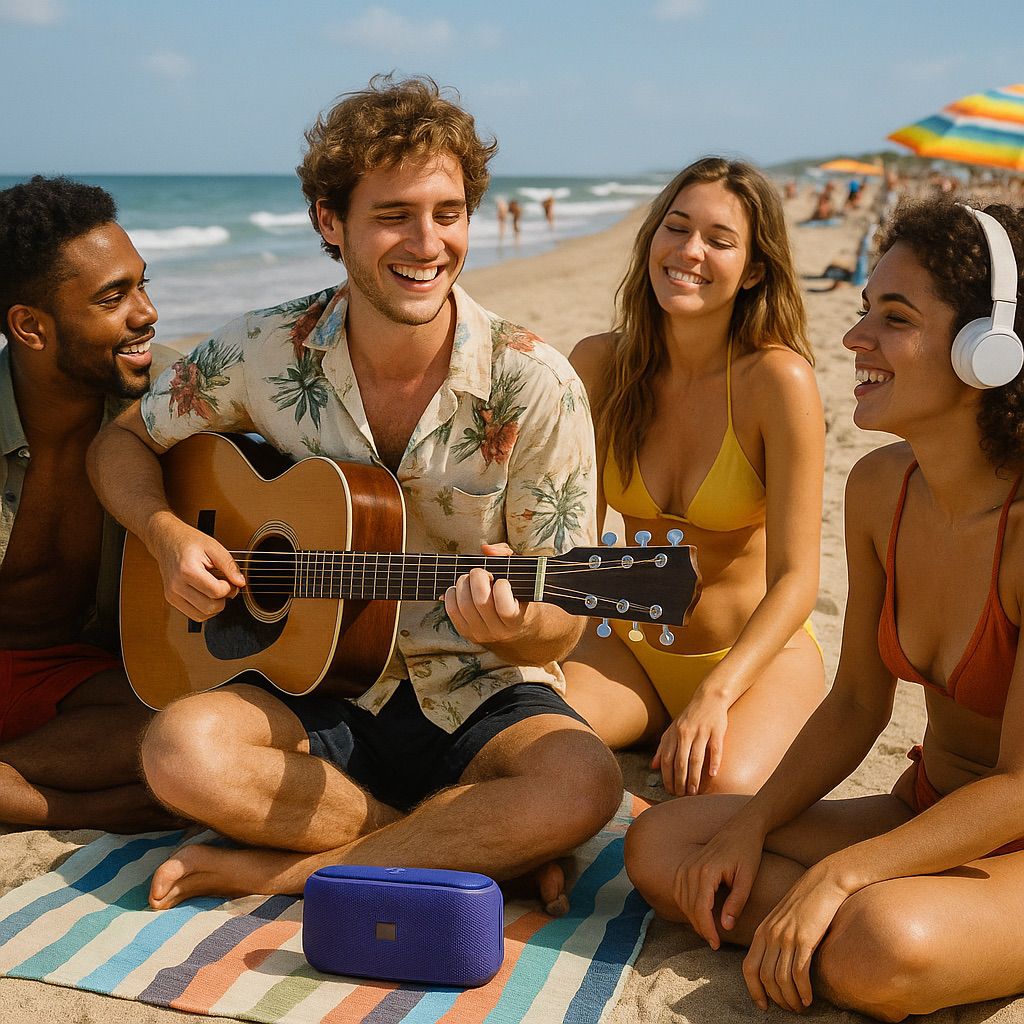
There’s something about the sound of music at the beach that feels like it’s been part of human DNA for centuries. Waves crash in perfect rhythm, gulls call out in random percussion, and somewhere—whether from a tinny transistor radio, a boombox propped on a towel, or Bluetooth speakers hidden under a sunhat—comes a melody that defines the moment. Beach music is more than just background noise; it’s the soundscape of summer, the heartbeat of sun-drenched afternoons, the invisible thread that ties strangers together under the same sky. Each decade has brought its own soundtrack to the shore, shaping not only what we danced to but how we remember our beach days. And like seashells collected along the waterline, each era’s sound carries its own distinct texture and shine.
The 1950s gave us the first taste of what would become “beach music” in the popular sense, though back then it wasn’t quite labeled that way. Post-war optimism was high, cars were shiny and big, and teenagers were suddenly a cultural force. Down in the Carolinas, a regional movement began to brew—smooth, soulful rhythm and blues, often from Black artists, that found its way into white beach towns via jukeboxes and AM radio. It was music you could shag to—a laid-back, swinging dance that matched the gentle sway of the tide. Songs like The Drifters’ “Under the Boardwalk” and The Clovers’ “Love Potion No. 9” became summer staples, echoing from open-air pavilions and seaside clubs. These weren’t songs about surfing or bikinis yet; they were about romance and mystery, the kind of stories that happened after the sun went down and the boardwalk lights flickered on.
Then came the 1960s, and with them, the West Coast claimed the beach as its stage. Surf music roared into being—electric guitars drenched in reverb, drumbeats like rolling breakers, and harmonies as bright as a lifeguard’s whistle. The Beach Boys became the undisputed kings of this era, spinning tales of surfing, cars, and endless summers that turned California into a dreamscape for kids thousands of miles from the nearest ocean. Songs like “Surfin’ Safari,” “California Girls,” and “Good Vibrations” weren’t just hits; they were passports to a sunlit world. Dick Dale’s rapid-fire guitar runs in “Misirlou” brought an instrumental ferocity to the scene, while Jan and Dean’s “Surf City” doubled down on the fun-loving imagery. The music was fast, carefree, and a little naive—perfect for a generation riding high on optimism and youth culture’s first big wave.
The 1970s slowed the tempo, shifting from surf rock’s pure adrenaline to something more mellow, reflective, and sun-soaked. Soft rock and yacht rock took over, carrying a breezy sophistication that paired perfectly with sunset beach bonfires and the gentle hiss of a cassette deck. Fleetwood Mac’s “Rhiannon” might not have been about the beach, but its ethereal quality fit the way the ocean feels at night. The Eagles’ “Hotel California” and America’s “Ventura Highway” carried the scent of salt and warm asphalt. Jimmy Buffett emerged as the poet laureate of tropical escapism with “Margaritaville,” turning beaches into a state of mind you could visit even in the dead of winter. Reggae, too, crossed oceans during this decade, bringing Bob Marley’s laid-back rhythms and political soul to beach playlists worldwide. His “Three Little Birds” became an unofficial seaside mantra—don’t worry, every little thing is gonna be all right.
By the 1980s, the beach had gone electric again. Synth-pop, glam, and dance tracks lit up coastal nightlife, while MTV ensured beach imagery was everywhere. Think Duran Duran’s “Rio,” with its yacht deck escapades, or the carefree vibes of Katrina and the Waves’ “Walking on Sunshine.” Pop icons like Madonna and Michael Jackson provided the kind of high-energy tracks that made beach volleyball games and neon swimwear feel like part of the same cultural wave. Meanwhile, the beach party movie saw a revival—films like “Back to the Beach” and “Weekend at Bernie’s” paired sandy hijinks with music that leaned heavily on punchy choruses and big, bold production. And then there was the rise of boombox culture, where you could literally carry your beach soundtrack on your shoulder, making your patch of sand feel like the center of the world.
The 1990s brought in a strange but delightful variety. On one hand, you had the grunge and alt-rock scene—Pearl Jam’s “Oceans” and Red Hot Chili Peppers’ “Scar Tissue” adding grit to the seaside air. On the other, hip-hop and R&B were shaping beach parties with beats as smooth as the boardwalk on a humid night. Will Smith’s “Summertime” was an instant classic, blending nostalgia with the fresh confidence of the era. Ska and punk-pop bands like Sublime and No Doubt fused surf culture with edgy street energy, giving us sunburned anthems that could just as easily play at a skate park as they could on the sand. The rise of portable CD players meant you could curate your own perfect beach mixtape—burned, labeled, and stored in a sandy backpack.
The early 2000s leaned hard into pop dominance, with artists like Shakira, Britney Spears, and Beyoncé providing the beats for endless summer afternoons. Shakira’s “Whenever, Wherever” had that irresistible Latin-infused rhythm that seemed to sync perfectly with waves lapping at your feet. Jack Johnson emerged as the era’s beachside troubadour—his acoustic guitar and mellow voice on tracks like “Banana Pancakes” and “Better Together” made you feel like the world could pause just for you. Reggaeton exploded onto global beach playlists, with Daddy Yankee’s “Gasolina” and Don Omar’s “Dile” shaking hips from Miami to Ibiza. By this point, Bluetooth speakers were replacing boomboxes, allowing smaller but more powerful sound to follow you wherever you laid your towel.
The 2010s brought streaming culture to the sand, and the concept of the “beach playlist” became a science. Spotify curated “Endless Summer” mixes; YouTube offered hours-long tropical house compilations; Apple Music let you pull up a mood-based beach set in seconds. The sound of the decade leaned heavily on EDM, tropical house, and festival-ready pop. Kygo’s remixes and original tracks like “Firestone” were practically engineered for sunsets on the water. Pop stars like Rihanna (“Cheers”), Calvin Harris (“Summer”), and Justin Timberlake (“Can’t Stop the Feeling”) ensured every beach gathering had its soundtrack dialed in before anyone arrived. And as social media grew, music became not just the soundtrack to the beach but part of the way we remembered and shared it—songs tied to drone footage of turquoise waves and perfectly timed slow-motion jumps into the surf.
Now, in the 2020s, beach music is as diverse as the people on the sand. Lo-fi beats hum from a group doing yoga under a palm tree, Latin trap thumps from a volleyball court, indie surf rock floats from a cooler-top speaker, and an older couple slow-dances barefoot to a playlist heavy on the 1960s classics. Technology has made the beach soundscape even more personal—you can have noise-canceling earbuds for a solo sunset soundtrack or waterproof speakers that turn your stretch of shore into a festival. Music discovery is instantaneous; a song playing from the next blanket over can be identified, saved, and added to your personal summer soundtrack in seconds. Yet, for all the tech, the essence hasn’t changed: beach music is still about setting a mood, about amplifying the joy of being exactly where you are, salty skin and all.
The beauty of beach music through the decades is that it’s never been just one genre or one scene—it’s a fluid, evolving conversation between place, people, and sound. Each era has added something to the shoreline’s permanent playlist: the soul of the 1950s, the energy of the 1960s surf craze, the reflective romance of the 1970s, the glam and groove of the 1980s, the eclectic boldness of the 1990s, the global fusion of the 2000s, the curated vibe of the 2010s, and the seamless personalization of today. Walk along any beach and you’ll hear echoes of them all—blended into a soundtrack that tells not just the history of music, but the history of summer itself.
In the end, beach music is less about what’s playing and more about what it makes you remember. A certain riff can transport you to the summer you fell in love. A chorus can bring back the smell of sunscreen and coconut oil, the heat of the sand on your feet, the sound of your friends laughing over the surf. That’s the real magic—songs come and go, trends fade, but the moments they score remain, polished smooth by the years like sea glass in the tide.