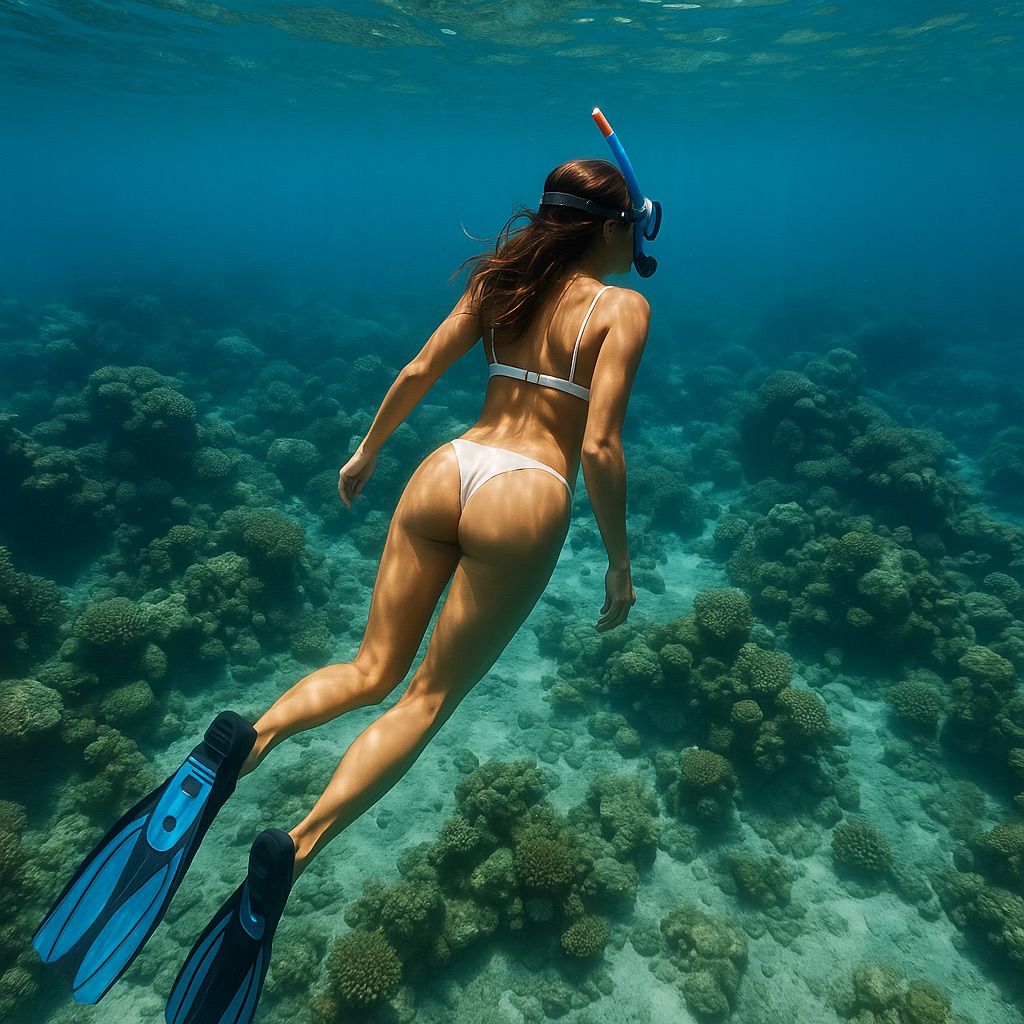
The beauty of a beach is often measured by the way it looks above the waterline, but the true magic lies just beneath the surface. For those willing to strap on a mask, bite down on a snorkel, and glide into the blue, an entire hidden universe awaits — colorful, vibrant, teeming with life. Snorkeling is one of the simplest and most rewarding adventures you can have on a beach day, requiring little more than curiosity and a willingness to float. It opens up a secret door into the world of coral gardens, swaying sea fans, darting tropical fish, and encounters with creatures that seem pulled straight from myths. Finding the best beaches for snorkeling is not about geography alone; it’s about entering places where nature has written her most dazzling stories in shades of turquoise and gold, pink and violet, emerald and silver. The water becomes a canvas, the fish the brushstrokes, and every snorkeler is both an explorer and a guest in a world older and grander than their own.
One of the most iconic snorkeling destinations on earth is Hanauma Bay in Oahu, Hawaii. From above, the bay looks like a perfect crescent carved out of volcanic rock, but beneath the waves lies a sanctuary bursting with coral reefs and vibrant marine life. The water here is calm and shallow, making it perfect even for beginners, but it’s the density of life that makes it unforgettable. Glide through the bay and you’ll find yourself surrounded by schools of butterflyfish and parrotfish, flashes of yellow tangs, and perhaps even a graceful sea turtle cruising by like a serene elder of the reef. The experience is so overwhelming that it feels less like snorkeling and more like stepping into a living aquarium, only this one has been sculpted by nature and preserved by protection efforts that have made Hanauma Bay a global model for marine conservation.
Half a world away, the Caribbean offers its own treasures. Trunk Bay in St. John, part of the U.S. Virgin Islands, is often described as one of the most beautiful beaches in the world, but its real jewel is underwater. An underwater snorkeling trail has been created here, complete with plaques that guide you through the coral formations and introduce you to the fish you’ll encounter. It’s as if the ocean itself is giving you a guided tour, whispering secrets about the reef as you glide through warm, crystalline waters. This blending of education and adventure ensures that even first-timers leave not only dazzled but also more aware of how fragile and precious these underwater ecosystems are.
Australia’s Great Barrier Reef may be the crown jewel of global snorkeling, but it is the smaller, more intimate spots that truly capture the heart. At Whitehaven Beach in the Whitsundays, powdery white sand gives way to waters where stingrays glide like shadows over a turquoise canvas, and tiny, curious fish dart between your legs as you walk in from the shore. The reef here is shallow and easy to access, but the diversity is staggering — corals like sculpted castles, clownfish peeking from anemones, and flashes of electric blue and neon pink that seem too vivid to be real. Snorkeling here reminds you that sometimes the greatest beauty is not in size but in intimacy, in the way each encounter feels personal, like the reef is performing just for you.
For those drawn to the raw, untamed beauty of the Red Sea, Egypt’s Ras Mohammed National Park offers snorkeling like nowhere else. Located at the tip of the Sinai Peninsula, this region is where vibrant coral reefs meet desert cliffs, creating a surreal collision of landscapes. Slip beneath the surface and you are greeted by walls of coral that drop into the depths, teeming with fish that shimmer like jewels against the backdrop of the blue. Barracuda patrol the outer edges, while colorful wrasses, angelfish, and butterflyfish populate the reef. Snorkeling here feels primal, ancient, as if you are tapping into the same waters that have flowed unbroken since the dawn of life itself.
Mexico’s Riviera Maya holds another treasure in Akumal, which means “Place of the Turtles” in Mayan. True to its name, Akumal’s shallow, calm waters are home to green sea turtles that graze peacefully on seagrass meadows just offshore. To snorkel here is to experience one of the most humbling encounters possible — drifting alongside these gentle giants as they move with slow, deliberate grace, completely unbothered by your presence. The sight of a turtle lifting its head to the surface for a breath before sinking back down into the meadow is unforgettable, a reminder of the delicate balance between sea and land, air and water.
In the Maldives, nearly every island offers snorkeling that could make the list of “world’s best.” The waters here are impossibly clear, the corals alive with every imaginable hue, the marine life dazzling in both diversity and abundance. Perhaps nowhere else in the world can you step directly from your overwater villa into a reef where you might see manta rays, reef sharks, and clouds of tropical fish in a single swim. The Maldives redefine what it means to be surrounded by the sea, making every snorkel an immersion in paradise.
The Galápagos Islands, meanwhile, add another dimension to snorkeling — not just color and beauty, but history and uniqueness. Here, you are as likely to encounter a marine iguana gliding past you as you are to see a school of surgeonfish. Sea lions often swim playfully alongside snorkelers, their agility and joy infectious. The Galápagos remind us that snorkeling is not just about seeing beautiful fish, but about sharing space with creatures found nowhere else on earth. It is a humbling, exhilarating reminder of how diverse life can be when allowed to flourish in isolation.
And then there are the hidden gems, the places that don’t make every glossy magazine list but stay forever etched in the memories of those who discover them. Devil’s Crown in the Galápagos, a submerged volcanic crater teeming with life. Molokini Crater in Hawaii, a crescent-shaped sanctuary where visibility is so clear it feels like floating through glass. Ningaloo Reef in Western Australia, less famous than the Great Barrier but just as dazzling, where whale sharks migrate and coral flourishes with fewer crowds.
What makes a beach great for snorkeling is not just what you see, but how it makes you feel. The best beaches for snorkeling remind you that the world is larger and more complex than you imagined, that beauty exists in layers, that every fish, coral, and current is part of a grand design you are only beginning to glimpse. They teach patience, humility, and wonder. They slow you down, force you to breathe, to observe, to marvel.
The real gift of snorkeling is not just the photographs or the list of species you can check off. It is the moment of connection — when a turtle meets your eye, when a school of fish envelops you like a living cloud, when sunlight refracts through water and turns everything into a kaleidoscope. These are moments of intimacy with a world that exists whether or not we visit it, a reminder that paradise is not a resort but an ecosystem, fragile and alive.
The best beaches for snorkeling are scattered across the globe, but they share one thing in common: they leave you changed. You emerge from the water with salt on your skin and wonder in your eyes, carrying with you a piece of the reef, not physically but emotionally. You carry the colors, the rhythms, the quiet power of a world that thrives just beyond our everyday sight. And once you have seen it, you will spend your life seeking it again, diving into new waters, chasing new horizons, searching for that same thrill of discovery.
Snorkeling is not about expertise, expensive gear, or even travel to the farthest corners of the planet. It is about curiosity, about surrendering to the idea that the world beneath the waves is as much ours to explore as the mountains and cities we call home. The best beaches for snorkeling are not just destinations; they are invitations — invitations to witness, to respect, to protect. Because once you have seen paradise underwater, you cannot help but want to keep it safe for generations to come.