
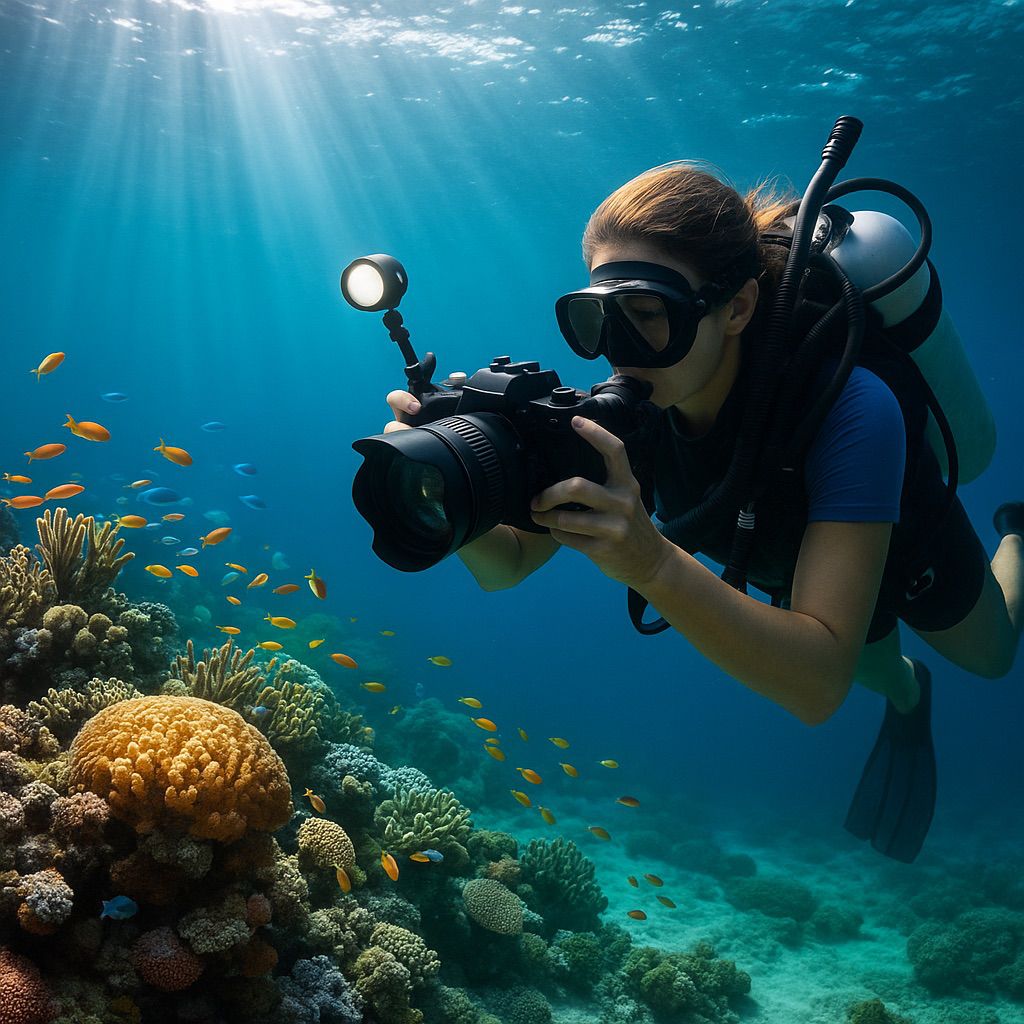
There’s something undeniably magical about slipping beneath the surface of the water. The world changes instantly: light bends differently, sound muffles into a low hum, and colors shift as if you’ve entered a living dream. Fish dart in flashes of silver, coral sways with the rhythm of the tide, and for a moment, you realize how vast and otherworldly the ocean truly is. Capturing that feeling through underwater photography is one of the most rewarding challenges a creative adventurer can take on. It’s not just about snapping pictures—it’s about learning to see the world in a new dimension, translating the surreal into something you can hold, share, and revisit long after you’ve dried off. But the ocean doesn’t make it easy. Cameras fog up, light disappears, currents tug, and subjects rarely stay still. Underwater photography is an art form where patience meets technology, and where the ultimate reward is bringing back images that make people gasp with wonder.
Like all adventures, it starts with preparation. You don’t need to buy the most expensive camera rig to begin. For many beginners, waterproof smartphones with proper underwater housings are a perfect start. They’re lightweight, easy to handle, and forgiving when you’re still figuring out how to manage breathing, buoyancy, and framing at the same time. Action cameras like GoPros have also earned a reputation as reliable, compact tools for beginners—simple, sturdy, and versatile. As you advance, mirrorless and DSLR cameras with dedicated housings and dome ports open up a world of professional possibilities, but they also demand more skill, investment, and maintenance. The key is to start with what you’re comfortable managing underwater; after all, even the best camera can’t save a shaky, unfocused shot.
Once you’ve chosen your gear, the housing becomes your best friend. It’s what stands between your camera and the water, and even the smallest leak can spell disaster. Checking O-rings for dust, hair, or grains of sand before every dive is essential. Always test your housing in shallow water first to ensure no leaks occur, because nothing ruins the dream faster than discovering a soaked camera. Anti-fog inserts help keep your lens clear, and regular rinsing with fresh water after a dive keeps salt from building up. Learning to care for your equipment is just as important as learning to use it.
Light is the next great frontier in underwater photography. The deeper you go, the more light fades away, and with it, color. Reds disappear first, then oranges, yellows, and greens. By the time you reach just 30 feet, everything takes on a bluish-green cast. This is why so many beginner photos come back looking flat or dull. The secret to reviving those colors lies in shooting shallow when possible, staying within 10 to 20 feet where sunlight still penetrates, and using artificial lights or strobes when diving deeper. Even a small video light can transform your photos, revealing vibrant coral and fish that otherwise blend into the shadows. Mastering the interplay between natural light and artificial illumination is one of the defining skills of a great underwater photographer.
Composition plays differently underwater too. The ocean is a dynamic place; nothing is static. Fish swim away, plants sway, bubbles rise, and light dances in ripples. To create striking images, you have to embrace that movement rather than fight it. Get close to your subject—closer than you think. Water reduces clarity, and the more distance between you and your subject, the hazier the image becomes. Filling the frame with a turtle, a diver, or a school of fish creates intimacy and impact. Shooting upward rather than downward often produces more dramatic results, capturing your subject against the light-filled surface. Wide-angle lenses are popular for this reason, letting you capture both subject and environment without losing clarity.
Buoyancy control is the unsung hero of underwater photography. If you’re constantly bobbing up and down, stirring up sand, or floating away from your subject, no camera will save your shots. Practicing neutral buoyancy until it feels second nature not only protects fragile marine environments but also allows you to hover calmly as you frame your shot. Think of yourself as part of the water column—you’re not fighting it, you’re flowing with it. This zen-like state not only improves your photos but also deepens your connection to the underwater world.
Timing is everything. Marine life doesn’t pose, and the ocean doesn’t pause for you. Patience, observation, and respect for your subjects are key. Watch how fish move, how they dart and return, how turtles rise for air, how rays glide. Anticipating behavior allows you to capture moments rather than chasing them. And always remember: the ocean is not a studio. Respect its rhythms, don’t harass wildlife, and prioritize safety over the perfect shot. The goal is to capture the beauty of the ocean without disturbing it.
Editing also plays a huge role in underwater photography. Even with the best lighting, colors often need correction to restore their true vibrancy. Software like Lightroom or Photoshop can bring back warmth, contrast, and detail lost in the depths. But editing isn’t about creating fantasy—it’s about honoring what you saw, bringing the image closer to the magic your eyes experienced that the camera couldn’t fully capture. A little adjustment to white balance, exposure, and sharpness can elevate a decent shot into something extraordinary.
What makes underwater photography so viral, so irresistible, is the sense of discovery it brings. People love to see what lies beneath the waves, especially those who’ve never strapped on a mask and snorkel. Your photos become more than just personal souvenirs; they become windows for others, invitations into a world that still feels mysterious. A single photo of a clownfish peeking out of anemone or a sunbeam breaking through kelp forests can ignite wonder across the internet. Underwater photography isn’t just a skill—it’s storytelling for a world most people never get to see.
And yet, what makes it unforgettable is how human it feels. You, floating in the vastness, heart beating a little faster with each dive, trying to hold steady as a curious fish tilts its head toward you. You, fumbling with settings, only to glance up and see a manta ray gliding gracefully above. You, realizing that half the fun isn’t the picture you bring home but the moment you lived to take it. The camera is just the excuse. The real magic is how the ocean makes you feel alive, small, and connected all at once.
In the end, the basics of underwater photography boil down to this: gear you trust, light you understand, composition that embraces intimacy, buoyancy that feels effortless, patience that honors the ocean, and editing that reveals what your eyes saw. It’s about building skill while keeping curiosity alive, about striving for technical mastery without losing the childlike awe of being underwater. Every photo is temporary—after all, the subjects move, the sand shifts, the tide returns—but the memories and images last long beyond the dive.
So pack your housing, charge your camera, and dive in. The ocean is waiting, filled with stories to tell, colors to capture, and creatures to meet. You may not get the perfect shot your first time, but that’s the beauty of it. Each dive, each attempt, is a lesson, and one day you’ll surface with an image that makes even you gasp. That’s the reward. That’s why we chase the light beneath the waves. That’s why underwater photography is more than a hobby—it’s a way of carrying the ocean home.