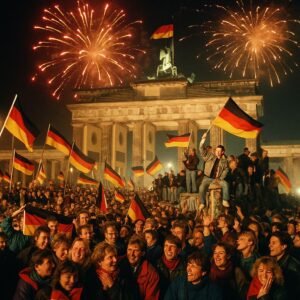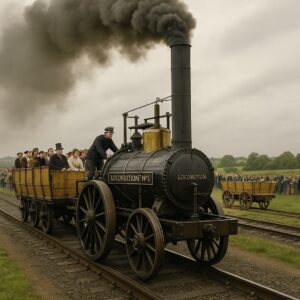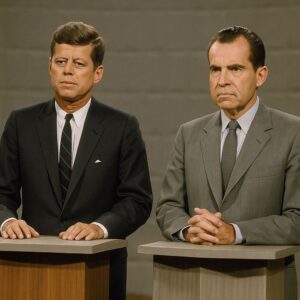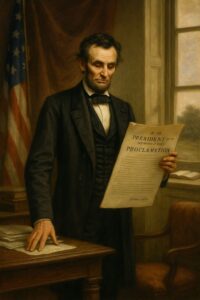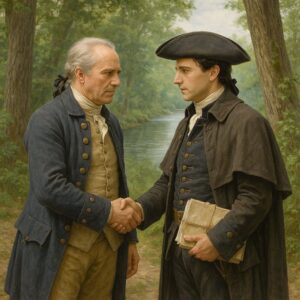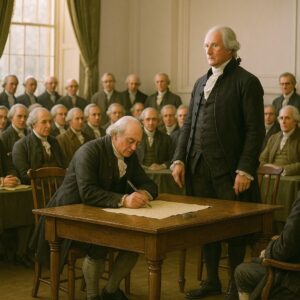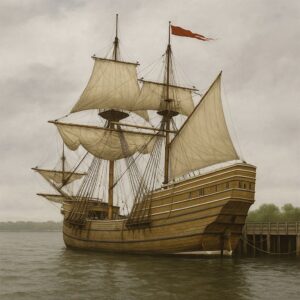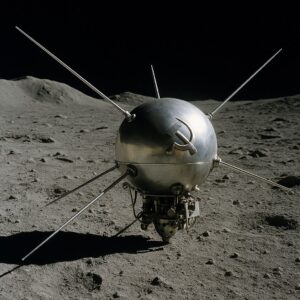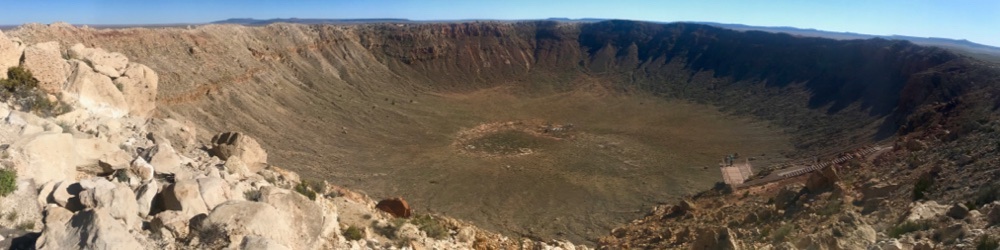
There are certain dates in history that refuse to be forgotten, not because they were chosen for celebration, but because something happened—so loud, so spectacular, so absurd, that the world had no choice but to listen. August 27 is one of those days. It is a date born of chaos and curiosity, destruction and delight. …
Category: Events
Votes and Toilet Rolls: The Unexpected Twin Triumphs
It’s strange how the calendar rarely tells us what’s important. August 26 doesn’t come bearing fireworks or fireworks’ anticipation. It doesn’t mark a new season or host a universally celebrated holiday. It’s just a hot day on the edge of summer in the United States. But to history? To culture, and comfort, and the human …
Emerald Lights, Endless Trails
On August 25, America learned two different ways to believe. In 1916, Congress created the National Park Service, a quiet sentence that would teach an entire country to treat mountains, canyons, coral reefs, and battlefields like family heirlooms: not for hoarding, but for sharing. Twenty-three years later, in 1939, a movie slipped from sepia into …
Cinders and Celluloid: When a Mountain Froze Time and a Camera Set It Moving
On certain dates the past feels like a stereo, two speakers broadcasting radically different songs that somehow harmonize. August 24 is one of those days. In AD 79, Mount Vesuvius erupted and erased Pompeii and Herculaneum in a convulsion of ash, pumice, and poisonous wind, turning everyday gestures into eternal artifacts. In 1891, Thomas Edison …
Ash and Light: The Day the Earth Looked Back and the Mountain Spoke
On a late summer day that sits like a hinge in the calendar, August 23 offers a startling diptych: a mountain that devoured cities and a machine that taught us to see our own. In AD 79, Mount Vesuvius erupted with a ferocity that turned Pompeii and Herculaneum into time capsules of terror and tenderness, …
The Long Drive: How Cadillac and Nolan Ryan Redefined American Precision
Under the industrial haze of early 20th century Detroit, a new kind of American ambition rolled quietly onto the factory floor. On August 22, 1902, Cadillac began production, emerging from the remnants of the Henry Ford Company with a name borrowed from the French explorer who founded Detroit and a philosophy that would become its …
The Day of Disappearance and Arrival: How August 21 Framed a World Without a Painting and a Union With an Ocean
On August 21, two scenes, two rooms, two kinds of silence. In Paris, a hush like a held breath spreads across the Louvre as visitors face an empty rectangle on a wall, four small pegs where a smile once hovered. In Honolulu, the wind tests a new flag’s seams as it climbs a pole against …
Two Declarations on a Summer Day: How August 20 Wrote the End of One War and the Beginning of Another
On an August day that might otherwise have passed like any other—humid, slow, the air shimmering above cobblestones—two signatures on two very different pieces of paper nudged the world onto quieter, healthier tracks. On August 20, 1866, President Andrew Johnson proclaimed the last embers of the U.S. Civil War officially extinguished, a legal coda to …
Light, Lenses, and Lives: How August 19 Captures the World
On August 19, the world tilts its head toward two vastly different but equally profound achievements of the human spirit. One belongs to art and science—the creation of the daguerreotype, the first publicly announced photographic process, in 1839, which allowed humans to capture light itself and hold it in their hands. The other belongs to …
Two Revolutions in Choice: The Day Women Voted and Took Control of Their Futures
August 18 is a date that echoes like a struck bell across the corridors of modern history. It is a day bound to the voices of women, to the weight of ballots cast and the quiet authority of choices made in the privacy of one’s own body. On August 18, 1920, the United States ratified …
Red Horizons and Concrete Divides: When a Moon Was Found and a Wall Rose
Under a warm August sky, two moments in history—separated by nearly a century—emerged on the same date, each shaping the human story in profoundly different ways. On August 17, 1877, Asaph Hall, an astronomer at the U.S. Naval Observatory in Washington, D.C., peered into the vast darkness through the largest refractor telescope in the world …
The Thunder at Bennington: How Ragtag Rebels Turned the Tide
The summer of 1777 was hot, tense, and full of doubt for the young American Revolution. Two years had passed since the Declaration of Independence, and while the words on parchment had been bold, the war on the ground was still a precarious gamble. The British were making a push from Canada down into New …
Peace, Freedom, and Faith: The Day the World Sang in Many Tongues
Some dates seem to carry more history than they can hold, as if time itself decided to stack meaning upon meaning until the weight of memory was almost too much. August 15 is one such date—a day when different corners of the world have celebrated liberation, witnessed the closing chapter of war, gathered in fields …
Security and Sovereignty: Two Births That Changed the World
History often reminds us that the same day can hold multiple meanings depending on where you stand. August 14 is one such date, etched into the memory of two very different nations for two very different reasons. In the United States, it marks the signing of the Social Security Act in 1935—a cornerstone of the …
Youth, Loss, and Leadership: A Date Where Generations Collide
History is full of dates that feel like crossroads, moments where the themes of life, death, and the shifting of generations meet in unexpected ways. August 12 is one such day—a day where the United Nations celebrates International Youth Day, honoring the promise, potential, and resilience of young people around the world. Yet, in a …
Alcatraz Receives Its First Federal Prisoners: The Rock, Capone, and the World at War
There are certain dates in history when events, separated by oceans and circumstances, become strangely intertwined. August 11 is one of those days. In 1934, the infamous Alcatraz Federal Penitentiary welcomed its first wave of inmates, among them some of the most dangerous and high-profile criminals in America—including the legendary gangster Al Capone. The Rock, …
The Day Japan Offered Conditional Surrender: A Turning Point in World History
The world in August 1945 was exhausted, battered, and holding its breath. For six years, the most destructive war humanity had ever seen had consumed cities, toppled empires, and stolen tens of millions of lives. Europe lay in ruins, its cities scarred with craters and charred buildings, its people worn thin from years of rationing …
Shadows in the Ash: Nagasaki and the Final Blow
On the morning of August 9, 1945, just three days after the devastation of Hiroshima, the Japanese city of Nagasaki found itself at the heart of the most destructive chapter of human warfare. At precisely 11:02 AM, a massive B-29 Superfortress bomber known as Bockscar released a second atomic bomb—nicknamed “Fat Man”—over the city. Within …
The Soviet Blitzkrieg That Broke the Rising Sun
The world was already screaming. Hiroshima had just been vaporized — a hundred thousand lives seared into shadows on concrete — and America was high off the smell of uranium and divine authority. People in Tokyo were twitching, waiting for the next flash of Judgment Day. But somewhere in Moscow, under Stalin’s glassy gaze and …
Shadows of Tomorrow: Nagasaki’s Silence and the Birth of a New World Order
The morning of August 7, 1945, dawned in the shadow of a shattered world. In Japan, the smoldering ruins of Hiroshima still burned from the previous day’s unprecedented horror. Across the Pacific, in the chamber of the United States Senate, something very different was happening—something that, in stark contrast to the destruction unfolding across the …
Hiroshima’s First Dawn of Destruction
The morning of August 6, 1945, unfolded over Hiroshima like any other humid summer day. The city stirred awake beneath a clear sky, with people going about their routines—workers heading to their posts, children preparing for school, shopkeepers unlocking their doors. War-weary but functioning, Hiroshima remained one of the few cities untouched by the relentless …
Behind the Bars That Shook the World
In the crisp chill of a winter morning in South Africa, August 5, 1962, the wheels of a police vehicle hummed down a quiet road near Howick in Natal. Inside sat a tall, dignified man wearing a chauffeur’s cap, assuming the role of a humble driver. But this was no ordinary man, and this was …
When the Empire Chose War: Britain’s Fateful Step into World War I
August 4, 1914, is a date that still echoes with the weight of a world forever changed. On that day, Great Britain officially declared war on Germany, following the latter’s invasion of neutral Belgium. It was a moment that would mark the beginning of Britain’s deep and harrowing entanglement in what would become known as …
How Britain’s First Electric Traffic Lights Transformed Urban Life
The history of a city is often told through its architecture, wars, and politics—but sometimes, its most transformative moments appear in the smallest of innovations. On August 3, 1926, the bustling streets of London bore witness to a curious sight that would go on to change the rhythm of modern life: the installation of Britain’s …
The Day Iraq Invaded Kuwait and the Gulf Caught Fire
August 2, 1990, began like many blistering summer days in the Middle East—dry, cloudless, and heavy with heat. But by the time the sun set over the Arabian Peninsula, the world had changed. In the dark early hours of that day, Iraqi tanks rolled across the Kuwaiti border in a swift and brutal invasion ordered …
Empires in Turmoil, Chains Broken: The Twin Shockwaves of August 1
History doesn’t always announce itself with a thunderclap, but August 1, 1834, and August 1, 1914, were days when the world felt two very different yet equally monumental shifts. One marked the end of institutionalized slavery in much of the British Empire, a culmination of moral reckoning and decades of fierce activism. The other marked …
The Day the World Got Its Voice
When Alexander Graham Bell received U.S. Patent No. 174,465 on July 31, 1876, he couldn’t have fully anticipated the extent to which his invention would change the world. What began as a rudimentary device capable of transmitting the human voice over a wire would evolve into one of the most transformative technologies in human history. …
The Day America Promised to Care for Its Own
It was a sweltering July afternoon in Independence, Missouri, when a president stood shoulder to shoulder with a man who once held his job, both of them representing two very different chapters of American history. The year was 1965, and the moment was far more than ceremonial—it was a reckoning. On July 30th, President Lyndon …
The Man Who Forged the Fasces: The Rise, Rule, and Ruin of Benito Mussolini
On July 29, 1883, in a humble home in the small town of Predappio in northern Italy, a child was born who would go on to change the course of European history. That child, Benito Amilcare Andrea Mussolini, would become the founding father of Fascism, a political ideology that promised national strength and unity but …
A Language for Peace: The Dawn of the Esperanto Movement
On July 28, 1905, the sleepy French seaside town of Boulogne-sur-Mer played host to an unprecedented event that would quietly echo across cultures and borders for more than a century—the First World Congress of Esperanto. Unlike political summits or royal affairs that often dominated the headlines, this was a gathering of idealists, linguists, teachers, and …