
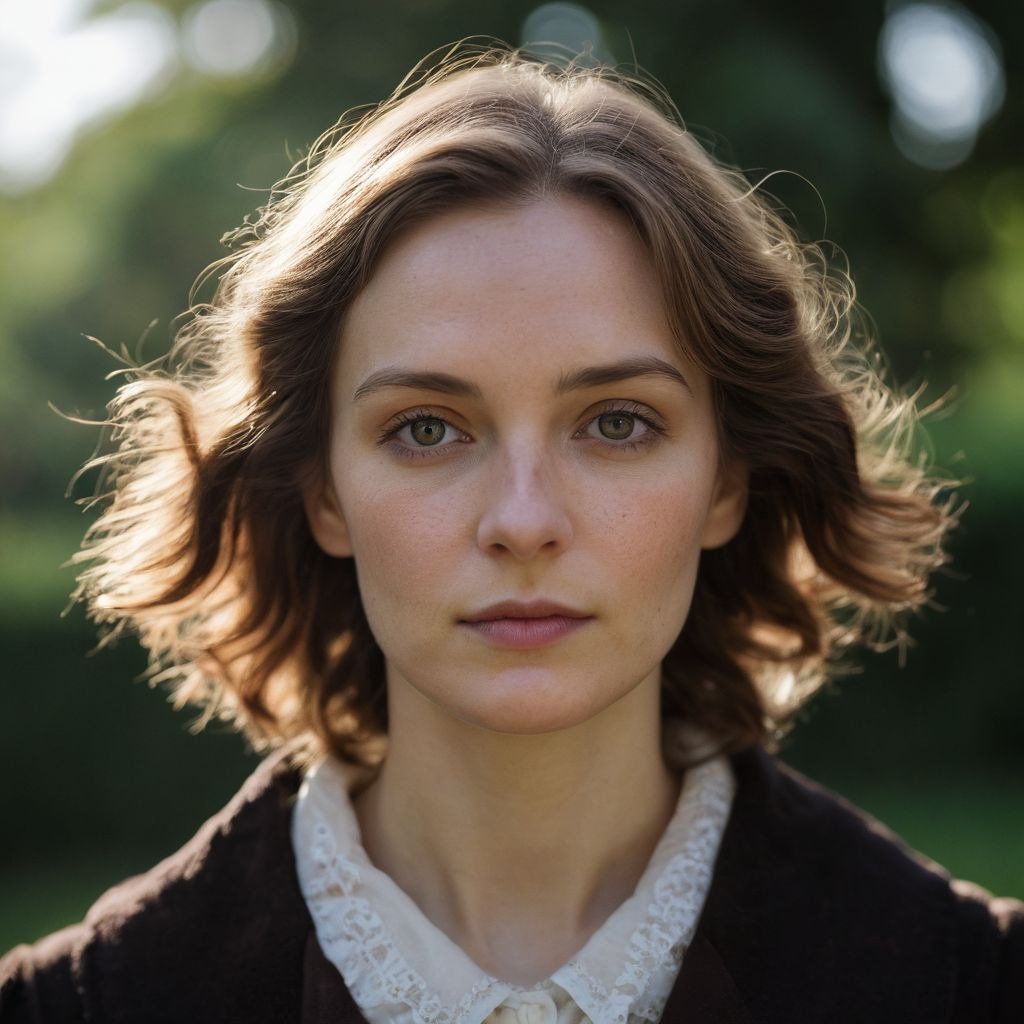
Emily Brontë has been lingering in the back of my mind for months, ever since I finished reading Wuthering Heights and couldn’t shake off its haunting presence. At first, it was just a vague sense of fascination with her reclusive life at Haworth Parsonage, where she lived with her sisters Charlotte and Anne, but as I delved deeper into her story, my interest only grew more complex.
What draws me to Emily is the way she seems to embody both extremes: creativity and repression, freedom and confinement. Her writing is a testament to the power of imagination, yet it’s also infused with a sense of melancholy and isolation that makes me wonder if she was ever truly free. I mean, here was this brilliant writer, crafting some of the most iconic characters in literature, but living her life under the strict rules of her family and society.
I find myself comparing Emily to my own experiences as a college student, struggling to balance creative pursuits with the pressures of academic expectations. There were times when I felt suffocated by the need to produce “good” work, when every essay or short story seemed to be judged against some unspoken standard of perfection. It’s frustrating to admit, but even now, after finishing college and feeling like I should be more confident in my abilities, I still worry about being seen as a “real writer.”
Emily’s relationship with her sisters is another aspect that fascinates me. On the surface, it seems like they were close, supporting each other through the hardships of their lives, but there are hints of tension and competition beneath the surface. Charlotte’s biographical essay on Emily has been influential in shaping my perception of their dynamic, but I’m also aware of its limitations – after all, it was written by a sister who had her own biases and agendas.
I’ve always been struck by the similarities between Catherine Earnshaw from Wuthering Heights and the young women I see around me. Like Emily, Catherine is an embodiment of wildness and passion, but also of vulnerability and impulsiveness. Her struggles with Heathcliff are as intense and all-consuming as any relationship I’ve ever seen or experienced – it’s a reminder that our most formative relationships often shape us in ways we can’t fully understand.
One of the things that keeps me coming back to Emily Brontë is her enigmatic silence. We know so little about her personal life, despite the wealth of biographical information available. She rarely spoke out on her own behalf or shared much about herself in interviews. It’s as if she preferred to let her writing speak for her – and yet, even that can be ambiguous, open to multiple interpretations.
I’m not sure what it is about Emily Brontë that resonates with me so deeply. Part of it might be the way she seems to embody both aspects of my own personality: the creative, imaginative side, and the more reserved, introspective one. Or maybe it’s just her refusal to conform to expectations – a trait I admire but also feel intimidated by.
Whatever the reason, Emily Brontë has become a sort of presence in my life, someone who haunts me with her intensity and her mystery. I keep coming back to Wuthering Heights, re-reading passages that I’ve underlined and annotated until they’re almost illegible. It’s as if I’m trying to grasp the essence of Emily herself, even though I know it’s impossible – she remains elusive, a shadowy figure who haunts my imagination long after I close the book.
Still, I’m drawn to her silences as much as her words. There’s something about the spaces between her sentences, the blank pages where we might expect some kind of revelation or epiphany, that speaks to me on a deep level. It’s like Emily is holding up a mirror to my own uncertainties and doubts – reminding me that, even with all our best intentions, we can never truly capture the truth about ourselves or others.
As I write this, I’m left with more questions than answers. What does it mean to be an artist in confinement? Can creativity ever truly flourish when it’s bound by societal expectations and personal fears? And what lies behind Emily Brontë’s enduring mystery – a testament to her genius, or a warning about the dangers of silencing our own voices?
I’m not sure I’ll ever have definitive answers to these questions. But in lingering on them, I feel like I’m slowly coming closer to understanding why Emily Brontë holds such a powerful place in my imagination – and maybe even in my heart.
As I continue to grapple with Emily’s enigmatic silence, I find myself wondering about the role of self-protection in her creative process. Was she actively choosing to conceal parts of herself from the world, or was it simply a product of her circumstances? The more I read and think about it, the more I realize that it’s not always easy to distinguish between intention and circumstance.
I think back to my own experiences with writing, how sometimes I feel like I’m exposing too much of myself on the page. It’s as if I’m vulnerable to criticism or rejection, and the fear of being seen as “not good enough” can be paralyzing. In those moments, it’s tempting to retreat behind a mask of objectivity, to write from a safe distance where I can’t get hurt.
But Emily Brontë seems to have done just the opposite – she wrote from the depths of her own pain and vulnerability, pouring her heart out onto the page in Wuthering Heights. And yet, despite its raw emotion and intensity, the novel remains a masterpiece that has captivated readers for generations.
I’m struck by the contrast between Emily’s writing style and my own. While I often struggle to find the right words or worry about being too “honest” on the page, Emily seems to have approached her writing with a fearless abandon. It’s as if she knew that her unique voice and perspective were worth sharing, no matter what others might think.
This makes me wonder: what would happen if I let go of my fears and allowed myself to be more vulnerable in my writing? Would I produce work that’s more authentic, more meaningful? Or would I expose myself to criticism or ridicule?
The questions swirl around me as I write, but I’m no longer feeling the same sense of uncertainty. Instead, I feel a growing sense of curiosity – what if I took a risk and wrote from my truest self? What kind of writing might emerge from that place of vulnerability and honesty?
As I ponder this question, I find myself thinking about the power dynamics at play in Emily’s relationships with her sisters and other figures in her life. It’s clear that she was deeply influenced by those around her, particularly Charlotte, who often took on a maternal or caretaking role. But what struck me is how Emily also seemed to exert her own influence over others – not through grand gestures or declarations of independence, but through the quiet persistence of her art.
I think about my own relationships with the people in my life, and how I often find myself navigating complex webs of obligation and expectation. As a college student, I was frequently asked to prioritize academic success above all else, as if it were the only valid measure of worth. And while this pressure can be overwhelming at times, I also recognize that it’s rooted in a deeper desire for connection and validation.
In Emily Brontë’s case, her relationships with others – particularly her sisters – seem to have been shaped by a similar dynamic. Charlotte, as I mentioned earlier, was instrumental in promoting Emily’s work after her death, but there are hints of tension and competition between the two sisters that suggest a more complicated reality. And yet, despite these tensions, Emily’s writing remains a testament to the enduring power of their bond.
As I continue to explore this idea, I find myself thinking about the ways in which our relationships shape us – not just as individuals, but also as artists and writers. Do we write from a place of solitude, or do we draw upon the people and experiences that surround us? And what happens when those relationships become complicated or fraught?
I’m reminded of Catherine Earnshaw’s doomed romance with Heathcliff, which feels like a primal expression of the conflicting desires for connection and autonomy that define human experience. Like Emily Brontë herself, Catherine is a force of nature – passionate, impulsive, and ultimately uncontainable.
But what if I were to take Catherine’s story as a model for my own writing? What if I allowed myself to be more raw, more vulnerable, more open to the risks and uncertainties that come with creating art from the heart?
The thought sends a shiver down my spine. It’s exhilarating and terrifying all at once – like standing on the edge of a cliff, looking out into an unknown future. And yet, as I write these words, I feel a sense of excitement building within me. Maybe, just maybe, this is where the real writing begins – not in the carefully crafted sentences or polished prose, but in the messy, imperfect spaces between them, where our truest selves are waiting to be set free.
As I imagine taking Catherine Earnshaw’s story as a model for my own writing, I’m struck by the ways in which her passion and intensity could be both a source of inspiration and a warning sign. On one hand, embracing my own raw emotions and vulnerabilities could lead to some of the most honest and compelling writing I’ve ever done. But on the other hand, it’s also possible that I’ll expose myself to criticism or ridicule – or worse, that I’ll lose sight of my own values and boundaries in the process.
I think back to Emily Brontë’s silence, how she seemed to prefer to let her writing speak for itself rather than speaking out publicly. Was she protecting herself from the risks of exposure, or was it simply a product of her circumstances? As someone who’s struggled with feelings of vulnerability and inadequacy in my own writing, I find myself wondering if there’s a middle ground – a way to balance honesty with self-protection, creativity with caution.
It’s funny how easily I can get caught up in these abstract questions when all they really amount to is a desire for control. As a writer, I want to be able to shape my own narrative, to decide what aspects of myself I’ll reveal and which I’ll keep hidden. But the truth is that our stories are always more complicated than we can possibly imagine – full of contradictions and paradoxes that defy easy resolution.
Take Emily Brontë’s relationship with her sister Charlotte, for example. On one hand, they were incredibly close, supporting each other through the hardships of their lives and collaborating on writing projects together. But on the other hand, there are hints of tension and competition between them – a sense that they were both vying for recognition and validation in a world that often seemed hostile to women writers.
I find myself comparing this dynamic to my own relationships with the people in my life. As someone who’s always struggled with feelings of inadequacy and self-doubt, I’ve often found myself looking to others for validation – whether it’s through academic achievements, romantic relationships, or creative pursuits. And yet, the more I learn about Emily Brontë’s life and writing, the more I realize that true fulfillment comes from within.
It’s a difficult lesson to learn, especially when we’re surrounded by messages that tell us we need to be constantly striving for more – whether it’s through social media, academic pressure, or cultural expectations. But as I reflect on Emily Brontë’s life and writing, I’m starting to see the value in embracing my own limitations and vulnerabilities. It’s not about being perfect or achieving some kind of external validation; it’s about tapping into the raw, unbridled power of my own creativity.
I look back at my own writing habits, how I often get caught up in trying to create a polished, publishable product rather than allowing myself to simply write from the heart. And I wonder – what would happen if I let go of all that pressure and just wrote for the sake of writing? Would I produce something truly innovative and groundbreaking, or would it be more like messy, imperfect art?
The questions swirl around me as I sit here, fingers poised over the keyboard. But as I take a deep breath and begin to write, I feel a sense of excitement building within me – a sense that this is where the real writing begins – not in the carefully crafted sentences or polished prose, but in the messy, imperfect spaces between them, where our truest selves are waiting to be set free.