
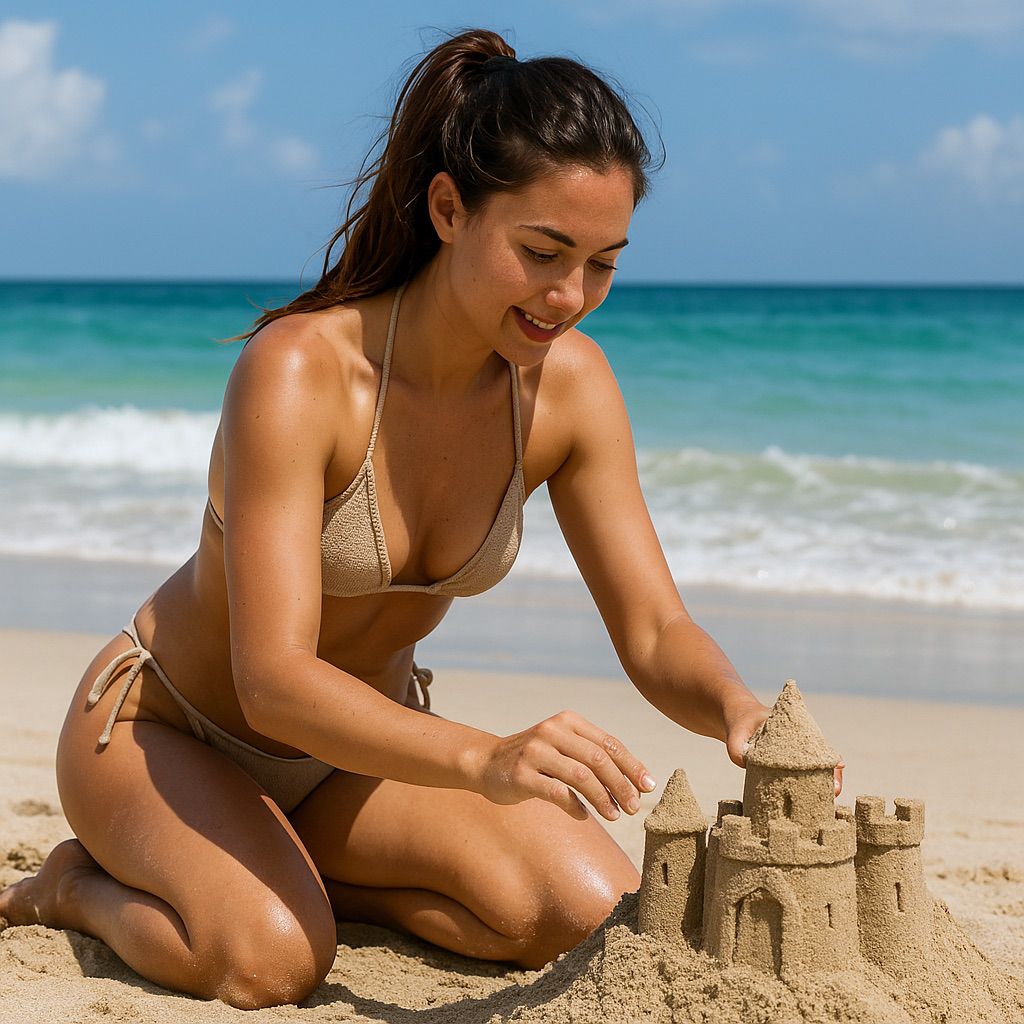
There is something timeless and universal about building a sandcastle. No matter where you grew up or how old you are, the urge to dig your hands into wet sand, scoop it into a bucket, and flip it upside down into a perfect little tower never quite leaves you. On beaches all over the world, castles rise with the tide, only to be washed away later, reminding us that some of the best creations in life are fleeting. But somewhere between those simple childhood piles and the jaw-dropping professional sand sculptures you see at festivals lies the dream of every beachgoer: building the ultimate sandcastle. Not just a lopsided tower or a moat that collapses, but something that feels like art, a fortress that stands proud against the breeze, a creation that makes people walking by stop in their tracks and say, “Wow, look at that.”
The beauty of building sandcastles is that the materials couldn’t be simpler. Sand, water, a few tools, and your imagination. Yet anyone who has ever tried to stack sand too dry or pile it too wet knows it’s not as easy as it looks. The secret is in the mixture: the perfect ratio of sand to water, something close to the consistency of cookie dough. Too dry and it crumbles; too wet and it slumps. Master sand builders know this instinctively, carrying buckets back and forth to the ocean, mixing until the grains hold together in a compact clump that you can carve without collapse. It’s a small act of alchemy, turning grains of crushed rock into something that feels as alive as clay.
But the ultimate sandcastle isn’t just about sturdy walls—it’s about imagination unleashed. Maybe your dream castle looks like a medieval fortress, with turrets and moats and drawbridges. Maybe it’s a fairy-tale palace, delicate spires rising like a dream out of the beach. Maybe it’s something modern, sculpted and abstract, an art installation disguised as play. Each design carries its own personality, and that’s part of the joy. Sand doesn’t cost a thing, and it doesn’t carry risk, so you are free to experiment, to try wild ideas you’d never attempt with brick or wood or stone. With sand, mistakes wash away, and every new tide brings a blank canvas.
Tools elevate the game. Buckets and shovels are classics, but straws, spatulas, spoons, and even old credit cards or butter knives become chisels for detail. With the right touch, you can carve windows, stairs, battlements, and tiny seashell decorations that transform a pile into a story. Some castle-builders bring spray bottles to keep the surface damp, others pack large forms to mold arches or towers. But even with nothing more than your hands, magic is possible. The human urge to build is primal, and in sandcastle-making, it collides with childlike joy.
Every great sandcastle has a story. Maybe it’s the castle a father built with his kids one summer, walls so high they almost reached their waists, complete with a moat that kept filling with ocean water as if defending it from an invisible army. Maybe it’s the castle two strangers collaborated on, wordlessly sharing tools and ideas until they built something together that neither could have done alone. Maybe it’s the castle that became a magnet for kids passing by, each adding a little tower or shell until it turned into a community project. These castles are more than structures—they are experiences woven into memory, lessons in teamwork, patience, creativity, and joy.
Professional sand sculptors take this to another level. At festivals from Texas to Portugal, artists carve dragons, pyramids, life-size faces, and towering cathedrals from nothing more than sand and water. These works can reach 15 feet high and last for days, defying the fragility we usually associate with sand. They remind us of the ultimate potential hidden in ordinary grains, the way imagination and technique can turn even the most temporary material into jaw-dropping beauty. But the ultimate sandcastle for the rest of us doesn’t have to rival these feats. It just has to feel like something we poured our hearts into, something that, for a few hours, stood as proof of joy and creativity on the shore.
What makes building sandcastles so viral, so memorable, is how it connects us across generations. Children, teens, adults, even grandparents all gather around the same pile of sand with equal wonder. It’s one of the few activities that doesn’t require skill to start but offers infinite levels to master. Everyone can play, everyone can contribute, everyone can marvel. The castle you build with your kids today might become the memory they tell their kids tomorrow. The castle you build alone might become the one thing that finally made you slow down and breathe deeply after months of stress. The act itself is grounding, almost meditative. Each scoop, each pat, each carved line brings you deeper into presence, tethered to the earth and the sea in the most playful way.
Of course, every sandcastle eventually falls. The tide creeps in, the waves lap at the moat, the walls weaken and slump, the turrets collapse into mush. And yet, rather than being depressing, it’s beautiful. It’s a reminder of impermanence, of the fleeting nature of joy, and of the value of creating not because something will last forever but because it mattered in the moment. Sandcastles teach us that beauty can be temporary and still worthwhile. That joy doesn’t have to be permanent to be real. That sometimes, the act of building is enough, regardless of what survives.
So what does the ultimate sandcastle look like? It’s less about the perfect spires or the straightest walls and more about the feeling it creates. It’s the castle that makes kids laugh when they jump in the moat. It’s the castle that strangers stop to admire, sparking conversations with people you’ve never met. It’s the castle that holds shells like treasure chests and leaves behind a story even when the waves carry it away. It’s the castle that lives in photos, in sunburned shoulders, in salty smiles.
In the end, building the ultimate sandcastle isn’t just a beach activity. It’s a metaphor. It’s about making time for play, about embracing imperfection, about collaborating, about enjoying the process as much as the result. It’s about knowing that some of the best things in life won’t last forever but will feel extraordinary while they do. And when you walk away at sunset, brushing sand off your hands and feet, you’ll know the truth: the real castle you built wasn’t in the sand—it was in your memory, your laughter, your heart.