
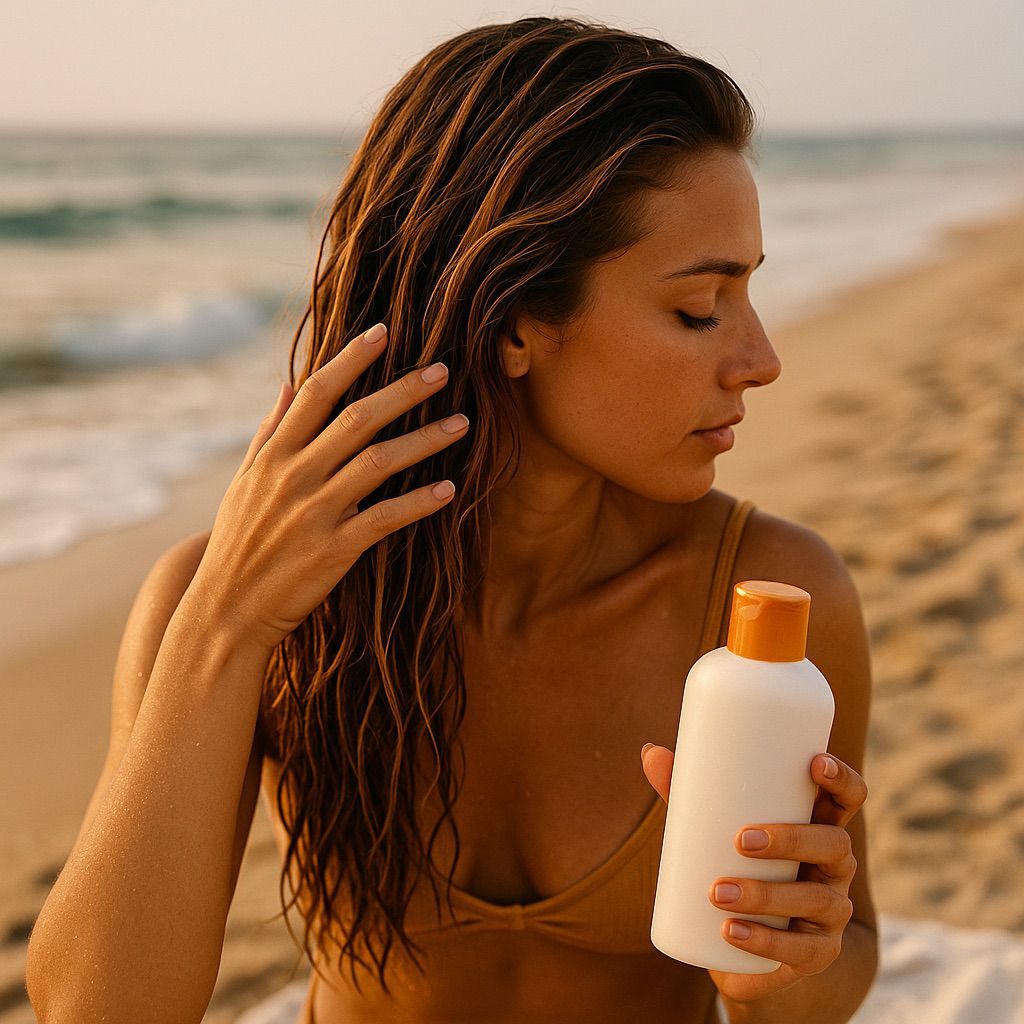
There’s a kind of magic to the beach that lures us in—sun warming your skin, saltwater cooling you down, and that unmistakable tousled hair that somehow looks like you’ve stepped out of a summer romance novel. But here’s the thing about that breezy “beach hair”: it’s a liar. What feels effortless and beautiful in the moment often conceals the harsh truth—sun, salt, and wind are merciless on your hair. Underneath that windswept glamour, your strands might be screaming for help, stripped of moisture, tangled into defiance, and faded in color. The reality is, those perfect Instagram-ready beach days can turn into hair nightmares if you don’t give your locks the aftercare they deserve.
The combination of saltwater and sun exposure is a double hit to your hair’s health. Saltwater is incredibly drying—it pulls moisture out of each strand, leaving your hair rough and brittle. The salt crystals that form as your hair dries under the sun act like tiny magnifying glasses, intensifying UV damage. Sunlight itself degrades keratin, the protein that gives hair strength, and fades color—whether it’s natural pigment or salon-made. Add in the constant wind, which whips hair into tangles and causes breakage, and you’ve got a recipe for split ends, dullness, and that straw-like texture nobody wants to admit they have after a long beach trip. The good news? You can enjoy every wave, every dive, and every lazy afternoon on the sand without sacrificing your hair’s health—if you know what to do when you get home.
The first step in post-beach hair care is rinsing—and the sooner, the better. Salt left on your hair continues to pull moisture, and the gritty residue encourages tangles and frizz. If there’s a shower at the beach, use it before you even head home. Rinse with cool to lukewarm water to avoid further drying out your hair. If you’re stuck without a shower, carry a bottle of fresh water in your beach bag just for your hair. Think of it as damage control: the faster you get the salt out, the easier it will be to restore softness later.
Once you’re home, swap your regular shampoo for something gentle and sulfate-free. You need to cleanse away salt, sand, and sunscreen residue without stripping your hair even more. Clarifying shampoos can help remove buildup, but use them sparingly—once a week at most—since they can also strip natural oils. Massage your scalp to stimulate circulation and help oxygen and nutrients reach your hair follicles. Your scalp took just as much sun as your skin, so treat it with kindness.
Conditioner is your next non-negotiable step, but not just any quick rinse. This is the time for a deep conditioning mask packed with hydrating ingredients like shea butter, coconut oil, argan oil, or aloe vera. Apply generously from mid-length to ends, wrap your hair in a warm towel or shower cap, and let it sit for at least 20 minutes. This allows the moisture to penetrate the hair shaft, restoring elasticity and shine. If your hair feels especially brittle, try a protein treatment once every few weeks to rebuild the keratin structure. Just remember to balance protein with moisture—too much protein without enough hydration can make hair stiff and prone to breakage.
Detangling after a beach day can be a test of patience, and the wrong approach can cause more harm than good. Never yank a brush through wet, salt-soaked hair—that’s a fast track to breakage. Instead, use a wide-tooth comb or a detangling brush, starting from the ends and working upward. A leave-in conditioner or detangling spray will make the process smoother and protect your hair from friction damage.
For those with color-treated hair, after-sun care needs an extra layer of attention. UV exposure and saltwater can fade dye faster than you can say “touch-up appointment.” Invest in a color-safe shampoo and conditioner, and consider adding a UV-protectant spray to your beach bag for next time. Post-beach, a glossing treatment can help revive vibrancy, seal the cuticle, and restore that just-dyed sheen. If you swim often, a pre-beach ritual of saturating your hair with fresh water and applying a leave-in conditioner can act as a barrier, preventing salt from penetrating as deeply.
Hydration doesn’t stop with conditioners and masks—your hair needs moisture from the inside out. Beach days often mean long hours in the sun, which can dehydrate your entire body. Drink plenty of water after your day at the shore, and load up on hair-healthy foods rich in omega-3 fatty acids (think salmon, chia seeds, walnuts) and antioxidants (berries, spinach, avocado). What you feed your body directly impacts the resilience and shine of your hair.
One often-overlooked aspect of post-beach hair care is scalp recovery. The scalp is skin, and just like your shoulders or nose, it can burn. If you notice redness, tenderness, or flaking, treat it with a soothing aloe vera gel or a scalp serum designed for post-sun care. Avoid heavy styling products until your scalp feels normal again—overloading with gels or hairsprays can trap heat and prolong irritation.
Heat styling after a beach day should be minimal to nonexistent. Your hair has already endured heat and dryness from the sun, and blasting it with a blow dryer or flat iron will only worsen the damage. If you need to style, opt for heat-free methods: braids, buns, or twists that let your hair dry naturally while still looking chic. This is also a great time to embrace your natural texture—saltwater often brings out curls and waves, so enhance them with a curl cream or lightweight mousse instead of fighting them.
Trimming regularly is essential if you spend a lot of time at the beach. Split ends travel up the hair shaft if left unchecked, leading to more breakage. A small trim every 6–8 weeks can keep your hair looking healthy and full, even if you’re a frequent sun-and-sea enthusiast.
And finally, consider protective hairstyles for your next beach trip to make post-care easier. Braids, buns, or a simple twist can minimize tangling and reduce exposure. A wide-brimmed hat or a scarf not only protects your hair but also your scalp and face. Think of it as your style-savvy shield against UV rays.
Hair care after saltwater and sun isn’t about undoing damage—it’s about maintaining the balance between enjoying the beach to the fullest and giving your hair the attention it needs afterward. The ocean gives us so much—its beauty, its calm, its sense of freedom. Giving your hair a little TLC after a day in its embrace is a small way to return the favor. And when you run your fingers through soft, shiny strands a day later, you’ll know that every rinse, mask, and gentle comb stroke was worth it.
The beach will always call you back. Now, you can answer without hesitation—because you know your hair will come home just as radiant as your memories.