
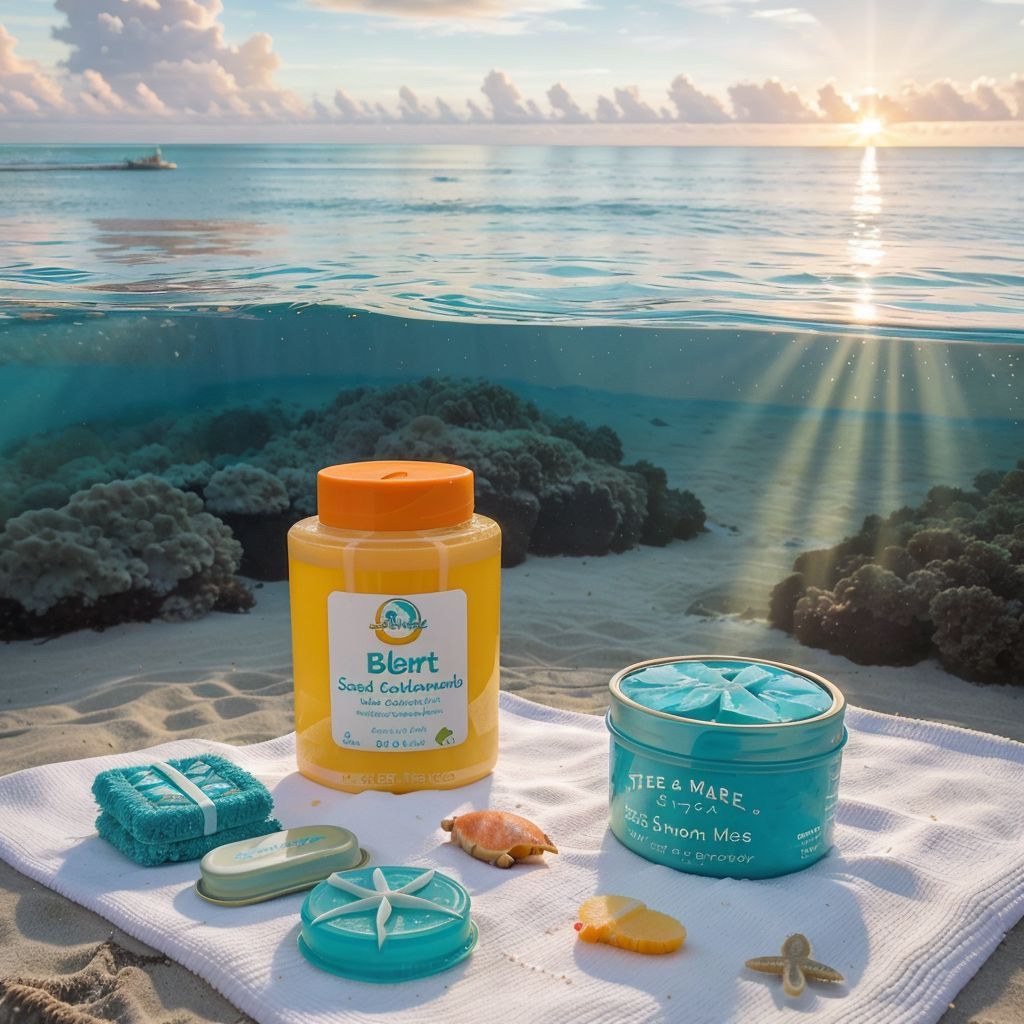
The quest for beauty has always been inseparable from the natural world. Ancient civilizations used clays from riverbanks, oils pressed from seeds, and pigments derived from crushed shells or flowers. But the modern beauty industry—shiny, colorful, and bursting with promises—has drifted far from its natural roots. Today, it stands at a crossroads, caught between innovation and ecological responsibility. Nowhere is this tension more apparent than in its relationship with the oceans. Beneath the glossy packaging and alluring marketing, the cosmetics industry leaves behind a trail of destruction that reaches all the way to coral reefs and marine food chains. But a new wave is rising—one that champions ocean-friendly beauty products. It’s a movement that seeks not just to protect the sea, but to redefine what beauty really means.
For decades, the ocean has been treated like an endless dumping ground. Beauty products—often made with synthetic chemicals, microplastics, and non-biodegradable packaging—enter our waterways through everyday use and improper disposal. Shampoo that swirls down the drain, sunscreen that rinses off in the waves, exfoliants that carry microbeads into sewage systems—each tiny action accumulates into a massive problem. What most people don’t realize is that these beauty routines contribute to environmental crises in ways both visible and invisible. Microplastics, for instance, are now found in the stomachs of fish, in sea salt, and even in human bloodstreams. Coral reefs, already threatened by climate change, face additional stress from common sunscreen ingredients like oxybenzone and octinoxate, which disrupt coral reproduction and lead to bleaching. These are not distant or abstract issues—they affect every one of us, from the seafood we eat to the health of the planet we share.
Ocean-friendly beauty products emerged as a response to this crisis, built on a philosophy of harm reduction, transparency, and sustainability. The movement champions ingredients that are biodegradable, ethically sourced, and non-toxic to marine ecosystems. It also advocates for packaging solutions that reduce plastic waste—recycled materials, refillable containers, and compostable alternatives. The shift toward ocean-friendly practices isn’t just about what’s left out (like parabens or sulfates), but what’s thoughtfully put in. Natural oils, algae-derived compounds, mineral sunscreens, and botanical extracts have become stars of this movement. But beyond ingredients, the movement is about mindfulness. It’s about recognizing that every choice we make—from the lipstick we wear to the lotion we apply—ripples outward into the wider world.
What makes ocean-friendly beauty compelling isn’t just its environmental impact—it’s the human stories behind it. Consumers are increasingly educated and empowered, demanding accountability from brands and making more conscious purchases. Social media has played a major role in this transformation, allowing activists, influencers, and scientists to raise awareness about marine degradation and sustainable alternatives. People are sharing their zero-waste beauty routines, posting before-and-after shots of their plastic-free bathrooms, and turning product reviews into mini-lectures on reef-safe sunscreens. This grassroots pressure has forced even the biggest beauty corporations to adapt. Brands like Lush, Ethique, and Aveda have long been pioneers in sustainable beauty, but now mainstream companies like Garnier, Neutrogena, and Unilever are rolling out more eco-friendly lines. While some of this may be greenwashing, the broader trend signals a cultural shift. Ocean-friendly beauty is no longer a niche; it’s becoming a norm.
But let’s not romanticize the path forward. True sustainability in the beauty industry requires more than token gestures or clever marketing. It demands systemic change—rethinking supply chains, reengineering product formulas, and reshaping consumer habits. One of the biggest challenges lies in regulation. In many countries, cosmetic ingredients are poorly regulated, and there’s no standard definition for what constitutes an “ocean-friendly” product. Terms like “natural,” “organic,” and “reef-safe” are often used interchangeably or inaccurately, creating confusion for consumers. Certifications can help, but they vary widely in credibility and scope. This lack of uniformity makes it difficult for even the most well-intentioned buyer to make informed decisions. Advocacy groups are working to address this, pushing for clearer labeling laws, stricter ingredient bans, and better testing protocols. Progress is slow, but every legislative win inches the industry closer to real accountability.
Another challenge is affordability. Ocean-friendly beauty products often come with a higher price tag, making them inaccessible for many. This creates a frustrating paradox: the people most affected by environmental degradation—often low-income communities—are the least likely to afford the products that help prevent it. For the movement to truly succeed, it must bridge this gap. That means scaling up production to bring down costs, creating accessible educational campaigns, and supporting local, sustainable beauty initiatives in underserved regions. Brands that prioritize inclusion—both in terms of pricing and representation—stand the best chance of driving lasting change. After all, the beauty of the ocean belongs to everyone. The responsibility to protect it must be shared too.
Still, the progress made so far is nothing short of remarkable. In recent years, Hawaii and Palau have banned certain sunscreen chemicals harmful to coral reefs. Brands have launched refill stations in retail stores. Entrepreneurs have invented solid shampoo bars, dissolvable packaging, and algae-based bioplastics. Scientists are developing biodegradable glitter and marine-safe preservatives. Consumers are asking harder questions: Where was this made? How will it break down? What impact does it have beyond my bathroom? These are not small shifts—they’re fundamental changes in the way we relate to beauty, the planet, and ourselves.
There’s also something profoundly emotional about the ocean. It’s a place of awe and imagination, of solace and play. Many people feel a deep, almost spiritual connection to the sea—whether through childhood memories, vacations, or the simple rhythm of waves on a shore. This connection can be a powerful motivator. When we realize that our daily choices can either harm or protect this sacred space, it becomes harder to ignore the consequences of convenience. Ocean-friendly beauty isn’t just about clean formulas; it’s about cultivating a sense of responsibility rooted in love, not guilt. It’s about saying, “I care,” in the small ways that add up to something immense.
As with all movements, there are moments of friction. Some critics argue that personal care choices are a distraction from larger environmental issues—that true change requires government action, not just consumer activism. And they’re not entirely wrong. Policy shifts, corporate regulation, and industrial reforms are essential. But to dismiss individual efforts as meaningless is to underestimate the power of collective action. Every time someone switches to a reef-safe sunscreen, skips a single-use bottle, or spreads the word about ocean-safe brands, they contribute to a cultural tide. These micro-actions, multiplied across millions of people, become a force strong enough to reshape industries. Change often begins at the margins, then moves to the mainstream. That’s exactly what’s happening with ocean-friendly beauty.
The role of technology cannot be overstated in this evolution. Innovations in green chemistry, biotechnology, and sustainable packaging are unlocking possibilities that didn’t exist even a decade ago. Plant-based alternatives are replacing petrochemicals. AI is helping brands create more efficient, waste-reducing supply chains. Blockchain is being explored to verify ethical sourcing. These tools not only make ocean-safe beauty more effective—they make it more transparent. Consumers no longer have to rely solely on marketing claims; they can research, review, and report in real time. Transparency is becoming a competitive advantage. The brands that thrive are the ones that don’t just tell a good story—they prove it.
Culturally, the movement is also dismantling outdated ideals of beauty. Traditional advertising often relied on exclusivity, perfection, and unattainable standards. Ocean-friendly beauty, by contrast, celebrates authenticity, diversity, and holistic well-being. It recognizes that looking good shouldn’t come at the expense of the planet—or of someone else’s labor or dignity. Campaigns are increasingly inclusive, featuring models of all backgrounds, ages, and abilities. Products are formulated for diverse skin tones and hair types. The narrative is shifting from “beauty as aspiration” to “beauty as empowerment.” It’s not just about what you put on your face, but how you live your values.
Looking ahead, the future of ocean-friendly beauty depends on education. Schools, media, and community organizations must play a role in fostering ecological literacy. Imagine a generation that grows up understanding the link between their body wash and the health of marine ecosystems. Imagine children learning about the impact of their choices and being excited to be part of the solution. This isn’t a fantasy—it’s a necessity. Climate change, pollution, and biodiversity loss are urgent realities. The beauty industry, like every sector, must evolve or become obsolete. Ocean-friendly practices offer a roadmap for this transformation—one rooted in science, ethics, and care.
We are already seeing signs of a broader awakening. Fashion is grappling with sustainability. Food industries are confronting supply chain ethics. Technology companies are pledging carbon neutrality. In this larger movement toward conscious living, ocean-friendly beauty is a vital chapter. It shows that even the most personal, intimate rituals can be acts of global citizenship. It reminds us that beauty is not a separate realm from the environment—it is a reflection of it. When we protect the ocean, we protect a part of ourselves.
Of course, the path isn’t perfect. There will be missteps, contradictions, and setbacks. Some products will fail. Some companies will betray the trust of their consumers. Progress will be uneven. But the direction is clear. Ocean-friendly beauty is more than a trend—it’s a transformation. And it’s one we can all be part of, regardless of where we live, how much we earn, or what products we use. Every purchase, every conversation, every intention counts.
To those just beginning this journey, start small. Switch one product. Do some research. Share what you learn. If you can, support brands that align with your values. If not, reduce waste in other ways—reuse containers, make your own skincare, or simply use less. Ocean-friendly beauty isn’t about perfection. It’s about progress. It’s about turning daily routines into rituals of respect for the world around us.
Because in the end, the ocean doesn’t need us to be perfect. It needs us to care. To listen. To change. And to remember that real beauty—like the sea itself—is wild, powerful, and deeply, achingly worth protecting.