
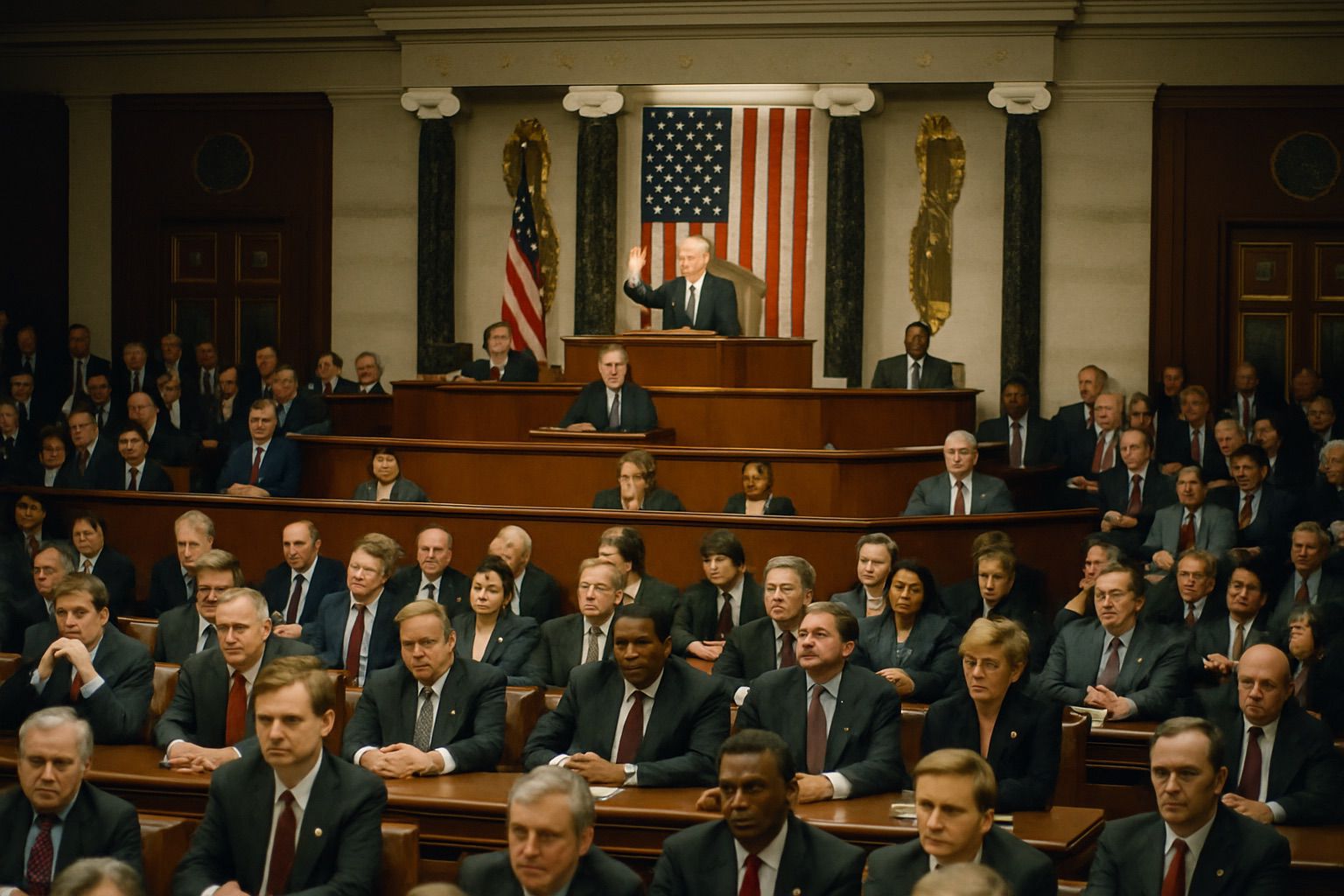
The night of December 19, 1998, unfolded with an unmistakable sense of gravity across Washington, D.C. Inside the U.S. Capitol, history was about to be made in a way few Americans had ever witnessed. Outside, the city buzzed with tension as news cameras lined the streets and citizens stayed glued to their televisions. By the end of the evening, President Bill Clinton would become only the second president in American history to be impeached by the House of Representatives, thrusting the nation into a moment of reckoning that went far beyond one man’s personal failings.
The impeachment of Bill Clinton did not erupt suddenly. It was the culmination of months of scandal, investigation, political maneuvering, and public spectacle that blurred the line between governance and voyeurism. At the center of it all was a deeply human story—one involving power, secrecy, deception, and the consequences of choices made in private that spilled relentlessly into the public arena.
The controversy began in January 1998 when reports surfaced that Clinton had engaged in an inappropriate relationship with Monica Lewinsky, a former White House intern. At first, the allegations were met with denial. Clinton stood before the cameras and delivered what would become one of the most quoted statements of his presidency, insisting he had not had sexual relations with Lewinsky. For a time, many Americans accepted his words, reluctant to believe that a sitting president would so boldly lie.
As evidence mounted, however, the narrative began to unravel. Testimony, sworn statements, and physical evidence contradicted Clinton’s denials. By August 1998, the truth could no longer be contained. Clinton admitted that he had indeed engaged in an improper relationship, though he carefully framed his confession in legalistic terms. The damage, however, had already been done. Trust—arguably the most fragile currency in politics—had been shattered.
What transformed a personal scandal into a constitutional crisis was not the affair itself, but the actions Clinton took to conceal it. Investigators alleged that he lied under oath during a deposition related to a separate sexual harassment lawsuit filed by Paula Jones. They further argued that he encouraged others to lie and attempted to obstruct justice by manipulating testimony and evidence. These allegations struck at the heart of the legal system, raising profound questions about accountability at the highest level of government.
The House Judiciary Committee took center stage as it examined whether Clinton’s actions constituted “high crimes and misdemeanors” as defined by the Constitution. Hearings were tense, emotional, and deeply partisan. Republicans argued that no one—not even the president—was above the law. Democrats countered that impeachment was being weaponized for political gain and warned of the dangerous precedent such a move would set.
Throughout the fall of 1998, the nation watched as legal arguments clashed with moral judgments. Polls revealed a striking contradiction: many Americans disapproved of Clinton’s behavior, yet they continued to support his presidency. The economy was strong, unemployment was low, and for many voters, Clinton’s personal failures did not outweigh his political successes.
Inside Congress, however, the lines hardened. On December 11, the Judiciary Committee approved four articles of impeachment, including perjury and obstruction of justice. Debate moved to the full House, where emotions ran high. Lawmakers delivered impassioned speeches invoking the Founding Fathers, the sanctity of the Constitution, and the moral fabric of the nation.
As December 19 arrived, the atmosphere inside the House chamber was electric. Members understood the gravity of what they were about to do. Late into the night, votes were cast. When the final tallies were announced, Clinton had been impeached on two counts—perjury and obstruction of justice—largely along party lines. History had been altered with the stroke of a gavel.
That same night, Clinton addressed the nation. His tone was somber but resolute. He accepted responsibility for his actions while rejecting the notion that they warranted removal from office. The presidency, he insisted, would continue. The country, exhausted by months of scandal, braced for the next phase: a Senate trial.
The Senate proceedings in early 1999 carried their own weight. Chief Justice William Rehnquist presided with quiet restraint as senators took an oath to administer impartial justice. The trial unfolded under intense media scrutiny, yet it lacked the theatrical drama many had expected. Testimony was limited, arguments were tightly controlled, and the outcome seemed increasingly predictable.
When the Senate voted on February 12, 1999, Clinton was acquitted on both charges. No article received the two-thirds majority required for conviction. Clinton remained president, but the scars of impeachment would linger long after the gavel fell.
The impeachment of Bill Clinton reshaped American politics in subtle but enduring ways. It deepened partisan divisions, normalized the use of scandal as political weaponry, and eroded public trust in institutions already under strain. It also forced Americans to confront uncomfortable questions about leadership, morality, and the limits of forgiveness.
For Clinton himself, the experience was both humbling and defining. Though he completed his term with relatively high approval ratings, his legacy would forever be intertwined with impeachment. His presidency became a case study in contradiction—a period of economic prosperity shadowed by personal failure and political turmoil.
In retrospect, the Clinton impeachment stands as a mirror reflecting the tensions of a nation wrestling with its values. It exposed how deeply politics had become entangled with identity, outrage, and media spectacle. More than two decades later, its echoes can still be felt in the hyper-partisan climate that defines modern American life.
December 19, 1998, was not just a night when a president was impeached. It was a night when the country learned how fragile trust could be—and how enduring the consequences of its loss might become.