
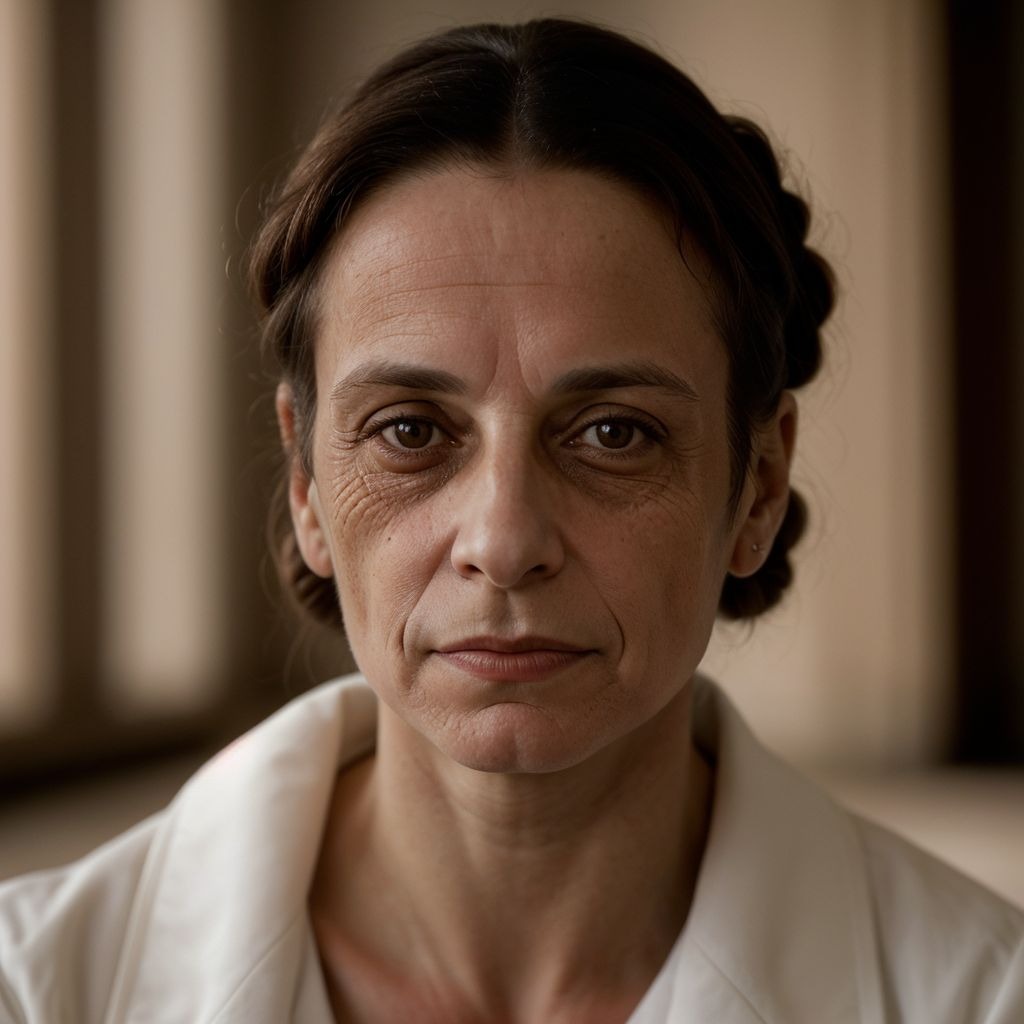
I keep coming back to Lise Meitner, the Austrian physicist who fled her homeland during WWII only to play a crucial role in discovering nuclear fission. Her name is etched in my mind alongside those of Marie Curie and Rosalind Franklin – women who broke ground in male-dominated fields, leaving behind a trail of awe-inspiring achievements.
What draws me to Meitner is the way she navigated uncertainty with unflappable resolve. Born into a Jewish family in Vienna, she began her academic journey at a time when anti-Semitism was on the rise. Her father’s death in 1907 forced her to reevaluate her future and pursue a career in science, an unconventional path for women of her era.
As I delve deeper into Meitner’s story, I’m struck by the way she balanced intellectual curiosity with personal courage. She worked alongside Otto Hahn, a colleague whose collaboration would ultimately lead to the discovery of nuclear fission. Yet, it was Meitner who made a crucial calculation that confirmed their findings – without which the discovery might have gone uncredited.
The part that unsettles me is how little I know about Meitner’s personal life during this tumultuous period. Her relationships with Hahn and other colleagues are well-documented, but what about her inner world? How did she cope with the emotional toll of fleeing her homeland, only to find herself an outsider in a foreign country?
The more I learn, the more questions arise. Did Meitner ever doubt her place among the scientific elite? Did she struggle to reconcile her intellectual pursuits with the chaos unfolding around her? And what role did her Jewish heritage play in shaping her experience during this time?
It’s the gaps in our understanding that keep me coming back to Meitner’s story. Her determination and expertise are undeniable, but it’s the unknowns – the silences and uncertainties – that resonate with me on a deeper level.
As I reflect on my own path, I realize that Meitner’s journey is not so different from mine. Like her, I’ve navigated uncertain waters, unsure of what lies ahead or whether my choices will lead to recognition. There are moments when self-doubt creeps in, making me wonder if I’m truly cut out for this writing life.
Perhaps it’s the relatability factor that keeps Meitner on my mind. We both walk a tightrope between intellectual pursuits and personal struggles, constantly recalibrating our sense of purpose. While her story is marked by historic significance, mine is still unfolding – and in many ways, it’s this shared uncertainty that binds us together.
As I continue to learn about Meitner, I’m forced to confront the complexities of her narrative. There are moments when her determination seems almost mythical, other times when her doubts feel eerily familiar. It’s this push-and-pull between inspiration and discomfort that keeps me invested in her story – and perhaps, by extension, my own.
I still don’t have all the answers about Lise Meitner, but I’m no longer satisfied with just knowing the facts. Her life is a reminder that uncertainty is not something to be overcome, but rather navigated – with intellectual curiosity, personal courage, and an unwavering commitment to one’s truth.
The more I read about Meitner, the more I’m struck by the ways in which her story intersects with my own. Both of us are women who’ve chosen non-traditional paths – she, a physicist in a male-dominated field; me, a writer trying to make a name for myself in a crowded literary landscape. We’re both navigating uncertainty, albeit in different contexts.
What I find particularly intriguing is how Meitner’s Jewish heritage influenced her experiences during WWII. As someone who’s never had to face anti-Semitism directly, it’s difficult for me to fully comprehend the weight of that identity. Yet, as I read about Meitner’s struggles to maintain her sense of self amidst the chaos of war, I’m struck by the ways in which our stories are connected – not just through our intellectual pursuits, but also through our experiences as women.
I’ve always been drawn to the idea of resilience, of finding strength in the face of adversity. Meitner’s story is a testament to this concept, one that I try to hold onto when faced with my own doubts and fears. But what I’m beginning to realize is that resilience isn’t just about overcoming challenges; it’s also about embracing our vulnerabilities.
Meitner’s struggles with self-doubt and her desire for recognition are eerily familiar to me. As a writer, I often feel like I’m swimming against the tide – trying to make my voice heard in a world where words can be both powerful and ephemeral. Meitner’s determination to prove herself in a male-dominated field resonates deeply with me, and yet, it also raises questions about the nature of success.
Is success merely about achieving recognition or accolades? Or is it something more nuanced – a sense of purpose that goes beyond external validation? Meitner’s story suggests that even the most accomplished individuals can struggle with these same doubts, and that it’s precisely this uncertainty that makes her journey so compelling.
As I delve deeper into Meitner’s narrative, I’m struck by the ways in which she navigated the complexities of identity, both personally and professionally. Her Jewish heritage was a defining aspect of her experience during WWII, but it’s also evident that she struggled with feelings of inadequacy and self-doubt throughout her career.
I find myself wondering if Meitner ever felt like an imposter, like she didn’t quite belong in the scientific community due to her gender or ethnicity. Did she feel pressure to prove herself constantly, to justify her place among the likes of Hahn and other male physicists? And what about her relationships with these colleagues – were they cordial, or did she ever feel like an outsider looking in?
These questions echo through my own mind as I navigate the writing world. As a woman in a predominantly male-dominated field, I often feel like I’m walking on eggshells, trying to prove myself worthy of attention and recognition. It’s exhausting, and it’s easy to get caught up in feelings of inadequacy.
But what if Meitner’s story is a reminder that we don’t have to define ourselves by these external expectations? What if our identities are more complex, more multifaceted than any one label or achievement can capture? I think back to my own experiences as a writer, and the ways in which I’ve struggled to balance my desire for creative expression with the need for external validation.
Meitner’s story suggests that this tension is not unique to me, nor is it exclusive to women. She was a product of her time, yes, but she also defied many of the expectations placed upon her. And in doing so, she created a legacy that continues to inspire and challenge us today.
As I reflect on my own path as a writer, I realize that Meitner’s determination is not just about achieving recognition or accolades – it’s about staying true to oneself, even when the world around us seems determined to define our worth. Her story is a reminder that we are complex, multifaceted beings, and that our identities cannot be reduced to any one label or achievement.
In many ways, Meitner’s legacy is a testament to the power of resilience – not just in the face of adversity, but also in the face of uncertainty. She knew that her place among the scientific elite was precarious at best, and yet she continued to push forward, driven by a passion for discovery and a commitment to her own truth.
I wonder if this is what it means to be truly successful – not just achieving external validation or recognition, but staying true to oneself, even in the face of uncertainty. Meitner’s story suggests that this is a journey worth taking, one that requires courage, determination, and an unwavering commitment to our own identities.
As I continue to reflect on Lise Meitner’s life, I’m struck by the ways in which she embodied a sense of intellectual curiosity and personal courage that I aspire to emulate. Her story is a powerful reminder that success is not solely defined by external achievements, but by our ability to stay true to ourselves, even when faced with uncertainty and adversity.
One aspect of Meitner’s narrative that resonates deeply with me is her passion for learning and discovery. She was a woman who lived in the 20th century, yet she remained committed to exploring the unknown, driven by a insatiable curiosity about the world around her. I think back to my own experiences as a writer, and how often I’ve felt like I’m swimming against the tide, trying to make sense of the complex emotions and ideas that swirl through my mind.
Like Meitner, I’ve come to realize that true learning is not just about accumulating knowledge or mastering techniques – it’s about cultivating a deep understanding of ourselves and our place in the world. This process can be messy, imperfect, and often painful, but it’s also where we discover our greatest strengths and our most profound insights.
As I navigate my own journey as a writer, I’m drawn to Meitner’s example because she reminds me that intellectual curiosity is not just about acquiring knowledge – it’s about cultivating empathy, compassion, and understanding. Her work on nuclear fission may have been groundbreaking in its time, but it was also a testament to her ability to see the world from multiple perspectives, to question assumptions and challenge conventional wisdom.
In many ways, Meitner’s legacy is a powerful reminder that our identities are not fixed or static – they’re dynamic, multifaceted, and constantly evolving. As I reflect on my own experiences as a writer, I realize that this is precisely what I’m trying to capture in my work – the messy, imperfect nature of human experience, with all its contradictions and paradoxes.
Meitner’s story suggests that our true strength lies not in our ability to overcome adversity or achieve external validation, but in our capacity to stay true to ourselves, even when faced with uncertainty and doubt. This is a lesson that I’m still learning to embody, one that requires me to confront my own fears and insecurities head-on.
As I continue to explore Meitner’s narrative, I’m struck by the ways in which her story intersects with my own – not just as a writer, but as a woman navigating a complex and often hostile world. Her determination to prove herself in a male-dominated field resonates deeply with me, and yet it also raises questions about the nature of success and recognition.
Is it enough to achieve external validation or accolades? Or is there something more profound at stake – our ability to stay true to ourselves, to cultivate empathy and compassion for others, and to create work that reflects our deepest values and aspirations? Meitner’s story suggests that this is a question worth exploring, one that requires us to be brave, vulnerable, and open-hearted in the face of uncertainty.
As I delve deeper into Meitner’s narrative, I’m struck by the ways in which she embodied these qualities – bravery, vulnerability, and openness – even in the midst of great adversity. Her determination to prove herself as a scientist, despite the many obstacles she faced, is a testament to her strength and resilience.
But what resonates with me most about Meitner’s story is the way she approached uncertainty with humility and curiosity. She didn’t pretend to have all the answers; instead, she asked questions, sought out new knowledge, and remained open to new perspectives. This approach reminds me of my own writing process – the times when I feel like I’m stuck or unsure about a particular idea or direction.
In those moments, I try to recall Meitner’s example and remind myself that uncertainty is not something to be feared, but rather navigated with curiosity and courage. It’s a mindset shift that requires me to let go of my need for control and perfection, and instead, trust in the process of discovery and growth.
As I reflect on Meitner’s legacy, I’m struck by the ways in which her story has changed me – not just as a writer, but as a person. She reminds me that our identities are complex and multifaceted, and that we are capable of growth and transformation in ways both unexpected and profound.
Meitner’s life is a testament to the power of resilience, determination, and intellectual curiosity. Her story shows us that even in the face of adversity, we have the capacity to create, to innovate, and to push beyond the boundaries of what is thought possible.
And yet, as I continue to explore Meitner’s narrative, I’m also struck by the ways in which her story raises more questions than it answers. What about the personal costs of her determination? The sacrifices she made for the sake of her work, the relationships she put on hold or sacrificed along the way?
These are questions that resonate deeply with me as a writer, and one that I’m still grappling with in my own life. How do we balance our pursuit of creative expression with the needs and expectations of those around us? What are the personal costs of striving for recognition and accolades, and how can we navigate these complexities without sacrificing our own well-being?
Meitner’s story doesn’t provide easy answers to these questions, but it does offer a powerful reminder that our identities are complex and multifaceted – and that our stories are worth exploring and uncovering. As I continue to reflect on her legacy, I’m reminded of the importance of staying true to myself, even in the face of uncertainty and doubt.
In many ways, Meitner’s narrative is a mirror held up to my own experiences as a writer – the struggles, the triumphs, and the uncertainties that come with pursuing a creative path. Her story shows me that I’m not alone in this journey, and that there are others who have walked similar paths before me.
As I look back on Meitner’s life, I’m struck by the ways in which her legacy continues to inspire and challenge me. She reminds me that our stories are worth telling, and that our experiences – both triumphs and failures – can offer valuable insights into the human condition.
And so, as I continue to explore Meitner’s narrative, I’m left with more questions than answers – but also a deep sense of gratitude for her example and her legacy. She reminds me that our identities are complex and multifaceted, and that our stories are worth exploring and uncovering.