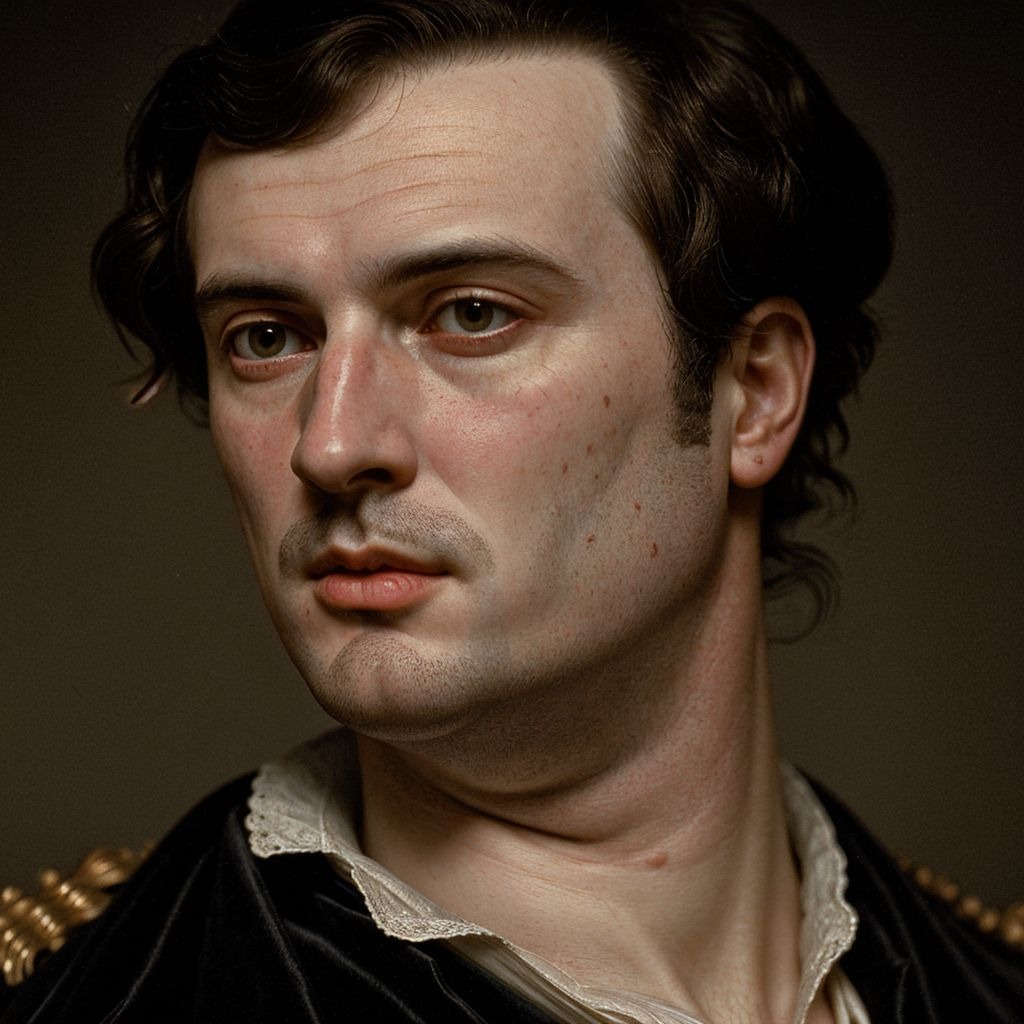
Lord Byron has been on my mind lately, probably because I’ve been re-reading his poetry. It’s not just the way he weaves words together that fascinates me – though, oh man, it’s like a masterclass in language. But it’s more than that. It’s the contradictions that make him hard to pin down.
I find myself drawn to people who can’t be neatly categorized. He was a member of the British aristocracy, but his views on politics and social justice were decidedly progressive for his time. He was known for his charisma and beauty, but he also struggled with addiction and depression. He’s often regarded as one of the greatest poets in English literature, yet his personal life was marked by scandal and controversy.
What gets me is how Byron seemed to revel in his contradictions. He wasn’t afraid to take risks or challenge societal norms, even if it meant being ostracized. In his poetry, I see a desire for freedom – not just from external constraints but also from the expectations placed on him as a member of the upper class.
I think about my own life, and how often I’ve felt trapped by the choices I’ve made or the paths I’m supposed to follow. As someone who’s just graduated from college, I’m expected to have it all figured out – career, relationships, adulting. But the truth is, I’m still figuring things out, and sometimes that feels like a luxury I can’t afford.
Reading Byron’s poetry makes me wonder if it’s okay to be messy and uncertain, even as an adult. Can I acknowledge my own contradictions and imperfections without feeling like I need to apologize for them? He wrote about being torn between his love of beauty and his disgust with the societal expectations that came with it. I feel like I’m stuck in a similar place – caught between the desire for stability and security, and the pull of something more authentic and true.
There’s this one line from “Don Juan” that keeps echoing in my head: “That men may be taught to hate, / They must be taught to love.” It’s a commentary on how we’re socialized to conform, to fit into predetermined roles. But what if I don’t want to fit? What if I’m tired of playing the game and just want to explore?
I know it sounds naive, but reading Byron makes me feel like maybe that’s okay – maybe it’s okay to question everything and take my own path, even when it means getting lost or finding myself in unexpected places. Maybe being a little bit messy is exactly what I need to find my way.
As I keep writing and re-reading his poetry, I’m struck by how much Byron’s work feels like an extension of himself – raw, honest, and unapologetic. And that’s what draws me in, I think: the willingness to be vulnerable and true, even when it’s uncomfortable or difficult.
I don’t know if I’ll ever find my own path, but reading Byron makes me feel less alone in feeling like I’m still searching.
As I delve deeper into Byron’s poetry, I start to notice a pattern – a thread that runs through his work, weaving together themes of identity, morality, and the human condition. It’s as if he’s constantly questioning himself, pushing against the boundaries of what’s acceptable, and exploring the complexities of being alive.
I find myself resonating with this impulse, feeling like I’m on a similar journey of self-discovery. The more I read his words, the more I realize that Byron’s poetry is not just about expressing emotions or telling stories – it’s about excavating the truth from within himself and sharing it with the world. He writes about his own contradictions, flaws, and fears, laying them bare for all to see.
In a way, it’s liberating to read someone who refuses to be tied down by societal expectations or personal biases. Byron’s poetry is like a mirror held up to humanity – imperfect, messy, and beautiful in its imperfections. I feel seen in his words, validated in my own struggles to find meaning and authenticity.
I start to wonder if this is what creative expression is all about – not just crafting a narrative or conveying emotions, but excavating the depths of one’s own soul and sharing that with others? Byron’s poetry feels like an act of courage, a willingness to be vulnerable and honest in the face of criticism or judgment. And yet, it’s precisely this vulnerability that makes his work so powerful, so relatable.
As I continue to read and write about Byron, I find myself grappling with the idea of identity – what does it mean to be oneself, especially when society seems to have its own ideas about who we should be? Byron’s poetry is full of characters who embody different aspects of himself, each one a fragment of his multifaceted personality. He writes about Don Juan, the charismatic rogue, and Childe Harold, the brooding romantic – both personas that reflect different sides of his own psyche.
I start to see myself in these characters, too – the parts of me that I’ve tried to hide or suppress, the aspects of my personality that don’t fit neatly into a predetermined mold. It’s as if Byron is giving me permission to be messy, to admit that I’m not just one thing, but many things at once. His poetry becomes a mirror, reflecting back all the contradictions and complexities that make up human experience.
In this moment, I feel like I’m on the cusp of something – a realization that’s been gestating inside me for a while now. It’s as if Byron has given me a key to unlock my own truth, to reveal the parts of myself that I’ve kept hidden or suppressed. And it’s terrifying and exhilarating all at once.
But what does this mean? What comes next? As I sit here with Byron’s words swirling in my head, I feel like I’m staring into the void – uncertain about which path to take, but willing to explore the unknown.
The uncertainty is suffocating, and yet, it’s also liberating. Reading Byron makes me realize that not having all the answers is okay, maybe even necessary. His poetry is a reminder that growth happens in the spaces between certainties, where questions and doubts reside.
I think about my own relationships – with friends, family, romantic partners – and how often I’ve tried to present myself as someone I’m not. The pressure to conform to expectations, to be likable or relatable, has led me down a path of self-doubt and people-pleasing. Byron’s poetry makes me wonder if it’s possible to be authentic in these relationships, to let go of the need for validation and instead speak from my own truth.
It’s not just about being true to myself; it’s also about allowing others to see me for who I am – messy, imperfect, and all. I think about how Byron’s poetry has been criticized for its perceived arrogance or self-indulgence. But what if that’s exactly what we need more of? What if our society is built on the idea that people should be palatable, likable, and easily digestible?
Reading Byron challenges me to rethink my own values and assumptions about identity, authenticity, and community. His poetry becomes a catalyst for self-exploration, urging me to confront my own contradictions and complexities head-on.
As I delve deeper into his work, I start to notice the ways in which Byron’s characters are both mirrors and foils to himself. They embody different aspects of his personality, but also serve as cautionary tales about the dangers of unchecked passion or ambition. It’s as if he’s creating a world where the lines between self and other are blurred, where the reader is forced to confront their own desires and flaws.
I feel like I’m stepping into this world, too – one that’s both familiar and foreign, comforting and terrifying all at once. Byron’s poetry becomes a guide, urging me to navigate these complexities with courage and curiosity. And as I write my way through his words, I start to see the contours of my own identity take shape – or rather, get dismantled and rebuilt anew.
What if being true to myself means embracing the parts that are messy, imperfect, and uncertain? What if it’s okay to be a work in progress, always evolving and growing? Byron’s poetry whispers these questions in my ear, echoing through the chambers of my mind like a gentle breeze on a summer day. And as I listen, I feel myself slowly opening up, revealing the depths of my own soul – all its contradictions, complexities, and mysteries – to the world.
As I continue to immerse myself in Byron’s poetry, I start to notice the ways in which he uses language to explore the human condition. His words are like a map, guiding me through the twists and turns of his own thoughts and emotions. He writes about love and loss, desire and despair, with a candor that is both breathtaking and humbling.
I find myself drawn to his use of metaphor and imagery – the way he can transform the mundane into the sublime, revealing hidden truths beneath the surface of everyday life. His poetry is like a key that unlocks the doors of perception, allowing me to see the world in all its beauty and ugliness.
But it’s not just his language that fascinates me – it’s also the way he uses his own experiences as fuel for his writing. He writes about his relationships, his addictions, his struggles with mental health, with a raw honesty that is both captivating and unsettling. It’s as if he’s sharing his deepest secrets with me, inviting me to join him on this journey of self-discovery.
As I read through his poetry, I start to see myself in his words – the parts of me that I’ve tried to hide or suppress, the aspects of my personality that don’t fit neatly into a predetermined mold. It’s as if Byron is giving me permission to be messy, to admit that I’m not just one thing, but many things at once.
I think about how often I’ve felt like I need to present myself in a certain way – like I need to be the “right” person, with the “right” answers and the “right” opinions. But Byron’s poetry makes me wonder if that’s even possible. Can we ever truly be ourselves, or are we always performing for others?
I start to see his characters as reflections of himself – fragmented personas that embody different aspects of his own psyche. Don Juan, the charismatic rogue; Childe Harold, the brooding romantic; Lady Waverley, the introspective poetess – each one a facet of Byron’s own complex personality.
And what about me? Am I like any of these characters? Or am I something entirely different? As I sit here with Byron’s words swirling in my head, I feel like I’m staring into the void – uncertain about which path to take, but willing to explore the unknown.
I think about how Byron’s poetry has challenged me to rethink my own values and assumptions about identity, authenticity, and community. His work is like a mirror held up to society, revealing all its flaws and contradictions. And yet, it’s precisely this vulnerability that makes his poetry so powerful – so relatable.
As I continue to read and write about Byron, I start to realize that his poetry is not just about him – it’s also about me. It’s about us – the messy, imperfect, uncertain beings that we all are. His words become a reminder that we’re not alone in our struggles, that others have walked this path before us.
And so, I keep writing – pouring my thoughts and emotions onto the page, letting Byron’s poetry guide me through the labyrinth of my own mind. It’s a journey without maps or certainties, but one that feels necessary all the same.
I don’t know what lies ahead – whether I’ll find answers or just more questions. But for now, I’m content to follow the thread of Byron’s words, seeing where they lead me. For in his poetry, I’ve found a reflection of myself – all my contradictions and complexities, messy and imperfect as they are.