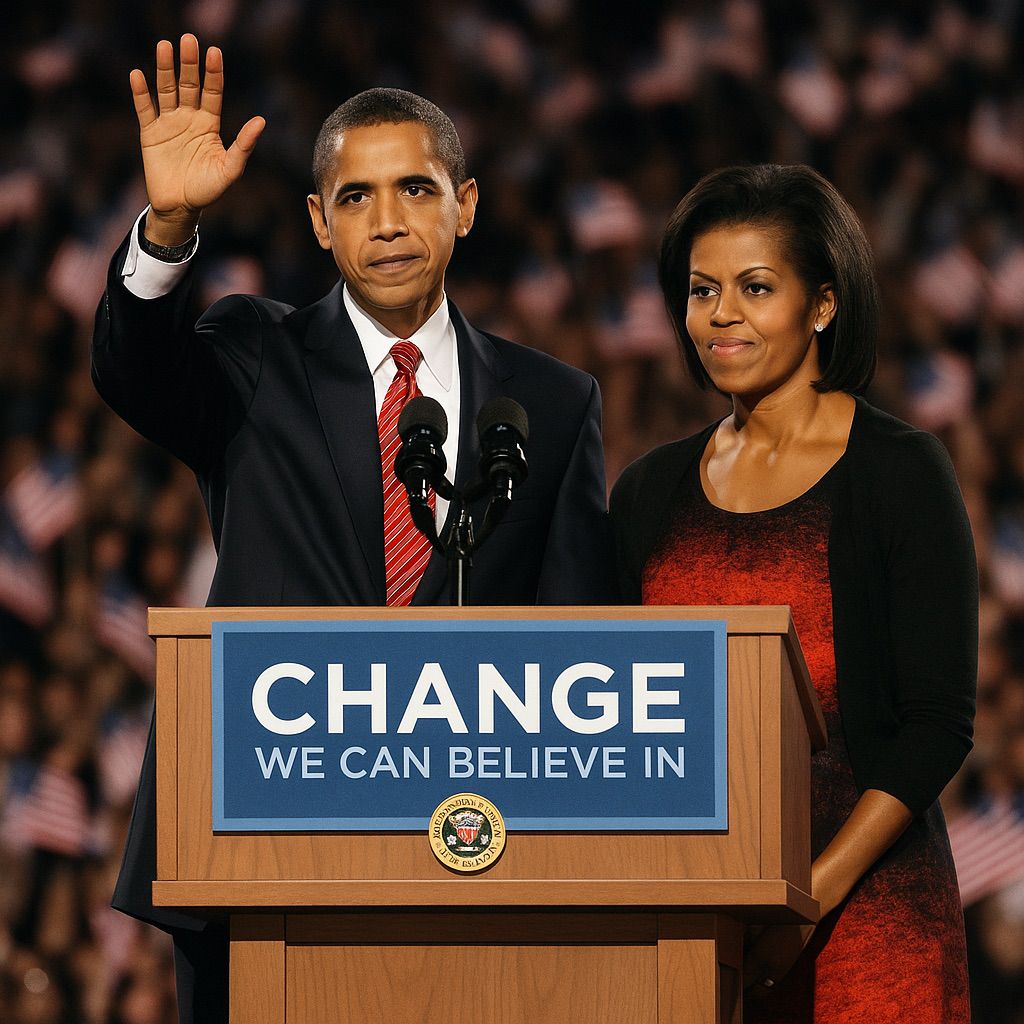
The year 2008 will be remembered for generations to come as a pivotal moment in American history. On November 4th of that year, a sense of hope and optimism swept across the nation as Barack Obama stood before thousands of cheering supporters at Grant Park in Chicago, Illinois. With his wife Michelle by his side, Obama declared victory in the presidential election, becoming the first African American to ever hold the office of President of the United States. This momentous occasion marked a significant milestone in the ongoing struggle for racial equality and justice in America, and its impact will be felt for years to come.
To fully appreciate the significance of Obama’s historic win, it is essential to understand the context in which he rose to prominence. Born on August 4th, 1961, in Honolulu, Hawaii, to Ann Dunham and Barack Obama Sr., a Kenyan father and an American mother, Obama grew up in a multiracial family that navigated the complexities of identity, culture, and belonging. His early life was marked by a sense of duality, with his parents’ divorce when he was just two years old sending him to live with his maternal grandparents in Hawaii, while his father remained in Kenya.
Obama’s childhood experiences would later shape his worldview and inform his commitment to public service. He attended Punahou School in Honolulu, a prestigious private institution that catered to the city’s elite. It was here that Obama developed a passion for community organizing and social justice, which would become defining features of his future career. After high school, he enrolled at Occidental College in Los Angeles before transferring to Columbia University in New York City, where he earned a Bachelor of Arts degree in 1983.
The early 1980s were a tumultuous time in American politics, with the presidency of Ronald Reagan dominating the national agenda. As a young man, Obama was drawn to the world of community organizing and activism, working for several years as a grassroots organizer on the South Side of Chicago. It was during this period that he discovered his talent for public speaking and began to develop the skills that would serve him well in future roles.
In 1988, Obama entered Harvard Law School, where he earned his Juris Doctor (J.D.) degree three years later. His academic credentials were solidified by a stint as president of the Harvard Law Review, a prestigious student publication that provided valuable experience and networking opportunities. After law school, Obama returned to Chicago, working as a civil rights attorney before entering politics.
Obama’s entry into politics was facilitated by his involvement in the Illinois Senate campaign of Alice Palmer, who later became his mentor and ally. In 1996, he ran for the state senate seat vacated by Palmer, winning handily in his first bid for public office. Over the next decade, Obama built a reputation as a charismatic leader and skilled orator, earning the respect of colleagues from both parties.
The presidential campaign that would catapult Obama to national prominence began in earnest in 2006, when he announced his candidacy for the Democratic nomination. Initially, many observers dismissed him as a long shot, citing concerns about his lack of experience and his status as an outsider within the party establishment. However, Obama’s message of hope and change resonated with voters, particularly among younger Americans and those disillusioned with politics.
As the primaries unfolded, Obama faced stiff competition from experienced politicians like Hillary Clinton, John Edwards, and Joe Biden. Yet he persevered, building a coalition of supporters that included progressive Democrats, liberal independents, and even some Republicans who were drawn to his message of bipartisanship and reform. The turning point came in January 2008, when Obama secured the Iowa caucuses with an impressive victory over Clinton.
From there, Obama’s momentum grew, as he won primary contests in states like New Hampshire, South Carolina, and Wisconsin. By Super Tuesday on February 5th, 2008, Obama had emerged as the front-runner, with Clinton forced to play catch-up. Over the next few months, the battle for the nomination narrowed to a two-candidate contest between Obama and Clinton, which Obama ultimately won at the Democratic National Convention in Denver.
The general election campaign against Republican nominee John McCain was marked by intense media scrutiny, fierce debates, and some of the most divisive issues in American history. The economy was in crisis, with widespread job losses, home foreclosures, and a growing national debt. Foreign policy concerns also dominated the headlines, from the ongoing conflict in Iraq to escalating tensions with Iran.
Throughout the campaign, Obama emphasized his commitment to change and reform, promising to address the nation’s pressing problems through bipartisan cooperation and a fresh approach to governance. His message resonated with voters, who responded enthusiastically to his calls for healthcare reform, climate action, and education investment. On Election Day, November 4th, 2008, Obama won a decisive victory in the Electoral College, securing 365 electoral votes to McCain’s 173.
As Obama stood before thousands of cheering supporters at Grant Park that evening, he acknowledged the historic significance of his achievement: “If there is anyone out there who still does not believe that America is a place for all Americans – who still does not believe we are capable as one people – then this election is your chance to prove it.” With these words, Obama broke barriers and made history, shattering long-standing racial and cultural taboos in American politics. His victory marked the beginning of a new era of diversity and inclusivity, as Americans began to envision a more perfect union.
The impact of Obama’s historic win was felt far beyond his own election campaign. It sent shockwaves through the Republican Party, as many members struggled to come to terms with their party’s narrow loss and the implications for their future electoral prospects. Within the Democratic Party, there were concerns about how to build on Obama’s momentum and sustain his reform agenda in the face of intense opposition from Republicans.
As president-elect, Obama faced a daunting set of challenges: navigating the deepening economic crisis, winding down the wars in Iraq and Afghanistan, and passing landmark legislation like healthcare reform and climate change mitigation. Throughout his presidency, he demonstrated remarkable resilience and adaptability, building coalitions with Republicans on issues like tax reform and foreign policy.
When Barack Obama took office on January 20th, 2009, a new era of American politics dawned. His inauguration speech, which drew heavily on the themes of hope, unity, and change, will be remembered as one of the most memorable moments in U.S. history. “My fellow Americans,” he declared, “the question is whether we can act boldly and wisely to shape our own destiny… Let us choose a different path – the path of justice, equality, and opportunity for all.”
As Obama began his presidency, he faced a multitude of challenges that would test his leadership and resolve. The economic crisis was deepening by the day, with millions losing their jobs and homes. The wars in Iraq and Afghanistan continued to rage, with no clear end in sight. And yet, despite these daunting circumstances, Obama remained steadfast in his commitment to change and reform.
One of his first acts as president-elect was to establish a transition team, tasked with reviewing the outgoing administration’s policies and identifying areas where he could make immediate improvements. This team, led by John Podesta, included experts from various fields who worked tirelessly to draft policy briefs, develop legislative proposals, and assemble a new cabinet.
Obama’s cabinet appointments were a diverse and impressive group of individuals who reflected his commitment to diversity and inclusion. There was Joe Biden as Vice President, a seasoned politician with decades of experience in the Senate. The Secretary of State, Hillary Clinton, brought a wealth of knowledge and expertise on foreign policy, while Eric Holder, the Attorney General, was a civil rights lawyer with a strong track record of advocating for justice.
The economic crisis demanded immediate attention, and Obama’s team worked tirelessly to develop a comprehensive plan to address it. This included a stimulus package aimed at creating jobs and stimulating growth, as well as reforms to the financial regulatory system designed to prevent future crises. The Auto Industry Bailout, which provided critical support to struggling automakers like GM and Chrysler, was another key component of Obama’s economic strategy.
Throughout his presidency, Obama demonstrated remarkable skill in building coalitions and working across party lines. He reached out to Republicans on issues like tax reform, healthcare, and national security, often finding common ground where others had failed. This bipartisan approach helped to pass landmark legislation like the American Recovery and Reinvestment Act (ARRA) and the Patient Protection and Affordable Care Act (PPACA).
The passage of PPACA, also known as Obamacare, was a major victory for Obama’s administration. This comprehensive healthcare reform bill aimed to increase access to health insurance for millions of Americans, reduce costs, and improve quality of care. Despite intense opposition from Republicans and the insurance industry, Obama remained committed to this priority issue, often using his bully pulpit to rally public support.
The legislative process was arduous and contentious, with multiple votes and amendments that tested the mettle of both parties. However, in March 2010, PPACA finally cleared Congress, marking a historic achievement for healthcare reform. The bill’s passage sent shockwaves through the insurance industry, which responded by increasing coverage options and expanding access to care.
Foreign policy was another key area where Obama made significant strides during his presidency. He reached out to world leaders, building relationships with countries like Iran, Cuba, and Russia that had long been strained or hostile towards the United States. The New START Treaty, signed in 2010, marked a major breakthrough in nuclear disarmament efforts between Washington and Moscow.
In addition, Obama’s administration took steps to address climate change, which he recognized as one of the most pressing global challenges facing humanity. He issued executive orders aimed at reducing carbon emissions, investing in renewable energy, and promoting sustainable development. The Clean Power Plan, unveiled in 2015, set ambitious targets for state and local governments to reduce their greenhouse gas emissions.
Despite these accomplishments, Obama’s presidency was not without its controversies and setbacks. The Trayvon Martin case, which sparked widespread protests and outrage over racial bias and police brutality, highlighted the persistent challenges facing African Americans. The ongoing struggle for LGBTQ+ rights and equality also continued, with Obama’s administration taking steps to advance marriage equality and non-discrimination protections.
The controversy surrounding NSA surveillance and Edward Snowden’s revelations about government spying on American citizens was another major challenge faced by Obama’s administration. While he acknowledged some of the concerns raised by Snowden, he ultimately chose to defend the NSA’s actions as necessary for national security.
As his presidency drew to a close, Obama reflected on the progress made during his time in office. In his final State of the Union address, delivered in January 2016, he looked back on the many challenges overcome and the strides taken towards a more perfect union. He acknowledged that much work remained to be done but expressed confidence that Americans could come together to achieve greatness.
The legacy of Barack Obama’s presidency is complex and multifaceted, reflecting both his accomplishments and the ongoing challenges facing American society. As he prepared to leave office in January 2017, many wondered what the future held for this historic figure. Would he continue to be a vocal advocate for social justice and progressive causes? Or would he retreat from public life, leaving behind only memories of a bygone era?
For his part, Obama remained committed to public service, establishing the My Brother’s Keeper Alliance (MBKA) in 2014 to promote education, employment, and mentorship opportunities for young men of color. He also continued to write and speak out on issues that mattered most to him, using his platform to inspire a new generation of leaders and activists.
Today, Barack Obama stands as a shining example of what can be achieved through hard work, determination, and a commitment to public service. His presidency marked a significant turning point in American history, breaking barriers and shattering taboos that had long constrained the nation’s progress. As we look to the future, his legacy serves as a reminder of the enduring power of hope, optimism, and collective action.
In conclusion, Barack Obama’s historic win in 2008 was more than just a personal triumph – it was a testament to the ongoing struggle for racial equality and justice in America. His presidency marked a significant milestone in this journey, opening doors that had long been closed to African Americans and paving the way for future generations of leaders.
As we reflect on Obama’s legacy, we are reminded of the power of leadership to inspire and transform society. His commitment to public service, his dedication to social justice, and his willingness to challenge the status quo have left an indelible mark on American politics. And as we look towards a brighter future, we can draw strength from his example, knowing that together, we too can build a more perfect union.