
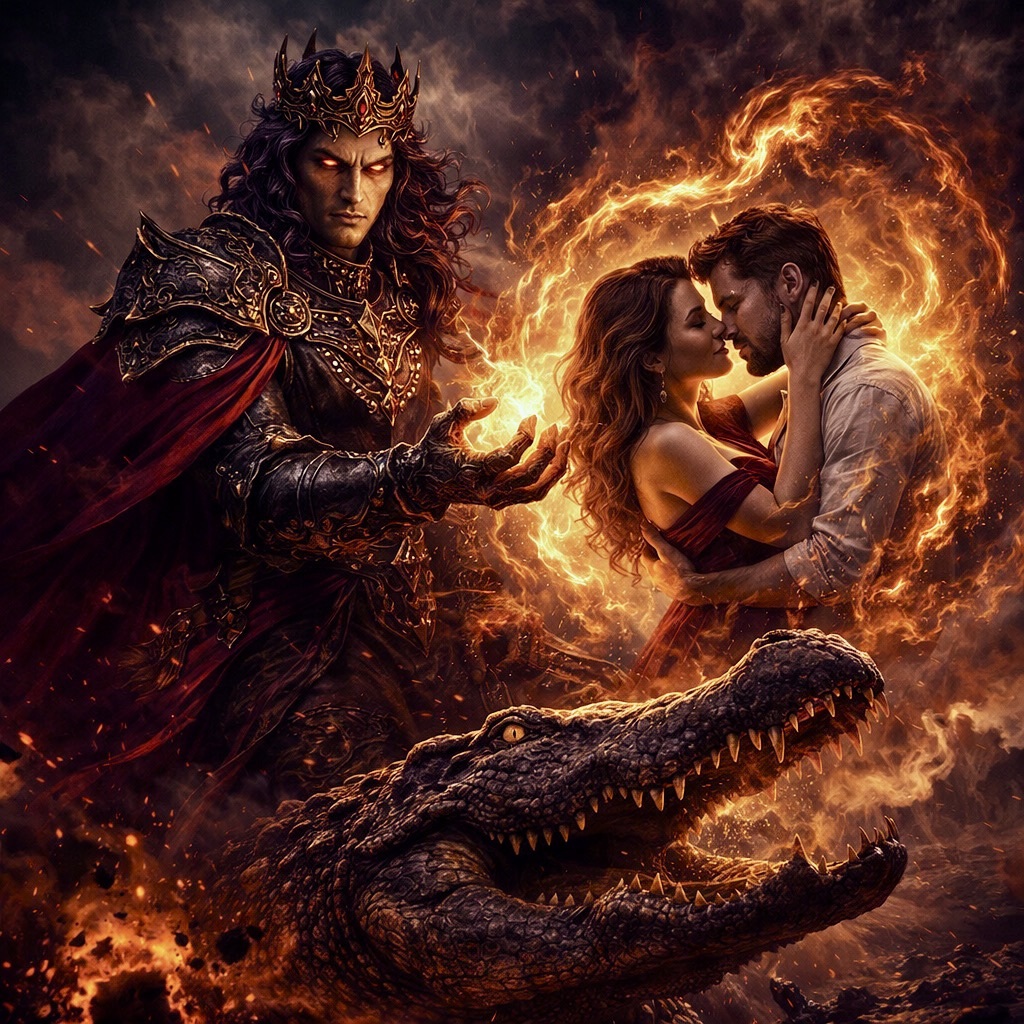
In the shadowy pages of ancient grimoires, where kings, princes, and dukes of the infernal hierarchy are cataloged with careful detail, the figure of Sallos stands out as both curious and paradoxical. Demonology is often associated with chaos, destruction, and deception, yet Sallos represents something far more intimate and human. Among the seventy-two spirits described in the legendary grimoire known as the Ars Goetia, Sallos is a demon who governs love. His domain is not the battlefield or the storm, but the strange and complicated terrain of human emotion. He is described as a powerful Duke of Hell who rides a mighty crocodile and wears a ducal crown, appearing as a handsome soldier before the magician who summons him. His purpose, according to centuries-old occult texts, is to cause men and women to love one another.
The idea of a demon whose power lies in creating affection seems almost contradictory at first glance. Demons in medieval and Renaissance theology were generally believed to corrupt and manipulate, not to nurture emotional connection. Yet Sallos occupies a peculiar role within demonology because his influence centers on attraction, passion, and romantic longing. Whether interpreted literally as a supernatural entity or symbolically as an archetype within human psychology, Sallos represents the overwhelming force that draws people together, sometimes against reason, logic, or social expectations.
Historical demonology often reflected the anxieties of the cultures that produced it. Love has always been one of humanity’s most powerful and destabilizing experiences. Entire kingdoms have been reshaped by romance, jealousy, and obsession. From ancient epics to modern novels, love has sparked wars, toppled rulers, and altered destinies. In this sense, the inclusion of Sallos among the infernal spirits may reflect a deeper recognition that romantic desire can feel like a supernatural force—unpredictable, irresistible, and occasionally destructive.
The earliest surviving descriptions of Sallos appear in seventeenth-century occult manuscripts compiled during a period when ceremonial magic was practiced by scholars, mystics, and aristocrats across Europe. The Ars Goetia, part of the larger grimoire known as The Lesser Key of Solomon, catalogs seventy-two demons allegedly bound by the biblical King Solomon and made to reveal their powers. Each spirit is described with remarkable specificity: appearance, rank, abilities, and the number of legions under its command.
Sallos is listed as a Great Duke of Hell who commands thirty legions of spirits. His appearance is vivid and unusual. He rides upon a crocodile, wears a ducal crown, and appears in the form of a gallant soldier. The crocodile itself carries deep symbolic meaning. Throughout history, crocodiles have represented primal power, patience, and ancient instinct. They are creatures that move silently through dark waters, striking suddenly when opportunity appears. In the context of Sallos’s mythology, the crocodile may symbolize the hidden depths of desire—the instinctive pull that lies beneath conscious thought.
The soldier imagery is equally significant. Soldiers represent discipline, order, and purpose. By presenting Sallos as a soldier rather than a monstrous creature, the grimoires imply that love itself can be strategic, directed, even orchestrated. Romance may appear spontaneous, but it often unfolds through subtle gestures, calculated risks, and emotional courage.
Occult practitioners who attempted to summon Sallos did so through elaborate ritual procedures. Ceremonial magic during the Renaissance was highly structured and steeped in religious symbolism. Magicians drew protective circles inscribed with divine names, burned specific incenses, and recited invocations written in ancient languages. These rituals were intended to compel spirits to appear and obey commands while preventing them from harming the summoner.
When summoned successfully—at least according to the texts—Sallos would appear peacefully and willingly perform his function. Unlike many other spirits described in the Ars Goetia, he is not characterized as deceitful or hostile. In fact, the grimoires explicitly state that Sallos is gentle and agreeable, making him one of the more cooperative figures within the infernal hierarchy.
This unusual description raises fascinating questions about how historical occultists perceived love itself. If demons were embodiments of temptation, corruption, or chaos, why would one of them be tasked with fostering affection between people? The answer may lie in medieval theology’s complicated relationship with romantic passion.
During the Middle Ages and Renaissance, romantic love—especially outside arranged marriage—was often viewed with suspicion. Passion was believed to overwhelm reason and lead individuals away from moral discipline. Courtly love literature celebrated intense emotional devotion, but church authorities frequently warned that such passion could become spiritually dangerous. In this worldview, uncontrolled desire could indeed appear demonic.
Sallos therefore becomes a symbolic figure representing love’s power to disrupt rational control. His influence might bring two people together, but the consequences of that union could range from joy to obsession. The demon does not guarantee happiness; he merely ignites attraction.
In literature and folklore, love has often been portrayed as something inflicted upon individuals rather than chosen. Cupid’s arrows in Roman mythology function much like Sallos’s power. One moment a person is indifferent, the next they are hopelessly captivated. Shakespeare’s plays frequently revolve around characters falling in love unexpectedly and irrationally, sometimes under the influence of magical interference.
These stories reflect a fundamental human experience. Love rarely feels logical while it is happening. People fall for those they never expected to admire, sometimes ignoring clear warnings from friends and family. Emotional bonds form quickly and reshape priorities overnight. In that sense, the demon Sallos personifies the mysterious and uncontrollable nature of attraction.
Modern psychology provides additional insight into why love has historically been interpreted as supernatural. Neuroscience shows that romantic attraction triggers powerful chemical reactions in the brain. Dopamine, oxytocin, serotonin, and adrenaline surge during early stages of romance, producing feelings of euphoria, obsession, and heightened emotional focus. The experience can resemble addiction, with lovers constantly thinking about one another and craving interaction.
For people living centuries ago without knowledge of brain chemistry, such overwhelming sensations may indeed have seemed like external influence. A spirit such as Sallos offered a narrative explanation for why individuals suddenly felt compelled toward someone else.
Even today, people often describe love using supernatural language. We speak of “falling” in love as though it happens involuntarily. Couples say they felt an instant “spark” or that destiny brought them together. These expressions mirror the ancient idea that forces beyond conscious control guide romantic connections.
Sallos’s role as a Duke commanding thirty legions also suggests that love operates through many subtle influences rather than a single moment of magic. In symbolic terms, these legions might represent countless small events that bring people together: chance encounters, shared interests, unexpected conversations, and emotional vulnerability.
Consider how many relationships begin through seemingly trivial circumstances. Two strangers sit beside each other on a train. A colleague mentions a book that sparks a long discussion. A missed bus leads to meeting someone new. These moments appear random, yet they often shape the course of entire lives.
Within the mythological framework of demonology, Sallos would be the invisible architect behind such coincidences. His presence would guide individuals toward one another, aligning paths that otherwise might never intersect.
The crocodile imagery also invites deeper interpretation when viewed through symbolic psychology. Crocodiles are ancient creatures, unchanged for millions of years. They embody primal instincts that predate civilization. Love, despite modern cultural complexity, remains rooted in biological impulses tied to reproduction, bonding, and survival.
By riding a crocodile, Sallos may represent mastery over these ancient instincts. He directs them rather than being controlled by them. The image suggests that desire itself is both ancient and powerful—something capable of carrying individuals into unknown emotional territory.
Historical depictions of Sallos sometimes portray him as calm and composed despite the dramatic symbolism surrounding him. This composure reflects another truth about love: while it can begin with explosive intensity, lasting relationships require stability and patience. Passion may ignite the connection, but commitment sustains it.
Another intriguing aspect of Sallos’s mythology is that his influence is limited specifically to mutual affection. According to the grimoires, he causes men and women to love each other rather than forcing love from one unwilling person to another. This distinction is subtle but important. It implies that Sallos does not create love from nothing; he reveals or amplifies feelings that already exist beneath the surface.
In modern terms, one might interpret this as the moment when two people finally recognize the attraction they have both been feeling. A conversation shifts, a glance lingers, and suddenly the relationship changes.
Throughout history, stories of supernatural matchmaking have appeared in many cultures. Ancient Greek myths featured gods intervening in mortal romances. Norse legends spoke of fate weaving relationships through invisible threads. Even contemporary romantic comedies often revolve around chance meetings that feel destined.
Sallos belongs to this long tradition of attributing romantic connection to forces beyond ordinary explanation.
Yet demonology also warns that any supernatural influence carries potential consequences. Passion without wisdom can lead to heartbreak, jealousy, or destructive obsession. Many grimoires caution practitioners against using spirits to manipulate emotions because such interference might produce unintended outcomes.
From a psychological perspective, this warning reflects the reality that relationships require mutual respect and emotional maturity. Attempts to force affection or control another person’s feelings rarely lead to lasting happiness.
The symbolic lesson within Sallos’s mythology may therefore be one of humility. Love cannot truly be commanded or engineered. It emerges through shared experience, trust, and emotional openness. Even if supernatural forces were involved, they would merely guide circumstances rather than override human agency.
In contemporary occult circles, Sallos is sometimes invoked in rituals focused on attraction or reconciliation between lovers. These modern interpretations often frame the demon less as a malevolent spirit and more as a symbolic representation of romantic energy.
Such reinterpretations reflect a broader shift in how people view demonology. Rather than literal belief in infernal beings, many practitioners see these figures as archetypes representing aspects of human psychology. Within that framework, Sallos becomes the embodiment of desire, emotional connection, and the mysterious chemistry that draws individuals together.
Whether approached as mythology, psychology, or occult tradition, Sallos continues to fascinate because he embodies one of the most powerful forces in human life. Love has shaped art, literature, and history more profoundly than perhaps any other emotion.
Entire civilizations have been influenced by romantic relationships between rulers. Cleopatra and Mark Antony’s partnership altered the course of Roman history. Henry VIII’s desire for Anne Boleyn triggered the English Reformation. Countless wars, alliances, and political decisions have been motivated by love or jealousy.
In ordinary lives, love exerts equally transformative power. People relocate across continents for partners. Careers shift, priorities change, families form. Moments of emotional connection can define decades of experience.
Against that backdrop, it becomes easier to understand why ancient demonologists placed a spirit of love among the most powerful entities in their infernal hierarchy. To them, love was not a gentle sentiment but a force capable of overturning reason and reshaping destiny.
Sallos therefore stands as a reminder that human emotions possess immense power. Whether interpreted as supernatural influence or natural psychology, attraction has the ability to alter perception, behavior, and identity.
The image of the crowned duke riding his crocodile through shadowy realms captures this idea perfectly. Beneath the calm exterior lies something ancient and unstoppable—the instinctive pull toward connection that has guided human relationships since the beginning of our species.
In the end, Sallos’s mythology does not merely describe a demon. It tells a story about love itself: unpredictable, powerful, and sometimes frightening in its intensity. It reminds us that affection can appear suddenly, reshape our lives, and carry us into emotional landscapes we never anticipated.
Perhaps that is why stories about spirits like Sallos endure across centuries. They give shape to experiences that remain difficult to explain. Love still feels mysterious even in an age of neuroscience and psychology. It arrives unexpectedly, changes everything, and leaves people wondering how such a powerful emotion could arise from a single meeting.
If ancient magicians believed that a crowned duke riding a crocodile guided such encounters, it was because they recognized something profound about human nature. Love, like magic, often feels as though it comes from somewhere beyond ourselves.