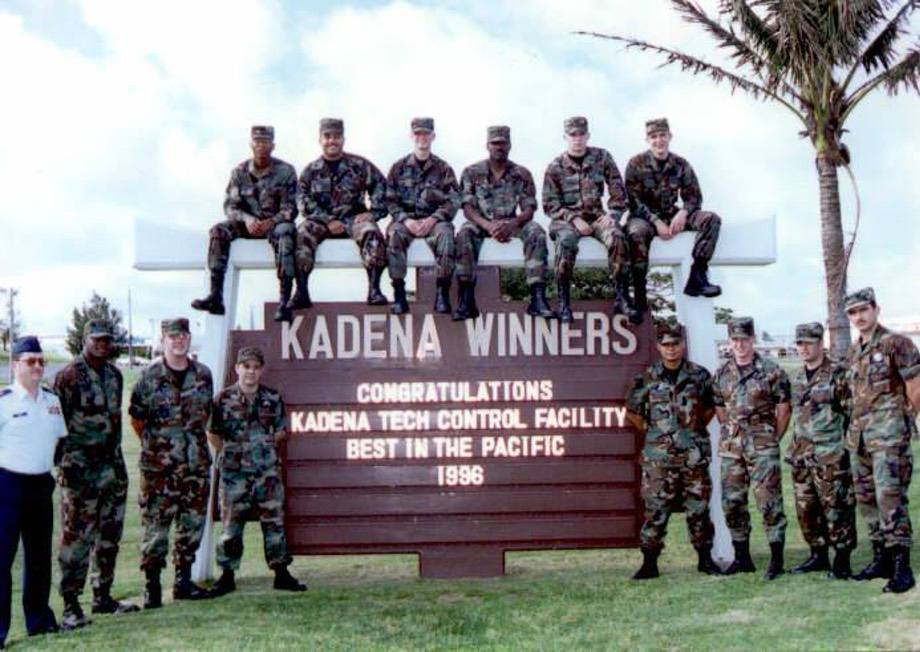
When I think back to my time stationed at Kadena Air Base in Okinawa, Japan, there are countless memories that come flooding in—long nights, high-pressure missions, and a camaraderie that was unlike anything else. But there’s one moment that stands out, not just because of the recognition it brought us, but because of what it represented about the dedication and precision of the team I was proud to be a part of. That moment was when the 18th Communications Squadron facility received the prestigious Defense Information Systems Agency award for best technical control facility in the Pacific. On paper, it might sound like a technical accolade—something bureaucratic or buried in the fine print of military communications—but in reality, it was the culmination of relentless effort, innovation, and a sense of responsibility to keep the lifelines of the military open and secure in one of the most critical regions of the world.
To understand the weight of this recognition, you first have to appreciate what a technical control facility actually is. In simple terms, a TCF is the nerve center of communications on a base. Every circuit, every connection, every channel that tied Kadena to the rest of the Pacific and beyond ran through our facility. We weren’t the ones flying the fighter jets or commanding ships across the ocean, but in many ways we were the ones ensuring those missions could even happen. A pilot can’t receive orders without secure channels. A commander can’t plan operations without reliable links. Troops can’t receive intelligence without signals being routed flawlessly. That was our world: a world of circuits, signals, redundancy, and an unspoken understanding that failure wasn’t an option.
DISA, the Defense Information Systems Agency, is the overseer of all things communication across the U.S. military. They don’t hand out awards lightly. Their job is to ensure that networks remain resilient, secure, and adaptable across every theater of operations, and when they take notice of a facility, it means that somewhere amid the hum of machines and the quiet diligence of technicians, excellence was achieved. For us at Kadena, that award didn’t just mean we were technically proficient—it meant that in the eyes of the agency that ensured the flow of information across the entire defense establishment, we had set a standard for the Pacific region.
Kadena itself is no ordinary base. Situated on Okinawa, it’s the crown jewel of U.S. air power in the Pacific. From its runways, fighters could scramble in moments, cargo planes could ferry supplies across oceans, and surveillance aircraft could patrol vast swaths of contested waters. But Kadena’s real strength was its ability to connect—connect the United States to Asia, connect commanders to their forces, connect the Pacific to Washington. Our communications infrastructure was the invisible scaffolding that held up all the visible displays of power. And at the heart of that infrastructure was our technical control facility.
The day we learned about the award, I remember the mix of pride and disbelief that filled the room. We weren’t in this for recognition. Most of the time, our work was thankless. If everything ran smoothly, nobody thought of us. If something went wrong, the finger-pointing would begin immediately. That’s the paradox of communications: success is invisible, failure is glaring. So when DISA singled us out for being the best in the Pacific, it was a validation that every unnoticed hour of troubleshooting, every sleepless night of testing circuits, every redundant backup system we put in place mattered. It meant we weren’t just keeping things running—we were setting a standard that others looked up to.
But awards don’t happen in isolation. They happen because of people. The 18th Communications Squadron wasn’t just a building full of racks, blinking lights, and cables. It was a collection of dedicated men and women who came from different backgrounds but shared a singular purpose. Some were seasoned veterans who had been through every kind of upgrade and system overhaul imaginable. Others were fresh arrivals, learning the ropes but bringing in new energy and ideas. We worked shoulder to shoulder, troubleshooting problems that sometimes seemed impossible, improvising when equipment failed, and sharing laughs in between crises that reminded us we were human, too. There was a kind of electricity in the room that wasn’t just from the circuits—it was from the people who believed in the mission.
The technical side of what we did was complex but fascinating. Our TCF handled countless circuits—voice, data, secure lines, satellite links—all of which had to be monitored, tested, and maintained. Redundancy was our religion. If one line failed, another had to take over instantly. That meant constant checks, constant drills, and constant fine-tuning of systems that couldn’t afford downtime. Technology in the military is always evolving, and at Kadena we were often on the cutting edge, implementing upgrades that brought new challenges as well as new capabilities. From analog systems of the past to the digital integration that was reshaping communications worldwide, we had to adapt quickly and flawlessly. That ability to transition smoothly, to bridge the gap between old and new while maintaining mission readiness, was one of the reasons DISA recognized us.
Still, the most compelling part of our story wasn’t the machines—it was the humans who interacted with them. Many of our colleagues were Okinawan locals, employed to work alongside us, blending their technical expertise with a cultural bridge that made our team stronger. There’s something remarkable about watching someone who grew up on that island working hand in hand with an American airman, both focused not on politics or cultural differences but on making sure a circuit tested clean or a system came back online. Those moments were a testament to the power of shared purpose.
The award itself was symbolic, but it also carried practical weight. Recognition from DISA meant more than a plaque—it meant resources, trust, and visibility. It meant that when new systems were being tested in the Pacific, Kadena was on the shortlist for implementation. It meant that our processes and practices would be studied, adapted, and replicated elsewhere. In a way, the award made us ambassadors of excellence. Other units would reach out, asking how we handled certain problems, and we’d share what worked. Our success became a ripple that extended far beyond Okinawa.
But beyond all the institutional impact, what stays with me is the personal pride. Walking into that facility after the award, everything felt a little different. The hum of the machines seemed like applause. The blinking lights on the racks seemed to nod in acknowledgment. And when we saw each other in the halls, there was a new lightness to our step. It wasn’t arrogance—it was pride. Pride that the long, often invisible work we did had been seen, understood, and celebrated.
Looking back now, I realize that moment was also a lesson. It taught me that excellence doesn’t require recognition, but when recognition comes, it’s worth pausing to savor. It taught me that even in the most technical, seemingly impersonal environments, human connection and dedication are the true differentiators. Machines can process signals, but it takes people to care enough to ensure those signals never fail. And it reminded me that history isn’t always written in grand battles or sweeping political changes—sometimes it’s written in a small facility on a distant island, where a group of dedicated individuals decided that nothing short of the best would do.
That award from DISA wasn’t just for the 18th Communications Squadron—it was for everyone who believes that invisible work matters. For everyone who knows that the strength of an operation depends not just on the planes in the air or the ships at sea, but on the circuits carrying information quietly and relentlessly across the world. For everyone who has ever labored in the background, unseen but indispensable. And for me personally, it was a reminder that no matter where life takes me, the lessons of that award—the dedication, the teamwork, the pursuit of excellence—will always stay with me.