
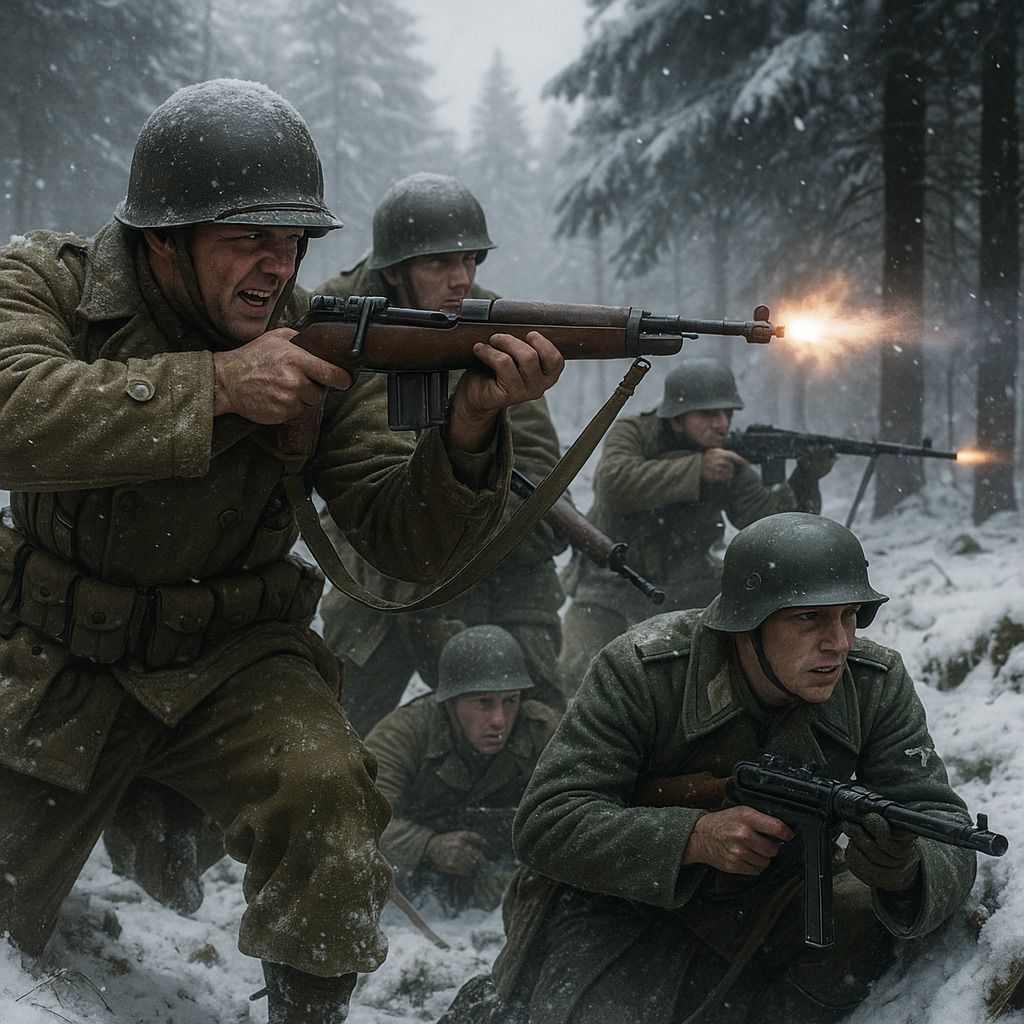
December 16, 1944, dawned cold, quiet, and deceptively calm across the Ardennes Forest. Snow blanketed the rolling hills of Belgium and Luxembourg, muffling sound and limiting visibility. For many Allied soldiers stationed in the region, the area was considered a rest sector, a place to recover from months of brutal fighting across France. Few suspected that this frozen landscape was about to become the stage for the largest and bloodiest battle ever fought by the United States Army.
The Battle of the Bulge was born out of desperation. By late 1944, Nazi Germany was losing on every front. The Allied invasion of Normandy had succeeded beyond expectations, Paris had been liberated, and Allied armies were pushing steadily toward Germany’s western borders. In the east, Soviet forces were closing in relentlessly. Adolf Hitler, increasingly isolated and dismissive of his generals, believed only a bold, decisive strike could reverse Germany’s fortunes.
Hitler’s plan was audacious to the point of recklessness. He ordered a massive surprise offensive through the Ardennes, the same forested region used successfully during Germany’s 1940 invasion of France. The goal was to split Allied forces, capture the vital port of Antwerp, and force the Western Allies into a negotiated peace. It was a gamble based on speed, surprise, and the hope that Allied morale would collapse under pressure.
To carry out the plan, Germany assembled over 200,000 troops, along with tanks, artillery, and limited air support. Many units were composed of inexperienced soldiers, older reservists, and teenage conscripts. Fuel shortages plagued the operation from the start, and German commanders quietly doubted its chances. Still, orders were orders, and preparations moved forward in secrecy.
At 5:30 a.m. on December 16, German artillery shattered the silence. Shells rained down on American positions, followed by waves of infantry and armored units pushing through fog and snow. The surprise was nearly complete. Many American units were understrength and scattered, caught off guard by the scale of the assault. Roads quickly clogged with retreating troops, refugees, and burning vehicles.
The German advance created a massive bulge in the Allied lines, giving the battle its enduring name. In the opening days, German forces achieved alarming gains, overrunning towns and capturing thousands of American soldiers. Panic spread in some sectors, but collapse never came. Small units fought stubbornly, delaying German progress and buying precious time.
Weather played a decisive role in the battle’s early phase. Thick clouds grounded Allied aircraft, preventing air support and reconnaissance. German forces advanced under cover of fog, while American troops struggled to resupply and reposition. The cold was relentless. Temperatures plunged below zero, and frostbite became as deadly as enemy fire.
One of the most critical points of the battle centered on the Belgian town of Bastogne. Its road network made it strategically vital, and German commanders were determined to seize it. The U.S. 101st Airborne Division, rushed to the area in trucks, was ordered to hold the town at all costs. They arrived poorly equipped for winter warfare and quickly found themselves surrounded.
Encircled, low on ammunition, and battered by constant attacks, the defenders of Bastogne became symbols of defiance. When a German envoy demanded surrender on December 22, General Anthony McAuliffe famously replied with a single word: “NUTS.” The message encapsulated the unbreakable resolve of Allied forces and soon spread throughout the ranks as a rallying cry.
As the siege continued, American artillery units fired relentlessly, often at close range. Medics worked without rest, treating wounded soldiers in freezing conditions. Civilians huddled in cellars, caught between advancing armies. Bastogne held, denying German forces a crucial objective and slowing their entire offensive.
Meanwhile, Allied command reacted swiftly. General Dwight D. Eisenhower recognized the threat and ordered reserves into action. The most dramatic response came from General George S. Patton, whose Third Army executed a rapid and daring pivot northward. In a matter of days, Patton’s forces marched through brutal winter conditions to relieve Bastogne.
On December 23, the weather finally broke. Clear skies returned, and Allied air power roared back into action. Fighter-bombers struck German supply lines, tanks, and troop concentrations with devastating effect. Without adequate fuel or air cover, German momentum stalled.
The battle turned decisively in favor of the Allies. American, British, and Canadian forces launched coordinated counterattacks, squeezing the bulge from both sides. German units, exhausted and undersupplied, began to retreat. What had been intended as a bold offensive became a costly withdrawal.
By January 25, 1945, the Battle of the Bulge was effectively over. The front lines returned nearly to their original positions, but the cost had been enormous. Approximately 19,000 Americans were killed, with tens of thousands wounded or captured. German losses were even greater, including irreplaceable tanks, aircraft, and experienced troops.
The battle marked Germany’s last major offensive in the West. After the Ardennes, the Wehrmacht would never regain the initiative. Allied forces surged forward into Germany, crossing the Rhine and accelerating the collapse of the Third Reich. Victory in Europe was now inevitable.
Beyond its strategic significance, the Battle of the Bulge became a defining test of endurance, leadership, and unity. Soldiers fought not only the enemy but starvation, exhaustion, and freezing cold. Acts of heroism occurred daily, often unnoticed, as small units held ground against overwhelming odds.
The battle also revealed the adaptability of Allied command. Initial surprise gave way to rapid coordination, flexible planning, and decisive action. Lessons learned in the Ardennes would influence modern military doctrine for decades to come.
For Adolf Hitler, the failure of the offensive was catastrophic. It shattered any remaining confidence among his generals and drained Germany’s final reserves. The illusion of a negotiated peace evaporated, replaced by the grim reality of total defeat.
Today, the forests and towns of the Ardennes stand quiet once more. Memorials and cemeteries mark where thousands fought and fell. Veterans’ stories, preserved through memory and history, continue to remind the world of the cost of freedom.
The Battle of the Bulge endures as a testament to the resilience of the human spirit. It was a battle defined not by flawless planning, but by perseverance under the harshest conditions imaginable. Against surprise, cold, and overwhelming pressure, Allied forces stood firm—and in doing so, helped bring an end to the most devastating war in human history.