
The summer of 1777 was hot, tense, and full of doubt for the young American Revolution. Two years had passed since the Declaration of Independence, and while the words on parchment had been bold, the war on the ground was still a precarious gamble. The British were making a push from Canada down into New York, hoping to cut the rebellious colonies in two and choke off New England from the rest. The plan was strategic, simple in theory, and deadly in execution: General John Burgoyne’s army would sweep south along the Hudson River Valley, linking up with British forces moving north from New York City.
But plans in war rarely go unchallenged, and in August 1777, in the small but fiercely determined hamlets of what is now Vermont and New York, local farmers, tradesmen, and frontiersmen decided that the British advance would stop with them. What followed was the Battle of Bennington—an engagement fought not by polished armies in neat lines, but by men who knew the forests and hills like the backs of their hands. On August 16, they proved that resolve, cunning, and a bit of luck could reshape the course of history.
The seeds of this battle were sown weeks earlier, as Burgoyne’s army—flush with early victories—pushed deeper into American territory. His force was formidable: British regulars, German Brunswickers, loyalist troops, and Native American allies. But it was also stretched thin. Supplies were running low, morale was faltering, and the rugged terrain of upstate New York was wearing on soldiers used to the discipline of European battlefields. Burgoyne’s solution was to send a detachment to raid for horses, cattle, food, and other desperately needed provisions.
That detachment, led by Lieutenant Colonel Friedrich Baum of the Brunswick troops, numbered around 800 men. They were an eclectic mix: German dragoons, loyalist militia, Native American warriors, and a handful of Canadians. Their target was Bennington, a supply depot believed to be lightly defended. But what Burgoyne’s intelligence missed was the fierce spirit of the local militia—especially under the leadership of Brigadier General John Stark, a battle-hardened veteran of Bunker Hill and a man with little patience for British arrogance.
Stark was not a man of flowery speeches, but he knew how to inspire fighters. When his ragtag militia gathered, he is famously said to have pointed at the enemy and declared, “There are the Redcoats, and they are ours, or this night Molly Stark sleeps a widow.” It was more than bravado—it was the voice of a man who understood the stakes. The loss of Bennington would cripple the local resistance; its defense could rally the entire region.
The battle unfolded in a series of fierce, chaotic clashes. Stark’s men, familiar with the wooded hills and swamps, outflanked Baum’s troops and hit them from multiple directions. The British-allied forces were surprised to find themselves facing not a token garrison but hundreds of determined militiamen who fired from behind trees and stone walls, darting in and out of sight. The fighting was brutal and personal, with bayonets flashing and musket balls whistling through the humid August air.
Baum’s men held out for several hours, even as casualties mounted and ammunition dwindled. But just as victory seemed within reach for Stark’s force, a fresh detachment of British reinforcements under Lieutenant Colonel Heinrich von Breymann appeared. Stark’s militia, exhausted from hours of fighting, risked being overwhelmed.
It was then that the tide truly turned. New Hampshire reinforcements under Colonel Seth Warner arrived, throwing themselves into the fray with renewed energy. Warner’s men crashed into Breymann’s force, and the combined American fighters drove the British-allied troops into retreat. By day’s end, Baum was mortally wounded, Breymann was in retreat, and more than 200 enemy soldiers were dead, with hundreds more captured. The Americans had won decisively.
The significance of the Battle of Bennington reached far beyond the numbers. Strategically, it deprived Burgoyne of the supplies and manpower he desperately needed, weakening his campaign toward Albany. Morale among the American forces surged, while the myth of British invincibility cracked. Politically, it boosted support for the revolution at a time when many colonists were unsure if independence was even possible.
Bennington’s victory was also a masterclass in the value of local knowledge and irregular tactics. The American militia was not the Continental Army—they lacked uniforms, formal drill, and heavy artillery—but they compensated with terrain mastery, guerrilla strategy, and an unshakable sense of defending their homes. In many ways, Bennington was a smaller-scale preview of how the Revolution itself would ultimately be won: not by outmatching the British in traditional battle, but by outlasting them in a war of endurance and will.
In the months that followed, the ripple effects of Bennington could be felt all the way to Saratoga, where Burgoyne’s weakened army suffered the decisive defeats that would bring France openly into the war on the American side. Without Bennington, Burgoyne might have had the resources to push further, altering the momentum of the entire campaign.
Today, the Battle of Bennington is remembered not just as a military engagement but as a testament to the grit of ordinary people who rose to extraordinary heights when history demanded it. In Bennington, Vermont, and surrounding towns, August 16 is still celebrated with parades, reenactments, and speeches that honor those who fought. The fields and hills where Stark’s militia once crouched behind rocks are now peaceful, but the echoes of musket fire still linger in the collective memory.
Bennington’s story is, at its heart, the story of a community refusing to yield, of neighbors standing shoulder to shoulder against a professional army, of a belief that freedom was worth fighting for even against impossible odds. It reminds us that revolutions are not only won in grand capitals or by famous generals, but also in muddy fields where farmers put down their plows and took up arms.
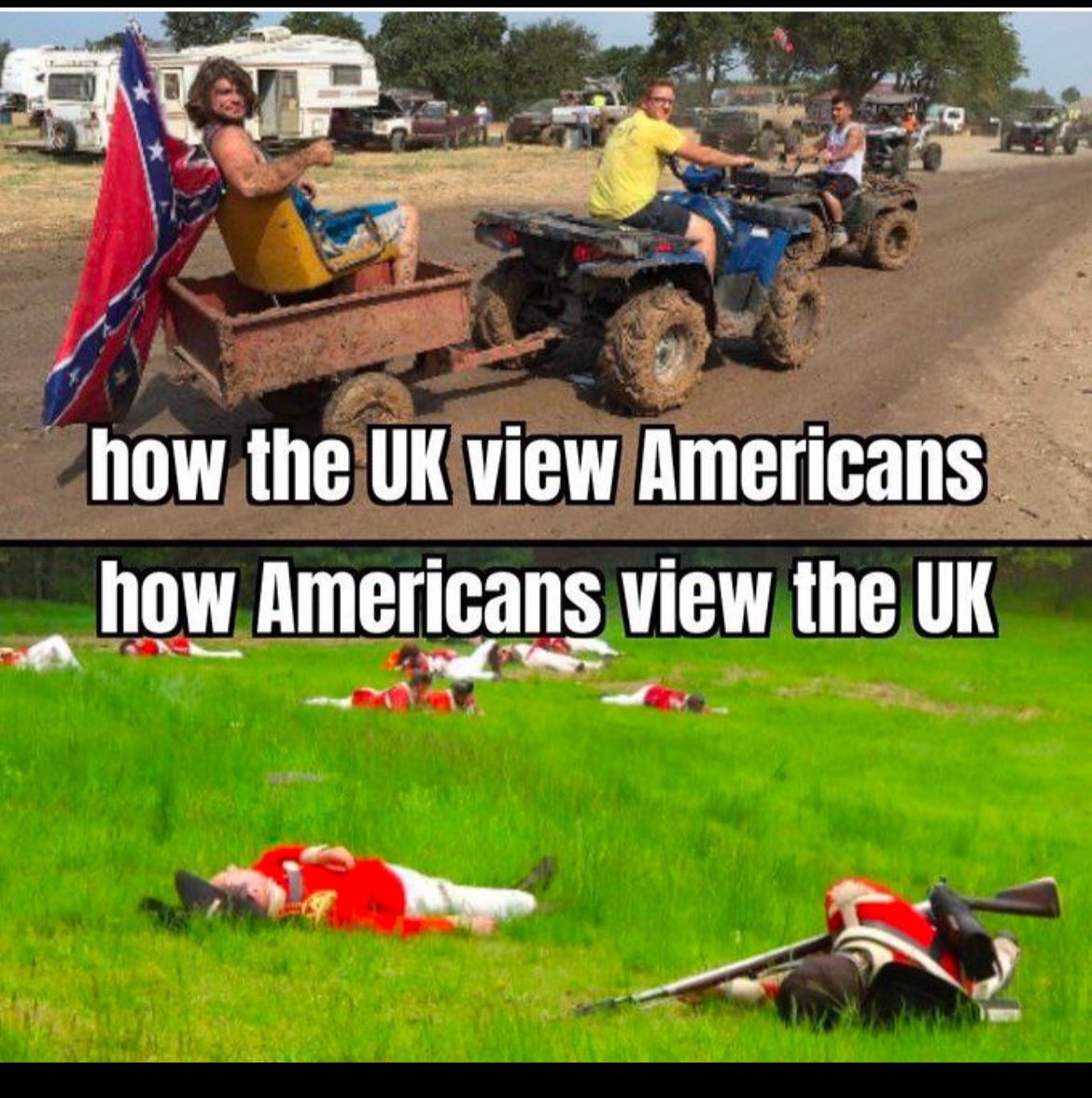
Present Day Meme: