
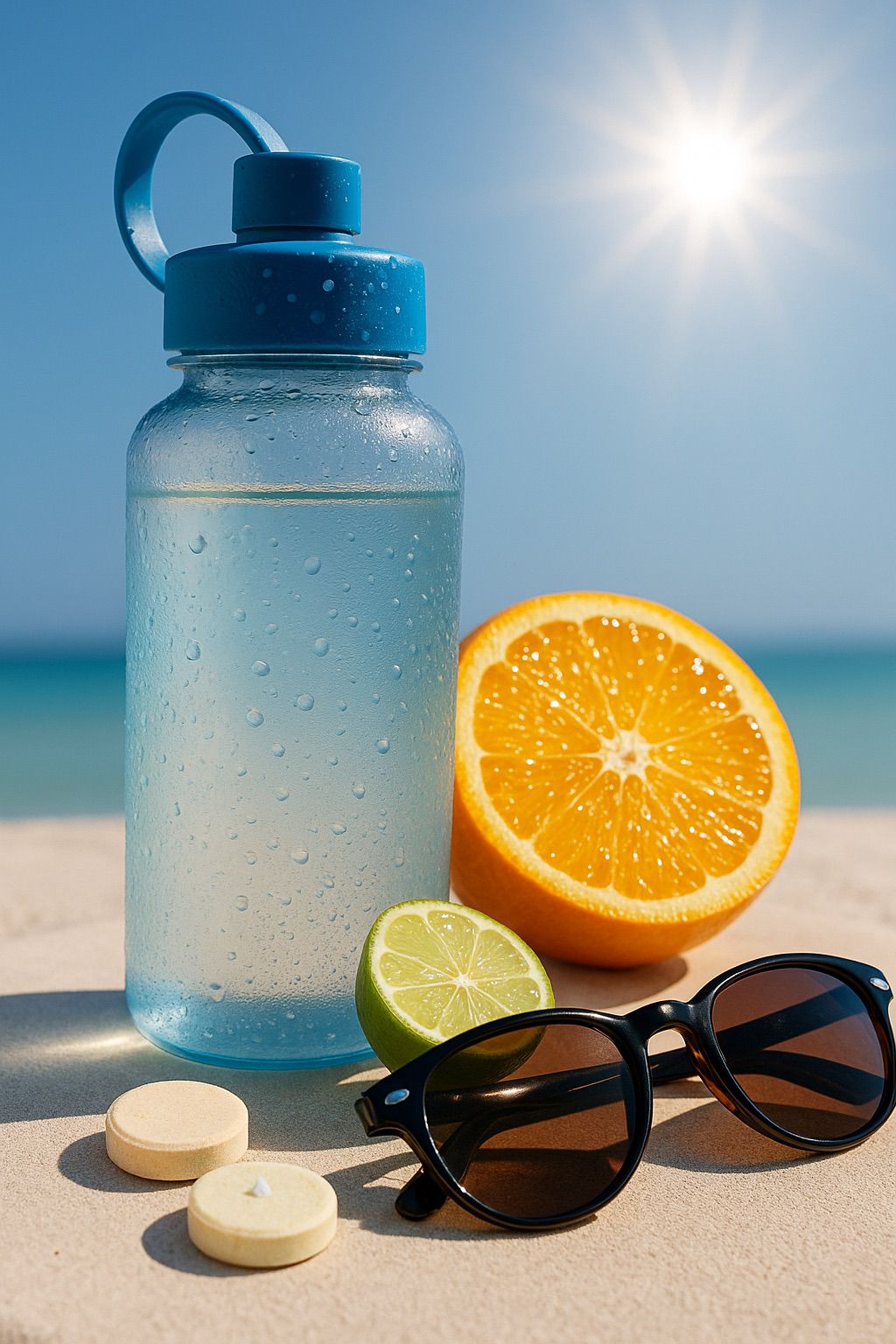
The sun is generous. It gives you light, warmth, color, mood—then it quietly asks for payment in water. Out on hot sand or a blazing trail, you can lose more fluid than you think long before you feel thirsty. That’s why “I’ll drink when I need to” is the Monday of hydration strategies: technically possible, practically expensive. Staying hydrated in the sun is less about chugging heroic amounts of water and more about rhythm—consistent sips, smart electrolytes, shade breaks, and foods that carry water in their cells like tiny canteens. Do it right and you get the whole day: clear head, steady energy, skin that forgives, and a body that doesn’t punish you when the heat finally eases.
Begin before the beach even begins. Pre-hydration is your opening move. In the hour before you step into the sun, aim for 300–500 ml of fluid (roughly 1–2 cups). Slow sips, not gulps. Add a pinch of salt or a squeeze of citrus if you’re a salty sweater or heading into high heat; your body retains fluid more efficiently when sodium isn’t at zero. If you’re a coffee person, enjoy it—but pair it with water. Caffeine doesn’t cancel hydration, but neither does it count for all of it.
Once you’re out there, think cadence over volume. The simplest rule that actually works: a few mouthfuls every 15–20 minutes while you’re in the sun, more during activity. Tie your sips to something you’re already doing—flipping a page, reapplying sunscreen, changing a song. A giant chug every two hours doesn’t hydrate as well as a steady trickle; your gut absorbs better in smaller, regular doses, and your mood appreciates the ritual.
Electrolytes aren’t a trend; they’re plumbing. Sweat carries out sodium, chloride, and smaller amounts of potassium and magnesium. Replace only water in heavy heat and you risk hyponatremia—too little sodium relative to water—especially if you’re out for hours. Replace only salt and you’ll still feel flat. Balance is the play. Use a light electrolyte tablet or powder (ideally ~300–500 mg sodium per liter) in one of your bottles; keep the other bottle plain water for thirst. If you dislike mixes, go “food-first”: a handful of salted nuts plus water, or sliced cucumber and tomatoes with a little salt. For a DIY sip: 1 liter water + juice of half a lemon or orange + 1–2 teaspoons sugar or honey + a small pinch of salt. It tastes like summer and behaves like science.
Temperature matters to compliance. Cold water cools the core faster and simply tastes better under a high sun. Keep one bottle in a soft cooler or wrap it in a damp towel under your umbrella; evaporation is natural air-conditioning. That said, any water you’ll actually drink is superior to the perfect temperature water you leave in the car. Make it easy: put the bottle where your hand lands.
Hydration also grows on trees. High-water snacks do double duty by bringing fluid, minerals, and fiber in one bite. Think watermelon, oranges, peaches, grapes, cucumber, bell pepper, cherry tomatoes. Yogurt cups (especially with a pinch of granola and a few berries) bring water plus electrolytes and protein. Salty crackers with hummus or avocado nudge sodium and potassium back into range. It’s not “snacking,” it’s strategy masquerading as pleasure.
Clothing and shade are hydrating, too. The less your body has to dump heat through sweat, the slower you dehydrate. Light, loose, UPF-rated fabrics and a wide-brim hat reduce the load. Take micro-shade breaks: two minutes under the umbrella can reset your core temp enough that your next 20 minutes feel like a different day. Feet in the water count as cooling, even if you’re not swimming.
Alcohol under a noon sun is the master illusionist. It makes you feel relaxed while sneaking water out the back door. If you choose to drink, bracket it with water and keep the proof low. A beer at sunset can be a poem; a string of cocktails at noon is a lecture your body will deliver later. Same with super-sugary drinks in heat: they can slow gastric emptying and make your stomach protest. Lightly sweet is the path.
Check your internal gauges without a lab. Urine color is crude but useful: pale straw is the target, dark apple juice means you’re behind. Headache, fatigue, irritability, and “my skin feels tight” are often hydration notes before they become alarms. If your heart rate stays higher than usual when you’re just walking the shoreline, or you’re suddenly clumsy, you’re likely low on fluid, salt, or both.
Different bodies, different math. Kids dehydrate faster; they’re enthusiastic movers who forget to drink. Make it a game: a sip every time a wave reaches your ankles, a sip when a cloud covers the sun. Older adults may feel less thirst even when they need water; set gentle timers or pair sips with sunscreen breaks. If you’re pregnant or nursing, bump fluids and shade time. If you take medications that affect fluid balance, follow your clinician’s guidance and keep electrolytes moderate, not maximal.
Swimmers get tricked twice—by cool water and saltwater. Being in the sea keeps skin cool, which masks thirst, and the salt on your lips can make you crave only fresh water while your body also needs sodium. After a long swim, take a few salted bites with water, even if you feel fine. Surfers and paddlers: stash a bottle at your entry/exit point and make two mindful stops, not just “one more set.”
What about the “too much water” problem? Yes, overhydration happens, but it’s rare on the beach unless you’re chugging liters of plain water for hours. The fix is balance, not fear: include some sodium, eat real food, and listen to thirst signals as the day cools. Your body is a good communicator when you learn its language.
Build a simple beach-day hydration plan and forget the spreadsheets:
Pre-game: 300–500 ml water with a pinch of salt or citrus 30–60 minutes before sun.
Pack two bottles: one plain, one with light electrolytes (or pair water with salty snacks).
Sip cadence: 3–5 mouthfuls every 15–20 minutes in direct sun; more if active.
Food-as-fluid: fruit + veg + yogurt or hummus sometime midmorning and midafternoon.
Shade cadence: two minutes under cover every 30–45 minutes in peak heat.
Reapply ritual: every sunscreen break = water + small salty bite.
Evening repair: water with dinner; a brothy soup or salad brings fluids back without effort.
If heat sneaks up anyway, respond early, not heroically. Heat cramps feel like tight calves or stomach twinges: move to shade, sip electrolyte fluid, gently stretch. Heat exhaustion brings heavy sweating, weakness, nausea, headache: cool the body—shade, fans, damp cloths on neck/armpits/groin, slow sipping. If confusion, a stop in sweating, or fainting appears, that’s heat stroke—a medical emergency. Cool aggressively and seek help immediately. Courage is cooling down, not toughing it out.
Back home, treat recovery as the last chapter. A cool shower rinses salt and lowers skin temperature; skin drinks moisturizer better afterward. Dinner can be a hydration encore: tomatoes with olive oil and salt, cucumbers with yogurt and mint, grilled fish with lemon, rice with a squeeze of lime. Sleep will come easier when your cells aren’t begging.
In the end, smart hydration isn’t a chore—it’s a pact with summer. You promise steady sips, a little salt, kind shade, and food that crunches and drips. Summer promises long golden hours where your mind stays clear and your body keeps saying yes. Thirst will always knock; you just won’t wait for it to become a shout.