
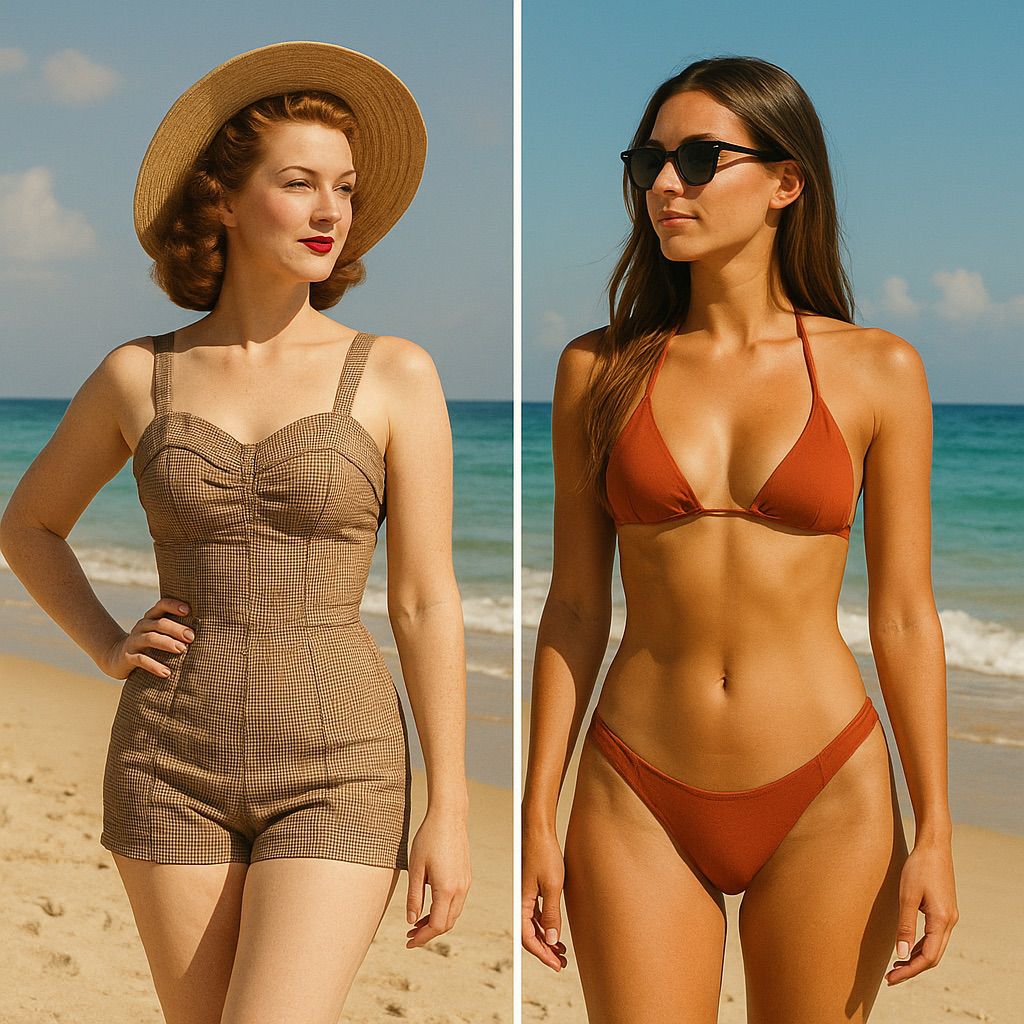
The beach has always been more than just a stretch of sand and water—it’s a stage. For over a century, it’s been where trends are born, where boundaries are tested, and where style is as much a part of the experience as the ocean breeze itself. Whether it’s a prim Edwardian woman dipping her toes into the surf in a wool bathing dress or a modern influencer flaunting a minimalist bikini in the glow of a tropical sunset, beach fashion has mirrored society’s changing attitudes toward beauty, modesty, freedom, and fun.
To trace the evolution of beachwear is to walk along a shoreline where each era leaves its footprints in the sand. Those prints may fade, but they shape the path forward, guiding us from the corseted days of the past to the sun-kissed, filter-ready looks of today. And in this comparison between vintage beach fashion and modern-day style, we discover not just changes in fabric and form, but in the very spirit of how we dress for the shore.
The Early 1900s — When the Beach Meant Layers
If you strolled along the beach in the early 20th century, you’d find women in bathing costumes that looked more suited for a picnic than a swim. Floor-length skirts, high collars, puffed sleeves, stockings, and even shoes were part of the ensemble. These garments were usually made from heavy materials like wool or flannel—absurd choices for water play by today’s standards, but perfectly aligned with the modesty norms of the era. For men, one-piece tank suits that covered the torso and extended to mid-thigh were the norm, and in many places, regulations dictated exactly how much skin could be shown.
These early beachgoers didn’t so much swim as they “bathed” or waded, often in the presence of chaperones. Bathing machines—small wooden huts on wheels—allowed women to change in privacy and enter the water without being seen in their bathing costumes. It was a time when the beach was more a place for decorous socializing than uninhibited play.
The 1920s–1930s — The First Real Shift
By the Roaring Twenties, the beach began to loosen up. Women’s bathing suits shed some layers, shortening skirts and sleeves, though they still covered most of the body. Materials like jersey wool allowed for more form-fitting designs, signaling a subtle embrace of the body’s natural shape. Beach pajamas—a wide-legged trouser set often made of lightweight fabric—became a stylish alternative for seaside lounging, especially among the fashionable elite.
Men’s swimwear began to shrink, too. The tank suit still reigned, but by the ’30s, some designs allowed the top to be removed, baring the chest—something considered scandalous just a decade earlier. Hollywood films of the time helped glamorize the beach, with stars like Jean Harlow and Esther Williams making swimwear aspirational.
The 1940s — War, Utility, and the Birth of the Bikini
The 1940s were defined by wartime fabric rationing, which ironically helped streamline beachwear. Swimsuits became more economical in cut, with higher hemlines and lower backs. For women, the two-piece emerged—not yet the bikini as we know it, but a midriff-baring design with high-waisted bottoms and structured tops.
Then, in 1946, French designer Louis Réard introduced the bikini, named after Bikini Atoll, site of atomic bomb tests. The bikini was explosive in its own way: so revealing that no model would initially wear it. Réard ultimately hired a Parisian nude dancer to debut the look. While the bikini was slow to catch on in conservative circles, it was a sign of the liberation to come.
The 1950s — Glamour Meets the Shore
The postwar era brought a return to indulgence and femininity in fashion, and beachwear followed suit. Women’s swimsuits in the ’50s often featured sweetheart necklines, cinched waists, and built-in bras, evoking the pin-up aesthetic popularized by icons like Marilyn Monroe and Brigitte Bardot. Fabrics were more varied, with cotton blends and early synthetics adding durability and stretch.
Men’s swimwear got shorter, with trunks replacing the older tank styles. Bold prints—stripes, checks, and tropical motifs—were everywhere, and surf culture began to influence mainstream styles, especially in California.
The 1960s–1970s — Liberation and Playfulness
By the 1960s, the bikini was no longer shocking—it was trendy. Designers experimented with bold prints, psychedelic colors, and daring cuts. Mod fashion made its way to the beach, with high-cut legs and bandeau tops. Crochet bikinis and handmade swimwear reflected the era’s DIY spirit.
The 1970s pushed boundaries even further. Thongs and string bikinis appeared, challenging ideas about modesty worldwide. Men’s swimwear followed suit with shorter, tighter trunks, though board shorts also gained popularity in surf communities. Polyester became the fabric of the decade—stretchy, quick-drying, and perfect for vibrant patterns. The beach became a playground for self-expression, and swimwear was a clear statement of personality.
The 1980s — The Aerobics Era Hits the Sand
The ’80s brought athleticism and boldness to beach fashion. Women’s swimsuits often featured high-cut legs that seemed to reach the waist, creating the illusion of longer legs—a look popularized by shows like Baywatch. Neon colors, metallic fabrics, and bold graphics ruled the shoreline. One-piece swimsuits made a strong comeback in sporty cuts, often with plunging backs or mesh panels.
For men, the decade was a split personality: brightly patterned short trunks for the casual crowd, and minimal swim briefs for the bold. Fitness culture permeated everything, and beachwear was no exception—showing off a toned body was as much the point as swimming.
The 1990s — Casual Cool Takes Over
The ’90s marked a more relaxed approach to beach style. Minimalism was in: solid colors, sleek cuts, and simple designs. Bikinis often featured triangle tops and string sides, while one-pieces leaned toward streamlined athletic styles. Sport brands like Speedo and Nike made functional swimwear fashionable.
Men’s swimwear lengthened again, with knee-length board shorts dominating the scene, thanks in part to surf and skate culture. The decade also saw the rise of the “tankini,” offering women more coverage while maintaining a two-piece look.
The 2000s — Mix, Match, and Brand Power
By the early 2000s, beachwear became more personalized. Mixing and matching bikini tops and bottoms was a trend, allowing for more individuality. Logos and brand names—Billabong, Roxy, Quiksilver—were proudly displayed. Metallic fabrics, bold patterns, and embellishments like rings or beads added flair.
Men’s board shorts were longer and baggier than ever, often paired with rash guards for surfers or casual wearers who valued sun protection. Swimwear was now as much about lifestyle branding as it was about function.
The 2010s–Today — Inclusivity, Sustainability, and Style Freedom
In the last decade, beach fashion has entered its most diverse era yet. There’s no single dominant style—retro high-waisted bikinis, minimal string designs, sporty one-pieces, and modest swimwear all coexist. Social media has brought global influences to everyone’s feeds, blending styles from different cultures and decades.
Inclusivity is now a driving force: brands are designing for all body types, offering extended sizes and adaptive swimwear. Modest swimwear options, like the burkini, have gone mainstream, allowing women from various cultural backgrounds to enjoy the beach without compromising their values.
Sustainability is also reshaping the industry, with eco-friendly fabrics made from recycled ocean plastics gaining popularity. Today, a swimsuit isn’t just about style—it’s about ethics, identity, and the freedom to choose what makes you feel confident.
Then vs. Now — The Heart of the Comparison
When we place vintage beach fashion beside today’s styles, the differences are obvious: fabric technology, comfort, and cultural openness have transformed what we wear to the shore. But the similarities are just as striking—beachwear has always been about more than swimming. It’s a form of self-expression, a reflection of society’s values, and a little bit of theater performed under the sun.
In the past, swimwear was often a compromise between modesty and practicality. Today, it’s about choice. You can channel the glamour of the ’50s, the boldness of the ’70s, the athleticism of the ’80s, or the minimalism of the ’90s—and no one blinks an eye. The shoreline has become a democratic runway where every style has a place.
In the end, whether you’re wearing a structured one-piece from a bygone era or a barely-there bikini hot off an influencer’s Instagram, the spirit is the same: to enjoy the beach, the sun, and the feeling of being alive. Fashion changes, but the joy of the shore is timeless.