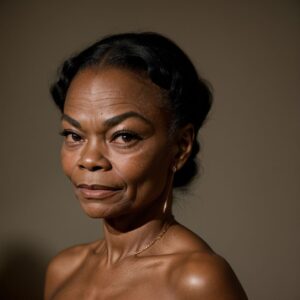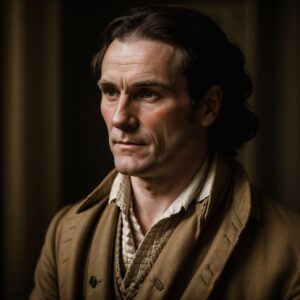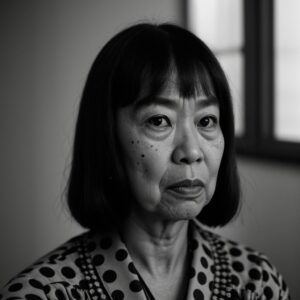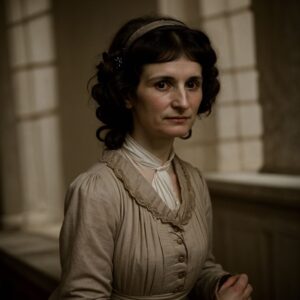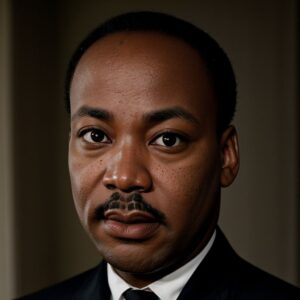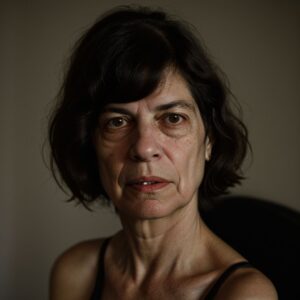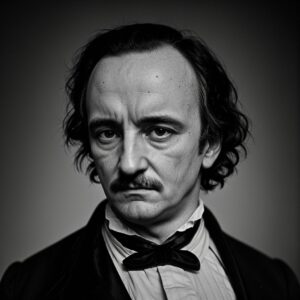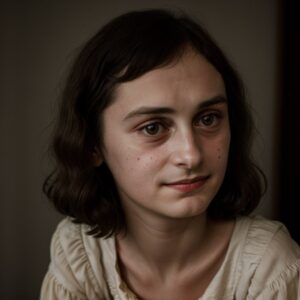
Mary Wollstonecraft was born on April 27, 1759, in Spitalfields, London, into a family whose financial instability shaped much of her early life. Her father’s failed ventures and volatile temperament produced a household marked by uncertainty, forcing Wollstonecraft to develop independence at an unusually young age. Formal education for girls was limited, and hers consisted …
January 2026 archive
Lord Byron: Too Many Masks for One Face
Lord Byron has been on my mind lately, probably because I’ve been re-reading his poetry. It’s not just the way he weaves words together that fascinates me – though, oh man, it’s like a masterclass in language. But it’s more than that. It’s the contradictions that make him hard to pin down. I find myself …
George Eliot and the Making of the Victorian Novel
Mary Ann Evans was born on November 22, 1819, at Arbury Hall in Warwickshire, England. Her father, Robert Evans, managed the estate for the Newdigate family, a position that placed the household within the orbit of landed society without granting it social standing. Her mother, Christiana Pearson Evans, oversaw domestic life until her death in …
David Bowie: A Life Shaped by Culture
David Robert Jones was born on January 8, 1947, in Brixton, London, to Haywood Stenton Jones and Margaret Mary Burns. His early years were marked by frequent changes in residence, with the family eventually settling in Bromley, Kent. School records from Bromley Technical High School show sustained engagement with visual art and music rather than …
Martin Luther King Jr. and the Labor of Words
Martin Luther King Jr.’s handwriting shifts from cursive to print in a draft of his letter to the Birmingham City Council. The sentence “We will have to face the fact that we are now dealing with beasts” appears first in cursive, then is rewritten in print with the word “beasts” crossed out and replaced with …
Virginia Apgar and the Weight of First Minutes
In a letter to her colleagues, Virginia Apgar writes, simply, “A baby’s life should count.” The sentence appears midway down a page dated March 1959. One line above it reads, “The newborn’s future hangs in the balance.” There is no transition between the two, no attempt to explain the connection. The words sit beside each …
Benjamin Franklin and the Discipline of Attention
He wrote, in a careful hand, “What I wish most to learn.” The phrase appears again in a later draft, altered only slightly: “what I wish most to understand.” The change is small, almost negligible, yet it suggests a shift from accumulation to precision, from gathering facts to refining judgment. In the margins of his …
Susan Sontag in Fragments and Revisions
In a draft, the sentence appears: “Susan Sontag’s writing is an act of attention.” In this early version, the phrase “act of attention” feels almost like a placeholder, a gesture towards something yet to be explored. Later, it is crossed out and written again: “her essays are meditations on the human condition.” The language shifts …
Edgar Allan Poe and the Persistence of Doubt
The sentence appears first as certainty and then as hesitation. “All that we see or seem is but a dream within a dream.” It surfaces in a letter, disappears in a later draft, and returns altered, as if the words themselves were unsure whether they wished to remain. In the margins nearby, Poe has written …
Anne Frank: Invisible Walls War, Identity, Trauma, Hope, Survival, Memory
A photograph dated 1942 shows Anne Frank at a desk, her face turned toward the camera. The image records a moment from the year the Frank family went into hiding after the German occupation of the Netherlands intensified. The photograph does not explain what followed. It marks only a point in time, preserved without context, …
Albert Camus: A Stranger in the Mirror
A photograph dated 1948 records Albert Camus at a small table on the Boulevard Saint-Michel. The image is grainy and tightly framed, offering little beyond the outline of a figure, a scattering of papers, and the suggestion of a crowded interior just beyond the edge of the shot. Nothing in the photograph explains what he …
Hedy Lamarr: The Hidden Seam
Hedy Lamarr. I’ve been thinking about her a lot lately, trying to figure out why she fascinates me so much. It’s not just that she was an actress and inventor – although those things are pretty amazing on their own. No, it’s something more complicated than that. I think what really draws me in is …
Rosa Parks: A Dose of Drama, a Lifetime Supply of Trouble
Rosa Parks’ hand was steady on the wheel of her bus route, a familiar rhythm that guided her through Montgomery’s city streets. But it was on one ordinary day, December 1, 1955, when her routine was disrupted by the driver’s demand that she give up her seat to a white person. She refused, sparking a …
Unraveling Orwell: A Study in Complexity
I have been studying the writings of George Orwell through the remains he left behind: notebooks, drafts, letters, photographs, and revisions that resist settling into a single narrative. His notebooks show a careful habit of recording fragments — overheard phrases, political observations, reminders written in haste. In “Why I Write,” he refers to the necessity …
Harper Lee: When The Spotlight Became a Straitjacket
I’ve always been fascinated by Harper Lee’s life, particularly the years leading up to and following the publication of To Kill a Mockingbird. It’s as if she vanished into thin air after that book became a sensation. I wonder what drove her to withdraw from the public eye. When I read about her struggles with …
Simone de Beauvoir and the Quiet Work of Ambiguity
Simone de Beauvoir’s handwriting is uneven, as if she would rather be writing with her left hand. In a letter to Jean-Paul Sartre, she mentions the “difficulty of putting words to thought.” The sentence appears in multiple drafts, each time slightly altered. Her daily routine included early mornings near the Seine. She describes this time …
The Unseen Energies of Tesla: A Journey into Innovation and Solitude
Photographs of Nikola Tesla’s laboratory are often blurred at the edges. The focus drifts, never settling on a single point. In these images, the machines appear sharper than the man himself, as if the apparatus were easier to fix in place than the work unfolding around it. The effect repeats across photographs taken years apart, …
Eleanor Roosevelt: Too Many Truths, Not Enough Peace
I’ve always been fascinated by Eleanor Roosevelt, not just for her impressive resume – former First Lady, human rights advocate, writer – but for the way she seemed to embody a sense of quiet determination that I find both inspiring and intimidating. As I read through her letters and writings, I’m struck by how much …
Frida Kahlo and the Language of Feeling Without End
In her letters to friends and lovers, Frida Kahlo often returns to the idea of “lo que se siente,” what one feels. The phrase, or slight variations of it, appears again and again across her drafts, revisions, and final letters. One letter from 1938 begins with a crossed-out line, then continues: “No sé cómo explicar …
James Baldwin’s Unfinished Reckoning
In her letters to his closest confidants, James Baldwin wrestled with the concept of love, returning to it time and again without reaching a definitive conclusion. Drafts show him struggling to find the right words, crossing out lines and rewriting them in search of greater precision or clarity. One early draft from 1947 reads: “Love …
Emily Dickinson and the Poetry of the Unfinished
In one of her letters, Emily Dickinson wrote: “A Route of Evanescence, With a revolving Wheel.” This image, later revised to the now-famous line “A Bird came down the Walk,” appears in multiple drafts and variations throughout her writing life. She tried out different phrasings for this concept of fleeting existence, from “Evanescence” to “a …
Jane Goodall’s Language of Connection and Complexity
In the margins of her drafts, Jane Goodall often crossed out the word “but.” This small act of revision appeared throughout her letters and writings, a quiet insistence on rephrasing that revealed a subtle yet persistent pattern in her thinking. The word itself was unassuming—a conjunction used to introduce something contrasting with what has already …
Virginia Woolf and the Art of the Elusive Moment
In Virginia Woolf’s correspondence and draft revisions, the concept of “moments of being” emerges as a recurring theme, explored through various iterations and phrasings. One draft reads: “There are certain moments which stand out and become fixed in one’s mind…,” while another version replaces this with “There are certain moments that have the power to …
The Travelers Within: Souls, Aliens, and the Eternal Mission of Spreading Life
Imagine for a moment that your life, as vivid and personal as it feels, is not entirely your own. You wake each day, make choices, carry memories, and feel emotions as uniquely yours — yet beneath it all, there might be something greater moving through you. For thousands of years, humans have described this “something” …
When the World Turns the Page: How Cultures Everywhere Welcome the New Year
New Year’s Day is one of the rare moments when humanity seems to pause collectively, reflect on the past, and imagine what lies ahead. Yet while the idea of “a new year” feels universal, the way people mark this transition varies widely across cultures, religions, climates, and histories. For some, it is a quiet, spiritual …