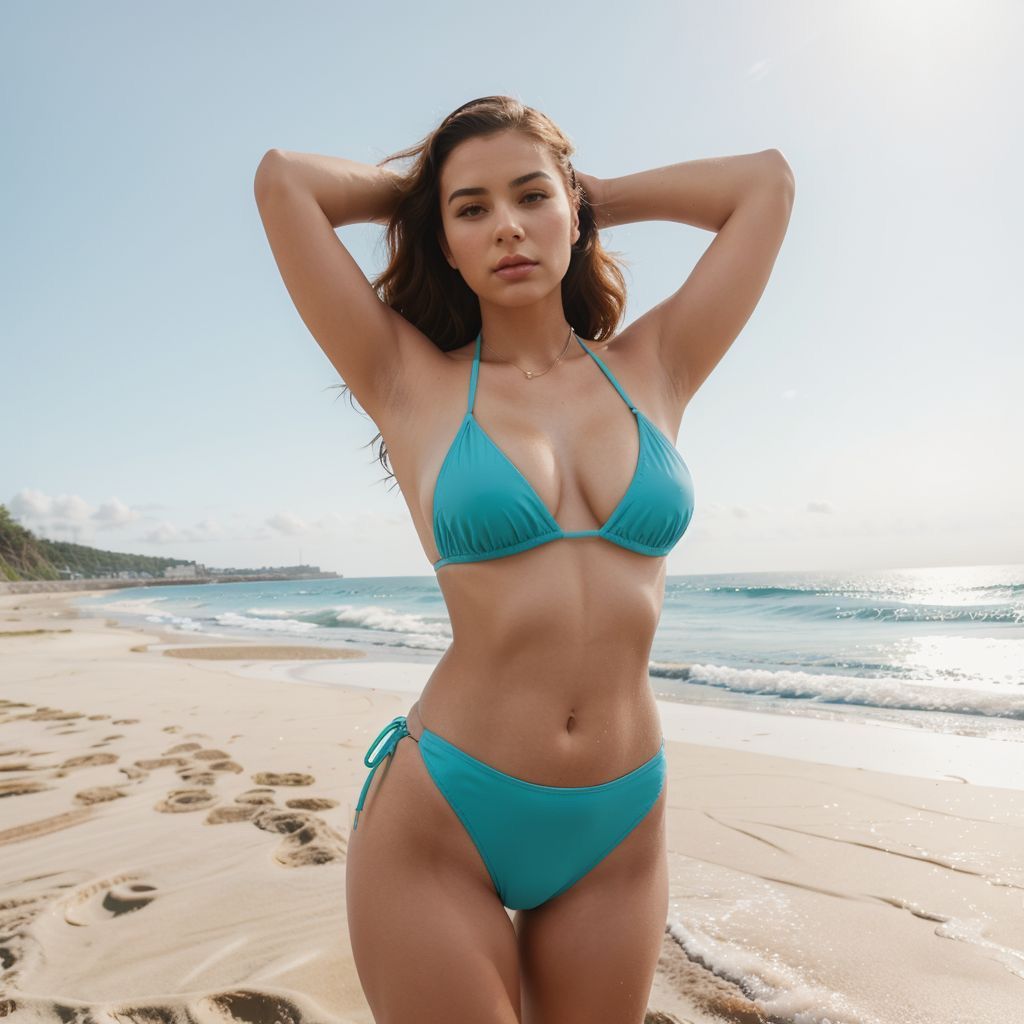
There’s something unmistakably captivating about a revival. Be it vinyl records, vintage convertibles, or red lipstick, certain trends have a way of clawing back into the spotlight—often better than ever. Among these reclaimed icons is a staple of beachwear that has graced sun-drenched coastlines from the golden age of Hollywood to today’s Instagram feeds: the high-waisted bikini. Once dismissed as outdated or modest in an era of stringy swimwear and low-rise everything, this retro-inspired silhouette is enjoying a powerful resurgence. And it’s not just about nostalgia—it’s about confidence, body positivity, fashion, and the way women are reclaiming their relationship with swimwear on their own terms. The high-waisted bikini isn’t just a piece of fabric stitched into a flattering shape. It’s a statement. It’s an attitude. It’s a comeback that tells a story worth unraveling.
The origins of the bikini itself are relatively modern in the grand scheme of fashion history. Though ancient mosaics in Sicily depict women in what resemble two-piece swimsuits, the term “bikini” wasn’t coined until 1946. Louis Réard, a French engineer and designer, introduced the bikini to the world with a jaw-dropping debut: a model named Micheline Bernardini wore Réard’s scandalously skimpy two-piece at the Piscine Molitor in Paris. It was so tiny that no mainstream model would agree to wear it. Named after the Bikini Atoll, a nuclear test site in the Pacific, the design was intended to be explosive—and it was. The bikini shocked a conservative post-war society and took years to be fully accepted.
But even in those early years, bikinis didn’t look like the floss-thin triangles we associate with some modern versions. In the 1950s and early ’60s, modesty still reigned. Think high-waisted bottoms that hugged the waistline and cupped the hips, often paired with structured tops or even halter-style bralettes. Stars like Marilyn Monroe, Elizabeth Taylor, and Brigitte Bardot made the look iconic. These swimsuits highlighted curves while still leaving a little to the imagination. They were sexy without being overt, stylish without being loud. They evoked a certain elegance—like walking barefoot through a French Riviera resort, the sea breeze flirting with a silk headscarf and cat-eye sunglasses.
Then came the cultural revolutions of the late ’60s and ’70s, and swimwear followed suit. Hemlines climbed, tops shrunk, and low-rise bottoms became the defining trend for decades to come. By the 1990s and early 2000s, the high-waisted bikini was almost nowhere to be found. It was branded as matronly, prudish, or out of touch. Mainstream fashion favored as little fabric as possible. The “bikini body” myth reached a fever pitch—unrealistic beauty standards, diet culture, and Photoshopped perfection dominated magazines, ad campaigns, and pop culture. Swimwear became a source of anxiety for many, not empowerment.
But fashion, like the tide, always comes back around. In the 2010s, something shifted. Fueled by a growing movement of body positivity, inclusivity, and fashion nostalgia, the high-waisted bikini began its unexpected return. At first, it started quietly—seen in curated vintage shops, on style blogs, or in music videos channeling old Hollywood glam. But before long, it had hit the mainstream, showing up in collections from designers big and small. Celebrities, influencers, and everyday women alike embraced the style with open arms—and for good reason.
So what exactly is it about the high-waisted bikini that has women reaching for it again, decades after it disappeared from the frontlines of fashion? It’s a perfect storm of form and function. For starters, the cut is universally flattering. By sitting above the natural waistline, high-waisted bottoms emphasize the narrowest part of the torso and elongate the legs. They provide more coverage without sacrificing style, giving wearers a sense of comfort and security without feeling frumpy. That’s no small feat in a world where swimwear often feels more like a test of confidence than a form of self-expression.
Then there’s the versatility. High-waisted bikinis come in every imaginable color, pattern, and silhouette—from minimalist monochromes to bold florals, from cheeky cuts to full coverage. They can be sporty, feminine, vintage, or modern. Paired with a crop top, sarong, or denim shorts, they even work outside the beach. For women who want to express personal style while feeling empowered in their own skin, this resurgence offers endless opportunities.
But more than anything, the high-waisted bikini’s comeback reflects a cultural shift in how we talk about beauty and bodies. For so long, women were taught that swimwear was a battleground: a place where flaws were exposed and comparisons were inevitable. Marketing campaigns showed one narrow version of attractiveness—thin, white, young, toned. If you didn’t fit that mold, you were often excluded from the narrative altogether. But today’s fashion culture, slowly but surely, is turning that idea on its head. Brands are featuring models of all sizes, skin tones, and body types. Campaigns are focusing on authenticity rather than airbrushed perfection. And the high-waisted bikini has emerged as a kind of emblem of this new wave: a celebration of the body as it is, not as it should be.
Social media, for all its pitfalls, has played a surprising role in this transformation. Platforms like Instagram, TikTok, and Pinterest have allowed women to showcase their style on their own terms. Instead of waiting for a fashion magazine to tell them what’s acceptable, they’ve become the tastemakers. Influencers and content creators from diverse backgrounds have helped redefine what beachwear confidence looks like. You’re just as likely to see a curvy mom rocking a gingham high-waisted two-piece as you are a model with washboard abs. This democratization of style has been nothing short of revolutionary.
And let’s not forget the comfort factor. The world is coming off a pandemic-era lifestyle that prioritized ease, practicality, and emotional wellness over rigid dress codes. Sweatpants became chic. Bra-free days were normalized. And when it came time to return to beaches, resorts, and pool parties, many women simply weren’t willing to go back to uncomfortable, restrictive clothing—especially not something as intimate as a swimsuit. The high-waisted bikini offered a compromise: stylish and chic, but also supportive, secure, and confidence-boosting. It’s fashion’s equivalent of a deep breath.
The beauty of the high-waisted bikini resurgence is that it doesn’t belong to any one generation. Gen Z wears it with fresh irony and vintage flair. Millennials embrace it for its balance of modern design and timeless appeal. Even Gen X and Baby Boomers are finding comfort in the style, appreciating how it bridges nostalgia and confidence. Unlike some trends that cater exclusively to youth culture, this one carries a sense of timelessness that transcends age.
Of course, some critics still scoff at the high-waisted style, branding it as old-fashioned or unsexy. But that criticism reveals more about the critic than the garment. For too long, sex appeal has been narrowly defined by exposure—shorter, tighter, skimpier. The comeback of the high-waisted bikini challenges that notion head-on. It redefines sexy as something more nuanced: confidence, comfort, elegance, and choice. There’s something undeniably powerful about a woman choosing what makes her feel beautiful—whether that’s a bold low-cut suit or a modest high-waisted number. The key word is “choosing.”
Retailers have certainly taken note. From luxury brands like Zimmermann and Solid & Striped to fast fashion giants like H&M and Target, everyone is cashing in on the demand. Even big box stores now feature high-waisted options in a variety of fits and sizes. There’s a growing awareness that swimwear isn’t one-size-fits-all, and the fashion world is finally beginning to accommodate that truth.
Designers, too, are getting creative. They’re blending vintage silhouettes with modern materials—like eco-friendly fabrics, mesh panels, or unexpected hardware. They’re experimenting with asymmetry, ruching, and bold prints. The result is a category of swimwear that feels both timeless and fresh. It’s not about replicating the past—it’s about honoring it while updating it for a new era.
More importantly, the rise of the high-waisted bikini has given way to important conversations around inclusivity, self-image, and autonomy. Every time a woman posts a picture of herself unapologetically wearing a style that once might have been deemed “unflattering” by rigid beauty norms, it chips away at decades of shame. It tells the next generation that there’s no such thing as a “bikini body”—just a body in a bikini.
The beach, once seen as a minefield of insecurities, is becoming more like a runway of self-love. And the high-waisted bikini, in all its retro glory, has become one of the brightest stars in this transformation. It’s not just fashion—it’s liberation stitched into a stylish silhouette. It’s proof that what we wear can be both personal and political. And it’s a reminder that sometimes, to move forward, we have to look back.
So the next time you see someone rocking a high-waisted bikini with effortless grace, know that it’s more than a nod to Marilyn or a Pinterest aesthetic. It’s a symbol of fashion’s full circle. Of empowerment. Of choice. And of the enduring truth that the most powerful style trend is—and always will be—confidence.