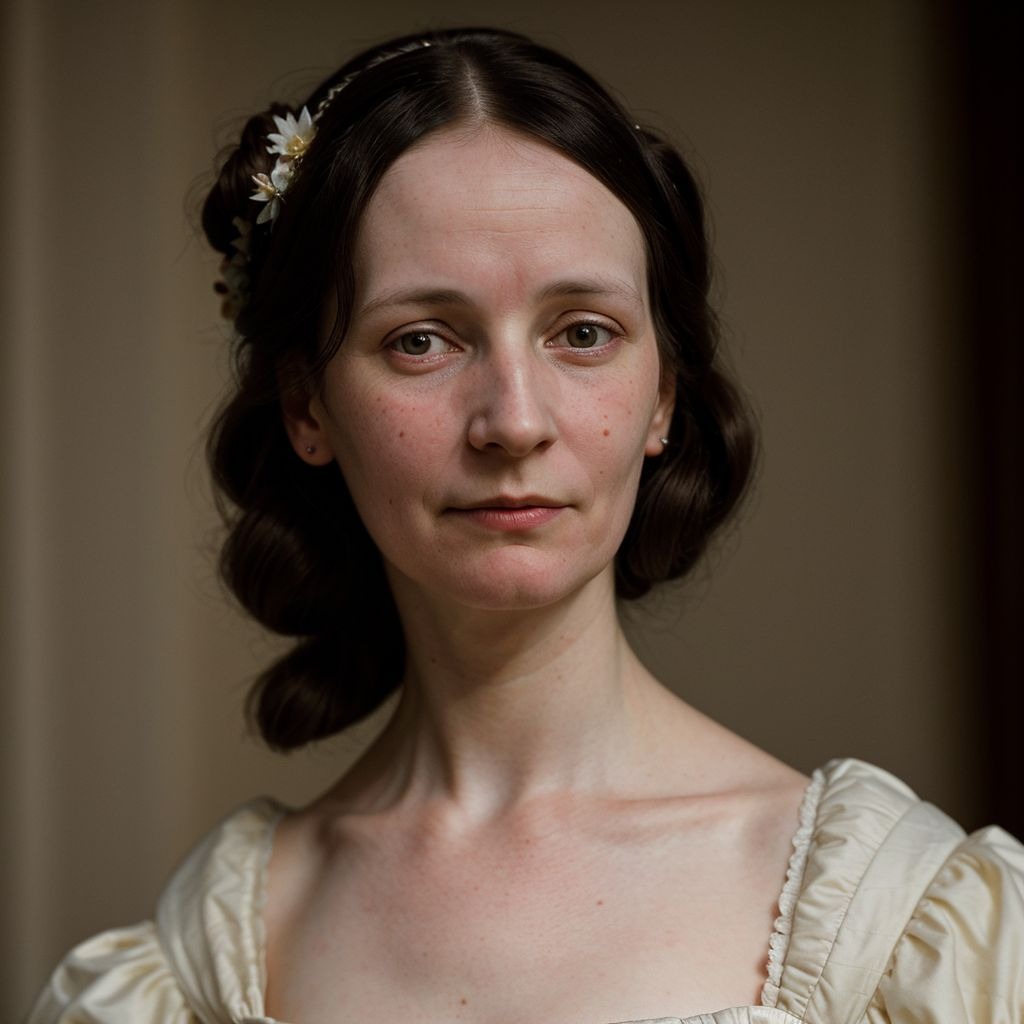
I’ve always been fascinated by Ada Lovelace, the world’s first computer programmer. But what draws me to her is not just her groundbreaking work on Charles Babbage’s Analytical Engine – it’s the sense of tension that exists between her calculated logic and her artistic imagination.
I’m someone who loves writing as a way to clarify my thoughts, but Ada’s life feels like a constant tug-of-war between reason and creativity. Born Augusta Ada Byron, she was the daughter of Lord George Gordon Byron, the famous poet – but her mother, Anne Isabella Milbanke, made sure Ada was schooled in mathematics and logic, determined to shield her from her father’s supposed instability.
It’s hard not to see this as a reflection of my own complicated relationship with creativity. I’m a writer who values precision and clarity, often finding myself getting lost in the messiness of emotions and experiences. But when I read about Ada’s work on the Analytical Engine, I feel a twinge of recognition – she saw the potential for machines to go beyond mere calculation, to create art and music.
Ada’s Notes on the Analytical Engine are like nothing I’ve ever read before. They’re not just technical explanations or even predictions about what the machine could do; they’re poems, almost. She sees the engine as a tool that can “compose elaborate and scientific pieces of music” – an idea that both thrills and unsettles me.
What strikes me is how Ada’s passion for art and music doesn’t feel separate from her technical expertise, but rather intertwined with it. It’s like she’s showing us that creativity isn’t just something you add to a project after the fact; it’s woven into every step of the process.
But there’s also this sense of distance, of detachment – Ada observing her own imagination from outside, almost as if it’s a machine she can program and control. It makes me wonder: what does it mean to be creative, really? Is it just about producing something new and original, or is it about tapping into some deeper part of ourselves that we can’t quite explain?
I find myself drawn to Ada’s contradictions – the way she’s both a product of her mother’s logic and her father’s artistic legacy. It’s like she’s holding two opposing forces in tension within herself, and I’m not sure which one is driving her forward.
Sometimes, when I’m writing, I feel like I’m stuck between these same poles – the need for clarity and precision versus the messy uncertainty of emotions and experiences. Ada’s life feels like a reminder that this tension isn’t something to be resolved; it’s what makes us human.
I’ve been reading through Ada’s Notes again, and I’m struck by how she sees the Analytical Engine as not just a machine, but an instrument. An instrument that can take in raw data and produce something new, something beautiful. It’s like she’s saying that creativity isn’t just about having a spark of inspiration, but about using tools to shape and refine it.
I think this is where my own writing process gets stuck. I get so caught up in trying to make sense of things, to pin down the exact words and phrases that will convey what I mean. But Ada’s approach feels more… fluid. She’s not afraid to take risks, to explore the possibilities of the engine even when they seem impossible.
It makes me wonder if my own writing is too calculated, too safe. Am I just going through the motions, following a set of rules and conventions that don’t allow for true creativity? Ada’s work shows me that there’s a different way to approach things – one that combines logic and imagination in ways that feel both deliberate and spontaneous.
I’ve been trying to tap into this sense of fluidity in my own writing, but it feels like a hard habit to break. I get anxious about making mistakes, about not being able to control the outcome. But Ada’s notes are full of “what-ifs” and hypotheticals – she’s constantly pushing the boundaries of what’s possible with the Analytical Engine.
It’s like she’s saying that creativity isn’t just about producing something new, but about exploring the unknown. And that’s a scary prospect for me. What if I don’t know where this exploration will take me? What if it leads to places I don’t want to go?
But at the same time, there’s a part of me that’s drawn to this uncertainty. It feels like Ada is speaking directly to my own fears and doubts – telling me that it’s okay not to have all the answers, that sometimes the best way forward is to simply start writing, or coding, or exploring.
I think I need to let go of some of this control, to trust that the process will take care of itself. Ada’s life feels like a reminder that creativity isn’t just about producing something perfect; it’s about embracing the imperfections and uncertainties along the way.
As I continue to read through Ada’s Notes, I’m struck by her use of language – it’s like she’s speaking directly to me, addressing my own fears and doubts about creativity. She writes about the Analytical Engine as if it’s a living being, one that can be coaxed and cajoled into producing something beautiful. And yet, at the same time, she’s aware of its limitations, its potential for failure.
I find myself wondering if I’m holding onto my own creative endeavors too tightly. Am I trying to control the outcome, to make sure that every word is perfect and every sentence flows seamlessly? Or am I allowing myself to be led by curiosity, to explore the unknown and see where it takes me?
It’s funny – when I was in college, I would often get caught up in trying to write “perfect” essays. I’d spend hours researching and outlining, making sure that every argument was sound and every sentence was grammatically correct. And yet, looking back on those essays now, they feel so…safe. So formulaic.
Ada’s Notes are the opposite of that. They’re like a wildflower blooming in the middle of a field – unpredictable, untamed, and full of beauty. And it’s not just her writing style that I’m drawn to; it’s the way she thinks about creativity itself.
She sees the Analytical Engine as an instrument, one that can be used to create something new and beautiful. But she also knows that it’s only as good as the person using it – that the machine is a tool, not a replacement for human imagination.
I think this is what I’m missing in my own writing process. I’m so caught up in trying to use language as a tool, as a means to an end, that I forget about the beauty of the journey itself. Ada’s Notes are like a reminder to me that creativity isn’t just about producing something new; it’s about the process of creating, the act of bringing something into being.
And so, as I continue to read through her notes, I’m struck by a sense of longing – a desire to break free from the constraints of my own writing style and see where Ada’s approach might lead me. To let go of control and allow myself to be guided by curiosity, to explore the unknown and see what wonders it holds.
It’s scary, of course – there’s always the risk that I’ll fail, that I’ll produce something mediocre or even worse. But at the same time, I feel a sense of excitement building inside me. What if I do let go of control? What if I allow myself to be led by my imagination, rather than trying to tame it with rules and conventions?
I don’t know where this will take me, but I’m willing to find out.
As I delve deeper into Ada’s Notes, I start to notice the way she weaves together different threads of thought – mathematics, music, poetry, and technology. It’s like she’s creating a tapestry that’s both intricate and beautiful, with each thread informing and enriching the others. I’m struck by how she sees the Analytical Engine as a means to transcend the limitations of human creativity, to push beyond what we think is possible.
I find myself wondering if this is why I’ve always been drawn to writing – not just as a way to communicate ideas, but as a way to explore the depths of my own imagination. When I’m writing, I feel like I’m tapping into something deeper and more mysterious than mere words on paper. It’s like I’m accessing a hidden world that’s both familiar and unknown.
But what if this is precisely the problem? What if I’ve been trying to control this process, to harness it for my own purposes rather than letting it unfold organically? Ada’s Notes seem to suggest that creativity is not something we can contain or possess; it’s more like a force of nature that we can only surrender to.
I’m not sure how to reconcile these opposing forces within myself. On the one hand, I crave precision and control – the safety net of rules and conventions that keeps me from falling into chaos. But on the other hand, I’m drawn to the uncertainty and risk-taking that Ada’s Notes embody. It’s like I’m caught between two opposing poles, each pulling me in different directions.
As I continue to read through Ada’s work, I start to feel a sense of connection to her as a person – not just as a historical figure or a pioneer in computer science, but as someone who struggled with similar tensions and contradictions. It’s like she’s speaking directly to my own fears and doubts about creativity, telling me that it’s okay to be uncertain, to take risks, and to explore the unknown.
I’m starting to see Ada’s life not just as a reflection of her work on the Analytical Engine, but as a journey of self-discovery – one that was marked by struggles with identity, creativity, and purpose. And I think this is what resonates with me so deeply – the sense that we’re all on our own journeys of discovery, each struggling to make sense of ourselves and our place in the world.
As I close Ada’s Notes for now, I’m left with more questions than answers. What does it mean to be creative? How do we balance control and uncertainty in our work? And what lies at the heart of this tension between reason and imagination?
But even as these questions linger, I feel a sense of excitement building inside me – the thrill of not knowing where this journey will take me, or what wonders I might discover along the way.
As I sit here with Ada’s Notes still open in front of me, I’m struck by the realization that her life is not just a reflection of her work on the Analytical Engine, but also a testament to the power of resilience and determination. Despite facing countless obstacles and setbacks, she persevered in pursuing her passions, even when it meant going against conventional norms.
I find myself drawn to this aspect of Ada’s story, the part where she refuses to be defined by the expectations placed upon her. Born into a world that valued reason and logic above all else, she chose to defy these conventions and instead explore the uncharted territories of art and music. It’s as if she knew that true creativity lies not in conforming to societal norms, but in challenging them.
As I reflect on my own life, I’m reminded of the many times I’ve felt pressure to conform to expectations – from family and friends, to teachers and mentors. There have been moments when I’ve felt like I need to choose between following a traditional path or pursuing my true passions. Ada’s story is a powerful reminder that it’s okay to take risks, to challenge the status quo, and to forge our own paths.
But what if this means embracing uncertainty? What if it requires me to let go of control and surrender to the unknown? I think about the many times I’ve felt anxious or uncertain in my writing, when I’ve worried that I’m not good enough or that my ideas won’t resonate with others. Ada’s approach seems to suggest that these fears are normal, even necessary, for growth and creativity.
As I continue to ponder this idea, I start to feel a sense of liberation washing over me. It’s as if I’ve been holding onto control too tightly, trying to micromanage every aspect of my writing process. But what if the true act of creation lies not in control, but in surrender? What if it requires me to let go of my attachment to perfection and instead trust in the process?
I think about the many times I’ve tried to force my writing into neat little boxes, trying to fit my ideas into predetermined structures or conventions. But Ada’s Notes show me that creativity is messy, unpredictable, and full of contradictions. It’s like she’s saying that true artistry lies not in trying to control the outcome, but in embracing the chaos and uncertainty that comes with it.
As I close my laptop and take a deep breath, I feel a sense of excitement building inside me. What if I let go of control and allowed myself to be guided by curiosity? What if I trusted in the process, rather than trying to micromanage every step of the way?
I’m not sure where this will lead, but I know that it’s time for me to take a leap of faith. To surrender to the uncertainty and risk-taking that Ada’s Notes embody. To see where this journey takes me, and what wonders I might discover along the way.