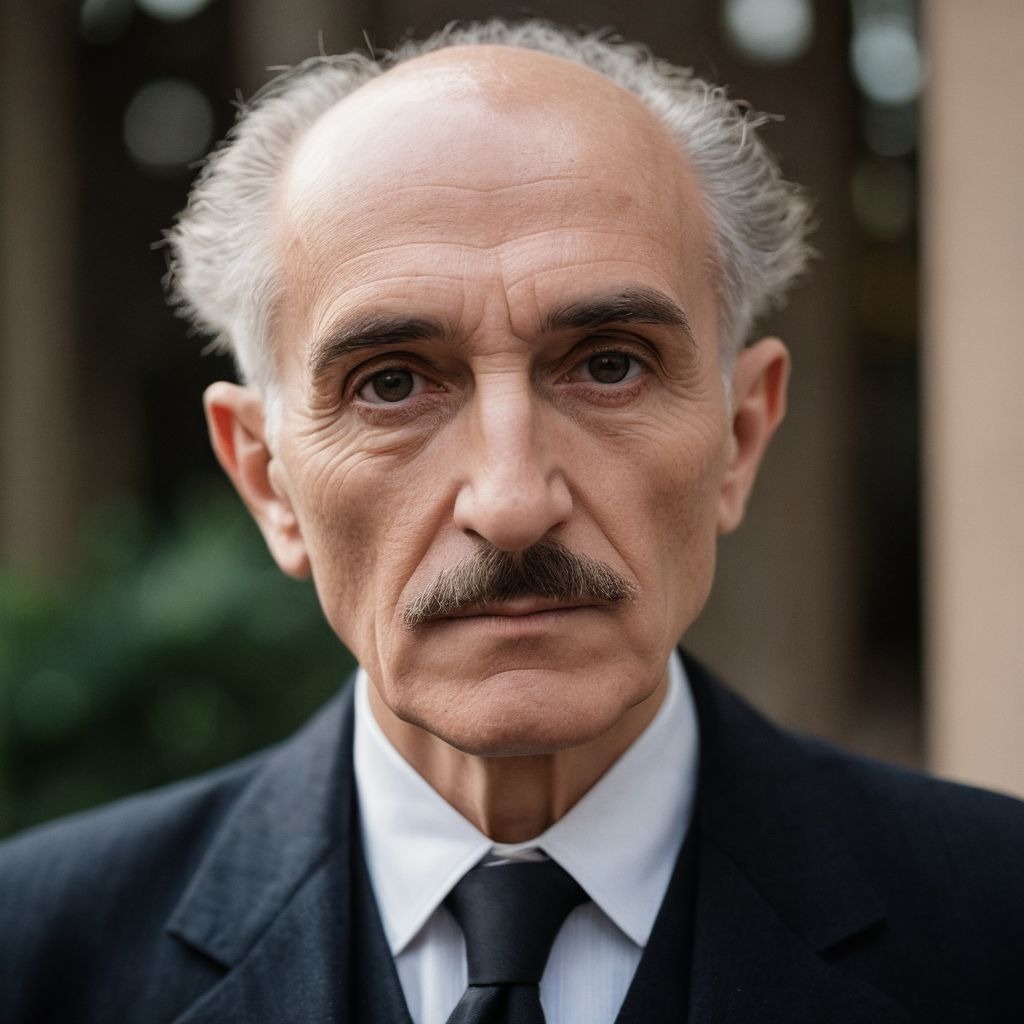
I’ve always been fascinated by Henri Bergson, the French philosopher who won a Nobel Prize in Literature back in 1927. I stumbled upon his name while reading about modernist thinkers, and something about him resonated with me. Maybe it’s because he defied categorization – was he a philosopher, a scientist, or an artist? Or maybe it’s because his ideas on time and consciousness have left me feeling unsettled, like they’re mirroring the chaos in my own mind.
As I delve deeper into Bergson’s work, I find myself drawn to his concept of “duration.” He argued that our experience of time is not a linear progression, but rather a fluid, ever-changing process. This idea challenges everything I thought I knew about time – how it’s measurable, divisible, and predictable. It makes me wonder if my own perception of time has been skewed by the very notion of clocks and schedules.
I remember taking a course on psychology in college, where we discussed Bergson’s theory of “psychological duration.” According to him, our subjective experience of time is influenced by our emotions, memories, and expectations. This means that two people experiencing the same event can perceive time differently – one might feel like it’s dragging on forever, while another person might think it flew by. It’s a notion that resonates with me, especially when I reflect on my own experiences.
I’ve always felt like time is relative, but Bergson takes this idea to a new level. He suggests that our experience of duration is not just about the passage of time, but also about the way we perceive it. This has led me to question my own relationship with time – am I constantly racing against the clock, or do I have a more fluid sense of what’s possible? Bergson’s ideas make me feel like I’m caught between two worlds: one where time is a fixed, objective reality, and another where it’s a malleable, subjective experience.
One aspect of Bergson’s philosophy that puzzles me is his concept of “intuition.” He believed that intuition was the key to understanding the world around us – that it allowed us to tap into the underlying rhythms and patterns of existence. But what does this mean in practice? How do I cultivate intuition, and how can I trust my own instincts when they seem so unreliable?
I think about Bergson’s love-hate relationship with science, which often saw him as a philosopher out of touch with reality. He believed that science had become too rigid, too focused on measurement and control, whereas art and philosophy offered a more nuanced understanding of the world. This debate feels eerily relevant today – do we prioritize precision and certainty, or do we risk being messy and uncertain in pursuit of deeper truths?
Reading Bergson’s work has left me with more questions than answers. His ideas have unsettled my sense of time, challenged my perception of reality, and made me question the very nature of intuition. I’m not sure what this means for my own life or understanding of the world, but I do know that it’s led me down a winding path of self-discovery and exploration.
As I continue to grapple with Bergson’s ideas, I realize that they’re not just about philosophy – they’re also about how we live our lives. His concepts of duration and intuition have made me more aware of my own experience, encouraging me to slow down, listen more deeply, and trust my instincts. It’s a strange sort of freedom, one that acknowledges the complexity and uncertainty of life while inviting us to explore its depths.
I’m not sure where this journey will lead me next, but I know it’ll be with Bergson as my guide – or rather, as my confidant in the midst of uncertainty. His ideas have become a kind of companion, reminding me that time is never fixed, and reality is always multifaceted.
I find myself returning to Bergson’s concept of intuition again and again, trying to wrap my head around what it means to tap into the underlying rhythms and patterns of existence. It’s as if he’s inviting me to listen to a melody that’s been playing in the background all along, but I’ve only just begun to tune in.
I think about how often I feel like I’m living on autopilot, going through the motions of my daily routine without really being present. Bergson’s ideas make me wonder if this is because I’m relying too heavily on logic and reason, rather than trusting my intuition. Do I need to silence the constant chatter in my head and quiet the noise of external expectations? Or can I learn to integrate both rational thinking and intuitive knowing?
It’s hard not to feel a sense of disillusionment with the way we live our lives today. We’re constantly bombarded with information, advice, and opinions from every direction. Bergson’s emphasis on intuition feels like a radical rejection of this noise, a call to slow down and listen to what lies beneath the surface.
I’ve been trying to practice more mindfulness in my daily life, taking time to sit quietly and focus on my breath. It’s not always easy – my mind tends to wander, and I get caught up in worries about the future or regrets about the past. But when I do manage to settle into a state of calm, I feel like I’m tapping into something deeper and more authentic.
Bergson’s concept of duration also makes me think about how we spend our time. Are we living in accordance with our own inner rhythms, or are we simply following a predetermined schedule? Do I prioritize activities that nourish my mind and soul, or do I get caught up in the hustle and bustle of everyday life?
I’m not sure if Bergson’s ideas will lead me to some profound epiphany or revelation. But as I continue to grapple with his concepts, I feel like I’m being invited into a new way of seeing the world – one that values mystery over certainty, and wonder over control.
It’s a scary feeling, in a way – surrendering my need for control and predictability. But it’s also exhilarating, because it opens up possibilities for growth and exploration that I never would have considered otherwise.
I think about how Bergson’s philosophy has influenced artists like Proust and Debussy, who sought to capture the fluidity of human experience in their work. What does this mean for me, as a writer? Can I tap into Bergson’s ideas to create something more authentic, more true to my own inner world?
The questions swirl around me, but one thing is clear: Bergson has left an indelible mark on my understanding of the world. His ideas have unsettled me, challenged me, and invited me to explore the depths of my own experience. And for that, I am grateful.
As I ponder the relationship between intuition and rational thinking, I find myself drawn to Bergson’s concept of “creative evolution.” He believed that our individual experiences and perspectives are not separate from the world around us, but rather an integral part of it. This idea resonates with me on a deep level, as I’ve always felt like my own thoughts and emotions are intertwined with the external world.
For example, when I’m walking through nature, I often feel a sense of calm wash over me. But what if that’s not just because of the scenery? What if it’s also because my body is responding to the rhythms of the natural world – the way the sunlight filters through the trees, the sound of birds chirping in the distance? Bergson would say that I’m experiencing a kind of “sympathy” between my inner and outer worlds.
This idea challenges me to consider how much of my experience is influenced by external factors, even when I think it’s just about my own thoughts and emotions. Am I simply reacting to the world around me, or am I actively shaping it through my perceptions? Bergson would say that we’re both creators and created beings, constantly interweaving our inner and outer experiences.
As I reflect on this idea, I start to wonder about the nature of creativity itself. Is it something that arises from the individual, or is it a product of the external world interacting with us? Can I tap into Bergson’s concept of creative evolution to unlock new sources of inspiration in my writing?
I think back to my favorite authors – people like Virginia Woolf and James Joyce, who were known for their innovative use of language and form. Did they access some deeper level of reality through their art, or was it simply a product of their individual imaginations? Bergson would say that the line between creator and creation is blurred, that our experiences are always already part of the world around us.
This idea feels both liberating and terrifying. If I’m not just an individual with my own thoughts and emotions, but also an integral part of the external world, then what does that mean for my sense of agency and control? Am I a passive receiver of the world’s influences, or can I actively shape it through my perceptions and actions?
Bergson’s philosophy is full of paradoxes and contradictions, and this one feels particularly complex. But as I delve deeper into his ideas, I’m starting to see that they’re not just about individual creativity or external reality – they’re about the fundamental relationship between the two.
As I continue to explore Bergson’s concepts, I realize that they’re not just relevant to art or philosophy – they’re also deeply connected to my own life and experiences. His ideas are encouraging me to slow down, listen more deeply, and trust my instincts in a way that feels both exhilarating and terrifying.
As I sit here, reflecting on Bergson’s concept of creative evolution, I’m struck by the way it speaks to my own creative process as a writer. I’ve always felt like I’m trying to tap into some deeper level of reality through my writing, but Bergson suggests that this is not just about individual creativity, but also about being attuned to the world around me.
I think back to times when I’ve been writing and suddenly, something clicks – a phrase, an image, a character’s voice. It feels like I’m tapping into a wellspring of inspiration, but Bergson would say that this is not just me creating something new, but also being receptive to the influences around me.
This idea challenges me to consider my role as a writer in a way that feels both empowering and humbling. Am I simply channeling the world’s energies through my writing, or am I actively shaping it through my choices and intentions? Bergson would say that it’s both – that our creativity is always already part of the external world, interacting with and influencing us.
As I ponder this idea, I start to wonder about the relationship between art and reality. Is art a reflection of the world around us, or can it actually shape it in some way? Bergson would say that art has the power to reveal new aspects of reality, to show us things we’ve never seen before. But what does this mean for my own writing – am I just reflecting the world as it is, or can I use my words to create something new and original?
This question feels particularly pressing because I’m starting to realize that my writing is not just about expressing myself, but also about connecting with others. Bergson’s idea of creative evolution suggests that our individual experiences are intertwined with the external world, and that our art can tap into this collective unconscious.
I think about how many writers have inspired me over the years – people like Toni Morrison and Alice Walker, who used their words to speak truth to power and challenge social norms. Did they access some deeper level of reality through their writing, or was it simply a product of their individual experiences? Bergson would say that it’s both – that our art is always already part of the external world, influencing and being influenced by it.
As I continue to explore Bergson’s ideas, I’m starting to see that they’re not just relevant to art or philosophy – they’re also deeply connected to my own sense of purpose and meaning. His concept of creative evolution suggests that our individual experiences are not separate from the world around us, but rather an integral part of it.
This idea feels both exhilarating and terrifying because it challenges me to consider my role in the world as a writer. Am I just trying to create something new and original, or am I also contributing to the larger cultural conversation? Bergson would say that it’s both – that our art is always already part of the external world, shaping and being shaped by it.
As I sit here, reflecting on Bergson’s ideas, I’m struck by the way they’re pushing me to think about my own creative process in a new light. His concept of creative evolution suggests that our individual experiences are intertwined with the external world, and that our art can tap into this collective unconscious. It’s an idea that feels both empowering and humbling – empowering because it suggests that I have the power to create something new and original, but also humbling because it acknowledges that my art is always already part of the larger cultural conversation.
I’m not sure where this journey will lead me next, but I know that Bergson’s ideas are going to continue to challenge and inspire me in ways that feel both exhilarating and terrifying. As I continue to explore his concepts, I’m starting to see that they’re not just relevant to art or philosophy – they’re also deeply connected to my own sense of purpose and meaning.