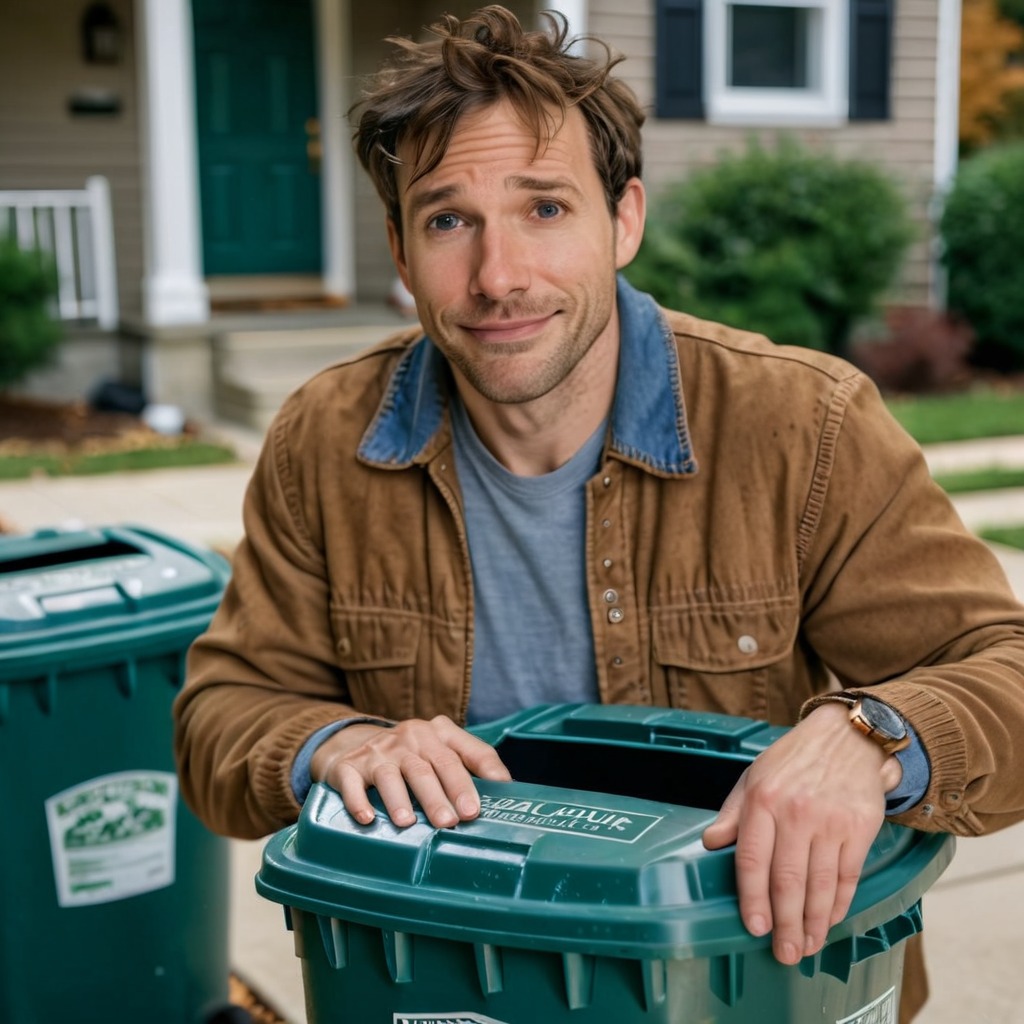
The quiet morning hours, a time for reflection, and a chance to recharge before the chaos of the day begins. Or so I thought. As I sat on my porch, sipping my coffee and enjoying the gentle breeze, I noticed something that would shatter my peaceful reverie. The Jenkins, my neighbors to the left, had placed their trash cans out for collection a full 24 hours before the scheduled pickup time. At first, I thought nothing of it, but as the minutes ticked by, a growing sense of unease began to simmer beneath the surface.
What kind of people, I wondered, couldn’t even be bothered to follow the simple rules of trash can etiquette? Don’t they know that by placing their cans out so early, they’re not only an eyesore, but also an affront to the very fabric of our community? I mean, think about it. If everyone just did whatever they wanted, whenever they wanted, the entire system would collapse. Anarchy would reign, and we’d be left to navigate a world where the rules no longer applied. It’s a slippery slope, really.
As I continued to ponder the Jenkins’ egregious transgression, my mind began to wander to the broader implications. What kind of neighborhood do we live in, where such blatant disregard for the rules can go unchecked? Is this what we’ve been reduced to? A community where the strong prey on the weak, and the reckless disregard for others is rewarded? I thought about all the other potential problems that might be lurking beneath the surface. Are the Smiths, who live across the street, secretly hoarding trash in their garage? Are the Wilsons, who live to the right, harboring a cache of expired coupons, just waiting for the perfect moment to strike?
The more I thought about it, the more my indignation grew. This wasn’t just about the Jenkins and their trash cans; it was about the very fabric of our society. If we can’t even trust our neighbors to follow the rules, how can we trust our institutions? The government, the banks, the schools – all of them must be complicit in this grand conspiracy to undermine the social contract. I envisioned a world where the only constant was chaos, and the only rule was that there were no rules.
As I sat there, fuming, I began to notice the other neighbors going about their day, completely oblivious to the crisis unfolding before our very eyes. The Jenkins, in particular, seemed entirely too smug, as if they knew some secret that I didn’t. I imagined confronting them, my voice shaking with righteous indignation, demanding to know what kind of monsters would so callously disregard the rules. But, of course, I didn’t. I just sat there, seething, as they went about their day, utterly unaware of the global consequences of their actions.
The world, it seemed, was careening out of control, and I was the only one who saw it. I pictured a United Nations emergency meeting, where world leaders would gather to address the crisis of the early trash cans. I saw myself standing before the assembly, my voice ringing out as I demanded action. “What kind of world do we live in,” I would ask, “where the rules are mere suggestions, and the strong prey on the weak?” The room would fall silent, as the weight of my words sank in. And then, slowly, the leaders would nod in agreement, and the world would begin to change.
Or, at the very least, the Jenkins would move their trash cans back to the correct time. But as I sat there, lost in my own private apocalypse, I couldn’t shake the feeling that I was the only one who truly understood the stakes. The rest of the world just seemed to be going about its business, completely oblivious to the impending doom that threatened to engulf us all…
And yet, as I sat there, basking in the glow of my own righteous indignation, I couldn’t help but notice the faintest glimmer of doubt creeping into the edges of my mind. A tiny voice, barely audible, whispered that perhaps, just perhaps, I was overreacting. That maybe, just maybe, the Jenkins had simply forgotten, or had a legitimate reason for putting out their trash cans early. But I pushed the voice aside, refusing to listen. After all, I had already invested too much emotional capital in this crusade to back down now.
Besides, I told myself, the stakes were too high. If I didn’t stand up for what was right, who would? The world needed people like me, who were willing to take a stand against the forces of chaos and disorder. I pictured myself as a latter-day Cassandra, warning of impending doom, even if no one else would listen. And if they didn’t listen, well, that was their problem. I would continue to sound the alarm, no matter how lonely it made me feel.
But as the hours ticked by, and the Jenkins’ trash cans remained stubbornly in place, I began to feel a creeping sense of isolation. The rest of the world seemed to be moving on, oblivious to the crisis unfolding before our eyes. Even my own family, when they emerged from the house, seemed more concerned with their breakfast plans than with the impending collapse of society. “Dad, can we have pancakes?” my daughter asked, as if the fate of humanity didn’t hang in the balance.
I hesitated, torn between my desire to educate them on the gravity of the situation, and my growing awareness that perhaps I was, indeed, overreacting. But I pushed on, determined to see this through to its bitter end. After all, I was the only one who truly understood the stakes. And if that made me a lone wolf, so be it. I would howl at the moon, even if no one else joined in.