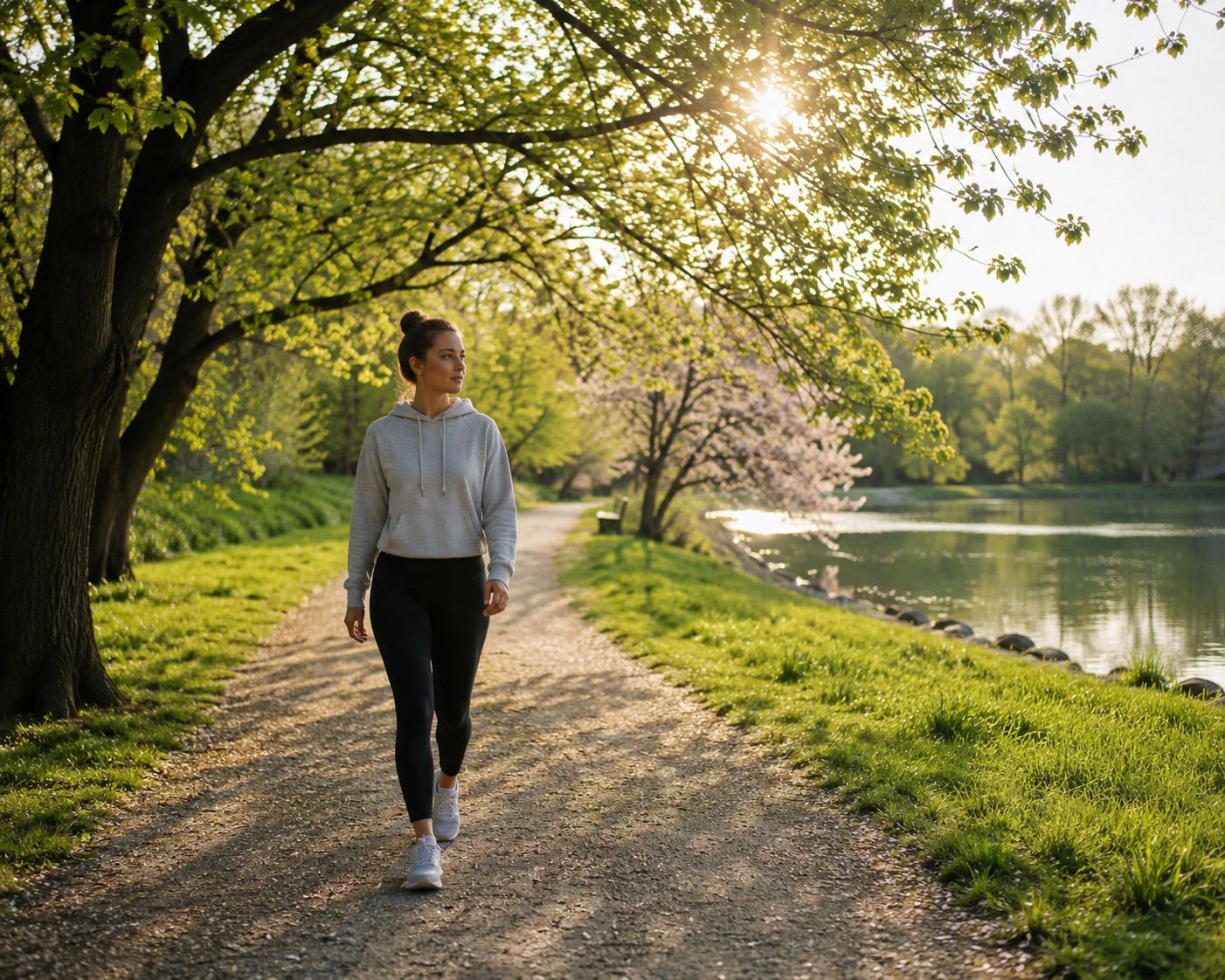
As I step out into the crisp spring air, the rhythmic crunch of gravel beneath my feet serves as a reminder that this most basic form of movement has remained an unyielding constant in my life. While other exercise regimens have come and gone, waxing and waning with varying degrees of enthusiasm, walking has proven impervious to the vicissitudes of motivation.
This realization struck me recently as I was sorting through a box of old athletic shoes, relics from past lives: running sneakers worn smooth from marathon training, Pilates shoes that never seemed quite right for my feet. Amidst this dusty collection, one pair stood out — scuffed and faded, yet still serviceable — my trusty walking boots. As I slipped them on, the familiarity was immediate, like slipping into a well-worn glove.
Why has walking endured while other forms of exercise fell by the wayside?
Perhaps it’s because walking is an exercise that defies categorization; it’s neither high-intensity nor low-impact, but something in between. It doesn’t require specialized equipment or clothing — those boots have seen me through countless miles — and its beauty lies in its very lack of drama.
Unlike running, which demands a certain level of dedication — the rigors of training schedules, the tyranny of pace — walking is an exercise that can be woven seamlessly into daily life. I recall mornings spent speed-walking to work during my corporate days, the city streets providing a grudging solace from the fluorescent lights and stifling conference rooms that awaited me.
But beyond its practicalities, there’s something almost meditative about walking. As I make my way through the spring landscape — the trees tentatively unfurling their leaves, the air thick with the scent of damp earth — my thoughts begin to untangle themselves from the knots of stress and anxiety. The repetitive motion becomes a form of self-soothing, each step calming the mind as much as it exercises the body.
In an era where every aspect of our lives seems subject to quantification — from steps taken to calories burned — walking remains refreshingly untrackable. There’s no app to monitor my progress, no fitness tracker to congratulate me on a job well done. I walk because I must, not for some extrinsic reward or validation.
As the seasons shift and the world around us transforms, our relationships with our bodies do too. Winter brings a period of dormancy, when even the most dedicated among us may find ourselves coaxed into hibernation by the cold and darkness. Spring, on the other hand, is a time for rebuilding — rekindling routines that have grown stale or been abandoned.
For me, walking represents a bridge between these two states: a way to ease back into physical activity after months of relative stillness while also honoring the rhythms of my body. It’s an acknowledgment that health and wellness aren’t static states but dynamic processes — ebbs and flows that respond to the world around us.
The other day, as I walked through the park, I noticed a woman standing beside the duck pond, her eyes closed and face tilted toward the sun. She swayed ever so slightly, as if allowing herself to be cradled by some invisible force. It was an image of perfect contentment, one that spoke to the simple joys of being present within our bodies.
Perhaps this is why walking has remained such a steady presence in my life: it reminds me that some of the most profound benefits can be found not in grand gestures or heroic efforts, but in quiet, unassuming actions. In an age where we are constantly exhorted to push ourselves harder and faster, walking offers a gentle counterpoint — a reminder that even as we move through the world with purpose and intention, we must also learn to appreciate moments of stillness along the way.
As I round the corner onto my street, the crunch of gravel giving way to the soft thud of pavement beneath my feet, I feel a quiet gratitude toward this humble exercise. Walking has been a constant companion through seasons and routines, triumphs and setbacks alike. It asks for very little, yet continues to offer a steadiness that more demanding forms of exercise never quite managed to provide.