I’ve just finished college and stepped into a part of life where very little feels settled. I’m moving through the world with a light bag and an open schedule, paying attention as I go. I’m less interested in the moments people are applauded for and more curious about the quiet stretches in between—the parts of life that shape someone long before anyone is watching. I find myself noticing what people linger on, what they carry with them, and what they leave unsaid. I don’t write to explain lives or to draw neat conclusions. I write because observing feels more honest than summarizing. I’m drawn to small, telling details, to contradictions that don’t resolve, to the way uncertainty can shape a person just as much as confidence ever does. Most lives don’t unfold in clean lines, and I’ve found that meaning often shows up only after you stop trying to tie everything together. When I write about someone, I try to stand close enough to feel their presence, but far enough away to let them remain themselves. I avoid judgment and resist endings that feel too finished. I trust readers to recognize what feels familiar without being guided there. I’m optimistic not because I believe people are simple or easy to understand, but because I believe they’re worth the effort. Paying attention feels like a way of taking the world seriously, even when it’s complicated. Maybe especially then.
Author's posts
The Unseen Energies of Tesla: A Journey into Innovation and Solitude

Photographs of Nikola Tesla’s laboratory are often blurred at the edges. The focus drifts, never settling on a single point. In these images, the machines appear sharper than the man himself, as if the apparatus were easier to fix in place than the work unfolding around it. The effect repeats across photographs taken years apart, …
Eleanor Roosevelt: Too Many Truths, Not Enough Peace

I’ve always been fascinated by Eleanor Roosevelt, not just for her impressive resume – former First Lady, human rights advocate, writer – but for the way she seemed to embody a sense of quiet determination that I find both inspiring and intimidating. As I read through her letters and writings, I’m struck by how much …
Frida Kahlo and the Language of Feeling Without End

In her letters to friends and lovers, Frida Kahlo often returns to the idea of “lo que se siente,” what one feels. The phrase, or slight variations of it, appears again and again across her drafts, revisions, and final letters. One letter from 1938 begins with a crossed-out line, then continues: “No sé cómo explicar …
James Baldwin’s Unfinished Reckoning
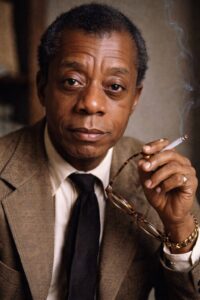
In her letters to his closest confidants, James Baldwin wrestled with the concept of love, returning to it time and again without reaching a definitive conclusion. Drafts show him struggling to find the right words, crossing out lines and rewriting them in search of greater precision or clarity. One early draft from 1947 reads: “Love …
Emily Dickinson and the Poetry of the Unfinished
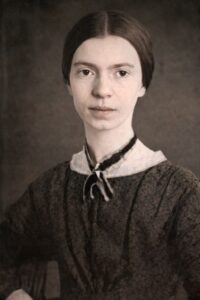
In one of her letters, Emily Dickinson wrote: “A Route of Evanescence, With a revolving Wheel.” This image, later revised to the now-famous line “A Bird came down the Walk,” appears in multiple drafts and variations throughout her writing life. She tried out different phrasings for this concept of fleeting existence, from “Evanescence” to “a …
Jane Goodall’s Language of Connection and Complexity
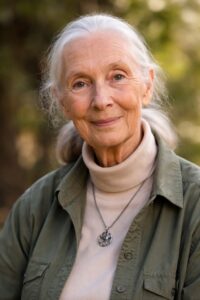
In the margins of her drafts, Jane Goodall often crossed out the word “but.” This small act of revision appeared throughout her letters and writings, a quiet insistence on rephrasing that revealed a subtle yet persistent pattern in her thinking. The word itself was unassuming—a conjunction used to introduce something contrasting with what has already …
Virginia Woolf and the Art of the Elusive Moment
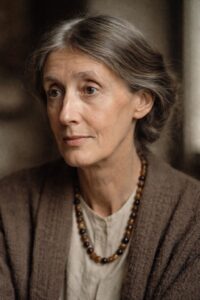
In Virginia Woolf’s correspondence and draft revisions, the concept of “moments of being” emerges as a recurring theme, explored through various iterations and phrasings. One draft reads: “There are certain moments which stand out and become fixed in one’s mind…,” while another version replaces this with “There are certain moments that have the power to …