
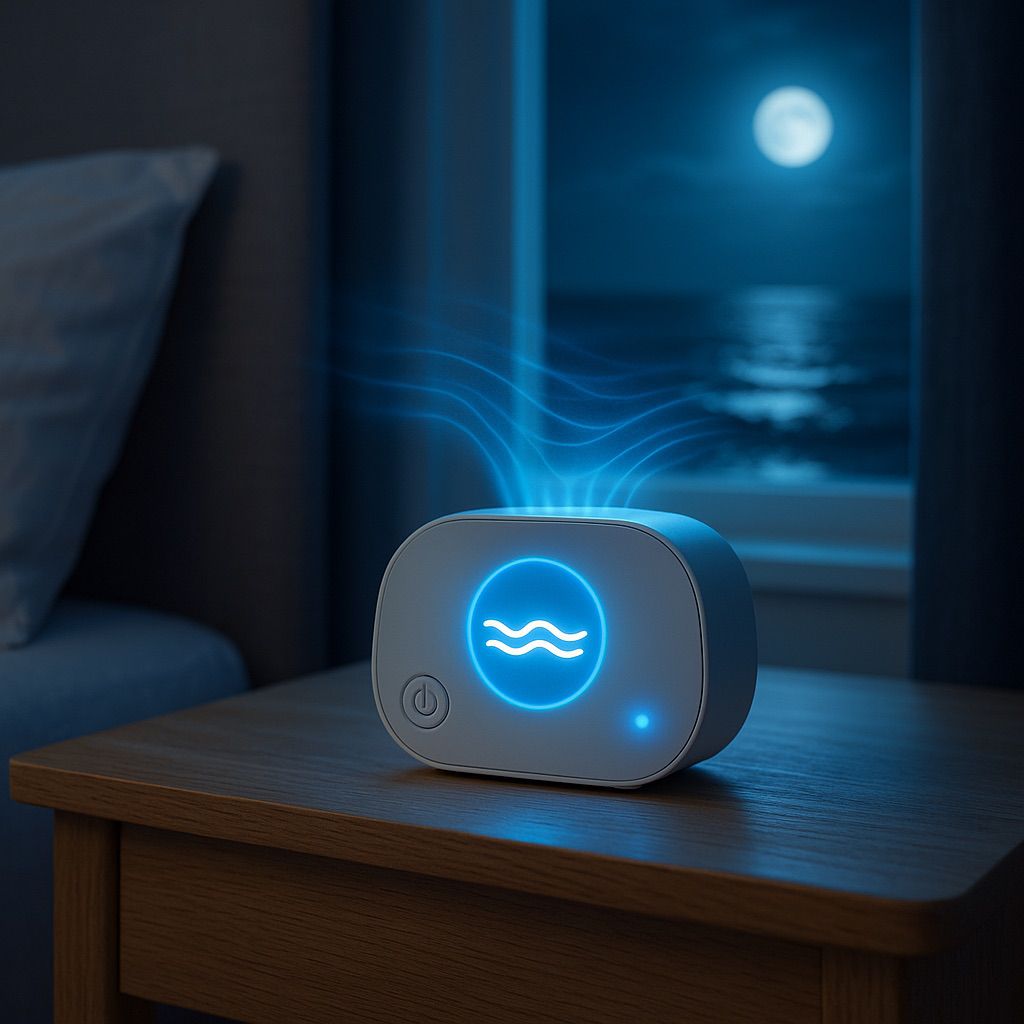
If you’ve ever slept near the sea, you know the feeling: the waves don’t just fill the room, they empty it—of buzz, of traffic, of the day’s loose ends. Ocean sound machines promise to bottle that hush and pour it right onto your nightstand. The skeptic’s question is simple: can a small speaker really compete with a coastline? The answer, surprisingly often, is yes—not because it “tricks” you, but because it cooperates with the way your brain already prefers to rest. Ocean audio works by smoothing the jagged edges of your soundscape, anchoring your breath to a steady rhythm, and signaling safety to a nervous system that’s been on duty all day. It’s a gentle technology with an old soul.
First, the masking magic. Sleep is easily sabotaged by unpredictable noise: a door slam, a distant motorcycle, a late-night notification. Your auditory system is a superb novelty detector—it keeps listening even when you’re asleep, ready to alert you to anomalies. That’s great for ancient caves and modern fire alarms; it’s less great for apartment pipes and midnight garbage trucks. Ocean sound machines lay down a continuous, broadband bed of sound—think of it like audio wallpaper. This smooth layer makes sudden intruders less contrasty, so they don’t yank your attention. The brain treats the steady whoosh as “always there, always safe,” and saves the wake-up call for true outliers. You’re not deaf to the world; you’re simply less interruptible.
Second, rhythm is regulation. Classic ocean tracks aren’t pure static; they breathe—a gentle swell and recede every few seconds. Many people unconsciously begin to entrain their breathing to that rise and fall, lengthening the exhale. Longer out-breaths nudge the parasympathetic (rest-and-digest) system forward and dial down the body’s go-signals. The heart rate eases, muscle tone softens, and the “I should be doing something” part of your brain loses the argument. It’s not hypnosis; it’s good pacing. The sea provides a metronome; your body says thank you.
Third, nature’s frequency recipe. Not all noise is created equal. White noise spreads equal energy across all frequencies and can sound hissy. Pink noise—more energy in lower frequencies, less in higher—matches many natural sound profiles (rain, leaves, waves) and feels warmer. Brown noise leans even heavier on bass, like a distant waterfall. Ocean machines that skew pink/brown often feel more soothing because they align with patterns your auditory cortex evolved around. In other words, your ears like the coast because your biology grew up outside.
There’s also the matter of memory and meaning. Water sounds often come bundled with positive associations: vacations, lazy afternoons, childhood naps after swimming. Your brain is a champion of context cues—it will reuse the calm it filed away under “beach.” Pressing the ocean button becomes a tiny ritual that says, “Same safe story as last time.” Over days, that consistent pairing becomes conditioning: ocean on → body off-duty. That’s the opposite of doomscrolling, which conditions the brain to expect drama on the pillow.
Focus and stress relief benefit too, even far from bedtime. During work, a steady ocean track can raise your signal-to-noise ratio by masking chatter without demanding attention. Musicians call this “filling the room”; psychologists might call it attentional shielding. The sound occupies just enough bandwidth to keep distractions from getting a grip, while its predictability means you stop spending brain cycles on it. Think of it as soft acoustic privacy.
If you’re picky (good), here’s what distinguishes a great ocean machine from a disappointing one:
True looplessness (or very long loops): Short loops (10–30 seconds) become obvious; your brain spots patterns fast. Look for devices or apps with 45–120+ second samples, randomized layering, or synthesized ocean that doesn’t repeat in an audible way.
Timbre control (white/pink/brown): Being able to shift toward warmer (pink/brown) can make a huge difference for comfort.
No high-frequency hiss: Cheap tweeters can add a fatiguing shimmer. Test at low volume; if the top end feels crisp but not prickly, you’re good.
Volume evenness: One wave shouldn’t crash 10 dB louder than the next. Dynamic swings defeat the purpose at night.
Physical controls you can find in the dark: A tactile volume wheel beats a fiddly multi-press button at 2 a.m.
Timer + continuous mode: Some people like the sea to fade after they’re asleep; others prefer all-night masking. Options matter.
Power & portability: A quiet AC adapter (no coil whine) or a solid battery mode keeps the setup hum-free.
Setup matters as much as gear:
Placement: Put the machine across the room aimed toward you, not right by your ear. This spreads sound more evenly and lets you keep volume lower. If the noise source is specific (hallway door), place the machine between you and it for better masking.
Volume: Think “soft shower heard from another room.” Aim roughly 35–45 dB at the pillow. If you need more to drown a noisy street, keep it as low as effectiveness allows.
Tone shaping: If the track has a harsh “spit” on the break, nudge toward pink/brown or angle the speaker slightly away so you’re mostly hearing reflections.
Ritual: Start the ocean 10–15 minutes before lights-out. Pair it with low light and one repeated wind-down (book, stretch, journal). Your nervous system loves predictability.
Common use-cases—and how ocean sound helps:
Light sleepers / shift workers: Continuous waves mask neighbor noise and daytime clatter. Add blackout curtains to let the sound do less heavy lifting.
Tinnitus: For some, gentle ocean audio provides sound enrichment, giving the brain a neutral signal to mix with internal ringing. (Always keep volumes safe and ask a clinician if you’re under care.)
Kids & babies: Consistent, moderate sound helps naps survive door clicks and sibling chaos. Use at a distance; keep volumes conservative.
Travel: Hotel HVAC and street noise are chaos. A portable machine recreates “home room tone” so your brain doesn’t have to evaluate a brand-new acoustic space.
A few myths, gently rinsed:
“White noise will ruin your hearing.” Not at sensible volumes. Keep it low, diffuse, and comfortable. Your ears need rest, not silence at all costs.
“Any ocean track is relaxing.” Not if it’s bright and splashy or looped too short. Softer timbres and long loops win at bedtime; livelier surf is fine for daytime focus.
“If it works, I’ll fall asleep instantly.” Sometimes; often it’s a subtle nudge—less tossing, fewer awakenings, quicker returns to sleep.
If you don’t want to buy hardware, you can still borrow the tide:
Apps & playlists: Look for “pink ocean” or “long-form surf” with no talking. Test for loop seams by listening 2–3 minutes with eyes closed; if you catch the repeat, try another.
DIY room tone: A small desk fan plus a light ocean track at low volume creates a layered mask that feels natural and forgiving.
Smart speakers: Disable voice chimes and set a routine that lowers lights and starts surf at a set time; automation = consistency.
And if you’re lucky enough to live near real water, use it. Crack the window and let the authentic dynamic range do its thing. Pair it with a light, familiar machine on very low as a failsafe for nights when the wind swings and the sea goes quiet.
In the end, ocean sound machines work because they collaborate with three truths: your brain calms around predictable patterns, your body settles to gentle rhythms, and your memory softens at kind associations. A tiny speaker can’t replace the shoreline’s moonlit theater—but it can bring home the best part: the feeling that something bigger than your to-do list is breathing steadily beside you. When the room fills with that quiet tide, sleep stops being an achievement and becomes what it always was by the water—a return.