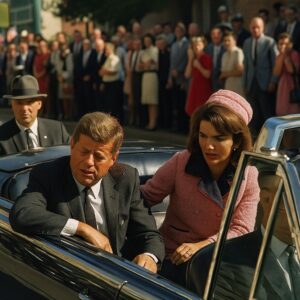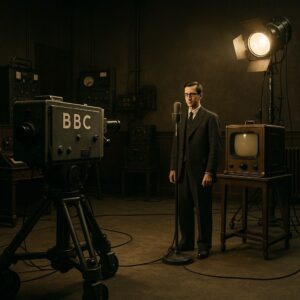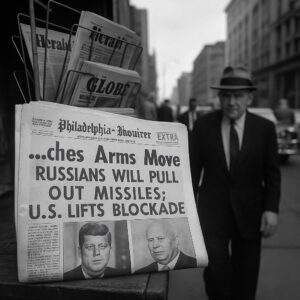
The autumn of 1960 shimmered with anticipation. The United States stood at a crossroads—between the comfortable calm of postwar stability and the restlessness of a new generation ready to redefine what it meant to be American. Factories thrummed, suburbs sprawled, and televisions flickered in nearly every home, each screen a mirror reflecting a country on …
Category: Events
When Light Revealed the Invisible: Wilhelm Röntgen and the Birth of X-Rays
On November 8, 1895, a quiet laboratory at the University of Würzburg became the birthplace of one of humanity’s greatest scientific breakthroughs. That day, Wilhelm Conrad Röntgen discovered X-rays—a form of invisible radiation that would forever change the way we see the world and the human body. In an instant, the opaque became transparent, and …
The Queen Who Shaped an Empire: Elizabeth I and the Dawn of England’s Golden Age
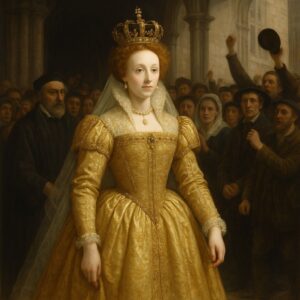
The year was 1558, a time of great turmoil and transformation in England. The country had been shaken by years of political and religious upheaval following the short and turbulent reign of King Edward VI, who succumbed to illness at the tender age of fifteen. His death left behind a power vacuum that was soon …
The Elephant Takes the Stage: GOP’s Iconic Rise
In the grand theater of American politics, symbols often speak louder than words. They distill ideology, evoke emotion, and crystallize the identity of an entire movement into a single, unforgettable image. Among these enduring emblems, none has stood taller or longer than the Republican elephant — a creature both mighty and gentle, commanding yet dignified, …
Marie Curie Makes History: First Female Physics Nobel Laureate
In the waning years of the nineteenth century, as the world teetered on the edge of a new scientific age, a woman quietly changed the course of human knowledge forever. Her name was Marie Curie, born Maria Skłodowska in Warsaw, Poland, in 1867. Her journey was not only one of discovery but also of resilience, …
The Turn of a Nation’s Tide: How Abraham Lincoln Became President and Shaped America
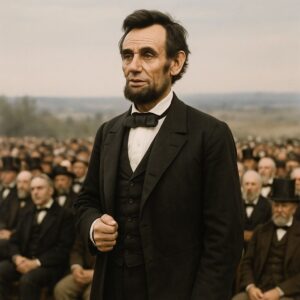
On November 6, 1860, a tall, thoughtful man from Illinois named Abraham Lincoln emerged from relative political obscurity and stepped into the role of the 16th President of the United States. His election marked not simply the rise of one man, but the turning point of a deeply divided nation. In that moment, everything changed. …
Germany’s First Jet Takes Off, Catapulting Aviation into Tomorrow
The dawn of a new era in aviation arrived on August 27, 1939, when the first jet aircraft took to the skies above Germany. This moment was not the result of chance or haste, but the culmination of years of imagination, persistence, and scientific ingenuity. Led by visionary engineer Hans von Ohain, a small team …
The Storming of the Winter Palace and the Birth of Soviet Power
On October 25, 1917, the icy winds of revolution swept through Petrograd as armed Bolshevik forces stormed the Winter Palace—a single night that would alter the course of modern history. Under the leadership of Vladimir Lenin, the Bolsheviks had spent months preparing for this decisive strike. Yet it was only on the eve of October …
Gunpowder Plot Fails, Parliament Survives: Guy Fawkes Loses Bombing Attempt
The year 1605 was a tumultuous one in England. The kingdom was still reeling from the recent execution of Mary Queen of Scots on February 8th of that year, and tensions between Catholics and Protestants were running high. Amidst this backdrop of simmering discontent, a group of conspirators hatched a plan to blow up the …
Art of War Meets Modernity as Japan Signs Meiji Constitution, History Shifts
The year was 1889 and the world was on the cusp of a new era. The Industrial Revolution had transformed Western societies, and the concept of modernity was spreading like wildfire across the globe. In this context, Japan found itself poised to emerge from centuries of isolationism and adopt many of the trappings of Western …
Panama Canal’s Historic 100% Transfer to Panama Sparks Global Cheers
The Panama Canal’s historic transfer to Panama on December 31, 1999, marked a significant milestone in the annals of modern history. The event sparked widespread jubilation across the globe as Panama finally gained full ownership and control of the vital waterway that has been its lifeblood for over a century. For generations, the canal had …
First Woman Gets U.S. Patent—Mary Kies Weaves History, Inspires Future
In the late 18th century, the United States was still a young nation, finding its footing after breaking free from British rule. The new country was a patchwork of diverse people and ideas, united by ambition and innovation. Among these early pioneers was Mary Kies, an English-born American who would make history as the first …
Unearthing Eternity: The Discovery That Changed Egypt Forever
It was a chilly winter morning on November 4, 1922, when British archaeologist Howard Carter made one of the most remarkable discoveries in the history of archaeology—the tomb of Pharaoh Tutankhamun. After years of exhaustive excavation in Egypt’s Valley of the Kings, Carter finally uncovered the sealed entrance to the boy king’s resting place. The …
Voices Finally Counted: Washington D.C.’s First Vote for President
On November 3, 1964, the citizens of Washington D.C. walked into polling places carrying more than ballots—they carried the weight of history, the echo of silenced voices, and the pride of finally being recognized as participants in the democratic promise of America. For the first time since the capital’s founding in 1790, the people of …
Laika’s Lonely Journey: The Dog Who Became a Star
On November 3, 1957, the world looked up and gasped as a tiny speck of light passed silently across the night sky. That speck was Sputnik II, a metal capsule launched by the Soviet Union, carrying not only instruments and technology but a small, trembling life: Laika, a stray dog from the streets of Moscow …
A New World Seen Anew: Columbus, Dominica, and the Echo of Discovery
On November 3, 1493, the sails of Christopher Columbus’s ships caught the winds of destiny as they crested the Caribbean horizon, and before his eyes rose the lush green mountains of an island that would be named Dominica. It was not the first island he had seen, nor would it be the last, but this …
A Dream Signed Into Law: How Martin Luther King Jr. Day Became America’s Promise
On November 2, 1983, the weight of history settled onto the Resolute Desk in the Oval Office as President Ronald Reagan bent forward to sign a piece of legislation that was more than just ink on parchment. With one stroke of the pen, he declared that the third Monday in January would forever be recognized …
Lion of Judah: The Crowning of Haile Selassie and the Birth of a Legend
On November 2, 1930, the world’s eyes turned to Addis Ababa, the capital of Ethiopia, where a ceremony unfolded with such grandeur and symbolism that it reverberated far beyond the borders of Africa. It was the coronation of Ras Tafari Makonnen, who would henceforth be known as Emperor Haile Selassie I, King of Kings, Lord …
Ink on Paper, Fire in History: The Balfour Declaration and the Birth of a Promise
On November 2, 1917, the world changed with the stroke of a pen. A letter, deceptively brief, issued by Britain’s Foreign Secretary Arthur Balfour to Lord Rothschild, a leader of the British Jewish community, declared that His Majesty’s Government viewed with favor the establishment of a “national home for the Jewish people” in Palestine. To …
When the Earth Shook the World: The Lisbon Earthquake of 1755
The morning of November 1, 1755, dawned with deceptive tranquility over Lisbon. The Portuguese capital stirred awake as church bells rang for All Saints’ Day, a solemn Christian holiday that drew thousands into cathedrals and chapels across the city. Families dressed in their finest clothes, candles flickered in prayerful devotion, and the cobblestone streets buzzed …
Ink, Taxes, and Rebellion: How the Stamp Act Sparked a Revolution
On November 1, 1765, the American colonies awoke to a new reality. What had once seemed like a distant rumble of imperial authority suddenly thundered into daily life with the arrival of the Stamp Act, a law passed by the British Parliament that required nearly every piece of paper in the colonies to bear a …
Fire From the Sky: The Day Humanity Lit the Hydrogen Sun
On November 1, 1952, before dawn broke across the Pacific, a new kind of sun was born — one not crafted by nature but by human hands. On a tiny speck of land known as Eniwetok Atoll, part of the Marshall Islands, the United States detonated the first hydrogen bomb, code-named “Ivy Mike.” It was …
When the Skies Held the Future: The End of the Battle of Britain
On October 31, 1940, the skies above England fell silent after months of thunder. It was the day the Battle of Britain officially ended—a clash not fought over fields or trenches, but in the air, where the very survival of a nation hung in the balance. For 16 brutal weeks, the Royal Air Force (RAF) …
Gulf Currents, Global Ripples: The 21st IISS Manama Dialogue 2025
It is dawn in the capital of the Kingdom of Bahrain, and in the elegant halls of the Ritz-Carlton in Manama delegates from across the world gather. Ministers in dark suits, military officers in uniform, strategic thinkers clutching tablets and notepads, journalists lining up microphones — all converge for the twenty-first edition of the Manama …
The Night the Lion Slept: Muhammad Ali and the Rumble in the Jungle
On October 30, 1974, the world witnessed not just a boxing match but the transformation of sport into myth, poetry, and revolution. In Kinshasa, Zaire—what is now the Democratic Republic of Congo—Muhammad Ali, the most charismatic and controversial boxer in history, stepped into the ring against George Foreman, the undefeated heavyweight champion whose punches were …
When the Market Fell and the World Trembled: Black Tuesday and the Great Depression
On October 29, 1929, the heartbeat of Wall Street collapsed into panic. The day would be remembered forever as “Black Tuesday,” the stock market crash that marked the beginning of the Great Depression. In just a few hours of chaos, fortunes were destroyed, optimism evaporated, and an entire era of roaring prosperity ground to a …
The Blackshirts on the Road to Power: Mussolini’s March on Rome
On October 28, 1922, Italy stood at a crossroads. The First World War had left the nation battered and disillusioned, its economy shattered, its people restless, and its politics fractured. In the vacuum of chaos, Benito Mussolini—a fiery journalist turned political agitator—saw his chance. With his paramilitary Blackshirts, he launched what became known as the …
The Day the City Moved Underground: New York’s Subway Opens
On October 27, 1904, New York City changed forever. That evening, with fanfare and excitement, the city opened its very first underground subway line, ushering in a new era of speed, mobility, and modernity. From City Hall in lower Manhattan, trains roared uptown beneath the bustling streets, carrying thousands of passengers on a ride that …
The Day the West Stood Still: The Shootout at the O.K. Corral
On October 26, 1881, in the dusty frontier town of Tombstone, Arizona, the gunfire lasted only about 30 seconds. Yet in that half a minute of smoke, shouting, and bullets, a legend was born. The shootout at the O.K. Corral became the most famous gunfight in the history of the American West—a moment that captured …
Swift Unleashes Gulliver’s Travels, World Reacts
Swift Unleashes Gulliver’s Travels, World Reacts On October 28, 1726, Jonathan Swift, a renowned Irish writer and satirist, published one of the most influential works in literary history: “Gulliver’s Travels.” This masterpiece of satire, which would go on to become a timeless classic, was not only a reflection of the societal issues of its time …