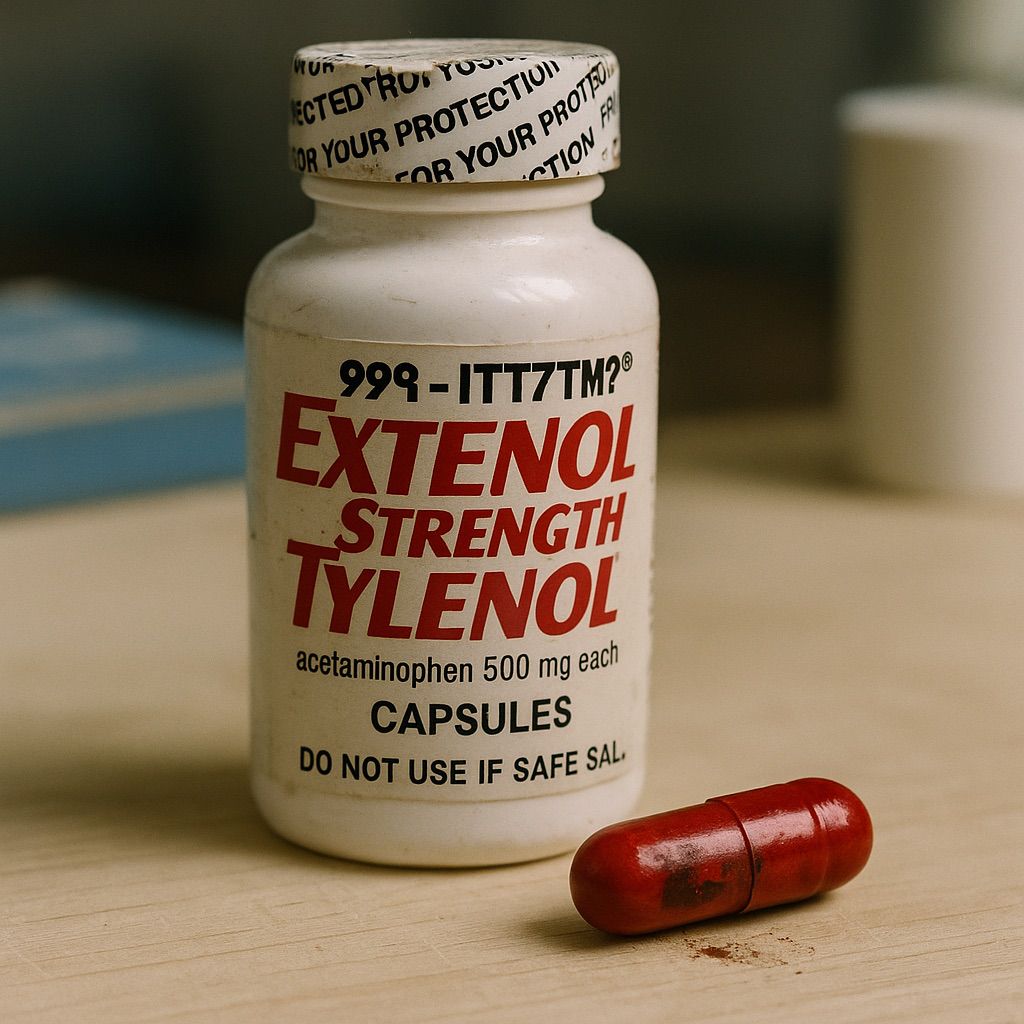
On the morning of September 29, 1982, a 12-year-old girl in the Chicago suburbs woke up with a cold. Her parents did what any family would do — they gave her Extra-Strength Tylenol, the most trusted pain reliever in America. By mid-morning, she was dead. Within hours, more deaths followed: a young postal worker, a new mother, a flight attendant’s brother, and others across the region. None of them knew one another. None of them shared a connection except one horrifying link — each had swallowed Tylenol capsules laced with cyanide. By the time panic spread, seven people were dead. A nation stared in shock at its medicine cabinets and realized, for the first time, that the very pills meant to heal could also kill.
The Tylenol Murders remain one of the most chilling unsolved crimes in American history. It was not a mass shooting or a bombing, but a silent act of terror, intimate and invasive. Someone had tampered with bottles of Tylenol on store shelves, injecting lethal doses of potassium cyanide into the capsules. The victims had no chance. Cyanide works fast, suffocating the body at the cellular level, cutting off oxygen and life itself. In every case, death came within minutes. What united the victims was not who they were, but what they trusted. They trusted a brand, a bottle, a pill that millions consumed daily. And in that trust lay their vulnerability.
The horror began in Elk Grove Village, Illinois, with the death of young Mary Kellerman. Hours later, Adam Janus, a 27-year-old postal worker, collapsed and died after taking Tylenol. As his family gathered in grief, his brother and sister-in-law also took Tylenol from the same bottle — and both collapsed. They too died. By the end of the day, hospitals, police, and federal investigators realized they were confronting something terrifyingly new. This was not a bad batch, not a factory error, but deliberate tampering. Someone had turned Tylenol into poison.
Johnson & Johnson, the parent company, faced a nightmare. Tylenol was its flagship product, controlling more than a third of the over-the-counter pain reliever market. The brand was synonymous with trust, with safety. Now it was a murder weapon. The company could have denied, delayed, or downplayed. Instead, in one of the most decisive acts of corporate crisis management in history, they pulled Tylenol from every shelf in America. All 31 million bottles. The cost was staggering, but the alternative — risking more lives — was unthinkable. Their recall set a new standard for consumer safety.
The investigation was frantic. Police combed drugstores, hospitals, and neighborhoods, searching for patterns. The FBI got involved. News outlets warned Americans nationwide: don’t take Tylenol. Households dumped bottles into trash cans. Pharmacies emptied shelves. The idea that someone could slip into a store, twist open a cap, and replace life-saving medicine with death was more terrifying than any headline. It was terror without ideology, murder without motive, the banal horror of poison hidden in plain sight.
Suspects emerged, but none stuck. A man named James Lewis sent an extortion letter to Johnson & Johnson, demanding money to stop the killings. He was caught and imprisoned — but authorities never proved he was the actual poisoner. To this day, the identity of the Tylenol killer remains unknown. The case is cold, yet its shadow lingers.
What emerged in the aftermath, however, was a revolution in consumer safety. Before 1982, medicine bottles had no tamper-proof seals, no shrink-wrap, no blister packs. Pills came in containers that could be opened, altered, and closed again without evidence. The Tylenol Murders changed that overnight. By 1983, the FDA mandated tamper-evident packaging, from foil seals to plastic wraps. Blister packs became standard. The phrase “safety seal” entered the consumer vocabulary. In short, every time you peel back a foil cover or break a seal on a new bottle, you are living in the legacy of the Tylenol Murders.
The cultural impact was just as deep. The murders shattered the trust that Americans placed in everyday products. If medicine could be poisoned, what else was vulnerable? It was a reminder of fragility in an age of convenience. Tylenol eventually recovered, thanks to its bold recall and new safety measures, but the memory of 1982 lingered. The victims — Mary Kellerman, Adam Janus, Theresa Janus, Stanley Janus, Mary Reiner, Paula Prince, and Mary McFarland — became symbols of innocence lost, of ordinary lives stolen by an anonymous act of cruelty.
The Tylenol Murders were not just a crime. They were a turning point in the relationship between consumers and corporations, between trust and safety. They revealed how a single bad actor could weaponize the ordinary, how terror could be delivered not by ideology but by a pharmacy shelf. They left scars on families, fear in households, and permanent changes in packaging, policing, and perception.
Forty years later, the bottles on our shelves are wrapped, sealed, and protected. But the unease remains. The Tylenol Murders remind us that safety is never guaranteed, that trust is always fragile, and that sometimes, the most dangerous place is the place we least expect: the medicine cabinet.