Author: Dave

I've always been curious about the world beyond my own backyard. While many people spend their entire lives close to where they were born, I've been fortunate enough to travel across the United States and around the world. Every place I've visited has challenged my assumptions in one way or another and reminded me that, despite our differences, people often have far more in common than they realize. I don't write to tell personal stories for the sake of telling them, and I don't believe every article needs to revolve around me. Instead, I enjoy using my experiences as a starting point for exploring larger ideas. Whether it's something I noticed while walking through a market overseas, a conversation with someone from another culture, or simply observing how different communities solve similar problems, I'm interested in the lessons those moments can teach all of us. Travel has given me perspective, but it has also taught me humility. The more places I visit, the more I realize there is still to learn. Every culture has something worth appreciating, and every journey has a way of expanding how we see the world and our place within it. When I write, my goal is simple: to share thoughtful observations, compare perspectives, and encourage curiosity. I hope readers come away having learned something new—not just about another place, but about the world we all share. If one of my articles inspires someone to look at a familiar idea differently, ask a new question, or venture a little farther than they otherwise might have, then I've accomplished exactly what I set out to do.
The Beautiful Blizzard: The Deadly Allure of Japan’s Yuki-onna

Dave

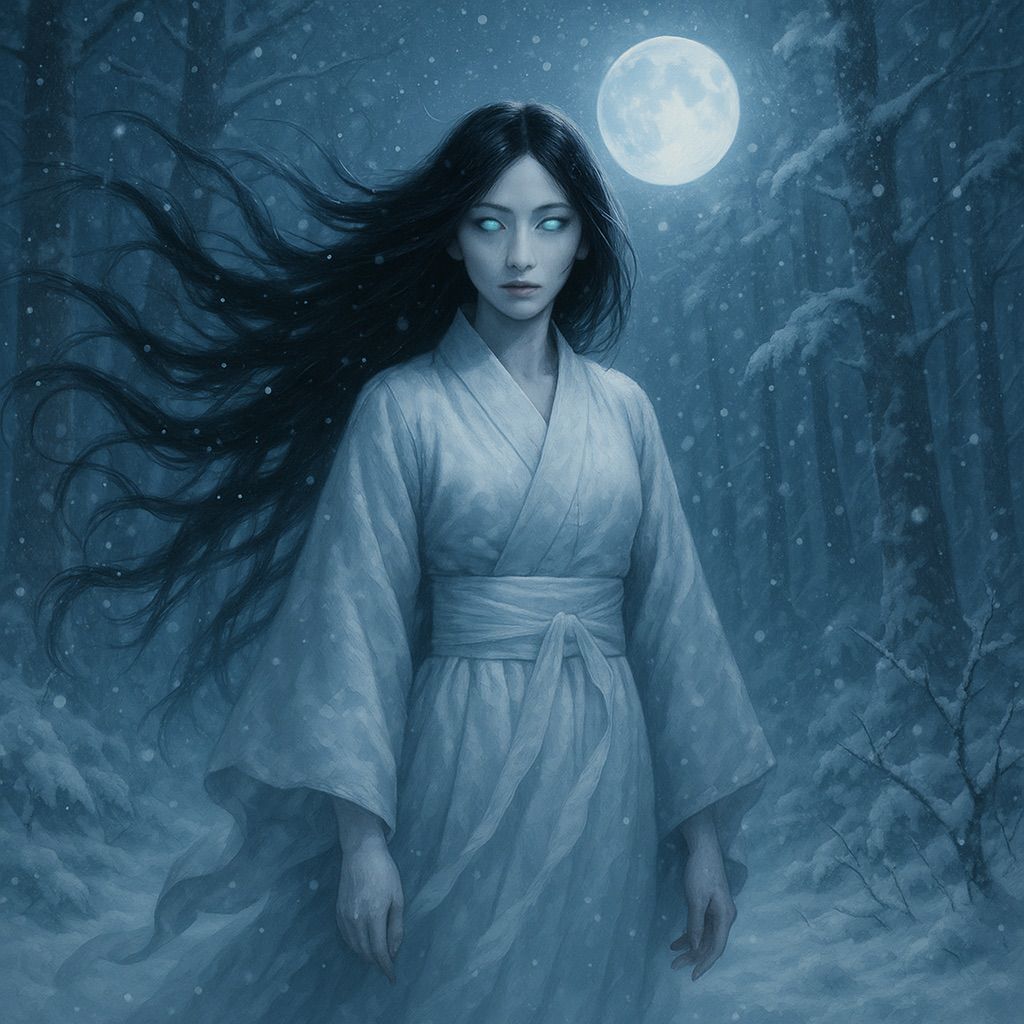
Some monsters frighten us with grotesque shapes, with claws and teeth, with blood dripping from their jaws. Others terrify in subtler ways, cloaked not in horror but in beauty, their danger hidden behind grace. In Japanese folklore, one such figure floats silently through the snow: Yuki-onna, the snow woman. She is described as breathtakingly beautiful, pale as moonlight, her hair dark against the whiteness of winter, her lips red as fresh blood on snow. But her beauty is a trap, for behind her calm, graceful face lies death. She lures travelers in blizzards, freezes men with her icy breath, and drifts away without footprints. On October 21, when her story is remembered, we are reminded that sometimes the most beautiful things in the world are also the most lethal.

Yuki-onna’s legend stretches back centuries, appearing in various regions of Japan with subtle differences. In some stories, she is a ruthless killer who delights in freezing men to death. In others, she is more complex, torn between her inhuman nature and human emotions, capable of mercy but unable to escape her deadly essence. What remains consistent is her connection to snowstorms, her haunting beauty, and her role as both a spirit of winter and a warning about desire, trust, and survival.

She is always pale, her skin translucent as if carved from ice itself. Her kimono is white, blending seamlessly with snowdrifts, making her appear as part of the storm. Her hair is long and black, contrasting sharply with her pale skin, and her eyes are said to shine like frozen stars. Some describe her with no feet, floating ghostlike over the snow, leaving no trace of her passing. To encounter her in a blizzard is to see death personified, wrapped in beauty so sharp it burns.

The origins of Yuki-onna are tied deeply to the environment. Japan’s winters, especially in mountainous regions, are harsh and unforgiving. Snowstorms could arrive suddenly, blinding travelers, freezing them before they could reach shelter. In a world without modern heating, protective gear, or reliable roads, winter itself was a killer. The Yuki-onna became a way to personify this danger — to give it a face, a story, a reason for why people vanished in the snow. In her, the cruelty of winter became a spirit, the blizzard a woman with icy breath.

Her motives vary in different tales. In some, she is pure predator. She seduces men with her beauty, lures them into the snow, then exhales a freezing breath that stills their hearts. Sometimes she drinks their life force, leaving them pale and lifeless. In other tales, she appears at the doors of houses, begging for warmth, and when admitted, she kills the family within. She is merciless, and her beauty only makes her more terrifying, because it hides the truth until it is too late.

But in other stories, Yuki-onna reveals a more tragic side. One famous tale tells of a woodcutter who encounters her in a blizzard. She spares his life, warning him never to speak of her. Later, he meets a beautiful woman, marries her, and has children. Years pass, and one night, he tells her the story of his encounter with Yuki-onna. His wife grows pale, revealing herself to be the very spirit who spared him. In some versions, she vanishes, leaving him heartbroken. In others, she stays for the sake of their children, but her true nature is forever revealed. This duality makes Yuki-onna more than just a monster. She is also a symbol of love, mercy, and the fragility of secrets.

Yuki-onna’s beauty and danger make her a fascinating figure. She embodies the idea that appearances deceive, that beauty can be lethal, that desire can lead to destruction. She reflects cultural anxieties about women, power, and sexuality. To some, she is the ultimate femme fatale — beautiful but deadly, alluring but fatal. To others, she is a tragic figure, caught between her nature as a spirit and her longing for human connection. Either way, she is unforgettable.

Her legend also speaks to broader themes in Japanese folklore, where nature and humanity are deeply entwined. Spirits like Yuki-onna remind us that natural forces are not just physical but spiritual. Winter is not only cold; it has intention, personality, danger. In this sense, Yuki-onna is not only a ghost but also a goddess of winter, a being who commands respect because she personifies the harshness of the natural world.

In modern culture, Yuki-onna has endured as one of Japan’s most iconic spirits. She appears in films, anime, manga, and literature. Sometimes she is portrayed as a horror figure, haunting snow-covered villages, her eyes glowing in the storm. Other times she is reimagined as a romantic figure, a tragic woman bound by her icy nature. Her flexibility ensures her survival in cultural memory, adapting to new forms while retaining her core: beauty wrapped in death.

Why does she resonate so deeply? Because she touches on universal fears and desires. We all know the allure of beauty, and we all fear its betrayal. We all understand the danger of nature, the way a storm can mesmerize and kill. We all fear coldness — not just of weather but of the human heart. Yuki-onna embodies all these fears, making her timeless.

So on October 21, when her story is told, it is not just about a snow woman who kills. It is about the dangers of desire, the fragility of secrets, the cruelty of winter, and the way beauty can hide death. She is both warning and wonder, terror and tragedy, a figure who drifts endlessly across snow-covered fields, her breath icy, her gaze eternal.

And maybe, when the first snow of winter falls, you’ll think of her. Maybe you’ll glance at the drifting white, and for a moment, imagine a woman in the distance, her kimono blending with the snow, her eyes fixed on you. And maybe you’ll wonder: is she watching? Is she waiting? And will she spare you, or will she breathe her icy breath until you sleep forever in the snow?

Related Posts

Undead Allure: Why the Zombie Babe Reigns Supreme on Halloween

Dave

Halloween has always been about the collision of opposites—life and death, fear and fun, beauty and horror. Few costumes embody that fusion as perfectly as the Zombie Babe, a look that combines the sultry with the sinister, the glamorous with the grotesque. Dressed in ripped fishnets that cling like remnants of a former life, blood effects smeared across skin like crimson art, and makeup that blends smoky eyes with a deathly pallor, the Zombie Babe doesn’t just walk into a Halloween party—she lurches in, owning the room with equal parts menace and magnetism. She is proof that even the undead can be irresistible, that horror and hotness can share the same coffin, and that Halloween thrives on the thrill of contradictions.

What makes the Zombie Babe such a viral powerhouse is the way she subverts expectations. Zombies are usually depicted as mindless, shambling corpses, all rot and ruin. But the Zombie Babe flips that stereotype on its head. She’s undead, yes, but she’s confident. She’s bloodied, but she’s beautiful. She embodies survival and sensuality all at once, her costume a testament to both destruction and desire. That contradiction catches attention instantly because it forces people to reconcile two things they don’t normally imagine together. It shocks, it intrigues, and it seduces, all at once. And in the age of social media, those are the exact ingredients for virality.

Visually, the Zombie Babe is stunning because she thrives on extremes. The ripped fishnets scream rebellion, their jagged edges framing legs like art torn from the apocalypse. The fake blood—dripping, smudged, or splattered—adds chaos, a sense of carnage written directly on the body. And the makeup? That’s where the real magic happens. Dark eyes, exaggerated lashes, smeared lipstick like a kiss gone wrong, and pale foundation that makes every contour pop. Add in cuts painted on with stage makeup, or even prosthetic scars, and the look transcends mere costume into cinematic spectacle. Under the flashing lights of a party, the blood glows red, the fishnets catch shadows, and every movement looks like a scene from a horror-thriller infused with glamour.

But the Zombie Babe isn’t just about looks—it’s about performance. She doesn’t just pose—she acts. She staggers dramatically, then breaks into a sultry strut. She bares her teeth in a mock snarl, then winks with smoky eyes. She drips menace, but also laughter. That interplay of horror and humor makes her magnetic. People at parties flock to her because she’s fun, she’s interactive, she’s larger than life. And online, videos of Zombie Babes dancing, snarling, or “attacking” friends rack up views because they’re both creepy and hilarious. The duality creates entertainment, and entertainment creates shares, likes, and virality.

Adaptability also explains why the Zombie Babe remains evergreen. Some play her straight horror, with decayed makeup, dangling wounds, and grisly prosthetics that push the gore factor sky-high. Others lean more playful, adding glitter to blood, rhinestones around scars, or neon contacts that glow under blacklight. Some keep it simple—just ripped fishnets, pale skin, and a smear of red lipstick angled into a grin that says, I may be dead, but I still slay. The point is, no matter how she’s styled, she’s always recognizable, always engaging, and always unforgettable.

The human element makes the Zombie Babe even more powerful. At her core, she’s not just about gore or sex appeal—she’s about resilience. She’s the image of someone who refuses to fade away, who takes destruction and turns it into performance. She’s a reminder that even in chaos, beauty can thrive, even in horror, charisma survives. That emotional resonance connects people to her, whether they realize it or not. She’s scary, yes, but she’s also oddly empowering. She proves that you can take ruin and own it, wear it proudly, make it unforgettable.

And in the age of social media, the Zombie Babe costume is pure gold. On TikTok, she dominates transformation videos—normal one moment, covered in blood and ripped fishnets the next, music thrumming with bass as the camera zooms in on sultry eyes. On Instagram, her aesthetic is perfectly tailored for carousels: close-ups of makeup artistry, full-body shots of fishnet chaos, candids of her laughing with blood streaked across her cheeks. On X, she trends because she’s the perfect mix of scary and sexy, sparking debates, admiration, and endless retweets. She isn’t just a costume—she’s a content machine, designed for virality.

Halloween is about reinvention, and the Zombie Babe delivers that in spades. She takes the idea of decay and transforms it into style, turning wounds into art and ruin into allure. She doesn’t just join the party—she owns it, leaving a trail of bloody footprints and unforgettable moments in her wake. And when the night is over and the costumes are put away, hers is the one people talk about, the one they post about, the one that lingers in memory like a haunting melody.

So when you see her this October 31st, standing under the strobe lights with fishnets ripped, makeup smeared, and a grin that’s equal parts hunger and charm, don’t be surprised when the crowd gravitates toward her. Don’t be surprised when phones rise to capture her every move. And don’t be surprised when, the next morning, her image floods your feed with captions like: Brains never looked this good. That’s the Zombie Babe. That’s the queen of the undead. And that’s why she doesn’t just survive Halloween—she defines it.

Related Posts

Beware the Shadows: The Eternal Terror of El Cuco

Dave

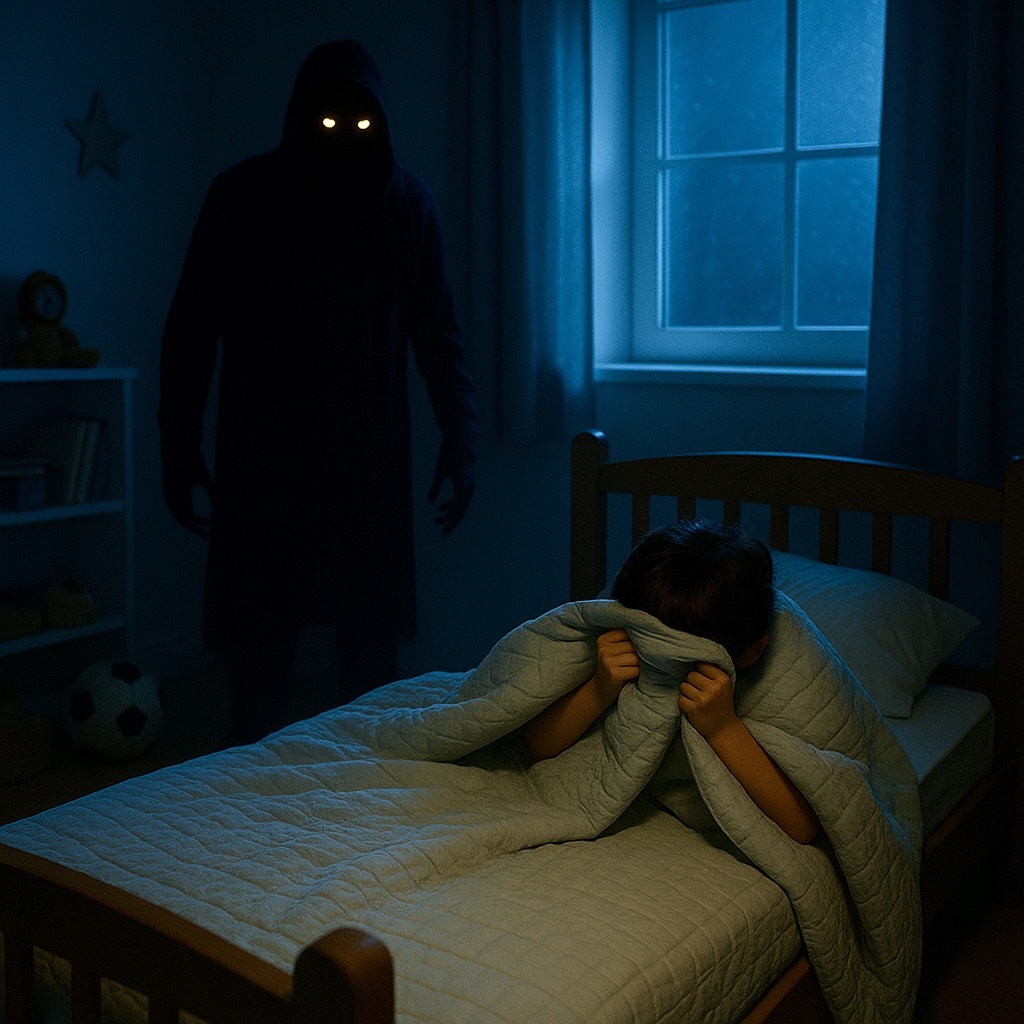
Every culture has a monster whispered into the ears of children at night, a shadowy figure who lurks just beyond the candlelight, ready to snatch them away if they disobey. In English-speaking lands, it’s the Boogeyman. In Spain and across Latin America, it is something older, darker, and far more personal: El Cuco. Known also as El Coco in Spain and El Cucuy in Mexico, he is the shapeless terror who comes when children refuse to listen. His form is vague — sometimes a shadow, sometimes a skeletal figure, sometimes a faceless man hiding in the closet — but his threat is always the same: if you misbehave, if you defy your parents, El Cuco will come. He will steal you away. He will never return you. On October 20, when his legend is remembered, we are reminded that sometimes the greatest fears are not the monsters with claws and fangs, but the ones we invent to make children obey.

El Cuco is not bound by a single description. In fact, his power comes from his ambiguity. He has no fixed appearance, which makes him infinitely adaptable to the imagination. To some, he is a dark shadow, a formless figure that hovers in the corner of the room. To others, he is a haggard man with hollow eyes, or a grotesque beast lurking under the bed. Parents rarely describe him in detail, because his vagueness allows children to fill in the blanks with their own fears. In this way, El Cuco is less a monster than a mirror — reflecting whatever frightens the child most. He is a shapeless embodiment of dread, always fitting the space he is invoked in.

The origins of El Cuco trace back to Spain, where El Coco was known as a child-snatching monster. The word “coco” itself refers to a hollowed-out gourd, often carved into a grotesque face. These gourds were used to frighten children, and over time, the name became attached to the idea of a lurking boogeyman. When Spanish colonization spread to Latin America, the figure of El Cuco traveled with it, taking on local variations and blending with indigenous myths. In Mexico, he became El Cucuy, more demonic in appearance, sometimes with glowing red eyes. In the Caribbean, he lingered as a shapeless phantom. No matter where he went, he kept the same purpose: to terrify children into obedience.

Parents used El Cuco as a tool of discipline. “Go to sleep, or El Cuco will come.” “Don’t wander into the dark, or El Cucuy will take you.” He became the perfect parental weapon because he required no proof. Children didn’t need to see him; the threat was enough. Unlike physical punishments, which could be resisted or explained, El Cuco was absolute. He was the terror that lived in shadows, the punishment that could strike anywhere. He wasn’t just feared — he was believed, because he filled the gaps of imagination with horror.

But El Cuco was more than just a bedtime threat. He reflected deeper cultural anxieties about childhood, obedience, and survival. In societies where danger was real — where children wandering into forests, rivers, or streets could meet deadly ends — El Cuco embodied those dangers in a single, unforgettable figure. He wasn’t only about discipline; he was about protection. By making children fear the shadows, parents kept them safe from the real dangers that lurked there. In this way, El Cuco was both cruel and necessary, a monster invented to guard children from the world by scaring them into caution.

The legend of El Cuco also highlights the power of storytelling in shaping behavior. Children who feared him went to bed on time, stayed close to home, and obeyed rules. But the cost of that obedience was fear — fear that lingered long after childhood. Many adults in Spain and Latin America still recall lying awake as children, eyes wide open, convinced they saw El Cuco lurking in the corner. His legacy is not just in keeping kids safe but in embedding a primal unease that shadows them even as adults.

What makes El Cuco particularly terrifying is his ambiguity of motive. Unlike other monsters who kill for hunger or rage, El Cuco’s goal is simple: to take children. Where he takes them is never clear. Some say he eats them. Others say he drags them to his lair, where they vanish forever. Still others claim he keeps them in cages, feeding on their fear. The lack of resolution makes him more horrifying. Death is final, but El Cuco’s fate is uncertain. He represents not just punishment but disappearance, the fear of being lost, of being forgotten, of never returning home.

El Cuco has endured for centuries because he adapts with time. In modern Latin America, he appears in films, songs, and even memes, but the fear he carries is unchanged. Parents still invoke his name, though often with a smile, half-serious, half-playful. Children still whisper about him at night, daring each other to summon him. His legend has crossed into the global imagination, with references appearing in horror films and literature outside the Hispanic world. The Boogeyman may be universal, but El Cuco is unique — sharper, older, and culturally richer, tied to both Spanish roots and Latin American reinvention.

His power lies in the fact that he is not a monster children seek out. Vampires, werewolves, and witches often draw fascination as well as fear. But El Cuco is pure dread, devoid of allure. No one wants to see him, and yet everyone feels his presence. He is the ghost of the parent’s warning, the echo of fear in the dark, the thing that moves just outside the corner of your vision. His story is less about him and more about us — about the way humans use fear to teach, protect, and control.

So on October 20, when the story of El Cuco is told, we are not just telling a tale about a monster. We are telling a story about childhood, about obedience, about the fears we inherit and pass on. El Cuco is not just a figure of terror but a cultural memory, one that binds families, communities, and generations together through shared fear. And maybe, just maybe, when you hear a bump in the night, or feel that strange certainty that something is watching, you’ll remember what your parents once told you: be good, or El Cuco will come.

Related Posts

Heaven and Hell in One: Why the Angel & Devil Combo Owns Halloween

Dave

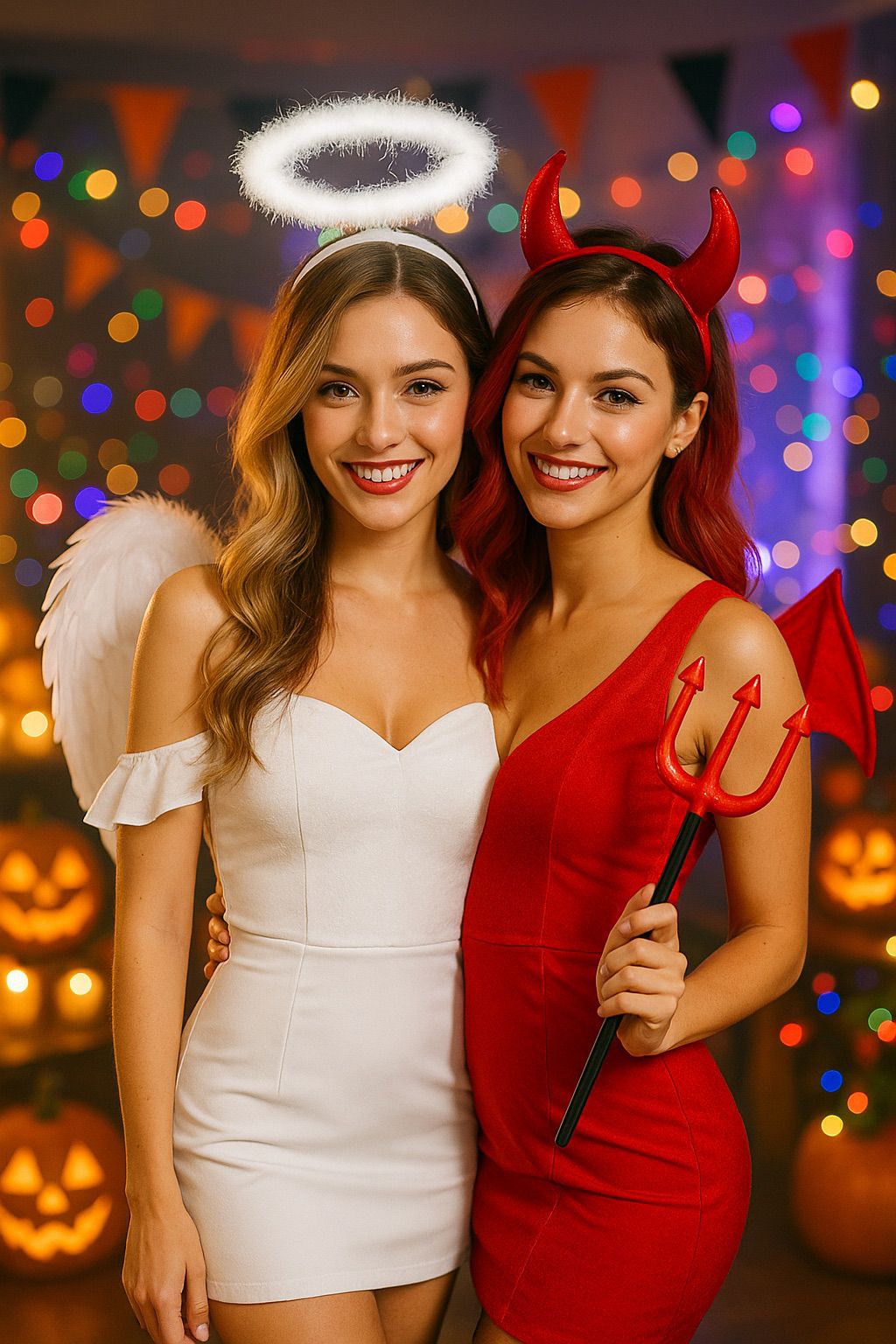
Halloween is a holiday built on duality—trick and treat, fear and fun, light and darkness. No costume captures that balance better than the Angel & Devil combo. Imagine a split look: one half glowing white with feathers, halos, and innocence; the other blazing red with horns, pitchforks, and fiery temptation. It’s a walking contradiction, a bold mashup of good and evil stitched into one unforgettable outfit. The Angel & Devil Combo isn’t just a costume—it’s a statement about the human experience, the eternal tug-of-war between purity and mischief, restraint and indulgence, order and chaos. And perhaps that’s why this costume goes viral every single year. It isn’t just visually striking—it’s psychologically magnetic. Everyone can relate to it, because everyone has both sides inside them.

From the first glance, the Angel & Devil Combo makes people stop and stare. It’s rare for a costume to tell such a clear story without words, but this one does it instantly. One side is radiant: white dress or bodysuit, soft feathered wings, glowing halo perched above the head. The other side is sizzling: red fabric hugging curves, horns jutting playfully from the hair, a pitchfork angled like a weapon of flirtation. The seam where the two meet is a bold line of contrast, a reminder that this isn’t just a person in costume—it’s an embodiment of the inner battle between virtue and sin. That visual contradiction photographs like a dream, dominating Instagram feeds, TikTok transitions, and X posts with ease. The moment someone poses in this costume, the duality leaps off the screen, practically begging to be shared.

But beyond the visuals, what makes the Angel & Devil Combo so powerful is the roleplay it inspires. Costumes are performances, and this one doubles the script. Wearers can play the sweet angel one moment—gentle smiles, hands folded, wings spread like protection—and then flip into devil mode the next—arched brows, sly smirks, hips cocked with temptation. Every gesture becomes a game of switching sides, of blurring lines, of reminding the world that good and evil aren’t separate—they’re intertwined. And the person in the costume? They aren’t just playing a character—they’re revealing the parts of themselves that usually stay hidden. Because let’s be honest: we all have a halo we polish for the world, and we all have horns we tuck away until the moment calls for them.

The versatility of the Angel & Devil Combo is another reason for its viral staying power. Some go minimalist, with one split dress or jumpsuit, wings on one side, horns on the other. Others go elaborate, hand-sewing sequins into patterns that shimmer differently depending on which half catches the light. Some wear it as a duo costume—one person in all angel, the other in all devil—creating a living yin-yang dynamic at the party. And others play it up for comedy, exaggerating the contrast with oversized halos and cartoonish pitchforks. No matter how it’s styled, it always works, because the concept is so strong it doesn’t need explanation.

What humanizes this costume is its relatability. We don’t wear it just to look good—we wear it because it resonates. Everyone has felt the pull between doing the “right” thing and giving in to mischief. Everyone knows what it’s like to want to appear angelic but feel devilish, or to embrace chaos while keeping a halo tucked away for later. The Angel & Devil Combo is a mirror for that shared humanity, which is why it connects so powerfully. When people see it, they laugh, they nod, they get it. It isn’t just sexy or creative—it’s personal. That’s what makes it linger in memory long after the night ends.

And of course, it thrives on social media. The split design is perfect for TikTok transitions—turning left to show the devil side, turning right to reveal the angel, each set to music that amplifies the vibe. On Instagram, it’s a carousel-worthy costume: first photo angelic, second photo devilish, third photo split down the middle. On X, it sparks debates: “Are you more angel or devil?”—engagement bait that ensures shares and replies. It’s interactive, dynamic, and participatory, which is exactly what makes content spread. Costumes that invite people to play along are the ones that don’t just trend—they explode.

Halloween is about transformation, and the Angel & Devil Combo nails that theme like no other. It allows us to embody two extremes at once, to acknowledge our contradictions, to laugh at them, and to flaunt them. It turns morality into fashion, psychology into performance, philosophy into fun. And maybe that’s why it feels so powerful. Because when you slip into that half-white, half-red costume, you aren’t just dressing up—you’re embodying the truth that humans are messy, contradictory, and complicated. You’re giving permission for both your sides—the halo-polished and the horn-sharp—to exist at once.

So when the party lights flash and the music surges, watch who owns the room. It’ll be the one shimmering in feathers and sequins, smiling with one eye and smirking with the other, halo tilted over horns, wings brushing against a pitchfork. That’s the Angel & Devil Combo. That’s Halloween’s eternal contradiction. And that’s why, year after year, she remains one of the most viral, magnetic, and unforgettable icons of October 31st.

Related Posts

Crawling Through Fear: The Haunting Legend of Teke Teke

Dave

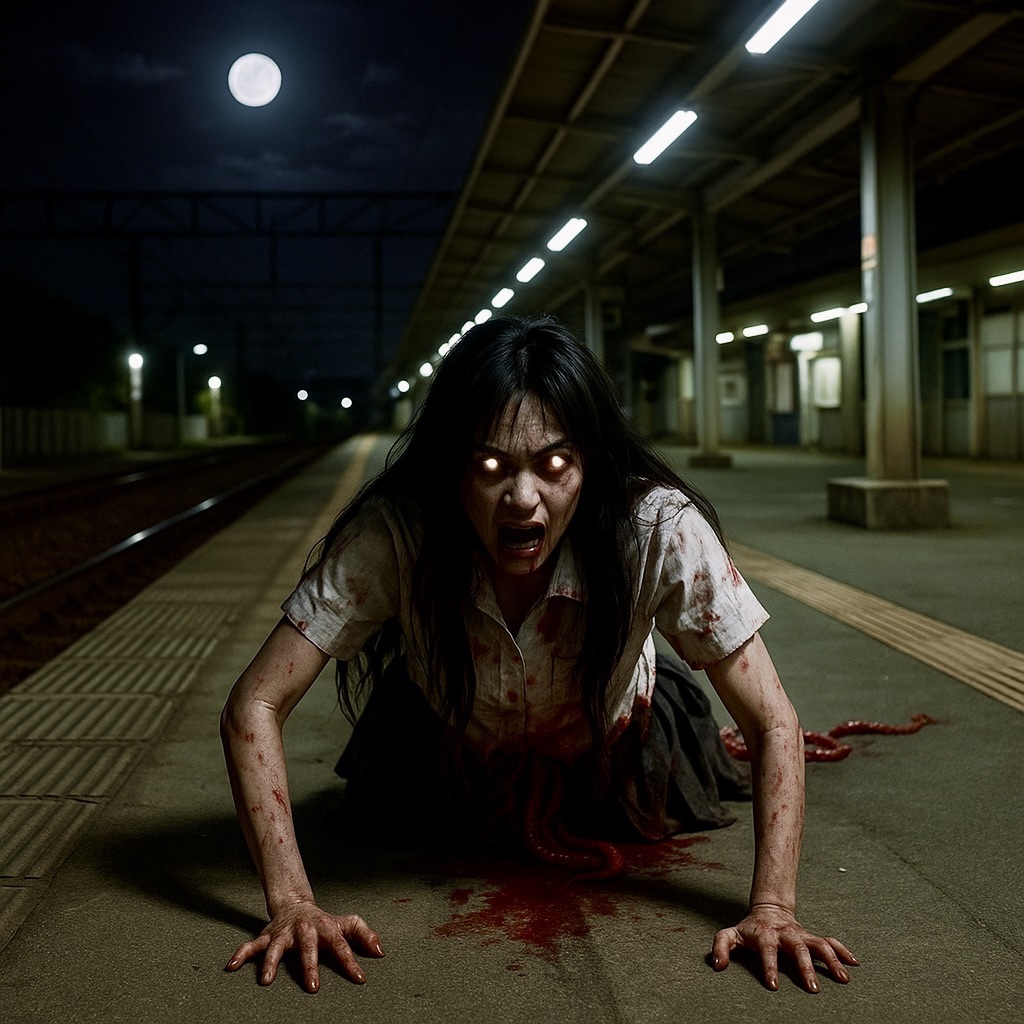
Some ghosts glide silently across the floor, white gowns trailing like mist. Others whisper from behind you, unseen but felt. But there is one ghost in Japanese urban legend that does not float gracefully or linger in shadows — she crawls. She drags herself across the ground with bloodied hands, her torso scraping against pavement, her eyes burning with rage, her mouth open in a scream or a grin that chills the soul. This is Teke Teke — the ghost of a woman cut in half, forever hunting the living, her presence announced by the horrifying sound that gives her name: teke…teke…teke. On October 19, when her legend is recalled, we are reminded that some fears are not about the supernatural alone but about the violence we do to one another and the cruelty of fate that can leave scars so deep they follow us beyond the grave.

Teke Teke’s story is modern, unlike ancient folkloric figures born centuries ago. She belongs to the world of urban legends, the whispered stories traded between students, the cautionary tales passed along to make spines shiver on late walks home. But her modernity does not diminish her horror; it makes it sharper. She is not cloaked in the distant mists of myth but rooted in the very real dangers of modern life. She is the ghost of the train tracks, a reminder of how technology and urban sprawl bring not only progress but tragedy.

The tale goes like this: Teke Teke was once a woman, or in some versions a schoolgirl, who suffered a gruesome accident. She fell onto train tracks and was struck by an oncoming train, her body severed in half. The pain, the shock, and the violence of her death were so intense that her spirit could not rest. Now she wanders as a ghostly torso, dragging herself along with her hands, her nails and elbows scraping pavement, her body moving in a sickening rhythm that produces the sound teke teke. To hear that sound is to know she is coming. To see her is to know you may not survive.

What makes her terrifying is not just her appearance but her relentlessness. Unlike other ghosts who haunt places or linger in specific locations, Teke Teke is a hunter. She chases those who cross her path, moving unnaturally fast despite her lack of legs. Her hands slam against the ground, dragging her forward with horrifying speed, closing the distance between her and her victim in seconds. The idea of a crawling ghost is unsettling enough; the idea of one that can outrun you while dragging itself is nightmare fuel.

Her vengeance is as brutal as her death. When she catches her victims, she slices them in half, mimicking the fate that befell her. In some versions of the legend, she carries a scythe or sickle to do the deed. In others, her ghostly strength alone is enough to rip bodies apart. Either way, her attack is both personal and symbolic: she repeats her trauma on others, spreading her pain in a cycle of horror.

Like many urban legends, Teke Teke’s story has countless variations. Some say she appears at train stations late at night, waiting for solitary travelers. Others claim she haunts school bathrooms, whispering from stalls before dragging herself out. In some tales, she even calls victims on the phone, her voice distant and echoing, asking if they know where her legs are. If the person answers incorrectly, she comes for them. The diversity of her appearances makes her even more terrifying, because she could be anywhere: the tracks you cross on your way home, the bathroom at school, the phone ringing in the dark.

The cultural impact of Teke Teke is profound. In Japan, she joins a pantheon of urban legends like Kuchisake-onna (the slit-mouthed woman) and Hanako-san (the ghost in the bathroom). Each of these figures reflects specific anxieties of modern life — school pressures, urban isolation, the violence lurking in public spaces. Teke Teke, in particular, embodies the fear of accidents, of lives cut short by the machinery of modernity. Trains are symbols of progress, but they are also merciless machines, and accidents on tracks are horrifyingly real. By turning such a death into a ghost story, the legend gives voice to communal fears about safety, vulnerability, and the fragility of life.

But Teke Teke is not only about trains. She is also about the cruelty of people. In some versions of the story, she was pushed onto the tracks as a prank gone wrong. In others, she leapt in despair after being bullied or shamed. These versions add layers of tragedy and social commentary, showing how neglect, cruelty, or violence from others can create ghosts as much as accidents can. Teke Teke’s rage is not only against the train that killed her but against the world that failed her.

Her imagery is unforgettable: long black hair, bloodstained school uniform, hollow eyes burning with anger, her body severed at the waist, entrails trailing as she crawls. The sound of her hands slapping pavement is as terrifying as the sight itself, because it is anticipatory — you hear her before you see her. Fear grows in the gap between sound and sight, in the knowledge that something is coming and you cannot stop it.

Yet, as with many legends, there are supposed ways to survive her. Some say you can escape if you run fast enough, though few succeed. Others say she asks a riddle, and answering correctly can save your life. In one version, she demands to know where her legs are, and only by answering “Meishin Expressway” — the supposed site where they were buried — can you escape. These details make her more than just a monster; they make her an interactive story, one that requires listeners to imagine themselves in her path, to test their own wits and courage against her rage.

The endurance of Teke Teke as a story shows the power of urban legends in shaping behavior. Children warned each other about walking home alone, about crossing train tracks carelessly, about bullying others. Fear became a tool of caution, a way to encode survival lessons in the language of horror. Just as old folklore warned against wandering into forests or disrespecting spirits, modern urban legends like Teke Teke warn against the dangers of city life — in forms that chill the blood enough to stick.

Teke Teke also resonates because she is both terrifying and tragic. She is a victim as much as a villain, a ghost born from trauma and injustice. Her violence is monstrous, but it is also the echo of her own suffering. In this way, she mirrors a universal theme in ghost stories: the restless dead often want what they were denied in life — justice, recognition, peace. But in their rage, they destroy instead of heal. Teke Teke terrifies us not only because she can kill us but because she reminds us of the pain we inflict on one another, and how it lingers beyond death.

So on October 19, when the story of Teke Teke is told, it is more than just a ghost story. It is a reminder of how fragile life is, how easily cruelty and accident can cut it short, and how the dead might carry their pain with them. She crawls not only through train stations and bathrooms but through our imagination, dragging herself hand over hand, reminding us that what is broken does not always stay buried.

And maybe, when you hear a strange sound at night — a scraping, a tapping, a teke teke — you’ll feel a chill run down your spine. You’ll look around, knowing she could be anywhere, knowing she doesn’t stop once she starts. Because Teke Teke doesn’t glide like other ghosts. She hunts. She crawls. And she never forgets the sound of your fear.

Related Posts

Dewey Decimal Desire: Why the Sexy Librarian Owns Halloween

Dave

There are certain archetypes that never lose their grip on the imagination. The witch, the vampire, the devil—all of them embody primal aspects of fear, rebellion, and temptation. But nestled among them, there’s one costume that doesn’t need blood or fire or darkness to command attention. She doesn’t need wings or fangs or horns. All she needs is a tight pencil skirt, a crisp blouse slightly unbuttoned, glasses perched on her nose, and stockings that hint at much more than modesty. The Sexy Librarian is one of Halloween’s most enduring viral icons because she thrives on contradiction. She takes an image that’s traditionally associated with quiet, rules, and order, and flips it into something daring, playful, and irresistible. She’s not about scaring you—she’s about making you lean in closer, drawn by the promise of knowledge, mystery, and just the right amount of mischief.

What makes the Sexy Librarian so powerful is the tension at the heart of the look. Librarians in our cultural imagination are figures of control: shushing voices, organizing chaos, maintaining order. They are the guardians of silence and discipline, the keepers of dusty tomes, and the overseers of rules. But Halloween is about rebellion. It’s about breaking free from rules, subverting expectations, and turning the ordinary upside down. The Sexy Librarian costume takes the idea of control and transforms it into temptation. The pencil skirt, usually a sign of modesty, suddenly becomes a spotlight for confidence. The glasses, symbols of seriousness, now frame flirtation. The stockings, once formal, now spark curiosity. This costume doesn’t just invite attention—it demands it, all while maintaining a clever wink that says: I know exactly what I’m doing.

Visually, the Sexy Librarian is designed for impact. The pencil skirt creates clean lines, accentuating curves with elegance and confidence. Paired with stockings, the look instantly blends sophistication with allure. The blouse, often white or cream, provides a canvas that can be styled modestly with a bow or unbuttoned just enough to suggest rebellion beneath the surface. And then there are the glasses—arguably the most powerful accessory in the entire look. They frame the face, sharpen the eyes, and create that unmistakable air of authority, even as they slide down the bridge of the nose with a mischievous smirk. It’s a costume made for performance, for adjusting glasses while raising an eyebrow, for tapping a ruler on a desk, for leaning forward as though grading more than papers. The details matter because they transform a simple outfit into an entire character.

The Sexy Librarian thrives in photos and videos because she’s not static—she’s interactive. Her props practically beg to be used: books stacked as flirtatious accessories, rulers wielded like playful tools, glasses that can be slid on and off with a smirk. Every gesture becomes an invitation, every pose a performance. On Instagram, the clean lines of the skirt and blouse pop against chaotic Halloween backdrops of cobwebs and neon. On TikTok, she’s the perfect subject for transformations—hair tied up into a bun, glasses perched firmly, then one snap and the bun drops, glasses slide down, blouse loosens, and suddenly the “strict librarian” becomes the “seductive librarian.” On X, she trends year after year because the internet cannot resist debating, sharing, and admiring the contradiction at the heart of the look. She’s not scary, but she’s unforgettable. She doesn’t hide in the shadows—she controls the spotlight.

Part of what makes her viral is how easy she is to adapt. Some Sexy Librarians keep the look classic—tight skirt, stockings, blouse, glasses, and maybe a stack of books. Others modernize it, adding leather skirts, bold lipstick, and heels that click with authority. Some lean into humor, carrying oversized glasses or giant novelty books as a parody of the trope. Others lean full-on sultry, with sheer stockings, fitted corsets, or plunging blouses that redefine what “library quiet” really means. That adaptability ensures that the costume never goes stale. Like the ever-expanding stacks of a library, the Sexy Librarian has endless interpretations, each one reflecting the personality of the woman wearing it.

But the reason she resonates isn’t just about looks—it’s about energy. The Sexy Librarian embodies confidence in a way that feels human and relatable. She’s not just showing skin—she’s showing control. She’s showing wit. She’s showing playfulness wrapped in sophistication. There’s something empowering about taking an image of strictness and formality and turning it into something unapologetically bold. For the woman wearing it, the costume becomes a declaration: I can be smart, I can be sexy, I can be both—and I’m going to have fun proving it. That empowerment doesn’t just stay with her—it radiates outward, filling the room with a charge that everyone feels. That’s why she dominates Halloween not just in person but online, because people don’t just admire the costume—they admire the confidence behind it.

Halloween is about transformation, and the Sexy Librarian is one of the purest forms of that idea. She takes a role rooted in rules and flips it into rebellion. She transforms silence into laughter, order into flirtation, modesty into mischief. She reminds everyone that the people who seem the most reserved often have the boldest sides waiting just beneath the surface. And that reminder is powerful, because it reflects something true about all of us: we all have contradictions, we all have hidden sides, we all crave moments when we can break free of expectations and reveal a version of ourselves that surprises the world.

That’s why the Sexy Librarian continues to trend year after year. She’s more than a costume—she’s an archetype of transformation, empowerment, and fun. She doesn’t rely on gore or gimmicks. She doesn’t need elaborate props or cinematic makeup. All she needs is a skirt, glasses, stockings, and the kind of charisma that turns heads and sparks conversation. She’s proof that sometimes the most viral costumes aren’t the ones dripping with fake blood or covered in sequins—they’re the ones that flip the script, the ones that subvert expectations, the ones that make people laugh, blush, and remember.

So when Halloween rolls around and the night is alive with monsters, superheroes, and creatures of the night, keep an eye on the room. Watch who everyone is watching, who people can’t resist talking to, who dominates selfies and videos. Chances are, it’s the woman with the books in her hands, the glasses on her nose, the pencil skirt that hugs her stride, and the stockings that say “rules are meant to be broken.” That’s the Sexy Librarian. That’s the viral queen of contradictions. And that’s why, year after year, she doesn’t just check out—she checks in as one of the most unforgettable icons of Halloween.

Related Posts

When the Body Splits: The Horrifying Flight of the Manananggal

Dave

There are monsters that haunt the imagination because of their sheer brutality, and then there are monsters that chill us because they twist the familiar into the grotesque. In Philippine folklore, one such nightmare dominates the night sky — the Manananggal. Unlike simple spirits or beasts, she is human by day and horror by night. At dusk, she splits her body in half, leaving her lower torso behind, sprouting massive batlike wings, and soaring into the darkness to hunt. She preys on the sleeping and the vulnerable, using a long, proboscis-like tongue to pierce roofs, windows, or even wombs, feeding on the blood of the living. On October 18, when her legend is remembered, we are reminded that not all nightmares wear masks — some are born of flesh, fear, and a culture’s deepest anxieties about life, death, and betrayal.

The Manananggal is one of the most distinctive and feared figures in Filipino folklore. Her very name comes from the Tagalog word tanggal, meaning “to remove” or “to separate,” a chilling reminder of her defining feature: the act of splitting her body. By day, she may appear as an ordinary woman, sometimes even beautiful, blending seamlessly into society. But when night falls, her head, torso, and wings rip free from her lower half, leaving her waist and legs standing abandoned. She takes to the sky, hunting in silence, her tongue stretching like a grotesque straw to pierce the flesh of her victims. This duality — human by day, demon by night — makes her one of folklore’s most terrifying shapeshifters, because she is both familiar and monstrous at once.

Her prey reveals much about her symbolic power. The Manananggal is infamous for attacking pregnant women, using her tongue to drain the blood of unborn children. This horrifying detail resonates with the deep cultural fears around pregnancy, childbirth, and infant mortality. In times when maternal and infant deaths were tragically common, the Manananggal embodied those anxieties, transforming them into a figure who stole life before it began. But she does not stop there. She also feeds on the sick, the sleeping, and the unwary, her attack as silent as it is devastating. To fear the Manananggal was to fear vulnerability itself — the times when one’s guard is down, when life hangs by a thread.

Communities devised defenses against her, many of which were as visceral as the stories themselves. Her lower half, left behind while she hunts, is her weakness. Villagers believed that sprinkling salt, smearing garlic, or spreading ash on the abandoned torso would prevent her from reattaching, dooming her to perish when the sun rose. Stakes, daggers, or bolos could also kill her, especially if aimed at the heart. These protections reflected both ingenuity and desperation, for the Manananggal was not a monster that could be reasoned with — she had to be fought with fire, salt, and steel.

What makes the Manananggal especially terrifying is her ability to hide in plain sight. By day, she is often depicted as a quiet, withdrawn woman in the community, sometimes beautiful, sometimes strange, but never openly monstrous. This duality created an undercurrent of paranoia. Anyone could be the Manananggal. A neighbor, a midwife, a widow — anyone who lived alone or defied social expectations risked being labeled. In this way, the legend was not only about horror but also about social control, warning against women who strayed outside prescribed roles. The Manananggal became not just a monster of the night but a mirror of societal anxieties about women, independence, and the boundaries of community.

Some folklorists trace the origins of the Manananggal to pre-colonial myths of spirits and demons that consumed flesh or preyed on the vulnerable. With the arrival of Spanish colonization, Christian demonology blended with local beliefs, amplifying her monstrous image. She became not only a predator but also a symbol of sin, temptation, and the grotesque inversion of motherhood. Her beauty by day and monstrosity by night reflected Christian warnings about temptation and hidden evil, shaping her into both a horror figure and a moral lesson.

Yet for all her grotesque imagery, the Manananggal is strangely compelling. Her act of splitting herself in half is unique among global monsters, setting her apart even from vampires or witches. She embodies transformation in its most terrifying form: the human body becoming alien, the familiar body turning against itself. Her wings symbolize freedom, yet their use is predatory. Her separation from her lower half makes her vulnerable, yet her upper half is terrifyingly strong. She is both powerful and fragile, monstrous and human. This tension makes her one of the most enduring figures in Philippine folklore.

Modern culture has embraced the Manananggal in countless ways. She appears in horror films, TV shows, comics, and even urban legends retold for new generations. In many depictions, she is both terrifying and tragic — a woman cursed to hunt, forced to split herself, doomed to prey on those she once might have loved. This tragic lens humanizes her, suggesting that beneath the monstrous wings and grotesque hunger lies a figure as trapped as her victims.

In rural areas, however, the belief in the Manananggal persists as more than story. People still whisper warnings about traveling at night, about pregnant women being especially careful, about strange noises on rooftops. The flap of wings in the dark, the scratching of claws, the cry of bats — all of these sounds can still evoke the fear that perhaps the Manananggal is near. Folklore here is not just entertainment but living memory, a way to shape behavior, protect the vulnerable, and give form to fears.

The Manananggal resonates because she embodies universal human anxieties. She is the fear of betrayal — someone you know, someone you trust, transforming into your predator. She is the fear of vulnerability — being attacked while asleep, sick, or pregnant. She is the fear of duality — that appearances lie, that beauty can mask monstrosity, that the human body itself can split into horror. These fears are not confined to the Philippines. They are human fears, given wings and a monstrous tongue.

So on October 18, when the Manananggal’s story is told, we are reminded that monsters endure because they say something true. They embody our nightmares in ways too sharp to forget. The Manananggal is not just a woman with wings; she is the terror of vulnerability, the suspicion of the neighbor, the danger of night, the fragility of life. And perhaps that is why her legend flies as high as her monstrous wings, carried from one generation to the next, never landing, never dying.

And maybe, when you hear something scratching at your roof tonight, or see a shadow move across the moon, you’ll wonder. Is it just a bat? Or is it the upper half of a woman, wings spread wide, searching for her next victim? And if so, will you have garlic, salt, and ash ready — or will you become just another whisper in her story?

Related Posts

Tangled in Temptation: Why Poison Ivy Always Blossoms on Halloween

Dave

There are certain costumes that cling to Halloween like ivy to a crumbling brick wall, creeping into every party, dominating every selfie, and staying rooted in the collective imagination long after the candy wrappers have been swept away. At the very top of that list is Poison Ivy, the queen of leafy seduction, the emerald enchantress whose name alone is enough to conjure visions of tangled vines, scarlet hair, and an aura of danger sweetened by temptation. She doesn’t just walk into a Halloween party—she invades it like nature reclaiming concrete, lush, confident, and impossible to ignore. Wrapped in a leafy bodysuit that clings like it was grown for her, vines spiraling around her arms and legs like living jewelry, and hair the color of autumn fire cascading down her back, Poison Ivy is one of the most viral, enduring, and magnetic costumes the season has ever known.

Part of her strength lies in origin. Born in the pages of DC Comics, Poison Ivy began as a villain in Batman’s Gotham City, an eco-terrorist who used plants to bend the world to her will. She wasn’t just another femme fatale—she was something new, something primal. While Catwoman prowled with claws and Harley Quinn twirled bats, Ivy arrived like a storm from the earth itself, armed with pheromones, toxins, and a beauty so sharp it could cut. Over time, she blossomed into more than a villain—she became an icon, a symbol of femininity entwined with danger, of sexuality fused with power, of rebellion cloaked in green. And that duality is exactly what makes her irresistible on Halloween. She’s not just sexy, she’s formidable. Not just pretty, but powerful. When someone dresses as Poison Ivy, they’re not putting on a costume—they’re stepping into the role of a seductress who knows her worth, and dares the world to resist her.

Visually, Poison Ivy is a dream for Halloween. The leafy bodysuit is bold and striking, immediately recognizable even from across a crowded room. Green is not a color that blends—it pops, and when paired with the fiery cascade of red hair, the effect is explosive. Vines curling around limbs add movement and texture, making every pose look alive, as if the costume itself might slither off into the night. And the accessories—the leaf crowns, the glittery makeup, the botanical props—only amplify the aesthetic, creating a look that’s cinematic, viral, and unforgettable. Under neon lights, she glows. In photographs, she dominates. On TikTok, she transforms from everyday wear to leafy goddess in a single snap, a transition that racks up likes and shares because everyone wants to witness the metamorphosis. Poison Ivy isn’t just worn—she’s performed, and performance is what makes costumes legendary.

But Ivy’s viral appeal goes deeper than glitter and vines. It’s rooted in the contradiction she embodies. She’s a villain who fights for something noble: the preservation of nature. She’s seductive but lethal, playful but uncompromising, beautiful but dangerous. That balance of allure and threat is intoxicating. When someone slips into her leafy armor, they’re channeling more than a look—they’re channeling an attitude. The tilt of a smile, the gleam in the eye, the deliberate slowness of a walk across the room—it all becomes part of the performance. And it’s a performance everyone in the room responds to, whether with admiration, envy, or fascination. Ivy doesn’t need to demand attention—she grows into it naturally, like vines climbing a wall, inevitable and unstoppable.

The adaptability of the Poison Ivy costume also explains her longevity in the Halloween spotlight. Some wear her as a classic comic book villain, with a simple bodysuit, vines, and scarlet wig. Others glam her up with sequins, rhinestones, and couture-inspired designs, turning her into a red carpet-ready eco-queen. Some lean into horror, painting their skin green, adding thorns dripping with blood, and turning her into a nightmarish forest witch. Others keep her sleek and sultry, with thigh-high boots, dramatic leaf-shaped corsets, and makeup sharp enough to kill. No matter the variation, she’s always recognizable, always stunning, and always viral. Because Poison Ivy isn’t a trend—she’s an archetype, one that evolves year after year without losing her roots.

Her humanity is part of the secret, too. Poison Ivy resonates because she feels real. Unlike some flawless characters, Ivy is a mess of contradictions—she’s passionate to a fault, loyal yet ruthless, soft yet spiny. She represents the parts of ourselves that are chaotic but purposeful, wild but beautiful. To wear her costume is to embrace that part of yourself, to lean into confidence without apology, to flirt with danger while still glowing with allure. That authenticity shines through the glitter and leaves, making the costume more than just fabric. It becomes a statement: I am powerful, I am playful, I am unforgettable. And people respond to that, both in person and online. It’s why the Poison Ivy look dominates feeds every Halloween, why her hashtag never stops trending, why her image is shared again and again.

Props and staging push the look even further into viral territory. A rose clutched like a dagger, a trail of vines across the dance floor, a backdrop of glowing pumpkins twisted with ivy—the possibilities are endless. Every pose becomes art, every candid becomes content. The costume thrives because it encourages creativity, because every detail adds to the story. Poison Ivy isn’t just a woman in green—she’s a character with lore, with edge, with charisma. That built-in storytelling is what gives her a leg up over generic costumes. She’s not just a look—she’s a vibe, and vibes spread like wildfire in the age of social media.

Halloween is about transformation, and few transformations feel as powerful as Poison Ivy. She takes something as ordinary as leaves and vines and turns it into an emblem of temptation and strength. She transforms vulnerability into power, beauty into weaponry, mythology into reality. For one night, the woman who dons the vines isn’t just playing dress-up—she’s becoming a force of nature. She’s the storm, the temptation, the danger in the room. And when the night ends, when the glitter fades and the leaves are packed away, the memory lingers, because Poison Ivy doesn’t just pass through—she takes root.

So when the next Halloween party rolls around and the music shakes the floor, watch who people can’t stop staring at. Watch who gets pulled into every photo, whose laughter spreads like wildfire, whose image floods the feeds by morning. It’s the one in green, with vines curling like secrets, with hair like fire, with a smile that says she knows exactly how much power she holds. That’s Poison Ivy. That’s the seductress who turns Halloween into her jungle. And that’s why, year after year, she isn’t just another costume—she’s the costume, the viral queen of Halloween.

Related Posts

When the Dead Refuse to Sleep: Romania’s Strigoi and the Terror of Restless Spirits

Dave

The grave is supposed to be an ending. Dirt falls on the coffin, the mourners leave, prayers rise, and life moves on. But what if the dead do not stay buried? What if the earth fails to hold them, and they crawl back into the world of the living, not as they once were, but as tormented, hungry shadows? In Romanian folklore, this nightmare has a name: the Strigoi. These restless spirits rise from the grave to torment the living, feeding on vitality, spreading misfortune, and reminding us that sometimes, death is not enough to stop a curse. On October 17, when the Strigoi’s legend is remembered, we step into a world where sleep is not eternal, and where the line between the living and the dead is terrifyingly fragile.

The Strigoi are among the oldest and most chilling figures in Eastern European folklore. Their name comes from the Latin striga or strix, meaning “screech owl” — a bird long associated with death and vampirism. Unlike the elegant vampires of modern pop culture, Strigoi are messy, uncanny, and unsettling. They are the dead who refuse rest, either because of curses, improper burials, or unresolved desires. Some rise as shadowy spirits, invisible but powerful, haunting their families and livestock. Others take on more physical forms, rising from their coffins to wander the night, pale and hungry, their eyes glowing with malice. They are the ancestors of the modern vampire myth, but rougher, older, and rawer in their menace.

The causes of becoming a Strigoi were many, and they reveal much about Romanian fears and values. A person might become Strigoi if they lived a sinful life, if they practiced witchcraft, if they were cursed, or even if they died prematurely, before their destiny was fulfilled. Babies born with deformities, people who died violently, or those not given proper burial rites could also return. The message was clear: death was not just a biological end but a spiritual transition, and if something disrupted that transition, the soul could not rest. In this way, the Strigoi embodied communal anxiety about death, morality, and the importance of ritual.

The powers of the Strigoi were varied and frightening. They were said to slip through cracks and keyholes, appearing in homes at night to sap energy from sleepers. They could transform into animals — cats, dogs, wolves, even owls — prowling the village unseen. They brought illness, bad luck, and famine, their very presence enough to poison a community. And like vampires, they craved blood, the essence of life. Tales describe Strigoi attacking livestock, draining cows and sheep, leaving farmers desperate. Others tell of Strigoi returning to their families, sitting at tables, whispering to loved ones, or lying beside spouses in bed — not with tenderness, but with hunger. These stories blurred the line between grief and fear: what if the person you mourned did not truly leave, but returned as something twisted and cruel?

The rituals to prevent or destroy a Strigoi were as grim as the legends themselves. Villagers took great care in burials, ensuring that the dead could not escape their graves. Bodies suspected of becoming Strigoi might be buried face down, so if they tried to claw upward, they would only dig deeper. Stakes were driven through corpses, a detail that later became iconic in vampire lore. Sometimes the bodies were dug up, burned, or their hearts removed. In extreme cases, villagers would drink ashes mixed in water, believing it would protect them from the curse. These were not symbolic acts; they were visceral, communal attempts to fight terror with action. When a Strigoi was suspected, the entire village might gather at the graveyard, armed with shovels, crosses, and knives, determined to force the dead back into death.

The fear of Strigoi was not confined to ancient times. As recently as the 2000s, Romanian villagers exhumed a body suspected of returning as Strigoi. They cut out its heart, burned it, and mixed the ashes in water to give to the afflicted family. This shows just how deeply the legend is embedded in cultural memory. For many, Strigoi are not just fairy tales but lingering truths, woven into the very way communities understand sickness, loss, and the uncanny.

Strigoi also reveal something profound about how people view the dead. Death is not just about absence — it’s about presence too. The dead linger in memory, in dreams, in rituals of mourning. The Strigoi take this lingering and twist it into horror. Instead of comforting ancestors, they are vengeful ones. Instead of guardians, they are predators. They embody the darker side of remembering the dead: the fear that they do not want to be forgotten, and that their return would bring only suffering.

Scholars often connect the Strigoi to the origins of vampire mythology. Bram Stoker’s Dracula was inspired by Romanian history and folklore, and the Strigoi’s influence is clear. Yet modern vampires — aristocratic, romantic, seductive — are far removed from the Strigoi’s raw menace. The Strigoi are not suave counts in castles; they are rotting corpses clawing from the ground, restless souls flitting through keyholes, curses whispered in the night. They remind us that before vampires were polished into literature, they were the stuff of raw fear — villagers staring at sickness and death and wondering if something inhuman was feeding off them.

But the Strigoi are not purely villains. Like many folkloric beings, they are complex. Some tales describe them as pitiful, souls unable to rest, cursed not by malice but by circumstance. They wander because they cannot find peace, lashing out because they are trapped between worlds. This complexity adds a layer of tragedy to the terror. The Strigoi are monsters, yes, but they are also victims — of curses, of improper burials, of lives cut short. Their story is not just horror but also sorrow.

The endurance of the Strigoi in Romanian culture speaks to their power as symbols. They embody everything uncertain about death — the fear that it is not final, that the grave is porous, that the dead carry grudges, that loss is never complete. In a culture where family and community ties run deep, the idea of ancestors returning not with blessings but with curses is profoundly unsettling. It flips the expected relationship between living and dead, turning love into fear.

So on October 17, when we recall the Strigoi, we are not only telling ghost stories. We are acknowledging the way death unsettles us all. We bury, we pray, we mourn, but some part of us always wonders: what if it is not enough? What if grief itself calls the dead back? What if they return, not as they were, but as hungry shadows?

Perhaps that is why Strigoi stories continue to resonate even in modern times. We may have science to explain disease and psychology to explain dreams, but the fear of restless dead never truly vanishes. It’s why horror movies about zombies and vampires still thrive, why graveyards still give us chills, why the idea of something scratching at the coffin lid makes our skin crawl. The Strigoi are not just Romanian monsters. They are universal symbols of our fear that death is not an ending but a door — and that sometimes, what comes through is not what we hoped to see again.

So tonight, if you hear a knock at your window, or if you dream of a lost loved one standing at your bedside, don’t answer too quickly. Because in the dark of night, when the boundaries are thin, you may not be welcoming back memory or comfort. You may be inviting in the Strigoi.

Related Posts

Siren of the Deep: Why the Mermaid Seductress Owns Halloween Nights

Dave

There are costumes that whisper, costumes that tease, and costumes that roar with undeniable presence. Then there’s the Mermaid Seductress, a Halloween look that doesn’t just appear at the party—it washes over it like a tidal wave, glittering, shimmering, and leaving everyone caught in her spell. Dressed in a seashell bra that sparkles under the lights and a glittering tail skirt that clings to her curves like the ocean itself, she is both fantasy and reality, both myth and temptation. The Mermaid Seductress is not some distant fairytale figure; she’s a living embodiment of allure, the siren who walked out of legend and into the heart of every Halloween celebration. And she doesn’t just turn heads—she drowns them in fascination.

The mermaid has always been a symbol of enchantment. In folklore, she’s the siren whose song lures sailors to their doom, the mysterious beauty who lives where the human world cannot reach. In modern pop culture, she’s playful and whimsical, a reminder of childhood tales filled with seashells and sea foam. But the Mermaid Seductress costume takes those threads of myth and modernity and weaves them into something entirely different. She is not just cute or whimsical—she is magnetic. She is the grown-up version of every mermaid fantasy, wrapped in sequins, glitter, and confidence. Halloween thrives on transformation, and slipping into the scales of a Mermaid Seductress is a transformation unlike any other: suddenly, you’re not bound by land or rules—you’re a creature of legend with the power to make anyone stop and stare.

Visually, the Mermaid Seductress thrives because her costume is pure spectacle. The seashell bra glimmers with metallic accents, catching every light in the room, a symbol of both playfulness and temptation. The glitter tail skirt elongates the body, hugging curves while shimmering with each step, giving the illusion of scales alive with magic. Some skirts even flare at the bottom like fins, swishing dramatically with movement, turning the dance floor into an ocean stage. Paired with waves of glitter-dusted hair, iridescent makeup, and maybe a crown of coral or pearls, the look transcends costume—it becomes performance. Every step is a ripple, every laugh a wave, every glance a spell. On Instagram and TikTok, this kind of visual impact is unstoppable: mermaid transformations trend constantly because they are both dazzling and timeless. On Halloween night, the Mermaid Seductress becomes a walking viral moment, effortlessly lighting up feeds with her oceanic glow.

But the magic goes deeper than sequins and glitter. The Mermaid Seductress resonates because she taps into something primal: the allure of the unknown. People have always been fascinated by what lies beneath the waves, by creatures that belong to a world we can’t touch. Mermaids represent mystery, and mystery is inherently seductive. When someone embodies that mystery, adding confidence and charisma to the shimmering scales, the effect is irresistible. It’s not just about looking pretty—it’s about embodying that myth of the siren who can captivate with a glance, who can tempt with a smile, who can own every room as though it were her ocean. That energy is intoxicating, both for the one wearing the costume and for everyone around her.

What makes the costume especially viral is how adaptable it is. Some Mermaid Seductresses go for pastel whimsy, with rainbow tails, soft shells, and a playful innocence that feels like a childhood dream turned real. Others lean into gothic glamour, with black sequined tails, dark makeup, and shells painted blood-red, transforming into sea witches who radiate power and danger. Some go regal, with crowns, flowing capes of iridescent fabric, and shimmering scales painted directly on their skin. Others strip it down, keeping the look sleek and simple with just a bra, tail skirt, and bold glitter makeup. The archetype allows for infinite interpretations, each one personal, each one dazzling, and each one ready to blow up online.

There’s also something deeply humanizing about this costume. The Mermaid Seductress isn’t about hiding—it’s about shining. It’s about letting yourself take up space, sparkle brighter, laugh louder. For the wearer, the costume isn’t just fabric and glitter—it’s confidence woven into every stitch. Putting on that seashell bra and tail skirt is like stepping into another version of yourself, one that’s free, bold, and unapologetically radiant. That confidence doesn’t just stay with the wearer—it radiates outward, catching everyone else in its tide. That’s why people take photos, why they post them, why they share them. The costume itself is beautiful, yes, but the energy behind it—the laughter, the glow, the charisma—is what makes it truly unforgettable.

Of course, the props only amplify the magic. Some Mermaid Seductresses carry glittered tridents or sea-shell scepters, others add glowing jewelry that mimics bioluminescence. Hair can be dyed or sprayed in ocean shades of teal, aqua, or violet. Skin can be painted with scale patterns using stencils and shimmer powder. Every detail adds another layer of fantasy, another reason for the costume to dominate feeds. It’s not just a dress-up moment—it’s a transformation into a character who feels larger than life, a mythical seductress striding through a world that suddenly seems just a little more magical.

And that’s why the Mermaid Seductress keeps making waves, year after year. Some costumes thrive for a season and then fade. Others are locked into cultural references that come and go. But mermaids are eternal. They are rooted in ancient myths, refreshed by pop culture, and reinvented every Halloween. The Sexy Nurse may flirt, the Catwoman may prowl, the Devil Temptress may blaze, but the Mermaid Seductress glows. She brings light into the darkness, sparkle into the shadows, and allure into the night.

So when you’re at the next Halloween party, watch the crowd. Notice who people can’t take their eyes off, who they’re filming on the dance floor, who they’re posting about online. More often than not, it’s the woman shimmering like the ocean, seashells framing her confidence, scales catching the light with every movement. That’s the Mermaid Seductress. That’s the siren who walked out of legend just to make this night unforgettable. And when the party’s over, when the glitter has settled and the photos are scrolling across screens, she’ll still be there—dazzling, timeless, viral.

Because the truth is, the Mermaid Seductress doesn’t just wear a costume—she is the costume. She is temptation made visible, mystery made tangible, confidence made radiant. She is Halloween distilled into sequins and seashells, and that’s why she’ll never sink. She’ll always rise, shimmering, laughing, and making waves wherever she goes.

Related Posts

When the Sea Spits Out Nightmares: The Skinless Terror of the Nuckelavee

Dave

There are monsters that frighten because they lurk in shadows, half-glimpsed, leaving us to fill in the blanks with our imagination. And then there are monsters that frighten because every detail of their form is so grotesque, so vividly wrong, that looking upon them is like staring into the very essence of horror. In the windswept Orkney Isles of Scotland, such a creature has haunted generations: the Nuckelavee. A horse-demon born of the sea, it is described as skinless, its raw, pulsing muscles exposed to the world, its massive, distorted body dripping with seawater and disease. To meet it on a stormy night was to meet death itself. On October 16, when its legend is recalled, we are reminded of the primal terror of the ocean — that vast, indifferent, and unforgiving power — and the monsters our ancestors saw rising from its depths.

The Nuckelavee is said to be the most malevolent of all the beings in Orcadian folklore. It does not torment for sport, nor teach lessons like trickster spirits, nor bless or curse in complex ways like other mythic beings. The Nuckelavee is pure malice. Its very breath is poison: crops wither, livestock fall ill, and plagues spread wherever it passes. It embodies the dread of an island community dependent on the sea but forever at its mercy. It is the embodiment of storm and sickness, a monster that strips away not only flesh but hope.

Descriptions of the Nuckelavee are so grotesque they border on surreal. Imagine a massive horse, its skin peeled away to reveal raw muscle and bulging veins coursing with black blood. Its head is oversized, its mouth gaping with jagged teeth, its breath steaming with disease. But the horror doesn’t end there: fused with the horse’s body is a humanoid torso, grotesquely stretched, with impossibly long arms that can snatch victims from the shore. Its human head lolls hideously, too large for its body, its single, fiery eye blazing with malevolence. Together, horse and man form a monstrous whole, a nightmare fusion of sea and sickness, beast and demon.

The absence of skin is perhaps the most chilling detail. Without skin, the Nuckelavee is a living wound, a constant reminder of mortality and decay. Its appearance is rawness itself, horror made flesh. To imagine such a thing crawling from the surf on a moonless night is to understand why Orcadian fishermen and farmers whispered its name with fear. It is not just a monster of the body but of the imagination, a symbol of all that is exposed, vulnerable, and rotting in the human condition.

Yet, like all folklore, the Nuckelavee is more than its appearance. It carries with it the weight of environment and survival. The Orkney Isles are rugged, windswept, and unforgiving. Storms batter the coasts, the sea both provides and destroys, and disease could devastate isolated communities with brutal efficiency. The Nuckelavee personifies these fears: the poisoned breath of plague, the destructive force of storms, the ruin of crops and cattle. It is not only a monster but an explanation for suffering. When livestock died suddenly or famine struck, people could whisper, “The Nuckelavee has passed.” In this way, the legend provided not only terror but also narrative structure to hardship.

Despite its power, the Nuckelavee has one weakness: fresh water. Streams, rivers, and lochs can halt its pursuit, trapping it in the salty realm of the sea. This detail is telling. For islanders surrounded by saltwater, fresh water was life, sustenance, and survival. To imagine it as the one force that could repel such a demon reinforced its sacredness. Crossing a freshwater stream was protection; drinking from a well was renewal. In myth, as in life, fresh water was salvation.

One of the most famous accounts of the Nuckelavee was collected by Walter Traill Dennison, a 19th-century folklorist from Orkney. He recorded stories told by islanders who swore by the creature’s existence. One man claimed to have encountered it while crossing a narrow strip of land between the sea and a loch. Terrified, he ran for his life, the sound of pounding hooves behind him, the stench of decay filling the air. Just as the Nuckelavee’s clawed hand reached for him, he splashed across the freshwater stream — and the demon vanished, unable to follow. Such tales cemented the Nuckelavee’s place in local memory: not merely as a story but as a lived reality, passed from generation to generation.

What makes the Nuckelavee especially horrifying is its utter lack of redemption. Unlike Baba Yaga, who may help the respectful, or Kitsune, who balance malice with love, the Nuckelavee has no softer side. It does not teach lessons, grant boons, or test heroes. It exists only to destroy. This absolute malevolence makes it unique — and perhaps explains its endurance. Humans are fascinated by pure evil, by the concept of a force that cannot be reasoned with, cannot be bargained with, cannot be redeemed. The Nuckelavee is the sea given form, indifferent and destructive, beyond morality or compassion.

Yet it is also profoundly symbolic. Skinless and raw, it represents the fragility of the human body, stripped of protection. Its fusion of horse and man mirrors the uncontrollable blending of human and natural forces. Its association with plague reminds us that death is always near, often invisible, always inevitable. The Nuckelavee is not just a monster — it is the world itself, harsh and unforgiving, reflected through myth.

Today, the Nuckelavee continues to inspire horror writers, artists, and game designers. It appears in novels, fantasy series, and even video games, often reimagined but always retaining its grotesque form. Yet for all its global reach, its heart remains in the Orkney Isles, where wind and sea still dominate life, and where the line between superstition and survival once blurred seamlessly.

So on October 16, when the Nuckelavee’s story is told, we are not merely recounting a gruesome monster. We are remembering the fears of a people who lived at the mercy of sea and storm. We are acknowledging the way myth becomes survival, how storytelling helps communities endure hardship by giving shape to chaos. And we are admitting, perhaps reluctantly, that some fears never leave us. The sea is still vast and merciless. Disease still stalks us unseen. And the image of a skinless horse-demon rising dripping from the surf still chills the blood.

Because maybe, just maybe, when the wind howls against your window tonight and the sea crashes harder than usual, it’s not only a storm you’re hearing. Maybe it’s hooves pounding, claws scraping, a fiery eye glaring from the dark. Maybe the Nuckelavee still rides.

Related Posts

Cuffed in Charm: Why the Sexy Cop Arrests the Spotlight Every Halloween

Dave

Halloween is a night built on archetypes, but only a handful of those archetypes consistently rise above the rest to become viral sensations. The Sexy Cop is one of them, and for good reason. She’s bold, instantly recognizable, playful, and just risqué enough to spark conversations long after the last jack-o’-lantern goes out. With her short navy or black dress hugging every curve, shiny badge gleaming in the glow of neon lights, hat tipped at a mischievous angle, and cuffs dangling in hand like an invitation and a warning all at once, the Sexy Cop isn’t just another costume—she’s an experience. She doesn’t ask for attention, she arrests it. And every year, at parties, in photos, and across social feeds, she’s proof that authority and allure are a deadly combination.

At the heart of her viral power is contradiction. Cops represent order, discipline, and authority. They’re supposed to maintain control, keep chaos at bay, and embody rules. The Sexy Cop costume flips that entire idea upside down. Instead of enforcing rules, she’s breaking them with a grin. Instead of radiating seriousness, she radiates mischief. Instead of demanding respect through intimidation, she earns admiration through allure. The irony is irresistible: the uniform that usually signals “hands off” becomes one that screams “look closer.” That playful rebellion against authority makes the costume not just sexy, but fun.

Visually, the Sexy Cop thrives in the Halloween ecosystem. The dark dress contrasts beautifully with party backdrops of orange pumpkins, purple strobes, and flashing lights. The shiny badge, handcuffs, and hat add metallic gleams that catch in photos, making the costume sparkle with just enough authenticity to look official, while staying flirty enough to stay unforgettable. The props are part of the magic—the cuffs in particular are iconic, a cheeky accessory that turns every pose into an invitation for laughs or winks. Every candid photo becomes a performance. Every posed selfie becomes a viral moment. She isn’t just wearing an outfit—she’s playing a role, and social media loves roles.

The personality of the Sexy Cop is as crucial as the outfit. She doesn’t slink quietly in the corner—she struts. She laughs. She teases with a “you’re under arrest” line, brandishing cuffs like a toy. She dances with playful authority, commanding the floor not with threats, but with charm. That performance element is what makes her truly viral. People don’t just want to see the Sexy Cop—they want to interact with her. She becomes part of the party, a source of entertainment and conversation, the person everyone gravitates toward. That energy translates online, too. Videos of Sexy Cops go viral because they’re fun, flirty, and just a little outrageous. Photos go viral because they balance recognition with allure, parody with power.

Another layer of her appeal is her versatility. Some Sexy Cop costumes lean heavily into realism, with detailed patches, realistic hats, and utility belts. Others strip it down to the essentials—short dress, hat, cuffs—and call it a night. Some add thigh-high boots or fishnets to up the flirt factor. Others play up humor, carrying oversized props like giant toy batons or novelty tickets that say things like “fine for being too cute.” That adaptability keeps the Sexy Cop fresh year after year, because no two ever look exactly the same. Each wearer brings her own spin, her own sense of fun, her own way of embodying the playful paradox.

And the human side is what seals the deal. The Sexy Cop isn’t about mocking authority—it’s about embracing confidence. It’s about stepping into a role where you get to command attention without apology, to flip seriousness into fun, to embody power in a way that makes people laugh and flirt rather than shrink away. For the person wearing it, the costume is liberating. It’s a chance to play a role of dominance and charisma while still being approachable and playful. That empowerment is infectious, and it’s why the Sexy Cop continues to trend long after newer costumes have come and gone.

The viral factor also comes from the universal recognition of the cop uniform. You don’t have to explain it to anyone—everyone gets it instantly. That instant recognition makes it perfect for quick laughs, quick photos, quick reactions. Pair that with the unexpected sexy twist, and you’ve got a costume that isn’t just memorable—it’s shareable. And in today’s Halloween culture, where costumes live and die by their ability to make an impression online, shareability is everything. The Sexy Cop doesn’t just make an impression—she makes a splash.

So when the party is pumping and the night is alive with monsters, angels, and superheroes, keep your eye on the room. Notice who people are laughing with, who they’re taking pictures of, who they’re tagging online. More often than not, it’s the woman in the navy dress, hat tilted, cuffs in hand, grinning like she just caught you red-handed. That’s the Sexy Cop. That’s Halloween’s playful enforcer. And that’s why, year after year, she doesn’t just attend the party—she runs it.

Related Posts

The Witch Who Walks on Chicken Legs: The Eternal Terror and Wisdom of Baba Yaga

Dave

In the dense, endless forests of Slavic folklore, there is a hut that moves on chicken legs. It creaks and groans as it turns, its windows glowing faintly like eyes, its door opening not onto safety but into mystery and terror. Inside lives Baba Yaga — the witch, the hag, the guardian, the villain, and sometimes the unlikely helper of heroes. She is one of the most complex figures in mythology, feared and revered in equal measure. To speak of Baba Yaga is to enter a realm where the lines between good and evil blur, where wisdom hides in cruelty, and where the forest itself seems to breathe with enchantment. On October 15, when her legend is remembered, we step once more into the shadow of the woods, listening for the cackle of a witch who has terrified and fascinated generations.

Unlike neat Western fairy tales with clear villains and heroes, Baba Yaga resists simple definition. She is often depicted as a bent old woman with iron teeth, a nose so long it touches the ceiling when she sleeps, and a hunger as insatiable as the grave. She flies through the forest in a mortar, steering it with a pestle, sweeping away her tracks with a broom of silver birch. She is grotesque, strange, and frightening. Yet she is also wise, cunning, and sometimes even generous. Those who approach her with bravery and respect may leave her hut with gifts of magical items, advice, or blessings. Those who come unprepared or disrespectful often never leave at all.

Baba Yaga’s hut is as legendary as the witch herself. Perched on giant chicken legs, it stalks the forest, turning to face visitors only when commanded with the right phrase: “Hut, hut, turn your back to the forest, your front to me.” This detail alone sets her apart from other witches of global folklore. Her home is alive, a sentinel and guardian, reflecting her own liminality — she is never quite still, never entirely predictable. To enter her hut is to enter a world of shifting boundaries, where the natural and supernatural collide.

The ambiguity of Baba Yaga makes her endlessly fascinating. On one hand, she is a cannibal, known to capture and devour children or unwary travelers. Tales warn of her boiling people in her cauldron, her appetite for flesh insatiable. On the other hand, she often plays the role of initiator — testing heroes and heroines, pushing them to prove their courage, cleverness, or purity. Those who survive her trials are stronger for it, gifted with tools to continue their journeys. In this sense, she is both destroyer and teacher, both death and rebirth. She embodies the forest itself: dangerous, unforgiving, yet also a source of life and transformation.

The origins of Baba Yaga’s legend run deep in Slavic myth. Some scholars believe she may be a remnant of ancient goddess figures — connected to death, fertility, or the cycles of nature. Her association with the hut on chicken legs may stem from funerary traditions, where bodies were placed in raised wooden structures to keep them safe from animals. Her image as a bone-legged hag connects her to the world of the dead, making her a liminal figure who straddles the line between life and death. Over centuries, as pagan beliefs blended with Christian morality, she became more monstrous, her wisdom twisted into menace, her role as guide recast as punishment.

Yet she endures because she speaks to primal fears and truths. The forest is dangerous; strangers may harm you; wisdom often comes through hardship. Baba Yaga embodies these truths in ways both terrifying and instructive. To children, she is the ultimate warning: do not wander into the woods. To adults, she is the reminder that trials, though painful, bring growth. She is the monster you must face to find yourself.

What makes her especially compelling is her unpredictability. Unlike the wicked witch of Western tales, Baba Yaga is not always evil. She may help the protagonist, if they are polite, resourceful, or fated to succeed. She may even act as a mother figure, guiding them to the tools they need. At the same time, she may eat them alive without hesitation. This uncertainty makes her far more frightening than predictable villains. You never know which Baba Yaga you will meet — the devourer or the mentor. And isn’t that the truth of life itself? The forces that shape us can destroy us, but they can also transform us.

Her presence in stories often marks a turning point. Heroes who seek her must enter the wild, leaving behind the safety of the known world. They must confront not only her but their own fears. In this sense, Baba Yaga functions as a gatekeeper to maturity. To face her is to face death in symbolic form. To survive her is to be reborn, armed with wisdom and strength. She is terrifying, yes, but she is also essential. Without her, the story cannot move forward.

Baba Yaga’s image has traveled far beyond Russia. She appears in literature, film, and even video games, from fairy-tale collections to modern fantasy worlds. Her hut on chicken legs has become iconic, instantly recognizable to anyone with even a passing knowledge of folklore. Yet in each retelling, her complexity remains. She is never reduced to a simple villain, because she cannot be. She is too deeply tied to the human experience of fear, survival, and transformation.

Even in modern culture, she carries resonance. In a world that often tries to sanitize danger, Baba Yaga is raw and unapologetic. She reminds us that life is harsh, that wisdom is hard-won, and that respect for forces beyond our control is essential. She is a figure of female power, grotesque and terrifying, yet commanding respect. She defies expectations, refusing to fit neatly into the roles of nurturing mother or wicked witch. She is both, and more.

So on October 15, when Baba Yaga’s story is told, we step into the dark forest of the imagination. We hear the creak of a hut turning on its chicken legs, smell the smoke of her cauldron, and wonder whether we would survive her gaze. Would she devour us, or would she hand us the tool we need to succeed? The answer depends not only on her but on us — our courage, our cleverness, our respect.

And maybe that is Baba Yaga’s greatest gift: she forces us to confront ourselves. She is the terror that shapes us, the trial that transforms us, the witch who is also a teacher. To face Baba Yaga is to face the truth that life is both danger and opportunity, death and rebirth, horror and wisdom.

So if you hear a creaking in the woods tonight, or glimpse a strange hut perched on chicken legs, remember: Baba Yaga waits for all of us, in one form or another. The question is not whether she is real, but whether we are ready to meet her when the forest calls.

Related Posts

Bone Deep Beauty: Why the Sultry Skeleton Rules Halloween Night

Dave

Every Halloween, costumes crawl out from the shadows to spook, to seduce, and to entertain. Some are funny, some are terrifying, and some walk the razor’s edge of playful seduction. Among the devils and witches, angels and vampires, one costume has steadily risen into the viral spotlight, both eerie and enticing: the Sultry Skeleton. She wears a form-fitting bodysuit that hugs every curve, painted with glowing bones that transform her into the walking embodiment of life and death entwined. It’s part macabre, part mesmerizing. She is not the skeleton of biology textbooks or horror movies—she is a skeleton made to strut, to pose, to command a room with her spooky allure. The Sultry Skeleton is a paradox brought to life: equal parts fright and flirt, humor and heat, a reminder that even bones can be beautiful.

The skeleton has always been one of Halloween’s oldest symbols. Carved into decorations, dancing in cartoons, rattling in haunted houses, skeletons are shorthand for death and the supernatural. But the Sultry Skeleton takes that centuries-old image and flips it into something modern and magnetic. The bones on her bodysuit may be symbols of mortality, but the way they trace along her curves makes her immortal in memory. It’s the contrast that works so well—the grimness of bones against the vibrancy of a living, laughing, confident woman. That tension between eerie and alluring is exactly why this costume has gone viral year after year.

Visually, the Sultry Skeleton thrives in the age of social media. The form-fitting suit is a canvas of contrast: black fabric for shadows, white or neon bones for light. Under party strobes, the bones glow, creating the illusion of movement, making every dance step or spin a visual spectacle. Add in a skull-inspired makeup look—dark eyes, teeth painted across the lips, maybe a little glitter dusted on the cheekbones—and suddenly the costume is no longer just fabric. It’s a character. It’s art. On Instagram, the stark visuals pop against orange pumpkins and cobweb backdrops. On TikTok, Sultry Skeletons turn their glow into viral dances, each twirl catching the light in ways that feel cinematic. On X, they trend as people can’t help but share the striking images.

But what makes the Sultry Skeleton more than just a cool visual is the personality she carries. She’s bold. She’s playful. She’s confident enough to wear something that on paper sounds scary and make it irresistibly sexy. The woman who wears a Sultry Skeleton costume isn’t hiding behind a mask or a cape—she’s showcasing herself with a wink, reminding the room that even death itself can be made to look enticing when paired with attitude. The costume amplifies charisma, and that’s what makes it unforgettable.

The versatility of the look only adds to its viral power. Some go classic, sticking with white bones on black, channeling a timeless skeleton style. Others go neon, painting their bones in glowing greens, purples, or pinks that make the outfit a walking rave. Some lean into horror, adding fake blood, torn bodysuits, or bone-chilling makeup. Others lean into fashion, pairing the suit with heels, jewelry, and makeup that screams couture runway. No matter the spin, the Sultry Skeleton adapts, making it one of the most universal sexy costumes of Halloween.

The humanizing factor here is undeniable. Skeletons, by nature, are universal—we all have one. The Sultry Skeleton costume takes that universality and flips it into a celebration of individuality. Everyone who wears it brings their own body, their own energy, their own way of making the bones dance. It’s not about being identical—it’s about being unique within a shared framework. That makes the costume relatable, empowering, and endlessly shareable.

And at its heart, the Sultry Skeleton reminds us what Halloween is really about: transformation. It’s about taking something ordinary, even mundane, and turning it into magic. Bones are just bones—until they glow under blacklight, until they frame a confident pose, until they become a viral photo that floods feeds on November 1st. The Sultry Skeleton doesn’t just decorate the night—she defines it. She’s spooky without being scary, sexy without being cliché, playful without being forgettable. That balance is hard to hit, but she nails it bone-deep.

So when the parties rage, the music pulses, and the costumes compete for attention, watch for the Sultry Skeleton. She’ll be the one glowing under the lights, smiling through skull-painted lips, moving like every step is part of a dance only she knows. People will take pictures with her, repost her videos, talk about her the next day. Because she isn’t just wearing a costume—she’s embodying Halloween itself: spooky, sultry, unforgettable.

Related Posts

When the Firefly Brings Death: The Haunting Curse of the Adze

Dave

There are monsters that roar, monsters that prowl, and monsters that terrify with sheer size or violence. But sometimes, the most dangerous beings are the ones that seem small, delicate, even beautiful. In West African folklore, few creatures embody this paradox as chillingly as the Adze: a vampiric spirit that takes the form of a firefly, slipping unseen into huts at night, draining blood, spreading sickness, and leaving behind only grief. On October 14, when the legend of the Adze is remembered, we’re forced to confront an ancient truth — that death doesn’t always arrive with claws and fangs. Sometimes it comes with a flicker of light.

The Adze legend originates among the Ewe people of West Africa, particularly in Togo and Ghana. At first glance, its form sounds almost laughable: a firefly, one of the smallest and most fragile creatures imaginable. Yet its danger lies precisely in its smallness. Unlike a beast that can be fought with spears or chased into the forest, the Adze is almost invisible. It drifts in with the night air, passes through cracks in the wall, and lands on a sleeping victim. Its presence is felt only after it has done its work — when the victim wakes weak, ill, or never wakes at all.

In its firefly form, the Adze feeds on blood, leaving behind not only exhaustion but also disease. Malaria, sleeping sickness, and other unexplained illnesses were often attributed to its nocturnal feeding. Long before modern science identified mosquitoes and parasites, communities needed explanations for sudden outbreaks of sickness, and the Adze provided a terrifyingly effective one. In this sense, the legend is not just myth but survival story — a way for people to understand, narrate, and defend against the invisible threats that haunted their villages.

But the Adze does not remain a firefly forever. When captured, it reveals its true form: a vampiric being, humanlike but twisted, with insatiable hunger. In this form, it is not only dangerous but malevolent, capable of bringing ruin not just to individuals but to entire communities. Its hunger knows no limit; its curse spreads like wildfire. The transformation from tiny firefly to monstrous vampire is itself symbolic: what seems harmless can mask devastating danger, and the smallest things — sickness, jealousy, superstition — can grow into forces that destroy lives.

The Adze is also deeply tied to the fear of witchcraft. In many stories, it is said to ally with witches, granting them power and feeding their malice. Accusations of witchcraft often accompanied outbreaks of disease, with certain individuals — often marginalized or vulnerable — blamed for harboring the Adze. In this way, the spirit became not only a supernatural figure but also a social one, shaping how communities explained misfortune and enforced norms. To accuse someone of being linked to the Adze was to brand them with suspicion, to isolate them, sometimes to condemn them. Thus, the myth was both protective and dangerous: it helped people make sense of the inexplicable but also provided a means of scapegoating.

What makes the Adze so terrifying, however, is not only its power but its intimacy. Unlike grand monsters that attack from outside, the Adze comes inside, into homes, into beds, into the most private spaces. Its bite is not announced with a roar but with a faint sting in the night, easily mistaken for nothing at all. Victims do not realize they are being hunted until it is too late. This intimacy mirrors the experience of illness itself — how it sneaks into the body quietly, how it weakens us invisibly, how it transforms us from within. In this way, the Adze is not just a monster of folklore but a personification of disease itself.

Consider the imagery: a firefly flickers in the dark. To most, it is beautiful, even enchanting. But to those who grew up with the legend, that flicker carried menace. Was it merely an insect, or was it the Adze? This uncertainty is the essence of fear — the inability to know if what you see is harmless or deadly. The Adze teaches that appearances deceive, that danger often hides in beauty, and that the smallest flicker can be fatal.

The story of the Adze also reflects the importance of vigilance. Communities warned children not to chase fireflies at night, not because the insects themselves were dangerous, but because belief in the Adze demanded caution. In a world where malaria and other mosquito-borne illnesses were rampant, such caution had practical benefits. Folklore became a form of public health, encoding survival strategies in stories that frightened children into staying indoors after dark.

Modern interpretations of the Adze often place it alongside global vampire myths, but it is distinct. Unlike European vampires, which often represent aristocracy, sexuality, or outsiders, the Adze embodies something more insidious: the everyday terror of disease, the fear of betrayal from within the community, the suspicion that death could come from something as small as an insect. In this way, the Adze is uniquely tied to its environment — a creature of the tropics, born from the real dangers of heat, mosquitoes, and fever.

Today, the Adze continues to inspire stories, art, and even horror films, though it remains less well known outside West Africa than creatures like Dracula or the werewolf. Yet it deserves global recognition, for it is a reminder that monsters are not only the stuff of castles and graveyards. Sometimes they are born in villages, shaped by the struggles of ordinary people trying to explain extraordinary suffering. The Adze is the firefly turned nightmare, the invisible turned visible, the whisper of disease given wings.

So on October 14, when the Adze is remembered, we are not just telling a story of a vampiric spirit. We are telling the story of how people have always wrestled with death, how they have explained the unexplainable, how they have turned fear into narrative. The Adze is more than a monster — it is a survival mechanism, a cultural memory, a reminder that even in beauty there can be danger, even in light there can be death.

And maybe, when you see a firefly flicker outside your window tonight, you’ll smile at its glow. Or maybe, deep down, you’ll wonder: what if it’s not a firefly at all?

Related Posts

Mad Love and Mischief: Why Harley Quinn Always Wins Halloween

Dave

If Halloween is a night where fantasy takes the wheel and rules no longer apply, then Harley Quinn is the queen of the carnival. She’s colorful, chaotic, mischievous, sexy, funny, and just dangerous enough to make you wonder if you should step closer or keep your distance. And year after year, from comic book fans to partygoers who just want to stand out, Harley Quinn has become one of the most viral and beloved Halloween costumes in the world. There’s something irresistible about that playful chaos—the mix of danger and fun, innocence and violence, sweetness and sharpness—that makes Harley the ultimate symbol of the holiday spirit. She is, in so many ways, the living embodiment of Halloween: a trick and a treat rolled into one glittering, unpredictable package.

Part of Harley’s viral power comes from her origin story. Born out of the Batman universe, Harley Quinn started as the Joker’s sidekick in “Batman: The Animated Series.” But over time, she became much more—an independent icon with her own voice, her own style, and her own legion of fans. Unlike other characters tied too closely to their villains, Harley grew beyond the Joker, becoming an antiheroine in her own right, celebrated for her chaotic spirit and refusal to conform. That independence translates perfectly into Halloween, a night when people embrace their own chaos and rebellion. Putting on the pigtails, smearing on the lipstick, and grabbing a bat isn’t just cosplay—it’s stepping into the role of a character who laughs at rules and has the time of her life while breaking them.

Visually, Harley Quinn is a dream costume because she’s endlessly recognizable yet wildly adaptable. Her classic look—half red, half black, with a jester’s cap—still appears at parties, especially among die-hard comic fans. But Margot Robbie’s portrayal in Suicide Squad launched the modern Harley into viral superstardom: playful red-and-blue pigtails, “Daddy’s Lil Monster” crop top, fishnet stockings, sequin shorts, and a baseball bat slung over her shoulder. Instantly, Harley became not just a character but an aesthetic, a vibe that radiates fun and flirtation while carrying a dangerous edge. And unlike other costumes that can feel limiting, Harley Quinn encourages personalization. Some Harleys wear roller skates. Some lean goth with darker palettes. Some go glitter-heavy, turning her into a disco queen of chaos. Each iteration still screams Harley, because her essence is more attitude than uniform.

That attitude is what makes her viral gold. Harley Quinn is all about performance—the way she laughs, the way she poses, the way she teases and taunts. Put someone in a Harley costume, and suddenly they aren’t just standing there—they’re acting. They’re swinging bats, blowing kisses, sticking their tongues out, throwing peace signs, and giggling like they’re in on a joke the rest of the world missed. That playful performance energy translates directly to social media. In photos, the colors pop, the makeup stands out, the poses radiate chaos and charm. On TikTok, Harley costumes explode into skits, lip-syncs, and dance videos. On Instagram, she dominates feeds with her striking visuals. On X, she trends because the internet can’t resist a character who embodies both sex appeal and comedy.

The secret sauce of Harley Quinn’s Halloween domination is that she appeals to everyone. She’s sexy enough to draw admiration, funny enough to draw laughter, mischievous enough to spark curiosity, and chaotic enough to keep people on their toes. That combination means the costume never falls flat. A Harley Quinn walks into a party, and she becomes the center of gravity. People want photos with her. People talk about her. People remember her. That’s what makes a costume viral—not just looking good, but creating moments that stick in memory. Harley Quinn is a walking, laughing, teasing moment waiting to happen.

What humanizes Harley, and what makes her so enduring, is her relatability beneath the chaos. She’s not a flawless goddess or an untouchable symbol. She’s messy, emotional, vulnerable, and impulsive. She makes mistakes, she loves too hard, she laughs too loud, she runs headfirst into trouble, and she owns it all. That humanity resonates with people because it feels real. Wearing a Harley Quinn costume isn’t about pretending to be perfect—it’s about embracing imperfection with flair. It’s about saying, “I’m a little wild, a little silly, a little messy, and that’s exactly why I’m fun.” On Halloween, that kind of energy is magnetic.

The costume also carries empowerment. For years, Harley was seen as a sidekick, tied to the Joker’s chaos, defined by her relationship. But as she evolved in comics and films, she broke free, choosing her own path, her own mischief, her own love of mayhem. That journey of independence resonates with people who want to embody strength wrapped in fun. Wearing Harley isn’t just about dressing sexy or funny—it’s about stepping into the shoes of someone who lives unapologetically. Someone who owns her madness and makes it work for her. That empowerment is part of why women in particular flock to the costume—it isn’t just hot, it’s liberating.

And then there’s the fact that Harley Quinn is simply fun. Halloween can sometimes get heavy with the gore, the horror, the competition of one-upping costumes. Harley cuts through all that with laughter. She’s bright in her colors, loud in her energy, playful in her attitude. She makes people smile, and that’s viral power right there. Because at the end of the night, people don’t just remember who had the scariest mask or the most elaborate props—they remember who made them laugh, who brought the party to life. Harley Quinn does that effortlessly.

That’s why, no matter how many years pass, she remains a Halloween juggernaut. Some characters rise, peak, and fade with the times. Harley Quinn only grows. Every year, new twists on her look go viral. Every year, her quotes, her makeup, her antics flood feeds. Every year, she proves that chaos never goes out of style.

So if you’re wondering what to wear this Halloween and you want to guarantee attention, laughter, admiration, and a flood of selfies, the answer might be holding a bat and blowing a kiss. Slip into those pigtails, smudge that eyeliner, throw on that playful grin, and let the mischief loose. Because when Harley Quinn enters the party, she doesn’t just join the fun—she is the fun. And long after the night is over, when the costumes are packed away and the pumpkins are rotting on porches, it’s her laughter, her colors, her energy that people will still be talking about.

That’s the magic of Harley Quinn. That’s why she always wins Halloween.

Related Posts

When Christmas Turns Dark: The Terrifying Reign of Krampus

Dave

Every December, across snowy Alpine towns in Austria and Germany, the streets fill with laughter, music, the scent of roasted chestnuts, and twinkling lights. But in those same streets, another figure lurks — one that makes children shiver and adults smirk knowingly at the mix of fear and festivity. Towering, horned, and covered in shaggy fur, dragging chains and carrying a bundle of birch sticks or even a sack to haul away naughty children, Krampus is no Santa Claus. He is the shadow of Christmas, the horned demon who reminds everyone that not all holiday magic is kind. On October 13, when we remember Krampus’s place in folklore, we’re reminded that even the brightest celebrations carry shadows, and that sometimes fear is part of the joy.

The Krampus legend is as striking as it is unsettling. In essence, he is the dark counterpart to Saint Nicholas. While the saint rewards good children with gifts and sweets, Krampus punishes the bad — whipping them with birch rods, chaining them up, or carrying them away in his sack to an unknown fate. His very appearance is designed to terrify: goat-like horns sprouting from his skull, a grotesque face with a lolling tongue, hooved feet, shaggy black fur, and glowing eyes. In some depictions he is almost devil-like, a reminder of hellish punishment for earthly misdeeds. In others, he is more animal than man, embodying the wild, untamed forces of nature that winter brings.

Krampus is part of a much older tradition than many realize. Long before he became linked with Christmas, Alpine cultures celebrated Perchtenlauf and other winter festivals where half-human, half-beast figures roamed the streets. These rituals were tied to the solstice, to the struggle between dark and light, and to the idea that the coldest time of year also brought spirits that needed to be acknowledged. When Christianity spread through Europe, many of these pagan figures were reinterpreted. Saint Nicholas arrived as a figure of generosity, but he did not walk alone. Krampus came too, his horns and chains echoing both pre-Christian fertility demons and Christian ideas of the devil. The result was a holiday pairing that was as much about fear as it was about joy.

On December 5th, the night before Saint Nicholas Day, Alpine towns celebrate Krampusnacht, or Krampus Night. This is when the horned demon emerges, clanging his chains and marching through the streets in parades known as Krampuslauf. Adults dress in elaborate costumes with carved wooden masks, cowbells, and furs, creating a spectacle that is equal parts terrifying and exhilarating. Children scream, some in delight, others in genuine terror, as Krampus chases them or pretends to swipe at them with his birch rods. The ritual is cathartic: it allows communities to embrace chaos before the more wholesome celebrations of Christmas take hold. It’s a reminder that life is not only about light, but also about darkness — and that the two often go hand in hand.

Krampus also embodies the oldest form of discipline: fear. While Santa Claus encourages good behavior with the promise of gifts, Krampus enforces it with the threat of punishment. Parents used him as a tool to keep children in line. “Behave,” they warned, “or Krampus will come for you.” Unlike abstract ideas of morality, Krampus was immediate, tangible. You could hear his bells, see his shadow, imagine his claws scratching at the window. For children, the fear was real. But fear, in this case, was also functional: it helped maintain order in communities where survival during harsh winters depended on discipline and obedience.

Yet there is humor too. For adults, Krampus has always carried a wink of satire. His wild, unruly nature stands in contrast to the orderly image of Saint Nicholas. While children scream, adults laugh, drink mulled wine, and watch the parades with amusement. Krampus is both a joke and a threat, a monster and a tradition. His dual role makes him fascinating, because he reflects something deeply human: the way we need both comfort and chaos, kindness and fear, to make sense of life.

The modern world has embraced Krampus in unexpected ways. In recent years, he has become an international pop culture icon. Horror movies feature him as a demonic anti-Santa, comic books reimagine him as both villain and anti-hero, and parades celebrating him have spread far beyond Austria and Germany. In America, Krampus-themed events have sprung up in major cities, often blending Halloween aesthetics with Christmas cheer. The internet has helped globalize his image, turning him into a viral meme, a costume favorite, and even a symbol of rebellion against the overly sanitized, commercial version of Christmas.

But behind the costumes and the memes lies something deeper. Krampus is not just about fear for fear’s sake. He represents balance. Just as the year must have both summer and winter, so must celebrations hold both light and dark. The Krampus legend reminds us that joy is most powerful when set against its opposite. Gifts are sweeter when contrasted with the threat of punishment. Light shines brightest when surrounded by darkness. Krampus gives Christmas its shadow, and in doing so, makes its brightness feel all the more real.

Think of a child’s perspective: December arrives, and the streets glow with lanterns and wreaths. Yet beneath that joy is the lurking possibility that if they’ve misbehaved, something with horns and claws will come for them. The thrill of Christmas is heightened by the fear of Krampus. He makes the season more intense, more alive, because he gives it stakes. Without him, it is all sweetness; with him, it is sweet and sour, terrifying and delightful. He is the seasoning that makes the story unforgettable.

In Alpine villages, Krampus is also a community builder. The parades bring people together, not just to celebrate but to acknowledge fear collectively. When the Krampuslauf fills the streets with masked figures, chains clattering, bells ringing, fire crackling, it’s not just children who feel the thrill — adults too relive the fear of their youth, laugh at it, and embrace it anew. It’s ritual theater, where fear becomes entertainment, and entertainment becomes bonding.

Krampus also symbolizes something primal: the wildness of winter itself. Winter is harsh, deadly, and unyielding. For centuries, it was the time when survival was not guaranteed, when food stores dwindled and cold nights pressed in. Krampus, with his fur, horns, and savage appearance, embodies that raw, threatening side of nature. To celebrate him is to acknowledge the truth that winter is not all cozy fires and songs — it is also a season that can kill. Krampus gives a face to that danger, a way to confront it symbolically before gathering inside with warmth and cheer.

So on October 13, when we think of Krampus, we’re reminded of the genius of folklore. Stories like his survive because they are flexible, adaptable, and deeply resonant. Krampus is at once terrifying and hilarious, pagan and Christian, ancient and modern. He punishes children yet entertains adults. He embodies fear yet strengthens community. He is the monster that completes Christmas, the shadow that makes the light shine brighter.

And maybe, when December comes, and you hear bells jingling outside in the snow, you’ll wonder: is it Santa bringing gifts, or is it Krampus, dragging chains, looking for someone who’s been a little too naughty this year?

Related Posts

Glowing All Night: Why the Playful Pumpkin Is Halloween’s Cutest Treat

Dave

Every October, when the air grows crisp and the streets glow with the flicker of jack-o’-lanterns, there’s one costume that embodies the very soul of Halloween with charm, sass, and a splash of cheeky fun—the Playful Pumpkin. Forget the scarecrows with their straw-stuffed faces or the witches with their pointy hats; the pumpkin has always been the true mascot of the season. And when it takes on human form in the shape of a flirty orange mini dress with green accents, it doesn’t just stay in the garden patch—it struts into the party with confidence, laughter, and the kind of glow that no candle could ever rival. The Playful Pumpkin is a costume that celebrates the joy of Halloween, blending festivity with flirtation, tradition with modern style, and innocence with spice. It’s not just a look—it’s a viral phenomenon waiting to happen.

The appeal of the Playful Pumpkin costume starts with its instantly recognizable theme. Pumpkins are everywhere in October: on porches, in pies, on lattes, in decorations, and carved into faces that grin from every window. They symbolize abundance, festivity, and fun. To turn that into a costume is to embrace the heart of the season itself. But the Playful Pumpkin takes things a step further. It doesn’t just stop at being cute—it adds a layer of allure. The mini dress hugs curves while still being whimsical. The bright orange makes the wearer pop in every room, while the green accents—whether as trim, stockings, gloves, or leafy accessories—add just enough playfulness to keep the look fresh. This is not a scary pumpkin, nor a decorative one—it’s a lively, sassy pumpkin who knows how to party.

Visually, the costume is a dream for Halloween photos. The bright orange color practically glows under party lights, creating a natural spotlight effect in every picture. Add in some green accessories—a leafy headband, green gloves, or a vine-like choker—and suddenly the Playful Pumpkin isn’t just recognizable, it’s unforgettable. Every candid laugh and every posed smile radiates energy because the costume itself radiates joy. On Instagram, TikTok, or X, the Playful Pumpkin stands out against the darker tones of devils, vampires, and zombies, offering a burst of color and charm that begs to be shared. Viral moments are about contrast, and nothing contrasts like a bright orange pumpkin in a sea of black costumes.

Part of what makes this costume human and relatable is the way it can be styled to fit different moods. Some go wholesome and cute, adding cartoonish pumpkin face prints to the dress, green-and-orange striped tights, and oversized leafy accessories for a more whimsical vibe. Others lean sultry, keeping the mini dress form-fitting, pairing it with thigh-high boots or heels, and adding bold makeup that says this pumpkin didn’t come to sit on a porch—she came to own the night. Some play up the comedy, carrying around a pumpkin candy bucket or adding puns like “Smashing Pumpkin” as a tongue-in-cheek accessory. That versatility ensures that no two Playful Pumpkins ever look the same, keeping the costume fresh and creative every single year.

Halloween costumes that go viral tend to tell a story, and the Playful Pumpkin tells a story of joy, confidence, and mischief. She’s the girl who lights up the dance floor, who hands out candy with a grin, who makes every selfie look like it belongs on a seasonal greeting card. She isn’t about fear or shock—she’s about fun. That energy is magnetic, pulling people in because it’s warm and inviting. The Playful Pumpkin doesn’t scare you away—she draws you in, makes you laugh, makes you want to join her vibe. That’s the kind of energy that makes a costume memorable, because at the end of the night, people don’t just remember what she wore—they remember how she made the room feel.

And that’s where the humanizing power of the Playful Pumpkin lies. It’s a costume that anyone can wear and make their own, regardless of personality. The shy can use it as an icebreaker, leaning into the cuteness and letting the costume do the talking. The bold can amplify it, adding accessories, sass, and confidence to turn it into a statement piece. It adapts to whoever wears it, becoming a reflection of personality while still staying true to the season’s theme. That adaptability is why it thrives in every party, every feed, every October.

Of course, part of the fun is that pumpkins are universal. They aren’t tied to a specific fandom, movie, or trend. You don’t have to explain the costume to anyone—everyone knows exactly what it is the second they see it. That instant recognition makes it easy to connect with people, easy to share, easy to go viral. And the twist of turning something so wholesome into something cheeky and playful is what elevates it beyond just “cute.” The Playful Pumpkin isn’t trying too hard, and that’s what makes her stand out.

So if you’re looking for a Halloween costume that guarantees laughs, likes, and lasting impressions, the answer might just be in the pumpkin patch. Slip into that orange mini dress, add the leafy green touches, tilt your hat or headband, and step into the night glowing brighter than any jack-o’-lantern. Be the pumpkin that didn’t stay carved on a porch, but came alive to dance, flirt, laugh, and steal the show. Because the truth is, when the night is over and the costumes are packed away, people won’t just remember the vampires or the witches. They’ll remember the burst of orange, the grin framed by green, the pumpkin who lit up the party. They’ll remember the Playful Pumpkin.

That’s the magic. That’s the glow. That’s why the Playful Pumpkin doesn’t just belong in the patch—she belongs in the spotlight.

Related Posts

When the Shadows Feast: The Eternal Terror of the Aswang

Dave

In every culture, there is a monster that slips beneath the skin of society, a figure so deeply rooted in collective imagination that it becomes more than a myth — it becomes a reflection of fear itself. For the Philippines, that monster is the Aswang. Not just one creature but a category of horrors, the Aswang is a vampiric shapeshifter that feeds on the living, its name whispered at dusk in hushed tones across islands, villages, and families. To invoke the Aswang is to call upon centuries of unease, nights of sleepless terror, and stories so ingrained in the Filipino psyche that they shape how people walk home in the dark, how they explain sickness, and how they make sense of the dangers that lurk just beyond the firelight.

On October 12, the Aswang’s shadow looms large. Its legend is not just about a creature in the night but about the human need to explain what frightens us — disease, death, betrayal, the feeling of being hunted by forces we cannot control. To know the Aswang is to know the fear of the unknown, sharpened into fangs.

The word Aswang itself is slippery, for it does not describe a single monster but a category of beings: vampires, ghouls, witches, werebeasts. In some provinces, the Aswang is a woman by day, beautiful and unassuming, but by night her body splits in half, her upper torso sprouting wings and flying into the night in search of blood. In other stories, the Aswang is more like a ghoul, feasting on corpses or unborn children. Still others describe it as a dog, a pig, a bird, or even a neighbor who slips away when the moon rises. This mutability is what makes the Aswang so frightening: it can be anyone, it can be anywhere, it can be anything.

Perhaps the most iconic image of the Aswang is the manananggal, a vampiric woman who detaches her upper body from her lower half and flies with batlike wings into the night sky. Her long, hollow tongue slips through cracks in roofs, searching for sleeping victims, especially pregnant women. The idea of something slithering unseen into homes, feasting while families sleep unknowing, struck a nerve so deep that expectant mothers were once protected with garlic, salt, and prayers to ward off the lurking Aswang. In this form, the Aswang is more than just a monster — it is the embodiment of vulnerability, of what it means to fear for life in the most helpless moments.

Yet the Aswang is not limited to vampirism. It is a shapeshifter, capable of disguising itself as an animal by night or blending into human communities by day. One of the most insidious parts of the legend is the belief that Aswangs can live among humans, appearing perfectly normal while hiding their hunger. They might be the neighbor who sells food at the market, the woman who greets you kindly at church, the man who shares a drink by the roadside. This fear of betrayal — of the familiar turning monstrous — is what gives the Aswang its true staying power. It transforms paranoia into folklore.

Spanish colonizers arriving in the Philippines were quick to record tales of the Aswang, perhaps exaggerating them to paint the islands as wild and superstitious. But the legend predates colonization. Indigenous communities had long told stories of shapeshifting predators that prowled at night. Over centuries, Catholic influences mingled with local myths, shaping the Aswang into the multifaceted creature known today. Demons, witches, and flesh-eaters merged with native spirits of disease and death, creating a monster that is both imported and uniquely Filipino.

The Aswang is also a cultural survival mechanism. For rural communities, where disease, infant mortality, and unexplained deaths were tragically common, the Aswang provided an explanation. A child wasting away at night? Perhaps the Aswang was feeding on it. A corpse strangely disturbed? Maybe an Aswang had feasted. A sudden sickness that baffled healers? Surely an Aswang’s curse. In a world where science was limited and life precarious, stories made sense of chaos, giving shape to suffering and a means of protection against it.

That protection often came in the form of ritual and tradition. Garlic, salt, vinegar, and prayers were said to repel Aswangs. Sharp objects, like knives or brooms placed by doors, could block their entry. Pregnant women wore amulets or slept with protective charms under their pillows. Even roosters played a role; their crowing at dawn signaled the end of the Aswang’s power, forcing the creature to retreat before sunrise. Each act of protection was also an act of community, weaving people together in shared belief and shared vigilance.

But the Aswang is not only about fear — it is also about control. The idea that someone in the community might secretly be an Aswang gave shape to social anxieties. Those who were different, marginalized, or suspected of wrongdoing could be labeled Aswang, a branding that both explained misfortune and reinforced social order. In this way, the legend became a social weapon, capable of isolating individuals through rumor and suspicion. Even today, accusations linger in rural areas, showing how folklore can shape social reality.

In modern times, the Aswang has adapted to new contexts. Films, television shows, and literature continue to feature it, often blending horror with comedy. The creature has become an icon of Philippine popular culture, appearing in everything from low-budget horror flicks to international anthologies of monsters. And yet, despite modernization, belief in the Aswang persists in some areas. People still avoid walking alone at night, still whisper when strange sounds echo through the trees, still glance at shadows with suspicion. The Aswang has migrated from firelight stories to movie screens, but its grip on imagination remains as strong as ever.

Perhaps the reason the Aswang remains so terrifying is because it is not bound to a single form. Unlike vampires in the West, which have rigid rules, the Aswang is fluid. It can be a ghoul one night, a witch another, a vampiric demon the next. Its shapeshifting mirrors the shapelessness of fear itself. Fear is never one thing; it adapts to circumstance, taking whatever form is most effective. That is what the Aswang embodies: fear that will not sit still, fear that takes on new faces, fear that is always hungry.

The Aswang also resonates because it touches on primal anxieties: fear of the night, fear of betrayal, fear of death, fear of losing those most vulnerable. Its stories are intimate, often tied to families and homes, not distant battlefields or faraway castles. The Aswang is the monster in your neighborhood, the predator outside your window, the hunger in the eyes of someone you thought you trusted. That intimacy makes the terror feel real.

So on October 12, when we tell the story of the Aswang, we are not just recounting a Philippine monster. We are remembering what it means to live with fear close to home. We are acknowledging the way myths grow out of real anxieties, and the way communities survive by naming their monsters. The Aswang may not fly through the night with its grotesque tongue anymore, but it lives in our need to explain the shadows.

And maybe, when you hear something scratching at your roof tonight, you’ll wonder. Maybe you’ll tell yourself it’s just a branch, just the wind. But a part of you will remember the Aswang — and that part will not sleep so easily.

Related Posts

Wild West Charms: Why the Cowgirl Cutie Always Lassos Halloween

Dave

There’s something about the sound of boots on a wooden floor, the flick of a lasso, the tilt of a cowboy hat, and the unmistakable twang of confidence that makes the Cowgirl Cutie one of Halloween’s most enduring and viral costumes. Every October, amidst the sea of vampires, witches, superheroes, and monsters, there’s always one figure who struts into the room with playful swagger: the girl in denim short shorts, a tied-up plaid top, thigh-high boots or cowgirl kicks, and that perfectly tilted cowboy hat. She’s not just dressed for a costume—she’s dressed to own the party, to steal the spotlight, and to make sure the night ends with people still talking about her playful, flirty, fun energy. The Cowgirl Cutie is more than a look—it’s a vibe, one that balances nostalgia with modern sass, tradition with transformation, innocence with heat.

At its core, the cowgirl aesthetic is about independence. Cowboys and cowgirls have always symbolized freedom, rebellion, and rugged charm. They live outside the rules, chasing horizons, riding into sunsets, and carving their own paths. That archetype already carries magnetic weight. But Halloween gives it a twist. The Cowgirl Cutie takes that independent, rugged spirit and wraps it in flirtation, transforming practicality into provocation. The short shorts aren’t just denim—they’re declarations of confidence, legs for days on proud display. The plaid top, tied at the waist, is both iconic and irreverent, turning farmyard tradition into nightclub temptation. And the cowboy hat? That’s the crown, the piece that says: I’m here to have fun, and I’m doing it on my own terms.

What makes the Cowgirl Cutie so viral is how adaptable she is. Some wear the costume with authentic western flair—distressed denim, leather belts, spurred boots, and wide-brimmed hats that look straight off the ranch. Others lean into playful exaggeration, with sequined tops, glitter-studded hats, and fringe skirts that shimmer under the strobe lights. Some go minimalist: a simple tied-up shirt, shorts, boots, and confidence. Others go all out with lassos, toy guns, and even rodeo-inspired makeup. No matter how it’s styled, the look always works because it blends familiarity with fantasy. Everyone recognizes the cowgirl archetype, but Halloween gives it a bold and sexy makeover that catches eyes, cameras, and conversations.

Visually, the Cowgirl Cutie costume thrives in the social media age. The plaid pops against Halloween’s darker backdrops, standing out in photos. The cowboy hat frames the face and adds instant silhouette recognition. The shorts and boots create striking lines that play beautifully in both candid shots and posed portraits. Add in props like a lasso or a hay bale backdrop, and suddenly every photo looks like a cover of a magazine. On TikTok, the Cowgirl Cutie turns into a dancing sensation, swinging hips to country remixes or trap beats. On Instagram, she shines with filters that highlight denim and fringe. On X, she trends with playful one-liners and bold selfies. She isn’t just a costume—she’s content, perfectly designed for the viral moment.

But beyond the look, the Cowgirl Cutie captures attention because of her personality. She isn’t a passive character—she’s bold, playful, and fun. She struts into the room with a grin, tips her hat with a wink, and radiates an energy that says she’s here to make memories. Halloween is a night for letting loose, and the Cowgirl Cutie does it better than most. She’s approachable because she’s fun, sexy because she’s confident, and unforgettable because she doesn’t take herself too seriously. Whether she’s two-stepping in the kitchen of a house party, posing with friends for a photo booth session, or holding court in the middle of a dance floor, she always owns her role with infectious charm.

There’s also a humanizing element in the way this costume resonates. The Cowgirl Cutie isn’t about pretending to be someone entirely different—it’s about embodying a version of yourself that feels free. For one night, you get to channel the wild spirit of the frontier, to laugh louder, dance harder, and flirt bolder. The hat, the plaid, the denim—they all become symbols of rebellion against the ordinary, of embracing a night where rules don’t apply. And that freedom, that joy, is what makes the costume stick in memory. People don’t just remember the outfit—they remember the fun that came with it.

The viral edge also comes from the Cowgirl Cutie’s ability to cross cultural lines. She’s nostalgic for some, reminding people of western movies, rodeos, or the golden days of Americana. She’s trendy for others, thanks to the resurgence of country-inspired fashion in music festivals like Coachella. And for everyone, she’s playful. The universal recognition of the cowgirl makes the costume accessible, but the sexy twist makes it unforgettable. That combination of universal and unique is exactly what it takes to go viral.

So when the party is in full swing, the music pumping, and the lights flashing, watch for her. She’s the one in denim cutoffs and boots, tipping her hat with a mischievous grin, dancing with carefree energy, posing for pictures with effortless confidence. She’s not just dressed as a Cowgirl Cutie—she is the Cowgirl Cutie, the embodiment of Halloween’s promise: that for one night, you can be anyone, and in being someone else, you discover a boldness that was always there. That’s why she dominates every October, and why she’ll keep riding high for years to come.

Related Posts