I enjoy writing about events that happened on specific days of the year. There’s something fascinating to me about the idea that every date carries its own story—moments when history quietly turned a corner or suddenly exploded into something unforgettable. I don’t focus on famous people as much as I focus on the moments themselves. I like digging into what was happening on that particular day, what led up to it, and what followed after. When I write, I try to bring readers into the moment, to capture what it might have felt like as events were unfolding in real time, before anyone knew how things would turn out. For me, history isn’t just a list of dates and facts. It’s a collection of lived moments that still ripple into the present. My goal is to turn calendar dates into stories that feel real, relatable, and worth remembering.
Author's posts
Fire on the Veld: The Second Boer War and the Empire’s Reckoning

On October 11, 1899, a war erupted on the sun-scorched plains of southern Africa that would test the might of the British Empire, redefine guerrilla warfare, and foreshadow the bloody conflicts of the twentieth century. It was the beginning of the Second Boer War, a clash between the world’s greatest imperial power and two small …
Deeds, Not Words: The Birth of the Women’s Social and Political Union
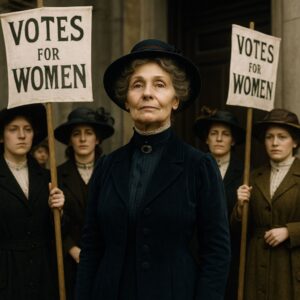
On October 10, 1903, in a modest house in Manchester, England, Emmeline Pankhurst gathered a small group of women around her kitchen table. The meeting was unassuming in size but seismic in consequence. That day, the Women’s Social and Political Union (WSPU) was born—a movement that would rattle the foundations of British society, storm the …
The Day the Revolution Lost Its Face: The Execution of Che Guevara

On October 9, 1967, in a dusty Bolivian schoolhouse in the small village of La Higuera, a man who had become more myth than flesh was executed by a firing squad. His name was Ernesto “Che” Guevara—doctor, guerrilla fighter, revolutionary icon. He died not on a battlefield, surrounded by the thunder of armies, but in …
When the City Burned: The Great Chicago Fire of 1871

On the night of October 8, 1871, the city of Chicago went to sleep under clear skies, unaware that within hours, flames would transform their lives, their homes, and their future forever. By dawn, the city would be a sea of fire, a hellscape of wood, wind, and despair. It became one of the most …
The War That Wouldn’t End: America’s Invasion of Afghanistan and the Long Shadow of October 7, 2001

On October 7, 2001, less than a month after the Twin Towers crumbled and the Pentagon burned, the United States launched airstrikes on Afghanistan. It was the beginning of what would become the longest war in American history—a war that promised justice, but instead dragged the world into two decades of blood, politics, shifting alliances, …
The Day of Atonement Turned to Fire: The Yom Kippur War of 1973

On October 6, 1973, while much of Israel stood in solemn silence for Yom Kippur—the holiest day in the Jewish calendar—the sound of shofars in synagogues was drowned out by the roar of jet engines, tank treads, and artillery fire. It was a day that began in fasting and prayer but descended into chaos and …
The Day the World Lost Its Apple: Remembering Steve Jobs

On October 5, 2011, the world seemed to pause. Screens dimmed, voices hushed, and millions of people across the globe sat in stunned silence as the news broke: Steve Jobs, the co-founder of Apple, the visionary behind the iPhone, iPod, iMac, and iPad, had passed away at the age of 56. His death was not …
The Beep That Changed the World: How Sputnik 1 Launched Humanity Into the Space Age

On the evening of October 4, 1957, a faint, rhythmic beep-beep-beep drifted down from the skies above Earth. It wasn’t the sound of a bird, a plane, or even the hum of earthly machines. It was the voice of a metal sphere, no larger than a beach ball, hurtling through the heavens. That voice belonged …
The Night the Wall Fell Twice: How East and West Germany Became One
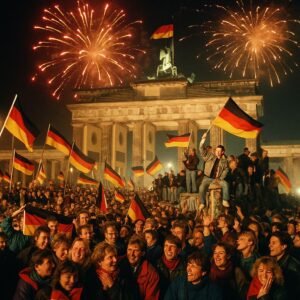
On October 3, 1990, fireworks lit up the Berlin sky, choirs sang, church bells rang, and tears flowed freely as Germany was officially reunified. It was not just the birth of a new nation—it was the healing of an old wound, a wound carved into stone and concrete for nearly three decades. That night, the …
The Quiet Force That Shook an Empire: The Story of Mahatma Gandhi

On October 2, 1869, in a quiet coastal town in Gujarat called Porbandar, a child was born who would one day unsettle the mightiest empire on earth not with cannons or armies, but with an idea—that truth and nonviolence could be stronger than bullets and bayonets. His name was Mohandas Karamchand Gandhi, but the world …
The Day the World Tilted: Alexander’s Triumph at Gaugamela

History is littered with moments that feel like the turning of a page in a book, but the Battle of Gaugamela was more than just a page—it was a whole new chapter. On October 1st, 331 BC, the fate of empires and the course of civilizations shifted in the dusty plains of northern Mesopotamia. The …
The Paper That Promised Peace: The Munich Agreement and the Price of Appeasement
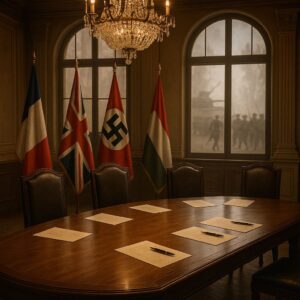
On September 30, 1938, the leaders of four nations sat in a gilded chamber in Munich and signed a piece of paper they claimed would preserve peace in Europe. British Prime Minister Neville Chamberlain, French Premier Édouard Daladier, German Chancellor Adolf Hitler, and Italian dictator Benito Mussolini affixed their signatures to the Munich Agreement, a …
Crisis in the Medicine Cabinet: The Tylenol Murders That Shook America

On the morning of September 29, 1982, a 12-year-old girl in the Chicago suburbs woke up with a cold. Her parents did what any family would do — they gave her Extra-Strength Tylenol, the most trusted pain reliever in America. By mid-morning, she was dead. Within hours, more deaths followed: a young postal worker, a …
A Happy Accident: How Fleming’s Messy Petri Dish Gave the World Penicillin
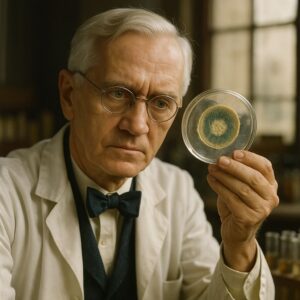
On the morning of September 28, 1928, in a modest laboratory at St. Mary’s Hospital in London, a man returned from vacation to find a small miracle growing in one of his forgotten petri dishes. Alexander Fleming, a Scottish bacteriologist with a keen eye for the unusual, noticed that colonies of staphylococcus bacteria he had …
Steam and Speed: The Day the World First Rode the Iron Horse
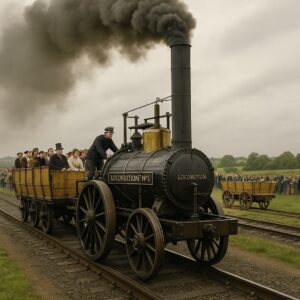
On September 27, 1825, the world changed forever, though few who were there that day could have grasped the full magnitude of what they were witnessing. In the north of England, on a stretch of track between the coal fields near Shildon and the port town of Stockton-on-Tees, a steam-powered locomotive hissed, rattled, and roared …
Lights, Camera, Politics: The Night Kennedy Outshone Nixon on Live Television
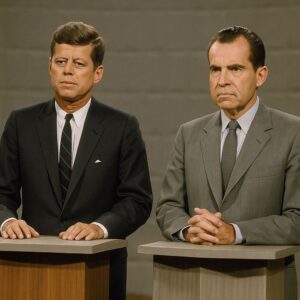
On September 26, 1960, America tuned in to something it had never seen before — politics as performance, democracy played out not on a podium or in print, but in the glow of television screens. It was the first-ever televised presidential debate, pitting a young senator from Massachusetts, John F. Kennedy, against the sitting vice …
The Little Rock Nine: Walking Into the Storm of History

On September 25, 1957, nine African American teenagers walked through the front doors of Little Rock Central High School in Arkansas under the protection of U.S. Army paratroopers. Their names were Ernest Green, Elizabeth Eckford, Jefferson Thomas, Minnijean Brown, Terrence Roberts, Carlotta Walls, Gloria Ray, Thelma Mothershed, and Melba Pattillo. They were young, ordinary students …
Beneath the Blue: The Magic of Snorkeling and Underwater Discovery

There is a certain moment when you first dip your face into the water, the world above instantly muted, the horizon erased, and suddenly everything changes. The chaos of the surface falls away, replaced by silence punctuated only by the sound of your own breath echoing through the snorkel. And then, as your eyes adjust …
Black Friday: The Day Greed Crashed the Gold Market and Shook America

On September 24, 1869, Wall Street descended into madness. It was a Friday morning like no other, a day when fortunes evaporated, when brokers screamed themselves hoarse on the trading floor, when the very foundation of America’s post–Civil War economy seemed to crack under the weight of raw speculation. The newspapers would forever call it …
Finding a Giant: How Neptune Emerged From the Shadows of the Sky

On the night of September 23, 1846, humanity’s gaze expanded to embrace another world. In the quiet of the Berlin Observatory, astronomer Johann Gottfried Galle peered through a telescope, guided not by chance but by mathematics, and spotted a faint blue disk glimmering against the canvas of the heavens. This was Neptune — a planet …
A Proclamation Toward Freedom: Lincoln’s Preliminary Edict That Shook a Nation
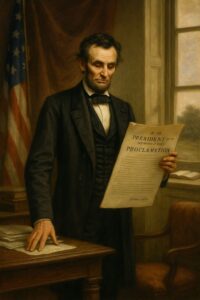
On September 22, 1862, in the midst of the bloodiest conflict America had ever endured, President Abraham Lincoln placed pen to paper and issued a proclamation that changed the moral and political trajectory of the United States. Known as the Preliminary Emancipation Proclamation, it declared that if the rebelling Confederate states did not return to …
Treason at West Point: The Day Benedict Arnold Betrayed the Revolution
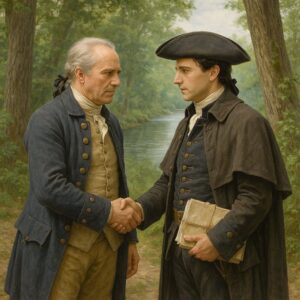
On September 21, 1780, in a quiet grove along the Hudson River, two men met in secret to alter the course of the American Revolution. One was Major John André, a dashing young officer in the British army, admired for his charm and intelligence. The other was General Benedict Arnold, a hero of earlier battles …
Billie Jean vs. Bobby: The Night America Turned a Tennis Court Into a War Zone

Houston, September 20, 1973. The Astrodome throbs like the belly of some giant neon beast, and I’m in the middle of it, ears ringing, brain boiling, heart sprinting like a rabbit trapped under floodlights. This isn’t tennis — don’t let anyone fool you. This is bloodsport dressed up in polyester whites. This is a carnival, …
From Smiley to Culture Shift: The Day the Emoticon Was Born

On September 19, 1982, in the computer labs of Carnegie Mellon University, history was made in the most unlikely way. Not with rockets or revolutions, not with treaties or discoveries, but with three humble keystrokes: colon, hyphen, and parentheses. Together, they formed “:-)” — the world’s first widely recognized digital smiley face. It was posted …
All the News That’s Fit to Print: The Day The New York Times First Hit the Streets

On September 18, 1851, the streets of New York City awoke to a new voice. Amid the clatter of horse-drawn carriages, the cries of newsboys hawking papers, and the hum of a city that was rapidly becoming the beating heart of America, a four-page newspaper rolled off a printing press for the very first time. …
A More Perfect Union: The Day the U.S. Constitution Was Signed
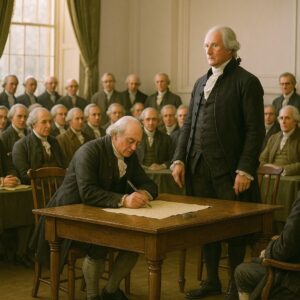
On September 17, 1787, in a stuffy room in Philadelphia’s State House, a group of weary delegates affixed their signatures to a document that would alter the trajectory of human history. That document was the United States Constitution. For four long months, the men gathered there — farmers and lawyers, merchants and generals, revolutionaries and …
Setting Sail for a New World: The Mayflower’s Voyage That Changed History
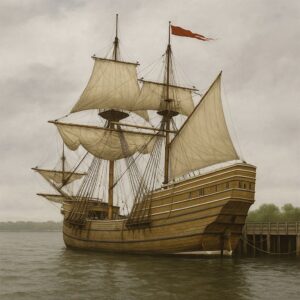
On September 16, 1620, a small wooden ship slipped away from the port of Plymouth in southern England and set its bow toward the unknown. The vessel was called the Mayflower, a merchant ship never designed for the burden of history it would soon carry, and aboard were just over one hundred passengers — men, …
The Day Wall Street Shook: How the Collapse of Lehman Brothers Changed the World

On September 15, 2008, the global economy was rocked by a single event that reverberated far beyond the trading floors of New York. Lehman Brothers, one of Wall Street’s oldest and most prestigious investment banks, filed for bankruptcy. With roots going back to 1850, Lehman had survived wars, depressions, and countless financial storms. But on …
Touching the Moon: The Day Humanity First Reached Another World
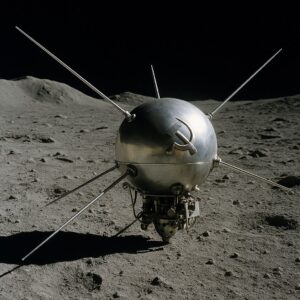
On September 14, 1959, something extraordinary happened. For the first time in history, an object built by human hands escaped Earth’s gravity, traveled across the void of space, and crashed into the Moon. That object was Luna 2, a Soviet spacecraft, and though its mission ended in a violent impact, its legacy was monumental: humanity …
Handshake on the White House Lawn: The Day Hope Was Given a Stage
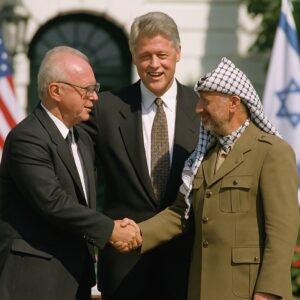
On September 13, 1993, the world stopped for a moment. Cameras from every major news network fixed their lenses on the White House lawn, where a stage had been carefully arranged, flags fluttering against the bright Washington sky. On that stage, U.S. President Bill Clinton stood between two men who had spent most of their …
We Choose the Moon: JFK’s Speech That Dared Humanity to Dream Beyond the Stars

On September 12, 1962, in the sweltering Texas heat, John F. Kennedy stood before a crowd of forty thousand people at Rice University and delivered a speech that would become one of the most defining orations of the twentieth century. The president’s words, carried on the air across the stadium, beyond Houston, and ultimately around …