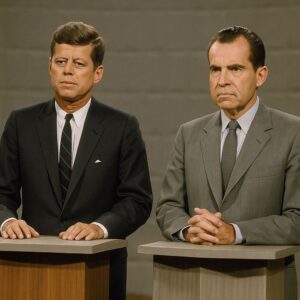
On September 26, 1960, America tuned in to something it had never seen before — politics as performance, democracy played out not on a podium or in print, but in the glow of television screens. It was the first-ever televised presidential debate, pitting a young senator from Massachusetts, John F. Kennedy, against the sitting vice …
Category: Events
The Little Rock Nine: Walking Into the Storm of History
On September 25, 1957, nine African American teenagers walked through the front doors of Little Rock Central High School in Arkansas under the protection of U.S. Army paratroopers. Their names were Ernest Green, Elizabeth Eckford, Jefferson Thomas, Minnijean Brown, Terrence Roberts, Carlotta Walls, Gloria Ray, Thelma Mothershed, and Melba Pattillo. They were young, ordinary students …
Beneath the Blue: The Magic of Snorkeling and Underwater Discovery
There is a certain moment when you first dip your face into the water, the world above instantly muted, the horizon erased, and suddenly everything changes. The chaos of the surface falls away, replaced by silence punctuated only by the sound of your own breath echoing through the snorkel. And then, as your eyes adjust …
Black Friday: The Day Greed Crashed the Gold Market and Shook America
On September 24, 1869, Wall Street descended into madness. It was a Friday morning like no other, a day when fortunes evaporated, when brokers screamed themselves hoarse on the trading floor, when the very foundation of America’s post–Civil War economy seemed to crack under the weight of raw speculation. The newspapers would forever call it …
Finding a Giant: How Neptune Emerged From the Shadows of the Sky
On the night of September 23, 1846, humanity’s gaze expanded to embrace another world. In the quiet of the Berlin Observatory, astronomer Johann Gottfried Galle peered through a telescope, guided not by chance but by mathematics, and spotted a faint blue disk glimmering against the canvas of the heavens. This was Neptune — a planet …
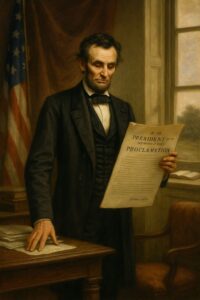
A Proclamation Toward Freedom: Lincoln’s Preliminary Edict That Shook a Nation
On September 22, 1862, in the midst of the bloodiest conflict America had ever endured, President Abraham Lincoln placed pen to paper and issued a proclamation that changed the moral and political trajectory of the United States. Known as the Preliminary Emancipation Proclamation, it declared that if the rebelling Confederate states did not return to …
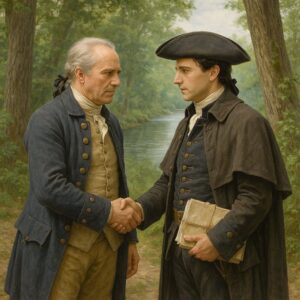
Treason at West Point: The Day Benedict Arnold Betrayed the Revolution
On September 21, 1780, in a quiet grove along the Hudson River, two men met in secret to alter the course of the American Revolution. One was Major John André, a dashing young officer in the British army, admired for his charm and intelligence. The other was General Benedict Arnold, a hero of earlier battles …
From Smiley to Culture Shift: The Day the Emoticon Was Born
On September 19, 1982, in the computer labs of Carnegie Mellon University, history was made in the most unlikely way. Not with rockets or revolutions, not with treaties or discoveries, but with three humble keystrokes: colon, hyphen, and parentheses. Together, they formed “:-)” — the world’s first widely recognized digital smiley face. It was posted …
All the News That’s Fit to Print: The Day The New York Times First Hit the Streets
On September 18, 1851, the streets of New York City awoke to a new voice. Amid the clatter of horse-drawn carriages, the cries of newsboys hawking papers, and the hum of a city that was rapidly becoming the beating heart of America, a four-page newspaper rolled off a printing press for the very first time. …
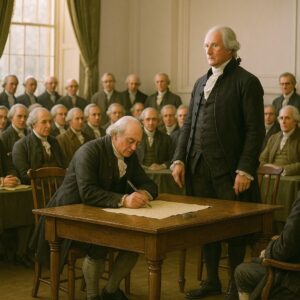
A More Perfect Union: The Day the U.S. Constitution Was Signed
On September 17, 1787, in a stuffy room in Philadelphia’s State House, a group of weary delegates affixed their signatures to a document that would alter the trajectory of human history. That document was the United States Constitution. For four long months, the men gathered there — farmers and lawyers, merchants and generals, revolutionaries and …
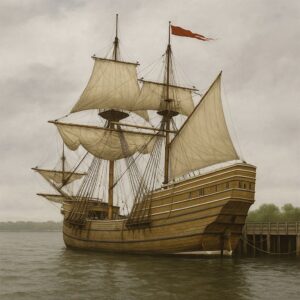
Setting Sail for a New World: The Mayflower’s Voyage That Changed History
On September 16, 1620, a small wooden ship slipped away from the port of Plymouth in southern England and set its bow toward the unknown. The vessel was called the Mayflower, a merchant ship never designed for the burden of history it would soon carry, and aboard were just over one hundred passengers — men, …
The Day Wall Street Shook: How the Collapse of Lehman Brothers Changed the World
On September 15, 2008, the global economy was rocked by a single event that reverberated far beyond the trading floors of New York. Lehman Brothers, one of Wall Street’s oldest and most prestigious investment banks, filed for bankruptcy. With roots going back to 1850, Lehman had survived wars, depressions, and countless financial storms. But on …
Touching the Moon: The Day Humanity First Reached Another World
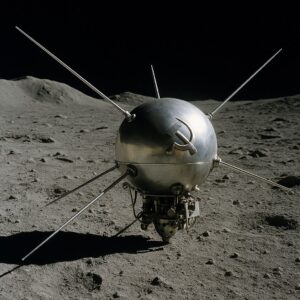
On September 14, 1959, something extraordinary happened. For the first time in history, an object built by human hands escaped Earth’s gravity, traveled across the void of space, and crashed into the Moon. That object was Luna 2, a Soviet spacecraft, and though its mission ended in a violent impact, its legacy was monumental: humanity …
We Choose the Moon: JFK’s Speech That Dared Humanity to Dream Beyond the Stars
On September 12, 1962, in the sweltering Texas heat, John F. Kennedy stood before a crowd of forty thousand people at Rice University and delivered a speech that would become one of the most defining orations of the twentieth century. The president’s words, carried on the air across the stadium, beyond Houston, and ultimately around …
A Nation Remembers: The Day the World Changed
On the morning of September 11, 2001, the world changed forever. The bright blue skies over New York City gave no hint of the terror about to unfold, no warning of the unimaginable tragedy that would carve itself into the memory of an entire generation. That day began like any other Tuesday. People rushed to …
Switching On the Big Machine: The Day We Fired the First Beam at the LHC
On September 10, 2008, the world held its breath. Somewhere deep beneath the French-Swiss border, a machine unlike anything ever built was about to come alive. It wasn’t a weapon, or a monument, or a luxury for the elite. It was a ring of steel and magnets stretching for 27 kilometers underground, cooled to temperatures …
Striking Gold: How California Crashed Into Statehood
When California joined the Union on September 9, 1850, it did so with the kind of drama, speed, and chaos that perfectly suited the place we now think of as the land of reinvention. In a country that was still wrestling with slavery, westward expansion, and fragile compromises, California didn’t wait politely in line like …
To Boldly Go: Star Trek Premieres on NBC
On the night of September 8, 1966, American television audiences tuned their sets to NBC and saw something they had never quite seen before. In a landscape dominated by westerns, family sitcoms, and police dramas, a new series opened with a starship streaking across the stars, accompanied by a voice intoning the now immortal words: …
The Blitz Begins: London Under Fire
On the evening of September 7, 1940, the people of London looked to the sky and saw their city’s fate written in the darkening clouds. At first it was only a hum, a vibration just on the edge of hearing, but soon the sound swelled into a roar as hundreds of German aircraft advanced across …
A Handshake and a Hidden Gun: Shots in Buffalo
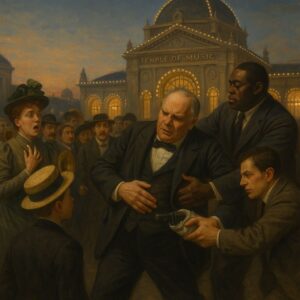
It was meant to be a day for handshakes, not headlines. Buffalo wore its Pan-American Exposition like a crown—electric lights strung along fairgrounds that looked like a city invented by hope, gondolas sliding across a man-made lake, pavilions named for progress and promise. On September 6, 1901, President William McKinley, a veteran with a calm …
Five Rings, Black Morning: Munich’s Day of Terror and the Shattered Promise of 1972
It was supposed to be the party where the world remembered how to breathe. The 1972 Summer Games in Munich were designed as a rebuttal to history’s darkest echoes—sunlit architecture, pastel uniforms, smiling volunteers, and a host city determined to prove that “the cheerful Games” could rinse the century’s taste of iron from the mouth. …
The Day the Internet Found Its Compass: How a Scrappy Garage Became Google, Inc.
There are birthdays that pass with cake and candles, and there are birthdays that rearrange the furniture of the world. September 4, 1998, belongs to the second kind. On paper, it was a simple act: two Stanford graduate students filed documents in California and turned their side project into a company with a proper name …
Eleven O’Clock in London, Five in Paris: The Morning Europe Chose War
At 11:00 a.m. in London, the ultimatum expired like a clock running out of mercy. Eleven is a polite hour—late enough for tea, early enough for errands—but on Sunday, September 3, 1939, it became a hinge on which a century swung. The British government had told Berlin: withdraw from Poland, or war follows. The hour …
Ink That Ended a World: V-J Day Aboard USS Missouri
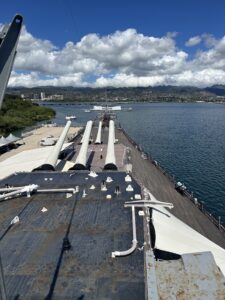
At 9:02 a.m. on September 2, 1945, the morning in Tokyo Bay felt like a held breath. The sea was pewter under an overcast sky, the air still with that strange quiet that follows thunder. Allied battleships and carriers crowded the water like punctuation marks at the end of a very long sentence, their decks …
Fog, Footsteps, and the Law: What August 31 Teaches Us About Fear, Memory, and Justice
The calendar is supposed to be tidy: boxes, numbers, moon phases, holidays, a kind of paper metronome that keeps life on beat. But some dates hum with a stranger rhythm, a low chord that vibrates through streets and courtrooms alike. August 31 is one of those dates. In the pre-dawn hush of 1888, a carman …
Bridges of Justice and Water
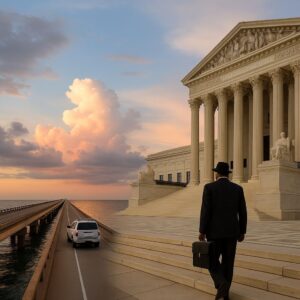
There are days on the calendar that behave like doorways—you step through and discover two rooms that shouldn’t share a wall and yet somehow complete each other. August 30 is one of those uncanny thresholds. On that date in 1956, the Lake Pontchartrain Causeway opened and drew a straight, improbable line across a moody, shallow …
Umbrellas and Amplifiers
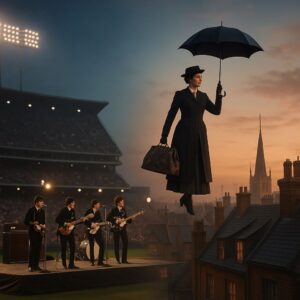
There are calendar days that feel like coin flips—two faces of the same metal, one side shine and one side grit, tossed into the air by history’s impatient hand. August 29 is one of those days. Look at it once and you see a ballpark thundering with a noise that would never be replicated quite …
Racing the Future, Dreaming of Freedom
There are dates that look ordinary until you lean in and catch the hum beneath the ink. August 28 is one of those dates. On one August 28, in 1830, a tea-kettle of a locomotive nicknamed Tom Thumb lined up beside a horse on a short run of track outside Baltimore and lost a race …