We Choose the Moon: JFK’s Speech That Dared Humanity to Dream Beyond the Stars

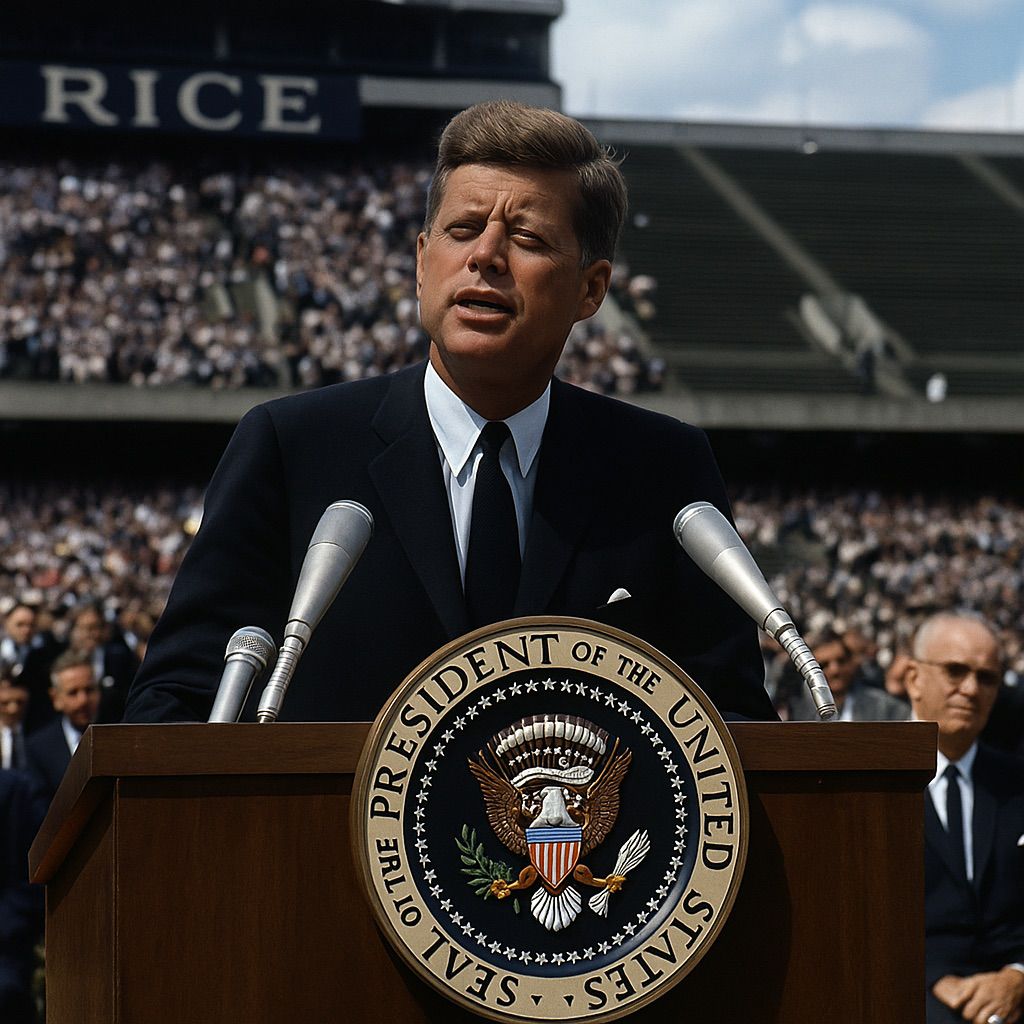
On September 12, 1962, in the sweltering Texas heat, John F. Kennedy stood before a crowd of forty thousand people at Rice University and delivered a speech that would become one of the most defining orations of the twentieth century. The president’s words, carried on the air across the stadium, beyond Houston, and ultimately around the world, did not simply outline a national policy goal. They did not read like a checklist of scientific milestones or budgetary justifications. Instead, Kennedy spoke in a way that lifted hearts, stoked imaginations, and challenged an entire nation to embrace the extraordinary. In a time when America was not only trailing its rival in the Cold War space race but also wrestling with internal anxieties about progress and identity, Kennedy pointed to the heavens and declared that the United States would go to the Moon before the decade was out. It was a bold promise, delivered with unwavering confidence, not because it was safe or easy, but precisely because it was difficult, risky, and uncertain. In doing so, he transformed the space race from a technical competition into a metaphor for human courage, for the restless desire to push past limits, and for the kind of ambition that redefines what a society believes possible. His words would echo not just in the annals of American history, but in the shared consciousness of humanity, forever symbolizing what it means to choose challenge over comfort and vision over fear.

The early 1960s were a period of turbulence and tension. The Cold War was at its height, and the Soviet Union had already made shocking advances in space exploration. In 1957, the launch of Sputnik, the first artificial satellite, had jarred American confidence, creating the uneasy sense that the Soviets were leaping ahead in both science and global prestige. The anxiety only deepened in April of 1961, when Yuri Gagarin orbited the Earth and became the first human in space. The United States, still working to stabilize its early rocketry programs, seemed to be playing catch-up at every turn. For Kennedy, the youthful and energetic leader of a nation that prided itself on innovation and dominance, the optics were unacceptable. America could not afford to appear second best. But rather than retreat into caution, Kennedy seized upon the moment as an opportunity to articulate a broader vision. Space would not merely be a field of rivalry; it would become the proving ground for national ambition, for collective purpose, for the very soul of a people who prided themselves on rising to challenges. And so, on that September afternoon in Houston, his words carried not only the weight of policy but also the weight of destiny.

Kennedy understood the importance of language, and he crafted his Rice University address with the rhythm of a poet and the conviction of a leader who knew that rhetoric could move nations. He did not disguise the magnitude of the task. He described the Moon as a distant and hostile world, its environment unlike anything humanity had ever encountered. He acknowledged the cost — billions of dollars, countless hours, and lives devoted to scientific research and engineering. Yet rather than soften the challenge, he amplified it. He told his audience that the difficulty was precisely why the mission mattered. “We choose to go to the Moon in this decade and do the other things,” he declared, “not because they are easy, but because they are hard.” In that line lies the essence of Kennedy’s genius: the ability to frame hardship not as a deterrent, but as an invitation. Difficulty was not a reason to shrink back, but the very reason to step forward. By stating that difficulty gave purpose, Kennedy elevated the moonshot into something much larger than rockets and astronauts. He made it a metaphor for all human aspiration, for every leap into the unknown that has ever defined progress.

What makes the Rice University speech endure in memory is the way it connected the immediate with the eternal. Kennedy was speaking at a particular historical moment — the height of the Cold War, in the wake of Soviet triumphs, amid political pressure and technological uncertainty. Yet the language he used transcended those specifics. He spoke of exploration as part of the human spirit, of the drive that once led explorers across oceans, that once inspired inventors to transform industries, that once compelled societies to dream beyond the limits of their time. By placing space exploration within this grand lineage, Kennedy turned the space race into something universal, something that belonged not just to Americans, but to humanity itself. The moon became a symbol of the eternal human desire to go farther, to know more, to test ourselves against the boundaries of the possible.

The impact of the speech lay also in its inclusivity. Kennedy made it clear that this was not just NASA’s mission or the astronauts’ mission. It was everyone’s mission. He spoke directly to the American people, telling them that the journey to the Moon was not just a scientific challenge but a collective one, tied to jobs, to education, to innovation, to the belief that the future could and should be brighter than the present. He reminded them that progress was not the work of the few, but the effort of the many. This was crucial in rallying support for a program whose costs would be staggering, both financially and in terms of human labor. Yet Kennedy made those costs seem not like a burden, but like an investment in the very essence of what it meant to be American: daring, ambitious, unwilling to accept defeat.

The moon landing in July of 1969 was, of course, the fulfillment of Kennedy’s promise. When Neil Armstrong stepped off the ladder of the lunar module and uttered his famous words — “That’s one small step for man, one giant leap for mankind” — it was more than a technical triumph. It was the culmination of a vision that had been planted seven years earlier in the hot Texas air, when Kennedy had dared to tell his nation that it would reach for the stars. The Rice speech, then, was not simply a piece of oratory. It was the seed of one of humanity’s greatest achievements. And yet its power goes beyond Apollo. “We choose to go to the Moon” has since become shorthand for every audacious goal, for every time a society dares to attempt what seems impossible. From curing diseases to combating climate change, from technological revolutions to cultural shifts, Kennedy’s words continue to serve as a rallying cry: difficulty is not a reason to stop; it is the reason to begin.

Decades after the speech, its resonance endures because it speaks to something deeper than politics, deeper than technology, deeper than any specific historical moment. It speaks to the very nature of human ambition. Kennedy’s declaration was not only about going to the Moon. It was about the way we, as humans, define ourselves by the challenges we accept. It was about the idea that greatness does not come from choosing the path of least resistance, but from embracing the path of most resistance. In an age where cynicism often overshadows optimism, and where fear of failure can paralyze action, Kennedy’s words are a reminder that the pursuit of the hard, the dangerous, the uncertain is what gives life its meaning. They remind us that the arc of human progress has always been drawn by those willing to try what others deem impossible.

When one listens to the recording of Kennedy’s speech, what stands out is not only the content but the conviction. There is an urgency in his voice, a cadence that builds momentum, a rhythm that pulls the listener along. The speech was not a lecture; it was a call to action, a challenge to the spirit. That is why it remains so powerful even today. It is not simply history. It is a living reminder of what humanity can achieve when it refuses to accept limitations. It is a testament to the fact that courage, vision, and imagination can take us beyond not only our fears but our wildest expectations.

The story of Rice University on September 12, 1962, is not merely the story of a president rallying support for a space program. It is the story of words that became action, of vision that became reality, of a nation that chose to believe in something larger than itself. It is the story of how a speech became a turning point, not just in the Cold War, not just in the history of space exploration, but in the broader narrative of what it means to be human. For in choosing the Moon, Kennedy reminded us that we also choose who we are. We choose whether to accept the comfort of the easy or the challenge of the hard. We choose whether to stand still or to move forward. We choose whether to shrink in the face of the unknown or to rise above it. On that day in Houston, Kennedy’s answer was clear. And it is an answer that still challenges us today.

Related Posts

Runways and Rapture: How New York Fashion Week SS26 Turned the City Into a Stage

New York Fashion Week SS26 arrived not with a whisper but with a thunderclap, and if you were anywhere in Manhattan this week you could feel the ground vibrating under the weight of stilettos, camera shutters, and the collective heartbeat of an industry that thrives on reinvention. Fashion Week has always been a spectacle, but this season, it feels more like a cultural uprising. The clothes are only the start of the story. The real magic is in the mood — and New York is the ultimate co-conspirator, playing host to a festival that turned the city into one giant, glittering runway. From Chelsea’s converted shipping terminals to intimate designer studios, from dog-walked runways to Studio 54-inspired soirées, SS26 is proving that fashion isn’t just about what we wear — it’s about who we are, what we hope for, and what we dare to celebrate.

There’s something about New York Fashion Week that feels like a pilgrimage. People pour into the city as if the skyline itself were stitched in couture. Designers, models, editors, influencers, celebrities, the merely stylish, the wildly eccentric — they all converge in a blur of movement and intention. But SS26 brought a sharper edge, a feeling that after years of uncertainty, delays, and global turbulence, fashion was ready to not only play again but to strut with audacity. It’s not just a comeback; it’s a coronation. And New York, with its relentless energy, embraced its role as the epicenter of reinvention.

Michael Kors set the tone early, staging his collection in a historic Chelsea shipping terminal that felt more like a cathedral of industry than a fashion venue. Against the backdrop of worn brick and river views, Kors sent models gliding down the runway in earthy tones that whispered of natural landscapes while still roaring urban sophistication. Creams, browns, soft blacks, and the occasional shock of sunflower yellow or island pink hinted at destinations both exotic and familiar. The collection balanced utility with sensuality, as if to say: you can be practical without being predictable. You could imagine slipping one of his linen suits on for a boardroom in the morning and then catching a flight to Tahiti by nightfall without ever changing. Kors’ show was a reminder that American glamour isn’t always loud — sometimes it’s the kind that grows on you, like a sun-soaked memory you don’t realize you love until it’s gone.

Ralph Lauren, the old master, responded not with noise but with quiet authority. His show, hosted in his private Madison Avenue studio, unfolded like an intimate conversation with fashion history. Guests sipped champagne under the glow of chandeliers as Lauren sent out models in fluid silhouettes and perfectly tailored classics. Oprah and Gayle King, front-row royalty, nodded approvingly as if to say: here is a man who knows the art of timelessness. Lauren didn’t chase trends — he never does. Instead, he refined them, reminding us that heritage isn’t about nostalgia, it’s about resilience. In a week full of bold statements, Lauren’s was the most understated of all, and somehow, that made it louder than the rest.

But of course, New York thrives on the unexpected, and SS26 delivered. Collina Strada, forever the enfant terrible of American fashion, rolled out a collection that defied categorization. Models stormed the runway like characters out of a dream, wearing garments that seemed stitched together from the discarded imagination of a cosmic carnival. There were sequins clashing with florals, exaggerated silhouettes collapsing into soft drapery, and accessories that looked like they were plucked straight from a surrealist painting. Collina Strada doesn’t design for the faint of heart — and that’s precisely why the crowd couldn’t stop cheering. If Kors was the elegant whisper and Lauren the dignified nod, Collina Strada was the raucous laugh that makes you spill your martini. And at Fashion Week, all three belong in the same conversation.

LaQuan Smith, the enfant terrible’s opposite but equally adored, reminded us that New York nightlife and New York fashion are two sides of the same sequined coin. His SS26 show was all about unapologetic glamour, the kind of body-con silhouettes and cutouts that dare you to look away but know you won’t. Smith’s runway felt like a party you weren’t quite invited to, yet couldn’t help sneaking into. And that’s the essence of his magic: exclusivity mixed with aspiration. Everyone leaves wanting more, and more is exactly what he gives.

Off-White™, too, made waves with its return. The label, long synonymous with urban cool, leaned heavily into its sportswear-meets-luxury ethos, sending out looks that were as at home on the runway as they’d be in a late-night Brooklyn warehouse rave. Bold typography, reimagined street codes, and structural tailoring reminded us why Off-White™ is a cultural language unto itself. The show wasn’t just about clothes — it was about community, about being part of an in-group that extends beyond fashion into lifestyle, attitude, and identity.

Yet the real surprises of Fashion Week weren’t the big names but the rising voices. Rachel Scott of Diotima, recently tapped as creative director at Proenza Schouler, proved she’s more than ready for the spotlight. Her SS26 collection shimmered with Caribbean influence, weaving crochet textures into urban silhouettes in ways that felt both grounded and transcendent. L’Enchanteur, the sibling-run label, took mythology and turned it into wearable poetry, while Gabe Gordon’s debut blurred the lines between tailoring and performance art. These shows weren’t just collections; they were declarations. They told us the future of fashion isn’t locked in Paris or Milan — it’s alive and pulsing in New York’s veins.

But perhaps the most charming moment came not from gowns or glamour but from a dog show. Yes, you read that right. Susan Alexandra teamed up with Rachel Antonoff for a runway where rescue pups trotted alongside models, their tails wagging as loudly as the crowd’s applause. The clothes were whimsical and fun — jewel-tone accessories, playful dresses — but the dogs stole the show, proving that sometimes fashion works best when it doesn’t take itself too seriously. The fact that several of the dogs were available for adoption only underscored the point: fashion can save lives, too, and sometimes the best accessory is a furry friend.

As for the parties — oh, the parties. Valentino turned back the clock with a Studio 54-inspired bash that felt like a fever dream of glitter and disco. Cher, because of course Cher, appeared as if summoned by sheer fabulousness, sending the crowd into hysterics. DJs spun into the early morning, champagne flowed like water, and if you looked closely enough you could see editors and influencers, rivals by day, dancing shoulder to shoulder by night. Over in Brooklyn, Veuve Clicquot staged a Jacquemus-themed picnic that turned an industrial rooftop into a surreal meadow, while Ralph Lauren invited a select few to “Ralph’s Club,” his take on sophisticated nightlife complete with jazz, oysters, and enough velvet to upholster all of Manhattan. Fashion Week is always about the runway, but in SS26 the after-hours proved equally essential. It wasn’t just about seeing and being seen; it was about living the experience fully, as if every night was the closing chapter of a novel too good to put down.

And yet, beneath the glitter, SS26 carried a quiet undercurrent of purpose. Designers leaned into natural palettes — sands, browns, muted greens — and sustainable fabrics. The runway was peppered with recycled materials, organic cottons, and futuristic synthetics designed to last longer and waste less. This wasn’t sustainability as a marketing gimmick but as a design principle, woven into the DNA of the season. You could feel it in Kors’ linen, in Diotima’s crochet, even in the experimental textiles of Off-White™. Fashion Week, so often criticized for excess, seemed to whisper a new promise: beauty without recklessness, spectacle without guilt.

New York itself, of course, was the star. The city doesn’t just host Fashion Week; it becomes Fashion Week. Streets transformed into catwalks, subways filled with showgoers dressed like characters from another dimension, and even the gray September skies seemed to take on a cinematic filter. The city’s energy fed into the collections, and the collections fed back into the city, creating a feedback loop of creativity that’s impossible to replicate anywhere else. You could argue Paris has history, Milan has craftsmanship, and London has edge — but New York? New York has life. Raw, unfiltered, unapologetic life.

What does all this mean for fashion as a whole? SS26 seems to suggest that we’re in an age of synthesis. The old and new, the sustainable and the extravagant, the quiet and the loud — they’re no longer at odds. They coexist, sometimes uneasily, but always in dialogue. Kors’ earthy elegance converses with Collina Strada’s anarchic play. Ralph Lauren’s heritage nods to Diotima’s fresh voice. Even the dogs trot happily alongside the models. The industry, once fractured by trend wars and generational divides, feels like it’s learning to tell one story again — a story of multiplicity, where no single definition of beauty reigns supreme.

As the week rolled on, each show, each party, each whispered conversation in the front row added to the narrative. Trends emerged not just from the runway but from the way people moved through the city. Oversized sunglasses were everywhere, not as a style choice but as shields against paparazzi flash. Metallic accents glimmered on everything from handbags to nails. Sneakers, yes sneakers, continued their reign, often paired with couture gowns in a mash-up that once would have horrified traditionalists but now seems utterly modern. If there was a single theme to SS26, it was freedom — the freedom to mix, to play, to wear what you want, how you want, where you want.

By the time the last show closed and the final after-party bled into morning, SS26 had done what every great Fashion Week does: it created memories, set trends, and gave us a glimpse of the future. But it also reminded us of the simple joy of dressing up, of expressing ourselves, of being part of a community that, at its best, celebrates individuality while welcoming everyone into the fold. Fashion isn’t just about the runway; it’s about the sidewalks, the taxis, the loft parties, the whispered “I love your look” exchanged between strangers. In New York, those moments are everywhere, and during Fashion Week, they shine brighter than sequins under a disco ball.

So what will we remember from New York Fashion Week SS26? We’ll remember Kors’ earthy glamour, Lauren’s dignified timelessness, Collina Strada’s joyful chaos, LaQuan Smith’s unapologetic seduction, Off-White™’s urban cool, and the new voices who dared to join the chorus. We’ll remember the dogs, the parties, the rooftops, the velvet, and the champagne. We’ll remember that in a world often weighed down by seriousness, fashion still knows how to make us smile. Most of all, we’ll remember that for one week in September, New York wasn’t just a city. It was the center of the universe, and everyone, from models to dogs to celebrities to wide-eyed kids clutching their first show invites, had a role to play in the spectacle.

Fashion may move fast, but moments like these linger. SS26 wasn’t just a collection of shows; it was a story told across streets, stages, and skylines. A story of resilience, joy, and possibility. And like all the best stories, it leaves us eagerly waiting for the next chapter.

Related Posts

The Best Tinted Moisturizers with SPF

There are makeup days when you want full coverage—lashes, layers, contour, the works. And then there are those other days, the sunshine hours when you crave simplicity: a sheer veil of glow, something that whispers “I woke up like this” while saying loud and clear, “I am protected.” This is where the magic of a tinted moisturizer with SPF lives, the unsung hero of minimalist beauty. These hybrid formulas offer not just a subtle tint, but moisture and sun protection, all in one lightweight texture that melts effortlessly into your skin. Think of them as the Swiss Army knife of your beauty bag—hydration, color correction, and broad-spectrum defense wrapped up in one silky touch. No wonder beauty editors can’t stop raving about the convenience, dermatologists nod in approval, and shoppers can’t stop reaching for them in the morning. On those bright, breezy days when SPF feels like a chore, a tinted moisturizer with SPF makes it a ritual—a moment of self-care rather than an obligation.

The charm of these products lies in their versatility. Take Merit’s The Uniform Tinted Sunscreen, a newcomer already winning hearts with its SPF 45 coverage, nearly invisible tint, and a formula that calms redness while blurring pores and imparting a soft glow. It doesn’t feel like sunscreen—it feels like skincare in a bottle that understands the golden rule: protection should feel good. Over at Byrdie, testing across dozens of tints crowned Tarte’s Maracuja Tinted Hydrator as best overall for its blend of hydrating maracuja oil, hyaluronic acid, and that candlelit glow we all crave without the sheen. And if oily skin is giving you pause, Fenty’s Hydra Vizor Huez, also praised for its single-step SPF 30 buildable tint, provides a matte-finish miracle. There are options for every skin type: Tower 28’s SunnyDays with mineral SPF 30 is gentle on sensitive skin, while Danessa Myricks’ Yummy Skin Serum shows mature skin some real love.

Navigating all the choices can seem like wandering a beauty labyrinth, but it gets easier with a few trusted guides. Marie Claire’s round-up names EltaMD’s Tinted Daily Face Moisturizer SPF 40 best overall — a dermatologist-approved pick that balances zinc protection, niacinamide, hyaluronic acid, and vitamin E in a featherlight formula that feels like hydration, not hesitation. Prevention magazine highlights Supergoop’s Protec (tint) Daily Skin Tint SPF 50 for folks seeking serious sun defense in a barely-there skin tint, while Ilia’s cult-loved Super Serum Skin Tint SPF 40 scores for its shade inclusivity and clean, glowing finish. Glamour’s editors praise Tower 28’s SunnyDays SPF 30 as a smart everyday choice and Milk’s Hydro Grip Skin Tint for those needing extra wear time and steady hydration through heat, makeup, and hustle. These products do more than cover—they improve your skin’s story while safeguarding it.

What consumers say is equally telling. On Reddit’s beauty threads, users gush over the Well People Bio Tint SPF 30, appreciating its natural, “skin-like” finish that works seamlessly with concealer for higher-impact days. Tower 28 earns repeated nods for walk-in comfort and reliability—it’s one of those products that doesn’t force itself on your routine; it earns its place. On r/Makeup, users recommend Kosas BB Burst, and note Laura Mercier’s Tinted Moisturizer with SPF 25 as a glow-giving workhorse that handles rosacea with grace. These lived experiences are where theory meets reality—tints that pass the daily wear test in oil, sun, and social media scrutiny.

Meanwhile, beauty news outlets continue echoing the praise. SELF magazine reminds us of practical favorites: Neutrogena’s Hydro Boost SPF 50 for hydration, Saie’s Slip Tint SPF 35 for a radiant dewy finish, and Vanicream’s SPF 30 for super-sensitive skin. Prevention notes La Roche-Posay’s Anthelios Mineral Tinted Sunscreen as a go-to for sensitive complexions, while editorial picks from Dermatologists recommend formulas like Supergoop’s Protec (tint) and Ilia’s Serum Skin Tint for sound SPF coverage with skin benefits.

The best tinted moisturizers with SPF aren’t just makeup—they’re every-day armor that look like skin but protect like armor. They give you a moment each morning when beauty and mindfulness converge, when your bare face gets a little love, a little shield, and a light dusting of confidence. Whether you need oil-control, dewy hydration, mature-skin radiance, or shade range that doesn’t ignore you, there’s a perfect match out there. And the best part? They turn the simple, routine act of applying SPF into something joyful—like brushing your skin with sunlit touch rather than slathering on caution. Because summer lines may come and go, but skin protected with love endures.

Related Posts

A Nation Remembers: The Day the World Changed

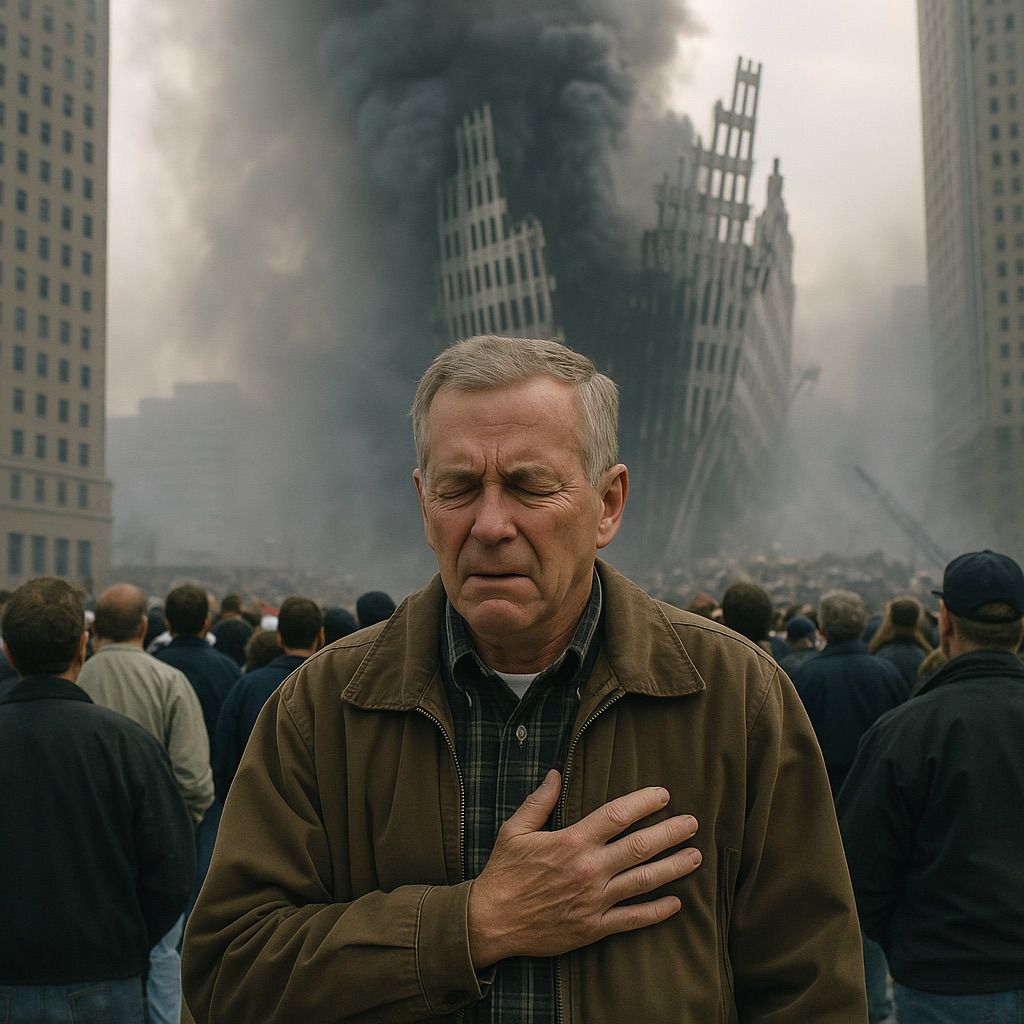
On the morning of September 11, 2001, the world changed forever. The bright blue skies over New York City gave no hint of the terror about to unfold, no warning of the unimaginable tragedy that would carve itself into the memory of an entire generation. That day began like any other Tuesday. People rushed to work, grabbed coffee from street vendors, chatted about school schedules and office meetings. The towers of the World Trade Center stood tall, gleaming symbols of American ambition and resilience, their windows reflecting the morning sun. In Washington, D.C., the Pentagon stirred with routine, while flights crisscrossed the country carrying vacationers, businesspeople, and families. But within the span of a few hours, what seemed ordinary was transformed into history’s most chilling reminder of how fragile life, freedom, and peace truly are.

At 8:46 a.m., American Airlines Flight 11 crashed into the North Tower of the World Trade Center. The impact ripped through floors filled with office workers, secretaries, and executives, scattering glass, steel, and paper into the morning air. At first, many assumed it had been a tragic accident — a plane gone astray, a pilot’s nightmare, a disaster without intent. But as the smoke poured into the blue sky, and as cameras turned toward Manhattan, a second strike came. At 9:03 a.m., United Airlines Flight 175 slammed into the South Tower in a fireball of jet fuel and chaos. In that instant, no one doubted: America was under attack.

The world watched in horror. Televisions across the globe broadcast live images of the Twin Towers burning, their steel skeletons groaning under the strain. People trapped above the impact zones waved desperately for help, some forced to make choices no human should ever face. Firefighters, police officers, and paramedics raced into the buildings, climbing stairwells filled with smoke, carrying equipment on their backs, and knowing the danger they faced. The streets below filled with debris and ash, but also with courage, as New Yorkers reached out to strangers, offering water, shelter, and comfort in the chaos. That was the first sign of the resilience that would define the day — amid the horror, humanity shone through.

At 9:37 a.m., American Airlines Flight 77 struck the Pentagon, piercing the symbol of America’s military might. Flames tore through the building, and chaos erupted in the capital. Just minutes later, another plane, United Airlines Flight 93, was hijacked and redirected toward Washington. But this time, passengers knew. They had heard the news of the towers. They called their families. They prayed. And they fought back. In an act of extraordinary bravery, ordinary citizens stormed the cockpit, sacrificing their lives to prevent the plane from reaching its target. At 10:03 a.m., Flight 93 crashed into a field in Shanksville, Pennsylvania. Its passengers’ courage added another chapter to the story of that day: that even in the face of certain death, the human spirit refuses to surrender.

By 9:59 a.m., the South Tower collapsed. The unthinkable became real. The skyline of New York City, so long defined by the Twin Towers, was swallowed in clouds of dust and debris. At 10:28 a.m., the North Tower followed. The world seemed to stop. Silence hung in living rooms where millions watched on television. Silence stretched across cities, towns, and villages around the globe. Silence, except for the sobs of those who knew loved ones were gone, and the sirens of those still rushing to save lives.

Nearly 3,000 lives were lost that day: mothers and fathers, sons and daughters, firefighters and police officers, office workers and airline crew. They were Americans, but also citizens of more than 90 countries. They were people who had simply gone to work, boarded planes, or responded to a call for help. They were lives cut short, dreams left unfinished, families left broken. And yet, they became part of something larger — symbols of innocence lost, but also of a nation’s enduring resilience.

The days that followed were filled with grief, but also with unity. Americans lined up to give blood. Strangers embraced in candlelight vigils. Flags flew from windows and overpasses. The skyline of Manhattan was filled with smoke, but the streets were filled with compassion. Firefighters and volunteers worked tirelessly at Ground Zero, digging through rubble with bare hands, hoping to find survivors. Walls of photos and messages of the missing covered the city, turning New York into a living memorial. Across the country and the world, people asked the same haunting question: how could this happen? And what comes next?

The attacks of 9/11 reshaped not just America, but the entire world. Airports changed forever. Wars began in Afghanistan and Iraq. Terms like “homeland security,” “war on terror,” and “Patriot Act” entered the global lexicon. Every traveler felt the weight of new security checks, every nation reconsidered its vulnerability, and every person who lived through that day carried its memory. Yet beyond politics and policy, the true legacy of 9/11 lies in the resilience of the human spirit. It lies in the firefighters who ran toward danger when everyone else was running away. It lies in the passengers of Flight 93 who fought for the lives of strangers they would never meet. It lies in the ordinary people who became extraordinary in a moment of crisis.

September 11 is remembered not only as a day of loss, but as a day of remembrance, unity, and resolve. Every year, the names of the victims are read aloud in New York, Washington, and Pennsylvania. Bells toll. Flags lower. And the world remembers. Memorials now stand where the towers once rose, not as symbols of destruction, but as tributes to resilience, courage, and the enduring memory of those lost. The 9/11 Memorial pools in Lower Manhattan, etched with nearly 3,000 names, are silent reminders of a day that shook the earth and changed us all.

But 9/11 is not frozen in the past. It continues to live in the stories told by survivors, in the children who grew up without parents, in the soldiers who served in the wars that followed, and in the daily lives of people who carry the scars of that day. It lives in the quiet moments: in the firefighter who hears a siren and remembers, in the airline passenger who grips the armrest during turbulence, in the family who sets an empty chair at Thanksgiving. It lives in us all, a reminder of both our vulnerability and our strength.

And yet, perhaps the most important lesson of 9/11 is that love endures. In the face of unimaginable hatred, love did not collapse with the towers. Love poured into the streets, across oceans, through phone calls, prayers, and tears. Love held families together. Love gave courage to strangers. Love gave the world hope that even in the darkest hour, the light of humanity cannot be extinguished.

On September 11, 2001, the world witnessed both the worst and the best of humanity. We saw destruction, hatred, and death. But we also saw heroism, compassion, and unity. We saw that even when buildings fall, people rise. And that is why, decades later, we still remember — not only the horror of what was lost, but the strength of what remained.

Related Posts

Stories in the Sand: The Ultimate Guide to Beach Reads for Summer Escapes

There’s a particular kind of magic that happens when you sit down on the beach with a book in hand. The world slows, the tide rolls in and out, and you find yourself caught between two worlds — the real one filled with waves, sunscreen, and laughter, and the fictional one filled with characters, journeys, and emotions that pull you in deeper than the sea itself. A good beach read is not defined by genre or literary acclaim but by the way it carries you. It’s the novel you can slip into easily, the one you can pick up and put down between dips in the water, the one that makes you forget the sunburn you’ll discover later because you just needed to read one more chapter. Beach reads are the passport to summer adventures without leaving your towel, the companions that turn lazy afternoons into voyages across continents, romances, mysteries, and worlds beyond imagination.

The concept of a beach read has long fascinated both readers and publishers. Every summer, lists are compiled, stacks appear at bookstores, and the phrase itself becomes shorthand for something fun, accessible, and engrossing. But beach reads are more than marketing. They are cultural markers of our seasons, the books that define summers past and present, the stories that linger like the scent of salt air long after the covers have closed. When you think back to a vacation you once took, chances are you remember not only the sand and the sea but also the book that accompanied you. Maybe it was a romance that left you smiling, a thriller that kept you turning pages until midnight, or a memoir that made you see your own life differently as you gazed at the horizon. Books have a way of binding themselves to moments, and summer is their favorite stage.

When people imagine beach reads, many picture lighthearted romances, and indeed, few things pair better with a sun-drenched day than a love story that unfolds like a summer breeze. Romance novels thrive on the beach because they echo the season itself — fleeting, passionate, tinged with possibility. Whether it’s a chance encounter in a small coastal town, a forbidden love set against family drama, or a witty, banter-filled tale of two opposites finding common ground, romance novels deliver hope and warmth, mirroring the very atmosphere of summer. They remind us that joy is worth pursuing, that vulnerability is strength, and that sometimes the best kind of escape is into the arms of a fictional someone who makes us believe in love again.

But romance isn’t the only contender for beach reads. Thrillers and mysteries dominate the category too, offering a different kind of escape. There’s something deliciously fitting about sitting under an umbrella while reading a story that makes your pulse race faster than the crashing surf. Summer thrillers often feature fast plots, shocking twists, and high-stakes drama — crimes in small beach towns, secrets among vacationing families, or missing persons that turn holidays into nightmares. The juxtaposition of a sunny day with a dark story heightens the thrill, a reminder that shadows exist even under the brightest skies. A well-crafted thriller is like the ocean itself: calm on the surface but hiding depths, currents, and dangers that can pull you under when you least expect it.

Historical fiction has carved its space in summer reading too, especially for those who crave immersion in another time. To sit by the sea while reading about wartime Europe, Renaissance Italy, or ancient civilizations is to feel transported twice over — once by the location, once by the story. Historical novels often balance research with storytelling, giving you characters to root for while teaching you something new about the past. They remind us that human emotions, struggles, and triumphs are timeless, echoing across centuries, even as we recline in modern swimsuits with sand between our toes.

For others, memoirs and nonfiction books provide the perfect beach companion. There is something powerful about sitting in nature while reading someone else’s truth, their lived experiences laid bare like footprints in the sand. Whether it’s a celebrity memoir filled with behind-the-scenes stories, a travelogue that mirrors your own wanderlust, or a self-help book that nudges you toward growth, nonfiction belongs on the beach as much as fiction does. The rhythmic sound of the waves becomes the backdrop for reflection, making lessons and insights land even deeper. Summer often feels like a season of reinvention, and nonfiction can be the spark that lights the way.

Then there are the classics — the books that have lived across generations and continue to find their way into beach bags year after year. To read a classic on the beach is to join an unbroken chain of readers who have been moved by the same words for decades, even centuries. Whether it’s the dreamy prose of F. Scott Fitzgerald’s Tender Is the Night read against an actual sunset, or the windswept romance of Emily Brontë revisited with waves crashing nearby, classics gain new texture in the summer air. They remind us that great stories never age, and that the joy of reading is eternal.

The best part about beach reads, though, is that they belong to the reader, not to a list. Your perfect beach book might be an epic fantasy with dragons soaring across kingdoms, a contemporary drama about friendships tested by time, or even a cookbook filled with tropical recipes you plan to try when you head back to the kitchen. What matters is not what the world declares as the “top summer novel” but what captures your heart, what makes the hours slip by unnoticed while the tide creeps closer to your toes.

There is something sacred about the act of reading on a beach. The sea reminds you of vastness, of eternity, while the book pulls you deep into intimacy with its story. Together, they create a paradoxical harmony — infinite and personal, external and internal. You lose yourself twice over, once in the horizon and once in the pages. And when you close the book, when you look up and see the water glittering, you realize that both kinds of beauty — natural and narrative — are working together to remind you how good it is to simply be alive.

The novels that define a summer are not always the ones critics hail or publishers push, but the ones that find you at the right moment. Maybe it’s a paperback passed down by a friend, pages worn and creased by many hands. Maybe it’s a brand-new release you picked up at the airport, devoured before the return flight. Maybe it’s a guilty pleasure, maybe it’s high literature. What matters is that it made you feel, it made you escape, it made the beach even more beautiful because the story became a part of it.

When you think about it, beach reads are more than books. They are memories. They are tied to scents, to sounds, to feelings. Years from now, you may not remember every detail of a novel, but you will remember the way you laughed out loud while reading it under an umbrella, or the way your heart pounded as the plot twisted just as the sun dipped below the horizon. You’ll remember the salty breeze carrying your imagination farther than you thought possible. A good beach read lingers like a tan — fading slowly but leaving traces that prove it was there.

So as summer stretches ahead, pack your sunscreen, your towel, your snacks — and don’t forget your book. Pick the story that excites you, that comforts you, that makes you curious. Pick the one that makes you forget the time, that makes you sigh with satisfaction, that makes you fall in love with words all over again. Because summer isn’t just about beaches. It’s about stories. And sometimes the best journeys you’ll take this season won’t involve boarding a plane or driving for hours, but flipping a page while waves crash in the distance.

Related Posts

Switching On the Big Machine: The Day We Fired the First Beam at the LHC

On September 10, 2008, the world held its breath. Somewhere deep beneath the French-Swiss border, a machine unlike anything ever built was about to come alive. It wasn’t a weapon, or a monument, or a luxury for the elite. It was a ring of steel and magnets stretching for 27 kilometers underground, cooled to temperatures colder than deep space, waiting for its first real test. It was the Large Hadron Collider — the LHC — and when its first proton beam fired, it felt as if humanity itself had flipped a switch to peek into the dawn of the universe.

People forget just how tense that morning was. Newspapers screamed about “Earth-eating black holes,” talk shows mocked the scientists as reckless doomsday engineers, and some even filed lawsuits to stop the machine from turning on. But the physicists weren’t afraid. They had run the math, double-checked the risks, and knew the science was safe. They weren’t courting destruction; they were chasing knowledge. Still, that sense of drama gave the event an almost cinematic energy — like a countdown before a rocket launch, only this rocket was aimed not at the stars, but at the smallest building blocks of existence.

And then it happened. A pulse of protons, tiny particles that make up the atoms inside us, shot into the tunnel. Monitors lit up, signals flashed, and suddenly, the beam made its full lap. In the control room, cheers erupted, hugs were shared, and eyes filled with tears. For the thousands of scientists who had devoted their lives to this colossal project, it was like watching a child take their first breath. The collider worked. The dream was real.

That moment wasn’t just about physics. It was about what humanity can do when it decides to dream together. The LHC wasn’t built by one country, one culture, or one billionaire. It was the work of thousands of people from over 100 nations, people who spoke different languages and lived in different worlds, but shared one unshakable belief: that the universe has secrets worth uncovering. In an era of wars and division, the collider became a symbol of cooperation — proof that curiosity can unite where politics divide.

Of course, the first beam wasn’t the end. It was the start of an adventure. Over the next few years, the LHC would give us the Higgs boson, one of the most important discoveries in modern science, a missing piece in our understanding of why matter exists at all. It would push theories to their limits, challenge assumptions, and create more questions than answers. But that’s the beauty of science: every answer is a doorway to something bigger.

Looking back now, that September morning feels almost mythic. The machine didn’t end the world; it opened it. It reminded us that the unknown is not something to fear, but something to chase. It reminded us that humanity’s greatest strength lies not in what we destroy, but in what we dare to build. And maybe most of all, it reminded us that wonder is still alive — that in a noisy, divided world, we are still capable of awe.

When the first beam circled that underground ring, it wasn’t just protons in motion. It was us — our dreams, our questions, our need to understand who we are and where we came from. The LHC’s first beam wasn’t a final answer. It was a beginning. And beginnings, especially ones this big, are worth remembering.

Related Posts

Treasures in a Bottle: How to Capture Sand Memories from Your Trips

There are souvenirs you buy and souvenirs you create, and the ones you create always carry the deepest weight. Anyone can walk into an airport gift shop and pick up a magnet, a T-shirt, or a snow globe with the name of a city printed on it. But when you crouch down on the shore of a place you’ve loved, dig your hand into the sand, and save a little of it to take home, you aren’t just collecting grains of earth — you’re bottling a memory, a moment, a feeling. Sand holds more than shells and fragments of coral. It holds laughter, saltwater, sunsets, stories, and the echoes of footprints long gone. Learning how to bottle sand memories from your trips is less about the mechanics of filling a jar and more about the poetry of preserving something fleeting in a way that will always bring you back to the shore where you first felt it.

The magic of sand is its uniqueness. No two beaches are ever the same. Some sands are as white and soft as powdered sugar, while others glitter with black volcanic minerals or glow with pink coral fragments. There are golden beaches that shine like sunlight, red sands carved by ancient iron, and even green sands born of olivine crystals. When you scoop a handful of sand from one place, you are holding a geological fingerprint of that stretch of coastline, a piece of history shaped over thousands of years. When you line bottles of sand from different journeys side by side, you create a gallery of landscapes, each one distinct and personal, telling a story no store-bought souvenir could ever tell.

Bottling sand memories is also an act of intimacy. The moment of bending down, of feeling the grains slip through your fingers, is like a handshake with the earth. You’re not just looking at a place; you’re touching it, engaging with it, taking a piece of its essence home. Later, when you’re back in your daily routine, opening that little bottle, shaking it gently, and watching the grains shift is like flipping through a diary written not in words, but in minerals and textures. The sand doesn’t just remind you where you were. It reminds you who you were in that moment — carefree, laughing, perhaps sunburned and salty, or maybe calm, contemplative, and in awe of the horizon.

The process of bottling sand memories doesn’t have to be complicated. A small glass jar or bottle, something simple and clear, is all it takes. The transparency is key — you want to see the sand, to let the light hit it and reveal its details. Some travelers add labels with the name of the beach and the date of the trip, while others prefer to leave it anonymous, letting memory fill in the gaps. A simple handwritten note or even a tiny tag tied around the neck of the bottle can turn sand into a time capsule. Each time you glance at it on your shelf, you’ll be transported to that beach, hearing the waves crash and feeling the sun on your skin again.

But beyond mechanics, there’s an art to making sand collections meaningful. Some people layer sands from multiple beaches in one jar, creating stripes of color and texture like a geological rainbow. Others add small seashells, pebbles, or dried flowers from the beach itself. A bottle can become a microcosm of an entire day, each element a piece of a larger memory. If you’re artistic, you can use sand in craft projects — layering it in shadow boxes with photographs, sprinkling it into resin jewelry, or using it in candles and ornaments. Each creative choice is another way of making the memory live outside of your head, tangible and touchable.

The power of sand memory bottles is not just in their beauty but in their accessibility. Unlike expensive souvenirs, sand is free, humble, and universal. Almost anyone can bend down and take a handful of sand, and yet what they create with it is entirely personal. A bottle of sand from your honeymoon beach will carry a different weight than one from a family vacation, a solo backpacking trip, or a spontaneous weekend getaway. Together, they weave the story of your life’s adventures in a way no mass-produced trinket could.

Of course, as with all acts of collecting, respect matters. Some beaches and parks have strict rules against removing natural elements, and those rules are there for a reason. Before you bottle, check. Sometimes, the right choice is not to take, but to find creative ways of capturing the memory in other forms — a photograph of your footprints, a sketch, a journal entry. When collecting is allowed, take only a small amount, just enough to fill your bottle, leaving the beach as beautiful as you found it. After all, the essence of bottling sand memories is to honor the place, not diminish it.

The beauty of this tradition is that it grows over time. The first bottle may seem small, almost insignificant, sitting alone on a shelf. But as years pass and travels accumulate, your bottles become a library. Each one is a chapter, each one a story, each one waiting to be opened and remembered. Lined up, they become not just souvenirs but a map of your wanderings, a timeline of your life’s adventures. The grains of sand you hold will outlast photographs that fade or phones that lose storage. They are elemental, timeless, and enduring.

When guests visit your home and notice the collection, they don’t just see sand. They see curiosity, they see love for the world, they see a storyteller who captures moments in bottles instead of relying on postcards. The conversations that follow are their own kind of memory-making — you, recounting the day you first scooped that sand, reliving the laughter, the swims, the sunsets. In this way, the bottles continue to create joy long after the trip has ended.

Ultimately, bottling sand memories is about grounding yourself in something physical. In a world where so much of our memory lives in digital clouds and endless scrolls of photos, a bottle of sand feels refreshingly real. You can hold it in your hand, shake it, feel its weight, see the way the grains catch light. It is a reminder that travel is not just about destinations but about connections — with places, with people, with moments that shape who we are. Each bottle is a reminder that time is fleeting, but memory, when honored and preserved, can last forever.

So the next time you find yourself at the edge of the sea, toes sinking into the shore, waves brushing against you, and sun sinking low on the horizon, take a moment to scoop up a handful of that place. Let it run through your fingers, feel its texture, and then save just enough to bring home. Later, when life is hectic and routine feels endless, you can pick up that bottle, shake it gently, and be transported. The sound of laughter, the warmth of sun, the crash of waves — all bottled, all yours, forever.

Related Posts

Striking Gold: How California Crashed Into Statehood

When California joined the Union on September 9, 1850, it did so with the kind of drama, speed, and chaos that perfectly suited the place we now think of as the land of reinvention. In a country that was still wrestling with slavery, westward expansion, and fragile compromises, California didn’t wait politely in line like the other states before it. It came barreling in on a tidal wave of gold dust, fortune seekers, and wild ambition. The Gold Rush that began in 1848 didn’t just transform a quiet Mexican province into a bustling epicenter of global migration; it hurled California onto the national stage in record time. In just two short years, what had been a sparsely populated land of missions, ranchos, and Native tribes became the obsession of prospectors, entrepreneurs, and schemers from around the globe. The state’s sudden leap into the Union was not just about gold, though the glitter of it colored everything; it was also about power, politics, and the uneasy balance between free and slave states. To understand California’s admission is to understand the fever of possibility and peril that defined America in the mid-19th century, and to see why California’s identity as a place of extremes and contradictions was written into its DNA from the very beginning.

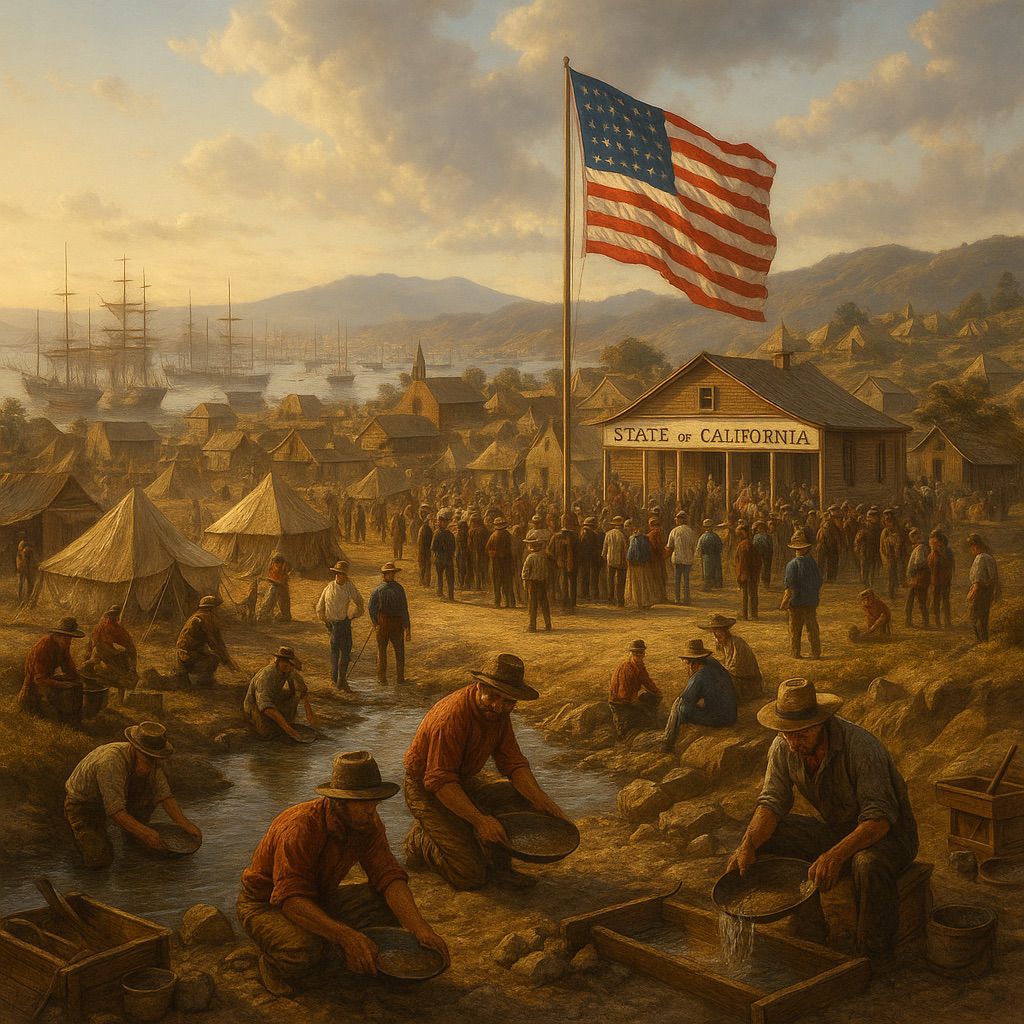
California’s path to statehood was not the gradual process most territories endured. Normally, the United States took its time: a territory would be organized, settlers would arrive, infrastructure would develop, and eventually, once the population reached a certain threshold, petitions for statehood would be considered. California blew past all of that. In January 1848, James Marshall spotted gold flakes in the water of the American River at Sutter’s Mill. By March 1848, word was trickling through San Francisco, and by that summer, the town had emptied of able-bodied men who all rushed to the hills with pans and dreams. By late 1848 and into 1849, word spread beyond California, across the United States, and around the world. The result was one of the most astonishing migrations in history: over 300,000 people descended upon California, arriving by ship around Cape Horn, trekking across the deadly deserts of the Southwest, or trudging through the treacherous Sierra Nevada. San Francisco’s population exploded from a sleepy 1,000 to over 25,000 in just a year. Tents and hastily built shacks replaced the mission quiet with saloons, gambling dens, and the kind of lawlessness that made California feel less like a future state and more like a fever dream.

The sheer speed of this population boom made California’s admission urgent. The land had only just been acquired by the United States under the Treaty of Guadalupe Hidalgo, which ended the Mexican-American War in 1848. Barely had the ink dried on that treaty when California transformed into the ultimate prize. Politicians in Washington saw not just gold but strategic power: a Pacific port, a connection to Asia, and a chance to demonstrate the manifest destiny ideology in glittering reality. Yet, there was a problem. The nation was already tearing itself apart over slavery. Would California enter as a free state or a slave state? The balance of power in Congress teetered on that question, and every new state threatened to tip the scales. Slaveholding southerners wanted California’s fertile valleys to join their system, while abolitionists insisted the land should be free. Meanwhile, Californians themselves—miners and merchants, farmers and fortune seekers—were far more concerned about striking it rich than building slave plantations, and the climate of their society, with its rapid growth and fierce independence, tilted toward free labor.

In 1849, California convened a constitutional convention in Monterey, and in true California fashion, they didn’t wait for Washington’s permission. Delegates, drawn from all over the territory and speaking a dizzying array of languages, drafted a constitution that outlawed slavery. They wanted admission immediately, skipping the territorial stage entirely. It was bold, audacious, and exactly in line with the character of the Gold Rush itself. They didn’t want to be governed by distant politicians or dragged into the slow bureaucratic grind of territorial status; they wanted recognition as equals, as a state, as fast as possible.

The debate in Washington was heated. Adding California as a free state would tip the balance of power in the Senate against the South. Southern senators raged that the Union could not withstand such imbalance, while northern politicians pushed back against the expansion of slavery. The crisis culminated in the Compromise of 1850, one of the most dramatic deals in American legislative history. Crafted by Henry Clay and supported by figures like Daniel Webster, the compromise admitted California as a free state but offered concessions to the South, including the notorious Fugitive Slave Act, which required that escaped enslaved people be returned to their owners even if they reached free states. The compromise held the Union together temporarily, but the fault lines remained, and just a decade later, the country would plunge into civil war. California’s admission was not just another star on the flag; it was a spark in the ongoing tinderbox of slavery and sectionalism.

Life in California during those early years was anything but orderly. The Gold Rush brought dreamers and desperados, men and women from every continent, and with them came both energy and chaos. Law was improvised, justice often carried out at the end of a rope, and fortunes could be made or lost in a single day. Chinese immigrants arrived in large numbers, facing discrimination but contributing significantly to mining, agriculture, and construction. Latin American miners brought techniques and expertise but were often pushed out violently by nativist mobs. Native American populations, already devastated by disease and mission systems, suffered terribly under the onslaught of newcomers, facing violence, dispossession, and systemic extermination campaigns. The promise of California was immense, but so too was the cost, and the rush for gold exposed the darker side of America’s hunger for expansion.

Yet even in that chaos, California’s myth took root: the idea that here was a place of opportunity, of reinvention, of fortune. If the East was about tradition and hierarchy, California was about starting fresh, about staking a claim, about daring to believe in possibility. That ethos shaped the state’s future far beyond gold. When California became the 31st state on September 9, 1850, it did so as a land already defined by extremes: astonishing wealth and crushing poverty, breathtaking beauty and ecological destruction, innovation and injustice. That paradox would echo through its history, from Hollywood’s dreams to Silicon Valley’s digital gold rush.

The speed with which California went from a sparsely settled province to a state was unprecedented. Most states crawled into existence; California sprinted. It was a state born not from patient growth but from frenzy. That frenzied birth is why California often feels different from the rest of the Union—less bound by tradition, more volatile, more visionary, more restless. It entered the United States not as a cautious supplicant but as a force demanding recognition. The Gold Rush was not just a story of nuggets in pans; it was the engine that propelled California onto the national stage, cementing its reputation as a place where anything could happen, for better or worse.

Looking back at September 9, 1850, it’s easy to see California’s statehood as inevitable. But at the time, it was anything but. The compromise that allowed its entry was fragile, the tensions surrounding it immense, and the gamble profound. Yet California’s admission showed the magnetic pull of opportunity. It revealed that America’s destiny was indeed westward, toward the Pacific, toward a future where the old rules didn’t apply. It also showed that the contradictions at the heart of America—freedom and slavery, opportunity and exploitation—were not easily resolved. California embodied both the dream and the nightmare, the promise and the peril, all at once.

And so, on that September day, when California joined as the 31st star on the flag, it was more than paperwork, more than ceremony. It was the moment when the United States reached the Pacific, when the Gold Rush turned from a regional frenzy into a national transformation, when the future of the Union tilted just a little more precariously toward its inevitable reckoning. California didn’t just join the Union. It crashed into it, demanded a seat at the table, and forever changed the conversation.

Related Posts

Beneath the Surface: Discovering the Best Beaches for Snorkeling Around the World

The beauty of a beach is often measured by the way it looks above the waterline, but the true magic lies just beneath the surface. For those willing to strap on a mask, bite down on a snorkel, and glide into the blue, an entire hidden universe awaits — colorful, vibrant, teeming with life. Snorkeling is one of the simplest and most rewarding adventures you can have on a beach day, requiring little more than curiosity and a willingness to float. It opens up a secret door into the world of coral gardens, swaying sea fans, darting tropical fish, and encounters with creatures that seem pulled straight from myths. Finding the best beaches for snorkeling is not about geography alone; it’s about entering places where nature has written her most dazzling stories in shades of turquoise and gold, pink and violet, emerald and silver. The water becomes a canvas, the fish the brushstrokes, and every snorkeler is both an explorer and a guest in a world older and grander than their own.

One of the most iconic snorkeling destinations on earth is Hanauma Bay in Oahu, Hawaii. From above, the bay looks like a perfect crescent carved out of volcanic rock, but beneath the waves lies a sanctuary bursting with coral reefs and vibrant marine life. The water here is calm and shallow, making it perfect even for beginners, but it’s the density of life that makes it unforgettable. Glide through the bay and you’ll find yourself surrounded by schools of butterflyfish and parrotfish, flashes of yellow tangs, and perhaps even a graceful sea turtle cruising by like a serene elder of the reef. The experience is so overwhelming that it feels less like snorkeling and more like stepping into a living aquarium, only this one has been sculpted by nature and preserved by protection efforts that have made Hanauma Bay a global model for marine conservation.

Half a world away, the Caribbean offers its own treasures. Trunk Bay in St. John, part of the U.S. Virgin Islands, is often described as one of the most beautiful beaches in the world, but its real jewel is underwater. An underwater snorkeling trail has been created here, complete with plaques that guide you through the coral formations and introduce you to the fish you’ll encounter. It’s as if the ocean itself is giving you a guided tour, whispering secrets about the reef as you glide through warm, crystalline waters. This blending of education and adventure ensures that even first-timers leave not only dazzled but also more aware of how fragile and precious these underwater ecosystems are.

Australia’s Great Barrier Reef may be the crown jewel of global snorkeling, but it is the smaller, more intimate spots that truly capture the heart. At Whitehaven Beach in the Whitsundays, powdery white sand gives way to waters where stingrays glide like shadows over a turquoise canvas, and tiny, curious fish dart between your legs as you walk in from the shore. The reef here is shallow and easy to access, but the diversity is staggering — corals like sculpted castles, clownfish peeking from anemones, and flashes of electric blue and neon pink that seem too vivid to be real. Snorkeling here reminds you that sometimes the greatest beauty is not in size but in intimacy, in the way each encounter feels personal, like the reef is performing just for you.

For those drawn to the raw, untamed beauty of the Red Sea, Egypt’s Ras Mohammed National Park offers snorkeling like nowhere else. Located at the tip of the Sinai Peninsula, this region is where vibrant coral reefs meet desert cliffs, creating a surreal collision of landscapes. Slip beneath the surface and you are greeted by walls of coral that drop into the depths, teeming with fish that shimmer like jewels against the backdrop of the blue. Barracuda patrol the outer edges, while colorful wrasses, angelfish, and butterflyfish populate the reef. Snorkeling here feels primal, ancient, as if you are tapping into the same waters that have flowed unbroken since the dawn of life itself.

Mexico’s Riviera Maya holds another treasure in Akumal, which means “Place of the Turtles” in Mayan. True to its name, Akumal’s shallow, calm waters are home to green sea turtles that graze peacefully on seagrass meadows just offshore. To snorkel here is to experience one of the most humbling encounters possible — drifting alongside these gentle giants as they move with slow, deliberate grace, completely unbothered by your presence. The sight of a turtle lifting its head to the surface for a breath before sinking back down into the meadow is unforgettable, a reminder of the delicate balance between sea and land, air and water.

In the Maldives, nearly every island offers snorkeling that could make the list of “world’s best.” The waters here are impossibly clear, the corals alive with every imaginable hue, the marine life dazzling in both diversity and abundance. Perhaps nowhere else in the world can you step directly from your overwater villa into a reef where you might see manta rays, reef sharks, and clouds of tropical fish in a single swim. The Maldives redefine what it means to be surrounded by the sea, making every snorkel an immersion in paradise.

The Galápagos Islands, meanwhile, add another dimension to snorkeling — not just color and beauty, but history and uniqueness. Here, you are as likely to encounter a marine iguana gliding past you as you are to see a school of surgeonfish. Sea lions often swim playfully alongside snorkelers, their agility and joy infectious. The Galápagos remind us that snorkeling is not just about seeing beautiful fish, but about sharing space with creatures found nowhere else on earth. It is a humbling, exhilarating reminder of how diverse life can be when allowed to flourish in isolation.

And then there are the hidden gems, the places that don’t make every glossy magazine list but stay forever etched in the memories of those who discover them. Devil’s Crown in the Galápagos, a submerged volcanic crater teeming with life. Molokini Crater in Hawaii, a crescent-shaped sanctuary where visibility is so clear it feels like floating through glass. Ningaloo Reef in Western Australia, less famous than the Great Barrier but just as dazzling, where whale sharks migrate and coral flourishes with fewer crowds.

What makes a beach great for snorkeling is not just what you see, but how it makes you feel. The best beaches for snorkeling remind you that the world is larger and more complex than you imagined, that beauty exists in layers, that every fish, coral, and current is part of a grand design you are only beginning to glimpse. They teach patience, humility, and wonder. They slow you down, force you to breathe, to observe, to marvel.

The real gift of snorkeling is not just the photographs or the list of species you can check off. It is the moment of connection — when a turtle meets your eye, when a school of fish envelops you like a living cloud, when sunlight refracts through water and turns everything into a kaleidoscope. These are moments of intimacy with a world that exists whether or not we visit it, a reminder that paradise is not a resort but an ecosystem, fragile and alive.

The best beaches for snorkeling are scattered across the globe, but they share one thing in common: they leave you changed. You emerge from the water with salt on your skin and wonder in your eyes, carrying with you a piece of the reef, not physically but emotionally. You carry the colors, the rhythms, the quiet power of a world that thrives just beyond our everyday sight. And once you have seen it, you will spend your life seeking it again, diving into new waters, chasing new horizons, searching for that same thrill of discovery.

Snorkeling is not about expertise, expensive gear, or even travel to the farthest corners of the planet. It is about curiosity, about surrendering to the idea that the world beneath the waves is as much ours to explore as the mountains and cities we call home. The best beaches for snorkeling are not just destinations; they are invitations — invitations to witness, to respect, to protect. Because once you have seen paradise underwater, you cannot help but want to keep it safe for generations to come.

Related Posts

To Boldly Go: Star Trek Premieres on NBC

On the night of September 8, 1966, American television audiences tuned their sets to NBC and saw something they had never quite seen before. In a landscape dominated by westerns, family sitcoms, and police dramas, a new series opened with a starship streaking across the stars, accompanied by a voice intoning the now immortal words: “Space… the final frontier.” That series was Star Trek, and though its first run struggled with ratings and risked cancellation at every turn, its legacy would grow into something far larger than anyone watching that evening could have imagined. What began as a modest science fiction program became a cultural force, a global movement, and a philosophy of hope. Its launch in 1966 was not just the beginning of a TV show; it was the start of a journey that would boldly go where no series had gone before, shaping imagination, inspiring technology, and reminding audiences across decades that the human spirit is at its best when it dreams beyond the stars.

The context of Star Trek’s premiere is essential to understanding its resonance. America in 1966 was a nation grappling with profound tension and change. The Cold War was at its height, with fears of nuclear annihilation lingering beneath daily life. The Vietnam War divided families and campuses, sparking protests and outrage. The Civil Rights Movement demanded long overdue justice, with marches, legislation, and heartbreak filling the headlines. Meanwhile, the space race between the United States and the Soviet Union inspired awe and wonder as astronauts pushed further into orbit. Against this backdrop, Gene Roddenberry conceived a show not about cowboys or cops, but about a future where humanity had moved past its divisions, united in exploration, and sought understanding rather than conquest. Star Trek was not escapism; it was a vision of what we could become.

That first episode, “The Man Trap,” which actually aired as the premiere though it was not the intended pilot, told the story of a shape-shifting creature on a desolate planet feeding on human salt. On the surface, it was a monster-of-the-week tale. But woven into it were the themes that would define Star Trek: questions about identity, morality, and the fine line between survival and compassion. Audiences met Captain James T. Kirk, the commanding but deeply human leader of the USS Enterprise. They encountered Spock, the half-Vulcan science officer whose logic clashed with his hidden humanity. They were introduced to Dr. Leonard “Bones” McCoy, equal parts cranky and compassionate, and to a bridge crew that, though fictional, reflected an ideal of diversity rare on television at the time.

Nichelle Nichols as Lieutenant Uhura was a revelation—a Black woman not relegated to servitude or stereotypes, but a competent, respected communications officer on the bridge of humanity’s flagship. George Takei as Sulu, an Asian helmsman, and later Walter Koenig as Chekov, a Russian navigator introduced during the Cold War, further reinforced Roddenberry’s vision of a future beyond prejudice. Pavel Chekov at the helm was particularly bold; at a time when Americans feared nuclear war with the Soviet Union, Star Trek dared to show a world where a Russian and an American served together as allies. And, of course, Leonard Nimoy’s Spock would become an icon, a character whose struggle between reason and emotion mirrored humanity’s own quest for balance.

Yet Star Trek was not an easy sell. The first pilot, “The Cage,” was rejected by NBC executives as “too cerebral.” Instead of scrapping it, the network did something almost unheard of: it ordered a second pilot. That pilot, “Where No Man Has Gone Before,” introduced Kirk and set the tone for adventure and moral quandaries. Even with that greenlight, the show’s future was tenuous. Budgets were tight, special effects were ambitious, and ratings were mediocre. By today’s standards, Star Trek’s sets looked modest, even flimsy, but in 1966 they represented some of the best attempts at visualizing space travel on television. And the storytelling was ambitious, aiming not just for entertainment but for allegory.

Episodes tackled racism, war, authoritarianism, and the dangers of unchecked technology, all cloaked in the safe veil of science fiction. In “Let That Be Your Last Battlefield,” two aliens—each half black and half white, but on opposite sides—destroyed themselves because they could not see past their differences. In “A Taste of Armageddon,” two societies waged a computer-simulated war that required real citizens to be killed as if they had been bombed, raising questions about sanitized violence. In “The City on the Edge of Forever,” Kirk faced the agonizing choice of allowing a woman he loved to die to preserve history. Star Trek dared to ask moral questions most shows avoided.

Despite its innovation, Star Trek’s survival was precarious. Ratings were never strong, and NBC moved the show to a death-slot on Friday nights for its third season. It was nearly canceled after its second year, but an unprecedented letter-writing campaign by fans, led in part by activist Bjo Trimble, convinced the network to give it one more chance. Those fans, who saw in Star Trek not just entertainment but a vision of a better future, became the seed of something new: organized fandom. Star Trek may not have dominated the Nielsen charts, but it birthed a movement that would keep it alive long after 1969.

That movement grew into conventions, fan fiction, and a phenomenon that shocked Hollywood when reruns in syndication became more popular than the original broadcasts. By the 1970s, Star Trek was not dead but more alive than ever, setting the stage for Star Trek: The Motion Picture in 1979, a string of feature films in the 1980s, and new television series that would expand the universe far beyond Roddenberry’s initial three seasons. The Next Generation, Deep Space Nine, Voyager, Enterprise, Discovery, Picard, and Strange New Worlds would follow, each with its own take on the dream. What began on NBC in 1966 became a multigenerational story spanning more than half a century.

The cultural impact of that premiere cannot be overstated. Star Trek inspired countless scientists, engineers, and astronauts. NASA has credited the show with encouraging interest in space exploration. The communicator inspired the design of flip phones. Tablet computers, automatic doors, voice recognition, and even medical scanners all found echoes in Star Trek before becoming reality. Mae Jemison, the first Black woman in space, said Uhura inspired her. Stephen Hawking, a fan of the show, appeared in The Next Generation. The imagination sparked in 1966 continues to ripple outward into real-world innovation.

But beyond technology, Star Trek changed hearts. The sight of a diverse bridge crew working as equals was radical in the 1960s. The kiss between Captain Kirk and Lieutenant Uhura in 1968, often cited as the first interracial kiss on American television, challenged taboos. Spock’s calm logic provided a model for embracing difference. The show’s central message was that humanity could rise above prejudice, violence, and greed. It was not utopia handed on a silver platter but earned through struggle, through making better choices, through choosing to boldly go.

For audiences in 1966, the show was a curiosity, a risky experiment in a time slot dominated by familiar genres. For those who returned week after week, it became something deeper: a promise that the future did not have to be one of fear and division but of unity and wonder. That message, quietly radical at the time, has proven timeless.

Today, looking back at that night in 1966, one can see how unassuming its beginning was. The sets wobbled, the effects were primitive by today’s standards, and the network executives doubted its appeal. And yet, across decades, across languages, across cultures, Star Trek has endured. It has spawned movies, spinoffs, novels, video games, documentaries, and more merchandise than could fill a starship cargo bay. It has been parodied, referenced, and celebrated across every corner of popular culture. And most importantly, it has continued to inspire.

The premiere of Star Trek was more than a television debut. It was a cultural spark. It was the moment a simple science fiction adventure stepped into history and began shaping the dreams of millions. On September 8, 1966, few could have guessed that this modestly budgeted show, struggling for survival, would one day become a universe unto itself. But it did, because it dared to show us not what we were, but what we could become.

Star Trek did not just boldly go. It boldly dreamed. And in doing so, it gave us all permission to do the same.

Related Posts

Sun, Sand, and Safety: Keeping Every Beach Day Worry-Free

There is nothing quite like a beach day. The anticipation begins before you even get there — the smell of sunscreen in the air, the cooler packed with drinks and snacks, the towels rolled tightly in a bag, the excitement of kids who can’t wait to run into the waves. The beach is freedom, a place where time slows down, worries fade, and everything is reduced to sun, sand, and sea. But for all its joy, the beach is also a place where safety matters more than we often think. Beneath the carefree laughter and golden skies, there are risks that can turn a perfect day into a nightmare if we don’t pay attention. That’s why keeping everyone safe on a beach day is not about being paranoid — it’s about being prepared, about creating the conditions where relaxation can actually flourish because the essentials are covered. Safety is not a burden; it’s the foundation of a day everyone will remember for the right reasons.

The first and most important factor of beach safety is the ocean itself. The water is magnetic — it calls to children and adults alike, shimmering under the sun, whispering promises of cool relief. But the ocean is also powerful, unpredictable, and deserving of respect. Rip currents are among the greatest hidden dangers. They are fast-moving channels of water that can sweep even strong swimmers away from shore in seconds. Many people panic when caught, exhausting themselves by fighting directly against the current. The safer strategy is to stay calm, conserve energy, and swim parallel to the shore until you are free from the current’s grip, then make your way back in at an angle. Teaching children — and even reminding adults — about rip currents before anyone enters the water can make the difference between life and tragedy. The rule is simple: the ocean is beautiful, but never underestimate it.

Supervision is another non-negotiable. A beach is not like a backyard pool where the water is contained and controlled. At the beach, waves crash unpredictably, sandbars shift under your feet, and the sheer expanse makes it easy to lose sight of people, especially kids. Having a designated “water watcher” in your group ensures that someone is always paying attention when children or weaker swimmers are in the surf. Rotating this responsibility keeps it fair, but the key is that the job is focused — no phones, no distractions, just eyes on the water. This simple system has saved countless lives. It doesn’t matter how good a swimmer someone is; all it takes is one strong wave, one sudden cramp, one slip beneath the surface. The ocean demands vigilance.

Of course, not all dangers come from the sea. The sun itself can be merciless, and while a sunburn may not seem like a life-threatening issue, the truth is that overexposure to UV rays can cause heatstroke, dehydration, and long-term damage to skin. Sunscreen is the obvious defense, but too many people treat it like an afterthought, applying a quick layer once and forgetting about it. The truth is sunscreen should be applied generously, thirty minutes before sun exposure, and reapplied every two hours, or immediately after swimming or sweating. Wide-brimmed hats, sunglasses, and UV-protective clothing add extra layers of defense. Shade is not optional — whether from an umbrella, a tent, or a natural spot, having a retreat from direct sun can mean the difference between a joyful afternoon and a miserable evening spent with chills and blisters.

Hydration ties directly into sun safety. The combination of heat, activity, and salt air can dehydrate the body faster than we realize. Sodas and cocktails may be fun, but nothing replaces water. Bringing a cooler stocked with cold water bottles and encouraging everyone — especially kids — to drink regularly keeps energy up and prevents dizziness, fatigue, or worse. Pairing hydration with snacks like fresh fruit provides not only relief but also fuel for all the running, swimming, and building of sandcastles that a beach day demands.

Then there are the hazards we don’t think about until they happen — stepping on a sharp shell or piece of glass hidden in the sand, jellyfish stings, or scraped knees from playing near rocks. A small first aid kit can be a quiet hero on a beach trip. Bandages, antiseptic wipes, tweezers, and even vinegar or baking soda (depending on the type of jellyfish common in the area) can turn a crisis into a minor inconvenience. It’s not about anticipating disaster; it’s about giving yourself the power to respond quickly and confidently if something arises.

Swimming zones and lifeguards exist for a reason, and choosing a beach with lifeguards on duty is always the safer option. Lifeguards are trained to spot trouble before it becomes obvious — they can see a struggling swimmer long before a casual observer would notice. Respecting their warnings, flags, and instructions is non-negotiable. If a flag indicates dangerous conditions, trust it. No photo, no thrill, no swim is worth risking your life or the lives of those you love.

One of the most overlooked safety aspects of a beach day is the buddy system. It seems simple, almost childish, but it works. Nobody, no matter how confident, should swim alone. Having someone with you means that if something goes wrong — a cramp, sudden fatigue, or getting caught in a current — there is someone right there to help or call for help. Even experienced swimmers, even athletes, can be humbled by the power of the sea. Pairing up is one of the easiest, most effective ways to add a layer of security.

Parents, especially, face the challenge of balancing freedom with safety. Children see the beach as an endless playground, and in many ways it is, but they also need boundaries. Setting clear rules before arriving — where they can and cannot go, how far into the water they are allowed, and who they must stay near — provides structure without dampening fun. Bright swimsuits for kids make them easier to spot in crowds, and teaching them simple hand signals or whistles for attention can bridge the gap when voices get lost in the roar of the surf.

And then there is the social aspect of safety. Beaches are public spaces, and as such, awareness of your surroundings matters. Keeping an eye on belongings, choosing a well-populated but not overcrowded area, and respecting the space of others contributes to an atmosphere where everyone feels secure. A little courtesy goes a long way — picking up trash, avoiding reckless games near other beachgoers, and being mindful of noise or smoke helps maintain a safe and welcoming environment for all.

But the most powerful aspect of keeping everyone safe on a beach day is mindset. It is about recognizing that safety is not the opposite of fun, but the foundation of it. The child who knows someone is watching can play more freely. The swimmer who understands rip currents can enjoy the waves with confidence rather than fear. The adult who reapplies sunscreen and drinks water will have the energy to make memories well into the evening rather than retreating with sunstroke. Safety is the unseen lifeguard in every joyful photograph, the quiet force that makes the laughter possible.

What people remember about a beach day is not the sunscreen routine, the rotation of water-watchers, or the bag of bandages tucked discreetly in a tote. What they remember is the way the water felt as they dove under a wave, the taste of watermelon on a towel, the warmth of the sun as they dozed under an umbrella, the sandcastle that somehow survived until sunset, the bonfire laughter that stretched into the night. Safety doesn’t erase spontaneity. It protects it. It ensures that when the day is done, and everyone is packing up salty towels and sandy feet, the memories are golden, not scarred by regret.

The truth is that beaches have always been places of both beauty and danger. Sailors feared them, poets worshiped them, families flock to them. To love the beach is to love both its serenity and its wildness. And to honor that love is to approach it with respect. When we take the steps to keep everyone safe — to watch, to prepare, to hydrate, to shade, to listen to the sea and to each other — we are not limiting the magic of the beach. We are amplifying it. Because nothing is more magical than freedom without fear, laughter without worry, joy without interruption.

So the next time you pack the car, load up the cooler, shake out the towels, and head to the shore, remember that safety is the most essential thing you bring. It is what allows you to run barefoot across the sand without hesitation, to float in the surf without fear, to let children play with abandon, to close your eyes under the sun and truly relax. Safety is not a list of rules — it is the invisible gift you give to everyone you love, the one that says, “Go ahead. Dive in. The day is yours.”

Related Posts

The Blitz Begins: London Under Fire

On the evening of September 7, 1940, the people of London looked to the sky and saw their city’s fate written in the darkening clouds. At first it was only a hum, a vibration just on the edge of hearing, but soon the sound swelled into a roar as hundreds of German aircraft advanced across the Channel. What began that night was more than an air raid; it was the opening act of a relentless campaign of terror that would stretch across months, reduce entire neighborhoods to rubble, and forever sear itself into the collective memory of a nation. It was the Blitz, and it would test London not only with bombs and fire but with the question of whether its people could endure the unbearable. They did, and in doing so, they created a story of defiance that still resonates eight decades later.

The Blitz was not born suddenly; it was the result of a shift in Hitler’s strategy. During the summer of 1940, the Luftwaffe had sought to crush the Royal Air Force, targeting airfields, radar stations, and aircraft production. Operation Sea Lion, the planned invasion of Britain, depended on clearing the skies. Yet the RAF refused to yield, aided by radar, home advantage, and the courage of young pilots who fought at staggering odds. In frustration, and in response to a British bombing raid on Berlin that wounded his pride, Hitler turned his fury on London itself. The theory was simple: bomb the capital, terrify the population, cripple industry, and force Britain to the negotiating table. What he underestimated was the resilience of ordinary people, who would rather endure hell than submit to tyranny.

On that first night, the Luftwaffe sent nearly 350 bombers escorted by 600 fighters against East London. The docks along the Thames, warehouses stacked with food, timber, and oil, became a cauldron of flame. Witnesses described a wall of fire so high it looked like the horizon itself was burning. Explosions tore through streets, flames leapt from building to building, and smoke choked the air. Entire families clutched one another in shelters, listening to the whistle of falling bombs, praying not to be among the unlucky. When the dawn finally came, the docks were devastated, hundreds lay dead, thousands were injured, and Londoners knew their lives had changed forever. What none of them realized was that this was just the beginning: the city would be bombed every night for 57 consecutive nights.

From that moment forward, the Underground became a refuge. At first the government resisted the idea, worried about panic, disease, and disruption, but as the raids grew in intensity, Londoners forced their way in. The Tube stations transformed into subterranean villages, filled with families who brought blankets, food, and children’s toys. It was not comfortable. The air was heavy, the noise of trains continued overhead, and the toilets were few. Yet people made lives down there. Children played hopscotch between the rails, musicians entertained the crowds, and impromptu dances and church services were held in the gloom. The Underground became more than a shelter; it became a symbol of how ordinary people adapted to extraordinary circumstances, turning hardship into community.

Above ground, firefighters became some of the great unsung heroes of the Blitz. Night after night they climbed ladders into infernos, battling flames that spread from incendiary bombs designed not merely to destroy but to ignite. With buckets of water and hoses that sometimes ran dry, they fought to contain the blazes even as bombs continued to fall around them. Many never returned home. Civilians too became fire watchers, standing on rooftops with sand and stirrup pumps, ready to douse small fires before they could consume entire blocks. The city’s survival was a collective effort, one fought not just by soldiers and airmen but by ordinary men and women who refused to let their homes burn without a fight.

Children grew up with war as their backdrop. Many had already been evacuated to the countryside, sent away on trains clutching name tags and small suitcases. But thousands remained. For them, the siren’s wail became as familiar as a school bell. They slept in bunk beds underground, carried gas masks everywhere they went, and tried to learn arithmetic while wondering if their homes would still be standing when they returned. Some grew numb to it all, playing in the rubble of their own neighborhoods. Others carried the scars for life. Yet even in their innocence, they embodied the resilience that came to define the Blitz: small figures clutching teddy bears in the flicker of candlelight, surviving a nightmare with remarkable courage.

Winston Churchill became the voice of defiance. Touring bombed-out neighborhoods, he clasped hands, offered words of encouragement, and most importantly, gave speeches that turned suffering into a kind of moral victory. “We can take it,” he told them. His voice carried across radios into homes and shelters, reminding people that their endurance was not meaningless but part of a larger battle for freedom. Churchill understood that morale was the real target of the Luftwaffe. Hitler wanted to break the British spirit. Churchill made certain that every shattered window and every crater in the street became not a symbol of weakness but of determination.

As the months wore on, London was hit again and again. On December 29, 1940, one of the worst nights came. Tens of thousands of incendiary bombs rained down, setting the City of London ablaze in what became known as the Second Great Fire of London. Ancient guildhalls, libraries, and historic churches vanished in the flames. Yet when the smoke cleared, St. Paul’s Cathedral still stood, blackened but unbroken. The image of its dome rising above the inferno became one of the most iconic photographs of the war. For Londoners, it was proof that their city, like their spirit, could not be destroyed.

The psychological toll of the Blitz was immense. Families lived with constant uncertainty. Any night could be their last. Children woke screaming from nightmares indistinguishable from reality. Parents tried to keep a sense of normalcy—sending kids to school, shopping in markets, holding church services—even as shops collapsed and churches crumbled. Yet from this chaos emerged what became known as the Blitz Spirit: a mixture of stoicism, humor, and collective solidarity. People cracked jokes in shelters, painted defiant slogans on walls, and carried on with daily life as best they could. Milkmen delivered bottles among the rubble. Bus drivers rerouted around bomb craters and kept their routes. Couples still married, children still played, and London kept living, even as bombs fell.

By the time the Blitz eased in May 1941, more than 43,000 civilians across Britain had been killed, with London suffering the heaviest toll. Hundreds of thousands of homes were destroyed, entire neighborhoods erased, and lives forever changed. Yet the campaign failed in its ultimate aim. The British government did not sue for peace. Morale, though battered, remained intact. The RAF was never destroyed. Operation Sea Lion was abandoned. Hitler’s gamble had failed.

What emerged instead was a story of resilience that shaped Britain’s identity for generations. The Blitz became more than history; it became legend. It was recounted in diaries, memorialized in photographs, and passed down in family stories. Survivors spoke of the terror, yes, but also of the camaraderie, the small acts of kindness, the laughter in the darkness. The Blitz Spirit was not a myth; it was lived reality, created by ordinary people who refused to let fear define them.

The legacy of the Blitz is complicated. It was a period of immense suffering, of children buried under rubble, of families torn apart, of centuries-old architecture reduced to dust. But it was also a period that revealed the depths of human resilience. It showed that bombs could destroy buildings but not hope, that terror could create fear but also forge unity, and that even in the darkest nights, light could endure. For Londoners of 1940, survival was itself an act of defiance. For the world watching, it was proof that Britain would not fall.

September 7, 1940, will always be remembered as the night the Blitz began. It was the night London entered fire and emerged, scarred but unbroken. It was the night Hitler discovered that cities can burn, but courage cannot.

Related Posts

Waves of Confidence: Finding Yourself in Swimwear

For as long as fashion has existed, few items of clothing have carried as much weight — emotional, cultural, even historical — as swimwear. The bikini, the one-piece, the tankini, the high-waisted retro set, even the humble cover-up, all come with layers of meaning far beyond fabric and thread. Swimwear is not just about the beach or the pool; it is about exposure, about vulnerability, about standing in front of the world without the usual armor of jeans and jackets and sweaters. And because of that, it is also one of the most powerful pieces of clothing when it comes to confidence. To wear swimwear is to stand in the light of sun and self-acceptance, to say, “This is me, exactly as I am.” But for many, that road to confidence is a winding one, filled with doubts, comparisons, and quiet battles. Yet the beauty of it is this: confidence in swimwear is not about the body at all. It’s about how you choose to see yourself.

Most of us have a memory of that awkward moment, maybe in adolescence, maybe later, when stepping out in a swimsuit felt like stepping onto a stage under a spotlight. The water glimmered invitingly, friends laughed easily, but inside, there was hesitation. Too pale, too curvy, too skinny, too tall, too short — the list of “too much” and “not enough” seemed endless. These thoughts weren’t born within us but pressed upon us by decades of glossy magazine covers, advertising campaigns, and social scripts that dictated what a “beach body” was supposed to look like. The myth of the perfect body in the perfect bikini became a cage that kept countless people from ever feeling the sand between their toes without self-consciousness.

But here’s the truth: every body is a beach body. The phrase “beach body” is nothing more than a marketing invention designed to sell diets, gym memberships, and swimsuits themselves. The beach itself does not care. The waves don’t crash differently depending on the size of your hips, the tide doesn’t pause to measure the flatness of your stomach. Confidence in swimwear begins when you realize that nature does not judge you, and neither should you. The ocean accepts every single body that dares to dive in.

What’s more, swimwear has always been about rebellion and liberation. In 1946, when the bikini first appeared, it was considered scandalous, a challenge to modesty and tradition. But women wore it anyway, claiming their right to dress as they pleased. That spirit of defiance still lingers in every bikini strap and one-piece silhouette. To put on swimwear is to participate in a long tradition of saying, “I will not hide.” Confidence, then, is not about how you look but about embracing your freedom.

Finding confidence in swimwear is also about fit, not size. There is magic in the right swimsuit — one that hugs you in all the right places, that flatters without constraining, that makes you want to move rather than hide. For some, that’s a bold bikini in neon or animal print. For others, it’s a sleek one-piece with clean lines. High-waisted retro styles give some a sense of vintage glamor, while sporty two-pieces empower others with strength and ease. The point is not the category of swimsuit but the way it makes you feel. When you slip into swimwear that feels like an extension of yourself, confidence follows naturally.

Accessories play a role too. A breezy sarong tied around the waist, a wide-brimmed straw hat, oversized sunglasses, or a sheer kaftan can add flair and comfort. They create not just an outfit but an experience, a vibe. These layers are not about hiding; they’re about style, about creating a look that feels intentional rather than fearful. Confidence often comes when we feel we are presenting ourselves in a way that matches who we are. Swimwear is no different.

Of course, confidence in swimwear is not just about the fabric but about mindset. The critical voice that whispers in your head is not truth — it’s noise. It’s the echo of years of cultural conditioning that told you to shrink, to compare, to cover up. One of the most radical acts of self-love you can perform is to drown out that voice with your own: “I belong here. I deserve this sunlight. My body is mine, and it is enough.” The people who shine the brightest on the beach are never the ones with so-called “perfect” proportions. They are the ones laughing freely, splashing in the waves, eating ice cream with sticky hands, living fully in the moment. That is what confidence looks like.

The journey to swimwear confidence also means redefining beauty. Media images have long celebrated narrow standards, but the reality is that beauty lives in diversity. Stretch marks are stories written on skin. Cellulite is as natural as freckles. Scars are reminders of survival. Freckles, curves, angular frames, softness, strength — all are forms of beauty when seen without comparison. Swimwear lays the body bare, yes, but in doing so, it reveals truths that are far richer than airbrushed perfection. Confidence means allowing those truths to exist unapologetically.

There’s also a practical element: practice makes powerful. Confidence is a muscle, and like any muscle, it strengthens with use. The first time you wear a swimsuit after months or years of avoidance, it may feel uncomfortable. But each time you step onto the sand, each time you slip into the pool, each time you let yourself be photographed without covering up, you build resilience. Confidence doesn’t arrive all at once. It grows in moments — when you choose to say yes to joy rather than no out of fear. When you choose to join the beach volleyball game instead of sitting out. When you let yourself float in the water without worrying what you look like from the shore. These choices accumulate, and slowly, they form a new reality where swimwear becomes second nature rather than a battlefield.

Confidence in swimwear also comes from community. There is something transformative about surrounding yourself with people who uplift rather than judge. Go to the beach with friends who celebrate you, who cheer you on, who remind you that life is too short to sit in the shade wrapped in insecurity. Social media, too, has become a surprising ally in this journey. The rise of body-positive influencers showing unedited, joyful photos in all kinds of swimwear has given millions the courage to reimagine what is possible. Representation matters. To see someone who looks like you thriving in swimwear is to realize that you can thrive too.

And then there is the deeper truth: swimwear confidence is about joy. It’s about reclaiming the simple pleasures of life without self-consciousness. It’s about running into the ocean without tugging at your straps, lying on a towel without worrying about rolls or angles, dancing at a beach party without checking yourself every five seconds. Joy is the fuel of confidence. When you allow yourself to feel joy, confidence follows naturally. Swimwear becomes not a test, but a ticket to freedom.

The ultimate irony is that nobody is looking at you as closely as you think. Most people at the beach are too wrapped up in their own moments — their children building sandcastles, their partners napping in the sun, their own insecurities whispering in their ears — to scrutinize you. The only gaze that truly matters is your own, and when you soften it, when you treat yourself with the same compassion you would give to a friend, you unlock the freedom to live fully.

So finding confidence in swimwear is not about transforming your body. It is about transforming your perspective. It is about shifting from “how do I look?” to “how do I feel?” It is about remembering that the ocean doesn’t care about size tags or cellulite, that the sun shines on every body equally, that joy is infinitely more attractive than perfection. Confidence is not about the bikini. It’s about you, standing tall, smiling freely, and allowing yourself to be seen.

The next time you put on swimwear, think of it not as exposure but as liberation. You are not displaying yourself for judgment. You are claiming your right to experience the world fully — the warmth of the sun, the coolness of the waves, the laughter of friends, the taste of salt on your lips. Swimwear is simply the costume of that freedom, and confidence is the performance you give not to others, but to yourself. You don’t need to wait until you’ve changed anything about your body. The time to step into confidence is now, exactly as you are, because the beach is waiting, the waves are calling, and life is too short to sit out of the water.

Related Posts

A Handshake and a Hidden Gun: Shots in Buffalo

It was meant to be a day for handshakes, not headlines. Buffalo wore its Pan-American Exposition like a crown—electric lights strung along fairgrounds that looked like a city invented by hope, gondolas sliding across a man-made lake, pavilions named for progress and promise. On September 6, 1901, President William McKinley, a veteran with a calm smile and a habit of leaning in to hear people better, scheduled the kind of public meet-and-greet that turned politicians into neighbors. The venue, the Temple of Music, might as well have been a cathedral to the idea that modern life, bathed in current and convenience, could be conducted in the key of civility. A line formed: workers in their Sunday coats, mothers with children boosted to see better, merchants who had traveled by rail just to say “Mr. President.” The band played. The air held the comfortable noise of a nation that believed its future was a solved equation. Then a man with a bandaged hand stepped forward, and the answer changed.

Leon Czolgosz did not look like a hinge on which history would swing. He was small, pale, a factory hand who drifted through the loose archipelago of American anarchism and came away with a single sentence lodged like shrapnel: the state is a cruelty disguised as order. He wrapped a revolver in a handkerchief and then wrapped the handkerchief in another, so necessity could pose as injury. McKinley, who had greeted thousands that afternoon, saw what everyone else saw—an ordinary citizen with an ordinary wound—and made the generous mistake at the heart of democracy: he offered trust. The first shot grazed, the second entered the President’s abdomen under the right ribs, tore through stomach, and vanished into the body—a trajectory surgeons would hunt for later in a rush of sweat and poor light. In the second between sound and comprehension, the crowd swayed between astonishment and rage. An African-American bystander named James Parker lunged and drove the gunman down; others joined; McKinley, bleeding, did the most Presidential thing a man can do when pain becomes a room that fills with noise: he told the people to stop. “Don’t let them hurt him,” he reportedly said. That sentence is the thread we should never cut when we tell this story.

The President was carried to a small exposition hospital whose white sheets and well-meaning staff could not hide its lack of preparation for the most serious surgery in the land. The new century promised medical miracles; the building promised good intentions. Dr. Matthew Mann led the team, a gynecologist drafted by urgency into abdominal trauma. Ether. Knife. Hands in the body of a nation. They found one perforation in the stomach and sutured it; they could not find the bullet; they cleaned the wound as best they could without the antiseptic rigor that would be standard later. There was an X-ray apparatus on the fairgrounds—novel, temperamental—but it wasn’t effectively used that night; electricity’s marvels hummed just out of reach while infection silently plotted its slow arithmetic. McKinley was then moved to the home of John Milburn, president of the Exposition, where curtains were drawn and the bedside manners of a republic were practiced: Cabinet secretaries standing in corridors; Vice President Theodore Roosevelt hurrying in and out of telegrams; a wife, Ida, gently ushered to calm by aides who knew that managing grief can be a form of service.

For a handful of days, the country learned a new way to read the weather. Newspapers ran hourly bulletins; editors discovered a modern register for breaking news—anxious, factual, repetitive, hopeful. “The President is resting comfortably,” Americans were told so often that the phrase turned into a spell. Outside the Milburn house, a crowd developed the rituals humans invent when they have no agency left: craning for a glimpse, passing rumors like canteens, offering soft prayers that assumed a God who keeps office hours. In Buffalo parlors and Georgia farm kitchens and San Francisco boardinghouses, people argued about the meaning of a bandage and a handshake, about whether too much openness is a virtue that tempts its own undoing, about whether this young century, not quite one year old, had already revealed its character.

McKinley himself did not traffic in drama. From bed, his thoughts drifted to Ida—frail, prone to seizures, the axis on which his private world had always balanced—and then to policy: the tariff, the currency, the war just won, the empire inherited by accident. He was not a man of thunderous sentences. His power came from steadiness: a veteran of Antietam who had learned in one afternoon that the best thing you can do for frightened men is to be ordinary and calm. He rallied, briefly. Temperature stabilized. A nation exhaled. Then, deep in tissues no surgeon could see, infection spoke its quiet, devastating grammar. Gangrene. Toxins. The slide from “resting comfortably” to “grave” is always two inches long and a mile deep. On September 14, he died, and an oath placed a Rough Rider in the White House.

The assassination traveled through the culture like a shock that decides to stay. Czolgosz would be tried quickly, convicted, and executed within weeks; the speed says more about early-century America than any philosophy seminar could. The larger response was institutional. The Secret Service, which had guarded Presidents in a patchwork way, became indispensable. The handshake—symbol and habit—was reevaluated in a nation built on the idea that you can walk up to power and introduce yourself. Public life would remain public, but its choreography changed: more space between stage and audience, more eyes trained on the gap. The Pan-American Exposition’s incandescent dream dimmed; the Temple of Music, once built for applause, became a landmark mapped by grief. Buffalo would keep its civic pride, but always with a shadow that afternoon had cast.

To understand why the day still unsettles, you have to see it at human scale. The band in the rotunda had rehearsed “The Star-Spangled Banner” with a tempo chosen for joy; in an instant, the song became connective tissue for strangers who felt something break inside them at the same time. The woman in a hat with a complicated ribbon, who had waited two hours in line, never made it to the front; for the rest of her life, when anyone mentioned presidents, she shook her head and said she had seen one smile and then stop. A boy on his father’s shoulders, who had practiced saying “Good afternoon, sir,” learned that the future can exit the room in a single sound; he would later work in a factory and tell his own children that he once saw history change its mind. James Parker, whose sudden courage prevented a third shot, went home with bruised ribs and a new understanding of how quickly a body can become a wall.

It is tempting to frame the story as a parable about ideology. Czolgosz read speeches and decided that killing a representative of the state would cause the state to wobble, perhaps fall. But assassinations rarely produce the change their authors fantasize about; they produce the opposite—consolidation, reform, the invention of new rituals that make the attacked office more resilient. If McKinley’s death shifted policy, it did so by the force of personality that replaced him: Theodore Roosevelt’s impatience with lethargy, his appetite for action. The economy did not shudder because one man fell; the Progressive Era found a bolder stride because a younger man moved into the center of the room. Czolgosz had wanted to puncture a system; in practice he strengthened it by reminding citizens that institutions must be guarded not only by laws but by habits of care.

Yet we should be careful not to let political analysis evacuate the people who loved William McKinley. Ida McKinley survived him by less than six years, inhabiting widowhood with the manners of a woman who believed grief should be folded and put away after use. The soldiers who had marched with Captain McKinley at Antietam cried in private, because the Civil War had taught them to perform stoicism in public. His Cabinet moved on because that is what Cabinets do; his friends tried to remember his laugh and not the way the room smelled on the last day. In Canton, Ohio, the town that fitted the life to the man and then the man to the town, children learned to lower their voices when they passed the house where the curtains stayed closed.

We call the moment the “McKinley assassination,” which is a concise label that hides the rectangle of life behind it. Think instead of a single handshake line as a poem. Each person carries to the front of that line their own America: a dirt under the nails kind, a patent in the pocket kind, a long train ride kind, a letter for a son in the Navy kind. The President’s job in that ritual is not to fix all lives in three seconds; it is to honor them by looking as if he might. A republic is a series of brief, sincere transactions between a person with disproportionate power and many people with ordinary power. For such a system to work, trust must be the default setting. On September 6, trust met its natural predator—bad faith with a prop—and lost. The response cannot be to exile trust. The response must be to make its practice smarter and safer.

Consider how technologies kept appearing at the edges of the story, like stagehands who want a line. Electric light turned the Exposition into a dream of the future. The Roosevelt-era security state would generate paperwork as a new kind of armor. The X-ray machine, a marvel only six years old, sat nearby while doctors performed work with nineteenth-century tools; it is as if the twentieth century knocked politely on the door and was told to try again later. Today we would wheel in a CT, flood the wound with antibiotics, and monitor every chemical whisper a body makes. That is not a criticism of 1901 so much as a reminder that progress is a race against old ways of dying. McKinley lost that race by inches.

The funeral, with its slow horses and drumbeats, was the choreography of a nation teaching itself to grieve efficiently. The black crepe, the orations, the lines of men who adjusted their hats on the exact beat to signal respect—these are the habits a republic keeps on a shelf for the worst days. They dignify loss; they also convert shock into narrative, which is one way to prevent damage from spilling into the weeks ahead. When Theodore Roosevelt took the oath at the Ansley Wilcox House in Buffalo, he asked to borrow the steadiness of the man he replaced. Even Roosevelt—quick, loud, allergic to smallness—chose a quiet room for the transfer. It is good to remember that the United States, which performs most things at stadium volume, does its continuity work with indoor voices.

Why does the story still want to be told? Because it is one of the few episodes that let us watch the American promise in x-ray: openness and risk on the same frame, optimism and its shadow, technology and the stubborn limits of luck. It also holds a personal lesson that travels well beyond politics: every day we line up for our own Temple of Music moments—places where we assume the best and extend a hand. We cannot stop doing so without becoming a country unworthy of itself. What we can do is build railings where there were none, ask better questions about entrances and exits, invite guardianship that is alert without becoming paranoid, and keep teaching the sentence McKinley said as he bled: do not harm him. The nation he addressed in that moment was not just the crowd; it was the nation we might become if fury gets to steer.

If we could open a window over that afternoon and look again: the band’s conductor will drop his hands mid-measure and look to the door; a woman will grab a stranger’s wrist and squeeze hard enough to leave thumbprint moons; a boy will forget to breathe for three full seconds and then take a breath that contains, in miniature, the whole twentieth century; James Parker will do something brave that will not erase the harm but will keep it from multiplying; a doctor will choose; a knife will enter; stitches will hold because hands willed them to; a machine will hum on a nearby table and not be invited to speak; a letter will start to form in a man’s mind to a woman he has always loved first; a nation will learn that trust is priceless precisely because it can be broken by cloth wrapped around a lie. That is not a reason to stop trusting. It is a reason to carry trust more carefully, like a bowl filled to the brim.

Related Posts

Sailing Through Paradise: The Ultimate Journey of Island-Hopping in the Caribbean

There are trips you plan, trips you dream about, and trips that end up etching themselves into the fabric of your memory so deeply that no amount of time can erase them. Island-hopping in the Caribbean belongs firmly in the third category. It is not just a vacation; it is a pilgrimage to turquoise waters and golden sands, to cultures layered with history and alive with rhythm, to food that dances on the tongue and sunsets that set the sky aflame. The Caribbean is not a single destination. It is a mosaic of islands, each with its own soul, its own stories, its own flavor of paradise. To hop from one to the next is to move through a kaleidoscope of experiences, each island offering a new revelation, a new note in a song that never seems to end.

The journey begins long before your feet ever touch the sand. It begins in the imagination, in the way the word “Caribbean” conjures visions of palm-fringed beaches and hammocks swinging lazily in the shade. But the reality is richer, more vivid, more complex than the postcard clichés. Step onto a ferry, a catamaran, or a small plane, and you are transported not only across waters but across histories. Colonization, piracy, slavery, resilience, and independence have all left their imprints here, shaping the islands into a tapestry where no two are alike. Island-hopping is not simply about beaches — though the beaches will take your breath away. It is about discovery, about peeling back layers, about surrendering to the rhythm of the islands and letting each one tell you its story.

In the Bahamas, the gateway to many Caribbean dreams, the water is so clear it seems unreal, like floating glass beneath your boat. Hop over to Nassau, with its pastel-colored colonial buildings and bustling straw markets, and then sail to the Exumas, where pigs actually swim in the sea and sandbars stretch endlessly beneath a sun so bright it feels like a spotlight. Already, you are intoxicated. Already, the spell is taking hold. But the Bahamas are just the beginning, the first note in a symphony of islands.

Head south to Jamaica, and the energy shifts. The island throbs with rhythm, reggae pouring from every doorway, jerk spices filling the air with smoke and fire. The beaches here are wide and golden, but what truly captivates is the spirit of the people — warm, vibrant, alive with a resilience born of struggle and pride. Climb Dunn’s River Falls, raft down the Martha Brae, dance in Kingston, sip overproof rum while listening to Bob Marley’s voice drifting from a local bar. Jamaica is not just an island; it is a pulse, a beat that lodges itself in your chest and stays with you long after you’ve left.

Then comes Cuba, an island frozen and yet timeless, where vintage cars roll past crumbling colonial facades and music spills into the streets at all hours. Havana feels like stepping into another world, one where history lingers in every cobblestone and every cigar. Walk the Malecón at sunset, the waves crashing against the seawall as couples stroll arm in arm, and you understand why poets and revolutionaries alike have been drawn to this island for centuries. To hop from Cuba to Puerto Rico is to feel the shift again, from the revolutionary to the celebratory. San Juan dazzles with its colorful Old Town, its forts standing guard against centuries of storms and sieges, its plazas alive with dancing, laughter, and the irresistible pull of salsa. Puerto Rico feels like a celebration that never ends, a place where history and joy dance together under the Caribbean sun.

Further along the chain, the Virgin Islands beckon. St. Thomas with its bustling harbor, St. John with its pristine national park beaches, St. Croix with its Danish history and rum distilleries. Then the British Virgin Islands, where sailors find nirvana among scattered isles like Tortola, Virgin Gorda, and Jost Van Dyke. Here, island-hopping is literal — hopping from one stretch of paradise to the next in the span of an afternoon sail. White Bay on Jost Van Dyke is famous for its beach bars, where rum punch flows like water and strangers become friends as easily as the tide rolls in. There is no hurry here, no schedule, only the sun overhead and the sand between your toes.

As you move further south, the Lesser Antilles unfurl like jewels scattered across the sea. Antigua boasts 365 beaches — one for every day of the year, they like to say. St. Lucia rises in dramatic splendor, its twin Pitons piercing the sky, waterfalls tumbling down emerald slopes, volcanic sand black beneath your feet. Barbados, with its British charm and calypso heart, offers cricket matches under swaying palms and waves that lure surfers from across the globe. Each island brings contrast, each island adds a verse to the story.

Then there is Dominica, the Nature Island, where rainforests cloak the land and boiling lakes steam from volcanic depths. This is a place less touched by mass tourism, where waterfalls crash into hidden pools and parrots flash their colors through the canopy. Grenada, the Spice Island, greets you with the scent of nutmeg and cinnamon the moment you step ashore. Its markets burst with color, its hillsides glow with flowers, its beaches invite without pretense. To wander here is to let your senses guide you — taste, smell, sight, all heightened by the island’s lush generosity.

And if you continue, you reach the ABC islands — Aruba, Bonaire, and Curaçao — each unique, each kissed by constant trade winds and boasting waters so clear they seem lit from within. Aruba dazzles with its luxury resorts and white sands, Curaçao charms with its Dutch architecture and vibrant culture, while Bonaire remains a diver’s paradise, its reefs protected, its waters alive with fish and coral. Here, the Caribbean feels both familiar and exotic, European and Caribbean, wild and refined.

What makes island-hopping so addictive is the contrast. You wake up one morning eating callaloo for breakfast, and by evening you’re sipping piña coladas on another shore. One day you’re hiking to a volcanic crater, the next you’re snorkeling above a coral reef or dancing in a street parade. Every island is a new world, and yet they are all tied together by the sea — that constant expanse of turquoise and indigo that carries you forward.

But island-hopping in the Caribbean is not just about the destinations. It’s about the people. The fisherman who offers you a fresh catch from his boat. The bartender who insists you try the local rum punch — “stronger here than anywhere else,” he swears. The musician whose steel drum melody makes you stop mid-step because for a moment, you feel you are hearing the heartbeat of the islands themselves. The Caribbean is not just seen. It is felt, lived, embraced through the warmth of the people who call it home.

Of course, no journey is without its challenges. Ferries can be unpredictable, flights delayed, weather capricious. A sudden storm can wash out plans, and the laid-back pace that makes the Caribbean so charming can frustrate those who crave punctuality. But island-hopping here teaches you something vital: to let go. To surrender control. To realize that paradise is not about sticking to a schedule but about embracing the unexpected. It is in those unscripted moments — the rain shower that forces you into a beachside shack where you discover the best conch fritters of your life, or the missed ferry that leaves you watching a sunset you would otherwise have rushed past — that the Caribbean reveals its true gifts.

By the time you have skipped from island to island, danced to different rhythms, tasted countless flavors, and dipped your feet in waters that change shade with every horizon, you come to understand why people call the Caribbean a paradise. It isn’t perfect — no paradise ever is. It is layered with histories of struggle, colonization, and resilience. But it is alive. It is joyful. It is generous. It is a place where the sea ties together a thousand differences into one shared identity.

Island-hopping in the Caribbean is not about checking boxes or collecting stamps. It is about immersion. It is about the way the light hits the water differently on each shore, the way the music changes beat from island to island, the way food tells a story that history books cannot. It is about the feeling of constant discovery, of waking up each day knowing you will step into something new, something unforgettable. And when you leave, when the plane takes off and the turquoise waters fall away beneath you, you carry more than memories. You carry the rhythm of the islands inside you.

The Caribbean is not a place you simply visit. It is a place you return to, again and again, in your dreams, in your heart, in the way a certain smell or song can transport you back instantly. To hop across its islands is to collect pieces of paradise, and those pieces never fade. They stay with you, salt-kissed and sun-warmed, forever.

Related Posts

Five Rings, Black Morning: Munich’s Day of Terror and the Shattered Promise of 1972

It was supposed to be the party where the world remembered how to breathe. The 1972 Summer Games in Munich were designed as a rebuttal to history’s darkest echoes—sunlit architecture, pastel uniforms, smiling volunteers, and a host city determined to prove that “the cheerful Games” could rinse the century’s taste of iron from the mouth. On the evening of September 4, athletes wandered a village of white balconies and tidy courtyards, swapping pins and recipes, learning national anthems they’d never heard before from roommates who’d been strangers 48 hours earlier. The night air smelled like cigarettes and victory and hairspray. A few hours later, just before dawn on September 5, eight men in tracksuits and balaclavas climbed the fence at 31 Connollystraße, and the party became a prayer. The five rings that had promised the world would meet as equals turned, in an instant, into a target no one could miss.

Inside Apartment 1, Israeli wrestlers and weightlifters were asleep when the door splintered. The first sounds were confused—boots on linoleum, shouted commands in a language most of them did not speak, a scuffle in the hallway that could have been a nightmare until the muzzle of a gun made it credible. Moshe Weinberg, a coach whose job was to teach men how to fall and rise again, tried to block the intruders and was shot. Yossef Romano, a weightlifter with a body meant to solve problems by lifting them, lunged to disarm a gunman and was killed. Nine others were bound and beaten and held as currency for a demand printed in rage: release prisoners in Israel and two jailed German radicals, or watch the clock do its cruel work. The attackers called themselves Black September. They did not need to explain the symbolism to an audience that had learned too much of it in the last 30 years.

As the sun climbed, the Olympic Village filled with the wrong kind of spectators. Cameras perched like curious birds on balconies across the courtyard. Reporters traded rumors the way athletes trade pins. The world’s most public event had become the world’s most televised hostage crisis, played out in grotesque daylight. West German police in soft caps and 1970s green uniforms tried to draw a cordon around a building designed for leisure, not siege. Negotiators talked through translators and thin walls to men who had trained to put the world on edge. The Israelis held inside—wrestlers who knew leverage, weightlifters who understood the physics of strength, coaches who had built entire careers from other people’s determination—were ordered to keep still and quiet. One of them, a fencing coach, whispered to another the names of his children so they wouldn’t be forgotten if he didn’t return. You do not need to see a single frame of film to feel the hour-by-hour erosion of hope; it lives in the ribs.

In homes and cafes and factory break rooms around the world, people watched the nightmare unfold with the helpless intimacy television can impose. In America, sportscaster Jim McKay—a voice we knew for covering routines, not tragedies—became the unlikely narrator of a day that refused to end. He alternated updates with silence, a rhythm that felt like breathing during a panic attack. The Olympics had always been a cathedral of exceptional bodies; now the camera pointed at faces—tired, tear-streaked, clenched. Munich wanted to be the un-Berlin, an unburdened city where the future could jog in sunshine. The camera made it smaller and more honest: a place where grief arrives like a bad athlete, awkward and unstoppable.

The negotiations stretched. Taxis, used as decoys, were brushed aside by new demands. A bus to an air base materialized. The plan, if it deserved the word, was to move the hostages and their captors to Fürstenfeldbruck, a military airfield northwest of Munich, and resolve the crisis there with an ambush improvised by a country that had not yet learned the grammar of counterterrorism. Police volunteers, some in tracksuits to mimic pilots and crew, crouched inside a Lufthansa jet, unspecialized courage forced into a specialized role. On the rooftop at Connollystraße 31, camera lenses found silhouettes of gunmen framed cleanly against the morning haze; those same images, broadcast to the world, were available to the apartment across the courtyard. It was a day that taught television something it has never forgotten: you can illuminate and endanger in the same beam.

Hours earlier, athletes had woken to a public-address announcement that told them to stay in their rooms and await instructions. Some did. Others wandered toward the cordon because curiosity is human and the Olympic Village had a reputation for turning strangers into friends, and friends share bad news up close. A Belgian runner described the scene like a nightmare filmed in slow motion: a balcony door, a gloved hand, the unmistakable shape of a weapon held at an angle that did not belong to the Olympics. An American swimmer who had believed the worst thing about the Games was a disappointing heat met a journalist who had run out of questions and became one himself: “Do you think they’ll be okay?” Behind the fences, athletes whispered a single sentence in a hundred languages: that could be us. The point of the Olympics is to erase borders for a fortnight; the terror that morning redrew them with ink that would not fade.

On the bus, the hostages were counted, eyes above gags above hands bound behind backs. On the tarmac, the ambush came apart like a chair with missing screws. The police marksmen lacked radios to coordinate fire; the floodlights, when finally switched on, helped the gunmen more than their targets; the assumption about the number of attackers was wrong. In the frantic minutes just before midnight, shots and explosions stitched a deadly pattern across the airfield. A German police officer fell. The gunmen sprayed the helicopters where the hostages were confined; a grenade turned one into a furnace; bullets ended hope in the other. Later, the phrase that the world would remember—“They’re all gone”—arrived like a door slamming hard enough to crack plaster. Eleven Israeli athletes and coaches dead. A West German police officer dead. Five of the attackers dead. Three captured alive. A century older by morning.

What do you do the next day after a day like that? In Munich, organizers debated whether the Games should continue. Some argued that closing would gift the killers a victory they could not claim on their own; others insisted that flags at half-staff cannot become a design choice. The decision—pause, memorialize, resume—created a fault line that historians still walk carefully. A memorial service in the Olympic Stadium filled the mouths of tens of thousands with silence; the wind moved flags; the world felt simultaneously too big and too small. The athletes marched again, this time to a drumbeat with no rhythm. Some nations withdrew. Others competed with eyes rimmed raw. The scoreboard, trained to render victory legible, found itself blinking beneath a sky that had no numbers for grief.

For Israel, the names were not abstract. They were fathers, husbands, brothers, friends: David Berger, Ze’ev Friedman, Yossef Gutfreund, Eliezer Halfin, Yossef Romano, Amitzur Shapira, Kehat Shorr, Mark Slavin, Andre Spitzer, Yakov Springer, and Moshe Weinberg. Photographs taken before Munich show smiles that knew joy as a sport—weddings, baby’s first haircut, the kind of laughter a coach reserves for a student who finally gets it. Their families flew to Germany to bring them home, and the word “home” became heavier. The modern world prides itself on being a machine for naming; suddenly the machine felt pitifully small beside the work a name is asked to do.

The massacre at Munich did not end on the tarmac. Every decision made afterward—by governments, by security services, by the International Olympic Committee—grew from a seed planted in the early hours of that morning. West Germany, confronted with the scale of the failure, rewired its approach to terrorism, creating units and doctrines that would spread through Europe and define the late twentieth century’s urban security. Israel made its own choices, some covert, some public, that would braid justice, deterrence, and politics into a rope strong enough to pull a small nation through geopolitical storms—and rough enough to fray hands that gripped it too hard. The Olympics wrapped itself in fences and protocols that made the summer of 1972 feel like a postcard from a lost country. Every bag search outside a stadium, every snaking line of spectators, every metal detector beeping a modern lullaby—trace them back and you will hear the echo of a boot on a balcony rail in Munich.

To humanize the day is to remember not just the heroism and horror but the ordinary acts that kept meaning alive. A German nurse sat beside a survivor, poured water into a paper cup, and learned the Hebrew word for “enough” long before the linguists did. A volunteer who had handed out maps the day before handed out tissues and directions to a quiet room and found, to her surprise, that “right this way” can be a kind of prayer. A broadcaster whose job was to name sports turned out to be brave enough to name the unspeakable, and his voice, unfamiliar with tragedy, did not try to dramatize what drama had already over-supplied. A carpenter mended a door frame because buildings require repair even when hearts cannot accept it. A teammate—his own future bent out of its old shape—sat alone and decided he would spend the rest of his life telling the story until it could be heard without flinching and never, ever, without feeling.

It is too easy to turn Munich into a thesis. Terrorism seeks attention; attention is oxygen. But refusing to think about it is not the same as starving it. The honest response is to look closely and draw lines that guard human dignity. Those lines are difficult. They snake through courthouse hallways and travel across borders on the backs of secret memos. They pass through living rooms where families ache for a justice that doesn’t come late and a vengeance that doesn’t come dressed as justice. They run through stadium checkpoints and across the internet where cameras never sleep, asking the same questions again and again: How do we safeguard openness without inviting harm? How do we remember without reducing lives to cautionary tales? How do we honor sorrow without trapping ourselves inside it?

The answer, if there is one, is not a single policy or a particular poem. It is a discipline made of many small decisions. We say the names. We teach the history in classrooms where students are old enough to understand that the world holds both wonder and malice, and young enough to still believe they can bias it toward the former. We design security that is competent without becoming petty, that uses intelligence like a scalpel, not fear like a floodlight. We resist the lazy narratives that collapse complex movements into caricatures. We listen to victims’ families and accept the ways they disagree, because grief is a country with many dialects. We learn from failures without building museums for them in the heart.

There’s another choice, too: the choice to keep playing. Not out of denial, but out of defiance. The opening ceremony of any Games since 1972 carries silent traffic from that morning in Munich. Behind the fireworks and choreography, you can sense a checklist that whispers: the fences are high, the radios are tuned, the maps have been walked by people who know exactly how far a minute is in fear. You can also sense something stubborn: the belief that meeting for sport is still a good idea in a world that too often answers difference with violence. Every medal won under those conditions is a small victory over the idea that terror gets the last word.

The paradox of Munich is that its moral is both particular and universal. It is particular because the dead were individuals and the perpetrators held specific grievances twisted into a shape that could only break things. It is universal because the structure of the day—joy punctured by cruelty, competence tangled with confusion, cameras magnifying everything good and bad—belongs to the modern age. We live with that structure still. Our screens deliver adrenaline and empathy faster than our institutions can metabolize either. We want to be open and safe, transparent and subtle, proud and cautious. Those pairs do not divide neatly; our lives are a constant negotiation among them.

When you stand in a modern stadium’s security line and shuffle forward, bored and mildly annoyed, consider it a tiny memorial. When you teach a child to say “Munich” and then to say the names that Munich demands, consider it an act of repair. When you disagree about what should have been done or what should be done now, argue in good faith and remember that the people who faced the choices at 3 a.m. on September 5 did not have the luxury of our hindsight. When you light a candle on September 5, if you do, place it where it can be seen from a window. Someone walking past in the evening might look up and remember that the world, though noisy, still recognizes the simple grammar of light.

What would the dead have wanted? We cannot know. But we can guess: that their names would not be reduced to bullets points; that their families would be held, not merely cited; that the Games would continue in a way that honors the promise Munich betrayed and then, stubbornly, tried to reclaim. Perhaps they would want us to memorize an ordinary photograph of them laughing, not because ordinary is better than heroic, but because ordinary is the point. Terror puts a spotlight on violence and calls it meaning. The rest of us must put a spotlight on ordinary life and call that meaning. The kitchen table. The team bus. The hotel hallway where a joke becomes an inside joke. The practice mat where a coach claps his hands and a student gets back up, again.

Fifty-plus years later, we live with legacies that are both visible and invisible. The security protocols are concrete, the memorial plaques literal. The invisible legacy is stranger: a heightened awareness that even the most joyous arenas are porous, that the human heart must be guarded and yet cannot grow inside a fortress. The most generous thing we can do in the shadow of Munich is to refuse to let fear negotiate for us. We build systems that are sober and smart. And then we cheer. Loudly. Loud enough to honor those who never got to hear their names echo under a roof built for applause.

One day, the last eyewitness will tell their last version of the story. When that happens, the story will not be over. It will be ours in the way all great stories are: a test we can fail or pass, daily, without a single camera pointed our way. We will pass when we give our neighbors the benefit of our care, when we design cities that welcome without naiveté, when we choose words that de-escalate rather than perform. We will pass when we refuse the grim thrill of spectacle in favor of the steady work of solidarity. We will pass when we remember that the Olympic idea is not childish optimism but adult stubbornness—the insistence that competition without hatred is not a fantasy but a discipline.

On September 5, 1972, sport met terror and learned that even the purest games are played on Earth. The lesson was brutal. The responsibility it left us is simple: keep Earth hospitable. Keep doors open with locks that make sense. Keep stadiums full of people who know each other’s songs. Keep telling the truth about what happened and keep refusing to let that truth shrink what is possible. The five rings are not flawless; neither are we. But they are a shape we can hold up to the light and promise, again and again, that we will do better under them than outside them.

Related Posts

Waves at Home: How to Bring Coastal Style to Your Bedroom

There is something about the coast that feels eternal, something that seeps into your bones the moment you breathe in the salty air, something that quiets the chaos of everyday life and replaces it with rhythm. The pull of the ocean is more than just visual; it’s emotional, spiritual, and deeply human. That’s why so many people who cannot live by the beach choose to bring the beach to them, infusing their homes with the kind of tranquility that only waves and wide skies can inspire. And nowhere does that influence matter more than the bedroom, the most personal space you inhabit. A coastal bedroom isn’t just about decorating with shells or painting the walls blue. It’s about creating a retreat that makes you feel as though you are waking up every morning with the sea just outside your window, even if you live a thousand miles from the shoreline.

The secret to coastal style is light. Natural light pouring through large, sheer curtains. Light-colored walls that reflect the glow of day and soften into warmth by night. White becomes the anchor here, not stark but alive, layered with sandy beiges, gentle taupes, seafoam greens, or sky blues. This palette is not meant to overwhelm but to soothe, like the horizon at dawn or the muted tones of shells scattered along a tide pool. The colors in a coastal bedroom don’t shout; they whisper. They bring calmness without sterility, balance without boredom.

Furniture in a coastal bedroom should never feel heavy or brooding. It should be easygoing, almost as though it drifted in on the tide. Light woods, whitewashed finishes, wicker, and rattan all echo the natural textures of a beachside cottage. A bed draped in crisp white sheets layered with linen throws or soft quilts in pale hues feels inviting without being cluttered. The key is effortlessness, that sense that the room is dressed just enough but not weighed down. A cane dresser, a wicker trunk at the foot of the bed, or simple wooden nightstands all keep the space grounded yet airy. The furniture isn’t there to dominate the room but to blend seamlessly into the environment you’re creating, just like the shoreline blends into the water.

Texture is where the room comes alive. Coastal style is tactile. It’s the weave of linen curtains that flutter when the window is open, the rough touch of a jute rug beneath your feet, the soft embrace of cotton sheets at the end of the day. Woven baskets, rattan lampshades, and raw-edge driftwood frames echo nature, while airy textiles remind you of wind and water. A space like this doesn’t just invite your eyes to wander but your hands to feel. It wants to be touched, lived in, and embraced, just like the beach itself.

Décor in coastal bedrooms is subtle, never themed. It isn’t about plastering starfish and anchors on every wall. Instead, it’s about restraint, about evoking the feeling of the coast without overwhelming it. A framed seascape, a ceramic vase in an ocean hue, a single jar of sand collected from a beloved shoreline — these touches matter more than dozens of trinkets. A large, airy woven light fixture that casts warm shadows at night can evoke the lantern glow of a seaside cottage. A piece of reclaimed driftwood set as a headboard or a woven rug in muted blues can carry more power than cluttered accessories. Every piece should feel intentional, not forced, like treasures you brought home rather than souvenirs bought at a shop.

Light itself becomes the most important accessory. In the daytime, your room should flood with sunlight filtered through gauzy curtains, creating a sense of openness and endless air. At night, lighting should be layered and gentle. Think table lamps with linen shades, rattan pendants that mimic the texture of nets, or candles flickering softly as if echoing the glow of a beach bonfire. Lighting in a coastal bedroom doesn’t just illuminate; it creates atmosphere, shifting with the hours like the sea itself.

No coastal-inspired space is complete without a touch of nature. Plants bring vitality to the room, but the choices matter. Palms in woven baskets, snake plants in clay pots, or eucalyptus branches in a glass vase all tie in seamlessly with the theme. They provide freshness without clutter, color without chaos. Even one well-chosen plant in the corner can evoke the wildness of dune grasses swaying in the wind. They connect your bedroom not only to the idea of the beach but to life itself, rooting you in something organic and alive.

The magic of coastal design is not in following rules but in creating feeling. Every detail should invite you to breathe deeper, to let stress roll away like the tide, to feel as though your bedroom is a sanctuary away from the noise of the world. Personal touches are what transform it from simply styled into authentically yours. A jar of shells you picked up on a trip, a framed photograph of your favorite shoreline, books about the ocean stacked by your bed — these are what give the room its soul. Your coastal bedroom should remind you not just of the coast in general, but of the coast as you know it, tied to your memories, your dreams, your longing.

What makes coastal style so enduring is that it speaks to something we all crave: peace. It doesn’t matter if your window looks out at crashing waves or a busy street — the coastal bedroom gives you the illusion of waking up at the water’s edge. It gives you space to breathe, to rest, to recharge. It proves that you don’t need to live near the shore to live with the sea in your heart.

So strip away the heavy, the dark, the unnecessary. Embrace lightness, simplicity, and nature. Let the textures tell their story. Let the colors calm you. Let the design transport you. Because at the end of the day, a coastal bedroom is not just about design. It’s about creating a sanctuary that feels as eternal and as free as the ocean itself. It’s your retreat, your safe harbor, your little corner of coastline, no matter how far from the shore you may be.

Related Posts

The Day the Internet Found Its Compass: How a Scrappy Garage Became Google, Inc.

There are birthdays that pass with cake and candles, and there are birthdays that rearrange the furniture of the world. September 4, 1998, belongs to the second kind. On paper, it was a simple act: two Stanford graduate students filed documents in California and turned their side project into a company with a proper name and a bank account. In the messy, humming reality of a Menlo Park garage filled with beige monitors, tangles of rainbow cables, humming home-built servers, pizza boxes, and a whiteboard with “PageRank” scrawled across it in quick nerd handwriting, that signature was a fuse. It set off a chain reaction that would change how humans answer almost every question they ask, from “What’s the best ramen near me?” to “How do I tell my father I forgive him?” It is hard to remember now, when “google” is lowercase and verb-shaped in most dictionaries, how bumpy the road looked that morning. But if you listen closely enough, you can still hear what the internet sounded like before the compass snapped into place.

In 1998, “finding stuff online” was an activity you did the way you rummage the junk drawer: with hope, with resignation, with an awareness you might get a paper cut. Portals were neon billboards crowded with horoscopes, stocks, weather, and three banner ads elbowing each other for your attention. Directories felt like phone books reheated for the web era. Search results were often a popularity contest rigged by whoever could shove the most keywords and invisible text into a page. We took wrong turns; we memorized favorite waypoints like AltaVista and Yahoo!; we leaned on a friend’s cousin who “knew the good sites.” Then came the idea that a page should be judged by the quality of who was pointing to it, the way scholars have always understood citations: links as votes, weighted by the authority of the voter. PageRank is an equation, sure, but it’s also a philosophy: relevance is not what a page calls itself; it’s what the rest of the web calls it, collectively. That shift—from shouting to listening—was the germ of everything that followed.

The incorporation day story is not glamorous; that’s part of why it matters. Two twentysomethings, Larry Page and Sergey Brin, had already spent nights on floors and days in labs, writing and rewriting the crawler that would relentlessly map the web, designing racks out of cheap parts because capital was the kind of word you used in economics class, not at the computer store. An early investor had written a check to a company that did not technically exist yet—a human vote of confidence so loud it echoed through the garage—and you cannot deposit a check like that without paperwork. So they did the paperwork. They signed; a file clerk stamped; somewhere, an inkpad gained a little more history. Then they walked back into a room that smelled like hot electronics and cold pizza and kept building.

If we want to humanize the moment, start with the small truths. The garage was a rental. The server cases rattled if you bumped the table. Dust made arrogant goals humble. The whiteboard marker would not fully erase, so yesterday’s scribble haunted today’s plan like a ghost of a half-solved problem. An empty bottle of Surge guarded the corner where a monitor’s degauss button made the screen shiver with color whenever you pressed it for fun. A paper taped to the wall declared “Don’t bring the site down today” in bubble letters that tried to be a joke and failed, because everyone knew it was also a prayer. The printer jammed at the worst possible time. The code crashed at the worst possible time. And yet: every hour bought a tiny improvement, a bug slain, a response time shaved, a relevance test won. The day they filed the incorporation papers, the product didn’t suddenly become perfect. What changed was the intent. A project that could be abandoned after finals became a promise to the world that this would be carried further than office hours.

Part of what made that promise believable was the interface. It is fashionable to underplay this now, in an age that treats minimalism like a universal solvent, but in 1998 a clean, mostly empty page felt subversive. It was as if someone pulled the velvet curtain aside and said, “The stage is for you, not for us.” The logo—quirky colors licensed from childlike joy rather than corporate solemnity—was more than a brand. It was a shrug that said, “Let’s not pretend the internet isn’t fun.” There was a box in the middle. You typed. Results arrived. The machine got out of your way. That small kindness changed behavior. We started to ask the web questions we would otherwise have asked a friend, or our mothers, or a librarian. And because the answers were better, we kept doing it until reflex calcified into ritual.

Strip the myth away and what remains is even better than the myth. No single genius moment turned a garage into a global utility. It was a chain of unglamorous decisions—write the crawler in a language that compiles clean; rent the cheaper place and spend the difference on RAM; build servers with commodity drives because the budget spreadsheet is not a work of fan fiction; test everything, then test it again; disagree in the morning and reconcile at lunch because the code needs both of you. It was also a chain of audacious ones: index more of the web than anyone else; believe you can make relevance objective enough to feel like magic; take a check when legacy companies say “No thanks”; imagine that the future might actually prefer substance to spectacle.

The work changed the world partly because it changed the workers first. When you’re surrounded by machines that never sleep, your own sense of hours shifts. Night becomes a collaborator, a quiet co-founder that buys you silence to think and a little bit of delirium to imagine features you’re not scared enough to try in daylight. You learn that leadership isn’t a podium; it’s the person who cleans up after the pizza because the ants don’t care that you invented PageRank. You discover that the fun part of being smart isn’t being right; it’s changing your mind fast when a better idea appears. You realize that your best sentences have commas named for six other people who made you think straighter.

And then the thing happens that happens to every great product: the users start telling you what it is. They teach you how they ask. They teach you that “near me” means “where I actually am,” not “the center of a zip code.” They show you that a search engine is less a directory than a prosthetic for human curiosity. They write emails that begin “I searched for my father’s name” and then proceed to rewrite your roadmap without asking permission. They ask questions at 3:12 a.m. that make your server graphs look like heartbeats. You look up one day and realize that what you built is not just a tool; it is part of how humans think now.

From that incorporation day, the story accelerates: a domain name that looked like a misspelling at first glance; a round of funding cobbled together from believers who didn’t mind being called foolish; the slow, relentless swapping of “toy” for “infrastructure” as racks grew from six boxes to six rooms; the first time someone from a big company cornered you at a conference and said “acquire” like it was a friendly verb; the first time you said “no” and meant it. The garage gives way to a Palo Alto office that smells like carpet glue and ambition; then to a campus so full of bicycles it looks like recess for grownups; then to a world where your logo is a holiday in dozens of countries and your servers live in buildings that have their own weather.

But let’s stay in 1998 a little longer, because virality—the machine that will later spin out from this company in every direction—starts small. It starts with a friend forwarding a link to “this new search thing that actually works.” It starts with five grad students postponing dinner because they lost track of time reading result pages that felt like an encyclopedia that learns. It starts with a journalist muttering, “Well, this is different,” and changing a bookmark. Viral is just a fancy word for useful plus delightful on a network. The garage day created both halves. The math delivered usefulness; the interface delivered delight.

Humanize it more. Picture the exact moment a stranger in Iowa types a question about a rash and receives a result that helps them sleep. Picture a teacher in Bangalore copy-pasting an explanation that will click for a kid who has been lost in algebra for six weeks. Picture a grandparent in São Paulo typing the name of a village they left fifty years ago and seeing a photo of a streetlight that looks exactly like the one that used to buzz outside their bedroom window. None of those moments were on the incorporation paperwork. All of them were the point.

Of course, every revolution creates counter-revolutions. A better way to find things makes it easier to find bad things, too. The signal attracts the noise, which trains the signal to be sharper, which inspires new noise. The company that began with a moral instinct—relevance first—will later find itself refereeing the messy, emotional brawls of a planet’s information diet. That burden doesn’t exist on September 4, 1998; that burden is born with the success that follows. The origin story is cleaner than the adulthood. That is true for companies; that is true for people.

Still, the garage day tells us something durable about building great things. It says: start with a problem that real humans feel at least once a day. Make the solution a habit disguised as a toy. Demote ego in the interface. Spend more time on speed than on sizzle. Be allergic to friction. When everyone else is turning the homepage into Times Square, build a blank page that whispers. When everyone else sells attention to the highest bidder, constrain the ads to the margins and insist they be useful too. When everyone else treats the web as a brochure, treat it as a conversation and teach the computer to listen.

There is also the cultural choice embedded in that signature: choose learning velocity over credential velocity. The people in that garage were not asking for permission; they were asking better questions. Permission followed because the answers worked. When you build like that, the world’s gatekeepers stop looking like walls and start looking like speed bumps. The garage ceiling is low, but the sky you’re aiming at isn’t inside the garage anyway.

It is easy to mythologize, but the best way to honor a myth is to give it weight. That means remembering the compromises, the dumb arguments about the color of a button, the functional chaos of filing cabinets repurposed as server stands, the moment a founder’s confidence cracked because a demo failed in front of someone they wanted to impress. It means remembering the people whose names you don’t see in headlines: the first office manager who knew the serial numbers, the shy engineer who noticed a memory leak at 2:00 a.m. and spared millions of users a slow morning, the friend who brought burritos and changed the team’s mood when the build broke for the third time. If a company is a story, incorporation day is simply the day the story gets a cover. The chapters are written by everyone who shows up.

What did September 4, 1998, feel like to the wider world? Honestly: it didn’t. The world was occupied with other stuff—CD burners, Y2K, a favorite browser war, the dot-com boom humming like a power line. The day did not trend. Nobody put a candle emoji next to the company name. And that’s the stealth beauty of origin days: they are quiet thunderstorms. The lighting happens in a sentence on a form. The thunder rolls for twenty-plus years, teaching us new definitions for words like “search,” “map,” “mail,” “translate,” and “video,” all of which will one day be smaller on the page than the word “Google” that sits above them like an umbrella.

If you strip away the corporate arcs and the product lines and the M&As and the stock tickers, you’re left with the human engine that made the whole thing go: curiosity. That is what gets incorporated on September 4—human curiosity, formalized into a cap table and a set of bylaws. The point wasn’t to build a company that knew everything; it was to build one stubborn tool that helped everyone else know a little more, a little faster, with a little less pain. We love technologies that make us more ourselves. The garage company did that. It made us louder when we needed to be heard and quieter when we needed to listen. It made us more patient with our own questions because answers felt closer. It made learning feel like flipping a light switch instead of hunting for a match.

You can adore or critique what came later—the scale, the power, the consequences, the gifts. But the incorporation day earns its own celebration because it captures a pure alignment of problem, talent, timing, and courage. It tells every future founder a simple, terrifying, liberating truth: the nearest distance between “That’s impossible” and “Everyone uses it” is the length of a garage and the stubbornness to keep the door open.

Somewhere tonight, a student is staring at a whiteboard with a dumb, brilliant idea that will sound like a joke to everyone but their best friend. Somewhere, a team is wiring together used parts and a hope that runs on caffeine and obsession. Somewhere, a check is being written to a not-yet-company because belief is sometimes faster than paperwork. They won’t know it yet, but they’re hunting for the north star of a problem that the rest of us have learned to navigate by. They are looking for the line between good and indispensable. On September 4, 1998, two people crossed that line because they built a map that could draw itself.

That’s the story you can tell in one breath at a party, and it’s the one you can stretch across a semester in a business school, and it’s the one you can whisper to yourself on the worst day of a new project when the servers are hot and the pizza is cold and the whiteboard won’t erase. File the papers. Ship the build. Be kind to the interface. Don’t spend attention you haven’t earned. Make the ads, if you must, useful. And when you’re scared, ask a better question. The internet is full of them. The rest of us are waiting to type.

Related Posts

Forever in the Sand: A Complete Guide to Beach Wedding Style & Inspiration

There is something timeless about the sound of waves meeting the shore, the salty air catching in your hair, the horizon stretching endlessly, blurring the line between sea and sky. For centuries, people have looked to the ocean as a place of renewal, healing, and connection. So it’s no surprise that couples everywhere are drawn to the shore when it comes time to say their vows. A beach wedding is more than just a ceremony in a beautiful location — it’s a statement, a declaration of love set against nature’s most breathtaking backdrop. It’s barefoot elegance. It’s champagne under the stars. It’s vows carried on the wind. And most of all, it’s unforgettable.

Planning a beach wedding, however, is an art form. It requires balancing the dreamy with the practical, weaving together style and inspiration with logistics and preparation. What makes beach weddings so magnetic is the unique blend of romance and freedom they offer. The ocean doesn’t care for formality, but it rewards authenticity. You don’t need marble arches or chandeliers when you already have sand, surf, and sky. What you need is to understand how to let the environment do the heavy lifting while you add personal touches that make the day yours.

Every beach tells a different story. Some are wild and rugged, with crashing waves and dramatic cliffs. Others are calm and serene, the water lapping gently at powdery white sand. Before planning a single detail, couples need to choose the beach that matches their vision. Do you want the drama of the Pacific coast, where the sunsets burn the horizon orange and crimson? Or the calm turquoise waters of the Caribbean, where every photo looks like a postcard? Perhaps you prefer a rustic East Coast vibe, with sea grass swaying in the dunes, or even a hidden Mediterranean cove with centuries of history whispering through the stones.

Each beach offers its own mood, its own palette. When choosing, think beyond the scenery — consider accessibility, weather patterns, and legal requirements for ceremonies. A secluded, private beach may sound perfect, but how easy is it for guests to reach? A tropical setting may seem idyllic, but what about hurricane season? Choosing the right beach is like choosing the stage for your play — it sets the tone for everything else.

Nothing transforms a wedding quite like what you wear. Beach weddings call for a style that feels natural yet elevated. Brides often lean toward lighter fabrics: chiffon, organza, silk, lace. Dresses that move with the wind, that catch the light, that don’t feel heavy under the sun. Long cathedral trains are beautiful in ballrooms, but on the beach, a flowing gown that grazes the sand whispers a more effortless kind of elegance. Some brides even choose shorter dresses, bohemian silhouettes, or gowns with daring open backs to match the casual but stunning atmosphere.

Grooms, too, get to break free from tradition. A full black tuxedo can feel out of place on the sand. Instead, linen suits, light colors, or even just crisp shirts and tailored trousers capture the relaxed yet refined spirit of the ocean. Barefoot vows? Absolutely. Loafers or espadrilles? Perfectly acceptable. The key is comfort blended with confidence — clothes that let you feel present in the moment, rather than trapped in fabric that doesn’t belong to the setting.

Bridesmaids and groomsmen often mirror the vibe — flowing pastel dresses, neutral tones, coral, turquoise, or even mismatched beach-inspired palettes. The result is a wedding party that looks like they were styled by the ocean itself.

And of course, accessories matter. Think flower crowns, seashell jewelry, woven hairpieces, soft curls tossed by the wind, or minimalist gold accents that shimmer in the sunlight. For grooms, simple boutonnières with tropical flowers or driftwood accents tie in perfectly. The beach itself provides inspiration; you just have to echo it.

The most magical thing about a beach wedding is that you don’t need to over-decorate. The ocean provides the soundtrack, the sky provides the canopy, and the sand provides the aisle. But thoughtful touches can enhance the natural beauty.

Many couples choose simple arches draped with linen or adorned with local flowers — orchids, hibiscus, bougainvillea. Others create aisles lined with shells, lanterns, or bamboo torches. Seating can be rustic wooden benches, white folding chairs, or even blankets and pillows for a casual bohemian vibe. The altar is often minimalist — a small platform or rug where vows are exchanged with waves crashing just beyond.

Lighting is another key element. Sunset weddings are among the most romantic, painting the sky in hues of pink, orange, and violet. As dusk falls, string lights, candles, or tiki torches create a warm glow that feels intimate and magical. Nature provides the stage; décor provides the accents.

After vows are said, the reception becomes the true canvas for personalization. Beach receptions can be barefoot feasts under the stars, elegant dinners under open tents, or even casual bonfires with acoustic guitars and s’mores. Caterers often lean into coastal menus: fresh seafood, tropical fruits, grilled specialties. Signature cocktails with names like “Ocean Breeze” or “Sunset Kiss” flow from the bar, their colors echoing the water and sky.

Tablescapes can include driftwood centerpieces, candles in glass vases filled with sand, starfish accents, or soft linens in seafoam green and sandy beige. The goal is to blur the line between natural and curated, so that guests feel the celebration belongs to the place itself.

Music, too, often reflects the setting. A steel drum band, a violinist, or a DJ mixing tropical beats can all capture the carefree spirit of the beach. And of course, dancing under the open sky — with sand beneath your toes — is an experience no ballroom can ever replicate.

Few backdrops rival the ocean for wedding photography. The interplay of natural light, wide horizons, and reflective water makes for breathtaking images. Photographers often work with the “golden hour,” just before sunset, when the light is soft and warm. Couples are silhouetted against fiery skies, or captured hand in hand as waves brush their feet.

But candid shots matter too: guests laughing with wind in their hair, flower girls chasing seagulls, a veil caught dramatically in the breeze. Beach weddings lend themselves to movement and spontaneity. No one expects rigid perfection. The beauty is in the flow.

Of course, beach weddings are not without challenges. Wind, sand, unpredictable tides, and weather all play roles. Sound systems can struggle against crashing waves. Dresses can gather salt and grit. Guests may squint in the sun or sweat in the humidity.

The key is preparation. Always have a plan B — a covered area nearby in case of rain. Choose microphones for officiants and readers. Advise guests to bring sunglasses, sunscreen, and comfortable shoes. Provide shade and hydration. The unpredictability of the beach can either ruin or enrich your day — depending on how well you plan.

What makes a beach wedding unforgettable is not just the setting but the personal touches. Some couples incorporate rituals like sand ceremonies, where two colors of sand are poured together as a symbol of union. Others release lanterns into the night sky or toss flower petals into the waves. Some embrace local culture — Hawaiian hula dancers, Caribbean drummers, or Mediterranean feasts.

Every detail should echo your story. Do you both love travel? Incorporate a map of beaches you’ve visited into your décor. Did you meet surfing? Add surfboards as props or signage. Do you want intimacy? Keep it to a small circle of family and friends. Do you want grandeur? Invite hundreds, with a stage set against the sea.

The beach is a canvas — your story is the paint.

There is a reason the idea of a beach wedding continues to capture hearts. It’s not just about style. It’s about symbolism. The ocean represents eternity, its tides constant yet ever-changing. The horizon represents hope, the idea that love stretches farther than we can see. The sand represents grounding — two people standing steady even as waves lap at their feet.

A beach wedding feels ancient and modern all at once, primal yet sophisticated. It’s a reminder that love, like the sea, is both vast and intimate, wild and enduring. Couples return to the beach to marry not because it is fashionable, but because it feels elemental — as if love belongs to the sea itself.

So when you picture your vows against the backdrop of the ocean, you’re not just planning a wedding. You’re writing yourself into a story that is as old as the tide and as new as tomorrow’s sunrise. A story of love, promise, and forever in the sand.

Related Posts

Eleven O’Clock in London, Five in Paris: The Morning Europe Chose War

At 11:00 a.m. in London, the ultimatum expired like a clock running out of mercy. Eleven is a polite hour—late enough for tea, early enough for errands—but on Sunday, September 3, 1939, it became a hinge on which a century swung. The British government had told Berlin: withdraw from Poland, or war follows. The hour came and went; the Wehrmacht did not reverse time; the wireless rooms kept their tense hum. Fifteen minutes later, in the Cabinet Room at 10 Downing Street, Neville Chamberlain leaned toward a BBC microphone and spoke the clearest sentence of his premiership: “This country is at war with Germany.” The words left his mouth and crossed a nation already bracing for air-raid sirens that might arrive before the echo faded. Across the Channel, the day stretched toward late afternoon; at 5:00 p.m. in Paris, Premier Édouard Daladier’s government, after its own loop of meetings and hesitations, joined Britain in a declaration the world had dreaded and, perhaps, expected. Two announcements, separated by water and five hours of clock time, fused into a single event: Europe had decided to answer invasion with war.

This is a story about radios and doorways, about the space between a government’s sentence and a neighbor’s knock. Two days earlier, the thunderclap in the east—Germany’s September 1st assault on Poland—had turned headlines into sirens. The news arrived in Britain and France on children’s luggage labels and schoolteachers’ tearful roll calls; Operation Pied Piper had begun, and columns of small evacuees trailed out of cities like hopeful, shuffling commas. The Saturday was a marathon of assembling: gas masks issued, blackout curtains pinned, tin helmets stacked in ARP posts. Yet Sunday possessed its own electricity. Because declarations, unlike rumors, hit the human nervous system like a verdict.

Picture a London kitchen: a wireless set on the counter, bakelite dials, the smell of toast grudgingly private in a nation preparing to turn its most intimate routines into public duty. A mother tells her son to be still. A father checks his watch, though everyone knows the time by the way the house itself seems to lean. Chamberlain speaks in that careful, almost apologetic cadence that had convinced many to hope for peace too long; now the voice is a pivot. For months he had sounded like a hesitant schoolmaster; today he sounds like a ledger balanced at last. The moment he finishes, the wireless dies into a silence so loud you can feel it. Then, seconds later, the rising, wavering note of an air-raid siren cuts the air—London’s first big cry. People move toward doorways, a practiced chaos, hearts thudding, only to learn minutes later that it’s a false alarm. Yet the sound has already done its work; it has tuned the city to the key of vigilance.

In Paris the theater is different but the plot the same. The boulevards carry news the old-fashioned way: posters, criers, clusters of men smoking in tight circles. The famous caption might as well be printed beneath every face: “La France est en guerre.” A girl named Hélène clutches a cardboard box that holds her gas mask and a chocolate that has melted to a shape like a fingerprint. Her father, a railway clerk, doesn’t smoke but keeps a cigarette between his fingers because everyone else does and he’s trying to keep his hands from shaking. Daladier, a man whose politics had been battered by Munich’s compromise the year before, faces a radio audience with a sentence that tastes like iron in the mouth: France has honored its pledge. In cafés, men nod into their cups. No one is surprised. Relief does not visit a day like this; only recognition does.

If you zoom out—if you step from the kitchen and the café into a room high enough to hold continents—you can see the logic that made those sentences inevitable. Poland on September 1st did not call merely for sympathy; it triggered treaties, promises Britain and France had made to convince themselves that deterrence can be written down like a spell. But it wasn’t only paper. It was conscience drawing a line across the past summer’s evenings, when too many people convinced themselves that angry speeches are a kind of weather that passes. Now the storm had chosen its path, and the declarations were not lightning but the decision to stop pretending that thunder is harmless.

The declarations were also, frankly, theater—and theater is not trivial. States must perform resolve to make resolve real. The Cabinet table with its pens set just so; the BBC microphone with its polished black orb; the French tricolor draped behind an office desk; the solemn reading of phrases that have to be spoken exactly because law will hang from them—these images planted poles in the soft ground of human fear. People remember pictures more than documents. History obliged by composing compelling ones.

Meanwhile, ships were already moving. Hours after the declarations, the ocean made its own announcement. The British passenger liner SS Athenia, outbound from Liverpool, met a torpedo from U-30 off the Hebrides. The first night of Britain’s war produced the first sea graves—dozens lost in cold water under a sky that couldn’t possibly know what it had been recruited for. News of the sinking pinballed through pubs and parlors; the war that had sounded like policy at lunchtime felt like physics by sunset. On the same day that a false siren rattled London with a ghostly enemy, the real enemy sent steel through the hull of a ship with women and children aboard. That contrast—performative alarm in the city, fatal silence at sea—gave the day an almost novelistic symmetry. The world didn’t need the symmetry. It already had enough plot.

The human brain, anxious animal that it is, tried to make lists as a talisman. What to take to a shelter: torch, blanket, thermos, identification card. Which neighbor needs a knock. Which friend must be phoned now in case, later, telephone lines become another front. In Manchester, a teacher named Ruth looked at a classroom she would not see tomorrow; the students, evacuated two days earlier, had left drawings in desks: houses with improbable chimneys, dogs with heroic names, two Spitfires drawn like hawks in a sky the color of chalk. In Brest, a French stevedore marked crates “AF” for Armée Française with a flourish, as if neat letters could travel faster than a train. On Whitehall, a junior civil servant polished the brass plate on his ministry’s door because polishing something felt like exercising control.

Declarations ignite memory as much as they ignite plans. Veterans of 1914 felt bones stiffen, an ache in the air you can feel with your ears. The last war had begun on a bank holiday too, with August light slanting through blinds, with crowds outside Downing Street cheering a thing they didn’t understand. In 1939 there was less cheering. There were nods, tight-lipped acknowledgments, jokes that weren’t funny but made breath move. “Here we are then,” said a woman at a bus stop to no one in particular. The bus arrived full; no one minded the crush. The driver took the long way because there were rumors of roadblocks—even though there weren’t, not yet. People have always rehearsed disasters before the stagehands set the props.

Power changed shape instantly. Winston Churchill, exiled from government and busy with his own war against quiet retirement, crossed Downing Street again that day to become First Lord of the Admiralty. Lamps lit in the Admiralty windows late into the evening produced a rumor that would harden into lore: “Winston is back.” The Navy had kept its rituals across the centuries; now it received a man who was himself a ritual of British defiance. In Paris, Army orders rolled outward from headquarters to provincial stations, dispatch riders scratching their names into daylight. André, a baker’s son in Lyon, stood amid men reciting their dates of birth to a clerk who had no patience left for handwriting. “You will be sent north,” the corporal said, as if north were a unit you could march with.

The declarations did not move armies instantly, and they were never meant to. They moved hearts, bureaucracy, steel, and coal. On Monday the British Expeditionary Force would begin to assemble, a careful chess piece in a game most of its players still imagined as trench and attrition. The Maginot Line, a fortress you could photograph and therefore love, seemed to promise that France had thought ahead hard enough to deserve safety. But fortresses, like declarations, only do what they are asked to do; they cannot reimagine strategy on their own. For now, it was enough that the border had a gate with a lock and that the key lived in Paris.

In working-class streets of Birmingham and Rouen, human logistics replaced military ones. Women inventoried larders the way quartermasters inventory crates. A British ARP warden knocked on doors to test blackout curtains, praising a neat seam here, offering a pin there. A French concierge taped a crosshatch on her building’s windows, the paste drying to a milky translucence, strong enough—someone told her—to keep splinters from becoming shrapnel. She did not fully believe it, but the tape gave her hands a script.

Children, who always read adult faces like weather reports, produced their own meteorology. Evacuated British schoolboys compared gas mask boxes and swapped rumors about country haircuts; French boys in berets, watching fathers queue at mairie doors, decided that queuing must be a form of courage. A little girl on the Île de la Cité insisted on wearing her best shoes because her mother was crying and best shoes are how you answer tears. In a terraced house in Leeds, a boy named Alfie placed his tin soldier battalion on the mantelpiece facing east and told them to hold the line until he returned from Grandma’s.

Hesitation existed alongside resolve; it always does. Among the British, some who had cheered appeasement stared at the wireless willing the words back into Chamberlain’s throat. Among the French, men who had bled in the Argonne felt dread masquerading as wisdom; they knew what artillery did to hills, to knees, to marriage. But the declarations converted private ambivalence into public coherence. The state’s job on such days is to make millions of individual pulses beat to a rhythm that can build ships and feed armies. If a nation is an orchestra, then September 3 was the conductor’s downbeat.

There is something almost rude about how ordinary the weather remained. Clouds in London, variable sun in Paris, a thin wind off the Channel as if the water wanted to eavesdrop. In such weather a man can carry a loaf home wrapped in paper and simultaneously imagine loading a Bren gun; a woman can sweep her stoop and review evacuation routes in the same movement. The mind learns to double-track. Perhaps that is the truest definition of “home front”: living two lives at once and insisting both are real.

You could draw a straight line from those declarations to the long strange months that followed, the period newspapers would baptize with nicknames—Sitzkrieg, drôle de guerre, the Phoney War—as if sarcasm could inoculate against catastrophe. On that first Sunday, no one yet knew they would spend winter measuring courage by the quality of tea in a shelter. They only knew that the alternatives to war had been exhausted by an enemy who treated treaties as paper and paper as kindling. So they put on their coats and went out into a world that looked almost the same as it had at breakfast and was, in fact, entirely different.

What makes September 3 feel contemporary is the way the day asked private people to do public things. Every great event does that, but war does it with a ruthless intimacy. Mrs. Patel in Southall (whose husband’s shop sells tins of condensed milk that become comfort food in any language) checks on the widow three doors down and adds her to a list for deliveries. Monsieur Bernard in Reims, who has never spoken to the communist across the hall, borrows his step ladder to affix blackout cloth to a lingering pane. People change their pronouns: “I” slips toward “we,” sometimes awkwardly, sometimes like a homecoming.

There are a thousand little scenes that belong to this day and are almost never commemorated because they do not fit neatly on plaques. A London typist spends her lunch break drawing a map of Europe on the back of a blotter to understand what her brother means when he says “Pripet Marshes.” A French postman, a veteran of the last war with a stiff knee, offers a half-smile to a young recruit and says nothing because he remembers how useless grown men’s advice sounded to him at nineteen. In a seaside town in Kent, a boy kicks a football so hard it bounces into the sea, and his father makes a show of wading after it because absurdity—save the ball while the world burns—is a medicine all its own.

It is easy, in hindsight, to grade these declarations as the unavoidable beginning of a larger tragedy that would include fall of the Low Countries, Dunkirk, the fall of France, the Blitz, and years of rationing and fear. But that grading misses what a declaration is for: to draw a clear moral line at the cost of comfort. The line is worth drawing even if the chalk washes away in the first rain. When Britain and France declared war, they told the future that aggression would not be normalized. They told small nations that the promises of great ones still carried weight—too little, too late for some, just enough for others—and they told their own citizens that sacrifice would be shared out loud.

The story is easier to hold when you humanize the architects. Chamberlain, so often reduced to an umbrella and a caricature, knew the weight of the words; his voice carries that knowledge, an undertone like a cello. Daladier, derided as a political survivor, also survived grief, and grief hardens a jaw as surely as ideology does. Their staffs—tired, ink-stained, hungry for lunch they would eat cold—wanted the documents exactly right because exactness is a secular prayer. Across both capitals, translators double-checked adjectives because adjectives can start arguments or end them.

And then there were the people who shouldered the first new burdens. A nurse in Hampstead practiced applying a bandage in the dark; an apprentice electrician in Lille checked a shelter’s wiring and whistled because whistling calms nerves; a dock worker in Portsmouth wrote his name inside his coat because he had learned from a father’s story that names get lost when things go wrong. A boy in Glasgow asked his mother if the Germans knew his name. “No,” she said, meaning to comfort him. “Only your friends do.” But the boy’s face lit with the deeper comfort: I have friends who know my name.

By nightfall, the declarations had settled into the city like a mist that thickens in alleys and brightens around streetlamps. Londoners discovered how quiet a blackout makes a metropolis. Paris listened to the river talk to its bridges. On the North Atlantic, the Athenia’s survivors counted waves and watched stars more carefully than they ever had. Somewhere in Poland, a young man named Jan—whose village had never heard the words “ultimatum expires” said in English or French—held his breath in a ditch and wondered whether anyone west of the Oder knew his name. He did not know that on that day two governments had said, effectively, “We know the principle that carries your name. We will not abandon it.” That matters. It doesn’t fix everything. Sometimes it fixes enough.

After the declarations, life did not magically sprout captions telling people what to do next. That is the work of Monday mornings, of committees and porters and the miraculous logistics of ordinary people. Yet even on Sunday night, certain patterns were already visible: neighbors forming circles of care; strangers becoming familiar in a single glance; stolid British humor and wry French fatalism performing their old duet in a new key. In a London pub, a sign appeared: “During Air Raids, No Singing Except by the Proprietor.” In a Paris bistro, the chalkboard read: “Menu: Courage, served daily.” You don’t defeat an aggressor with jokes and chalkboards. But you do remind yourself who you are, and identity is an armor that catches shrapnel the way curtains catch light.

It is fashionable, sometimes, to call days like September 3 “inevitable,” as if history were a river that could only ever choose one path. Inevitable is a word that pardons bystanderhood. Better to say: the day was chosen, and the choosing required courage, calculation, and a willingness to be unpopular with those who prefer quiet to justice. The options were not good. Good options rarely survive long in the presence of tyranny. But the two sentences—one beginning at 11:15 in London, the other at 5:00 in Paris—said something important about who gets to decide the future of the continent. Not the loudest liar in Berlin. Not the last man left in a conference chamber after midnight. Not yet, not this time.

The next months would test those sentences brutally. But leave the later chapters for later. Let September 3 keep its own integrity: the felt pads under the radio in the Cabinet Room, the black hat worn by a French bureaucrat who never saw sunlight all day, the civilian who knocked on a neighbor’s door and said only, “Have you got what you need?” and meant it broadly: candles and courage, blankets and company. The hour hand made its rounds, and midnight arrived, and then the calendar turned to a Monday that would be ordinary in name only. Even sleep felt different, as if pillows had learned the new weight of heads.

History will always remember the declarations for their public language. People will remember them for their private aftermaths. A woman in Hackney fell asleep with her shoes on. A farmer outside Tours kissed his ox on the forehead because hard times make rituals strange and tender. A telephone operator in the GPO exchange stared at the switchboard and decided that connecting voices might be as noble as any uniform. A choir in a village church in Sussex sang a hymn off-key and proud and learned that harmony is something you build, not something you find.

The thing about declarations is that they ask you to declare in return—not in law but in life. Who are you, now that your government has chosen? Are you the kind of person who stands in a doorway for a neighbor while the siren moans? Who writes a postcard to a stranger’s child because the mother on the platform did not have a pencil? Who tells jokes in a shelter until the echo of fear shrinks enough to share? On September 3, the British and the French declared war on Germany. Millions of citizens, without microphones or signatures, declared something more ambitious: that they would try to be worthy of the sacrifices they were about to ask of one another.

Related Posts

Sun, Sand, and Sustenance: Eating Light and Staying Energized at the Beach

There’s a certain magic about stepping onto the beach that makes everything feel lighter—your steps, your mood, your worries, even your appetite. The ocean stretches out like a glittering invitation, the sun warms your shoulders, and the salty air seems to whisper that life doesn’t need to be complicated. But spend a whole day by the shore, and you’ll quickly realize something: the beach drains you. The sun burns energy faster than you expect, the waves pull at your strength, and the heat can make your body crave refreshment in ways that feel almost primal. That’s where food becomes more than just fuel—it becomes part of the beach ritual itself. And the key to keeping that seaside vibe fun, light, and energized? Eating smart, eating light, and eating with intention.

This isn’t about dieting or restricting; it’s about listening to your body and giving it what it actually needs when you’re out under the sun for hours at a time. The beach is not the place for heavy meals that make you sluggish, nor for greasy snacks that leave your fingers sticky and your energy flat. No, the art of eating at the beach is about balance: hydrating foods that replenish what the sun steals, protein-packed bites that keep you active in the waves, and refreshing flavors that keep your mood as bright as the day itself. This essay dives into the culture, science, and beauty of eating light at the beach—and why the food you bring to the shoreline is just as important as the sunscreen in your bag.

Let’s start with what the sun does to you. Sitting in the heat for hours naturally dehydrates your body, even if you don’t feel like you’re sweating. The salt in the ocean pulls water out of your skin, and the sun burns through electrolytes faster than a high-intensity workout. That’s why beach hunger often feels so strange—it’s not always hunger you’re feeling, but thirst disguised as the need to snack. That’s why fruits are the beach’s secret weapon. Watermelon, pineapple, oranges, grapes—all of them come with high water content, natural sugars for quick energy, and the kind of refreshing juiciness that makes you sigh with relief on a hot day. Think about biting into a cold wedge of watermelon with your feet buried in warm sand—that’s not just food, that’s an experience, a sensory reset, a reminder that nature really does give us what we need.

But fruit alone won’t keep you going if you’re surfing, swimming, or chasing kids up and down the shoreline. That’s where protein comes in, but the trick is to keep it light. Wraps stuffed with lean turkey, hummus with whole-grain crackers, or even a container of Greek yogurt with berries can fuel you without weighing you down. The last thing you want at the beach is that post-meal crash, where all you want to do is nap under your umbrella while everyone else is running toward the water. Protein helps stabilize your energy, keeping your muscles fed and your body active, which is crucial if you’re spending the day in and out of the waves.

Cultural traditions also play a big role in shaping what people eat at the beach. In Italy, you’ll see beachgoers with fresh mozzarella, tomatoes, and basil tucked between slices of crusty bread—simple, fresh, and easy to carry. In Japan, families often pack onigiri, rice balls filled with pickled plum or salmon, wrapped in seaweed to make them perfectly portable. In Mexico, the beach is a paradise of elote—grilled corn on the cob slathered with lime, chili, and cotija cheese. Everywhere in the world, beach food reflects a common theme: freshness, simplicity, and portability. The beach demands food that fits the environment, that feels natural under the sun, and that doesn’t require complicated preparation.

There’s also a psychological side to eating light at the beach. The sun itself reduces your appetite. Studies have shown that exposure to heat decreases the body’s hunger signals, meaning you’re less likely to crave heavy meals when you’re in direct sunlight. That’s why beach snacks often feel better when they’re cool, crunchy, and refreshing rather than hot or dense. It’s not just about preference; your body is literally signaling for hydration and lightness. And this is why people remember beach food as some of the most satisfying meals of their lives—not because it was gourmet, but because it was exactly what the body needed in that moment.

Of course, hydration is half the battle. Drinking water at the beach isn’t optional—it’s survival. But plain water isn’t always enough when you’ve been swimming, sweating, and playing all day. That’s when coconut water, electrolyte drinks, or homemade fruit-infused water can make a world of difference. Drop cucumber, mint, or lemon into a water bottle, and suddenly hydration feels like a treat rather than a chore. Staying energized at the beach is really about staying ahead of dehydration, because once fatigue sets in, no snack can bring you back to life as quickly as water can.

And then there’s the social side of food at the beach. It’s not just about eating to survive; it’s about eating to share. A big cooler filled with colorful fruit skewers, homemade wraps, and refreshing drinks isn’t just fuel—it’s an invitation. It’s a way to create memories around the food as much as around the waves. People rarely remember the exact sandwiches they ate, but they always remember the laughter around the picnic blanket, the sticky fingers from shared watermelon slices, and the way cold grapes tasted better simply because the ocean was nearby. Eating light isn’t only about staying energized; it’s about creating experiences that feel as effortless and joyful as a summer day.

What makes the beach unique is how it transforms the way we think about food. In everyday life, we often rush meals, overeat, or eat out of habit rather than hunger. But at the beach, food slows down. You notice the sweetness of fruit more intensely, the crispness of veggies more sharply, the coolness of a drink more gratefully. Eating light at the beach reconnects you with the sensory side of eating, making food feel like a celebration of life itself rather than just fuel. It’s one of the few places where health and indulgence align—where the foods that feel best are also the foods that are best for you.

Of course, the modern beach day also comes with temptations. Ice cream trucks, fried snacks, greasy burgers at beachside shacks—they all beckon with nostalgic charm. And honestly, sometimes saying yes to those treats is part of the fun. The secret is balance. A cone of ice cream on a hot day feels like bliss, but it won’t ruin your energy if it’s balanced with hydrating snacks and light meals. Eating light doesn’t mean avoiding fun; it means making choices that let you enjoy the whole day without crashing. It’s about giving yourself the freedom to indulge without losing the rhythm of the beach.

At its heart, eating light and staying energized at the beach isn’t about rules; it’s about harmony. It’s about tuning into your body, respecting the environment you’re in, and choosing foods that let you enjoy every hour under the sun. It’s about finding joy in simplicity, strength in freshness, and connection in sharing. The beach is a place of balance—between water and sand, sun and shade, movement and rest. Food at the beach should reflect that same balance: nourishing without burdening, refreshing without overwhelming, light without leaving you empty.

So the next time you pack your beach bag, think about more than just the sunscreen and towel. Think about the foods that will make your day brighter, longer, and more memorable. Pack the watermelon, the wraps, the cucumber-mint water. Say yes to the ice cream when it feels right. Create a ritual around eating light that makes your beach days feel endless. Because the truth is, the beach teaches us something profound about food: that it’s not about filling up, but about feeling alive. And isn’t that what we’re really chasing when we head for the shore?

Related Posts

Paradise Discovered: How Beaches Became Vacation Hotspots

It’s hard to imagine now, but there was a time when people avoided beaches at all costs. They were dangerous, unpredictable, and mostly reserved for fishermen, sailors, and those who had no choice but to live near the sea. Storms destroyed ships, pirates roamed coasts, and the idea of lying in the sun for fun would have seemed ridiculous. Fast forward a few centuries, and beaches are the first place people think of when they dream of vacation. Honeymoons, spring breaks, family getaways—all roads lead to the sand.

So how did this change happen? The story is a fascinating mix of medicine, culture, and human desire. In 18th-century Europe, doctors began telling wealthy patients that the sea could heal them. Saltwater baths and bracing sea air were suddenly fashionable, turning small fishing villages into spa-like destinations. Brighton in England became the poster child for this movement, attracting nobles who wanted to mix healing with pleasure.

Then the Industrial Revolution hit, and cities filled with smoke and stress. People needed a break, and trains made seaside trips possible for ordinary families. The beach was no longer just for the rich; it became a shared escape. This was also the moment when culture flipped its script on the sun. Pale skin had always been a mark of wealth, but in the early 20th century, tanning suddenly became desirable. Coco Chanel, lounging on a yacht and getting a suntan, accidentally started a trend that redefined beauty standards. Being bronzed meant you were healthy, modern, and adventurous—and the beach became the perfect place to get that glow.

By the mid-20th century, the beach was everywhere. Hollywood films, pop music, and magazines made the seaside look glamorous and exciting. Surf culture exploded in California, and tropical escapes became global symbols of luxury. Air travel meant you could fly to the Caribbean, Hawaii, or the Mediterranean, and suddenly the beach wasn’t just local—it was international. Whole economies began to thrive on tourism, reshaping coastal communities forever.

But there’s something deeper going on too. Science tells us that humans are drawn to water—it calms us, lowers stress, and makes us feel more connected. That explains why, no matter how many times we go, we keep returning to the sand and surf. Beaches are more than just vacation spots; they’re a reminder of what it feels like to be free, light, and alive.

So when you pack your bag for the next seaside escape, remember: you’re not just going on vacation. You’re stepping into a centuries-long story of how humans learned to turn the edge of the world into paradise.

Related Posts

Ink That Ended a World: V-J Day Aboard USS Missouri

At 9:02 a.m. on September 2, 1945, the morning in Tokyo Bay felt like a held breath. The sea was pewter under an overcast sky, the air still with that strange quiet that follows thunder. Allied battleships and carriers crowded the water like punctuation marks at the end of a very long sentence, their decks lined with sailors standing shoulder to shoulder, dress khaki and blues turning into a human shoreline. And in the center of it all, moored like a stage, sat the USS Missouri—BB-63—her teak deck scrubbed, her brass polished, her bulkhead draped with an American flag that had once flown with Commodore Perry when he sailed into Japan nearly a century earlier. History rarely arranges theater so neatly. That day, it did.

On the deck, a plain table sat under a green felt cover—nothing ornate, nothing that would compete with the moment. A pair of black inkstands, a fountain pen, a neat stack of documents, and two empty chairs. Nearby, General Douglas MacArthur stood in khaki, open collar, sunglasses, all posture and angles, the very shape of declaration. Admiral Chester Nimitz waited with the relaxed intensity of a man who has carried an ocean on his shoulders for four years. Arrayed behind and around them were the representatives of nations that had bled and broken and borne the weight: Britain’s Admiral Sir Bruce Fraser, China’s General Hsu Yung-chang, the Soviet Union’s Lieutenant General Kuzma Derevyanko, Australia’s General Sir Thomas Blamey, Air Vice-Marshal Leonard Isitt of New Zealand, General Philippe Leclerc for France, Admiral Conrad Helfrich for the Netherlands, and Colonel Lawrence Cosgrave of Canada. Cameras clustered like curious birds. On the waterline, launch craft bobbed, as if even the small boats wanted a better view of the world righting itself.

Then the Japanese delegation climbed aboard. They came in morning coats and striped trousers, black formal shoes polished to a mirror. Leading them was Foreign Minister Mamoru Shigemitsu, top hat in hand, a cane under his right arm to relieve the pain of an old wound that made every step a small wince. Beside him was General Yoshijirō Umezu, the Army’s Chief of Staff, his face a practiced stillness. They did not look like victors or heroes, or even villains; they looked like men who had arrived at the end of a road that had never led anywhere else. The wind worried a corner of the surrender document as if impatient for the ink.

MacArthur spoke—measured phrases hammered flat by the steel of the ship and the sea. He said this ceremony was not a victory party, but a return to reason. He said he hoped a better world would emerge from the blood. It was the kind of speech that is easier to make when the guns are silent, but it mattered anyway because sometimes the world needs words more than it needs hardware. Then the choreography began: the Japanese signatories stepped forward first, because the order of names on paper must match the order of history. Shigemitsu lowered himself carefully into the chair, set his top hat on the table, laid his cane alongside the inkstand, and took up the pen. The scratch of nib on paper was too soft to hear over the water and the cameras and the lungs of thousands, but you could almost feel it in your teeth. That line of ink was the narrowest bridge ever built between war and peace, and somehow it held.

Within minutes, Umezu added his name. The Allies followed, MacArthur first with a pen he would later give away in pieces as souvenirs for those who had borne the burden; then Nimitz for the United States; then the others, in a roll-call of nations that had learned new meanings for the word “ally.” There was a small, human error: Colonel Cosgrave, half blind from a wartime injury, signed on the wrong line, nudging the signatures beneath his downward by one. A witness leaned in to correct him. MacArthur shrugged and smiled. After years of industrial catastrophe measured to the second and the bolt, this little misalignment felt almost like a blessing—a reminder that the future we were entering was one where mistakes could be mended with pencil marks and courtesy rather than artillery.

But the meaning of the morning wasn’t on that table alone. It was scattered across the decks in a thousand private stories: a radio operator from Kansas who had learned to sleep between general quarters, a Marine from Harlem whose last letter home still had sand in the envelope, a shipfitter from Manila who had carried another man through smoke. Some of them had names for that day—V-J Day in the American lexicon, simply “the surrender” for others. For many, September 2 was less a celebration than an exhale. The sailor beside the starboard rail held his breath longer than he meant to, then let it out and realized his hands were shaking. He didn’t raise his cap or shout; he just pressed his palm to the warm teak and told himself the wood was real.

If you pan the camera back enough, you can see the entire decade folding toward that deck: the invasion of Manchuria in 1931, the long grind through China, Pearl Harbor, the island chain strung with names that will never again mean only geography—Guadalcanal, Tarawa, Saipan, Leyte Gulf, Iwo Jima, Okinawa. You see factory floors in Detroit and Osaka; you see ration cards and code books and the steady beat of propellers that made the Pacific smaller than anyone had believed. And if you pan wider still, you glimpse the ruins in Europe and the trains that never came back and the cities made of bricks and ash. The Missouri’s deck held the Pacific war’s ending, but the relief radiated across oceans.

Think about the weather that morning: a blanket of gray cloud, as though the sky preferred to mute itself. Photographs from the ceremony have that calm, even light that portrait photographers dream of—no harsh shadows to collapse eyes into caves. It’s as if the day refused drama, at least the kind you can see, because the drama had already exhausted itself. The Pacific had eaten years; the calendar had become a stone wheel. And then, for an hour, everything was still enough for handwriting to matter.

“History is made by signatures and sergeants,” an old Navy chief liked to say. He meant that the world turns when leaders agree and when ordinary people execute. In Tokyo Bay, both kinds of history were busy. The signatures were neat; the sergeants had already done their part. You cannot have a surrender without people who refused to surrender when it cost the most. Imagine a 19-year-old gunner’s mate who had never been 19 in any ordinary way, a nurse whose hands could tie a tourniquet in the dark, a codebreaker who translated a signal that saved a convoy in seas rougher than anger. They had ferried the world to this deck plank by plank, heartbeat by heartbeat. They were not on camera. The camera rarely finds the foundation.

Some observers called the ceremony “mercifully brief.” That mercy mattered. War has a way of turning every human act into a prolonged formality, a queue that always ends in an office where someone says “Come back tomorrow.” The surrender on Missouri was the opposite—finite, precise, a bureaucracy refitted for grace. The Japanese delegation departed quickly. The Allied representatives saluted. The band played. Bells rang across the fleet, voices rolled like a tide, and then—quiet again, as if everyone wanted to be alone with the thought that they might live to be old.

What happens when a war ends? The movies cut to embraces and parades, to Times Square and kisses and ticker tape, and those are true too. But endings are also messy. Demobilization is a poem written in paperwork. Ships must be re-provisioned for peace. Promotions stall; furloughs expand; the mail has to find new towns. PTSD had not yet been named widely, but it had already moved in with many men and women, unpacking in their dreams, rearranging their breaths. On the Missouri, some sailors celebrated, some stared at the horizon, some wrote letters with hands that could not decide on a script—half block print, half cursive. “It’s over,” they wrote, then “I think,” then “No, really, it is.” But they would not fully believe until they were on a train that took them somewhere their mother recognized.

There’s a reason the world chose a battlewagon for the ceremony. The Missouri was more than steel; she was a symbol of industrial resolve, of a nation that had learned how to turn mines into hull plates and barns into airfields. But aboard that emblem of force, the instrument of peace was gentle: paper and ink and courtesy titles. That juxtaposition is worth keeping. Victory required ships and planes and islands measured by the yard; peace required chairs and pens and the patience to read out names. The future would depend on remembering both halves of the recipe.

Aboard another ship in the bay, a young photographer named Ruth adjusted her shutter speed and tried not to think about the photograph she didn’t take two years earlier because her hands had been too cold. She captured the moment when MacArthur stepped aside and Nimitz leaned in. When she developed the negative later, she saw the slight tremor at the corner of Nimitz’s mouth—a almost-smile—and understood something she hadn’t known: command is a burden you only set down in public after you have learned how to set it down in private. She kept that contact print in a drawer until she died. Her granddaughter would find it and think, “Every ending is also someone’s beginning.”

The symbolism piled up on Missouri’s deck like folded flags. Perry’s 31-star flag, brought out of the Naval Academy museum for the day, reminded everyone that Japan’s opening to the West had begun under canvas and steam and would now be reimagined under airplanes and treaties. The two copies of the instrument—one for the Allies, one for Japan—stared at each other across the table like mirror images that had finally agreed to match. Even the teak planks mattered; wood is an honest material, warm under boots, a reminder that ships are built by hands even when they are designed by equations.

We sometimes tell the story of V-J Day as a neat ending, a clean cut that frees the future from the snag of conflict. That’s tidy, and honesty has no patience for tidy. The war’s consequences spilled forward: occupation, trials at Tokyo, the new constitution in Japan, the rebuilding of cities in ashes, the long argument with the atom that would define geopolitics for the rest of the century. But “ending” doesn’t mean “erase.” It means we choose the tools of repair over the tools of ruin. In that sense, September 2, 1945 was less a full stop than a turn of the page. The story went on, but the genre changed.

Humanize the moment and you will never lose it. Picture Shigemitsu’s careful handwriting, the slight lean of his body that told a private truth about pain. Picture MacArthur removing his sunglasses before he spoke, because naked eyes make promises stronger. Picture a seaman apprentice named Ortiz, who had lied about his age to enlist, quietly palming a tiny chip of teak from a seam near the table—a pocket-sized relic he would carry for six decades, rubbing it between thumb and forefinger on particularly bad nights. Picture a Japanese interpreter who had studied English with a missionary in Nagasaki and now found himself translating his nation’s surrender; when he reached the phrase “We hereby undertake, for the Emperor, the Japanese Government, and their successors, to carry out the provisions,” his voice did not break. He would remember that steadiness for the rest of his life like a borrowed coat.

Ask ten veterans where the war ended and you’ll get eleven answers. Some will say it ended the first time they slept without boots. Others will say it hasn’t ended yet—not for them—because ending is a geography, not a calendar. But when the Missouri’s whistle blew and the documents were carried below, a particular kind of silence fell over the water. It was not the silence of emptiness; it was the silence of possibility. The fleet could leave. The boys could become men in the way that does not require gunpowder. The Pacific could return to being an ocean rather than a map of objectives.

The last words of that ceremony were not etched in marble. They were practical: orders to weigh anchor, to ferry delegations back, to secure the table. A petty officer put the inkstands in a box. A sailor reclaimed the folding chairs from the edge of the stage. Another coiled a length of rope the way his grandfather had taught him, neat and flat, looping the future onto the present. The Missouri would carry many things in her long life—missiles later, tours for schoolkids later still—but she would always carry that hour. Visitors would walk her deck and touch the brass plaque that marks the spot where the table sat and feel taller without understanding why. They would read the names and find their own family names hidden between the lines, because every generation inherits the debts and credits of those signatures.

If you squint, you can see the ceremony backwards: the Allied representatives walking to their places in reverse, the Japanese delegation stepping backward up the brow, the sailors un-saluting, the documents returning to blank paper. It’s a parlor trick, but it makes a point. War is easy to run forward and impossible to rewind. Peace is the opposite: hard to start, easier—if we’re relentless— to keep moving. The Missouri’s deck teaches that paradox perfectly. Starting peace required thousands of days of war plus one hour of ink. Keeping peace would require the next seventy-plus years of discipline, restraint, cooperation, argument, and the dull, gorgeous labor of diplomacy.

Titles like “V-J Day” can become marble if we’re not careful, a crisp acronym that hides the heat of human breath. Bring back the heat. Bring back the sailor whose hands shook. Bring back Shigemitsu’s cane, the soft thud as it touched the deck. Bring back the smell of oil and salt and paper. Bring back Cosgrave leaning to sign and placing his name on the wrong line because injuries do not keep other appointments. Bring back the way a thousand men heard the same words and assigned them a thousand private meanings. And then carry those details with you the next time the world invites you to choose between pride and pragmatism. Remember how ink outperformed steel that morning.

“Where were you when it ended?” It’s a question grandchildren love to ask because endings make good stories. The answers from that day unfurl: a nurse on a hospital ship finally sat down and cried into her hands; a submariner in drydock in Pearl Harbor looked at a patch of blue and thought it had never been so blue; a Marine in Tientsin found a bakery and bought bread even though he didn’t speak the price; a Japanese mother in Yokohama tied back her hair and told her son that the world would be different now, and she meant it as a promise, not a threat. The Missouri’s deck collected those answers the way tree rings collect rain.

“Never again” is an aspiration, not a spell. It doesn’t work on its own. It needs practice, rehearsal, patience—exactly the opposite of how wars start. But aspirations require anchors, and Tokyo Bay on September 2 is one. When we point to that morning, we’re not just remembering relief; we’re remembering a set of choices: surrender rather than annihilation, law rather than vengeance, reconstruction rather than humiliation. The choices were not perfect. They never are. But compared to the alternatives, they shine like a wet deck under soft cloud.

It is tempting to imagine that if you had been there, you would have understood instantly the scale of the moment. Maybe you would have. More likely, you would have looked for your friends in the ranks, checked the line for the mail buoy, wondered about lunch, planned to write home, and then—only later, perhaps years later—understood that you had stood fifteen feet from the hinge on which a century swung. That’s okay. History is kind to late realizations. It stores them for you until you’re ready, then presents them like a photograph you forgot you took.

When the fleet finally dispersed, the bay resumed being water instead of witness. Gulls reclaimed their airspace. The mountains watched with the patience of stone. On the Missouri, the green felt was folded, the table returned to ordinariness, the scuffed mark of a chair leg polished away. But the ship kept the echo. If you stand there today, above that brass plaque, you can hear it if the wind is right: paper sliding across wood, a pen finding its cadence, a signature completing the loop. It sounds like a door unlocking.

And that is the music of endings we should learn to recognize: not brass bands and flyovers—though those are glorious in their moment—but the smaller sounds of human agreement. Pens, breath, chairs, footsteps, a low voice reading names. We learned that music in Tokyo Bay. We can play it again, whenever we need to, if we keep the instruments tuned.

Related Posts

The Shot That Shattered Peace: The Invasion of Poland

It began with a sound that didn’t belong to morning. In the gray just before sunrise on September 1, 1939, roosters and church bells and the first clatter of carts should have owned the air of Poland. Instead there was concussion—steel on silence—when the German battleship Schleswig-Holstein opened fire on the Polish Military Transit Depot at Westerplatte near Danzig. The blast flattened the dawn and folded it into history. In one violent punctuation mark, the world that still wished to be 1938 became 1939, and then, very quickly, everything else: evacuations, ration cards, ash-gray skies, and an age that would learn the vocabulary of catastrophe with a fluency no one wanted.

A baker named Zofia in Wieluń, a market town far from the front lines, was already awake. She didn’t see warships; she saw loaves. She reached for the oven door when the first Stuka sirens wrote their terrible cursive over her street. The bombs fell at about the same time the guns opened at Westerplatte—a near-simultaneous strike that made truth out of a terrifying new doctrine. The Germans had a word for it—Blitzkrieg—lightning war—but for people like Zofia there was no doctrine, only the panic you feel when the walls move and there is nothing to hold onto that will not splinter. She grabbed the nearest child and ducked under a counter that wasn’t made for this. Outside, glass turned to sand. The day had not yet properly begun, and yet it was already older than any day she had ever known.

To talk about “the beginning” is to argue with a shadow. The paper trail led back years—Versailles and the resentments it sowed; unemployment, inflation, and the demagogues that thrive in economic rot; speeches that started as thunder and ended as policy; the annexation of Austria; the dismemberment of Czechoslovakia; the guarantee to Poland that Britain and France wrote as a promise against their own consciences; and, most secretly, the Molotov–Ribbentrop Pact, which quietly carved Poland into an east-west answer key. But for ordinary people, there is always a moment the abstract turns specific. It’s the moment a radio voice lowers and says “This is not a drill,” the moment the aircraft you heard about becomes the airplane you see, the moment the border printed on a map becomes a bridge taken and renamed.

At the Military Transit Depot, Polish defenders rubbed the sleep from their eyes with grit and did the only thing that makes sense when the impossible happens: they worked their problem. Lieutenant Sucharski had a spreadsheet in his head—ammunition, positions, fields of fire—except the cells on this sheet were lives and every sum had a cost column. There were no reinforcements coming, not really, and the Schleswig-Holstein’s big guns kept talking, using steel grammar to insist that this would be quick. But the defenders, dug into their thin rectangle of earth, turned delay into a tactic. Seven days later, the German timetable for “hours” would still be broken by the human refusal to be convenient.

South and west, armored columns moved with a choreography that earlier wars could not imagine. Tanks had been tried, of course, in the First World War, but tried like a new instrument in an old orchestra. In 1939, Panzers were the melody. They moved not as solitary monsters but as part of a conversation with radios—squadrons of Stukas talking to tanks talking to motorized infantry. The map no longer mattered as a series of lines; it mattered as a series of gaps. Find a seam, flood it, turn the enemy’s front into a door that opens inward and then won’t close. If the word Blitzkrieg sounds like marketing, that’s because it was also theater: the exaggerated howl of the dive siren, the speed, the photographs staged at the roadside, the appearance of inevitability. But inevitability is always an illusion, and it always has a price.

On a dirt lane near Krojanty, a Polish cavalryman named Marek tightened the girth on his mount and tried not to think about the news racing ahead of the columns. The world would later tell a cheap myth about men with sabers charging tanks, as if the Poles were romantics galloping into geometry. The truth was more complicated: cavalry were mobile infantry, scouting, harassing, buying time; they aimed at vulnerable points—supply trains, stragglers, soft underbellies—and when the story went wrong in Krojanty it was not because men on horses didn’t understand machines but because fog and terror and bad luck can break even a good plan. Marek survived that morning with a hearing that would never fully return. He wrote home about the smell of the grass after the bombardment. “It smelled like a garden that forgot its name,” he told his sister. Years later she would cry remembering that letter because the war turned him into a man who could write a sentence like that and then took him anyway.

Wars are fought by armies, but they are felt by towns. In Bydgoszcz, in Łódź, in Poznań, people learned to measure distance by sound—how far away the front was, what kind of plane, the difference between shelling and demolition. A violinist named Dawid wrapped his instrument in a blanket and then unwrapped it again because the weight didn’t feel right; he wanted to carry it as it was, like a person, like something that might breathe if only he believed hard enough. When the air raid ended, he took it to the cellar and played to drown out the next siren. A neighbor, a German speaker who had lived in the building since before Dawid was born, sat on the stairs and cried without understanding why. It would be a long war, and the meanings of neighbor and identity would be mangled by ideology, but on September 1, 1939, the music made them two people sitting inside the same human sound.

Far away in London and Paris, the word “guarantee” turned out to have more syllables than anyone expected. Diplomats whose cheeks had been warmed by the applause for Munich now had to explain how you back a promise with tanks. On September 3, Britain and France declared war, voices crisp on radio waves that shook in the sky. But declarations are not divisions, and the armies that could have moved in the west hardly moved at all. History would call it the “Phoney War,” which is what children name things when grownups disappoint them. In Poland there was nothing phony about anything: bridges fell into rivers with a splash that shook streetlamps, and whole towns learned to keep a bag by the door.

By September 17, the other half of the pact signed in Moscow took its turn. The Red Army came in from the east, and a country already staggered had to learn that you can be divided not just by lines on a map but by the logic of men who treat other people like arithmetic problems. Refugees who had been walking toward safety became refugees who had always been walking. Those who told you there were rules stopped telling you anything at all. In Lwów, a schoolteacher who had been teaching Polish grammar on August 31 was now whispering Russian vocabulary. She wrote the words on the board with a hand that shook in a way that had nothing to do with fear of grammar.

Human beings try to organize chaos into stories because stories have beginnings, middles, and ends, and chaos has only before and after. So we make scenes. We remember Westerplatte because it was a small unit that wouldn’t fold. We remember the Polish Post Office in Danzig because postal workers—people whose daily job is to move messages—held their own position against men with better weapons until fire itself tried to write the last word. We remember Wieluń because the first dead of a world war ought to have been soldiers on a battlefield but were instead civilians in a marketplace, and if you want to understand the century you have to start there: with the idea that the front line is wherever people are alive.

A German conscript named Thomas, nineteen and convinced he was older because newspapers had made him so, rode in a muddy truck flicking a lighter he’d bought with money he didn’t have. He stared at the Polish countryside like it was a picture that had been taken for him. His sergeant told him the people they saw were dangerous. Thomas thought they looked like his mother’s cousins. When the truck stopped, he climbed down and felt the weird intimacy of invasion: the smell of someone else’s bread, the cracked paint on someone else’s windowsill, the sudden knowledge that the person who slept in this bed, this exact bed, has a different word for “blanket.” That night he wrote a letter he would never send. He said that the fields were wider than he had imagined and the sky felt too low. He said he didn’t know whether the war was outside him or already inside him.

In Warsaw, a boy named Julek, twelve, collected rumors like stamps: that the Luftwaffe had run out of bombs; that the British had landed in Gdańsk; that the city wall could stop tanks; that the city had no wall; that his father had volunteered; that his father had been turned away; that grown men could be helpless even when they tried not to be. He watched as adults negotiated with the new physics of fear: how long it takes to get from the window to the stairs, how many bottles to carry, whether to leave the cat, whether to bring the wedding photograph or leave it to prove they had been married before the ruin. When the lights went out, Julek’s mother told a story about the king who disguised himself as a farmer and wandered among his people to learn their secrets. Julek asked what he learned. “That the world is wrong sometimes,” his mother said, “but we must still do right inside it.”

There is an argument, made often by people who haven’t had to live in the middle of history, that the Second World War was inevitable: the axe-blade wedge of Versailles, the failure of the League, the calculus of power, the cruelty that had become policy. But inevitability is a story told by victors and professors. What was inevitable on September 1, 1939 was only this: people would decide, every hour, what kind of person to be. A teenager in Tarnów would choose to help strangers who did not share her last name; a train conductor near Lublin would look the other way at a crucial switch; a priest would open the door to a cellar and not ask which language the people inside said their prayers in. In a village outside Piotrków Trybunalski, a woman named Halina would judge every passerby by the weight of their bag and decide how much bread she could afford to lose.

The invasion of Poland should not be romanticized; it should be remembered. Remembered not only because it began a war that would redraw continents and alter the chemistry of the human psyche, but because in that beginning you can see the pattern that follows. There are the lies we tell to make aggression look like grievance. There are the bureaucrats who prefer a stamped order to a sleepless night. There are the small defenders whose names will be known to their grandchildren because the town will put up a plaque. There is the shock of realizing that technology built to awe can also herd and starve. There is the temptation, always, to believe that if you look away, the thing won’t be looking back.

What makes September 1, 1939 feel modern is not the old photographs; it is the feeling that a normal Tuesday can be the hinge of twenty centuries. That is the weight of the date: we can say it aloud and know exactly what it buys us. The day doesn’t just remind us of tanks and treaties; it remakes the edges of our own mornings. When we wake now to a siren test or a news alert or a sudden silence where there should be birds, we carry the muscle memory of that day, the knowledge that history is not an old story—it is your street with slightly different signage.

And yet, within the cratered outline of those first hours, there were still neighbors and bread and cats. There were still jokes—brittle, bad ones that made everyone laugh anyway because laughter is a way of insisting on grammar where there is none. There were still hands held in stairwells and birthdays that went unmentioned because candles were a luxury and names had to be whispered. A young nurse in Łomża, who had dreamed of Vienna and new surgical techniques, spent the day inventing bandages from curtains and the night learning the names of people she would never see again. She remembered Westerplatte without ever seeing it: she remembered it as “the place where people like us made time angry.”

By mid-September, the map of Poland looked like a demolished puzzle. Cities were under siege; columns of civilians moved like rivers that had forgotten their banks. The world had learned a phrase, “ refugees flow,” that makes people sound like weather. But they were not weather. They were people carrying keys to doors that no longer existed, people who could name every notch in the wooden table left behind. There is a photograph—your mind will supply one if you’ve never seen it—of a family on a road, the mother looking left as if the past might call her back, the father pointing right because direction feels like control, the children understanding none of it and all of it at once. The picture lies: it makes displacement look still. In reality, the air moved like a thing alive, and every turn held a stranger’s eyes.

What did September 1 do to the century? It trained us to hear. It taught us to listen for boots on stairwells, to parse a speech for the meanings behind the verbs. It made us suspicious of certainty and in love with the small proofs of life: the stubborn shop that opens at dawn, the book passed hand to hand, the school that meets in a cellar because learning is a rebellion against the idea that the future is someone else’s to decide. It made “never again” both a prayer and a commitment whose grammar we are still perfecting.

Memory is not a courtroom; it is a choir. When we remember the day the war began, we are not seeking a verdict but a harmony where we can sing in many keys at once: the key of strategic analysis, the key of the family letter, the key of the street that was bombed before most of the world had breakfast. We remember Zofia at the oven door, Marek with the ringing in his ears, Dawid in the cellar, Thomas with the lighter he didn’t need, Julek with the rumors, Halina counting loaves. We remember the defenders of Westerplatte who stretched hours into a week and taught the calendar that courage can bend it. We remember Wieluń because it warns us that civilians are always the front line even when the world pretends otherwise.

If there is a final lesson, it is ruthlessly ordinary: mornings matter. The decisions we make before the sun is fully up—how we speak, what we ignore, whom we believe—have a way of scaling beyond our intention. The world did not simply fall into war on September 1. People pushed, and looked away, and calculated, and hoped, and froze. And people resisted, and warned, and wrote, and ran toward danger to carry someone else out. The day began with a sound that didn’t belong to morning. It ended with the knowledge that all our mornings belong to us only as long as we are willing to share them with others.

So we honor that dawn by seeing the world more clearly at ours. We teach the names, especially to children who will inherit a sky full of sirens and thunder and planes that sometimes save and sometimes don’t. We say Westerplatte like a challenge to despair. We say Wieluń like a promise to pay attention the next time someone tells us that a town can be strategic and that this explains anything worth explaining. We hold the story until our arms ache and then we hand it to someone younger, not because the story is heavy but because it is a relay baton and stopping is a failure of imagination.

The truth is that September 1, 1939 never quite ended. It keeps starting over in smaller ways, in places with different names, each time asking us whether we can hear the difference between a dawn that belongs to bread and a dawn that belongs to artillery. The answer is a thousand small acts: a vote cast with courage, a rumor corrected, a neighbor defended, a lie refused. We cannot go back to the harbor and turn the ship around, cannot unlight the fuses or return the bombs to their racks, cannot tell twelve-year-old Julek to keep the radio off. We can, however, insist that the future keeps more of the morning and less of the blast.

And if there is any mercy to be wrung from a day like that, it is the peculiar kindness of memory itself. Remembering does not rebuild a town or resurrect a defender. But it changes the angle of the light that falls on our own lives. It teaches us to read the world for seams—to patch them before someone else learns to tear them open. It reminds us that the human project is not to avoid catastrophe—history has opinions about that—but to meet it with a stubborn insistence on the ordinary, the neighborly, the human. We cannot stop all ships from firing, but we can build, every day, a world in which fewer captains think it wise to aim at the places where people keep their bread.

That is why the day the Second World War began is not just a historical landmark but a moral one. It is a sign on the road that says, in a script learned with pain, “This Way Leads to Ruin.” And beneath it, in smaller letters that we write together each generation, another sign: “This Way Leads Home.” The handwriting is ours. The choice is always, relentlessly, now.

Related Posts

Sun, Salt, and Skin: The Ultimate Guide to Post-Beach Skincare Recovery

You know that feeling after a long, blissful day at the beach—the warmth of the sun still clinging to your skin, the salty film of the ocean lingering, and that happy exhaustion that makes everything feel softer around the edges. It’s pure magic, but it’s also a trap. Beneath that golden glow, your skin is screaming for help. UV rays have been breaking down collagen like little demolition crews, salt has been sucking moisture out of every pore, and sand has been exfoliating you whether you wanted it to or not. And yet, most of us just rinse off quickly and call it a day, totally forgetting that beach time is as much a skincare battle as it is a summer ritual.

Here’s the truth: recovery starts the moment you leave the sand. Your first move should always be hydration, inside and out. That means water—lots of it—and a moisturizer that doesn’t just sit pretty but actually repairs the barrier your skin just sacrificed to the sun. Aloe vera? Yes, but only the good stuff, pure and without alcohol. Hyaluronic acid? Absolutely, because your thirsty skin will drink it up like a desert flower after rain. And let’s not forget your scalp, which often gets ignored but takes just as much of a beating from UV exposure.

Then there’s the detox. Saltwater is amazing, but it leaves behind minerals and buildup that clog pores if you don’t wash them away. A gentle cleanser, followed by something soothing like chamomile or green tea toner, can bring down inflammation before it turns into redness or breakouts. Think of it like pressing pause before the damage sets in.

But here’s where recovery becomes more than just routine—it’s ritual. Lighting a candle, slowing down your shower, applying each layer with intention. It transforms the act from “ugh, skincare” into “I’m treating myself because I deserve it.” And that’s the secret to making it stick. Post-beach skincare isn’t just about avoiding peeling or breakouts; it’s about preserving that feeling you had on the sand. That free, glowing, effortless version of yourself who deserves to carry that energy long after the waves have quieted.

So the next time you come home with sea salt in your hair and sand in your bag, don’t collapse on the couch. Start your recovery routine like a ritual. Hydrate, cleanse, repair, and soothe. Your skin will thank you with a glow that lasts longer than any tan, and your future self will thank you for protecting it against the kind of damage you can’t see right away. Because beach days come and go, but healthy, radiant skin? That’s forever.

Related Posts

Borrowing the Tide: Ocean Sound Machines and Why They Work

If you’ve ever slept near the sea, you know the feeling: the waves don’t just fill the room, they empty it—of buzz, of traffic, of the day’s loose ends. Ocean sound machines promise to bottle that hush and pour it right onto your nightstand. The skeptic’s question is simple: can a small speaker really compete with a coastline? The answer, surprisingly often, is yes—not because it “tricks” you, but because it cooperates with the way your brain already prefers to rest. Ocean audio works by smoothing the jagged edges of your soundscape, anchoring your breath to a steady rhythm, and signaling safety to a nervous system that’s been on duty all day. It’s a gentle technology with an old soul.

First, the masking magic. Sleep is easily sabotaged by unpredictable noise: a door slam, a distant motorcycle, a late-night notification. Your auditory system is a superb novelty detector—it keeps listening even when you’re asleep, ready to alert you to anomalies. That’s great for ancient caves and modern fire alarms; it’s less great for apartment pipes and midnight garbage trucks. Ocean sound machines lay down a continuous, broadband bed of sound—think of it like audio wallpaper. This smooth layer makes sudden intruders less contrasty, so they don’t yank your attention. The brain treats the steady whoosh as “always there, always safe,” and saves the wake-up call for true outliers. You’re not deaf to the world; you’re simply less interruptible.

Second, rhythm is regulation. Classic ocean tracks aren’t pure static; they breathe—a gentle swell and recede every few seconds. Many people unconsciously begin to entrain their breathing to that rise and fall, lengthening the exhale. Longer out-breaths nudge the parasympathetic (rest-and-digest) system forward and dial down the body’s go-signals. The heart rate eases, muscle tone softens, and the “I should be doing something” part of your brain loses the argument. It’s not hypnosis; it’s good pacing. The sea provides a metronome; your body says thank you.

Third, nature’s frequency recipe. Not all noise is created equal. White noise spreads equal energy across all frequencies and can sound hissy. Pink noise—more energy in lower frequencies, less in higher—matches many natural sound profiles (rain, leaves, waves) and feels warmer. Brown noise leans even heavier on bass, like a distant waterfall. Ocean machines that skew pink/brown often feel more soothing because they align with patterns your auditory cortex evolved around. In other words, your ears like the coast because your biology grew up outside.

There’s also the matter of memory and meaning. Water sounds often come bundled with positive associations: vacations, lazy afternoons, childhood naps after swimming. Your brain is a champion of context cues—it will reuse the calm it filed away under “beach.” Pressing the ocean button becomes a tiny ritual that says, “Same safe story as last time.” Over days, that consistent pairing becomes conditioning: ocean on → body off-duty. That’s the opposite of doomscrolling, which conditions the brain to expect drama on the pillow.

Focus and stress relief benefit too, even far from bedtime. During work, a steady ocean track can raise your signal-to-noise ratio by masking chatter without demanding attention. Musicians call this “filling the room”; psychologists might call it attentional shielding. The sound occupies just enough bandwidth to keep distractions from getting a grip, while its predictability means you stop spending brain cycles on it. Think of it as soft acoustic privacy.

If you’re picky (good), here’s what distinguishes a great ocean machine from a disappointing one:

True looplessness (or very long loops): Short loops (10–30 seconds) become obvious; your brain spots patterns fast. Look for devices or apps with 45–120+ second samples, randomized layering, or synthesized ocean that doesn’t repeat in an audible way.

Timbre control (white/pink/brown): Being able to shift toward warmer (pink/brown) can make a huge difference for comfort.

No high-frequency hiss: Cheap tweeters can add a fatiguing shimmer. Test at low volume; if the top end feels crisp but not prickly, you’re good.

Volume evenness: One wave shouldn’t crash 10 dB louder than the next. Dynamic swings defeat the purpose at night.

Physical controls you can find in the dark: A tactile volume wheel beats a fiddly multi-press button at 2 a.m.

Timer + continuous mode: Some people like the sea to fade after they’re asleep; others prefer all-night masking. Options matter.

Power & portability: A quiet AC adapter (no coil whine) or a solid battery mode keeps the setup hum-free.

Setup matters as much as gear:

Placement: Put the machine across the room aimed toward you, not right by your ear. This spreads sound more evenly and lets you keep volume lower. If the noise source is specific (hallway door), place the machine between you and it for better masking.

Volume: Think “soft shower heard from another room.” Aim roughly 35–45 dB at the pillow. If you need more to drown a noisy street, keep it as low as effectiveness allows.

Tone shaping: If the track has a harsh “spit” on the break, nudge toward pink/brown or angle the speaker slightly away so you’re mostly hearing reflections.

Ritual: Start the ocean 10–15 minutes before lights-out. Pair it with low light and one repeated wind-down (book, stretch, journal). Your nervous system loves predictability.

Common use-cases—and how ocean sound helps:

Light sleepers / shift workers: Continuous waves mask neighbor noise and daytime clatter. Add blackout curtains to let the sound do less heavy lifting.

Tinnitus: For some, gentle ocean audio provides sound enrichment, giving the brain a neutral signal to mix with internal ringing. (Always keep volumes safe and ask a clinician if you’re under care.)

Kids & babies: Consistent, moderate sound helps naps survive door clicks and sibling chaos. Use at a distance; keep volumes conservative.

Travel: Hotel HVAC and street noise are chaos. A portable machine recreates “home room tone” so your brain doesn’t have to evaluate a brand-new acoustic space.

A few myths, gently rinsed:

“White noise will ruin your hearing.” Not at sensible volumes. Keep it low, diffuse, and comfortable. Your ears need rest, not silence at all costs.

“Any ocean track is relaxing.” Not if it’s bright and splashy or looped too short. Softer timbres and long loops win at bedtime; livelier surf is fine for daytime focus.

“If it works, I’ll fall asleep instantly.” Sometimes; often it’s a subtle nudge—less tossing, fewer awakenings, quicker returns to sleep.

If you don’t want to buy hardware, you can still borrow the tide:

Apps & playlists: Look for “pink ocean” or “long-form surf” with no talking. Test for loop seams by listening 2–3 minutes with eyes closed; if you catch the repeat, try another.

DIY room tone: A small desk fan plus a light ocean track at low volume creates a layered mask that feels natural and forgiving.

Smart speakers: Disable voice chimes and set a routine that lowers lights and starts surf at a set time; automation = consistency.

And if you’re lucky enough to live near real water, use it. Crack the window and let the authentic dynamic range do its thing. Pair it with a light, familiar machine on very low as a failsafe for nights when the wind swings and the sea goes quiet.

In the end, ocean sound machines work because they collaborate with three truths: your brain calms around predictable patterns, your body settles to gentle rhythms, and your memory softens at kind associations. A tiny speaker can’t replace the shoreline’s moonlit theater—but it can bring home the best part: the feeling that something bigger than your to-do list is breathing steadily beside you. When the room fills with that quiet tide, sleep stops being an achievement and becomes what it always was by the water—a return.

Related Posts

Catch the Light, Not the Glare: How to Take the Perfect Beach Selfie

You’re standing in the best studio on earth: ocean as backdrop, sky as softbox, sand as reflector. A perfect beach selfie isn’t luck—it’s small, repeatable choices that make the light love you, keep details crisp, and tell a story in one frame. Here’s the playbook I use so your photo looks “how it felt.”

1) Time it right (the two golden windows)

Golden hour (about 45–60 minutes after sunrise / before sunset) gives warm, forgiving light, natural skin glow, and gentler shadows.

Blue hour (10–20 minutes before sunrise / after sunset) gives dreamy gradients and even skin, perfect if you prefer cooler tones.

Midday? Find open shade (umbrella, pier, dune), or turn your back to the sun and use the sand as a giant reflector. Step closer to the waterline where the light bounces softly.

2) Clean your lens (SPF is the secret smudger)

Sunscreen and sea spray haze your front camera fast. Wipe with a clean cotton cloth (inside of a T-shirt works in a pinch). A clear lens = instant sharpness and contrast.

3) Frame like a pro (fast composition wins)

Horizon straight; don’t let it slice your neck/head. Tilt slightly if you’re going for energy, but keep it intentional.

Rule of thirds: place your eyes on the top third; let the shoreline lead in from a corner.

Depth: stand a few steps from the water; include foreground (sand texture/footprints) for dimension.

Story prop: hat, towel fringe, surfboard edge—one item that says “where” without clutter.

4) Angle & lens (avoid the funhouse face)

Hold the phone slightly above eye level, angled down a touch. This sharpens jawline and opens the eyes.

Prefer 1x (wide) or 2x (tele) for faces. 0.5x ultrawide warps features—if you use it, keep your face centered and your arm out of the corners.

Extend your arm 45° off-center—not straight overhead—to get cheekbone light and a slimmer shoulder line.

5) Train the light (exposure you control)

Tap your face on screen, press/hold to lock AE/AF. Slide the exposure down a hair to save highlights (the ocean/sky).

Backlit sunset? Put the sun just out of frame or behind your hat to rim-light your hair without flare.

Use your hat brim or a friend’s white towel as a fill reflector to lift under-eye shadows.

6) Pose cues that don’t look posed

“Turtle”: forehead subtly forward, chin down a touch—instant jawline.

Angle your shoulders 30° from camera; shift weight to back hip.

Micro-expression: breathe out, think of something kind, then smile with your eyes first; the mouth will follow naturally.

Hands: light touch on hat brim, a strand of hair, or sunglasses—give them a job.

7) Color that loves the sea

Complementary pops: coral, rust, mustard, or warm pinks against aqua/teal water.

Avoid tiny high-contrast patterns (they moiré on phone sensors).

If you wear sunglasses, check reflections—great for creative shots, but they’ll also mirror your phone/people behind you.

8) Hair + wind = friend, not foe

Wind toward camera adds movement. Turn slightly into the breeze so hair lifts back, not across your lips.

A soft clip or scrunchie on the downwind side keeps shape without looking stiff.

9) Settings & features that help (fast and universal)

Live/Moving photo on iOS/Android: pick the best frame later.

Burst for waves and hair flips; stop on the laugh, not the jump.

Portrait mode at 2x for tighter headshots; check edges for weird blur (fix by stepping back and re-tapping your face).

Timer 3s to relax your grip—press, then reset posture.

10) Hands-free tricks (for solos & groups)

Prop the phone in your sandal or cup, or use a tiny tripod.

Trigger with watch remote, Bluetooth button, voice/gesture, or wired earbuds (volume click = shutter).

For groups: stagger heights (sit/kneel/stand), create triangles, and count “1… 2… breathe” instead of “3.”

11) Keep it crisp near water (safety + heat)

Use a wrist strap or waterproof pouch when wading.

Shade the phone between takes; overheated phones throttle image quality.

Rinse salt from your hands before touching the lens again.

12) Edit like you were there (not like a filter pack)

Lift shadows slightly, drop highlights a touch, nudge warmth at golden hour or tint toward teal at midday.

A tiny texture/clarity boost on hair; ease off on skin (let the glow be real).

Add vignette so the eye goes to your face, not the corners.

Keep horizon straight in crop; 4:5 fills feeds nicely, 9:16 for stories.

13) Prompts that give natural expressions

“Look at the wave you’re waiting for.”

“On three, blink… then open and smile.”

“Tell the camera one secret about why today is good.”

Quick recipes (copy–paste workflows)

Sunset glow: 2x lens → sun just off-frame → tap/hold face → -0.3 EV → hat brim fill → half-smile.

Midday shade: under umbrella edge → 1x lens → step toward sand bounce → timer 3s → slight chin tuck.

Action selfie: 0.5x lens center face → burst while stepping into tiny wave → pick the frame where spray arcs.

Checklist before you tap

Lens wiped?

Horizon straight?

Exposure locked on your face?

Shoulder angled, chin slightly down, forehead forward?

One clean background story element (shoreline/umbrella/board)? Good—shoot three takes and move on.

Related Posts
Fog, Footsteps, and the Law: What August 31 Teaches Us About Fear, Memory, and Justice

The calendar is supposed to be tidy: boxes, numbers, moon phases, holidays, a kind of paper metronome that keeps life on beat. But some dates hum with a stranger rhythm, a low chord that vibrates through streets and courtrooms alike. August 31 is one of those dates. In the pre-dawn hush of 1888, a carman on his way to work in London’s East End found a woman lying near a gated yard on Buck’s Row. Her name was Mary Ann Nichols—“Polly” to those who knew her—and within minutes she was transformed from person to headline, from a complicated life of laughter, hardship, and stubborn hope into the unliving symbol of a mystery that would metastasize into folklore. The man who likely killed her would be handed a nickname that sounded like theatre but felt like terror: Jack the Ripper. Nearly a century later, on another August 31 and far across the Atlantic, a very different kind of headline threaded itself into American life: landmark legal milestones that re-anchored the promise of equal justice under law. Over time, August 31 became a hinge where a gaslit alley meets a marble portico, where a constable’s lantern meets the cool gaze of a blindfolded statue. One day, two stories: the oldest unsolved serial-murder case to still spark arguments in pubs and seminars, and the living, evolving story of U.S. legal breakthroughs that try to make the country truer than its mistakes. If that juxtaposition feels jarring, good—it should. It’s the distance between fear and the systems meant to answer it, between the shadow of a crime and the scaffolding of a society that learns how to protect the vulnerable not just by catching monsters, but by changing the rules that let monsters thrive. What follows is a walk through fog and into the courtroom—an essay that insists on remembering a victim by name, locates the myth where it belongs, and then uses that memory to talk about how justice actually gets built, case by case, statute by statute, precedent by precedent, until the law’s promise sounds less like a lullaby and more like instructions.

History will tell you that Polly Nichols’ story begins the night she was murdered, but that is the historian’s economy, not the human truth. She was born in 1845, grew up in the bustle of London’s working-class neighborhoods, married a printer’s machinist, had children, and wrestled with poverty that behaved like a tide—sometimes receding enough to let a tiny beach of hope appear, sometimes swallowing every plan. Victorian London had two kinds of light: the shining newness of empire’s boulevards and the rancid glow of alleys where the poor rented not rooms but corners of air. Whitechapel was a neighborhood of laborers, hawkers, seasonal trades, and those whom the language of the day, with its chilly blend of pity and disdain, called “unfortunates.” Police rosters and charitable society ledgers reveal a world of hand-to-mouth hustle. There were workhouses whose rules punished the poor for needing them, lodging houses that charged by the night for beds that still smelled of the last occupant’s fear, and streets that carried a thousand finger-smudge stories no one wrote down. Against this life, Polly laughed when she could, argued when she needed to, borrowed when she had to, and—on the worst nights—sold what men had taught the world could be bought. If you want to do right by her memory, start there: with a person who had friends, a father who worried, a frayed dignity she kept trying to sew back together. Then put her back on Buck’s Row. Imagine the hour before dawn, when cities shiver and the mind feels both foggy and too sharp. Imagine a lamplighter’s residue in the air, a constable’s boots making their own metronome, and a quiet so complete that any sound—footsteps, a cart’s squeak, a door, a voice—feels like a decision arriving. Polly’s murder was swift and deliberate; I refuse to narrate it in gory detail because her dignity does not require it. What matters is what followed: shouts in the street, men running, a doctor’s hurried assessment by lamplight, a police investigation that stumbled through the limits of its time, and a set of newspaper editors who understood that fear sells even faster than scandal.

Jack the Ripper is as much an invention of typography as a person of flesh and bad choices. The name itself arrived via letters whose authenticity is still disputed, punctuation bleeding drama into broadsides. There is an undeniable, unsettling giftedness in how the Ripper legend learned to market itself: the taunting letterhead, the red ink, the cadence of terror serialized. But every time we get caught in that theatre, we let the culprit hijack the narrative of the people he harmed and the community he scarred. Better to keep the camera wide. The Whitechapel of 1888 was a social pressure cooker: immigration, unemployment cycles, religious friction, and the Victorian habit of treating poverty as a moral failure rather than a civic responsibility. Police were stretched thin and trained for a different kind of crime; forensics, as we now understand it, barely existed; neighborhoods bristled at authority while relying on it in emergencies. Newspapers pounced. They coined phrases, drew alarming maps, and tested the moral intermittently; their coverage served a purpose—attention can force resources into a crisis—but it also sipped from the same sensationalism that would later turn true crime into a spectator sport. The case cracked open a century-long argument about privacy and publicity, ethics and appetite. How do you tell the truth about violence without teaching it to itself? How do you warn without exploiting? How do you mourn without mythologizing wickedness? Try this: keep the victims’ names a litany (Mary Ann Nichols, Annie Chapman, Elizabeth Stride, Catherine Eddowes, Mary Jane Kelly) and keep the criminal’s name as a label of the system’s failure rather than as a brand.

If you walk Whitechapel’s streets today, you can buy a tour with shudders baked into the price. The guides are often kind, knowledgeable people doing their best to balance education and entertainment. Still, the city hums with a dissonance they cannot always resolve. For on those same streets, modern Londoners go to work, wait for buses, share chips on the curb, talk on phones that put the whole world in a pocket. The gap between 1888 and now seems huge—DNA in crime labs, databases in the cloud, cameras that call witnesses back from their scrolling. Yet the old questions remain stubborn: Who gets protected? Who is credible when they speak? Who gets the benefit of the doubt and who gets the blame? If the Ripper killings keep their long lease in our imagination, it’s partly because they sit at the intersection of these questions. They force us to watch a society improvising an answer and getting it only half-right. Yes, police opened investigations; yes, citizens organized watch patrols; yes, the Home Office stirred. But no, the city did not fix the poverty that made women more vulnerable after midnight. No, the nation did not learn fast enough how to listen to the voices closest to the danger. When we retell the story with accuracy and humility, we learn that safety is not just patrol routes and whistles; it is housing policy, it is wages that can stand up to hunger, it is public lighting budgets prioritized where fear lives, it is lodging houses inspected because dignity is a right even when money is a rumor.

The evolution of criminology since 1888 looks, from the twenty-first century, like a miracle we should not take for granted. Consider fingerprints: a curiosity when the Whitechapel case erupted, a cornerstone of identification a generation later. Consider blood typing, then DNA swabbing: molecules learning to raise their hands in court to say, “I was there.” Consider behavioral analysis: flawed when used as prophecy, but sometimes clarifying when used as context. Consider the creation of centralized databases and cross-jurisdictional task forces; violence does not respect postal codes, so the people who fight it needed to become more fluent in collaboration. These advances are more than gadgets and acronyms; they are the civic decision to let truth have better tools than rumor. Even so, the case remains unsolved. That fact has been as productive of cheap fascination as it has been of scholarship. Every few years a new theory appears with the confidence of a salesman and the staying power of a fogbank. Perhaps the most honest thing we can say is that the mystery belongs as much to the city’s history of inequality as to the murderer’s technique. He used darkness; the city supplied it. He used anonymity; the city’s neglect crowded his victims into it. He used fear; editors gave him ink and a megaphone. The lesson for us is sharper than a whodunit answer could ever be: if we want fewer monsters, we must starve the ecosystems that feed them.

This is where the essay pivots, not out of indifference to the dead but out of allegiance to the living. Because the second half of August 31’s strange double bill asks a different question: How does a society teach itself to be more just than the sum of its terrors? The United States has answered imperfectly, and also magnificently, through a chain of legal milestones that turned grief, courage, and rage into rules. Think first of cases that changed the water temperature of American life. In Brown v. Board of Education, the Supreme Court acknowledged what parents and children already knew in their bones: that separate is never equal, that segregation was not simply a social habit but a constitutional insult. The case did not desegregate America in a single splash—resistance stood up snarling and the work took decades—but it recalibrated the law’s compass, gave a legal grammar to the moral demand. In Gideon v. Wainwright, the Court admitted that the right to counsel means nothing if it can be priced out of reach; a poor defendant facing the machinery of the state must be given a lawyer, not as charity, but as a matter of fairness. In Miranda v. Arizona, the justices translated the Fifth Amendment’s protection against compelled self-incrimination into everyday language, instructing police to advise suspects of their rights; that small speech, now baked into television scripts and teenagers’ imaginations, is a civic ritual that says: power must talk to you as if you were a citizen, not a trophy. In Loving v. Virginia, the Court struck down bans on interracial marriage and reminded legislatures that intimacy is not theirs to ration. In New York Times v. Sullivan, the Court gave the press breathing room to criticize officials without being bankrupted by thin skins, ensuring that the Ripper-era synergy of news and fear could be balanced, when we do it right, by a press liberated to investigate the powerful. In Obergefell v. Hodges, the Court listened to decades of gay and lesbian Americans insisting that the architecture of marriage should not be a museum of someone else’s values and said, with constitutional clarity, that equal protection is not a synonym for “maybe later.”

These cases are not trophies on a shelf; they are bridges that require inspection and repainting. For every Miranda, there is a case that tries to carve an exception; for every Gideon, a county that underfunds public defenders until the promise thins to a whisper; for every Brown, a district line gerrymandered to reassemble what the law knocked down; for every Obergefell, a state-level stratagem to delay dignity. You do not fix a country once. You keep fixing it. The milestones are instructions as much as they are victories. They tell you where to stand when the weather turns mean. They teach the difference between vengeance—hot, quick, and almost always aimed at the wrong target—and justice, which is slow, careful, and interested in everyone’s tomorrow.

From Whitechapel’s fog to the appellate record, the through-line is not as strange as it first looks. Both halves of August 31 insist that fear is a poor architect unless you teach it math. After Polly Nichols’ death, London learned, slowly, to count better—counting the ways lighting, housing, and patrol habits could starve a predator of his favorite conditions. After each American case I mentioned, the country learned to count differently too—counting voices equally in classrooms, counting rights at the moment of arrest rather than after, counting love as a public good rather than a private embarrassment, counting the press as a watchdog that must be free to bark. None of this rescues us from tragedy. People will still harm. Institutions will still err. But it changes what we do next. It replaces superstition with procedure, rumor with record, panic with process. It makes the city and the nation less hospitable to the kinds of silence that violence prefers.

There is an ethics to how we remember August 31, and it begins with refusing to make the Ripper the protagonist of anyone’s story. The protagonist is always the person whose life was taken. Say Mary Ann Nichols’ name with the pacing of respect. Imagine her children’s questions. Imagine her laughter before the world decided to hear only the echo of a man’s footsteps. Then widen the circle to include the women who survived that era’s nightly gamble, the neighbors who left extra coal by a door they did not knock on, the constables who walked a little slower past lodging house steps after that night because it felt indecent to hurry. In the same breath, remember the plaintiffs whose names became verbs: to mirandize, to gideonize the courtroom so that no one is forced to stand alone before the state, to brown a schoolhouse into something more like a community, to loving a marriage until the law recognizes what love already knows. These are the heroes of a quieter kind of story—the one in which a society decides to stop improvising compassion and start standardizing it.

Humanizing an essay that begins in an alley can feel like a dare, but people live entire lives in alleys and on courthouse steps. So here is a way to practice the memory this date demands. If you are ever tempted by a lurid headline, pause and ask yourself what the victim loved the day before the headline. If you are ever tempted to treat a Supreme Court case as an abstraction, find the face: Clarence Gideon with his petition written in pencil; Mildred and Richard Loving with their daughters on a front porch; Ernesto Miranda signing a confession he did not fully understand; plaintiffs in Brown walking their kids to school under the friendly surveillance of a community that had finally decided to share. If you are ever tempted to celebrate a verdict as an ending, throw a party and then calendar the next hearing; justice is less a destination than a schedule of maintenance, like the inspection of a long causeway that keeps a region together.

What, finally, does August 31 want from us? Vigilance softened by empathy. Curiosity disciplined by ethics. Policies informed by the people who will live under them at midnight, not just those who design them at noon. It wants us to build laws that arrive before the monster does, to fund services that make the streets less lonely for the poor, to train police and prosecutors to consider dignity as a form of evidence. It wants journalists to write in a way that never forgets who the main character is. It wants citizens who understand that rights are habits, not souvenirs. It wants the next frightened person in a dark place to meet a city that has bothered to light the way.

Related Posts

Caption Ideas for Your Beach Posts

Steal-and-post lines grouped by vibe + ready-to-tweak templates. Keep it short up top for scannability, then mix in a few longer, storyteller captions for carousel posts.

Short + punchy (10 words or less)

Seas the day.

Vitamin Sea activated.

Salty, sandy, happy.

Sunscreen > stress screen.

Mood: low tide, high vibes.

Barefoot and unbothered.

Saltwater soul.

Currently: wave watching.

SPF, STL (still loving).

Ocean air, don’t care.

Tanned pages, turned tides.

Be right tide back.

Shore thing.

Tide & seek.

Shell we dance?

Sandy toes, sun-kissed nose.

Wave after wave.

Coastal calm loading…

Sea-esta time.

Making sand plans.

Playful puns

Long time no sea.

This is my resting beach face.

Feeling fin-tastic.

I’m shore it’s love.

Current status: in de-nile about leaving.

Pier pressure made me do it.

Sea-duction at golden hour.

Buoy, do I love this place.

Tropic like it’s hot.

Surf and de-serve.

Aesthetic & poetic

The horizon taught me how to breathe in full sentences.

Collecting quiet in shells and shorelines.

A soft place to land between sun and salt.

Light folded into waves; the day exhaled.

Blue thoughts only.

Where the ocean edits every footprint.

Today’s forecast: tender, with a chance of wonder.

I came for the view, stayed for the hush.

The tide and I are on speaking terms.

Notes from a soft, salt-scented afternoon.

Vibe captions (single-photo)

Golden hour set to “glow.”

Proof that slowing down is a superpower.

Suns out, serotonin up.

Borrowing calm from the sea.

My out-of-office has sand on it.

If found, return to beach.

Wave therapy, no appointment needed.

Kissed by the sun, coached by the tide.

This is my yes.

For carousels/reels (hooks + closers)

Hook: “3 seconds of ocean calm—breathe with me.”

Hook: “POV: the sea teaches you to take your time.”

Hook: “What I packed for peace today ⤵︎”

Closer: “Saving this for a future self who needs blue.”

Closer: “Send to someone who needs a tide break.”

Couples & friends

Better together—like sun + sea.

My favorite shoreline is your shoulder.

We came, we saw, we sea-esta’d.

Sand in our conversations, stars in our plans.

Matching freckles, mismatched towels.

Tides, rides, and inside jokes.

Family & kids

Tiny toes, big tides.

Building empires out of sand and giggles.

Beach naps > all naps.

Sun hats and snack attacks.

Raise them salty and kind.

Sunrise & sunset

Sunrise is my soft alarm.

Sun kissed the sea goodnight; I took notes.

Chasing light to learn patience.

Skies doing the most, me doing the least.

Day signed off in gold ink.

Water play (surf, swim, paddle)

Paddles up, worries down.

Caught feelings and a few waves.

Saltwater PR: personal reset.

Training plan: laps between thoughts.

Stoke level: offshore.

Wellness & mindfulness

Inhale, swell. Exhale, release.

Ocean minutes > screen minutes.

Grounding, but make it sandy.

Hydrate, sunscreen, breathe, repeat.

Meditation powered by waves.

Eco-kind

Take memories, leave only gratitude.

Reef-safe and beach-brained.

Packed out more than I packed in.

Love the shore? Show it.

Sassy/fun

SPF 50 and zero chill.

BRB, out-romancing my to-do list.

I’m with the mermaids today.

Dress code: barefoot.

Hot girl low tide.

Longer storyteller captions (for saves/shares)

“Tried a new routine today: slow arrival, long swim, even longer exhale. The ocean is a generous teacher—every wave is feedback, every pause is a permission slip.”

“We measured time in chapters and dips. Sunscreen breaks were our commas. The horizon kept editing our worries down to one clear line.”

“Today I hydrated, re-applied, and remembered: joy doesn’t need a plan to be valid. It just needs a shoreline.”

“Packed out what wasn’t mine, left behind a quieter mind. May this place stay as soft as it felt.”

Emoji-forward (swap to taste)

🌊 + ☀️ = 🙂

👣🏖️💬 (footprints say more than captions)

📖☀️🍑 (tanned pages, fruit breaks)

🧴🧢😎 (SPF, hat, shades—rituals > regrets)

🐚🤍 (collecting small, kind things)

Fill-in-the-blank templates (easy customization)

“Found my calm at ______ Beach.”

“If you need me, I’m somewhere between ______ and ______.”

“Today’s color palette: _______, _______, and a lot of blue.”

“Three things I’m taking home: _______, _______, _______.”

“Playlist for this tide: _______, _______, _______.”

CTA & engagement prompts

“Save this for your next low-tide day.”

“Tag your beach buddy.”

“Comment your go-to beach snack 🥭🍉🥥.”

“Drop a 🌊 if you’re pro-sunrise swims.”

“Which photo is your tide (1–5)?”

Hashtag bundles (mix 3–5 big + 5–8 niche)

Discovery: #BeachVibes #OceanLovers #CoastalLife #SunsetMagic #SeaScape
Niche/brandable: #SaltyButSweet #TideTherapy #LowTideLife #BlueMindSet #Sandletters
Localizable: #YourCityBeach #GulfCoastDays #MedSeaMoments #IslandAfternoons #HiddenCove

Related Posts

Bridges of Justice and Water

There are days on the calendar that behave like doorways—you step through and discover two rooms that shouldn’t share a wall and yet somehow complete each other. August 30 is one of those uncanny thresholds. On that date in 1956, the Lake Pontchartrain Causeway opened and drew a straight, improbable line across a moody, shallow inland sea, replacing hours of detour with a continuous ribbon of concrete that seemed to surf the horizon. Eleven years later, on August 30, 1967, the United States Senate confirmed Thurgood Marshall as the first Black justice of the Supreme Court, drawing an equally improbable line across centuries of exclusion and saying, with the weight of the law, that the highest bench in the land could finally reflect more of the people it judges. A bridge and a justice: one carries cars, one carries precedent; both carry hope. It’s tempting to keep civil engineering and civil rights in separate lanes, but they share a simple, stubborn verb: to connect. The Causeway taught communities separated by water how to live as neighbors; Marshall taught a nation separated by custom how to live by its Constitution. August 30 is therefore less a date than a lesson in what it takes to cross distances—rebar and resolve, pylons and patience, bearings and bravery.

Begin on the water. Lake Pontchartrain is not quite a lake; it breathes with the Gulf through tidal straits, wears a thin sheet of brackish gray-green, and hides its moods behind a calm surface that can turn petulant when the wind hustles in from the east. The New Orleans that leans on its southern shore has always been a city of detours—cypress and marsh, meanders and levees, culture and routes that curl before they arrive. Before 1956, the trip to the Northshore required loops of road around lake edges or long waits for ferries that moved at the speed of weather. Then the Causeway arrived—two dozen miles of low, repeating spans pouring north from Metairie like a string of gray prayer beads. It is not grand in the way of suspension bridges with their taut harps and skyline signatures; its grandeur is repetition and endurance: a cadence of segmented concrete lifting and falling, lifting and falling, until land appears again like an answered wish. An entire generation grew up measuring time by the number of light standards passed, by the length of the straightaway when the world thins to a line, by the midpoint drawbridge that lets masts slip through like needles threading a seam. Engineers will tell you the mind of the Causeway is in its details—precast girders seated like vertebrae, expansion joints that exhale under heat, pilings driven down into stubborn beds to discourage the lake from reclaiming the line. Locals will tell you its soul is in what it lets you do—kiss someone goodnight on one side and make breakfast on the other, keep a job that would otherwise demand a move, visit a grandmother whose cooking keeps both sides of the lake honest.

Every bridge is also a bet—on materials, on human behavior, on the weather’s manners. The Causeway’s designers wagered that the everyday drama of commuting across open water could be made routine. They drew diagrams that had to survive not just tides and the occasional tantrum of a storm, but the softer erosions of monotony and fog. They added turnouts so stalled cars wouldn’t turn a bridge into a parking lot; they added call boxes so panic could reach help; they added a small fleet of patrols that glide like shepherds along the lanes, coaxing the anxious along, corralling the reckless. When hurricanes grumble across the Gulf, the bridge becomes a barometer of prudence; close it too late and it becomes a trap; close it too early and a region’s commerce seizes up. The Causeway taught officials to choreograph safety and taught drivers to respect the mysteries of crosswinds and whitecaps. In exchange, it gave the region a new map. Suburbs on the Northshore swelled, weekend plans expanded, and the cultural exchange accelerated—jazz festivals commuted, restaurant reputations traveled, families braided themselves across water without checking timetables.

Now turn to Washington, D.C., where different spans rise and fall—bridges made of logic and memory. Thurgood Marshall’s journey to the Supreme Court did not begin in 1967 or even with Brown v. Board of Education; it began in classrooms where a Black student burned through textbooks like kindling and decided that the law could be a way of talking a stubborn nation into telling the truth. He trained at Howard University’s law school under Charles Hamilton Houston, who smuggled strategy into syllabi and taught students that segregation wasn’t simply immoral but illogical, inefficient, unconstitutional, and therefore defeatable in court. Marshall absorbed the gospel of careful preparation: file suits that target the rotten beams of the structure, gather plaintiffs whose courage can endure cross-examination, stack up facts until a judge can’t pretend not to see them. On the road as NAACP counsel, he slept in homes that put a lookout at the window and a pistol under the pillow; he debated sheriffs with smiles that weren’t surrender; he argued before benches that applauded themselves for their neutrality while sitting under murals that didn’t include a single person who looked like him. By the time he stood to argue Brown, he had already built the staircase—cases against whites-only primaries, against restrictive covenants that quarantined Black families out of opportunity, against separate-but-equal sham policies that used the language of parity to disguise theft.

When President Lyndon Johnson nominated Marshall for the Supreme Court, the Senate’s advice-and-consent stage became its own weather system. The hearings showed the country a man whose voice combined preacher and professor, generosity and granite. He answered questions designed to belittle with patience that refused to shrink. He parried those who baited him into seeming “too radical” by returning to the steady drumbeat of constitutional text and lived reality. The vote did not crown a saint; it seated a lawyer. But make no mistake, the moment had sanctity for many Americans. In living rooms from Baltimore to Baton Rouge, families who had memorized Marshall’s victories nodded at the television and felt years slide off their shoulders. Confirmation did not end struggle; it widened the corridor where struggle could be argued and inscribed. On the bench, Marshall wrote opinions that read like field guides for fairness and dissents that read like letters from the future, reminding colleagues of the people missing from their abstractions. He insisted that the Constitution was not a museum piece but a meeting promise—constantly tested, sometimes disappointing, capable of growth.

It is easy to talk about precedence and concrete as if they were separate species of progress, but the Causeway and Marshall share anatomy. Each depends on foundations you can’t see from a distance. Under the waterline, pilings; under the holding of a right, decades of organizing, strategy, and small town cases that never make it into the textbooks. Each uses joints to accommodate stress: a bridge must flex or crack; a constitutional order must adjust to lived experience or betray itself. Each has to be maintained—inspection crews with measuring tapes and hammers, citizens with ballots and stubborn attention. Each faces load limits: too much traffic, and a span strains; too much cowardice in political branches, and a court buckles under what it refuses to hold. Each—this is crucial—makes a promise about destination. A bridge says, “You can get there from here.” A justice says, “You can belong there from here.” The Causeway’s promise is geographic; Marshall’s is civic. Both change how people plan their days and their lives.

There are human stories nested in both triumphs that make the metaphors honest. Consider an ironworker standing knee-deep on a platform in 1955, wind trying to steal his hat, palms the color of effort. He may never drive the Causeway to a white-tablecloth restaurant on the other side, but he likes the idea that a nurse on a night shift will get home in time for breakfast because of his welds. Consider a young secretary in 1967, sorting mail at the Supreme Court, whose father once said the building wasn’t meant for people like them. On the day of Marshall’s swearing-in, she lingers under a coffered ceiling too ornate to be friendly and feels something unseen move out of the doorway. Later, on a lunch break, she writes her mother a postcard that says simply, “I saw him.” Decades pass. The ironworker’s grandson proposes to his girlfriend on the midpoint of the Causeway at sunset, patrol car idling behind them to keep the moment safe. The secretary’s niece stands in a courtroom gallery and hears an attorney cite a Marshall opinion to protect a tenant from a landlord’s games. If the Causeway is a linear miracle, Marshall’s confirmation is a layered one; both prove that infrastructure—roads, laws, norms—is the shape of our kindness to strangers.

Of course, progress invites correction and accountability. The bridge you cheer can also carry the archipelago of sprawl, leaking heat into an atmosphere already under siege; the court you celebrate can also hand down decisions that crack communities and invite cynicism. The work of love, public and practical, is to build while questioning. Who is served by this path over water? Who is missed by this path through law? The Causeway, for all its utility, raised questions about wetlands and where we choose to grow. Marshall’s tenure, for all its brilliance, unfolded alongside political tides that sometimes turned the court away from the most vulnerable. None of this negates the victories; it clarifies the maintenance schedule. The bridge adds railings and new decks as storms teach their lessons; citizens add turnout strategies and new arguments as courts forget their courage. August 30 teaches that we do not bless milestones because they are flawless but because they hold when we test them and invite us to keep testing.

There is also a rhythm here worth noticing: how bold acts feel in the moment versus how they look in hindsight. Opening day on the Causeway must have tasted like risk—a long reach over water that dared drivers to believe in math. Confirmation day must have tasted like relief with a stern aftertaste—an appointment earned times ten, a victory that still had to be defended case by case. Now, from our vantage, both look inevitable, as if the Causeway rose from the lake without argument and Marshall’s seat had been dusted for him long ago. We should resist that softening. The people who make these things happen are not removed from fear; they just decide it isn’t the most interesting thing in the room. Engineers read weather reports and adjust cure times for concrete; senators count votes and decide which fight is worth a scar. And somewhere far from the podiums, a parent tells a child, “Look. That’s ours now—a way across.” Look. That’s ours now—a voice in the room.

Think too about what these August 30 gifts did to time. The Causeway compressed hours into minutes and, with that compression, changed what was reasonable and what was lazy. Courting someone across the lake became feasible; keeping a promise to show up became a little harder to wriggle out of. Marshall’s presence compressed the distance between petition and possibility. Lawyers who might have trimmed arguments to fit the fragile tolerances of an all-white bench brought bolder filings. Plaintiffs who had learned to expect polite dismissal saw eyes that recognized their neighborhoods. Time, tightened, becomes obligation. If it’s easier to get to each other, we must. If the law is more likely to hear us, we must speak.

The pairing of bridge and justice also reminds us that systems—physical and legal—are stories we tell with materials. The Causeway says humans can lay down a sentence across water: subject (pilings), verb (carry), object (neighbors). The Court says humans can lay down a sentence across conflict: subject (people), verb (are), object (equal). One is written in concrete and steel, the other in opinions and dissents, both legible to anyone willing to read the pattern. When the Causeway disappears into fog, drivers lean into lane markers and trust the rhythm of lights; when the law disappears into jargon, citizens lean into stories—of kids bused, ballots counted, hospitals integrated—and trust the rhythm of justice. In both cases, faith is not blind; it is trained by use. The best compliment you can pay either system is not reverence but reliance.

So what should we do with a date like August 30 besides salute it? Perhaps treat it as a maintenance reminder and a blueprint. Check the bridge in your own life—the habit, meeting, or commute that connects you to people who depend on you. Is the deck sound? Are the joints dry? Build a new span if a friendship has been allowed to silt up or if a zip code has become an alibi. Check the justice in your own civic life—the ways you vote, volunteer, read, donate, argue. Are you relying on someone else’s patrol to keep the crossing safe? Are you letting cynicism close lanes that ought to stay open? Find a small case to take up—at a school board, housing clinic, or neighborhood council—and learn the local equivalent of expansion joints and pilings. We honor engineers and jurists best not by statues but by imitating their patience with complexity.

Finally, humanize the abstract with gratitude. Somewhere today a nurse will cross the Causeway at dawn, coffee burning her tongue, a radio murmuring weather, the long flat water naming the line between shift and sleep. Somewhere today a law student will read a Marshall dissent and understand, maybe for the first time, that the law is not a machine for the powerful but a language anyone can learn well enough to fight in. Somewhere today a child will look out from a backseat and ask why the road floats, and a parent will say, “Because people decided to make a way.” Somewhere today a client who has never been listened to without hurry will sit in a courtroom and hear their name said correctly by a judge whose understanding of fairness was shaped by a man who knew what it cost to be ignored. August 30 is their day, and ours—proof that the distances we inherit are not destiny.

Related Posts

Thirst Isn’t a Plan: How to Stay Hydrated in the Sun

The sun is generous. It gives you light, warmth, color, mood—then it quietly asks for payment in water. Out on hot sand or a blazing trail, you can lose more fluid than you think long before you feel thirsty. That’s why “I’ll drink when I need to” is the Monday of hydration strategies: technically possible, practically expensive. Staying hydrated in the sun is less about chugging heroic amounts of water and more about rhythm—consistent sips, smart electrolytes, shade breaks, and foods that carry water in their cells like tiny canteens. Do it right and you get the whole day: clear head, steady energy, skin that forgives, and a body that doesn’t punish you when the heat finally eases.

Begin before the beach even begins. Pre-hydration is your opening move. In the hour before you step into the sun, aim for 300–500 ml of fluid (roughly 1–2 cups). Slow sips, not gulps. Add a pinch of salt or a squeeze of citrus if you’re a salty sweater or heading into high heat; your body retains fluid more efficiently when sodium isn’t at zero. If you’re a coffee person, enjoy it—but pair it with water. Caffeine doesn’t cancel hydration, but neither does it count for all of it.

Once you’re out there, think cadence over volume. The simplest rule that actually works: a few mouthfuls every 15–20 minutes while you’re in the sun, more during activity. Tie your sips to something you’re already doing—flipping a page, reapplying sunscreen, changing a song. A giant chug every two hours doesn’t hydrate as well as a steady trickle; your gut absorbs better in smaller, regular doses, and your mood appreciates the ritual.

Electrolytes aren’t a trend; they’re plumbing. Sweat carries out sodium, chloride, and smaller amounts of potassium and magnesium. Replace only water in heavy heat and you risk hyponatremia—too little sodium relative to water—especially if you’re out for hours. Replace only salt and you’ll still feel flat. Balance is the play. Use a light electrolyte tablet or powder (ideally ~300–500 mg sodium per liter) in one of your bottles; keep the other bottle plain water for thirst. If you dislike mixes, go “food-first”: a handful of salted nuts plus water, or sliced cucumber and tomatoes with a little salt. For a DIY sip: 1 liter water + juice of half a lemon or orange + 1–2 teaspoons sugar or honey + a small pinch of salt. It tastes like summer and behaves like science.

Temperature matters to compliance. Cold water cools the core faster and simply tastes better under a high sun. Keep one bottle in a soft cooler or wrap it in a damp towel under your umbrella; evaporation is natural air-conditioning. That said, any water you’ll actually drink is superior to the perfect temperature water you leave in the car. Make it easy: put the bottle where your hand lands.

Hydration also grows on trees. High-water snacks do double duty by bringing fluid, minerals, and fiber in one bite. Think watermelon, oranges, peaches, grapes, cucumber, bell pepper, cherry tomatoes. Yogurt cups (especially with a pinch of granola and a few berries) bring water plus electrolytes and protein. Salty crackers with hummus or avocado nudge sodium and potassium back into range. It’s not “snacking,” it’s strategy masquerading as pleasure.

Clothing and shade are hydrating, too. The less your body has to dump heat through sweat, the slower you dehydrate. Light, loose, UPF-rated fabrics and a wide-brim hat reduce the load. Take micro-shade breaks: two minutes under the umbrella can reset your core temp enough that your next 20 minutes feel like a different day. Feet in the water count as cooling, even if you’re not swimming.

Alcohol under a noon sun is the master illusionist. It makes you feel relaxed while sneaking water out the back door. If you choose to drink, bracket it with water and keep the proof low. A beer at sunset can be a poem; a string of cocktails at noon is a lecture your body will deliver later. Same with super-sugary drinks in heat: they can slow gastric emptying and make your stomach protest. Lightly sweet is the path.

Check your internal gauges without a lab. Urine color is crude but useful: pale straw is the target, dark apple juice means you’re behind. Headache, fatigue, irritability, and “my skin feels tight” are often hydration notes before they become alarms. If your heart rate stays higher than usual when you’re just walking the shoreline, or you’re suddenly clumsy, you’re likely low on fluid, salt, or both.

Different bodies, different math. Kids dehydrate faster; they’re enthusiastic movers who forget to drink. Make it a game: a sip every time a wave reaches your ankles, a sip when a cloud covers the sun. Older adults may feel less thirst even when they need water; set gentle timers or pair sips with sunscreen breaks. If you’re pregnant or nursing, bump fluids and shade time. If you take medications that affect fluid balance, follow your clinician’s guidance and keep electrolytes moderate, not maximal.

Swimmers get tricked twice—by cool water and saltwater. Being in the sea keeps skin cool, which masks thirst, and the salt on your lips can make you crave only fresh water while your body also needs sodium. After a long swim, take a few salted bites with water, even if you feel fine. Surfers and paddlers: stash a bottle at your entry/exit point and make two mindful stops, not just “one more set.”

What about the “too much water” problem? Yes, overhydration happens, but it’s rare on the beach unless you’re chugging liters of plain water for hours. The fix is balance, not fear: include some sodium, eat real food, and listen to thirst signals as the day cools. Your body is a good communicator when you learn its language.

Build a simple beach-day hydration plan and forget the spreadsheets:

Pre-game: 300–500 ml water with a pinch of salt or citrus 30–60 minutes before sun.

Pack two bottles: one plain, one with light electrolytes (or pair water with salty snacks).

Sip cadence: 3–5 mouthfuls every 15–20 minutes in direct sun; more if active.

Food-as-fluid: fruit + veg + yogurt or hummus sometime midmorning and midafternoon.

Shade cadence: two minutes under cover every 30–45 minutes in peak heat.

Reapply ritual: every sunscreen break = water + small salty bite.

Evening repair: water with dinner; a brothy soup or salad brings fluids back without effort.

If heat sneaks up anyway, respond early, not heroically. Heat cramps feel like tight calves or stomach twinges: move to shade, sip electrolyte fluid, gently stretch. Heat exhaustion brings heavy sweating, weakness, nausea, headache: cool the body—shade, fans, damp cloths on neck/armpits/groin, slow sipping. If confusion, a stop in sweating, or fainting appears, that’s heat stroke—a medical emergency. Cool aggressively and seek help immediately. Courage is cooling down, not toughing it out.

Back home, treat recovery as the last chapter. A cool shower rinses salt and lowers skin temperature; skin drinks moisturizer better afterward. Dinner can be a hydration encore: tomatoes with olive oil and salt, cucumbers with yogurt and mint, grilled fish with lemon, rice with a squeeze of lime. Sleep will come easier when your cells aren’t begging.

In the end, smart hydration isn’t a chore—it’s a pact with summer. You promise steady sips, a little salt, kind shade, and food that crunches and drips. Summer promises long golden hours where your mind stays clear and your body keeps saying yes. Thirst will always knock; you just won’t wait for it to become a shout.

Related Posts