He wrote, in a careful hand, “What I wish most to learn.” The phrase appears again in a later draft, altered only slightly: “what I wish most to understand.” The change is small, almost negligible, yet it suggests a shift from accumulation to precision, from gathering facts to refining judgment. In the margins of his …
Tag: AmericanHistory
Treaty of Ghent ends War of 1812
The Treaty of Ghent, signed on December 24, 1814, marked the official end to the War of 1812 between the United States and Great Britain. The war had been raging for over two years, resulting in significant bloodshed and economic losses for both nations. However, despite the fighting ceasing with the signing of the treaty, …
George Washington resigns as Commander-in-Chief
On December 23, 1783, a chilly winter morning in New York City, a significant moment in American history unfolded. In the aftermath of the Revolutionary War, George Washington, the commander-in-chief of the Continental Army, stood before his assembled officers to make an announcement that would be etched in the annals of time forever: he was …
Impeached: The Night Bill Clinton’s Presidency Was Put on Trial
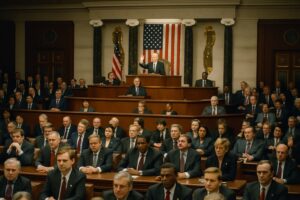
The night of December 19, 1998, unfolded with an unmistakable sense of gravity across Washington, D.C. Inside the U.S. Capitol, history was about to be made in a way few Americans had ever witnessed. Outside, the city buzzed with tension as news cameras lined the streets and citizens stayed glued to their televisions. By the …
The Mayflower Landing: Faith, Survival, and the Birth of Plymouth Colony
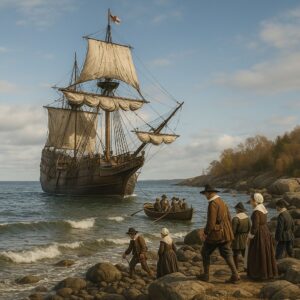
In the early seventeenth century, a single wooden ship crossing the Atlantic carried far more than passengers and cargo. The Mayflower carried fear, hope, desperation, faith, and ambition—elements that would collide on the shores of North America and help shape the future of an entire continent. When the ship finally dropped anchor off the coast …
Securing Liberty: How the Bill of Rights Became America’s Shield Against Power
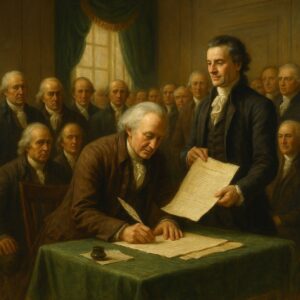
In the fragile years following the American Revolution, the United States stood at a crossroads, unsure whether the hard-won promise of liberty could survive the transition from rebellion to governance. Independence had been secured, but freedom itself still felt uncertain. Many Americans feared that the very government created to protect them might one day resemble …
The Sandy Hook Tragedy and Its Lasting Reckoning
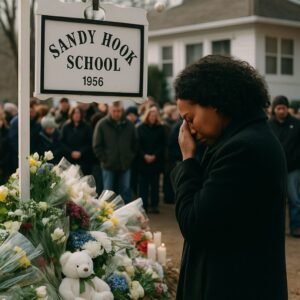
On the morning of December 14, 2012, the town of Newtown, Connecticut, awoke like countless other American communities in mid-December, wrapped in the quiet anticipation of the holiday season. Frost clung to lawns, Christmas decorations lined neighborhood streets, and parents dropped off their children at Sandy Hook Elementary School believing it would be an ordinary …
The Missouri Morning That Gave Us Mark Twain
Samuel Langhorne Clemens entered the world on November 30, 1835, in a small, unassuming house in the quiet village of Florida, Missouri—a place so modest that even today it feels more like a footnote than a birthplace of literary greatness. When he was born, few could have imagined that this fragile, premature infant would grow …
The Day America Lost Its Innocence
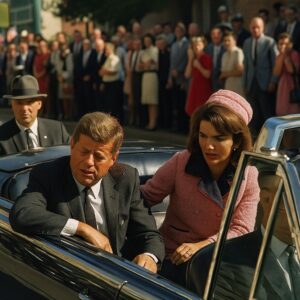
On November 22, 1963, the world seemed to slow its breath, as if instinctively sensing that something irreversible was about to occur. President John Fitzgerald Kennedy—young, charismatic, endlessly symbolic of a new American era—arrived in Dallas that morning with the kind of optimism that had become synonymous with his administration. The sun shone brightly on …
A Nation’s Quiet Thunder: Lincoln’s Words That Rewove America
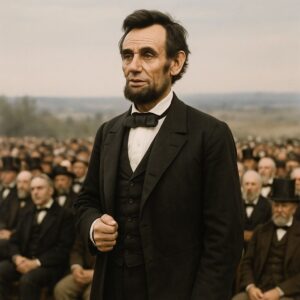
On November 19, 1863, Abraham Lincoln stepped onto a simple wooden platform in Gettysburg, Pennsylvania, carrying no grand entourage, no lengthy scroll, and no expectation that his words would echo across centuries. He had arrived not as the fiery orator many imagined a wartime president to be, but as a somber leader burdened by the …
How the First Congress in Washington D.C. Forged a Nation’s Future
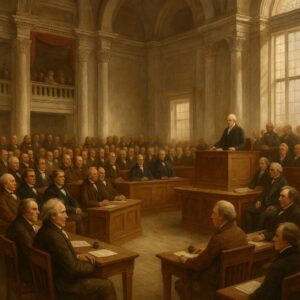
When the First Session of the United States Congress convened in Washington, D.C., on November 17, 1800, something far greater than a routine legislative gathering took place. It was a moment when an idea became a reality, when a theoretical capital—sketched on maps, debated in halls, argued over in newspapers, and surveyed in muddy fields—suddenly …
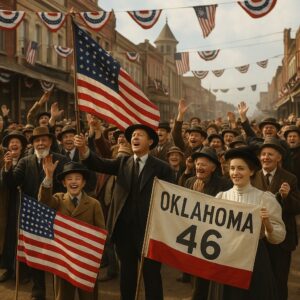
The Day the Frontier Became a State: Oklahoma’s Bold Step Into the American Union
On November 16, 1907, the map of the United States changed forever. A bold, irregular shape in the center of the continent, long known as a crossroads of cultures, frontiers, treaties, and conflicts, finally took its place among the stars of the American flag. Oklahoma, after decades of transformation, turmoil, displacement, hope, exploitation, ingenuity, and …
How John F. Kennedy Captured the Presidency and Rewrote America’s Story
The autumn of 1960 shimmered with anticipation. The United States stood at a crossroads—between the comfortable calm of postwar stability and the restlessness of a new generation ready to redefine what it meant to be American. Factories thrummed, suburbs sprawled, and televisions flickered in nearly every home, each screen a mirror reflecting a country on …
A Dream Signed Into Law: How Martin Luther King Jr. Day Became America’s Promise
On November 2, 1983, the weight of history settled onto the Resolute Desk in the Oval Office as President Ronald Reagan bent forward to sign a piece of legislation that was more than just ink on parchment. With one stroke of the pen, he declared that the third Monday in January would forever be recognized …
When the Market Fell and the World Trembled: Black Tuesday and the Great Depression
On October 29, 1929, the heartbeat of Wall Street collapsed into panic. The day would be remembered forever as “Black Tuesday,” the stock market crash that marked the beginning of the Great Depression. In just a few hours of chaos, fortunes were destroyed, optimism evaporated, and an entire era of roaring prosperity ground to a …
The Day the West Stood Still: The Shootout at the O.K. Corral
On October 26, 1881, in the dusty frontier town of Tombstone, Arizona, the gunfire lasted only about 30 seconds. Yet in that half a minute of smoke, shouting, and bullets, a legend was born. The shootout at the O.K. Corral became the most famous gunfight in the history of the American West—a moment that captured …
When the City Burned: The Great Chicago Fire of 1871
On the night of October 8, 1871, the city of Chicago went to sleep under clear skies, unaware that within hours, flames would transform their lives, their homes, and their future forever. By dawn, the city would be a sea of fire, a hellscape of wood, wind, and despair. It became one of the most …
Treason at West Point: The Day Benedict Arnold Betrayed the Revolution
On September 21, 1780, in a quiet grove along the Hudson River, two men met in secret to alter the course of the American Revolution. One was Major John André, a dashing young officer in the British army, admired for his charm and intelligence. The other was General Benedict Arnold, a hero of earlier battles …
Striking Gold: How California Crashed Into Statehood
When California joined the Union on September 9, 1850, it did so with the kind of drama, speed, and chaos that perfectly suited the place we now think of as the land of reinvention. In a country that was still wrestling with slavery, westward expansion, and fragile compromises, California didn’t wait politely in line like …
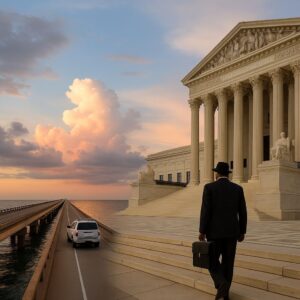
Bridges of Justice and Water
There are days on the calendar that behave like doorways—you step through and discover two rooms that shouldn’t share a wall and yet somehow complete each other. August 30 is one of those uncanny thresholds. On that date in 1956, the Lake Pontchartrain Causeway opened and drew a straight, improbable line across a moody, shallow …
Equal Before the Law: The Long Road to the 14th Amendment’s Promise
The United States in the summer of 1868 was still licking the open wounds of its Civil War. Cities were rebuilding, families were mourning, and the Southern states—recently in rebellion—were being reshaped by the federal government’s ambitious but turbulent project of Reconstruction. In this atmosphere of uncertainty and fragile hope, the ratification of the 14th …
The Spirit of 1776: Embracing Independence
There are moments in history that feel like the lightning strike of destiny—sudden, bright, and forever altering the landscape of what came before. July 4, 1776, stands as one of those moments. It wasn’t just a day on the calendar or the ceremonial drafting of another political document. It was, in many ways, the birth …
Ink That Changed a Nation
The afternoon sun beamed down on Washington, D.C., on July 3rd, 1964, as history hung thick in the air. Inside the White House, President Lyndon B. Johnson prepared to sign one of the most transformative pieces of legislation the United States had ever seen. The Civil Rights Act of 1964 wasn’t just a document—it was …
A Mountain State Born from Divided Loyalties: How West Virginia Defied a Confederacy to Join the Union
In the heart of America’s darkest hours during the Civil War, when brother was pitted against brother and the nation seemed irreparably torn apart, a remarkable and almost unheard-of event took place. On June 20, 1863, West Virginia officially became the 35th state of the United States—the only state to be formed by seceding from …
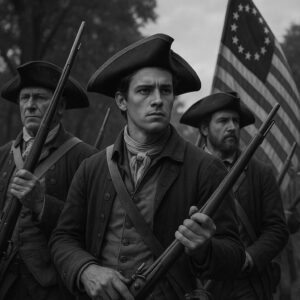
From Revolution to Nation: The Birth of the U.S. Army and the Fight for Freedom
Picture the American colonies in the summer of 1775—tensions boiling over, hearts burning with the desire for freedom, and a fledgling group of patriots ready to stand against one of the world’s most powerful empires. It was on June 14 of that year that the Continental Congress took a bold, historic step: establishing the Continental …
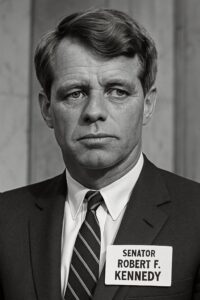
The Bullet That Silenced Hope: Remembering RFK’s Final Stand
On June 5, 1968, just after midnight, the voice of hope for a divided America was abruptly silenced. Senator Robert F. Kennedy, younger brother of the late President John F. Kennedy, had just delivered a victory speech at the Ambassador Hotel in Los Angeles after winning the California Democratic primary. Moments later, as he walked …
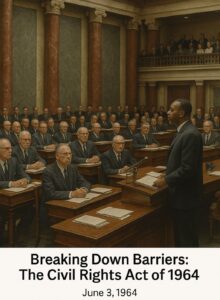
Breaking the Chains: The Senate Steps Toward Equality
It’s difficult to imagine the weight of a moment like June 3, 1964, without stepping back and understanding the long, painful journey that led up to it. That day, the United States Senate, after months of brutal political wrangling and nearly a century of racial injustice codified into law and daily life, passed the Civil …
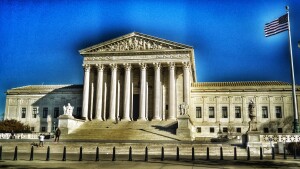
Unanimous Justice: The Day the Wall Began to Crack
On May 17, 1954, the United States Supreme Court did something monumental: it unanimously declared that racial segregation in public schools was unconstitutional. The case—Brown v. Board of Education—didn’t just overturn a legal precedent. It cracked the very foundation of institutional racism in America. For decades, Plessy v. Ferguson (1896) had held that “separate but …
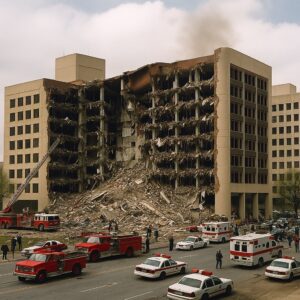
The Oklahoma City Bombing: A Dark Day in American History
On April 19, 1995, the United States was rocked by one of the deadliest acts of domestic terrorism in its history. A massive explosion ripped through the Alfred P. Murrah Federal Building in downtown Oklahoma City, killing 168 people, including 19 children, and injuring hundreds more. The attack, carried out by Timothy McVeigh and Terry …
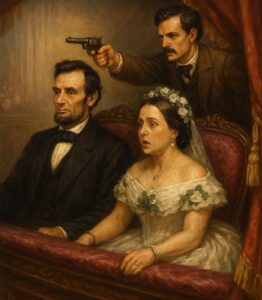
The Night That Changed America: Lincoln’s Final Hours
Abraham Lincoln, the 16th President of the United States, was no stranger to adversity. He led the country through its darkest days—the Civil War—keeping the Union intact and paving the way for the abolition of slavery. But on the night of April 14, 1865, just days after the war had effectively ended, tragedy struck. Lincoln …
- 1
- 2